LS Staging

Tag: digital marketing

  • Blockchain’s Potential in Revolutionizing Digital Marketing

    Blockchain’s Potential in Revolutionizing Digital Marketing

    Blockchain has shaken up industries like finance and logistics by adding a new layer of transparency and security. Now, it’s turning its attention to digital advertising and marketing, offering a chance to rethink how brands track their campaigns and engage with consumers

    So, what exactly is blockchain? At its core, blockchain is a decentralized, distributed ledger that records transactions across many computers in such a way that the registered transactions cannot be altered retroactively. This technology ensures transparency and security, making it an ideal fit for industries where trust and data integrity are paramount.

    For digital marketers, blockchain offers a way to create verifiable and tamper-proof records of customer interactions, ad impressions, and transactions. It’s like knowing exactly where your ad spend is going, without worrying about intermediaries taking hidden cuts or bots inflating your numbers.


    Challenges in Traditional Digital Marketing

    Digital marketing in its current form isn’t without its problems. In India, where digital ad spending is projected to reach ₹62,045 crores by 2025, up from ₹40,685 crores in 2023, these challenges are magnified.

    • Ad Fraud: Click fraud and bot traffic are rampant. Marketers often find themselves paying for impressions and clicks that never come from real users.
    • Data Privacy: With increasing regulations like the GDPR and India’s Data Protection Bill, consumers are more concerned about how their data is being used. Third-party data tracking is becoming harder to justify.
    • Transparency Issues: Advertisers often struggle with a lack of transparency in how their budgets are spent and whether their ads are actually reaching the intended audience.


    Blockchain’s Impact on Digital Marketing

    This is where blockchain comes in, offering solutions to some of the most pressing issues in the industry.

    • Enhanced Security and Transparency: Blockchain’s decentralized nature ensures that every transaction or interaction is recorded on a public ledger. For Indian marketers, this means you can track where your ad spends are going and verify that real people are viewing your ads, not bots.
    • Data Privacy and Ownership: Blockchain gives control back to the consumers. Instead of relying on third-party data, marketers can obtain consented, first-party data directly from users. This is particularly relevant in India, where data privacy concerns are on the rise. Blockchain ensures that users own their data and decide who gets access to it.
    • Lead Quality: One of the standout benefits of blockchain in digital marketing is the potential for improved lead quality. When consumers willingly provide their data, it indicates a genuine interest in the brand, which translates into higher-quality leads. Unlike traditional methods, where data is collected from various sources and often lacks consistency, blockchain ensures that marketers go directly to the source – the consumer.

    Take, for example, the Brave browser, which has introduced a new model for ad targeting. Brave blocks conventional ads but offers its users the option to view ads in exchange for rewards through its Basic Attention Tokens (BAT). This setup allows users to control the amount of personal data they share, while advertisers select audiences based on demographic data without ever accessing the users’ identities.

    • Smart Contracts: These are self-executing contracts with the terms of the agreement directly written into code. In digital marketing, smart contracts can automate and secure processes like ad buying and payments. Imagine running a campaign where payments to publishers are automatically triggered based on verified performance metrics – no middlemen, no delays.
    • Tokenization and Loyalty Programs: Blockchain enables the creation of digital tokens that can be used for rewards or loyalty programs. Close home in India where loyalty programs are popular across various sectors, this could lead to more innovative and engaging ways to reward customers. Brands can create blockchain-based tokens that customers can earn and redeem, adding a layer of transparency and trust to these programs.


    Challenges and Considerations

    While the future of blockchain in digital marketing is promising, it’s essential to recognize the challenges that come with it. Despite its potential, blockchain technology is still relatively new and complex, creating adoption barriers for many marketers who may find it difficult to understand and implement. Additionally, scalability issues are a concern; while blockchain ensures security, it can be slower compared to traditional databases, which may hinder large-scale digital marketing operations, especially during high-traffic periods. Cost implications further complicate adoption, as implementing blockchain solutions can be expensive. For many brands, especially small and medium-sized businesses, these costs may not be feasible without a clear return on investment. Therefore, while blockchain offers significant advantages, marketers need to carefully weigh these considerations as they explore this innovative technology


    Conclusion

    As decentralized ad networks rise, we can expect a significant reduction in the need for intermediaries, leading to more transparent and efficient marketing ecosystems. Over the next decade, blockchain is likely to become a key player in AI-driven marketing strategies, enabling more precise targeting, better data security, and streamlined operations.

    Beyond transparency and security, blockchain could reshape how marketers interact with consumers, offering new ways to build trust and deliver personalized experiences. While there are still challenges, such as scalability and adoption barriers, the integration of blockchain with emerging technologies positions it as a powerful tool for the future of digital marketing.
  • The Impact of Digital Transformation on Indian Businesses

    The Impact of Digital Transformation on Indian Businesses

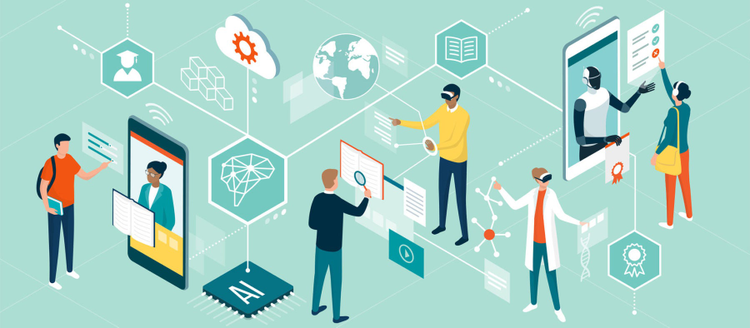
    Imagine a world where over 830 million people are connected, and businesses are just a click away from tapping into a $1 trillion digital economy. This isn’t the future; this is India today. As one of the largest digitally connected democracies in the world, India is witnessing tremendous a digital revolution. With the rapid pace of technological advancements, the question isn’t whether businesses should transform, but how quickly they can adapt to stay relevant. Digital transformation isn’t just an option anymore—it’s the key to survival and success in a market that’s evolving faster than ever. From streamlining operations to creating unforgettable customer experiences, digital transformation is redefining what it means to do business in India.

    At the core of this transformation are six key pillars, each playing a critical role in driving success in the digital era. Let’s explore how these pillars—media, creative strategies, data, technology, UI/UX, and customer and employee experience—are fundamentally transforming businesses across industries.

    Media

    Media is reshaping how companies interact with customers. E-commerce giants like Amazon and Flipkart have mastered the art of using digital media to reach vast audiences, even in rural areas. By leveraging digital advertising, social media, and content marketing, businesses can target specific markets more effectively. Indian businesses are increasingly using these platforms to build brand awareness, connect with consumers, and ultimately drive growth.

    Creative Strategies

    A key part of digital transformation is creativity. Personalized marketing strategies are no longer optional—they’re essential. Think of how e-commerce platforms recommend products based on your previous purchases, or how healthcare systems offer remote consultations through telemedicine. These innovations are shaping how businesses engage with customers, offering them more personalized and relevant experiences.

    Data

    Data is now one of the most valuable assets for businesses. Take India’s Unified Payments Interface (UPI), which processes millions of transactions daily, generating valuable insights into consumer behaviour. Companies can analyse this data to make informed decisions, improving customer experiences and driving innovation. The more businesses leverage data, the better they can optimize their operations and respond to changing market needs.

    Technology and Innovation

    India’s digital transformation is being powered by cutting-edge technologies such as artificial intelligence (AI), the Internet of Things (IoT), and big data analytics. These tools are revolutionizing industries—from finance to healthcare—by automating tasks, personalizing services, and driving smarter decision-making. The Digital India initiative is further promoting the adoption of these technologies, making them more accessible to businesses of all sizes.

    UI/UX

    As mobile internet access expands across India, the need for intuitive and user-friendly digital platforms is greater than ever. Whether it’s a banking app or an e-commerce site, businesses must prioritize user experience (UI/UX) to engage and retain customers. A seamless digital experience fosters customer loyalty, which in turn fuels long-term business growth.

    CX and EX

    The true impact of digital transformation can be measured with an adept focus on Customer Experience (CX) and Employee Experience (EX). Providing a smooth, rewarding interaction with customers is crucial for maintaining satisfaction, from the initial browsing to post-purchase. Meanwhile, enhancing EX through digital tools enables employees to perform better and feel more engaged in their roles. A great example is the National Digital Health Mission, which simplifies processes for both patients and medical professionals, improving their experiences.

    Challenges in driving Digital Transformation of Businesses in India

    However, achieving digital transformation doesn’t come without hurdles. Many businesses, particularly smaller ones, still rely on outdated systems that struggle to keep up with modern digital solutions. Investing in new technologies, infrastructure, and training can be costly, making it hard for some businesses, especially small and medium-sized enterprises (SMEs), to keep pace. Data privacy is another concern, with the growing amount of consumer data being collected. Businesses must ensure they comply with regulations and protect this data from potential threats like breaches and ransomware. Additionally, a shortage of skilled professionals in fields like data analytics and cybersecurity presents another challenge that businesses must address to fully embrace the digital future.

    Despite these challenges, the future of digital transformation in India is promising. The integration of AI, IoT, and big data will continue to reshape industries and create new opportunities. As internet infrastructure improves and 5G technology rolls out, digital services will become even more widespread, opening doors to new markets and ecosystems.

    In essence, the impact of digital transformation is evident in the success witnessed by several Indian businesses, which is enabling them to increase efficiency, engage customers, and create new value propositions. While there are obstacles to overcome, the potential rewards are immense. With continued innovation, collaboration, and a commitment to learning, businesses in India are well on their way to harnessing the full power of the digital era.

  • Personalization in Digital Marketing: Strategies for the Indian Consumer

    Personalization in Digital Marketing: Strategies for the Indian Consumer

    When the digital revolution took India by a storm, it also changed several aspects of the Indian consumer’s behaviour, virtually forcing marketers to adapt and find new ways to reach their target audience. India had over 700 million smartphones users as of January 2023, which will have significantly gone up owing to the rapid digitization and internet democratization in the country. With such a large pool of potential customers who are exposed to hundreds of ads every single day, personalization in digital marketing emerges as a core strategy for businesses willing to stand out.

    The Indian market, with its unique cultural diversity and rapidly evolving consumer behaviour, presents both opportunities and challenges for brands aiming to connect with their audience on a personal level. In such a scenario, personalisation becomes even more crucial if brands want to break out of the clutter and reach their target groups. However, before delving into personalization strategies for the modern marketers, it is vital to understand the nuances of the Indian consumer’s behaviour to that truly resonate, ensuring that the brand’s offerings align with cultural preferences, regional differences, and individual aspirations.


    Understanding the Indian Consumer Behaviour

    Indian consumers embody a blend of traditional values and modern aspirations, making personalization essential in digital marketing. With a diverse population in terms of culture, language, religion, economic status, and technological adoption, generic marketing approaches often fall short. Indian consumers expect brands to understand their unique needs and preferences, influenced by cultural diversity, digital savviness, and value-consciousness. They are particularly price-sensitive, seeking quality at reasonable prices, so personalized strategies must balance luxury with affordability and ensure customers feel individually valued.


    The Importance of Personalization in Digital Marketing

    Personalization in digital marketing goes beyond simply addressing consumers by name; it’s about crafting a seamless, relevant experience across all interactions. For Indian consumers, personalization is key to building trust, loyalty, and deeper brand connections. By understanding the customer journey and tailoring messages to individual preferences, brands can enhance engagement, boost conversion rates, and foster long-term customer retention. This approach not only increases brand loyalty but also creates meaningful and lasting relationships with consumers.


    Strategies for Personalization in the Indian Market

    To effectively implement personalization in digital marketing for the Indian consumer, brands must consider the following strategies:

    1. Leverage Data and Analytics: Data is the backbone of personalization. Brands need to invest in data analytics to gather insights into consumer behaviour, preferences, and purchasing patterns. In India, where consumer behaviour varies widely across regions, data-driven personalization can help brands tailor their messages to specific segments.
    2. Segment Your Audience: Given the diversity of the Indian market, audience segmentation is crucial. By dividing consumers into distinct groups based on demographics, psychographics, and behaviour, brands can create targeted marketing campaigns that resonate with each segment.
    3. Localized Content and Messaging: Language and cultural nuances play a significant role in the Indian consumer’s decision-making process. Brands should consider localizing their content and messaging to cater to regional preferences. This could involve creating multilingual content, incorporating local festivals into marketing campaigns, and understanding the cultural context of each region.
    4. Personalized Product Recommendations: Using AI and machine learning algorithms, brands can offer personalized product recommendations based on a consumer’s browsing history, purchase history, and preferences. This not only enhances the shopping experience but also increases the likelihood of conversion.
    5. Dynamic and Adaptive Content: Personalization in digital marketing should extend beyond static content. Brands can use dynamic content that adapts to the user’s behaviour in real-time. For example, a consumer who frequently searches for eco-friendly products could be shown content related to sustainability and green living.
    6. Personalized Email Campaigns: Email marketing remains a powerful tool in digital marketing. Personalized email campaigns that address the recipient’s specific needs and preferences can lead to higher open and click-through rates. For Indian consumers, personalized emails could include regional offers, festival greetings, and product recommendations based on previous purchases.
    7. Social Media Personalization: With India being one of the largest markets for social media, brands must leverage these platforms to deliver personalized content. By using social listening tools, brands can understand consumer sentiments and trends, allowing them to tailor their social media strategies accordingly.
    8. Omnichannel Personalization: The Indian consumer’s journey is often spread across multiple channels, both online and offline. Omnichannel personalization ensures that consumers receive a consistent and personalized experience, whether they are browsing a website, using a mobile app, or visiting a physical store.
    9. Personalized Pricing: Indian consumers are highly price-sensitive, with even small price differences impacting brand perception and loyalty. To maximize customer retention, brands should leverage AI tools to offer personalized pricing, recognizing first-time and repeat buyers. This approach helps brands stay ahead, enhancing ROI by catering to individual customer needs.


    Challenges in Personalization for the Indian Market

    While personalization offers numerous benefits, implementing it in the Indian market comes with its own set of challenges:

    • Data Privacy Concerns: With the increasing awareness of data privacy, consumers are becoming cautious about sharing personal information. Brands must ensure transparency and build trust by protecting consumer data.
    • Technological Barriers: Despite the widespread use of smartphones, there is still a significant digital divide in India. Brands must find ways to personalize experiences for both tech-savvy consumers and those with limited access to technology.
    • Balancing Personalization with Scale: The sheer size of the Indian market can make personalization at scale challenging. Brands need to invest in scalable personalization strategies that can cater to millions of consumers without losing the personal touch.


    Personalization in digital marketing is no longer a luxury but a necessity in the Indian market. By understanding the unique behaviours and preferences of Indian consumers, brands can craft personalized experiences that resonate with their audience, build long-lasting relationships, and drive business growth. As digital transformation continues to evolve, the ability to personalize at scale will be a key differentiator for brands looking to succeed in India’s competitive market.

  • Weekend Digital Media Round-Up: What’s shaping today’s movie and TV streaming viewer behavior, Digital advertisers still looking for recipe to thrive in cookieless world, 2024 SEO tools & tactics to refresh your strategy & boost performance, and more…..

    Weekend Digital Media Round-Up: What’s shaping today’s movie and TV streaming viewer behavior, Digital advertisers still looking for recipe to thrive in cookieless world, 2024 SEO tools & tactics to refresh your strategy & boost performance, and more…..

    1.What’s shaping today’s movie and TV streaming viewer behavior?

    People—especially Millennials and Gen Z—are reevaluating their relationship with streaming services. [Source: Adweek]

    2. Digital advertisers still looking for recipe to thrive in cookieless world

    Google’s new identity solution that allows publishers and advertisers to match first-party data to deliver personalized ads. [Source: Search Engine Land]

    3. 2024 SEO tools & tactics to refresh your strategy & boost performance

    Make your SEO strategy a success with generative AI and Google’s Search Generative Experience. Stay up-to-date with the latest trends and SEO tools for 2024! [Source: Search Engine Journal]

    4. Measuring effectiveness, retail media, AI and first-party data will dominate 2024

    The acceptance of new tools for measuring media effectiveness, the activation of new media strategies, a boom in retail media and the move towards developing new first-party data strategies in light of the cookie-less world were all key themes for senior marketers. [Source: The Drum]

    5. How brands should be thinking about spatial technology and the mixed-reality future

    With the launch of Apple Vision Pro earlier this year, the start of the spatial computing era has begun in earnest. The $3,499 device initially sold 200,000 units, not exactly at the same pace as the iPhone when it was introduced in 2007. [Source: Adweek]

    6. Content chaos grows as marketers struggle with omnichannel demands

    Hyper personalisation and localisation may be the end goal for most brands, but an increasing number of marketers are scrambling to manage the complex content requirements needed to deliver a truly omnichannel marketing approach. [Source: Marketing Tech]

    7. AI drives major shift in 2024 SEO strategies

    In light of advancements in AI technology, the Search Engine Optimization (SEO) landscape in 2024 is set to experience a paradigm shift. [Source: DMN]

    8. The future of B2B growth? Your brand

    When B2B executives and board members recognize that brand is not only a logo, but rather a shorthand used by current and prospective customers to be comfortable with your products, the growth possibilities are virtually endless. [Source: Adweek]

    9. How mobile data drives omnichannel success

    Kevin McGurn, vice-president of sales, marketing, and distribution at T-Mobile Advertising Solutions, explores how the power of first-party mobile data continues to prove highly successful in campaigns for leading brands. [Source: The Drum]

    10. How programmatic audio is reshaping digital marketing

    Enter programmatic audio: A transformative solution that not only simplifies the ad-buying process but also elevates audience engagement to position itself as a pivotal development in audio advertising. [Source: Adweek]

  • Weekend Digital Media Round-Up: YouTube marks new milestone in Connected TV viewing, adds TV channel pages, Harmonizing human potential and AI: The evolution of work in the digital era, WhatsApp adds new text formatting options to improve communications, and more…..

    Weekend Digital Media Round-Up: YouTube marks new milestone in Connected TV viewing, adds TV channel pages, Harmonizing human potential and AI: The evolution of work in the digital era, WhatsApp adds new text formatting options to improve communications, and more…..

    1.YouTube marks new milestone in Connected TV viewing, adds TV channel pages

    With YouTube marking a new milestone in connected TV viewing (i.e. people watching YouTube on their home TV set), the platform’s taking the opportunity to launch a new channel page layout for TV. [Source: Social Media Today]

    2. Harmonizing human potential and AI: The evolution of work in the digital era

    In an era marked by relentless digital advancements, companies invest billions in transformative efforts that sometimes fall short of expectations. [Source: Venture Beat]

    3. WhatsApp adds new text formatting options to improve communications

    WhatsApp has officially announced its new text formatting options, which are now available on both Android and iOS. [Source: Social Media Today]

    4. YouTube analytics now shows top-earning shorts, videos on demand, and lives

    YouTube Analytics now tells creators their top-performing content across Shorts, Videos on Demand, and Lives. [Source: Search Engine Land]

    5. Brands turn Instagram’s long-post glitch into a moment marketing trend

    A new Instagram glitch has surfaced, allowing users to post extra-long images on their feeds. Brands like Swiggy Instamart, TLC, FeviKwik and more have joined in on this trend. Let’s explore them down below. [Source: Social Samosa]

    6. How AI copyright lawsuits could make the whole industry go extinct

    There’s a lot going on in the world of generative AI, but maybe the biggest is the increasing number of copyright lawsuits being filed against AI companies like OpenAI and Stability AI. [Source: The Verge]

    7. Integrating SEO into the multichannel customer journey

    To effectively reach and engage customers, businesses must adopt a multichannel marketing approach, leveraging various online and offline channels based on customer preferences. [Source: Search Engine Land]

    8. X Faces restrictions in India and Pakistan amid Government orders for content removals

    In India, as confirmed by X, the Indian Government has issued a new order for X to ban users that it has identified as prompting civil disobedience. [Source: Social Media Today]

    9. Instagram launches its marketplace to connect brands and creators in 8 new countries

    Instagram said that it is expanding its marketplace tool to connect brands with creators for paid partnerships or ads in eight new countries. [Source: Tech Crunch]

    10. Comfort isn’t just a Vision Pro problem — it’s a wearable one

    You won’t use a wearable that’s not comfortable, but it’s hard to make comfy wearables at scale. Plus, what’s comfortable for me may not be for you. [Source: The Verge]

  • Weekend Digital Media Round-Up: Headlines Are Now Returning to Link Previews on X, Facebook rolls out ‘Link History’ for all users – and uses data for targeted ads, Facebook rolls out ‘Link History’ for all users – and uses data for targeted ads; Details & More…..

    Weekend Digital Media Round-Up: Headlines Are Now Returning to Link Previews on X, Facebook rolls out ‘Link History’ for all users – and uses data for targeted ads, Facebook rolls out ‘Link History’ for all users – and uses data for targeted ads; Details & More…..

    1.Headlines Are Now Returning To Link Previews On X

    With post headlines now beginning to reappear on link previews posted to X once again. They’re now coming back to the web version of the app, with other platforms to follow, with the headline now in a slightly different place, and the preview text not shown. [Source: Social Media Today]

    2. Facebook Rolls Out ‘Link History’ For All Users – And Uses Data For Targeted Ads

    Facebook has started archiving all users’ link history globally on both Android and iOS devices. While users have the option to opt out, the feature is turned on by default, allowing Meta to utilize the collected data for targeted advertising. [Source: Search Engine Land]

    3. X Rolls Out New ‘Affordable’ $200 Basic Tier Subscription For Verified Organizations

    X seems to be on a mission to provide small businesses with financial relief as it just rolled out a new basic tier for verified organizations. Coming around at an estimated cost of just $200 per month, it’s a change from what many used to pay in the past. [Source: Digital Information World]

    4. Google Implements First Stage In The Removal Of Tracking Cookies

    The day has come, with Google activating the first stage of its cookie-removal strategy today. Last month, Google finally confirmed when it would begin removing tracking cookies for some users. [Source: Social Media Today]

    5. Microsoft’s New Copilot Key Is The First Big Change To Windows Keyboards In 30 Years

    A new Copilot key will ship on a variety of new PCs and laptops from Microsoft’s partners, providing quick access to Microsoft’s AI-powered Windows Copilot experience straight from a keyboard button press. [Source: The Verge]

    6. WordPress Google Fonts Plugin Vulnerability Affects Up To +300,000 Sites

    A vulnerability rated as High was recently patched in a Google Fonts optimization plugin for WordPress, allowing attackers to delete entire directories and upload malicious scripts. [Source: Search Engine Journal]

    7. Instagram’s Upcoming Profile Collection Feature Will Help You Curate Your World

    Instagram is all set to broaden its Collections feature, offering users the ability to share curated posts on their profiles. This move aims to enhance user understanding of individual interests. [Source: Digital Information World]

    8. Google Confirms It Is Testing Ad Copy Variation In Live Ads

    Google has quietly started testing placing headlines within the ad copy description text in live ads. Advertisers were not given prior notice about the ad copy variation experiment, and the uncertainty about the potential expansion of this test to more accounts has led to frustration within the community. [Source: Search Engine Journal]

    9. New Window For Growth Opens On X After App Confirms 750,000 Job Openings Up For Grabs

    Elon Musk’s X app just might be getting the best start for 2024 that it might have hoped for. The app just shared a new post that spoke about how more than 750,000 job openings were up for grabs, giving rise to endless possibilities of growth for the organization. [Source: Digital Information World]

    10. X Announces Lower-Cost Verification For Organizations Package To Lure SMBs

    X’s focus in 2024 will be on SMBs, with the platform looking to sign-up many more smaller ad partners in order to offset its losses from the bigger players, rather than paying $1,000 per month for a gold check mark in the app. [Source: Social Media Today]

  • Weekend Digital Media Round-Up: X Continues To Roll Out Updates for the Profile ‘Media’ Tab, Reddit’s Retiring its ‘Stay Chat’ Possibility in Subreddit Communities, New calendar search option spotted in WhatsApp Beta versions; Details& More…..

    Weekend Digital Media Round-Up: X Continues To Roll Out Updates for the Profile ‘Media’ Tab, Reddit’s Retiring its ‘Stay Chat’ Possibility in Subreddit Communities, New calendar search option spotted in WhatsApp Beta versions; Details& More…..

    1.X Continues To Roll Out Updates for the Profile ‘Media’ Tab

    X has been rolling out its new grid display format, so rather than a list of posts with media included, you can now get a better view of the various video and image uploads from a specific account. [Source: Search Engine Journal]

    2. From graphic design to visual workflows, Canva’s new AI core is changing its business

    Canva has crafted a wildly successful business model on the idea that graphic design should be accessible to everyone. Over the last 12 months, Canva has released a slew of generative AI products which gives both the company and its users a new ability to build features and design work that might not have even been considered five years ago. [Source: TechCrunch]

    3. Instagram Continues To Test Ways To Use Notes

    With IG losing ground as the cool app of choice among youngsters, that’s music to the ears of the Meta team, which is why it keeps experimenting with new Notes options, including even more new Notes tests uncovered. [Source: Social Media Today]

    4. X Publicizes Integration With StreamYard for Livestream Broadcasts

    Excellent news for X livestreamers, with the platform saying a new integration with StreamYard which can allow you to show X feedback in streams through StreamYard’s platform. [Source: Red Mention]

    5. New calendar search option spotted in WhatsApp Beta versions

    WhatsApp is experimenting with a new calendar search feature in the WhatsApp Web beta version. This functionality appears to have been introduced in the beta edition of the Android app. [Source: Social Samosa]

    6. Reddit’s Retiring its ‘Stay Chat’ Possibility in Subreddit Communities

    After making an attempt out one other solution to spark real-time dialog within the app, Reddit has announced that it’s sunsetting its “Live Chat” option inside communities. [Source: Red Mention]

    7.Microsoft Copilot is now available as a ChatGPT-like app on Android

    Microsoft has quietly launched a dedicated Copilot app for Android. The new app is available in the Google Play Store, offering access to Microsoft’s AI-powered Copilot without the need for the Bing mobile app. [Source: The Verge]

    8. Meta is introducing generative AI tools for group admins

    Meta is introducing generative AI tools for group admins, offering content recommendations, advanced filters, and AI post prompts. [Source: Medium]

    9. WhatsApp enhances its Status update interface

    The update brings a dedicated layout that offers a clearer presentation of channel updates, establishing a stronger connection between the posted content on Status and its origin from a channel. [Source: Social Samosa]

    10. Google makes it easier to buy YouTube reservation ads

    Google is making it simpler to buy ads on YouTube by expanding its self-service purchasing system. Depending on its availability in your local market, this feature has now been rolled out. [Source: Search Engine Land]

  • Weekend Digital Media Round-Up: 12 new Google Analytics 4 eCommerce dimensions and metrics, Google’s Switch Access is Now Offered as a Standalone App, Instagram’s Updating its UI & More…

    Weekend Digital Media Round-Up: 12 new Google Analytics 4 eCommerce dimensions and metrics, Google’s Switch Access is Now Offered as a Standalone App, Instagram’s Updating its UI & More…

    1.12 new Google Analytics 4 eCommerce dimensions and metrics

    Ecommerce advertisers and brands will now be able to view which items were added to cart, purchased, clicked, and more. [Source: Search Engine Land]

    2. Google’s Switch Access is Now Being Offered as a Standalone App

    Accessibility has been a prime focus for most tech companies because of the fact that this is the sort of thing that could potentially end up making their products easier to use for a wider swathe of consumers. [Source: Digital Information World]

    3. Instagram’s Updating its UI, with the Shop Tab to Disappear from the Main App Screen

    Instagram’s UI is getting an update, with a few minor tweaks to the app layout, and the placement of function buttons on-screen. [Source: Social Media Today]

    4. Google Chrome Team Shares Tips for Optimizing Core Web Vitals

    Google is sharing an updated set of recommendations for optimizing Core Web Vitals to help you decide what to prioritize when time is limited. [Source: Search Engine Land]

    5. Meta introduces new ad targeting limits for teens

    Meta will remove the option for targeting advertising to teen users based on gender. They’ll also end advertisers’ ability to target personalized ads to under-18 users based on their in-app activity, including who they follow on Instagram and what Facebook pages they like. [Source: Search Engine Land]

    6. Microsoft’s New AI Advancement Can Clone People’s Voices From Three-Second Audio Clips

    The power of AI technology can never be underestimated and this new advancement from Microsoft related to voice cloning is definitely worth a glance. [Source: Digital Information World]

    7. Meta Will Now Enable You to Connect Your Heart Rate Monitor to its VR App

    Meta’s adding a new heart-rate tracking element to its Quest VR headsets will enable you to sync your heart rate monitor with the app to track your response to various VR experiences. [Source: Social Media Today]

    8. Apple Maps relaunches Apple Business Connect

    Apple has revamped the Apple Business Connect service, where businesses can update what Apple Maps shows about their business. [Source: Search Engine Land]

    9. YouTube Adds New Analytics Updates, with a Focus on Shorts Content

    YouTube has announced a range of new analytics and display options in its first Creator Insider update of the year, including new data on subscriber growth, Shorts thumbnails, new subscriber recognition options, and more. [Source: Social Media Today]

    10. Twitter’s New Verification System Has Blue & Gold Checkmarks

    Twitter is launching a modified version of its verification system, which includes gold checkmarks for businesses and unique labels for official accounts. [Source: Search Engine Land]

  • Weekend Digital Media Round-Up: Meta Showcases New AI System, Google Tests New Feature That Allows Companies to Diversify Their Revenue, Meta launches ‘Find, Message and Buy on WhatsApp’ & More….

    Weekend Digital Media Round-Up: Meta Showcases New AI System, Google Tests New Feature That Allows Companies to Diversify Their Revenue, Meta launches ‘Find, Message and Buy on WhatsApp’ & More….

    1.Meta Showcases New AI System That Can Use Strategic Reasoning to Solve Problems

    Meta shares its latest update, an AI system that can use strategic reasoning and natural language to solve problems put before it. [Source: Social Media Today]

    2. Google Tests New Feature That Allows Companies to Diversify Their Revenue

    The tech giant is quietly experimenting with means to diversify revenue by putting new choices on the table for monetization alongside the usual endeavours such as advertising. [Source: Digital Information World]

    3. Meta launches ‘Find, Message and Buy on WhatsApp’

    The new feature on WhatsApp would allow users to discover new brands, connect with them and make purchases directly on the app. [Source: Social Samosa]

    4. Snapchat Launches New Features to Celebrate the 2022 World Cup

    Snapchat’s announced a range of new features to help fans engage with the 2022 World Cup, including team-based AR filters, new AR Try-On features. [Source: Social Media Today]

    5. New Meta privacy updates for teens

    New Facebook and Instagram teen users will automatically be opted in, while current users will need to manually select the settings. [Source: Search Engine Land]

    6. How Will Metaverse Impact the Businesses and Consumers: The Future of Internet

    Metaverse is the next buzzword in the IT cosmos, and given the amount of interest it has already created, it won’t be long until it joins the ranks of the fastest-growing digital trends. [Source: Digital Information World]

    7. LinkedIn to let you schedule posts to send at later time

    LinkedIn is rolling out a new schedule posts feature which is currently available on Android and web versions only. Users can now use the post-scheduling feature inside the Android app and on the LinkedIn website too. [Source: India TV ]

    8. YouTube Brings Photo Editing & Quizzes To Community Posts

    YouTube is giving creators new tools to work with when publishing community posts, with the addition of photo editing features and interactive quizzes. [Source: Search Engine Journal]

    9. LinkedIn Launches New ‘Brand Safety Hub’ to Manage Audience Network Placements

    LinkedIn has aunched a new Brand Safety hub for its Audience Network ads, which will enable advertisers to find out more information about LinkedIn’s partner platforms. [Source: Social Media Today]

    10. Messaging App Now Allows Using One Account In Multiple Smartphones

    Instant Messaging platform WhatsApp has rolled out a new feature that will allow its beta users to connect their accounts with another handset and an Android tablet. [Source: India.com]

  • Weekend Digital Media Round-Up: Meta Announces Instagram Explore Home Ads Placement, Google Play streamlines policies around kids, Meta Launches New Sports Experience in VR & More….

    Weekend Digital Media Round-Up: Meta Announces Instagram Explore Home Ads Placement, Google Play streamlines policies around kids, Meta Launches New Sports Experience in VR & More….

    1.Meta Announces Instagram Explore Home Ads Placement Via Marketing API

    Meta formally announced the ‘Instagram Explore home’ Ads Placements via the Instagram Marketing API which allows marketers to run ads on the Instagram Explore home page. [Source: Search Engine Journal]

    2. Google Play Makes a Series Of Changes For Apps Designed For Kids

    Google Play has rolled out a series of changes to various programs and policies linked to Android apps that are designed for kids. [Source: Digital Information World]

    3. Meta Launches New Sports Experience in VR Which Could Help to Spark Interest in the Metaverse

    Meta has announced the launch of XTADIUM on Meta Quest, which will enable Meta VR users to experience sports in a more immersive, engaging way. [Source: Social Media Today]

    4. G2 launches Market Intelligence dashboard

    G2, the software and services review site, has launched G2 Market Intelligence, an interactive dashboard giving software vendors increased visibility into the data G2 gathers about in-market software purchasers. [Source: MarTech]

    5. Google launches new search, shopping and maps features

    Google has announced a boatload of new search features across Google Search, Google Lens, Shopping and Maps all aimed at bringing search to more users in more helpful ways. [Source: Search Engine Land]

    6. Meta Releases ‘Galactica’ AI System Which Can Produce Academic Papers Based on Simple Prompts

    Meta has launched a demo version of its new ‘Galactica’ language model for scientific papers, which is able to summarize academic literature, solve math problems, generate Wiki articles, and more. [Source: Social Media Today]

    7. Meta Launches Campaign To Support Small Business Shopping

    Meta is kicking off a marketing campaign to encourage customers to assist small to medium-sized companies (SMBs) throughout the vacation purchasing season. [Source: Search Engine Journal]

    8. Google Adds New Search Tools for the Holidays, Including AR Try-On Tools and Map Overlays

    Google’s adding some new Search enhancements for the holidays, in order to help businesses maximize interest in the peak shopping season. [Source: Social Media Today]

    9. WhatsApp Always Bless its Users by Introducing New Features For Them To Enjoy

    WhatsApp has rolled out many new features for its users. The most fascinating ones are polls and communities, and viewable profile pictures within a group chat. [Source: Digital Information World]

    10. LinkedIn Launches New ‘Brand Safety Hub’ to Manage Audience Network Placements

    LinkedIn has launched a new Brand Safety hub for its Audience Network ads, which will enable advertisers to find out more information about LinkedIn’s partner platforms. [Source: Social Media Today]