LS Staging

Category: Digital Marketing

  • Top 5 Reasons to Outsource Your Digital Marketing  – A Complete Guide for Businesses

    Top 5 Reasons to Outsource Your Digital Marketing – A Complete Guide for Businesses

    Digital marketing for businesses is no longer optional today, but it is essential for growth, visibility, customer acquisition, and competitive success.

    However, managing digital marketing in-house can be expensive, time-consuming, and difficult without the right expertise.

    That’s why many businesses today are choosing to outsource digital marketing services to professional agencies and specialists.

    In this guide, we’ll explore:

    • What does digital marketing outsourcing mean?
    • The top 5 reasons to outsource marketing
    • When outsourcing makes the most sense
    • How outsourcing improves ROI, scalability, and business focus

    Introduction to Digital Marketing Outsourcing

    Digital marketing today is no longer limited to just posting on social media or running a few ads. It includes multiple channels and moving parts that need to work together to generate real results, such as leads, traffic, and conversions.

    Some of the key areas of digital marketing include:

    • Search Engine Optimisation (SEO) to improve website rankings and organic traffic
    • Social media marketing to build brand presence and engage audiences
    • Paid advertising (PPC) across platforms like Google, Meta, LinkedIn, and YouTube
    • Email marketing campaigns for nurturing leads and customer retention
    • Content marketing such as blogs, landing pages, videos, and marketing copy
    • Analytics and reporting to track performance and optimise campaigns regularly

    For growing businesses, managing all of these functions in-house can quickly become overwhelming. It requires time, skilled professionals, paid tools, consistent planning, and constant optimisation. Without the right expertise, businesses may also end up spending money on campaigns that don’t deliver measurable returns.

    This is where digital marketing outsourcing becomes a smart solution.

    By outsourcing to a professional agency, businesses can access experienced talent, industry-level tools, and faster execution in one place, without the cost and effort of building a full internal marketing department. It also allows business owners and internal teams to focus on core operations, while experts handle strategy, performance, and growth online.

    LS Digital, through its specialised vertical Media Alchemy, focuses on delivering integrated, performance-driven digital marketing solutions.

    What is Digital Marketing Outsourcing?

    Digital marketing outsourcing is the process of hiring an external agency or marketing partner to manage part or all of their online marketing activities.

    Instead of doing everything in-house, businesses outsource services like:

    • SEO management
    • Social media content and ads
    • PPC campaigns
    • Website optimisation
    • Email marketing
    • Lead generation

    Is Outsourcing Digital Marketing Cost-Effective?

    Yes, outsourcing is often far more cost-effective than hiring, training, and managing a full in-house digital marketing team.

    To build an internal team that can handle digital marketing properly, a business typically needs multiple specialists — such as an SEO expert, a performance marketer, a content writer, a designer, a social media manager, and an analytics specialist. And beyond hiring, there’s also the ongoing cost of training, upskilling, and keeping the team updated with platform changes.

    When you outsource, you save significantly on:

    • Full-time salaries across multiple roles
    • Employee benefits and HR overhead
    • Paid marketing tools and software subscriptions
    • Training and upskilling costs
    • Trial-and-error execution, which often leads to wasted ad spends and slow results

    More importantly, outsourcing gives you access to a ready-to-go team of experts across different levels, from strategists and senior specialists to execution-focused professionals, all working together. Instead of relying on one or two generalists, you get the benefit of a complete digital marketing setup without the cost of building it from scratch.

    Top 5 Reasons to Outsource Your Digital Marketing

    Let’s break down the most important reasons why businesses choose to outsource digital marketing — and why working with a full-service, integrated agency delivers stronger, faster, and more measurable outcomes than managing everything in-house.

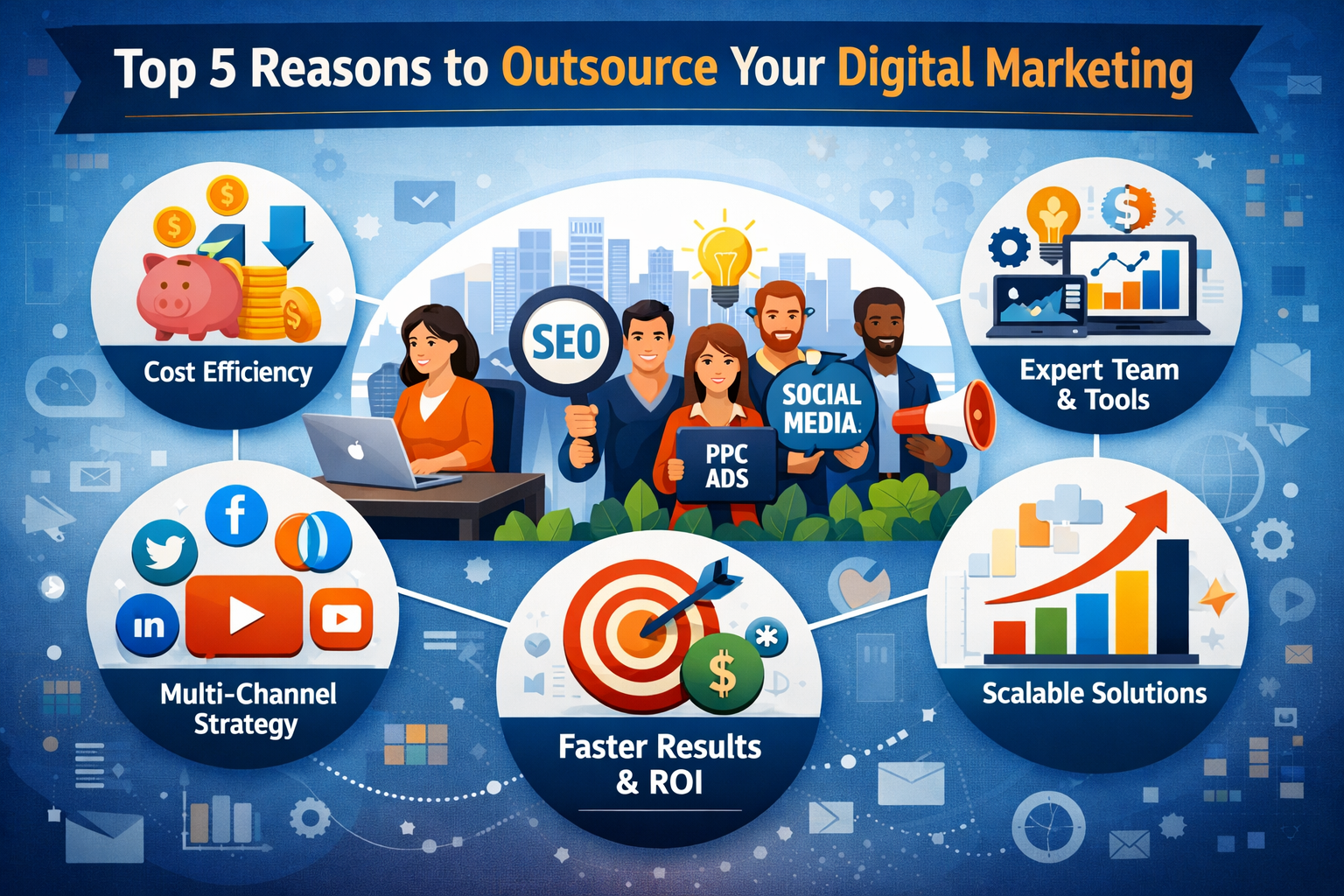
    Reason 1: Cost Efficiency Without Compromising Quality

    One of the biggest reasons businesses outsource digital marketing is to control costs while improving performance.

    Building a capable in-house marketing team requires hiring multiple specialists, such as:

    • SEO specialists
    • Content writers and editors
    • Graphic designers
    • Paid media and performance marketers
    • Social media managers
    • Data and analytics professionals

    This isn’t just a hiring challenge — it’s a long-term financial commitment that includes salaries, benefits, training, software subscriptions, and management overhead.

    Outsourcing to an agency solves this by offering:

    • Access to multiple specialists at one consolidated cost
    • No recruitment, onboarding, or training expenses
    • Use of premium tools and platforms already built into the service
    • Flexible pricing models that grow with your business

    Instead of paying for individual roles, businesses get an integrated team working together, making outsourcing especially effective for startups, SMEs, and scaling brands.

    Reason 2: Access to Multi-Level Expertise & Advanced Tools

    Digital marketing is not a single skill — it’s a constantly evolving ecosystem. Search algorithms change, ad platforms update policies, and audience behaviour shifts rapidly.

    An experienced agency brings together:

    • Senior strategists who plan campaigns aligned with business goals
    • Mid-level specialists who optimise performance and execution
    • Execution-focused experts who handle daily tasks with precision

    This layered expertise ensures campaigns are both strategically sound and operationally efficient.

    In addition, agencies invest in premium tools such as:

    • SEO platforms (SEMrush, Ahrefs)
    • Analytics tools (GA4, Search Console, Data Studio)
    • CRM and automation platforms (HubSpot, marketing automation tools)

    For example, when a business outsources SEO to an agency, they instantly gain access to:

    • In-depth keyword research and competitive analysis
    • Technical SEO audits and fixes
    • Content optimisation and on-page improvements
    • Link-building and authority growth strategies

    All of this happens without the learning curve and trial-and-error that often slows down in-house teams.

    Reason 3: Integrated Approach Across All Digital Channels

    One of the biggest advantages of hiring a full-service agency is integration.

    Instead of managing SEO, content, paid media, social media, and analytics separately, agencies bring everything together under one strategy. This ensures:

    • SEO insights inform content creation
    • Content supports paid media performance
    • Social media aligns with brand messaging
    • Analytics guide optimisation across all channels

    An integrated agency doesn’t work in silos — it connects every digital effort to business objectives. This unified approach leads to better consistency, stronger messaging, and higher conversion rates.

    Reason 4: Scalability Backed by Real-World Experience

    Marketing requirements are rarely constant.

    At different stages, businesses may need:

    • Full-funnel campaign launches
    • Festive or seasonal promotions
    • Aggressive paid media scaling
    • Increased content production
    • Short-term performance boosts

    Agencies offer built-in scalability because they already have teams and systems in place. Businesses can:

    • Scale services up or down without hiring or layoffs
    • Launch campaigns faster with proven processes
    • Adapt quickly to market shifts and seasonal demand

    More importantly, agencies work with multiple clients across industries. This exposure helps them identify patterns, apply best practices, and avoid mistakes — making them far more results-oriented than isolated in-house teams.

    Reason 5: Faster Results, Clear Accountability & Measurable ROI

    Agencies operate with performance frameworks, defined KPIs, and accountability baked into their process.

    Outsourcing digital marketing leads to:

    • Faster execution using tested workflows
    • Continuous optimisation based on data
    • Better audience targeting and budget efficiency
    • Regular performance reviews and improvements

    Most professional agencies provide structured reporting on:

    • Website traffic and engagement
    • Lead generation and conversion rates
    • Cost per acquisition (CPA)
    • Search engine rankings
    • ROI from paid campaigns

    The result?
    Marketing shifts from experimentation to measurable, revenue-driven outcomes — with clear ownership and accountability.

    What Digital Marketing Services Can Be Outsourced?

    Businesses can outsource almost every part of digital marketing, including:

    Commonly outsourced services:

    • SEO strategy and content optimisation
    • Social media marketing outsource (Instagram, LinkedIn, Facebook)
    • PPC advertising (Google Ads, Meta Ads)
    • Website design and landing pages
    • Content writing and blogging
    • Email marketing automation
    • Conversion Rate Optimisation (CRO)
    • Analytics and reporting dashboards

    Outsourcing allows businesses to create an integrated online presence without internal complexity.

    How Does Outsourcing Improve Marketing Performance?

    Outsourcing improves performance by providing:

    • Multi-channel expertise
    • Data-driven decision-making
    • Advanced marketing tools
    • Dedicated optimisation teams
    • Consistent campaign monitoring

    Agencies often outperform internal teams because they work across industries, allowing them to bring best practices and insights.

    How Do I Choose the Right Digital Marketing Agency to Outsource To?

    Choosing the right partner is essential for trust and long-term success.

    Look for an agency with:

    • Proven case studies and results
    • Transparent pricing and deliverables
    • Strong communication process
    • Industry experience
    • Clear KPIs and reporting
    • Google Partner or Meta certifications

    Ask these questions:

    • What results have you delivered for similar businesses?
    • How will you measure success?
    • Who will manage my account directly?

    Trustworthy agencies operate as growth partners, not vendors.

    Why Outsourcing is a Smart Growth Move

    Outsourcing digital marketing is no longer just a cost-saving tactic — it is a competitive strategy.

    With the right outsourcing partner, businesses gain the expertise of an entire marketing department — without the overhead.

     FAQ Section

    Is outsourcing digital marketing cost-effective?

    Yes, outsourcing is often more cost-effective than hiring a full in-house team because it reduces salary, training, and tool expenses.

    What services can be outsourced in digital marketing?

    SEO, social media marketing, PPC ads, content creation, email marketing, analytics, and website optimisation can all be outsourced.

    Does outsourcing improve marketing performance?

    Yes, outsourcing gives access to experienced specialists, advanced tools, faster execution, and continuous optimisation.

    How do I choose the best agency to outsource marketing?

    Choose an agency with proven results, transparent reporting, strong communication, certifications, and relevant industry expertise.
  • The Role of AI in Hyper-Personalized Customer Journeys

    The Role of AI in Hyper-Personalized Customer Journeys

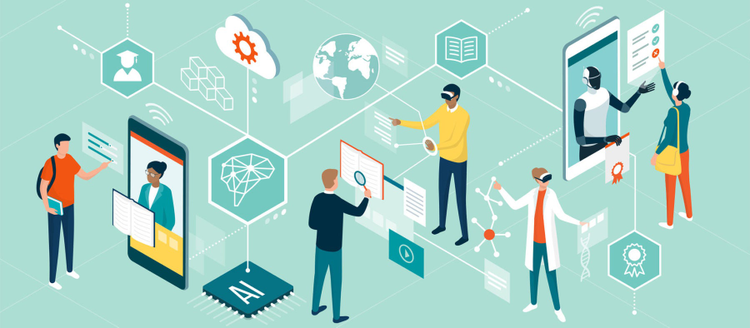
    In today’s fast-paced digital world, creating an outstanding customer experience isn’t just a nice-to-have—it’s a game-changer. We’ve all been there: scrolling through endless products or services, feeling lost in a sea of options. That’s where the magic of hyper-personalization and AI-powered customer journeys comes in.

    What’s Hyper-Personalization All About? 

    Think of hyper-personalization as your digital concierge. It’s like having a friend who knows your tastes perfectly, always ready with spot-on recommendations. By tapping into AI and machine learning, businesses can craft experiences that feel tailor-made for each person. It’s not just about putting your name in an email anymore—it’s about understanding your unique preferences and needs at every step of your customer journey.

    But let’s dive deeper. Hyper-personalization is about creating a 360-degree view of each customer. It’s about understanding not just what they’ve bought, but why they bought it, when they’re most likely to shop, and even predicting what they might need next. This level of insight allows businesses to create truly meaningful interactions that resonate on a personal level.

    Imagine walking into a store where the staff knows exactly what you’re looking for before you even ask. Now, translate that experience to the digital world. That’s the power of hyper-personalization. It’s about creating digital experiences that are so intuitive and relevant that customers feel truly understood and valued.

    The Secret Sauce: AI and Your Customer Journey

    AI is the wizard behind the curtain, making hyper-personalization possible at scale. Imagine millions of tiny decisions being made in real-time, all to make your experience smoother and more enjoyable. From suggesting your next favourite product to offering help right when you need it, AI is working tirelessly to anticipate your needs.

    Here’s how AI is reshaping the customer journey:

    • Smart recommendations that feel like they’re reading your mind
    • Prices and offers that adjust to match your shopping style
    • Friendly chatbots that are always there to lend a hand
    • Seamless experiences whether you’re shopping online or in-store


    The beauty of AI in the customer journey is its ability to make every interaction feel personal, even when it’s serving millions of people at once. It’s like having a personal shopper who’s always on call, helping you navigate your unique path while staying true to the brand’s story.

    But it’s not just about making sales. AI-powered customer journeys are about building relationships. They’re about understanding the context of each interaction and responding in a way that adds value. For instance, AI can analyze past purchases, browsing history, and even social media activity to predict when a customer might need a refill on their favorite product, or when they might be in the market for a complementary item.

    Moreover, AI can help businesses understand the emotional context of customer interactions. By analyzing sentiment in customer communications, AI can help tailor responses that are not just factually correct, but emotionally appropriate. This level of emotional intelligence in digital interactions can significantly enhance customer satisfaction and loyalty.

    Taking Your First Steps into Hyper-Personalization

    Ready to dive in? Start by getting to know your customers better. Collect those valuable nuggets of information that make each person unique. Then, craft content that speaks directly to them at every stage of their journey with your brand.

    Remember, consistency is key. Whether they’re checking their email, browsing your website, or using your app, make sure the experience feels seamless and tailored just for them. And don’t forget to leverage a robust digital platform that can bring all these personalized touches together seamlessly.

    But where do you begin? Start by auditing your current data collection practices. Are you gathering the right information? Are you using it effectively? Consider implementing a Customer Data Platform (CDP) to unify data from various sources and create comprehensive customer profiles.

    Next, focus on creating dynamic content. This could be anything from personalized product recommendations to customized email content. The key is to use your data to inform these personalization efforts. For instance, if you know a customer frequently browses running shoes, don’t just show them any athletic wear—prioritize running-related products and content

    Don’t forget about the power of testing and learning. A/B testing different personalization strategies can help you refine your approach and understand what resonates best with your audience. Remember, personalization is an ongoing process, not a one-time implementation.


    The Perks of Getting Personal

    Companies that embrace hyper-personalization are seeing some pretty sweet results:

    • Smoother sales journeys that keep customers engaged
    • More new faces becoming loyal fans
    • Staying one step ahead of what customers want
    • Better conversion rates and happier, long-term customers


    But the benefits go beyond just numbers. Hyper-personalization can lead to increased customer trust and brand affinity. When customers feel understood and valued, they’re more likely to develop a strong emotional connection with your brand. This emotional connection is what turns one-time buyers into lifelong customers and brand advocates.

    Moreover, hyper-personalization can lead to operational efficiencies. By understanding customer needs and behaviours, businesses can optimize their inventory, streamline their marketing efforts, and even inform product development. It’s about working smarter, not harder.

    As we continue to navigate this ever-changing digital landscape, adopting an AI-powered approach to hyper-personalization isn’t just smart—it’s essential. By harnessing the power of data and AI to create truly unique experiences, businesses can forge meaningful connections, fuel growth, and stay ahead of the pack.

    So, are you ready to take your customer relationships to the next level with hyper-personalization and AI-enhanced customer journeys? Your customers are waiting for experiences that feel like they were made just for them. It’s time to deliver.

    Remember, the journey to hyper-personalization is a marathon, not a sprint. It requires ongoing commitment, continuous learning, and a willingness to evolve with your customers’ needs. But for businesses willing to make the investment, the rewards can be transformative. Not just in terms of revenue and customer satisfaction, but in creating a brand that truly resonates in today’s digital-first world.

  • Blockchain’s Potential in Revolutionizing Digital Marketing

    Blockchain’s Potential in Revolutionizing Digital Marketing

    Blockchain has shaken up industries like finance and logistics by adding a new layer of transparency and security. Now, it’s turning its attention to digital advertising and marketing, offering a chance to rethink how brands track their campaigns and engage with consumers

    So, what exactly is blockchain? At its core, blockchain is a decentralized, distributed ledger that records transactions across many computers in such a way that the registered transactions cannot be altered retroactively. This technology ensures transparency and security, making it an ideal fit for industries where trust and data integrity are paramount.

    For digital marketers, blockchain offers a way to create verifiable and tamper-proof records of customer interactions, ad impressions, and transactions. It’s like knowing exactly where your ad spend is going, without worrying about intermediaries taking hidden cuts or bots inflating your numbers.


    Challenges in Traditional Digital Marketing

    Digital marketing in its current form isn’t without its problems. In India, where digital ad spending is projected to reach ₹62,045 crores by 2025, up from ₹40,685 crores in 2023, these challenges are magnified.

    • Ad Fraud: Click fraud and bot traffic are rampant. Marketers often find themselves paying for impressions and clicks that never come from real users.
    • Data Privacy: With increasing regulations like the GDPR and India’s Data Protection Bill, consumers are more concerned about how their data is being used. Third-party data tracking is becoming harder to justify.
    • Transparency Issues: Advertisers often struggle with a lack of transparency in how their budgets are spent and whether their ads are actually reaching the intended audience.


    Blockchain’s Impact on Digital Marketing

    This is where blockchain comes in, offering solutions to some of the most pressing issues in the industry.

    • Enhanced Security and Transparency: Blockchain’s decentralized nature ensures that every transaction or interaction is recorded on a public ledger. For Indian marketers, this means you can track where your ad spends are going and verify that real people are viewing your ads, not bots.
    • Data Privacy and Ownership: Blockchain gives control back to the consumers. Instead of relying on third-party data, marketers can obtain consented, first-party data directly from users. This is particularly relevant in India, where data privacy concerns are on the rise. Blockchain ensures that users own their data and decide who gets access to it.
    • Lead Quality: One of the standout benefits of blockchain in digital marketing is the potential for improved lead quality. When consumers willingly provide their data, it indicates a genuine interest in the brand, which translates into higher-quality leads. Unlike traditional methods, where data is collected from various sources and often lacks consistency, blockchain ensures that marketers go directly to the source – the consumer.

    Take, for example, the Brave browser, which has introduced a new model for ad targeting. Brave blocks conventional ads but offers its users the option to view ads in exchange for rewards through its Basic Attention Tokens (BAT). This setup allows users to control the amount of personal data they share, while advertisers select audiences based on demographic data without ever accessing the users’ identities.

    • Smart Contracts: These are self-executing contracts with the terms of the agreement directly written into code. In digital marketing, smart contracts can automate and secure processes like ad buying and payments. Imagine running a campaign where payments to publishers are automatically triggered based on verified performance metrics – no middlemen, no delays.
    • Tokenization and Loyalty Programs: Blockchain enables the creation of digital tokens that can be used for rewards or loyalty programs. Close home in India where loyalty programs are popular across various sectors, this could lead to more innovative and engaging ways to reward customers. Brands can create blockchain-based tokens that customers can earn and redeem, adding a layer of transparency and trust to these programs.


    Challenges and Considerations

    While the future of blockchain in digital marketing is promising, it’s essential to recognize the challenges that come with it. Despite its potential, blockchain technology is still relatively new and complex, creating adoption barriers for many marketers who may find it difficult to understand and implement. Additionally, scalability issues are a concern; while blockchain ensures security, it can be slower compared to traditional databases, which may hinder large-scale digital marketing operations, especially during high-traffic periods. Cost implications further complicate adoption, as implementing blockchain solutions can be expensive. For many brands, especially small and medium-sized businesses, these costs may not be feasible without a clear return on investment. Therefore, while blockchain offers significant advantages, marketers need to carefully weigh these considerations as they explore this innovative technology


    Conclusion

    As decentralized ad networks rise, we can expect a significant reduction in the need for intermediaries, leading to more transparent and efficient marketing ecosystems. Over the next decade, blockchain is likely to become a key player in AI-driven marketing strategies, enabling more precise targeting, better data security, and streamlined operations.

    Beyond transparency and security, blockchain could reshape how marketers interact with consumers, offering new ways to build trust and deliver personalized experiences. While there are still challenges, such as scalability and adoption barriers, the integration of blockchain with emerging technologies positions it as a powerful tool for the future of digital marketing.

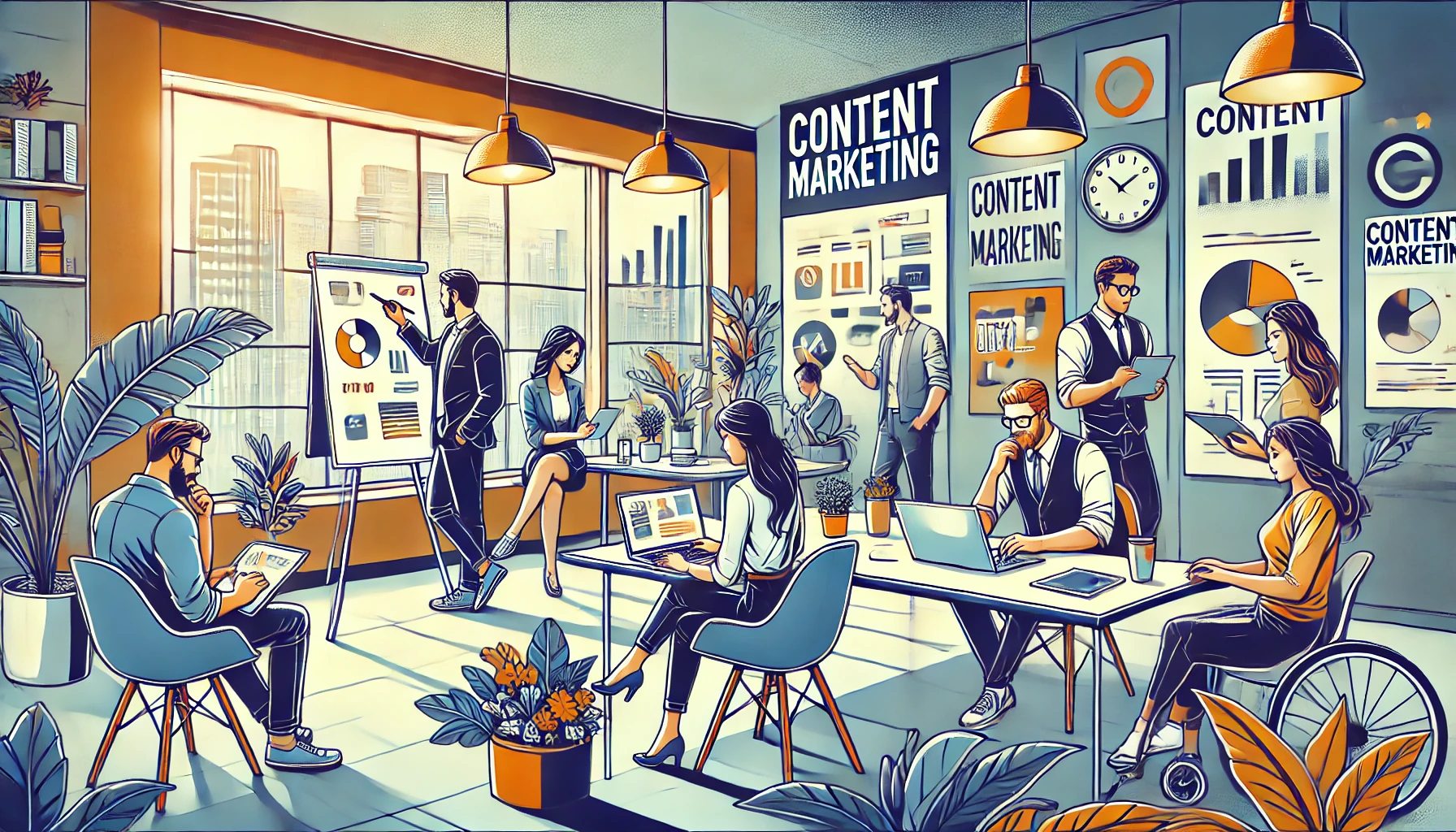
  • The Role of Content Marketing in building brand awareness in India

    The Role of Content Marketing in building brand awareness in India

    Did you know the average Indian spends nearly 10 hours a day consuming digital content? With such immense engagement, businesses and individuals have a tremendous opportunity to promote their ideas, products, and services. Content marketing has become a crucial element in modern strategies, enabling brands to foster connections, build loyalty, and achieve measurable results. In India’s highly competitive market, brand awareness is vital—it shapes how consumers perceive and engage with businesses. Through content marketing, brands can position themselves as leaders, gaining trust and building lasting relationships with their audiences.

    To harness the power of content marketing, it’s essential to explore its various forms. Digital content marketing includes blogs, articles, and web pages designed to drive traffic and enhance search engine rankings. By providing valuable insights, these formats attract organic visitors and build credibility. Social media content marketing utilizes platforms like Instagram, LinkedIn, and Facebook to share eye-catching visuals, videos, and live streams, engaging a wide audience. Blogging enables brands to dive deep into specific topics, establishing themselves as thought leaders. Meanwhile, podcasting creates a conversational platform for discussing industry trends, offering a more personal connection to audiences who prefer audio content. Lastly, video marketing taps into the growing consumer preference for dynamic visual content, making it an effective way to showcase products, services, or brand stories.

    All these forms come together to create a robust strategy that connects businesses with their target audience across multiple platforms, boosting visibility and influence.

    At its core, content marketing is about educating audiences. By consistently sharing valuable, informative, and engaging content, brands position themselves as industry authorities. Informed consumers are more likely to form emotional connections with a brand, leading to long-term loyalty. Additionally, high-quality content fosters emotional ties that go beyond simple transactions. When content resonates with an audience—whether it’s inspiring, educational, or entertaining—it creates positive associations with the brand, turning occasional viewers into loyal advocates.

    Content marketing not only builds emotional connections but also enhances search engine optimization (SEO). By producing keyword-rich content that addresses the audience’s needs, brands can improve their ranking on search engine results pages (SERPs), driving organic traffic and enhancing brand visibility. Social media platforms further amplify this reach, allowing businesses to share compelling posts, videos, and live streams that encourage interaction and boost engagement.

    A particularly powerful tool within content marketing is user-generated content (UGC). When customers share their experiences with a brand, it serves as authentic social proof, fostering trust and credibility. UGC not only increases visibility but also strengthens a brand’s reputation by showcasing real-life interactions and satisfied customers.

    The benefits of content marketing are extensive. Trust and credibility are among its most significant advantages. According to the Content Marketing Institute, 96% of consumers find brand content trustworthy if it’s valuable, and 70% prefer learning about companies through articles rather than ads. Content marketing also significantly boosts visibility. Research shows it generates three times more leads than traditional marketing while costing 62% less. Engaging social media content can receive up to 94% more views and 150% more shares compared to purely promotional posts.

    SEO-driven content is crucial for generating organic traffic. Websites with blogs generate 55% more traffic than those without, and BrightEdge research indicates that organic search contributes to 53% of all website traffic. High-quality, SEO-optimized content is vital for increasing a brand’s visibility and search engine rankings. Moreover, LinkedIn reports that 74% of B2B buyers and 62% of B2C consumers find thought leadership content useful when making decisions, highlighting another benefit of content marketing: audience engagement.

    However, content marketing in India comes with its own set of challenges. While 64% of Indian marketers recognize its importance, 85% struggle to align content with business objectives. Budget constraints, especially for small and medium enterprises (SMEs), pose a challenge as they often lack the resources to compete with larger brands that invest heavily in content creation. Moreover, India faces a shortage of skilled content marketers, particularly in SEO and storytelling, limiting the effectiveness of content marketing campaigns. The oversaturation of digital content also requires brands to use more creative and innovative approaches to stand out.

    Despite these challenges, the future of content marketing in India looks promising. Video content is set to dominate, with businesses increasingly leveraging short-form videos, live streams, and interactive formats to capture consumer attention. Personalization will also take center stage as artificial intelligence (AI) and machine learning allow brands to deliver customized content experiences based on individual consumer behavior, deepening connections with their audiences.

    AI-driven strategies are transforming the way businesses create and distribute content. By using AI to analyze data and optimize content for peak performance, brands can remain ahead of the curve in today’s fast-paced digital environment.

    As India embraces digital transformation, content marketing will play an even more critical role in building brand awareness. Through video marketing, personalization, and AI-powered strategies, businesses can forge stronger connections with their audiences and foster greater loyalty. In today’s competitive landscape, content marketing is not just a choice—it’s an essential strategy for brands looking to thrive and stand out.

  • The Impact of Digital Transformation on Indian Businesses

    The Impact of Digital Transformation on Indian Businesses

    Imagine a world where over 830 million people are connected, and businesses are just a click away from tapping into a $1 trillion digital economy. This isn’t the future; this is India today. As one of the largest digitally connected democracies in the world, India is witnessing tremendous a digital revolution. With the rapid pace of technological advancements, the question isn’t whether businesses should transform, but how quickly they can adapt to stay relevant. Digital transformation isn’t just an option anymore—it’s the key to survival and success in a market that’s evolving faster than ever. From streamlining operations to creating unforgettable customer experiences, digital transformation is redefining what it means to do business in India.

    At the core of this transformation are six key pillars, each playing a critical role in driving success in the digital era. Let’s explore how these pillars—media, creative strategies, data, technology, UI/UX, and customer and employee experience—are fundamentally transforming businesses across industries.

    Media

    Media is reshaping how companies interact with customers. E-commerce giants like Amazon and Flipkart have mastered the art of using digital media to reach vast audiences, even in rural areas. By leveraging digital advertising, social media, and content marketing, businesses can target specific markets more effectively. Indian businesses are increasingly using these platforms to build brand awareness, connect with consumers, and ultimately drive growth.

    Creative Strategies

    A key part of digital transformation is creativity. Personalized marketing strategies are no longer optional—they’re essential. Think of how e-commerce platforms recommend products based on your previous purchases, or how healthcare systems offer remote consultations through telemedicine. These innovations are shaping how businesses engage with customers, offering them more personalized and relevant experiences.

    Data

    Data is now one of the most valuable assets for businesses. Take India’s Unified Payments Interface (UPI), which processes millions of transactions daily, generating valuable insights into consumer behaviour. Companies can analyse this data to make informed decisions, improving customer experiences and driving innovation. The more businesses leverage data, the better they can optimize their operations and respond to changing market needs.

    Technology and Innovation

    India’s digital transformation is being powered by cutting-edge technologies such as artificial intelligence (AI), the Internet of Things (IoT), and big data analytics. These tools are revolutionizing industries—from finance to healthcare—by automating tasks, personalizing services, and driving smarter decision-making. The Digital India initiative is further promoting the adoption of these technologies, making them more accessible to businesses of all sizes.

    UI/UX

    As mobile internet access expands across India, the need for intuitive and user-friendly digital platforms is greater than ever. Whether it’s a banking app or an e-commerce site, businesses must prioritize user experience (UI/UX) to engage and retain customers. A seamless digital experience fosters customer loyalty, which in turn fuels long-term business growth.

    CX and EX

    The true impact of digital transformation can be measured with an adept focus on Customer Experience (CX) and Employee Experience (EX). Providing a smooth, rewarding interaction with customers is crucial for maintaining satisfaction, from the initial browsing to post-purchase. Meanwhile, enhancing EX through digital tools enables employees to perform better and feel more engaged in their roles. A great example is the National Digital Health Mission, which simplifies processes for both patients and medical professionals, improving their experiences.

    Challenges in driving Digital Transformation of Businesses in India

    However, achieving digital transformation doesn’t come without hurdles. Many businesses, particularly smaller ones, still rely on outdated systems that struggle to keep up with modern digital solutions. Investing in new technologies, infrastructure, and training can be costly, making it hard for some businesses, especially small and medium-sized enterprises (SMEs), to keep pace. Data privacy is another concern, with the growing amount of consumer data being collected. Businesses must ensure they comply with regulations and protect this data from potential threats like breaches and ransomware. Additionally, a shortage of skilled professionals in fields like data analytics and cybersecurity presents another challenge that businesses must address to fully embrace the digital future.

    Despite these challenges, the future of digital transformation in India is promising. The integration of AI, IoT, and big data will continue to reshape industries and create new opportunities. As internet infrastructure improves and 5G technology rolls out, digital services will become even more widespread, opening doors to new markets and ecosystems.

    In essence, the impact of digital transformation is evident in the success witnessed by several Indian businesses, which is enabling them to increase efficiency, engage customers, and create new value propositions. While there are obstacles to overcome, the potential rewards are immense. With continued innovation, collaboration, and a commitment to learning, businesses in India are well on their way to harnessing the full power of the digital era.

  • Personalization in Digital Marketing: Strategies for the Indian Consumer

    Personalization in Digital Marketing: Strategies for the Indian Consumer

    When the digital revolution took India by a storm, it also changed several aspects of the Indian consumer’s behaviour, virtually forcing marketers to adapt and find new ways to reach their target audience. India had over 700 million smartphones users as of January 2023, which will have significantly gone up owing to the rapid digitization and internet democratization in the country. With such a large pool of potential customers who are exposed to hundreds of ads every single day, personalization in digital marketing emerges as a core strategy for businesses willing to stand out.

    The Indian market, with its unique cultural diversity and rapidly evolving consumer behaviour, presents both opportunities and challenges for brands aiming to connect with their audience on a personal level. In such a scenario, personalisation becomes even more crucial if brands want to break out of the clutter and reach their target groups. However, before delving into personalization strategies for the modern marketers, it is vital to understand the nuances of the Indian consumer’s behaviour to that truly resonate, ensuring that the brand’s offerings align with cultural preferences, regional differences, and individual aspirations.


    Understanding the Indian Consumer Behaviour

    Indian consumers embody a blend of traditional values and modern aspirations, making personalization essential in digital marketing. With a diverse population in terms of culture, language, religion, economic status, and technological adoption, generic marketing approaches often fall short. Indian consumers expect brands to understand their unique needs and preferences, influenced by cultural diversity, digital savviness, and value-consciousness. They are particularly price-sensitive, seeking quality at reasonable prices, so personalized strategies must balance luxury with affordability and ensure customers feel individually valued.


    The Importance of Personalization in Digital Marketing

    Personalization in digital marketing goes beyond simply addressing consumers by name; it’s about crafting a seamless, relevant experience across all interactions. For Indian consumers, personalization is key to building trust, loyalty, and deeper brand connections. By understanding the customer journey and tailoring messages to individual preferences, brands can enhance engagement, boost conversion rates, and foster long-term customer retention. This approach not only increases brand loyalty but also creates meaningful and lasting relationships with consumers.


    Strategies for Personalization in the Indian Market

    To effectively implement personalization in digital marketing for the Indian consumer, brands must consider the following strategies:

    1. Leverage Data and Analytics: Data is the backbone of personalization. Brands need to invest in data analytics to gather insights into consumer behaviour, preferences, and purchasing patterns. In India, where consumer behaviour varies widely across regions, data-driven personalization can help brands tailor their messages to specific segments.
    2. Segment Your Audience: Given the diversity of the Indian market, audience segmentation is crucial. By dividing consumers into distinct groups based on demographics, psychographics, and behaviour, brands can create targeted marketing campaigns that resonate with each segment.
    3. Localized Content and Messaging: Language and cultural nuances play a significant role in the Indian consumer’s decision-making process. Brands should consider localizing their content and messaging to cater to regional preferences. This could involve creating multilingual content, incorporating local festivals into marketing campaigns, and understanding the cultural context of each region.
    4. Personalized Product Recommendations: Using AI and machine learning algorithms, brands can offer personalized product recommendations based on a consumer’s browsing history, purchase history, and preferences. This not only enhances the shopping experience but also increases the likelihood of conversion.
    5. Dynamic and Adaptive Content: Personalization in digital marketing should extend beyond static content. Brands can use dynamic content that adapts to the user’s behaviour in real-time. For example, a consumer who frequently searches for eco-friendly products could be shown content related to sustainability and green living.
    6. Personalized Email Campaigns: Email marketing remains a powerful tool in digital marketing. Personalized email campaigns that address the recipient’s specific needs and preferences can lead to higher open and click-through rates. For Indian consumers, personalized emails could include regional offers, festival greetings, and product recommendations based on previous purchases.
    7. Social Media Personalization: With India being one of the largest markets for social media, brands must leverage these platforms to deliver personalized content. By using social listening tools, brands can understand consumer sentiments and trends, allowing them to tailor their social media strategies accordingly.
    8. Omnichannel Personalization: The Indian consumer’s journey is often spread across multiple channels, both online and offline. Omnichannel personalization ensures that consumers receive a consistent and personalized experience, whether they are browsing a website, using a mobile app, or visiting a physical store.
    9. Personalized Pricing: Indian consumers are highly price-sensitive, with even small price differences impacting brand perception and loyalty. To maximize customer retention, brands should leverage AI tools to offer personalized pricing, recognizing first-time and repeat buyers. This approach helps brands stay ahead, enhancing ROI by catering to individual customer needs.


    Challenges in Personalization for the Indian Market

    While personalization offers numerous benefits, implementing it in the Indian market comes with its own set of challenges:

    • Data Privacy Concerns: With the increasing awareness of data privacy, consumers are becoming cautious about sharing personal information. Brands must ensure transparency and build trust by protecting consumer data.
    • Technological Barriers: Despite the widespread use of smartphones, there is still a significant digital divide in India. Brands must find ways to personalize experiences for both tech-savvy consumers and those with limited access to technology.
    • Balancing Personalization with Scale: The sheer size of the Indian market can make personalization at scale challenging. Brands need to invest in scalable personalization strategies that can cater to millions of consumers without losing the personal touch.


    Personalization in digital marketing is no longer a luxury but a necessity in the Indian market. By understanding the unique behaviours and preferences of Indian consumers, brands can craft personalized experiences that resonate with their audience, build long-lasting relationships, and drive business growth. As digital transformation continues to evolve, the ability to personalize at scale will be a key differentiator for brands looking to succeed in India’s competitive market.

  • 3 Retail and E-Commerce Trends Brands and Marketers Should Watch Out for in 2023

    The COVID-19 pandemic proved a boon for many online retailers and e-commerce brands. With physical movements restricted, online channels became the go-to shopping destination.

    According to a report by consulting firm Bain, the e-retail market in India witnessed 25% growth in FY2021.

    But while the last couple of years might have been stellar for the digital ecosystem, what about the future? How should brands and marketers prepare themselves for 2023? Here are 3 retail and e-commerce trends expected to shape the online landscape in 2023-

    1. The Hybrid Future

    While many brick-and-mortar stores moved online in the last few years to capitalize on digital growth, offline shopping is here to stay. The experience of being able to touch and feel the product before purchasing gives brick-and-mortar stores an edge over their digital counterparts.

    In fact, the growing popularity of omnichannel purchases has encouraged many online-only brands in India, like Lenskart, Pepperfry, and many more, to aggressively expand their offline store network. As a result, the future of retail in India is hybrid, where online and offline shopping will complement each other to offer an immersive shopping experience to consumers.

    What Should You Do?

    Brands should combine online and offline retail efforts by building a seamless experience across channels to gain a competitive edge and reach a wider audience.

    2. Building a Sustainable Future

    Sustainability and environmental consciousness have been a raging trend among global consumers, especially since the pandemic. And Indian consumers are undergoing a behavioural shift too.

    According to a Bain report, 48% of Indian consumers started buying sustainable products in the last two years. Moreover, 94% of consumers are willing to pay more for more sustainable products. The change in shopping behaviour is also evident in the growing number of sustainable D2C brands across categories like health & wellness, fashion, nutraceutical, and FMCG.

    What Should You Do?

    Brands should assess their current operations to look for opportunities to make sustainable changes. Environmental organizations and experts could help you in the process.

    3. The Rise of Social Commerce

    Social media has become an inevitable part of our everyday lives. And the COVID-19 pandemic contributed to their popularity further. According to a Hammerkopf Consumer Survey, Indians spent more than 4 hours every day on social media a week after the lockdown, registering an 87% weekly rise in social media consumption.

    E-retail brands can leverage the growing popularity of social platforms through social commerce. All the leading platforms, like Facebook, Instagram, Pinterest, Twitter, TikTok, and more, now offer social commerce facilities, allowing brands to sell their products/services directly on their platforms.

    What Should You Do?

    Social commerce success relies on trust and value. Encourage followers to engage with your posts, write reviews, and share your shoppable content to drive trust and engagement.

    Succeeding with your Retail Strategy in 2023

    The digital landscape is constantly changing, and the pandemic only accelerated the rate at which changes occur. Like every other year, 2023 is also expected to present a myriad of challenges but far more opportunities for brands to refine their operations and reach more customers.

    With 2023 just a couple of months away, online retailers and e-commerce platforms should start working on their marketing strategies for 2023 to prepare for the challenges and capitalize on the opportunities. Brands can also consider consulting with a leading digital marketing agency to get the most from their digital marketing spends and achieve business objectives.

    Social Media Post

    Is it too early to talk about 2023 trends? We think not. The earlier, the better. Read this post for 3 retail and e-commerce trends that could shape the industry in 2023.

  • GA 4 Set to be the Only Source of Truth – LS Digital

    GA 4 Set to be the Only Source of Truth – LS Digital

    The Nightmare of User Privacy:

    It’s no secret that we’re in the midst of a massive transition, and user privacy is at the forefront of everyone’s thoughts. Here is where Google Analytics 4 has made a significant technology leap that will alter the way businesses analyze their traffic.

    Foregoing are the grounds for this leap:

    • Regulatory changes throughout the world have increased the bar for user privacy.
    • Core technology like as cookies, on which measurement systems have relied on for years, are being changed by browsers and other platforms. Furthermore, end-users are expecting greater transparency and control over how their data is utilized.
    • At the same time, the amount of data created by a plethora of business touchpoints and platforms with which consumers engage continues to grow at an exponential rate.

    So, Obviously, A privacy centric ecosystem would be a ‘positive ‘for humanity, but for us digital marketers it is a ‘nightmare’
    Now while this Nightmare of User Privacy haunts us marketers, Google had already foreseen it and introduced ‘GA 4’ Two and half years ago considering User privacy as the center of vision.
    ————————————————————————————————————————

    About the new normal:

    GA 4 is designed to be a platform for everyone- including businesses with either a presence on web or app, for those having exposure on both app plus web, as well as for brands with a hybrid existence.

    The new Google Analytics 4 brings with it a vast spectrum of enriched capabilities:

    • Stiches your app and web data and provides a unified view.
    • Has Machine Learning at the core to give you predictions about target audience’s likelihood to purchase, churn, potential revenue, so that you are better prepared on what’s coming your way.
    • Enables enhanced marketing capabilities with its integration possibility with the entire ad ecosystem of Google (GMP suite).
    • Gives opportunity to query your data and have precision in reporting with the Big Query warehouse.
    • Can be integrated with Salesforce as well as Marketing Cloud
    • Designed to be future-proof even as stringent regulatory changes around the world and the rumored cookie-less culture try to create a gap in your data.
      ————————————————————————————————————————

    About the Migration:

    It is a known fact that GA 4 will take over the analytics’ reins on July 1, 2023, replacing Universal Analytics as a mandatory update for everyone. But wait! Here’s something you need to know: Your Universal Analytics data won’t be migrated to GA 4!
    Therefore, with the clock ticking to defined end date, it is justified to conclude that GA 4 is no longer an option, it’s a compulsion!
    And, like any other Machine Learning model the reporting accuracy of GA4 also depends on the data collected in it, thus the sooner you start the better the data repository.

    What does Google have to say about this?

    “We encourage you to make the switch to Google Analytics 4 as soon as possible to build the necessary historical data before Universal Analytics stops processing new hits.”

    Well, then what does Google recommend?

    “We strongly encourage you to make the switch to Google Analytics 4 as soon as possible. Doing so will allow you to build the necessary historical data and usage in the new experience, preparing you for continuity once Universal Analytics is no longer available.” Also, “Google Analytics 4 is fully equipped to support your measurement needs today and into the future. To take advantage of Google Analytics 4’s measurement continuity, automated insights about the customer journey, and easy activation to improve marketing ROI, finish setting up your GA 4 property today.”

  • 5 Strategies for D2C Brands to Amp Up Their Marketing Efforts This Festive Season

    5 Strategies for D2C Brands to Amp Up Their Marketing Efforts This Festive Season

    The COVID-19 pandemic took its toll on every direct-to-consumer (D2C) brand, barring a few dealing with essential commodities. But now that things are returning to normal, revenge shopping in all its glory is expected to help brands reach or surpass pre-pandemic sales this festive season.

    In fact, according to a report by RedSeer, online sales are going to experience a 28% YoY growth to reach a little less than $12 billion during the festive month in 2022.

    But for D2C brands, the struggle to build a customer base is beyond the online and offline dichotomy. Attracting and retaining customers requires consistent efforts, especially during the festive season when brands are aggressive with their growth and revival plans.

    Here are 5 marketing strategies for D2C brands to help them with business growth during the festive season-

    1. Advertise Online but Be Choosy with Your Digital Strategy

    The pandemic has significantly impacted consumer behaviour and made them more reliant on online channels. And if your D2C brand is not present where the consumers are, you’re bound to lose the competition.

    But while digital marketing is crucial, brands should be picky with their digital strategies. For most brands, being overly dependent on a single channel like SEO, PPC, SMM, email marketing, or content marketing seldom works.

    A better approach would be a customized digital plan combining all of these elements according to the brand’s marketing goals and target audience.

    2. Building a Festive Experience

    The festive season allows businesses to build an emotional connection with their customers. The stronger the emotional connection, the higher the brand engagement and chances of conversions. Moreover, connecting with the customers on an emotional level can also improve brand loyalty and mouth-to-mouth publicity.

    Launching creative festival-based marketing campaigns, building dedicated website pages, sending personalized push notifications, and offering curated gift bundles are some ways to build a lasting festive experience.

    3. Have Your Own Website

    According to KPMG, the D2C market in India was worth $44.6 billion in 2021. By 2025, it is expected to surpass $100 billion. But while the D2C industry has vast potential in India, you need the right tools to be part of the expected growth. And one of the most important of them is having your own e-commerce website.

    While e-commerce platforms like Amazon are great for the initial days of your D2C start-up journey, building your brand website is crucial. It enables you to gain customer insights, build credibility, acquire loyal customers, and grow your brand. Moreover, it allows you to personalize the customer experience and unleash the true potential of online marketing.

    Build a user-friendly e-commerce website with detailed product descriptions, 24×7 customer support, fast shipping, and multiple payment options.

    4. Launch New Products

    The festive season can also be an excellent time to launch new products. As discretionary spending rises around the holiday season, especially for categories like home decor, appliances, and tech gadgets, D2C brands can tap into the holiday rush with their new products.

    Launching creative ad campaigns, leveraging social media, and hiring digital influencers are some of the ways to ensure your new product receives adequate visibility and attention.

    5. Discounts Galore

    For customers, the festive season also means exclusive deals and discounts. Amazon’s annual Great Indian Festival and Flipkart’s Big Billion Sale, followed by the Big Diwali Sale, have only furthered the popularisation of festive offers in India. Moreover, many customers wait for the festive season to purchase the products they need at discounted prices.

    D2C brands can also consider offering discounts on their websites during the festive season to boost engagement, attract new customers, increase sales, and offer a satisfying shopping experience.

    Customers Are Ready, but Are You?

    The festive season in 2022 can be a turning point for many D2C brands in India. After two gloomy years, shoppers will be celebrating this festive season with great enthusiasm, and D2C brands can take advantage of this opportunity by taking the necessary steps, like the ones discussed above.

    Brands can also partner with reputed digital marketing agencies to create customized online strategies according to their needs and business objectives. Even if you already have an in-house marketing team, the expertise of professional digital marketers can be a smart way to refine your online strategies further and achieve improved results.

  • What is KOL Marketing and Tips to Start Using It in 2022 | Logicserve Digital

    What is KOL Marketing and Tips to Start Using It in 2022 | Logicserve Digital

    What is KOL Marketing and 3 Tips to Start Using It in 2022

    A rising number of consumers are gravitating towards KOLs (Key Opinion Leaders) to navigate the chaos created by digital advertising.

    With a study suggesting that nearly two-thirds of the Indian population follows at least one influencer on social platforms, KOL marketing is one strategy no brand could afford to miss in 2022.

    So, what is KOL marketing? How can you start using it in 2022? Take a look-

    What is KOL Marketing?

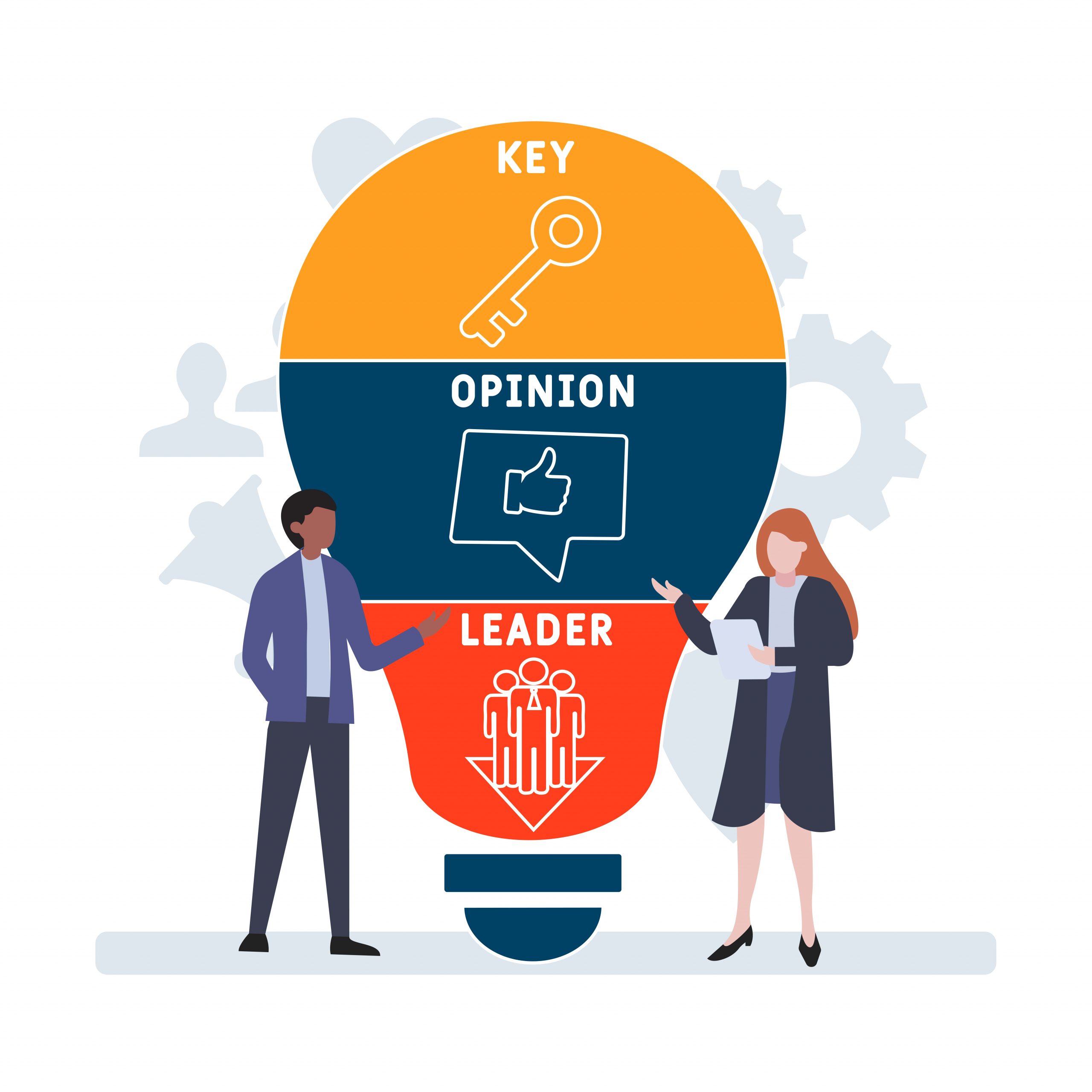
    KOL marketing involves using Key Opinion Leaders (KOLs) or people with expert knowledge on a specific field or subject for online or offline promotions. The subject they are experts in is in some way connected to the brand or its products or services.

    Unlike influencers who are native to social platforms and spend most of their time creating online content, KOLs generally have parallel full-time professions. For example, they could be entrepreneurs, stylists, journalists, writers, or even politicians.

    In other words, they have proven expertise in the subject or field they’re involved in, not just the online but also in the offline world.

    KOL Marketing Example

    If a brand uses a cricketer to promote the latest car, it is a form of celebrity marketing and not KOL marketing.

    While the cricketer has extensive knowledge about playing cricket, he is not an automobile expert.

    But let’s say if a cricket coaching institute hires the cricketer for promotions, it can be considered KOL marketing as he is advertising something that he is an expert in.

     3 Tips to Make KOL Marketing Work for Your Brand in 2022

    Want to add KOLs to your marketing mix? Here are three tactics to help you begin-

    1. Identify Campaign Goals

    Setting the right goal, be it generating traffic, sales, or brand awareness, at the beginning of the campaign will make it easier for you to measure performance. The goal will function as a benchmark for devising the strategy.

    Here are some tips for choosing the right goals for your KOL campaign-

    • Set clear and measurable goals
    • Ensure that the goals are practical and achievable
    • Choose long-term goals for maximum results
    • The goals should also align with the overall brand’s mission and vision
    1. Strategize

    Once the goal is finalized, it is time to work on the strategy. Key personnel from market research, sales, product development, administration, and finance should be involved in the discussions.

    Follow these tips to create an effective KOL marketing strategy-

    • Define ideal KOL characters and target audience
    • Finalize the product, service, feature, or event you want the KOL to promote
    • Establish how many KOLs you’ll need for the campaign
    • Know where you’ll find your target KOL
    1. Select the Right KOL

    You now have your campaign objectives and strategy in place. The only thing left is finding the right KOL who suits your brand. Choose wisely, as your selection will directly influence the campaign’s success.

    Here’s are some questions that can help you choose the right KOL-

    • What is their field of expertise or profession?
    • What platform they’re most active on?
    • How many followers do they have on social platforms?
    • How is their bonding with the followers?
    • Are they interested in your brand?
    • Are they already working with other brands?

    Once a KOL is chosen, you can work on various collaborations such as online ads, product videos, brand mentions, guest blogging, and live interviews to effectively influence their followers.

    Using KOL Marketing to Achieve Digital Goals in 2022

    Now that you know what KOL marketing is and how to start using it, put your knowledge to work and start reaping valuable benefits.

    Alternatively, if you’re struggling to find the right KOL or KOL marketing strategy, you can look for a reputed digital marketing agency that can help.

    After thoroughly understanding your expectations and requirements, expert marketers can create a custom KOL strategy that aligns with your business objectives.