LS Staging

Tag: twitter updates

  • Twitter is Working on a New ‘Replies’ Layout to Boost Engagement

    Twitter is Working on a New ‘Replies’ Layout to Boost Engagement

    Twitter is reportedly testing a new way of interacting on the microblogging platform. It is experimenting with ways to update how interactions work on the site in order to make it feel more conversational and generate a better level of engagement.

    How do the updates look like?

    Speaking on the occasion, Twitter’s team presented some snapshots of how the new updates work in ‘reply threading’ and a status indicator to depict whether you are available currently to chat on Twitter.

    The snapshots display the replies to be indented and shaded differently. It also shows a green dot coming up on the profile picture in case the users are online and available to converse. To summarise here are the changes –

    • Indented responses to individual tweets. This makes it easy to understand which tweet carries which reply when the user is scrolling on the screen
    • Shading to denote the different forms of tweets. So your own tweet would be indicated in blue and the original tweeter’s post would be marked in a purple shade
    • Green dots to denote an online user who is available to chat. This would be conducive to the engagement inside the platform and generate a better degree of interaction.

    What is the audience response?

    There has been a mixed response to the new ‘replies’ layout and colour. Some have praised the new update and mentioned that it does indeed help in improving the engagement factor on the plain vanilla layout they are accustomed to seeing on Twitter. Others have not been very encouraging in their critique of these updates. They feel that the design looks cluttered and doesn’t leave much white space on the limited real estate presented by the mobile screen.

    Twitter had invited suggestions from users to improve engagement and spark off interactions. Here are some updates that users want to see –

    • Enable better usage of the screen space by keeping the original post pinned on the top
    • Keep replies collapsible to make optimum use of the screen space
    • Determining the number of replies that can be shown in a chain to a post
    • Add timestamps just like what is seen on other platforms like Whatsapp
    • Add an indicator that the tweeter is ‘typing…’ Similar to what is seen on Whatsapp. This will help the tweeter to confirm that the person is online and is in the process of responding

    How will the update boost engagement?

    The changes are made intending to propel engagement further and keep the users hooked to the site for longer. So if the user knows that there is a response coming in from an online user, the tendency would be to wait a while to see the response and engage ahead.

    While the changes look promising, it is imperative that it consults with users first and get their buy-in to ensure that the outcomes are as per what they expected.

    Let us know your views on these changes made to the Twitter interface.

  • Facebook removes the option for auto posting tweets and retweets from Twitter

    Facebook removes the option for auto posting tweets and retweets from Twitter

    Popular social media platform Facebook announced that it had deprecated its Publish action feature from its API. This feature earlier made it possible for apps to publish posts on Facebook as the logged-in user.

    In an estimate provided by Facebook itself, approximately 60,000 apps logged onto the social media site would be impacted. And this includes Twitter too.

    Twitter on learning that it would no longer be able to allow users to auto-post across Facebook, happened to take it rather gracefully. They tweeted out their take on this as: “We’ve learned that Tweets and Retweets will no longer automatically post to connected Facebook accounts due to a recent Facebook update. Don’t worry; you have other ways to share a tweet.”

    Impact on end users

    It means that a Twitter user, who had connected their Twitter account to a Facebook account that automatically shared their tweets and retweets on Facebook, will no longer be able to do that. This feature had come in handy to Twitter accounts that have a considerable amount of influence and would like to reach out to the audiences across Facebook also. All they had to do is fill in the tweet and schedule it for a certain day and time, and let Facebook do the rest. The next thing this Twitter account holder would see is their tweet has been shared on Facebook by itself, without having to do it manually.

    This helped users to share tweets on Facebook at times when they thought or knew they would not be available. Content flow across Facebook could not be disrupted, courtesy this feature. The digital marketing industry found this feature to be a boon and was driving endless social media campaigns on the shoulders of this feature.

    Clarification from Facebook

    Confirmation came in on behalf of Facebook regarding the scrapping of this cross-platform auto-posting feature through their spokesperson who said that this update was a result of Facebook’s decision to deprecate the Publish actions permissions feature. They also acknowledge the impact it had on Twitter. According to Facebook, anyone who wants to have a Twitter account automatically posting out content on Facebook should not be disheartened just yet. There are Facebook share dialogs for web, iOS, and Android.

    This update, however, did come in with a fair share of forewarning. Facebook first announced that it was deprecating Publish actions permissions in April this year. The social media company, with a recent controversial history, said that a few categories of developers with apps that had longer product life cycles were given extensions so that they had more time to update their software.

    With the recent update in effect, which disallows users to share tweets and push out content in any other form on Facebook automatically, apps have not only lost the ability to share content freely, but a lot of apps have lost access to its API platform. This all is Facebook’s additional effort to clean up the site’s landscape, and to safeguard user’s data and privacy controls.

  • Weekend Digital Media Round-up: Google’s Reach Planner for YouTube, Facebook’s “Issue Ads”, New social networking platform ‘Hello’ and more..

    Weekend Digital Media Round-up: Google’s Reach Planner for YouTube, Facebook’s “Issue Ads”, New social networking platform ‘Hello’ and more..

    1. Google is training AI to separate voices in a crowd which could find use in video chat apps as well as hearing aids

    Google’s computer vision has seen major improvements over the years, a fact that is highlighted by the artificial intelligence chops of its Photos apps, which recognises faces, objects and more. Now, Google wants to do the same with voice as well. More specifically, audio-visual speech separation. [Source: Firstpost]

    1. Facebook’s “Issue Ads” And Verification Requirements For Page Managers

    Looking back at the mess Cambridge Analytica Scandal left behind for the social media giant, Facebook seems to have taken evasive privacy protection measures. They are now rolling out a range of privacy tools that aim to safeguard data. [Source: Logicserve Digital]

    1. LinkedIn Adds New GIF Access Within its On-Platform Messaging

    LinkedIn seems determined to tap into the trends of other social networks, even if those trends don’t immediately seem like a perfect fit for the professional platform. The company’s latest trending option is the addition of an immediately accessible GIF library within their message flow, powered by Tenor, via a new partnership. [Source: Social Media Today]

    1. Google launches Reach Planner for YouTube & video ad forecasting in AdWords

    Google has launched Reach Planner, a new planning tool for video campaigns. Currently in beta, Reach Planner in AdWords is designed to help media planners and advertisers forecast the reach and frequency of video campaigns on YouTube and the video partners on the Google Display Network. [Source: Search Engine Land]

    1. Snapchat looks to offer new e-commerce options for Discover Publishers

    Snapchat is testing an e-commerce option on some of its Discover publisher channels. The feature will allow users to swipe on a product and then purchase it within the Snap Store, an in-app shopping section Snapchat launched in February. [Source: Marketing Land]

    1. Google Announces “More Results” Button for Mobile – A Win for Publishers

    In a bit of good news for web publishers, Google announced via Twitter a change to Google Mobile Search that will show more links to web pages faster. If the default search results do not satisfy the user they will have the option to click a “More results” button that will show links to more pages. [Source: Search Engine Journal]

    1. Chrome tests showing themed search suggestions based on Google search history

    Google is testing a new feature in its Chrome browser to show themed search suggestions based on your past searches directly on the Chrome start screen. [Source: Search Engine Land]

    1. Orkut founder brings a new interest-based social networking platform called ‘Hello’ to India

    A new social networking platform ‘hello’, set up by the founder of the once-popular Orkut, has announced its entry into the Indian market amid the controversy surrounding user data breach at Facebook. [Source: Firstpost]

    1. Twitter Endorses ‘Honest Ads Act’, Along with Facebook

    While Mark Zuckerberg was facing questions from politicians, Twitter announced that it’s endorsing the Honest Ads Act, which is seen as a major stepping stone for the bill. [Source: Social Media Today]

    1. Google is about to launch a Gmail web redesign

    Google sent an email to G Suite customers to tell them that the company has been working on a brand new version of Gmail for the web. In addition to a fresh design, the company also listed some of the new features. [Source: TechCrunch]

  • Weekend Digital Media Round-up: Maccabees update, Google chrome app, Facebook’s face recognition and more..

    Weekend Digital Media Round-up: Maccabees update, Google chrome app, Facebook’s face recognition and more..


    1. Maccabees Update: Google Confirms New Core Algorithm Changes

    “We released several minor improvements during this timeframe, part of our regular and routine efforts to improve relevancy,” a Google spokesperson told Search Engine Journal. [Source: Search Engine Journal]

    1. Adobe Campaign to roll out enhanced email functionality

    Adobe wants to make it easier for marketers to reach its email targets with creative messaging. That’s why it’s adding drag-and-drop functionality to Adobe Campaign in early 2018. [Source: MARTECH TODAY]

    1. Google Chrome app removed from Microsoft Store: Here’s why

    Recently, Google had published a Chrome app on the Windows Store that simply opened up the download page to the actual browser. While Google never intended to bring the actual browser to the Microsoft Store, Microsoft responded yesterday by removing the actual link to the Google app. [Source: TIMES NOW]

    1. Digital publishers cry foul as Google exerts more control over an industry it already dominates

    Google’s latest move to block “intrusive” ads starting February 15 next year has made digital publishers wary and left them wondering how such a unilateral, top-down approach could impact their bottom line. [Source: The Times of India]

    1. Lotame’s prep for GDPR highlights big changes in data management

    As data management platform (DMP) Lotame gears up for compliance with the upcoming General Data Protection Regulation (GDPR), some of the far-reaching changes are coming into focus. [Source: MARTECH TODAY]

    1. Having collected enough unique ‘Indian’ data, Flipkart gears up with ‘AI for India’

    Flipkart is all geared up to double down its work with artificial intelligence technologies, across operations ranging from conversational search, visual similarity, better last-mile delivery, fraud detection, personalisation to warehousing. [Source: The Economic Times]

    1. Facebook is clamping down on posts that shamelessly beg for your engagement

    The social network giant said on 18th December that it will penalize Page owners and people who resort to “engagement bait,” which means posts that encourage users to like, comment or tag people in the comments section in order to gain wider visibility of their content. [Source: TechCrunch]

    1. Facebook’s facial recognition now finds photos you’re untagged in

    Facebook launched a new facial recognition feature called Photo Review that will alert you when your face shows up in newly posted photos so you can tag yourself, leave it be, ask the uploader to take the photo down, or report it to Facebook. [Source: TechCrunch]

    1. Brands Can Now Sponsor Snapchat Filters With Animated Messages

    Earlier this month, Snapchat began rolling out animated filters (like a twinkling wreath of holiday lights) that move across the screen when users take a photo or video. Now, the platform is opening up animated filters for advertisers that enable users to snap and share moving graphics. [Source: ADWEEK]

    1. The new consumer behaviors that defined Google’s Year in Search

    This year, people turned to Google Search to discover the secrets of slime and locate solar eclipse glasses, as well as to learn how to help hurricane victims, and support the city of Las Vegas in the wake of October’s mass shooting. [Source: think with Google]

    Expert Opinion:

      Q. 5 things that worked for Zoho in our journey of Entrepreneurship

    The journey of entrepreneurship has been long and struggle some, but we were able to hold firmly, withstand the storms, only to emerge successfully as a company. Here are five things that worked for us in our journey of success.


    1.  Dogfooding

    Before you launch your products, use them internally. Once you use them for your day-to-day work, you will be able to sort out the issues and anomalies long before the products hit the market. For instance, we cannot use Outlook internally while providing Zoho mail to the outside world. We will have to use the same internally too, so that issues, if any, can be addressed well in advance, instead of waiting for the clients to raise them.

    1. Look beyond academic credentials

    When you look forward to building a start-up, or scale-up the existing one, you will realize that most of the academic environments prepare talent for regimented evaluations in sanitized environments. However, startups are dynamic and look for something beyond the paper degree. They look for learning potential, risk-taking capacity, resilience, and the ability to try again, after being defeated, with an undefeated strength.

    1. Focus on Products that work well together

    The product you build is going to enter a highly cohesive world of interconnectivity. Every customer of yours also uses other products and services, some of which might be of your competitors. Thinking about the customer first, and giving him the highest priority by ensuring that your products and services play in-sync with others will give your company a positive boost. This can be done by sharing data, unifying interfaces, complementing features, and co-ordinating workflows.

    1. Empower your customers

    It is not possible to asses every need of the customer as each customer is unique.  5% of your product features may be not satisfactory for all. So, instead of just enabling them to do X or Y, build your product, or architect your service in such a way that they are empowered to build on top of it.  Give them a room for customization by allowing to add their own coded modules, loose-coupling what you provide with what others provide, or separating design from data so that it can be consumed and repurposed in interesting new ways.

    1. Think long-term about running the marathon, rather than a quick sprint

    There are companies that look for fast money and quick exit, and then there are those that outlive the individuals. Leave a lasting legacy by building value and wealth over the decades. When you keep your needs to a minimum and think long-term about the company’s future, you may not be able to enjoy the quick windfalls and sudden spurts of prosperity. However, you will be able to sustain the storm of struggles and thrive long enough to finally emerge successfully as a brand.

    Patience and perseverance are the two keys when sticking to these points, but they have worked for us effectively and contributed to Zoho’s success.

    Rajendran Dandapani, Business Solutions Evangelist at Zoho Corporation

  • Weekend Digital Media Round-up: Google Analytics’s new features, Twitter ‘Threads’, Snapchat’s Lens Studio app and more..

    Weekend Digital Media Round-up: Google Analytics’s new features, Twitter ‘Threads’, Snapchat’s Lens Studio app and more..


    1. Google adds price tracking features to flight search, hotel search and Google Trips

    Google announced it has added features to help you plan your trips, flights and hotel stays for your vacations or business trips. Google is showing new “tips” under the flight search results to show you ways to save money for that trip. [Source: Search Engine Land]

    1. Google Analytics releasing 4 new functions to offer more user-centric insights

    Google Analytics has announced four new features to better measure the customer journey. The new features are user-focused reporting, user explorer, audience reporting and conversion probability. [Source: Marketing Land]

    1. AdWords advertisers can use phone numbers & addresses for Google Customer Match targeting

    Google has added more ways for businesses to target their known customers with AdWords campaigns. Google attempts to match phone number and mailing address information with user-provided data in Google accounts. [Source: Search Engine Land]

    1. Facebook ads can now link to brands’ WhatsApp accounts

    Facebook is piecing together the business side of WhatsApp in much the same way it did with Messenger. Now, Facebook is giving businesses a way to kick-start conversations with customers on WhatsApp. [Source: Marketing Land]

    1. Facebook announces 6-second pre-roll ad test, new mid-roll ad restrictions

    Facebook will begin testing a six-second pre-roll ads hub next year, the company announced on Thursday, confirming earlier reports. Facebook is also introducing new restrictions on when and which publishers and creators can insert mid-roll ads in their videos and changing how its algorithm decides which videos to prioritize in people’s News Feeds. [Source: Marketing Land]

    1. Twitter’s Launching its Native Tweetstorm Feature, Called ‘Threads’

    Twitter has now officially announced the launch of ‘Threads’, a new, native option which will automatically link your tweets, enabling users to string together longer messages. [Source: Social Media Today]

    1. Instagram Announces New Option for Users to Follow Specific Hashtags

    Instagram has announced that users will now be able to follow specific hashtags on the platform, in addition to profiles, with posts using those tags appearing in your main feed. The new option expands the potential of Instagram as a discovery engine. [Source: Social Media Today]

    1. Snapchat’s Lens Studio app opens augmented-reality format to everyone, including self-serve advertisers

    Snapchat’s Lenses have largely been responsible for popularizing augmented reality. On Thursday, Snapchat launched Lens Studio, a desktop app for Mac and Windows that anyone can use to create augmented-reality Lenses that can be applied to photos and videos shared on Snapchat. [Source: Marketing Land]

    1. Advertisers plan to increase mobile ad spend in 2018 despite ad fraud concerns [Study]

    A new survey suggests that marketers will continue to increase ad spend on mobile despite the expectation that a fairly significant percentage of that spend will go to fraud. The results showed that 69 percent of respondents believe that at least 20 percent of their in-app mobile ad spend is subject to fraud. [Source: MARTECH TODAY]

    1. Facebook Releases Annual Trends Report, Showing Topics with Biggest Increases in Mention Volume

    Facebook has published an annual trends report, utilizing the same methodology as their monthly updates, and shining a light on the key subjects which have seen significant increases in mention volume over the past 12 months. The report includes findings across seven categories – Beauty & Fashion, Commerce, Culture, Entertainment, Food & Drink, Mind & Body, and Technology – with detailed insights for each. [Source: Social Media Today]

    Expert Opinion:

    1. Drive genuine engagements through emotions

    Consumers’ emotions have a strong impact on brand loyalty. Creating strong emotional connections with consumers can help brands in gaining loyal set of users for a long time. Also, humans have a natural tendency of wanting to be loyal and they can survive only in loyal groups, as suggested by learnings in humanities and biology. Brands can leverage on this very human need and get some loyal set of audiences for their brand.

    In spite of knowing the importance of creating emotional engagements with the customers, we often see a disconnect between the executives and consumers on how well organisations make emotional connections with their audiences. As per Capgemini Digital Transformation Institute survey, 80% of executives say their brand understands the emotional needs of their users. However, only 15% consumers say that the brands put in efforts to emotionally bond with them.

    Various factors foster loyalty amongst the users, with honesty and trust having the greatest influence. Other factors include price competitiveness, promotions, customer service, etc. Brands that work on engaging with the consumers emotionally and create a strong bond are sure to enjoy a plethora of benefits that these set of users provide. Emotionally engaged consumers tend to spend more, promote brands they are loyal to and enjoy giving back to a brand.

    Brands can focus on the below aspects to engage emotionally with their consumers.

    – Respect – to gain consumer respect and trust, brands need to go beyond usual transactions and develop relationships with their users by showing respect to their needs and concerns in a variety of ways like responding to queries in real time, using consumer feedback to improve their future experience with the brand, working on reducing the wait time for addressing their concerns, etc. If you, as a brand, will do what you say will do, it will promote honesty, trust and integrity.

    – Reciprocate – create reciprocal relationships with the customers. Customers enjoy giving as much as receiving. Information shared by them should be used by the marketers. Also, a customer complaint should be acknowledged and responded upon promptly. When your customers complete milestones, thank them and appreciate their loyalty. This will build a two-way relationship with your customers, which they will appreciate, and which will thrive loyalty for a longer period.

    – Recognise – it is important to know your customers well and understand their unique needs. Understanding them and what they care about, what they want, how they behave can help in creating meaningful experiences for them in the future.

    – Reward – brands need to focus on creating experiences that can help them promote long-term relationship with their users. Provide timely rewards to the loyal customers. The rewards can be monetary, special offers and experiences or something that can make their transactions easier. Rewards are a great way to connect with your customers and gain their loyalty.

    Along with devising ways to emotionally connect with the users, it is also essential to measure and optimize the relationship on a timely basis.

    With the rising competition, it becomes crucial for brands to know their customers at a human level. They need to be aware about their behaviour, changing needs and desires. With this in mind, marketers can work on creating meaningful experiences that drive emotional engagement and help brands secure a sustainable and long-term loyalty from their users.

    Advit V Sahdev, Head of Marketing, Infibeam Inc

     

  • Weekend Digital Media Round-up: Google Lens, Twitter’s broadened AMP support, Instagram’s Stories Highlight on profile pages and more..

    Weekend Digital Media Round-up: Google Lens, Twitter’s broadened AMP support, Instagram’s Stories Highlight on profile pages and more..


    1. Google Lens an impressive start for ‘visual search’

    Google Lens has gone live or is about to on Pixel phones in the US, the UK, Australia, Canada, India and Singapore (in English). Currently, Lens can read text (e.g., business cards), identify buildings and landmarks (sometimes), provide information on artwork, books and movies (from a poster) and scan barcodes. It can also identify products (much of the time) and capture and keep (in Google Keep) handwritten notes, though it doesn’t turn them into text. [Source: Search Engine Land]

    1. Facebook Looks to Prompt More Personal Sharing as Conversations Switch to Messaging Apps

    It seems that Facebook’s still looking for ways to address its ‘context collapse’, the decline in personal sharing on the platform which has been in effect over the last few years. [Source: Social Media Today]

    1. Instagram now lets brands feature Stories Highlights on their profile pages

    Instagram is giving brands a new reason to invest in producing higher-quality Stories. Brands and all other Instagram users can now showcase collections of their old Instagram Stories on their profile pages. [Source: Marketing Land]

    1. Twitter broadens its AMP support to include analytics

    Twitter is broadening its support of AMP (accelerated mobile pages) to include article analytics. According to the announcement, when Twitter loads an AMP version of an article, it will now ping the original article URL to record the view, in addition to passing the query arguments from the original article redirect into the AMP run-time. This will allow publishers to receive the data using the amp-analytics component. [Source: Search Engine Land]

    1. Google officially increases length of snippets in search results

    Google has confirmed that it has made a change to the way it displays snippets in search results. Over the past week or so, many have been noticing that the snippets were longer than what’s typically been shown. [Source: Search Engine Land]

    1. Ad spending to grow at 8.4% in 2018 in India: Zenith report

    Advertisement spending in India is expected to grow 8.4% in 2018, led by growth in television ads, Publicis Groupe-run media agency Zenith forecasted. The estimated growth rate for 2018 is about three percentage points lower than the 11.2% forecast for 2017, when ad spending was estimated to touch Rs54,344 crore. [Source: Mint]

    1. Apple launches ‘set it and forget it’ Search Ads Basic for the App Store

    Apple says it will bring more installs with less effort “at a predictable cost.” That’s how the company is pitching its new Search Ads Basic offering. [Source: Search Engine Land]

    1. Pinterest Adds New Facebook Messenger Integrations to Boost Exposure and Usage

    Pinterest is looking to piggyback on the popularity of Facebook Messenger in order to boost growth, adding two new tools which will enable greater Pinterest functionality within Messenger threads. [Source: Social Media Today]

    1. Google testing an answers carousel within the search results snippets

    Google has started testing and potentially rolling out a new feature in search that shows a carousel with a list of answers directly within the search results snippets. It shows the main search result snippet, and below it, it shows a carousel of answers picked from the content on the page the snippet is linking to. [Source: Search Engine Land]

    1. Report: YouTube set to raise ad prices on premium ad inventory

    Even as it has hit several brand safety bumps over the past year, YouTube is poised to raise prices on premium ad inventory in the coming year. [Source: Marketing Land]

    Expert Opinion:

    1. Why investing in Artificial Intelligence for Your Marketing efforts is the way to go

    Artificial Intelligence and Machine Learning are revolutionizing the marketing world. Many brands are already taking advantage of this technology and utilizing it in innovative ways to boost the impact of their marketing activities. According to a survey by The Boston Consulting Group, 85% of executives believe that AI will allow their companies to obtain or sustain a competitive advantage.


    Some of the benefits offered by this unique technology are:

    – Efficiently process and analyse the huge chunk of data available with marketers and gain useful insights for the same that can be used for future marketing plans

    –  Analyse customer profiles and provide insights that can be used to optimize customer value

    – Figure out effective ways to interact and engage with the audience

    – Time saving

    – Improved productivity

    AI is surely helping marketers profoundly by streamlining their processes and functions. Marketers can make the most out of this technology by accessing the right set of data, use the insights considering their business objectives and keep on improving the processes on an on-going basis. AI has the power to transform the overall success of a brand, if used correctly. Brands that adapt to the newer technologies like AI & machine learning, invest in them and use them intelligently are sure to succeed and sustain in the new-age marketing era.

    Pariekshit Maadishetti, Managing Director, Grid Logic Group

  • Weekend Digital Media Round-up: Updated Google Trends, Instagram’s new features, Youtube’s new feature ‘Reels’ and more..

    Weekend Digital Media Round-up: Updated Google Trends, Instagram’s new features, Youtube’s new feature ‘Reels’ and more..


    1. Google Is Updating Google Trends with More Data Filters and Tools

    Google Trends can be a great source of insights to help guide your content strategy and understand which subjects are gaining momentum online. And now, Google is adding some new tricks to the Trends application, providing additional insights based on more specific search behaviors around each topic. [Source: Social Media Today]

    1. Twitter testing a feature that shows how many are ‘talking about’ tweets

    Twitter is experimenting with a new feature that will show how many people are “talking about” individual, popular tweets. The metric shows up under some embedded tweets when they appear elsewhere on the web, and seems to replace both the retweet and replies totals with one, cumulative total. [Source: TechCrunch]

    1. Facebook tests tool to make it easier for businesses to send message blasts on Messenger

    Facebook is internally testing a tool that businesses would be able to use to send message blasts to people who had conversed with their accounts on Messenger.  [Source: Marketing Land]

    1. WhatsApp rolls out new update: You can soon watch YouTube videos within the messaging app

    A new WhatsApp update rolled out for iOS will let users play YouTube videos right within the instant messaging app. The update will also let users navigate to another chat while you are watching the video. [Source: The Economic Times]

    1. Instagram testing native Regram, archive Stories, Share to WhatsApp, more, no iPad support in sight

    Instagram is testing out a wide range of new features including a native Regram button, an archive Stories feature, a share to WhatsApp option, a beta version of its app, and more. [Source: 9to5Mac]

    1. Snapchat Launches Two New Ad Formats

    Snapchat business users are in for a treat with the recent changes made to Snapchat’s self-serve ad platform. With two new ad formats, the objective is to enhance the stickiness of the platform and derive maximum engagement for the users. [Source: Logicserve Digital]

    1. Google launches new Google Finance features in search and drops the portfolio feature

    Google announced it is launching a new Google Finance experience that brings many of the finance features directly into Google Search on desktop and mobile. With this launch, Google has dropped the portfolio, the ability to download your portfolio, and historical tables. [Source: Search Engine Land]

    1. YouTube is testing an Instagram Stories-like feature called Reels

    After Instagram, Facebook and WhatsApp, YouTube is now planning to roll out a Stories-like feature called Reels. The launch of Reels Beta was made on YouTube in its blog post titled as ‘Expanding community on YouTube’. The company says that Reels is a spin on Stories format but designed specifically for Creators. [Source: India Today]

    1. Snapchat’s newest filters can recognize what’s in your photos

    Snapchat is rolling out new filters that can recognize what’s in your photos in order to suggest graphics, like borders or stickers, to accompany your posts. These filters are capable of recognizing images of objects like pets, sports, and food, as well as specific locations, like beaches or concerts. [Source: TechCrunch]

    1. Instagram Rolls Out New Direct Message Tools, Including Remix and Replay Controls

    After announcing their direct message photo remix tools back in August, Instagram has confirmed that the new option is now being rolled out to all users. [Source: Social Media Today]

    Expert Opinion:

    1. Build data- savvy teams for long term success

    In today’s mobile-first world, it is crucial for everyone in an organization to understand analysis and interpretation of marketing data.  Although a lot of marketers do not have enough analyst-related resources to accomplish data-related goals, if we look at most of the leading marketers, they seem to have figured out ways to enable everyone in their teams to be able to use and analyse the huge chunk of available data. Training the team members to be experts in data analysis not only helps strengthen the analysis purview but also helps figure out ways to effectively reach out to the customers at the right time in their journey.

    Here are some ways you can make your team members data-savvy marketers and succeed in your marketing efforts.

    – Knowledge and skills assessment

    Get an understanding of the knowledge and skills of your team members and what they need to learn. Incorporate learning programs, training modules wherever required to speed up their analysis skills.

    – Ensure your data is of great value

    Make sure that the data you share is of high value and is presentable before giving your teams a peek at the same. The data should be simple, organized, understandable and usable. This also helps in setting clear and common standards that the team members need to follow.

    – Provide easy access

    Allow easy access to data without to help the teams understand the reports & recommendations and to provide an idea about how to use the same. This eventually helps in improving the overall performance of the organization.

    – Reward the team members

    It is important to recognize and reward the members who efficiently use data insights for the campaigns. This helps in building enthusiasm amongst the team and also provides you insights about the members who can take on the role of training other members.

    – Provide technology support

    When your team members understand the data analysis game, it is necessary to provide them the required technology that ca help them take relevant actions. This helps profoundly in optimizing user experience. As per a recent survey by Econsultancy and IBM, 33% of elite marketers say having the right technologies for data collection and analysis is most useful in understanding customers.

    For brands that do not have a strong data-driven marketing strategy yet, it is high time to make use of the big data and empower your teams to be pros at data analysis. This is sure to help you reach the audience better and also grow your business in today’s highly competitive environment.

    Vish Bajaj, CEO, ValueFirst

  • Weekend Digital Media Round-up: Google’s #SmallThanks Hub, Facebook’s VR experiences, Twitter’s Bookmarks feature and more..

    Weekend Digital Media Round-up: Google’s #SmallThanks Hub, Facebook’s VR experiences, Twitter’s Bookmarks feature and more..


    1. Google’s new #SmallThanks Hub automatically creates digital & printed marketing assets for SMBs

    In a move to help SMBs — as well as drive up its verified business listings — Google has launched #SmallThanks Hub, an online resource that creates customized digital marketing content and printed materials based on Google reviews. [Source: Search Engine Land]

    1. Facebook debuts web-based VR experiences within standard News Feed

    People can now enter virtual reality through their traditional Facebook News Feeds. The social network has debuted examples of brands that have developed VR apps that people can interact with through Facebook’s standard site and mobile apps. Facebook has labeled these VR-enabled posts as “360 experiences.” [Source: Marketing Land]

    1. Twitter is now testing Bookmarks, its save for later feature

    Twitter is testing a new feature called Bookmarks, which allows users to privately save tweets for later. [Source: The Verge]

    1. Google beefs up mobile shopping results for the holidays, adds more product info & buying guides

    Google is beefing up its mobile shopping experience to prepare for the holidays, now showing buying guides for broad categories like “sewing machine” and “coffee grinder” searches and adding more product-related information for specific product searches. [Source: Search Engine Land]

    1. Forget WhatsApp, Facebook Messenger now has TWO major advantages

    WhatsApp might be the world’s biggest messaging service but it may have just been overshadowed by Facebook Messenger. WhatsApp is getting some major competition from Facebook Messenger as the service reveals new 4K photo sharing and peer-to-peer money transfers. [Source: Daily Express]

    1. Twitter Moments – A Look At The Recent Changes

    Twitter Moments is all set to get a refreshing new look. The company is currently trying to move away from the horizontal listings of curated topics on common themes like Sports, Entertainment, and News. [Source: Logicserve Digital]

    1. Facebook, Google, Bing and Twitter join The Trust Project to help users combat fake news

    Facebook, Google, Bing and Twitter have all agreed to be part of a non-partisan effort called The Trust project which is aimed at enlightening users about the difference between reliable journalism and fake news. [Source: The Drum]

    1. Google AdWords Editor updates to support budget type option for video ads & more

    Google has rolled out version 12.2 of the AdWords Editor. It brings a nice number of new features including Gmail asset-based ads, full support for promotion and video extensions and a new budget-type option for video ads. [Source: Search Engine Land]

    1. Pinterest adds custom QR-like codes for businesses, more shoppable pins

    Pinterest rolled out several new features designed to make it easier for people to find products to purchase through its platform, from QR-like codes for brands to append to product packaging to an influx of shoppable pins to its first mashup of visual and text search. [Source: Marketing Land]

    1. Facebook Is Testing Yet Another Copycat Snapchat Feature

    Facebook has copied so many features from Snapchat now that it’s gone beyond a joke. But hey, here’s another one to add to the list. Facebook Messenger now includes a Snapchat-style “streak” feature. [Source: Fortune]

    Expert Opinion:

    1. Focus on Customer Lifetime Value for long-term success

    In the fast-paced digital space, it has become critical for brands to think beyond short-term gains and instead focus on maximizing the Customer Lifetime Value (CLV).

    Simply put, CLV is the prediction of the net profit attributed to the entire future relationship with a customer. It means, how much money one can actually make from a client not just from ‘a particular transaction’ but from a series of experiences we are able to provide over time. New age marketers are increasingly seen moving from immediate returns on ad spends to long-term, company-wide growth to measure the success of their campaigns. One of the key areas focused on by them is prioritizing CLV.

    While this sounds easy and the focus on this type of an approach is growing, a lot of factors make it challenging to evaluate CLV. Customer journey has been transforming over time; it is split across multiple platforms & devices, and also from online to offline and vice-versa. Brands need to figure out how to tackle the problem areas and design a way to calculate the lifetime value. And like Pareto’s Principle, that specifies an unequal relationship between inputs and outputs, recent customer lifecycle studies suggest that 80% of your results will come from 20% of your efforts.

    Some of the key benefits of CLV are:

    • Improved marketing that focusses on your customer
    • Saves time and money as you do not waste any efforts on the customers less likely to convert
    • Encourages brands to use multiple marketing approaches
    • Helps in better customer profiling and segmentation
    • Boosts brand loyalty

    Focusing on CLV not only helps the brands reach out to their most valuable customers but also to build better relationships with them. Various tools are available these days that can analyze the insights from the data available and deliver customized messages and experiences to the users. This also helps marketers in designing effective communication strategies for new and existing customers. Also, consumers are now preferring experiences from brands, so brand loyalty is not the only way to retain consumers. Customers that relate to a brand basis the experience they offer are more likely to help you continue climbing up the ladder.

    Brands should focus on understanding their audience and the best approach to communicate with them. It is essential to reach out to the right set of consumers that can provide the most value. Brands that drive CLV for the right audience are sure to achieve long-term success in today’s dynamic environment.

    Here is a “Fast Four” – Practical strategies to help improve your CLV:

    • Focus on building a long-term relationship – remember it’s not just about that one click, transaction or view
    • Brand Loyalty will remain important – however, the service experience will play a key role in retaining the client
    • Look for opportunities to up-sell and cross-sell – it’s far easier to get an existing customer to buy more than a new acquisition
    • Use multiple touch points to deliver superior customer service – the client is not just there for you to reach when he comes to you. There are more than enough opportunities to engage with him in his own backyard

    Balaji Vaidyanathan, Deputy Head – Marketing, Franklin Templeton Investments

  • Twitter Moments – A Look At The Recent Changes

    Twitter Moments – A Look At The Recent Changes

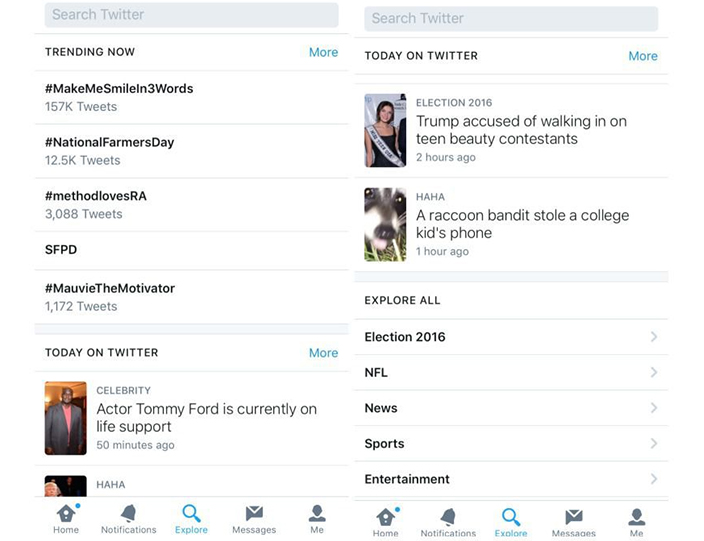
    Twitter Moments is all set to get a refreshing new look. The company is currently trying to move away from the horizontal listings of curated topics on common themes like Sports, Entertainment, and News. Ever since its release in October 2015, the section has been portrayed as a mainstay of the popular social network. This has also been a key reason why many non-users have wanted to sign up to the platform.

    However, over the years, the tab has done little to explain its prime positioning in Twitter’s scheme of things. In a recent move to bolster its declining popularity, Twitter is looking to experiment with the way it is being displayed on the screen. While its current avatar shows Moments listing all the trending stories in a vertical order, the company is seeking to change this.


    What has changed now?

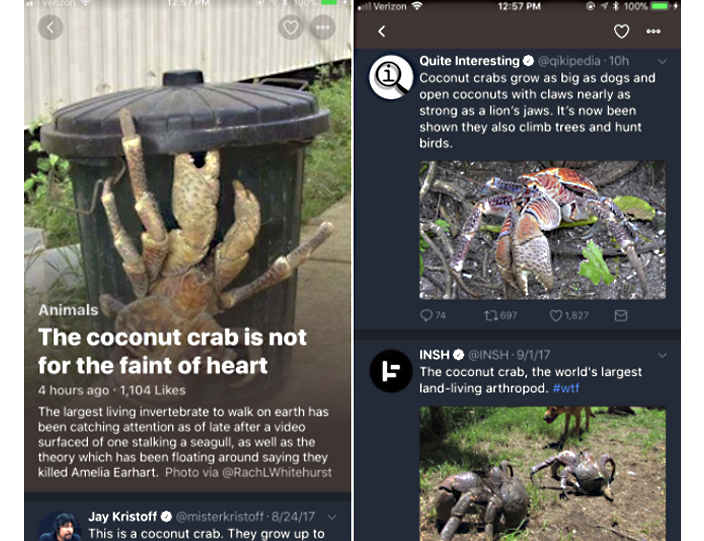
    Twitter is now working on a horizontal presentation format and discard its current vertical presentation and add a touch of freshness to the module. So, while the present horizontal form covers the entire screen with an enlarged image that takes up the background of the app, the vertical positioning will be slightly different. It will be in the form of a regular tweet that users can scroll vertically to move from one post to another.

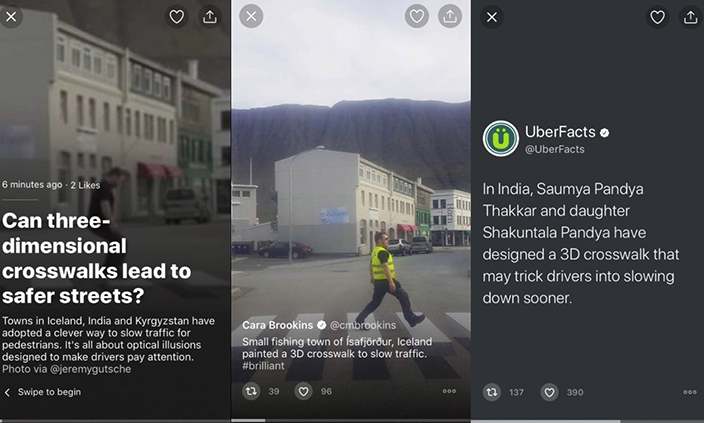
    The changes are applicable to both Android and iOS. For iOS, the first tweet is still in the form of an enlarged picture (as we currently see) and the next set changes in the form of regular tweets. On the Android, the presentation is with a slight tweak. Here, you will see only one tweet at a time. While the company has not clarified the need for different presentation formats for the two dominant mobile OS, the look is still refreshing enough and worth a look.


    Why the need for this change?

    As mentioned, the Moments module had lost some of its popularity over the years, and the brains behind Twitter feel that its current look has something to do with this decline in popularity. Hence it is experimenting with the new look. They also think that this type of presentation will be in sync with the overall Twitter experience. While the presentation format looks different, the way content is curated (around a specific point of interest of a single theme) is still the same.

    The change might be significant as it may seek to enhance the overall user experience. For Twitter users, this will be more in line with their regular content consumption habit on the usual Twitter feed. This move comes some months after it sought to have a replacement solution to Moments in the form of ‘Explore’ tab that too did the same thing as Moments – i.e. highlight the trending videos and posts around particular topics.


    Will anything change?

    Moments was launched to counter Snapchat’s vertical presentation format. Over time, however, Twitter figured out that Twitter users do not expect the same behaviour that they experience on Snapchat. With this move, it seeks to augment the overall user experience that is unique to the Twitter platform. How well it is embraced by the users, is a matter yet to be seen after its beta launch.

  • Weekend Digital Media Round-up: Google’s new knowledge panel, Twitter’s 280-character limit, PayPal’s official launch in India and more..

    Weekend Digital Media Round-up: Google’s new knowledge panel, Twitter’s 280-character limit, PayPal’s official launch in India and more..


    1. Google adds new knowledge panel to provide information about news publishers

    Google has announced a new knowledge graph card for news publishers in which searchers can learn more about a specific news publication directly in the search results. [Source: Search Engine Land]

    1. Twitter officially enables 280-character limit for all accounts, including brands

    Less than two months after testing extending tweets’ maximum length to 280 characters, Twitter is enabling the new length for all users. The new maximum will apply to tweets in all languages except Chinese, Japanese and Korean, in which space is less of an issue. [Source: Marketing Land]

    1. Facebook’s Adding a New Option to Help Advertisers Maximize their Ad Budgets

    Facebook’s providing a new way for advertisers to better optimize their ad spend by automatically allocating more of their ad budget to their highest performing ads. Called ‘Campaign Budget Optimization’, the new option is aimed at smaller businesses who need to more closely monitor their ad spend, but are also looking to run multiple ad sets. [Source: Social Media Today]

    1. PayPal formally launches India operations

    Under its services, PayPal India will offer global Indians a single account for their domestic and cross-border transactions. [Source: MoneyControl]

    1. Facebook Messenger can now power chat on brand sites

    Messenger is rolling out a chat plugin for companies to use Facebook’s messaging service to power the chat features on their own sites. Called Customer Chat, the tool is currently in testing with a limited number of companies, but businesses can apply to be added to the waitlist. [Source: MARTECH TODAY]

    1. Salesforce announces data integrations with Google Analytics 360

    To help customers gain more insights into their marketing campaigns’ impact on the customer journey, Salesforce and Google have announced an arrangement to integrate CRM data with digital analytics and ad campaign data. [Source: Marketing Land]

    1. Google adds wait times to local results in search and maps

    Wait times for some local listings, such as restaurants, are Google’s latest addition to its local search results, appearing when people view those listings in web search. Eventually, this information will appear on Google Maps, as well. [Source: Search Engine Land]

    1. Instagram opens sponsor-tagging tool to more creators, adds monitoring system

    In June, Instagram began testing a tool for creators to label when an organic post or Story has been paid for by a brand, similar to the one its parent company, Facebook, debuted in April 2016. Now the photo-and-video app is making the branded-content tool available to more creators, in particular those that receive high levels of engagement on their posts and account for a lot of the branded content on Instagram. [Source: Marketing Land]

    1. Twitter opens up $99 a month subscription ad program to more accounts

    Over the summer, Twitter began testing a subscription-based ad-buying program through which brands could opt to pay Twitter $99 a month and have the company promote their accounts and tweets for them. Now the company is opening up the program to all accounts in the US and United Kingdom, including businesses and individuals. [Source: Marketing Land]

    1. Instagram Now Lets You Post Any Content to Stories, Even if it’s Older than 24 Hours

    Instagram has rolled out a new change for Instagram Stories which enables users to upload any photo or video content from their camera roll for their Story, even if that content is older than the previous 24 hour limit. [Source: Social Media Today]

    Expert Opinion:

    1. Marketing Attribution is the need of the hour for new-age marketers

    There has been a rise in the usage of marketing attribution lately suggesting an increase in the recognition of this technology as a helpful tool for brands to grow their businesses. The State of Marketing Attribution 2017 Report by Econsultancy suggests that the proportion of companies that carry out attribution on all or most of their marketing activities has significantly increased from 31% in 2016 to 39% this year.

    In spite of this positive boost in the usage of the technology and growing awareness about this useful tool, a lot of marketers are still hesitant or lack the required confidence for using attribution technology for their marketing activities. Also, a lot of businesses find it difficult to apply the findings of the insights received through attribution tools to enhance their marketing activities.

    There are multiple types of attribution models that can be used by businesses to gain better returns from their activities. However, most companies still use simplistic attribution models with last-click and first-click being the most popular ones. This limits the efficiency and effectiveness that this technology can offer for the growth of business.

    Brands that wish to really make an impact and boost the success of their companies need to buckle up and take a holistic and nuanced approach to attribution, understand the contribution & impact of every touch-point and plan the future activities considering every minute detail to achieve enhanced results.

    Some of the ways to better utilize the attribution technology for your business include:

    – Use a good mix of automated softwares as well as the good old spreadsheets, etc to achieve the required flexibility

    – Understand the online customer journey well and work on the relevant problem areas to provide a seamless experience to the users

    – Keep yourself well aware about any developments and updates and incorporate them at every step applicable to keep your processes/ activities updated

    – Create a culture of measurement and accuracy across the organization so that every individual works towards doing the best and improving the activities on an on-going basis

    Attribution is an impressive tool that can profoundly help your business grow and sustain. A lot of marketers are already focusing on this technology and have adapted to various attribution techniques. In the age where things change every moment and the customers are shifting towards online channels, attribution can act as a gateway to understand the efficiency of your marketing activities and plan the future activities in order to reach out to the correct audiences and eventually gain positive results. If you are still not using this technology, it is high time to start incorporating attribution models in your marketing plans to move up in the advertising space.

    Gautam Shelar, Business Head, MoneyControl