LS Staging

Tag: targeted traffic

  • Is There Any Difference Between SEM and SEO?

    Yes, of course there is a difference between the two techniques. People often get confused by search engine optimisation (SEO) and search engine marketing (SEM) as, these terms are frequently used interchangeably. In this article, you will find out how each method is different?

    SEM is a form of Internet marketing technique that is employed to promote web sites by increasing their visibility in search engine result pages. On the other hand, SEO is the first step in SEM that allows for broad reaching site promotion. SEM not only includes SEO strategies, but also various other methods to increase the web site’s targeted traffic and exposure. Some other SEM methods consist of: paid inclusion, paid advertising, and pay-per-click.

    SEM refers mainly to the text advertisements that are published at the top or on the right hand side of the search engine results pages. These ad links are purchased mainly from the major search engines like Google and Yahoo.

    SEM also includes any banner ads or ad placement advertising at authority related sites. With SEM, you can have full control over your budget, keywords, and web sites you wish to target.

    As above mentioned SEO is the foremost step in SEM and is aimed to increase a site’s organic and natural ranking in the search engine results pages. Furthermore, SEO involves On-page optimisation and Off-page optimisation.

    On-page optimisation elements are: keyword density, keywords in the content, title tag optimisation, keywords in hyperlinks and URL, meta tags, sitemap, and link structure. And Off-page optimisation elements include: back links, link exchanges, traffic, keywords in the anchor text, and much more.

    Therefore, SEO focuses on increasing the volume as well as quality of the traffic to your web site from the search engines. As the Internet marketing method, SEO considers how the search engines work and what people look for.

    Optimising your web site would involve editing its content and HTML coding to improve its relevance to definite keywords and to remove barriers to the indexing activities of the search engines.

    Thus, both the techniques-SEM and SEO are important to help you promote your web site through better visibility in the search engine results pages.
  • Choose SEM to Get Instant Qualified Traffic to Your Web Site

    SEM (search engine marketing) is a powerful online customer acquisition medium. It is a form of Internet marketing and essentially promotes web sites by increasing their exposure in search engine result pages. In other words, SEM is all about researching, submitting, and placing a site within the search engines to attain maximum visibility of the web site.

    SEM comprises of various methods, such as search engine optimisation (SEO), paid listings, contextual advertising, and other search engine related services that increase the site’s visibility as well as attract more traffic to it.

    Therefore, the main functions of SEM include:

    1. Search engine optimisation: As abovementioned, SEO is one of the methods of SEM that seeks to improve the position of a web site within the search community.

    2. Submission of directory and link development: A professional SEM campaign starts by submitting to all major directory services and the topic or industry specific directories across the web. This is one of the best ways to enhance the site’s credibility.

    3. Pay-per-placement campaigns: For a successful pay-per-placement SEM campaign, the SEM manager should do thorough keyword research, write and test the content, form and test landing pages, plus measure and monitor the results.

    4. Paid inclusion programs: This SEM technique is one of the fastest ways to achieve the top ranks in the major search engines, but a paid inclusion program is somewhat different from a pay-per-placement method.

    Thus, SEM is a set of methods related to marketing to increase the visibility of a website. Once learned, this technique can provide an effective way of driving highly targeted traffic to the web site.

  • Choose the Right Keywords and Bring Targeted Traffic to Your Web Site

    Keywords are the words and phrases that web surfers use in search engines when they search for web sites that sell certain products or services, or relate to particular topics.

    Right selection of the keywords can help build your business and optimise your web site so that it turns up close to the top of the search engine results pages. Thus, it involves making a list of keywords that can drive Targeted traffic to your site and are commonly searched for.

    Here are some techniques that will help you to determine what keywords and phrases you should select, if possible before building your site.

    1. You must make a list of keywords or search words and phrases that your prospective customers might use when they look for your product or service. Make sure that you include similar words as well as common misspellings.

    2. When selecting keywords, try not to limit yourself to single words. Remember that the majority of people search using multiple words that consist of two or more words so as to get more targeted results.

    3. Search these keywords in order to find your competitors on the major search engines. Also, review the competitors’ web sites for the keywords they are using.

    4. If you have site with web analytics software then check the keywords that surfers make use of to view your web site.

    5. You may visit Wordtracker web site. This site will help you select the appropriate keywords and key phrases. Wordtracker brings together a database of words and phrases that are usually searched by the people.

    6. You can also use Yahoo’s search term suggestion tool or Google’s key word suggestion tool to determine a list of keywords to use on your web site.

    Once you have the list of keywords, you need to priorities them. Check which are the most important ones? Make sure that you use these keywords in the web page content, file names, internal hyperlinks, and the like.

  • How effective is Affiliate Marketing?

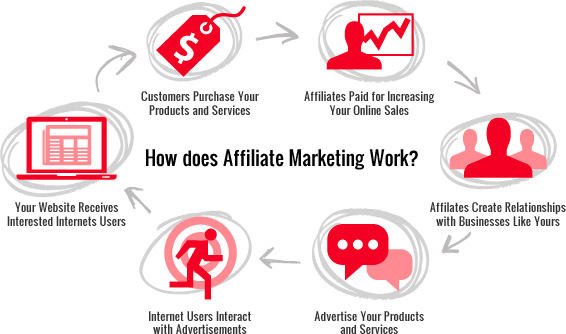
    How effective is Affiliate Marketing?


    Undoubtedly, effective implementation of Affiliate marketing can make you earn lots of money. There are numerous benefits for your company when operating an affiliate program that consist of driving Targeted traffic to your site, increased sales, plus increased brand awareness.

    To take advantage of affiliate marketing, you must understand what all goes into it?

    Affiliate marketing is an Online marketing practice in which a business treats and motivates one or more affiliates for online customers brought about by the affiliate’s marketing efforts. In other words, affiliate marketing is a great method for making profits all the way through revenue sharing associations involving online merchants and content web sites.

    This online marketing technique drives products and services out to the customer across the World Wide Web. This creates more opportunities for the merchants to generate sales, for the affiliates to make income from their web sites, and for consumers to easily locate the products and services they want to buy online.

    Moreover, merchants go for affiliate marketing because in the majority cases it uses a “pay for performance” method. In this method the merchant does not incur any marketing expenses unless results are accrued. A number of businesses, such as Amazon.com owe much of their success to this online marketing method.

    What’s more, affiliate marketing method offers an efficient and scalable market network. An affiliate program enables you to collect some assessable data on each affiliate or the affiliate program all together. This will help you to estimate the performance of the affiliate program.

    Thus, it would be apt to say that affiliate marketing is a cost-efficient as well as measurable method of delivering long-term results.