LS Staging

Tag: Social Media Optimisation

  • Weekend Digital Media Round-up: Google’s AMP Project updates, Instagram’s New Polls feature in Stories, LinkedIn’s Talent Insights and more..

    Weekend Digital Media Round-up: Google’s AMP Project updates, Instagram’s New Polls feature in Stories, LinkedIn’s Talent Insights and more..


    1. Google releases a variety of Accelerated Mobile Pages Project (AMP) updates: scrolling animations, video analytics, fluid ad support

    Google announced several Accelerated Mobile Pages Project (AMP), technical updates. These included scrolling animations, an improved responsive-navigation sidebar, support for video analytics, fluid ad support and other features to improve ad targeting. [Source: Search Engine Land]

    1. LinkedIn Adds New ‘Talent Insights’ to Help Employers Improve Hiring and Recruitment Efforts

    While Facebook’s also trying to muscle in on LinkedIn’s turf by introducing job listings on Pages, LinkedIn’s data gives them a big advantage. The latest development on this front is LinkedIn’s new ‘Talent Insights’. [Source: Social Media Today]

    1. Mobile ads will make up 62% of digital ad spends in India by 2021: Report

    Although television still remains the biggest advertising platform in India, growing demand for smartphones, cheap 4G handsets and falling data prices are expected to increase mobile ad spending significantly, according to marketing research firm eMarketer. [Source: Mint]

    1. Google test surfaces user data in DoubleClick for Publishers as part of new Insights Engine Project

    Google is laying the groundwork for turning the love-hate relationship many publishers have with the company into a love-love relationship. Among the recent announcements by the company was the launch of a new effort to share user data with publishers and introduce more machine learning into Google’s publisher products. [Source: Marketing Land]

    1. Instagram’s Adding New Shopify Tags to Enable In-Stream Purchases

    It’s been a while since we’ve heard anything more on Instagram’s shopping tags, their coming eCommerce addition which would enable businesses to add information and price tags to products featured in their posts. [Source: Social Media Today]

    1. Google: First Click Free is over, being replaced by Flexible Sampling

    Most online news publications are not able to support themselves with advertising these days. For this reason, among others, Google is yielding to publisher requests and replacing its much-debated “First Click Free” program with what it calls “Flexible Sampling.” [Source: Search Engine Land]

    1. Google intends to beat Amazon and Apple with the combination of ‘hardware, software and AI’

    Google believes it has found a winning formula in its smartphone war with Apple and in its smart home war with Amazon. Eight new or updated devices are being introduced, from new Pixel smartphones to a Google Home Mini, a new laptop and a new smart camera. All or nearly all of them feature the Google Assistant and are designed to integrate with other Google devices and work seamlessly together. [Source: MARTECH TODAY]

    1. LinkedIn’s Adding Snapchat-Like Geofilters for Conferences and Events

    Yes, LinkedIn is also copying Snapchat – though their use-case is a little different, and does make a lot of sense. As part of their new native video tools, LinkedIn’s giving conference attendees the opportunity to add dedicated event frames to the videos they create while attending such functions. [Source: Social Media Today]

    1. Google announces AdWords daily budgets can overspend by 2x, automatically

    Google AdWords notified advertisers in their accounts and on Twitter that a change had already happened to the way budgets get handled on a daily basis. It is not going over well. [Source: Search Engine Land]

    1. Instagram Adds Polls in Stories, New Creative Tools

    Instagram’s adding a new method for conducting polls, with a sticker option that lets you pose a question within your Instagram Story and see the results from your followers as they participate. [Source: Social Media Today]

    Expert Opinion:

    1. Marketing for the new age hyperconnected consumers

    Digitalization has changed the way we consume and process information. With the deluge of information, the customer’s attention span is shrinking and the interactions are becoming evanescent. This changing customer behavior is compelling the digital marketers to think creatively about the new strategies to remain relevant to the fast-evolving customer behaviors.

    With the rising use of smartphones and insatiable appetite for data, the new age consumers are now getting ‘hyper-connected’- Perpetually and with increasing frequency. As per the recent study done by Gfk, there are around 41 million hyperconnected consumers in India and the internet users in India will burgeon to more than 450 million by June 2018. This naturally is increasing the frequency with which these consumers are engaging with different brands showing a substantial level of engagement with at least one brand on social media.

    Considering these facts, it’s becoming imperative for brands to focus on the hyper-connected consumers with hyper personalisation. The user experience across the touch points needs to be coherent and intelligent to communicate the ‘right product’ with the ‘right price’ to the ‘right customer’ at the ‘right time’ through the ‘right channel’. In order to get this entire experience ‘right’, requires a thorough redesign of the processes, data crunching and redefining communication message. There is clearly a need for digital professionals to evolve into Techno-marketers who understand the new age customers, their needs and have the requisite technology skills to provide a seamless customer experience. When the customer experiences are value accretive at every touch point, organizations will start winning loyal customers and naturally create winning brands.

    Gaurav Hazrati, Senior Vice President and Head, Digital Banking-Consumer Banking, IndusInd Bank

  • Weekend Digital Media Round-up: Google’s New Smart Screen Competitor To Amazon’s Echo Show, Twitter’s doubling the length of tweets, Snapchat’s Sponsored 3D World Lenses and more..

    Weekend Digital Media Round-up: Google’s New Smart Screen Competitor To Amazon’s Echo Show, Twitter’s doubling the length of tweets, Snapchat’s Sponsored 3D World Lenses and more..


    1. Google is building a smart screen competitor to Amazon’s Echo Show

    Google is building a tabletop smart screen for video calling and more that will compete with Amazon’s Echo Show. The device could help Google keep up in the race for the smart home market after Amazon just revealed a slew of new Echos and as Facebook continues to work on its codename “Aloha” video calling screen. [Source: TechCrunch]

    1. MailChimp adds Google Ads as it becomes a multichannel platform

    MailChimp took another step toward becoming a multichannel marketing platform, announcing that users can now create and deploy Google Remarketing Ads within its dashboard. [Source: MARTECH TODAY]

    1. Facebook and Twitter Continue to Expand their TV-Like Video Efforts, Add New Opportunities

    Both Twitter and Facebook have continued their push into TV-like content this week, with new announcements on programming which will further expand their efforts. [Source: Social Media Today]

    1. Twitter tests doubling the length of tweets to 280 characters

    Twitter’s defining feature — the tweet’s 140-character limit — may soon go the way of Instagram’s square posts and Vine’s, well, everything. If Twitter does opt to officially adopt 280 characters as the new maximum length, it would mark the biggest change to the social network since its founding in 2006 and the biggest big bet yet by the company to increase its user base. [Source: Marketing Land]

    1. Instagram Adds New Comment Control Options to Help Improve User Safety

    Instagram, which has traditionally focused on images as opposed to exchanges, has worked to stay ahead of the curve, introducing advanced reporting tools and features to give users more control over what they see on the platform. And now, Instagram’s adding in some new tools to help, with three updates to help improve community safety. [Source: Social Media Today]

    1. YouTube unveils new tools to create custom ads at scale, sequence videos & more

    Designed to help advertisers reach their audiences with relevant messaging, at scale, the new features touch on improved targeting options, creative offerings and measurement tools. [Source: Marketing Land]

    1. Bing Ads rolling out offline conversion imports to capture impact of ads on offline sales

    Advertisers that run Bing Ads campaigns to generate leads can now upload offline conversion data back into the platform to get a more complete picture of campaign impact on actual sales. [Source: Search Engine Land]

    1. Pinterest Introduces Taste Graph For Better Ad Targeting

    Pinterest announced the unlocking of more than 5000 varied ‘interests’ that digital advertisers can target against a ‘Taste Graph’. This means a much better precision-based targeting will be made available for digital ad marketers, which in turn, is expected to boost the conversion from Pinterest substantially. [Source: Logicserve Digital]

    1. Facebook’s Adding a New Messages Ad Objective to Drive Messenger Business

    Facebook’s introducing a new messages objective for ads which will help businesses raise awareness of their Messenger presence (and bots) and directly connect more users to the option. [Source: Social Media Today]

    1. Snapchat rolls out Sponsored 3D World Lenses, bringing its AR format to advertisers

    Snapchat debuted its latest augmented-reality ad format on Thursday. Advertisers can now create their own branded versions of Snapchat’s 3D World Lenses that allow people to augment videos shot with their phones’ rear-facing cameras with animated three-dimensional objects, like Snapchat’s famous dancing hot dog, that can be moved and resized to fit the scene. [Source: Marketing Land]

    Expert Opinion:

    1. How do you think Programmatic Guaranteed (PG) deals will work in India?

    Ad tech is constantly evolving. We keep hearing about so many new technologies and platforms that offer a host of benefits for online advertisers and publishers.

    Programmatic Guaranteed is one of the latest technologies provided by Google which eliminates lot of the back and forth that happens between buyers and sellers during a direct deal setup. With PG, a buyer can pre-negotiate the terms of a deal and lock-in their ad spends, delivery or volume commitment with an end publisher using Google’s DoubleClick for Publishers (DFP) ad server. For advertisers, PG is about securing pre-negotiated rates against an audience that is otherwise hard to find.

    Programmatic Guaranteed efficiently automates traditional reservation buys, enabling publishers and advertisers to negotiate and execute one-to-one deals in a secure digital setting. It is rapidly seen as a way to assure media buyers as well as sellers against concerns about the miss-delivery of various ads using such technologies, and also the potential loss of inventory prices via auction-based selling using real-time bidding (RTB) technologies.

    Programmatic Guaranteed is a great way for hesitant buyers to test the programmatic technology. Buyers who are uncertain about programmatic are using the method to experience the benefits of programmatic buying, without the ambiguity that comes while bidding for a price and not knowing if the required inventory will be secured by them.

    Publishers across every category and continent are seen to be offering larger inventory through programmatic deals. PG is expected to evolve rapidly in the coming years. Some of the key factors shaping the evolution of programmatic guaranteed include:

    – Many publishers are pushing agencies to use PG with some publishers becoming PG only

    – Advertisers are drawn towards the security and brand safety features of PG

    – Multinational brands are driving buy side adoption

    Programmatic Guaranteed is creating new opportunities for advertisers and publishers to connect. Programmatic guaranteed penetration is expected to grow 6 -10 times in India by 2020. Programmatic platforms are predicted to connect every piece of the advertising ecosystem in the future. By harnessing the power of data, inventory and audience discovery will become seamless, and it will be easier for buyers and sellers to find each other and their target audience. Building new relationships will become faster and simpler with the use of PG.

    PG is indeed changing the ad tech space in India with many publishers and advertisers moving towards a future with the highest touch deals taking place in a programmatic environment.

    Prabhvir Sahmey, Head of Media Buying & Analytics Solutions, India (DoubleClick & Google Analytics 360), Google

  • Pinterest Introduces Taste Graph for Better Ad Targeting

    Pinterest Introduces Taste Graph for Better Ad Targeting

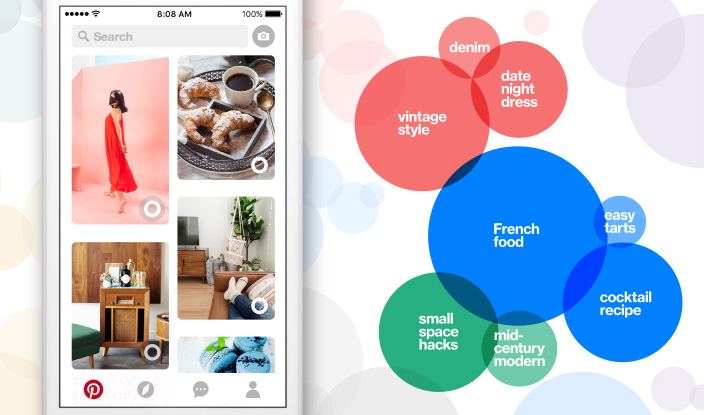
    Pinterest has emerged as a leading social channel for visual discovery. The aim is for a user to discover some topic of interest that they like, and do a deep dive to know more about this topic/ theme of interest. It announced the unlocking of more than 5000 varied ‘interests’ that digital advertisers can target against a ‘Taste Graph’. This means a much better precision-based targeting will be made available for digital ad marketers, which in turn, is expected to boost the conversion from Pinterest substantially.

    How to use Taste Graph?

    If you have used Facebook ads for your digital marketing, then you would find it easy to use Pinterest’s Taste Graph within the Pinterest Ads Manager.
    1. Select from one of the many Pinterest categories that will be available to you in the form of a drop-down box
    2. You can target better by choosing the appropriate sub-categories within each segment

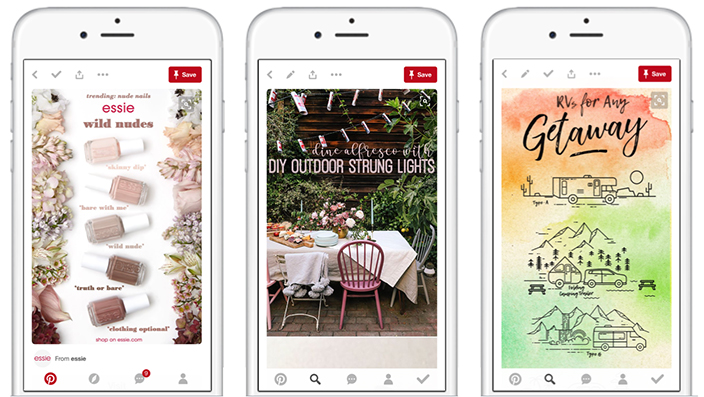
    From the user’s end, it works easily. If the user is pinning a lot of visual content around bikes, he will be shown ads that revolve around motorcycles and two-wheelers. If he hasn’t pinned wedding images for quite a long time, then he will stop seeing wedding-related ads.

    This development heralds a lot of convenience to ad marketers who wish to target Pinterest as a part of their social or digital marketing campaigns. The presence of more segments means that marketers can sharpen their focus on specific products to reach a wider set of target audience at the right time. This means that the targeting is better, the likelihood of a user engaging with a brand increases, and this, in turn, proves profitable for both Pinterest and the brand.

    What does this development mean?

    With this update, the team at Pinterest endeavours to build a strong advertising business integrated within its social media platform. It will help users travel down the customer journey to lead to a conversion eventually. More importantly, it will depict to brands and businesses that the conversion was a result of Pinterest’s initial work of building brand awareness.

    In addition, the Taste Graph is expected to show how the user interests evolve over time with respect to a particular topic or theme. The potential is huge, given that Pinterest has 200 monthly active users and is home to more than 100 billion Pins.

    What the future holds?

    The current statistics have been very encouraging for advertisers. Pinterest has stated that initial results from these ultra-precise targeting have improved Click-through rates (CTR) by 50% and decreased the cost per click by 20%. This was reported for brands like the American luxury department store chain, Nordstrom which adopted Taste Graph for their advertising online.

    In the future, Pinterest plans to make segment selection better. This will be done via a search box where marketers can begin typing in their preferred segments, and the box will be auto-populated with the available segments containing the same alphabets.

  • How To Measure Dark Social Data For Better Marketing Efficacy?

    How To Measure Dark Social Data For Better Marketing Efficacy?

    Dark social is the mode of communicating (mostly one to one, or one to many) using instant messages or other private channels of communication. As compared to regular social media content like that on Facebook and Twitter (that generates data which can be captured and analysed by marketers), content shared via dark social is challenging to track, slice and dice, or monitor.

    With its jump in usage, marketers are increasingly seeking interest into the realms of dark social and how it can be utilised to gain richer insights into customers’ pain points or their buying behaviour. Google analytics marks this traffic as ‘direct’ traffic in the tool. Some examples of dark content sharing will be:

    1. A wife sharing on SMS the movie she would like to watch at the theatre

    2. A WhatsApp group sharing details about their favourite cricket team

    3. An email to a group highlighting a social issue in the locality

    Why is this needed?

    Today content sharing and distribution don’t happen merely through links. There will be social platforms, influencer engagement, and email links through which a person can come to know about your brand. The massive proliferation of these ‘dark’ zones makes it necessary for a smart marketer to know what is going on in that zone. He will have to target the dark social for better reach and coverage of his marketing messages.

    Activating dark social data as a part of your marketing campaign’s analytics stack will further accentuate your brand’s first party data assets. It can radically expand the measurability, tracking, and monitoring beyond the scope of what can be bought and sold on the commodified data marketplace.

    What can be done to capture data from dark social?

    As evident, the key difference between regular social and dark social is the challenge of collecting data in this ‘dark’ zone. Hence it is important for brands to see how they can invest in tools that can help them have a peek into the dark social. This will allow them to measure branded content’s sharing and use this data for designing targeted marketing campaigns for better efficiency.

    The first step in this process is to add UTM parameters to the sharing buttons of your branded content. It looks something like this format – “&utm_source=sharebutton&utm_channel=linkedin”. But this will be a minor step forward as almost 70% of the social shares are done in the dark. We need to go beyond the regular identification of referrer to capture this. For instance, mobile apps will pass a unique identifier in the UserAgent field even if it doesn’t pass the referrer. An example will be the FBIOS identifier that is passed from Facebook UserAgent field for identifying the user accessing a particular piece of content from the Facebook mobile app.

    To sign off

    Remember that these measures will only track the sharing happening on social channels and will not capture relevant data from SMS, IM chats or emails. For this, you will need a more targeted approach that can monitor and analyse these unstructured and dark social data effectively.

  • Want To Transform Those ‘Likes’ Into Business Revenues? Here’s How You Can!

    Want To Transform Those ‘Likes’ Into Business Revenues? Here’s How You Can!

    Your brand might have an impressive following on social media and a remarkable presence on social media channels. But, are you doing everything to make the most of it? A majority of brand owners enjoy their popularity in this arena and love to create a buzz in their respective professional landscapes. However, the most crucial thing gets left out as they are unable to turn social followers into meaningful prospects for their business.

    Here’s a short discussion on what all those precious ‘Likes’ can do for you. How to make the most of them thus increasing business revenues and earnings?

    Monetization is important

    When you have a bunch of followers promoting your brand, its services, and products across markets, you should utilize it for the better. A strong social presence increases your brand value by quite a few notches, and there are no second thoughts about it. But, you should also understand the importance of financial incentives that take your brand ahead of the market.

    Education helps in social monetization

    If you wish to create an educated, effective, and dynamic follower-base, opting for the traditional marketing strategies would be a grave error. Educate your followers first, which will help in monetizing them. Here are some tips to consider:

    • Video content: Captivating visuals have always been more effective than powerful words. These are the most impactful and dynamic lead magnets that help you attract your social followers within a short time.
    • Turn followers into subscribers: Give your followers the opportunity to sign up for courses. That will help you build a strong subscriber-base who can be approached outside social media too.
    • Be thought leaders: Your followers and target audience aren’t just data points. You should emerge as thought leaders who have the power to educate them.

    Get things right

    Monetizing your social media followers is imperative. However, that doesn’t mean you will create sales campaigns and go on pitching them. The process of transforming social followers into customers should be natural and smooth. Forceful attempts won’t help you in this context and might lead to undesired results. Try to realize the significance of monetizing social followers first, and then you can get things right!

  • Weekend Digital Media Round-up: Google’s upgraded Adwords mobile extensions, Facebook’s video hub ‘Watch’, Pinterest’s new promoted videos and more..

    Weekend Digital Media Round-up: Google’s upgraded Adwords mobile extensions, Facebook’s video hub ‘Watch’, Pinterest’s new promoted videos and more..

    1. Google updating site category exclusion options for Google Display Network campaigns

    Google is refining the options it gives advertisers for excluding categories of sites from their display network campaigns on the Google Display Network. [Source: Marketing Land]

    1. LinkedIn adds analytics, audience management & media buying solutions to its partner program

    LinkedIn added 19 more integrations and three new categories — Marketing Analytics, Audience Management and Media Buying — to its three-year-old Marketing Partner program. [Source: MARTECH TODAY]

    1. Facebook Announces New News Feed Update to Further Restrict Spammers

    Facebook’s continuing to expand its efforts to restrict the reach of spam and misleading content, announcing yet another News Feed algorithm change, this time solely focused on a practice called ‘cloaking’. [Source: Social Media Today]

    1. AdWords mobile extensions get major upgrades with tappable sitelinks & more visible content

    Google AdWords extensions are more powerful than ever, and they just got another major mobile upgrade. Mobile sitelinks are becoming interactive, while callouts and structured snippets are gaining more real estate. [Source: Search Engine Land]

    1. Google Outlines Problematic Ad Types in New Report, as a Precursor to Chrome Ad Blocker

    Google has launched tools like their Ad Experience report, which provides data on how the ads on your site fare in regards to the Coalition’s recommendations. Google also says that they’re reviewing sites daily and recording videos of poor ad experiences so they can include further visual guides within the Ad Experience report to help advertisers update their sites in-line with user expectations. [Source: Social Media Today]

    1. Twitter uses Foursquare, Nielsen to show impact of ads on offline store visits, sales

    Twitter wants you to know that its ads work — offline. To demonstrate Twitter ads impact real-world behavior, the company tapped Foursquare and Nielsen to show how telco campaigns on Twitter produced a meaningful effect on store visitation and sales. [Source: MARTECH TODAY]

    1. Facebook debuts Watch, its home for original shows

    Facebook announced on Wednesday that it will begin rolling out a revamped version of its existing home for videos that caters to the original, episodic shows Facebook has been licensing to make people think of it as a digital video service on par with YouTube, Netflix and Hulu. [Source: Marketing Land]

    1. Pinterest Rolls Out Promoted Video to All Advertisers

    A year after Pinterest first started testing promoted video, the platform’s now opening the option to all advertisers, giving brands a new way to connect with the Pinterest audience. [Source: Social Media Today]

    1. Bing Ads now shows potential conversion impact with budget suggestions

    Bing Ads advertisers that have the Universal Event Tag (UET) implemented may now see estimated conversion impact when looking at budget suggestions in their accounts. [Source: Search Engine Land]

    1. Facebook looks to clean up Audience Network with higher standard for counting clicks

    After appraising Audience Network publishers’ ad placements last year and this year offering advertisers more control over where their ads are placed within the ad network, Facebook is now instituting a higher standard when charging for clicks on brands’ ads. [Source: Marketing Land]

    Expert Opinion:

    1. Improved customer experiences can reap long term benefits for brands

    Customer experience is one of the most important factors affecting the overall revenue generation of a brand. Despite understanding the importance, marketers often seem to lack a robust customer experience strategy for their brands.

    The latest study done by Salesforce suggests that 75% of users expect a consistent experience wherever they interact with brands and 64% of users demand immediate interaction. Customers expect a proactive approach and personalised experiences from companies.


    Enhanced customer experience can benefit the brands with:

    – increased preference from customers to purchase your offerings

    – brand loyalty with higher chances of repurchasing

    – improved customer retention

    – stronger word-of-mouth publicity

    Although no proven theories suggest the impact of customer experience on revenue, marketers believe that it plays a significant role in increasing the ROI and improving the overall performance of a company.

    With the rapid rate of digital innovations and varied experiences provided by various brands, it becomes crucial for marketers to work on building a strong customer experience strategy in order to gain their customers’ trust and flourish their businesses.

    Sai Narayan, Associate Director & Head of Marketing, Policybazaar.com and Paisabazaar.com

  • Protect Your Brand’s Ads on Facebook to Prevent Bad Publicity

    Protect Your Brand’s Ads on Facebook to Prevent Bad Publicity

    In the digital marketing parlance, the concept of knowing how the customers perceive your brand has been prevalent for a long time. The brands from around the world, over the years, have been cautious about creating a positive image about themselves to the potential and existing customers. However, it is only recently that the concept of brand safety has emerged greatly and is being taken quite seriously by marketers around the world, especially in the digital sector.

    Earlier in February 2017, The Times published an article, which claimed that Google funded world terrorism by allowing YouTube ads to feature in the extremist video content. However, soon the brands started to notice that their ads have been appearing on various radical news sites through Facebook Audience Network. In this write-up, we would take a closer look at different mechanisms that allow the reputation maligning mistakes that occur on Facebook and what the advertisers can do to avoid being victims.

    What are the risks of bad publishing of ads?

    In theoretical terms, the advertisers should not be worried more about advertising on social platforms as all their online activities are on display for public viewing. Millions of websites can display your ads, however, if you publish your ad on Facebook, it would typically be visible on Facebook alone. This is a general belief, right? But this the most common mistake that most advertisers commit.

    If Facebook had to rely on the newsfeed alone for ad placement, they would be limiting the ad revenue. They have come up with other sources to resolve this situation.

    FAN – Facebook Audience Network

    Facebook launched this network in 2014, which is essentially a network of varied mobile sites and apps that can be chosen as a placement at ad set level. This allows your advertisements to feature outside the Facebook system.

    Instant Articles

    Instant articles, which are meant for mobile web allows quick loading of articles on Facebook. The instant articles were initially criticized for affecting the revenue value of the publishers. However, in its recent updates, Facebook has rolled out ad units that are placed at the bottom of the articles.

    In-Stream Video

    The video format allows delivery of five to 15 seconds video ads within the live and non-live videos.

    With the availability of more space for placing your ads, it directly translates into more revenue for Facebook. However, the problem with these placements is that while it enables you to choose whether to use the space or not, you are not allowed to choose the videos or articles that you want to appear on Facebook.

    Why take the risk?

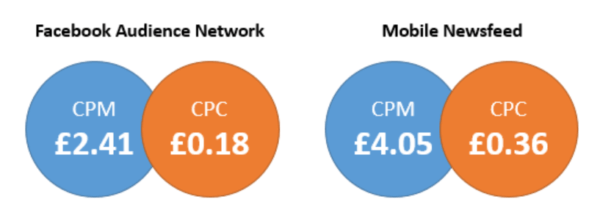
    One of the best ways to avoid being victims is to refrain from targeting these placements. If you notice that your ads are visible only in people’s newsfeed, then there is no risk.

    From the above image, there are two crucial things to consider. However, you must note that this will vary from client to client. If FAN doesn’t prove to be efficient for you, it would only make sense for you to avoid targeting this placement. Secondly, with the video performance, the natural in-stream video will fetch you more views since your ad will be visible only when someone is watching a video. The users would have to watch your ad to be able to see the video of their interest.

    How can advertisers protect themselves?

    Until 2016, Facebook had no means for brand protection. FAN was an entirely blind network that did not have the capacity to suggest where the ads appeared or even block the risky ads. It is no surprise then that this did not go well with the global advertisers. In 2016, the social networking giant released the ability to block ads of a few categories like gambling and dating.

    However, in June 2017, Facebook rolled out few controls (Pre-campaign transparency, Blocking at account level) that allowed the advertisers to have better control over their ad placements. In the purview of these new controls, here is how Facebook has categorized the safety levels:

  • Weekend Digital Media Round-up: Google’s native ad blocker for Chrome, Facebook’s updated NewsFeed Algorithm, Snapchat’s new feature allowing brands to track the impact of their ads and more…

    Weekend Digital Media Round-up: Google’s native ad blocker for Chrome, Facebook’s updated NewsFeed Algorithm, Snapchat’s new feature allowing brands to track the impact of their ads and more…

    1. Google updates quality raters guidelines with details around non-English language web pages

    Google updated their search quality raters guidelines PDF document a few days ago. The core change is the new guidelines around non-English language pages. [Source: Search Engine Land]

    1. The IAB releases its new standard ads portfolio with multi-screen sizing

    The Interactive Advertising Bureau has released the final version of new standard ad units that incorporate the industry group’s LEAN guidelines for lightweight ads as well as the Coalition for Better Ads’ set of ad guidelines developed in response to the use of ad blockers. [Source: MARTECH TODAY]

    1. Facebook Updates News Feed to Penalize Non-Mobile Optimized Websites

    Facebook has announced another News Feed algorithm update, this time focused on reducing the reach of websites which are not optimized for mobile devices. [Source: Social Media Today]

    1. Facebook will let brands target ads to people who RSVPed to their Pages’ events

    Facebook plans to let brands target ads to people who RSVPed to events posted by a brand’s Page. The event-based targeting will be a new option within Facebook’s Custom Audiences ad-targeting product, which originated as a way for brands to convert their existing customer bases into an audience to target on Facebook and has expanded to doing the same for brands’ followings on Facebook and Instagram. [Source: Marketing Land]

    1. Google’s native ad blocker for Chrome shows up in Android developer build

    Google will reportedly debut a built-in ad blocking feature for its Chrome browser next year, and now we have the first concrete look at this addition to the web navigation software in action. [Source: TechCrunch]

    1. Snapchat will let brands measure its ads’ impact on sales, results against rivals

    Snapchat rolled out a program to allow third-party measurement firms to track its ads’ impact on a brand’s sales and to include that data in the dashboards that marketers use to evaluate where they’re spending their money and, of those places, where they’re getting the best bang for their bucks. [Source: Marketing Land]

    1. This script creates Google Slides with AdWords data to automate your presentation-making

    Google just introduced its latest advanced API integration for AdWords Scripts: Google Slides. That means you can now programmatically connect AdWords with Google Slides. [Source: Search Engine Land]

    1. Instagram Releases New Stats on Stories Use to Celebrate Stories’ First Anniversary

    It took a little more than a week, but effectively, this is what Instagram has done. They did release a tool called ‘Eraser Brush’ a few days later (though not the same functionality as Snapchat’s tool), and now, on the one year anniversary of the release of Instagram Stories, they’ve reported that users under the age of 25 are spending 32 minutes per day in the app, up from 21 minutes per day at last official report. [Source: Social Media Today]

    1. Report: Facebook working on video-chat device and smart speaker

    Facebook is working on an Echo Show competitor and possibly on a second device, a smart speaker to compete with similar units from Amazon, Google and Apple. [Source: MARTECH TODAY]

    1. Not ad creep: Images labeled ‘Product’ in Google Images part of new badges markup

    Users searching for products on Google Image search will now notice that sometimes images appearing at the top of the results are labeled with a “Product”. This is part of the new badge markup Google introduced earlier this week. [Source: Search Engine Land]

    Expert Opinion:

    1. Why brands should focus on improving mobile consumer experience?


    Off late, digital user experience has become the need of the hour for brands. Consumers want everything quick and instant. Thus, providing the best digital experience becomes a key differentiator for brands to maintain brand loyalty and improve the overall brand image.

    With newer technologies and increased penetration of mobile devices across markets, marketers need to be on their toes by coming up with innovative ways to provide a delightful experience to their customers every time they interact with a brand. The latest report by Google suggests that 89% of users are likely to recommend a brand after a positive experience on mobile. Customers are highly demanding on mobile, and organisations need to invest a lot to match up with the service and experience demands. Companies need to provide highly customizable mobile experiences based on individual likes and dislikes.

    Also, with the increase in the usage of smartphones and the decreasing cost of data, mobile has become the preferred medium for users to connect with brands for their needs.

    Some simple and efficient ways to provide a seamless experience to the customers on mobile are:

    –  To prioritize customer relationship and integrate their insights into all the processes followed by a brand

    – To understand your customers well by analyzing the data available and the logic behind why a particular customer prefers a particular route and continuously improving on the problem areas

    – To adopt a customer-centric approach across all the departments in the organisation so that all the functions work towards providing the best of the best experience to the end users

    As per the latest mobility report published by Ericsson, there will be 6.1 billion smartphone users globally by 2020. Also, nowadays customers have more choices than ever. It is vital for brands to be at the top of their game and provide a superior experience to the mobile users.

    Aniruddha Dange, President – Chief Strategy Officer, IIFL (India Infoline Group)

  • Twitter’s Timeline is Becoming More Algorithm-Influenced – Here’s How It Can Benefit Brands

    Twitter’s Timeline is Becoming More Algorithm-Influenced – Here’s How It Can Benefit Brands

    If you haven’t checked Twitter recently, you ought to check it out. Twitter has changed the way tweets are displayed on a user’s timeline. You will see much more tweets compared to its earlier avatar. Also, Twitter has started showing more relevant tweets now. By virtue of more tweets and thereby more user engagement, its revenue and earnings have increased by 14% and 12% in the first two-quarters of 2017.

    What are the changes?

    One of the primary changes Twitter has deployed to make the tweets relevant and display those tweets at the top is the use of an algorithm. It takes into account, the tweets you are tweeting as well as replying and that way it decides your area of interest. On the explore tab, it displays popular tweets of the subjects in which your Twitter activity had shown interest. Suppose if I had recently typed Kevin Durant, it would show the popular NBA or results tweet.

    One of the most important things to be considered is, it takes into account only the recent activity and not your old timeline. This way the algorithm is able to generate latest tweets according to your interest.

    Now the logical question would be how to take advantage of the new algorithm based system.

    What’s in it for you?

    The new algorithm on Twitter timeline shows two key takeaways:

    1) It heavily focuses on your recent Twitter activity

    2) It can be largely influenced by user actions

    Although these are just two of the factors a Twitter algorithm works with, we can safely say it’s not complex like Facebook. So it’s an obvious candidate for manipulation. We can definitely take advantages of this new update. Below are two nifty ways:

    • Generate more buzz with your tweets

    The algorithm displays more tweets on top, which are largely engaged by users and which produce more conversation among them. You can jump in the conversation by talking about that particular subject and inspire them to talk more.

    • Like and reply

    After the Twitter algorithm started working, you must have seen much more tweets from people you don’t know or follow. Even if you respond to unknown individuals and like their tweet, you will generate significant exposure, and that would help you to market your products or services better.

    But a random conversation with random people can alienate your loyal audience. So you will have to do it smartly, thereby not offending your followers.

    Use these Twitter timeline algorithm changes to your advantage and improve your brand and personal visibility substantially.

  • Weekend Digital Media Round-up: Brand new Google search console, Amazon’s new Spark social feed, Snapchat’s Snap Publisher and more…

    Weekend Digital Media Round-up: Brand new Google search console, Amazon’s new Spark social feed, Snapchat’s Snap Publisher and more…

    1. Original Programming is Set to Make a Big Splash on Social Media

    With the recent announcement that Snapchat is diving into more original news programming in partnership with NBC, we’re seeing more and more investment dollars being put into custom content. Don’t expect that to slow down anytime soon. [Source: Social Media Today]

    1. Facebook plans to start testing Instant Article subscriptions as soon as October

    Facebook’s Instant Articles format may not be the revenue rainmaker that publishers had hoped for, but the company is readying another method for media companies to make money. [Source: Marketing Land]

    1. Google Analytics rolling out ‘ask a question’ to get answers instantaneously

    A little over a year ago, Google teased using natural language to get data from Google Analytics just by asking. That “asking a question” functionality has now arrived in Google Analytics and Google Analytics 360 globally. [Source: Search Engine Land]

    1. Google Introduces New, Personalized Information Feed to Improve the Utility of Their App

    As web search evolves into more predictive, intelligent models, Google’s working to evolve their app to meet the rising demands of the modern consumer. [Source: Social Media Today]

    1. Amazon’s new Spark social feed wants to be ‘Instagram for products’

    Amazon has introduced Amazon Spark, a very Instagram-like social shopping feed. Not all of the images and posts are tied to products but most are — and can be purchased on Amazon. [Source: MARTECH TODAY]

    1. LinkedIn Adds New Data Tools to Help Advertisers Maximize their on-Platform Efforts

    LinkedIn’s introducing a range of new data tools which will provide more transparency on performance, and more data for improved targeting on the platform. [Source: Social Media Today]

    1. Snapchat releases Snap Publisher: self-serve ad creation tool converts horizontal videos, websites into vertical video ads

    One of the knocks against advertising on Snapchat is that it’s hard to make ads for Snapchat. The mobile app’s insistence on vertical video compels advertisers to create campaigns from scratch rather than reusing ads that ran elsewhere. Now Snapchat is addressing that obstacle. [Source: Marketing Land]

    1. Facebook’s Removing the Ability to Edit Link Previews – Here Are Your Alternatives

    Facebook announced a pending change to their Graph API which would remove the ability for Pages to edit link previews attached to posts – that change comes into effect this week, but the backlash has lead to Facebook providing a stay of execution, of sorts, on the feature for some Pages, with a new option that will enable publishers to maintain the capacity to edit previews. [Source: Social Media Today]

    1. Google beta testing brand-new Google Search Console design

    Google is currently testing a new design and user interface for the Google Search Console. The new user interface takes a design look from the revised mobile-friendly testing tool that launched less than a year ago. [Source: Search Engine Land]

    1. Snapchat Enables Recording Beyond 10-Seconds, Adds New Creative Options

    Keeping up their pace of adding new features and tools, Snapchat’s launching two new updates this week, one of which could fundamentally change the Snap process. [Source: Social Media Today]

    Expert Opinion:

    1. How can brands use immersive marketing to provide unique customer experience and maintain brand credibility?

    Storytelling has always been an important factor for any campaigns and ads to engage with the audience, and convey the brand message effectively. However, the 2D story approach is winding down, and a three dimensional, fully immersive approach is gaining pace these days.

    Immersive technology combines virtual reality (VR), augmented reality (AR) and mixed reality (MR) to create a unique experience for the customers which is relatable, impactful, memorable and fun. VR has played a major role in changing the way marketers can play with the campaigns and provide an impactful immersive experience to the audience. As per Statista Inc., the virtual reality console market is estimated to reach 4.5 billion U.S. dollars in 2018.

    Immersive marketing can help marketers to:

    – provide a seamless experience to customers and improve brand credibility

    – provide unique content to the individual customers’ basis their preferences

    – tackle language barriers through immersive visual solutions

    – provide detailed and precise customer analytics

    Immersive marketing is changing the marketing world at a fast pace. Reports by Statista Inc. suggest that, by 2018, the number of active VR users is estimated to reach 171 million. Considering the changing customer behaviour & expectations and the way audience is adopting newer technologies, it is high time that the marketers get themselves accustomed to the immersive marketing techniques and use them to achieve optimal customer engagement and brand reputation.

    Vishwajeet Parashar, Group Marketing Head, Bajaj Capital Ltd.