LS Staging

Tag: Social Media Optimisation

  • Should my Business Worry about Libra, the new cryptocurrency from Facebook?

    Should my Business Worry about Libra, the new cryptocurrency from Facebook?

    After months of speculations, last week, Facebook announced that the social media giant would lift the curtains on “Libra,” a brand-new cryptocurrency, sometime in 2020. Facebook announced that Calibra is a newly formed subsidiary to the parent company and aims to provide seamless and secure financial services by using the Libra network.

    Calibra and Libra: A Quick Explanation

    While Libra is a digital currency, it doesn’t have much in common with Bitcoin, the original cryptocurrency. The value of Bitcoin is basically because of its scarcity, and though it has been around for nearly a decade, it’s still considered a niche currency, not used for daily, everyday payments.

    Libra, is like Bitcoin, in that it will be tied into a blockchain (this blockchain is currently under development by Facebook). The similarities end there. Unlike Bitcoin, you cannot mine Libra. Instead, you must pay for it and purchase it.

    Facebook believes that Libra will become the global currency standard, like the popular currencies USD, GBP, and EUR.

    Coming to the all-important question: how will the value of Libra be determined, since it doesn’t have real-world assets like a country backing it?

    This is where things turn interesting. The value of Libra will be guaranteed by real assets provided by the partners that buy into Facebook-cofounded Libra association. Facebook has managed to rope in industry biggies, including venture capitalists, tech companies, and non-profit associations.

    eBay, Lyft, Spotify, Uber, Union Square Ventures, PayPal, Visa, and Mastercard are some of the top names in the association. You can find more about the founding members of the Libra Association in the whitepaper published by Libra. The company will have its headquarters in Geneva, Switzerland.

    What does this mean for Regular Users?

    Will it bite the dust like that time when Facebook was trying developing nations to use its platform for all their internet access by offering them free internet? Or will Libra become the first-ever digital currency to go mainstream?

    While that needs to be seen, Facebook’s goal here is to make Libra the go-to currency for transferring funds to friends and family in other countries and to make it the number one payment option for both online and offline purchases.

    Initially, Facebook will offer Libra as part of WhatsApp and Facebook Messenger, with plans to move it into a stand-alone app, later.

    This is where Calibra comes into the picture. Calibra is a digital wallet that will help users to save, spend, and send Libra. Initially, you can use the Calibra wallet to send and receive money instantly to anyone with a smartphone. Later Facebook plans to extend the functionality of Calibra to provide financial services for small businesses like paying bills, etc.
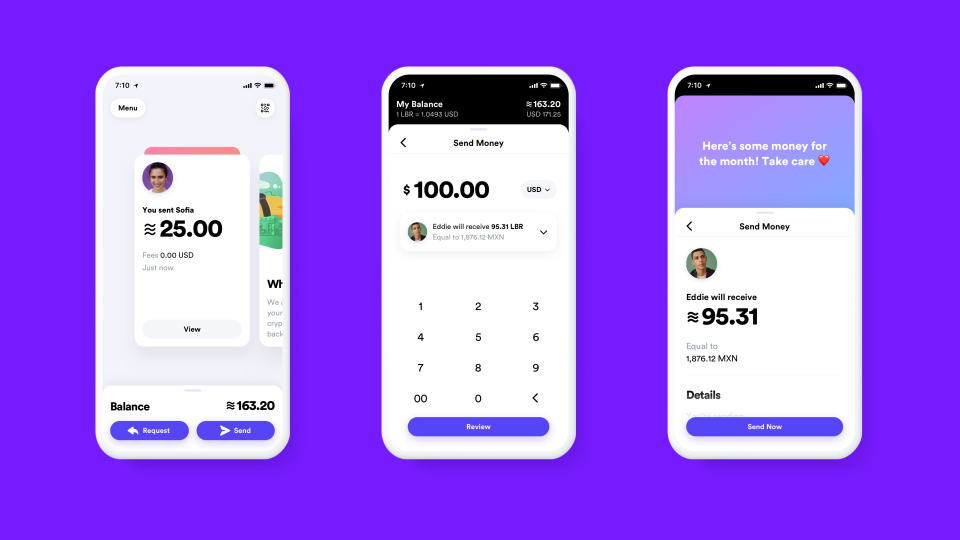
    sneak peek into Calibra’s interface, courtesy of Facebook.

    Calibra will use anti-fraud, and verification processes used by all leading credit cards, and provide live support to people who misplace their smartphone. Calibra even promises refunds if you lose your Libra because of fraudulent activities. Calibra will also value user privacy and will not share financial data with Facebook or other third-parties.

    Facebook claims that they are still a long way from launching Calibra. Interested users can sign up here to join the newsletter to be the first to receive information about the progress of Calibra and Libra.

    How will Libra and Calibra impact Businesses that sell via/on Facebook?

    Industry experts believe that entrepreneurs using Facebook pages for information about their products will not be impacted much. However, if you sell goods via Facebook, then you would have to make changes to include Libra as one of the payment currencies.

    However, since Facebook has an enormous reach, at least a few of your customers will be using the new crypto coin. Hence, it makes sense to include it in your payments page.

    When should you start making changes to include Libra?

    No hurries. Facebook is still in the process of development, and nothing has been confirmed yet. So, businesses need not panic and spend the interim time reading up on the merits and drawbacks of this brand-new venture from Facebook.


  • Facebook Ads are Getting Smarter: Here’s What Marketers Must Do to Thrive

    Facebook Ads are Getting Smarter: Here’s What Marketers Must Do to Thrive

    Facebook is a critical marketing channel for businesses of all sizes and across industries. With nearly 2.38 billion active users (stats for the first quarter of 2019), Facebook offers great opportunities for businesses to target current and potential customers.

    When done the right way, Facebook ads help businesses boost brand awareness, launch new products and services, sell more, and increase revenue. However, advertising on Facebook is not exactly what it may seem. Today, Facebook ads have grown smarter, and there’s a need for smarter paid ad strategies to meet your advertising objectives. Read on to know about what has changed and what you can do about it.

    What has Changed?

    There’s no denying the fact that Facebook feed has become oversaturated with ads. Similar ads are served to the same users, meaning brands lose out on their effectiveness and attention-grabbing abilities. Not to forget, the organic reach of the posts and ads on Facebook have taken a hit, thanks to recent algorithm changes.

    This means, today, most marketers on Facebook are forced to invest in paid campaigns or abandon the platform altogether. Despite the declining popularity of Facebook, the social media network managed to generate a whopping $16.6 billion in advertising revenue for the last quarter of 2018, which is a 30% increase compared to the previous year.

    This clearly shows that Facebook advertising is not dead as speculated. Rather what has changed is that Facebook ads have gotten smarter, and it is high time that marketers revised their advertising strategies on Facebook. In the cluttered social-media landscape of today, it’s essential that brands integrate robust paid strategies along with high-quality content generation to be successful.

    Shifting Advertising Goals – The Need of the Hour for Facebook Marketers

    According to Susan Wenograd, the Vice President of Marketing Strategy of Aimclear, for brands to thrive in the new era of social media advertising, there is a pressing need to revise the campaign goals. She believes that brands must re-examine their objectives and understand that conversion is just a part of the bigger picture.

    Brands must shift their focus away from CPA (Cost per Acquisition – Conversion) to CPM (Cost per thousand Impressions). Marketers must concentrate on building a more engaged and more qualified audience pool, to get the best ROI from their ad spends.

    It’s not just about picking the low-hanging fruit, but, brands must enhance their Facebook ad strategies to build qualified leads that improve brand awareness. Once advertisers have this data, they can use it for retargeting. Brands must build remarketing pools so that they can convert leads on all stages of the purchase funnel, helping them generate more revenue.

    Brands that can measure and understand user triggers are the ones that will be sustainable in the long run. Furthermore, brands must leverage cross-channel data to improve retargeting opportunities. Utilizing UTM parameters, tagging structures are some ways to streamline and segment data across channels.

    Not to Forget Quality Content

    All the above-discussed strategies may not yield the desired results, if the marketers do not have a high-quality content to back it up. With the social media landscape rapidly evolving, audiences demand high-quality, optimized content. Simply put, brands need to adapt to smarter Facebook ads with efficient strategies and high-quality creative content if they want to survive in the evolving social landscape of Facebook and Instagram paid ads.

  • Weekend Digital Media Round-up: Google’s new search console, Facebook Messenger’s new features, Bing ads’ rebranding and More…

    Weekend Digital Media Round-up: Google’s new search console, Facebook Messenger’s new features, Bing ads’ rebranding and More…

    1. Google Introduces Three New Search Console Reports

    Google is bringing three new reports to Search Console which are all related to structured data. New enhancement reports for the ‘Sitelinks searchbox’ and ‘Logo’ structured data join existing reports on Recipe, Event, Job Posting, and others. [Source: Search Engine Journal]

    2. Facebook Messenger to get new lead gen templates, appointment booking

    Messenger is rolling out two new features for businesses: lead generation templates and an appointment booking interface that will integrate with calendar platforms. [Source: Marketing Land]

    3. Bing Ads rebrands as Microsoft Advertising

    First there was Microsoft adCenter. Then there was Bing Ads. Now there is Microsoft Advertising. The rebrand emphasizes a focus on personalization and AI. [Source: Search Engine Land]

    4. Is Facebook Working on Launching an Exclusive Creator Studio for Instagram?

    Facebook is working on releasing a brand-new ‘Creator Studio’ app exclusively for Instagram users. Social media industry consultants & commentators are waiting to see what this exclusive studio creator has to offer. [Source: Logicserve Digital]

    5. Instagram officially tests hiding Like counts

    Instagram will now hide Like counts from posts as part of an experiment. If rolled out, the change would refocus Instagram on self-expression instead of being a popularity contest. [Source: Tech Crunch]

    6. Shopify adds new Facebook, Snapchat ad buying options from the e-commerce platform

    Shopify is giving Facebook and Snapchat advertisers new ways to purchase ads through its e-commerce platform. Shopify is also launching new integrations with Snapchat, making it possible for clients to create Story Ads campaigns via a Snapchat Ads App from Shopify. [Source: MARTECH TODAY]

    7. Quora, Pinterest ads pixel integrations now available in Google Tag Manager

    Pinterest and Quora are now approved Google Tag Manager vendors, making it easy for marketers to manage their Pinterest and Quora Pixels via Google’s platform. [Source: MARTECH TODAY]

    8. Facebook F8 2019: New Tools for Messenger and WhatsApp

    Facebook has announced new features for its messaging tool which is where, according to Facebook, social interactions are increasingly headed. These includes Messenger Desktop App, Limiting Your Messenger Content to Close Friends Only, etc. [Source: Social Media Today]

    9. Google launches new video series: SEO Mythbusting

    Google is launching a new video series on its Webmaster YouTube channel, called “SEO Mythbusting.” The video series will feature Martin Splitt from the Google Webmaster Trends Team, who will speak with developers and SEOs on common misconceptions. [Source: Search Engine Land]

    10. Microsoft launches a drag-and-drop machine learning tool

    Microsoft announced three new services that all aim to simplify the process of machine learning. These range from a new interface for a tool that completely automates the process of creating models, to new no-code visual interface for building, training and deploying models, all the way to hosted Jupyter-style notebooks for advanced users. [Source: Tech Crunch]

  • Is Facebook Working on Launching an Exclusive Creator Studio for Instagram?

    Is Facebook Working on Launching an Exclusive Creator Studio for Instagram?

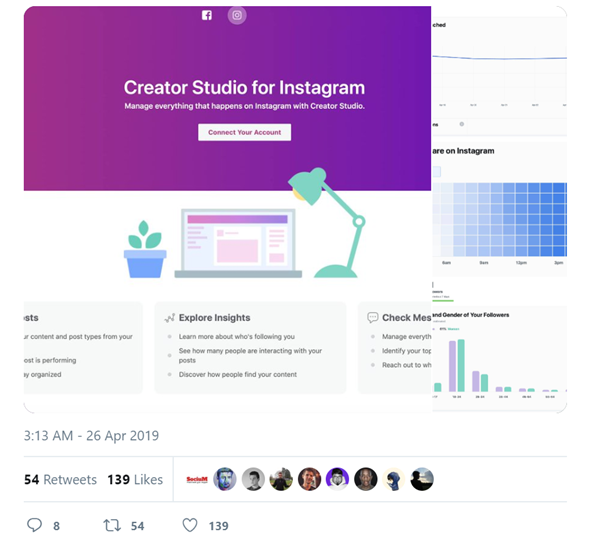
    Recent reports state that Facebook is working on releasing a brand-new ‘Creator Studio’ app exclusively for Instagram users. Social media analysts speculate that this new dashboard is likely to be similar to the Facebook Creator Studio app, which was released globally in August of last year.

    Facebook’s Creator Studio was launched along with the much-anticipated feature “Watch.” The interface of the Creator Studio is divided into three sections. In the center tab, you can find a list of the posts that you have published. You can search for a particular post using keywords.

    On the right side of the UI, you can find insights about posts that you have published in the last seven days, along with other information like – scheduled posts, number of posts published, drafts created in the last 28 days, etc. The left panel allows you to access Creator Studio using various views.

    Images via Matt Navarra on Twitter

    Social media industry consultant and commentator, Matt Navarra, recently tweeted an image of the Creator Studio’s Dashboard. Looking at the image, it looks like the new Instagram Creator Studio will be housed as a tab within Facebook’s Creator Studio dashboard. Note the toggle button for Instagram and Facebook are at the centre of the screen on top.

    What will the Instagram Creator Studio Offer?

    The dashboard will enable Instagram users to track and monitor several analytic metrics like – the activity status of their followers and their demographics – age, gender, etc. Additionally, the dashboard will also make it easy to monitor engagement stats of users. When the feature is rolled out, Instagram users will be able to access various metrics including – time periods when your audience is most active, engagement stats and other relevant demographic info.

    What will be the Impact of this Change to Users?

    It’s true that all these details are already available to Instagram Business users. However, the new Creator Studio for Instagram will make all the required details quickly accessible via a handy desktop app. Another major benefit of this new Creator Studio is that Instagram business account holders will be able to utilize a joint asset library for both their Facebook and Instagram accounts.

    When will the Creator Studio for Instagram be Available?

    Right now, it looks like this feature is being tested, so it’s not available for all Insta users. However, since this is a handy feature for Instagram creators, social media commentators believe that the app will be released globally soon.

    Once it’s made available, it will be a part of the Facebook Creator Dashboard, and you can easily access the Instagram Creator Studio app, by using the toggle button on top. However, to access this feature, you would have to have a connected Instagram account to your Facebook page.


  • Your Facebook News Feed might get a makeover with new font styles

    Your Facebook News Feed might get a makeover with new font styles

    Are you part of the social media crowd that still uses Facebook to post updates regularly or do you belong to the larger Facebook user group, who silently swipes through the news feed?

    Then, we’ve got some exciting news for you. Your news feed is about to look different.

    According to reports by SocialMediaToday, Facebook is testing new font styles for posts on the news feed. Facebook users would now be able to use a range of text effects while updating posts on their news feed.

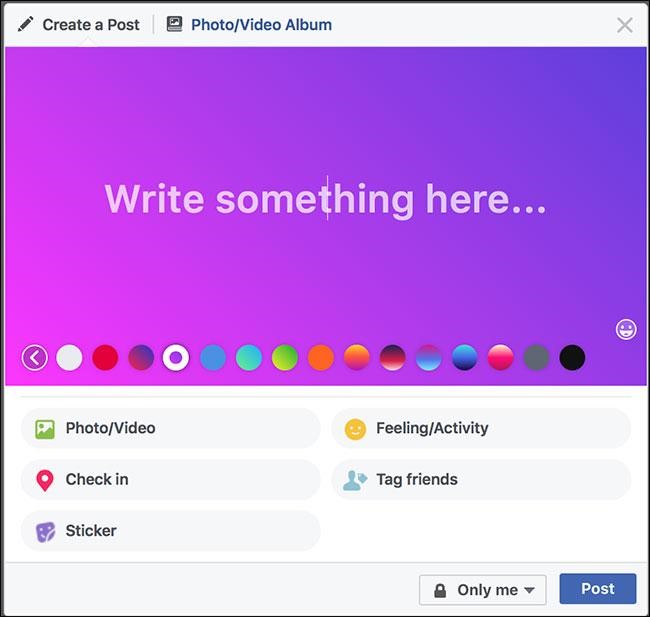
    As of now, Facebook allows users to change the background of the posts. So, instead of posting on the plain white background of the news feed, users were able to alter the background color, to make their posts stand out in the news feed.

    Image via Facebook

    Recent reports suggest that Facebook is working on providing font effects to its posts, which wasn’t available before.

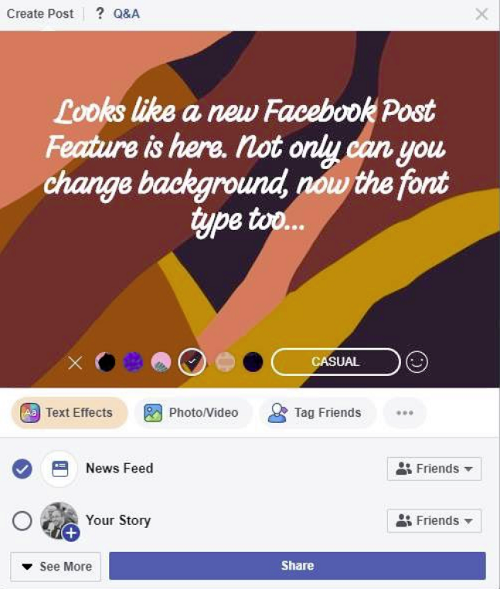
    Image shared by social media industry commentator Matt Navarra.

    As you can see, when posting updates on Facebook from desktop, users now have the option for adding “Text Effects.”

    What are the available Text Effects?

    Currently, Facebook offers five text features to choose from. Rather than being able to select specific font styles, users would be able to choose only font effects. The available options include:

    • Casual
    • Headline
    • Clean
    • Simple
    • Fancy

    Is this update available on mobile?

    As of now, there is no information on whether Facebook plans to roll out this update to all users including mobile users. Right now, it looks like Facebook is just testing this feature, making it available only for a few users.

    What’s the impact of this new update?

    While font effects work well in stories (since it’s a highly visual focus tool), social media commentators are perplexed by the relevance of this new feature in the News Feed. And, since users can already add a colorful background to their posts, this latest update doesn’t provide users with much of a leap.

    And, there’s the chance that this update could make the news feed look messy. As of now, there is no official data on the number of people who make use of Facebook’s colored backgrounds. Apart from the occasional attention-grabbing post, most users don’t use colored backgrounds when they post on their news feed since it isn’t the default option.

    Currently, Facebook offers these font features only to users who create Facebook stories. It’s interesting to see this feature being extended to regular posts. Social media experts believe that Facebook is trying to get users to post more frequently by providing them with added features and to familiarise them with Facebook Stories, the tool which the company wants user attention to shift to.

    Experts caution that these latest updates can get old really quick and could put off users from the news feed if it becomes cluttered with different font styles and backgrounds.

    As of now, Facebook has not provided any official update on whether this feature will be available to all or only for desktop users.

  • Facebook Retiring Relevance Score – 3 New Metrics to be introduced in April

    Facebook Retiring Relevance Score – 3 New Metrics to be introduced in April

    In a recent major updated by Facebook, the social media giant bid adieu to the all-powerful ad relevance score. It announced that it is shutting down the ad relevance score and six other ad metrics on April 30. The company announced via a blog post that the single ad relevance score would no longer be available after 30th April. It also mentioned that it would start rolling out three new metrics in place of the old relevance score.

    What’s The Ad Relevance Score?

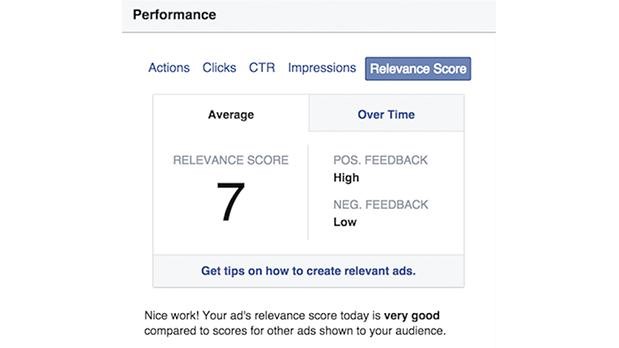
    Facebook introduced the ad relevance score in 2015 to help advertisers measure the effectiveness of their ad campaigns. Facebook explained at the time of introduction that the ad relevance score would be computed using the feedback received from the target audience. When an increased number of users engaged positively with the ad, the higher was the relevance score and vice versa.

    Image via Facebook

    The relevance score helped advertisers tailor their ad campaigns to deliver better performance and higher an ad’s relevance, the lower the cost for delivering it on Facebook.

    What’s Changing Now?

    Facebook recently explained that the relevance score is no longer sufficient to deliver actionable insight to advertisers. Hence, the social media giant plans to switch to more detailed metrics to evaluate ad performance.

    The company plans to roll out three brand new metrics in the coming weeks. They are:

    • Quality Ranking – This is a measure of the ad’s quality compared with similar ads that are targeting the same set of audience.
    • Engagement Rate Ranking – This is a measure of the ad’s expected engagement rates compared with similar ads targeting the same set of audience.
    • Conversion Rate Ranking – This is a measure of the ad’s expected conversion rates compared with similar ads targeting the same set of audience.

    Compared to the single metric used earlier, these three metrics will help advertisers get a clear idea of various elements of their ads like creativity, effective engagement and conversions. Thus, they can know which specific areas they should focus on boosting their ad performance.

    Facebook Also Retiring Other Less Used Ad Metrics

    Apart from the ad relevance score, Facebook is even shutting down other less used ad metrics and replacing them with better actionable options.

    Other Metrics that are Being Removed:

    • Offers Saved and Cost per Offers Saved

    This will be replaced with a “Post Saves” metric that will perform the work of both these metrics while offering you overall insights to monitor when your ads are saved.

    • Messaging Replies and Cost per Messaging Reply

    These two metrics will be replaced by “New Messaging Connections,” and “Messaging Conversations Started,” metrics correspondingly. You can still measure replies in your old conversations. However, the new metrics will offer more functionality for users interacting with your business for the first time, via a new messaging thread.

    • Mobile App Purchase ROAS and Web Purchase ROAS

    ROAS (Return on Ad Spends) will be aggregated into a single metric that will work for all channels – web, mobile and On-Facebook. The individual ROAS metrics will be replaced using a single holistic ROAS metric that will measure ROAS across channels.

    How Will These Changes Impact You?

    Facebook’s new metrics will help advertisers gain more insights for their ad performance campaigns. Advertisers can now build high-quality ad strategies to boost results and increase conversions.

  • YouTube Introduces Fact-Check Information Panels to Combat Fake Information and Hoaxes

    YouTube Introduces Fact-Check Information Panels to Combat Fake Information and Hoaxes

    YouTube has recently made changes to the user interface to include “information panels,” that will help users’ fact check their queries.

    In the purview of recent changes introduced by YouTube, the platform is testing ‘information panels’ feature for a limited number of users in India. When users search for sensitive information, the app displays a “fact check” alert that will provide additional information on the search query, from the authentic fact-checking partners of YouTube.

    With over 250 million internet users and some of the cheapest data plans in the world, India is a massive market for YouTube. India, in recent years, has witnessed several horrifying crimes like lynching due to the spread of fake news. This new feature will deal another blow to disinformation peddlers on the popular video-sharing site and is aimed to reduce the spread of fake news. This new feature, apart from being available for English search queries is also available for Hindi language queries.

    How does this Feature Work?

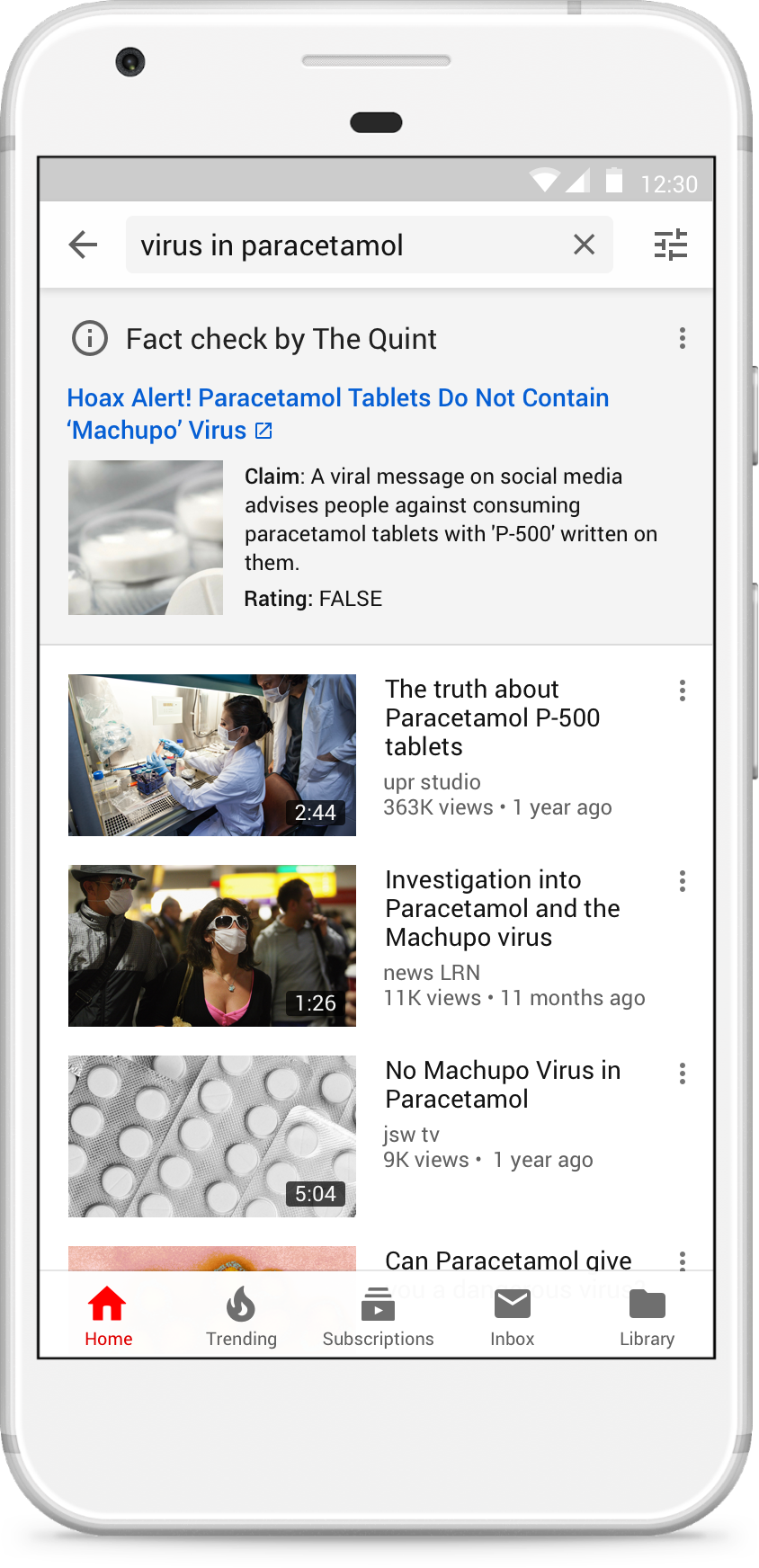
    Image via Buzzfeed News

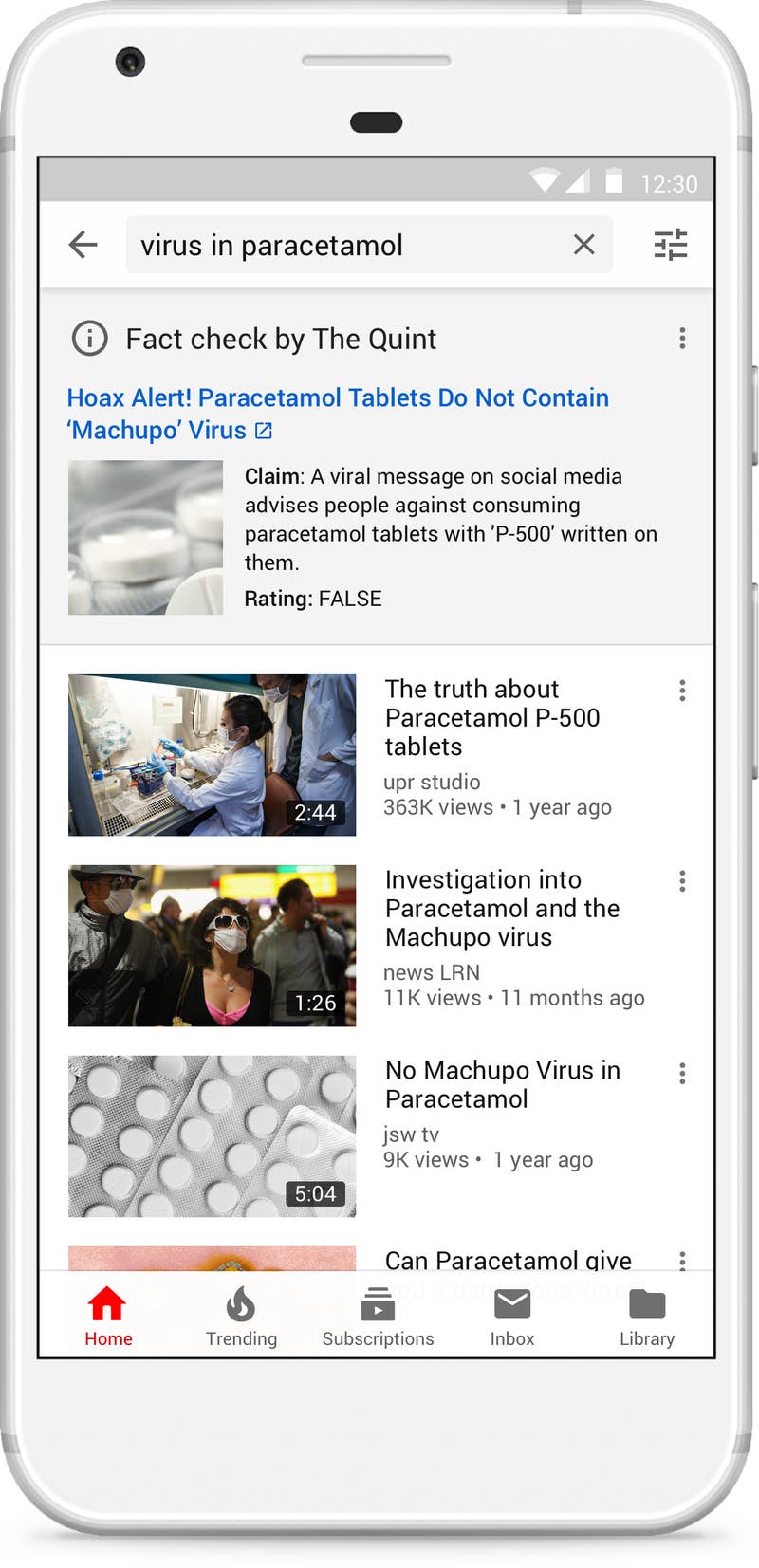
    YouTube explained how this feature works using the above image. For example, if the user searches on YouTube with the query, ‘virus in paracetamol,’ you can see the information panel at the top of the search results.

    Machupo virus in pain-killers is a widespread internet hoax that sent thousands of people into a panic. At the top of the search results, users who search using this query will get a prompt from YouTube verified fact-checkers. This alerts users to the hoax.

    Does YouTube block videos that contain wrong information or fake News?

    Right now, Google doesn’t block videos that contain wrong information or information about hoaxes. But, it provides users with additional fact-checked information at the top of the search page results, so users can avoid clicking on hoaxes and other videos containing fake news. The information panels pop-up based on the queries users use to search. It’s not based on the information contained in videos that appear on search page results.

    YouTube on the path to fight fake news

    In recent years, YouTube has introduced several new changes to prevent the spreading of videos that contain false information. The company recently came under public fire because it enabled the growth of conspiracy theorists and other fake news peddlers.

    As a result, YouTube introduced NewsWire, a dedicated video feed exclusively reserved for verified news organizations. The company also included informational cues from Wikipedia under controversial videos. Recently, YouTube has prevented advertisements from appearing on videos that are anti-vaccine, to prevent these channels from making money off misinformation.

    Will this feature prevent users from believing wrong information?

    YouTube believes that by promptly displaying the disclaimer above the results page, it will prevent users from getting swayed by the wrong information in videos.

    When will this feature be available worldwide?

    YouTube reported that the company is working on making “information panels” available to worldwide users, though it hasn’t given a timeline until now.

  • Instagram Denies Rumors Claiming That Posts Reach Only 7% Of Followers

    Instagram Denies Rumors Claiming That Posts Reach Only 7% Of Followers

    If you are an avid user of Instagram, then you would have come across posts and memes stating that the popular photo-sharing social network is restricting the visibility of posts.


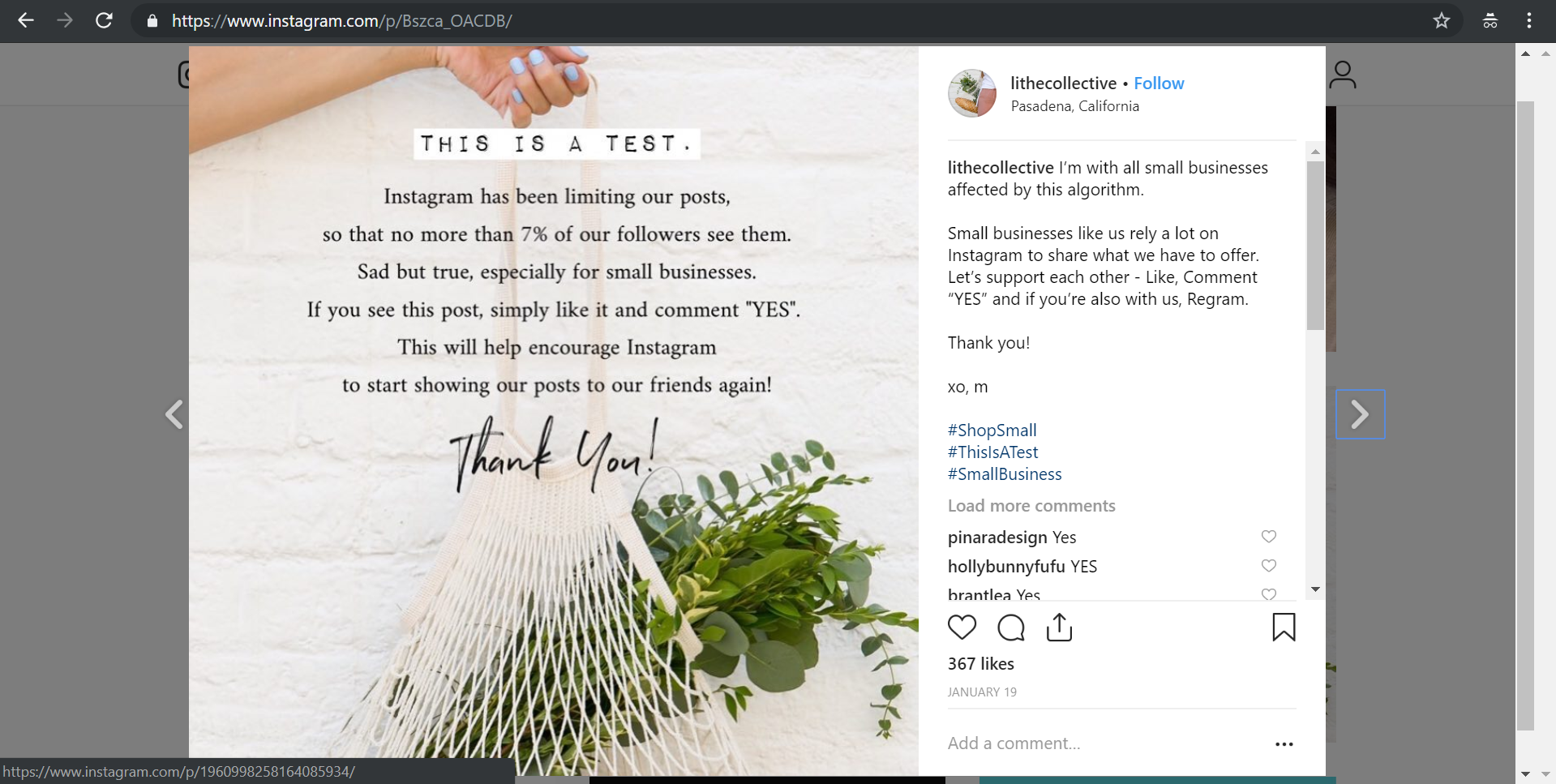
    Image via Instagram

    A large number of Instagram users, especially business account holders, have been complaining of late that Instagram has made some tweaks to its algorithm, that limit post visibility. While some users like the above say that their posts reach only 7% of their followers, others say posts are shown only to 15% of their followers.

    To counteract this change, Insta users have been posting images with the words above and asking their followers to like or comment on this post, which they believe will increase future post visibility.

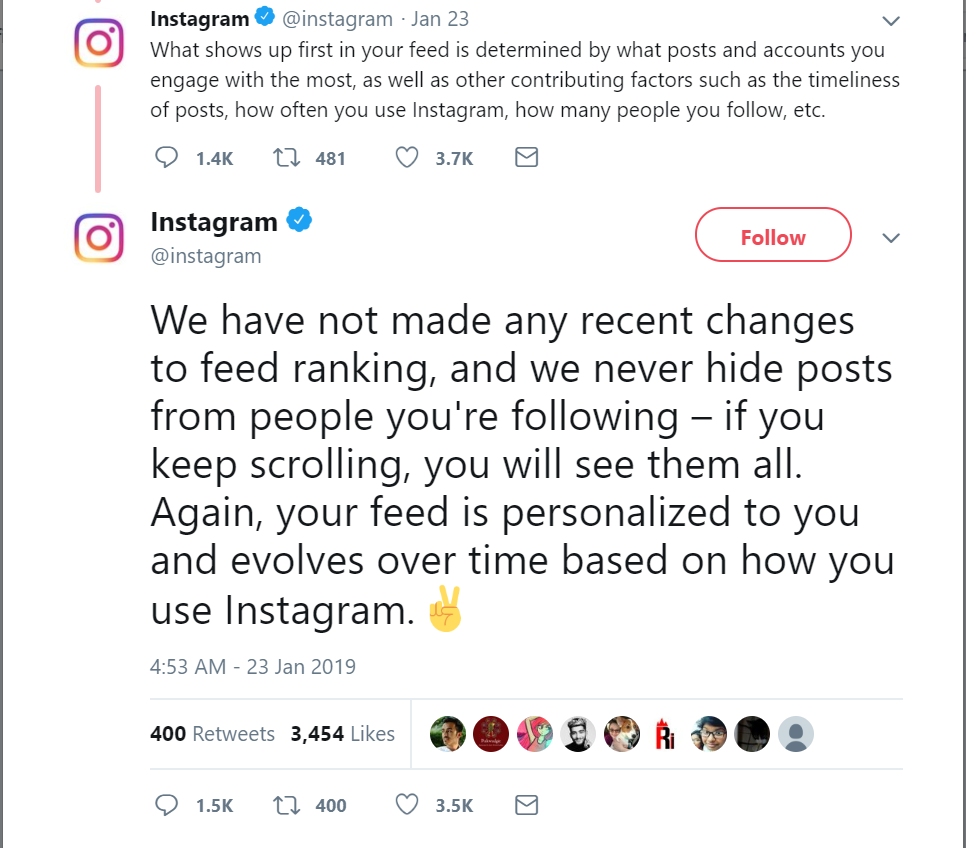
    Instagram has been quick to point out that it hasn’t specifically made any changes to its algorithm that limits post visibility. Instagram in a series of tweets from its official Twitter handle clarified the issue.


    Image via Twitter

    The official statement from Instagram clarifies that there have been no changes to the algorithm powering the Insta feed recently. Instagram acknowledges that what shows up in a user’s feed is personalised. This means, posts don’t appear chronologically but are based on how a particular user engages with his/her feed.

    Posts from accounts that you interact – like or comment – regularly appear at the top. Additionally, post order also depends on other factors like how frequently you use Instagram, the timeliness of posts, the number of people you follow and so on.

    Instagram states that if you keep scrolling, you can see posts from all user accounts that you are following.

    Even after Instagram released this statement, sceptics have been pointing out that the social media network doesn’t deny the “7% view limit” rumour outrightly.

    As Instagram clarifies in this thread – what a user sees in his/her feed is highly personalised and depends on several factors.

    For instance, let’s assume that you follow 200 user and business accounts on Insta. You regularly comment and like posts from only 20 of these user accounts. Then, every time you log into the Instagram app, you are likely to see posts from these 20 user accounts at the top of your Insta feed.

    Let’s assume, that each of these 20 accounts post multiple times a day and average around 2-3 posts per day. And, if you scroll through your feed only for a couple of minutes each time you check the app, then you are likely to see only the posts from your favourite accounts.

    That doesn’t mean, the other posts are hidden from you. You can continue scrolling below, to find posts from other accounts that you follow.

    As you can see, Instagram doesn’t limit content. Instead, the algorithm works in such a way to show you your preferred posts first so that you keep coming back to the app often.

    Social media experts claim that the rumour is not unbiased. However, the fault doesn’t lie with Instagram. For instance, if you have a business profile on Instagram with 100 followers, then only a handful of them are likely to be active followers. Your posts are expected to show up in the feeds of these active followers at the top. Whereas for the rest of your followers, your posts are likely to be buried in the feed deep down.

    This is the reason for this rumour asking users to like and comment on the post. Now, with Instagram clarifying that there are no changes to feed ranking recently, users need not worry that the popular photo-sharing site is creating a conspiracy to limit your post views.


  • Schedule Videos to Your Business Profiles with this New Feature from Instagram

    Schedule Videos to Your Business Profiles with this New Feature from Instagram

    Are you a social media manager or an influencer? Now, you can add video scheduling to your social media management apps, thanks to this latest tweak to Instagram’s API. 

    Instagram finally launches one of the most anticipated features by business Instagram account managers and social media influencers. The popular photo-sharing social media network updated the Instagram Graph API to facilitate video posts scheduling.

    Earlier the Instagram API allowed scheduling of only single-image posts and even third-party tools couldn’t schedule multi-image posts and videos. With the introduction of this feature, you can now use social media management apps to schedule your video posts, eliminating the need to log into the app frequently.

    Avoid the “Manual” Smartphone Workaround

    Before the availability of this feature, it was common for social media managers and influencers to set a mobile alert to remind them, it’s time to post on Instagram. As social media managers and business Instagram account owners, you would know that videos and images have to be posted at specific times to increase engagement rates.

    With the scheduling feature, now you can use third-party content publishing tools to schedule your videos, just like your single-image posts. Most of the popular scheduling tools like Hootsuite, Buffer, Social Report, and others are part of this video scheduling API.

    Video Scheduling Limited Only to Business Instagram Accounts

    Just like photo scheduling, video scheduling is available only to business Instagram accounts.If you are an influencer, you can easily migrate from a personal Instagram account to a business account. All you need is a corresponding Facebook page to link your business account.

    Video Guidelines for Instagram:

    Instagram is pretty strict with the specifications for videos that you can post on the platform, using this scheduling feature. Here’s what Instagram lists regarding specifications for the videos to be scheduled:

    • Format – MP4 or MOV
    • Audio Codec – AAC, mono or stereo, 48Khz sample rate maximum
    • Video Codec – H264 or HEVC, closed GOP, progressive scan, 4:2:0 subsampling
    • Frame Rates – 23 to 60 frames per second
    • Picture Size – 1920 (maximum horizontal pixels), maximum aspect ratio –16/9, minimum aspect ratio – 4/5
    • Duration – minimum: 3 seconds, maximum: 60 seconds
    • File Size – Maximum: 100 MB

    Your third-party scheduling tool will ensure that these limitations are implemented.

    Which Social Media Management Tools support Video Scheduling?

    While video scheduling has been one of the most requested updates from Instagram, it’s a surprise that Instagram made no formal announcements regarding this change to its API. Generally, Instagram announces new features and updates via its business blog. However, this API tweak was simply added to the features page during the end of December last year, without any formal announcements.

    Currently, Social Report, one of the popular social media management tools has implemented this feature. With that said, one can expect popular social media management tools like Buffer, Hootsuite and others to adapt to this change quickly.

    How will the New Feature Impact Users?

    Video scheduling was one of the most anticipated updates. This has the potential to change the social media game for business users and social media marketing houses. Instead of having to manually log into the app to post videos at odd hours or over the weekends, automatic scheduling takes care of it all.

    With video scheduling available, social media managers expect multi-image scheduling to follow suit.

  • How to Make Your Social Media Strategy Stronger For the Coming Year

    How to Make Your Social Media Strategy Stronger For the Coming Year

    With the end of 2018 approaching, it is that time of the year when you look back at all you have done throughout the year and improve for the year that awaits you. Social media strategies are far too dynamic, and can be hard to decipher.

    Here are some useful tips that help you improve your social media strategy for 2019.

    1. Review Your Current Social Media Performance
      The oldest trick in the book, you cannot know what your ails your social media output unless you review it thoroughly. You really need to take a step back and ask yourself which social media networks are you on, whether they are relevant to your brand’s goals, and most importantly, which of them are evidently sucking in time and yielding the least possible results.
    2. Optimise Your Social Media Networks
      Once you determine what is harming your social media strategy, the natural course of action would be to clean them off. You would need a cleaner and better social media bio entering into 2019.
      Ensure that your profile and header images are clear and that they include keywords in your “About us” section. Though all this is basic, it is more likely to be overlooked, and hence needs special attention.
    3. Know What You Are Aiming For
      By now you have a clearer understanding of what your social media plan lacks, and hence you fix those loose ends. But that cannot happen in the absence of goals you have in mind.
      Your social media goals do not have to be complicated. You need to set practical and achievable goals for yourself and push to achieve all that you set out to achieve.
    4. Create A Content Schedule
      Consistency is a major part of creating an online strategy that wins in the long run. When you have a content schedule, you will be able to notice the gaps in your earlier plans and target to close them off with better and more consistent content.
    5. Video Content Will Help
      Though a lot may have changed from last year to this, one thing remains – the hit ratio of video content. In the year ahead, there will be more reliance on online content, especially with the rise of Instagram stories and IGTV. Content is getting more and more visual, and you would have to ensure that you are ahead of the curve that matters.
    6. Repeat The Process
      Nothing can ever be achieved in the first go. But if you keep trying hard enough, you would eventually. You have to review the execution of your process, and keep going at it harder than before, filling more gaps than you did earlier.
      This way, you would soon have an effective fail-proof plan which will bring you better returns.

    In a dynamic industry like social media marketing, determining the elements in SMM that work for you is hard. These trends will be able to provide some guidance to marketers on how to best utilise the social media marketing campaign budget to generate maximum ROI in 2019.