LS Staging

Tag: social media management

  • Weekend Digital Media Round-up: Google’s Gallery Ads, Twitter’s personalization features, Pinterest’s new ‘shopping hub’ and More…

    Weekend Digital Media Round-up: Google’s Gallery Ads, Twitter’s personalization features, Pinterest’s new ‘shopping hub’ and More…

    1. Google Officially Launches Gallery Ads in Beta

    Google’s new gallery ads, first introduced this past May, are now rolling out to advertisers in beta. Gallery ads are a swipeable, image-based ad unit that appear at the top of search results. [Source: Search Engine Journal]

    2. Twitter Outlines Personalization Features Built Into Twitter.com Refresh

    Last month, Twitter rolled out its new and improved desktop experience to all users. Now, the company has outlined how users can change the font sizing, along with various other personalization choices which are built into the new format. [Source: Social Media Today]

    3. Pinterest adds new e-commerce layer with personalized ‘shopping hub’ atop user feed

    Pinterest continues to push e-commerce initiatives, introducing a personalized “shopping hub” last week that displays at the top of users’ feeds with product recommendations pulled from retailers’ organic Product Pins and Catalog feeds. [Source: Marketing Land]

    4. Google adds playable podcasts directly in the search results

    Google announced you can now play podcasts directly in the desktop and mobile search results. The company said this feature will also come to the Google Assistant later this year. [Source: Search Engine Land]

    5. Facebook Adds New Slideshow Option to Facebook Stories to Boost Usage

    In its latest attempt to get more people using Facebook Stories, Facebook has introduced a new Stories option, which will enable users to add a still image slideshow to their Story. [Source: Social Media Today]

    6. Reservations, AR navigation coming to Google Maps

    Google Maps users will soon be able to view their flight and hotel reservations directly from the mobile app and use augmented reality to direct them as they travel on foot. These new features are part of Google’s expanded Maps offerings aimed at travelers. [Source: Search Engine Land]

    7. Facebook’s updated Ads Manager UI is easier to navigate, but more work still needed, say advertisers

    As early as February, there were reports Facebook was updating its Ads Manager interface. In April, the company confirmed the update and said it was beginning to roll out the new version of Ads Manager. Some marketers share their insights on the new interface. [Source: Marketing Land]

    8. Google Updates Google Images to Make it Easier to Shop via Search

    Google has announced another social-like feature within Google Images. When you select an image, it will appear in a side panel on the page, next to the search results. To help make shopping decisions easier, when you select an image of a product, you’ll now see details such as the brand, price, availability and reviews. [Source: Social Media Today]

    9. AI augmentation to create $2.9 trillion business in 2021: Gartner

    In 2021, artificial intelligence (AI) augmentation will create $2.9 trillion of business value and 6.2 billion hours of worker productivity globally, according to research firm Gartner, Inc. [Source: Mint]

    10. Google Ad Manager, AdMob add support for app-ads.txt, to start blocking unauthorized ad serving for publishers this month

    The company announced that beginning August 27, Google Ad Manager and AdMob will block ad serving of unauthorized in-app ad inventory in both platforms when publishers have app-ads.txt files implemented. [Source: MARTECH TODAY]

  • Should my Business Worry about Libra, the new cryptocurrency from Facebook?

    Should my Business Worry about Libra, the new cryptocurrency from Facebook?

    After months of speculations, last week, Facebook announced that the social media giant would lift the curtains on “Libra,” a brand-new cryptocurrency, sometime in 2020. Facebook announced that Calibra is a newly formed subsidiary to the parent company and aims to provide seamless and secure financial services by using the Libra network.

    Calibra and Libra: A Quick Explanation

    While Libra is a digital currency, it doesn’t have much in common with Bitcoin, the original cryptocurrency. The value of Bitcoin is basically because of its scarcity, and though it has been around for nearly a decade, it’s still considered a niche currency, not used for daily, everyday payments.

    Libra, is like Bitcoin, in that it will be tied into a blockchain (this blockchain is currently under development by Facebook). The similarities end there. Unlike Bitcoin, you cannot mine Libra. Instead, you must pay for it and purchase it.

    Facebook believes that Libra will become the global currency standard, like the popular currencies USD, GBP, and EUR.

    Coming to the all-important question: how will the value of Libra be determined, since it doesn’t have real-world assets like a country backing it?

    This is where things turn interesting. The value of Libra will be guaranteed by real assets provided by the partners that buy into Facebook-cofounded Libra association. Facebook has managed to rope in industry biggies, including venture capitalists, tech companies, and non-profit associations.

    eBay, Lyft, Spotify, Uber, Union Square Ventures, PayPal, Visa, and Mastercard are some of the top names in the association. You can find more about the founding members of the Libra Association in the whitepaper published by Libra. The company will have its headquarters in Geneva, Switzerland.

    What does this mean for Regular Users?

    Will it bite the dust like that time when Facebook was trying developing nations to use its platform for all their internet access by offering them free internet? Or will Libra become the first-ever digital currency to go mainstream?

    While that needs to be seen, Facebook’s goal here is to make Libra the go-to currency for transferring funds to friends and family in other countries and to make it the number one payment option for both online and offline purchases.

    Initially, Facebook will offer Libra as part of WhatsApp and Facebook Messenger, with plans to move it into a stand-alone app, later.

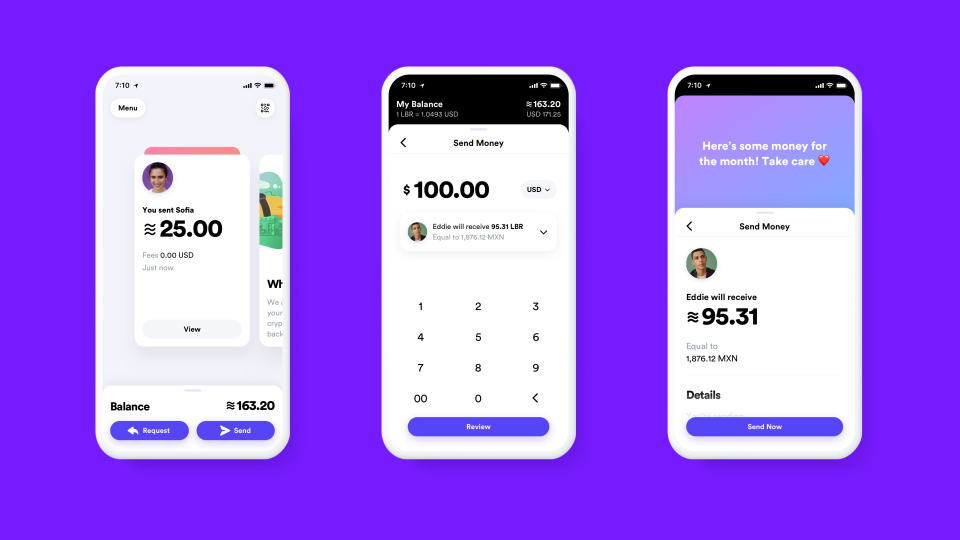
    This is where Calibra comes into the picture. Calibra is a digital wallet that will help users to save, spend, and send Libra. Initially, you can use the Calibra wallet to send and receive money instantly to anyone with a smartphone. Later Facebook plans to extend the functionality of Calibra to provide financial services for small businesses like paying bills, etc.

    sneak peek into Calibra’s interface, courtesy of Facebook.

    Calibra will use anti-fraud, and verification processes used by all leading credit cards, and provide live support to people who misplace their smartphone. Calibra even promises refunds if you lose your Libra because of fraudulent activities. Calibra will also value user privacy and will not share financial data with Facebook or other third-parties.

    Facebook claims that they are still a long way from launching Calibra. Interested users can sign up here to join the newsletter to be the first to receive information about the progress of Calibra and Libra.

    How will Libra and Calibra impact Businesses that sell via/on Facebook?

    Industry experts believe that entrepreneurs using Facebook pages for information about their products will not be impacted much. However, if you sell goods via Facebook, then you would have to make changes to include Libra as one of the payment currencies.

    However, since Facebook has an enormous reach, at least a few of your customers will be using the new crypto coin. Hence, it makes sense to include it in your payments page.

    When should you start making changes to include Libra?

    No hurries. Facebook is still in the process of development, and nothing has been confirmed yet. So, businesses need not panic and spend the interim time reading up on the merits and drawbacks of this brand-new venture from Facebook.

  • Facebook Ads are Getting Smarter: Here’s What Marketers Must Do to Thrive

    Facebook Ads are Getting Smarter: Here’s What Marketers Must Do to Thrive

    Facebook is a critical marketing channel for businesses of all sizes and across industries. With nearly 2.38 billion active users (stats for the first quarter of 2019), Facebook offers great opportunities for businesses to target current and potential customers.

    When done the right way, Facebook ads help businesses boost brand awareness, launch new products and services, sell more, and increase revenue. However, advertising on Facebook is not exactly what it may seem. Today, Facebook ads have grown smarter, and there’s a need for smarter paid ad strategies to meet your advertising objectives. Read on to know about what has changed and what you can do about it.

    What has Changed?

    There’s no denying the fact that Facebook feed has become oversaturated with ads. Similar ads are served to the same users, meaning brands lose out on their effectiveness and attention-grabbing abilities. Not to forget, the organic reach of the posts and ads on Facebook have taken a hit, thanks to recent algorithm changes.

    This means, today, most marketers on Facebook are forced to invest in paid campaigns or abandon the platform altogether. Despite the declining popularity of Facebook, the social media network managed to generate a whopping $16.6 billion in advertising revenue for the last quarter of 2018, which is a 30% increase compared to the previous year.

    This clearly shows that Facebook advertising is not dead as speculated. Rather what has changed is that Facebook ads have gotten smarter, and it is high time that marketers revised their advertising strategies on Facebook. In the cluttered social-media landscape of today, it’s essential that brands integrate robust paid strategies along with high-quality content generation to be successful.

    Shifting Advertising Goals – The Need of the Hour for Facebook Marketers

    According to Susan Wenograd, the Vice President of Marketing Strategy of Aimclear, for brands to thrive in the new era of social media advertising, there is a pressing need to revise the campaign goals. She believes that brands must re-examine their objectives and understand that conversion is just a part of the bigger picture.

    Brands must shift their focus away from CPA (Cost per Acquisition – Conversion) to CPM (Cost per thousand Impressions). Marketers must concentrate on building a more engaged and more qualified audience pool, to get the best ROI from their ad spends.

    It’s not just about picking the low-hanging fruit, but, brands must enhance their Facebook ad strategies to build qualified leads that improve brand awareness. Once advertisers have this data, they can use it for retargeting. Brands must build remarketing pools so that they can convert leads on all stages of the purchase funnel, helping them generate more revenue.

    Brands that can measure and understand user triggers are the ones that will be sustainable in the long run. Furthermore, brands must leverage cross-channel data to improve retargeting opportunities. Utilizing UTM parameters, tagging structures are some ways to streamline and segment data across channels.

    Not to Forget Quality Content

    All the above-discussed strategies may not yield the desired results, if the marketers do not have a high-quality content to back it up. With the social media landscape rapidly evolving, audiences demand high-quality, optimized content. Simply put, brands need to adapt to smarter Facebook ads with efficient strategies and high-quality creative content if they want to survive in the evolving social landscape of Facebook and Instagram paid ads.

  • Facebook Retiring Relevance Score – 3 New Metrics to be introduced in April

    Facebook Retiring Relevance Score – 3 New Metrics to be introduced in April

    In a recent major updated by Facebook, the social media giant bid adieu to the all-powerful ad relevance score. It announced that it is shutting down the ad relevance score and six other ad metrics on April 30. The company announced via a blog post that the single ad relevance score would no longer be available after 30th April. It also mentioned that it would start rolling out three new metrics in place of the old relevance score.

    What’s The Ad Relevance Score?

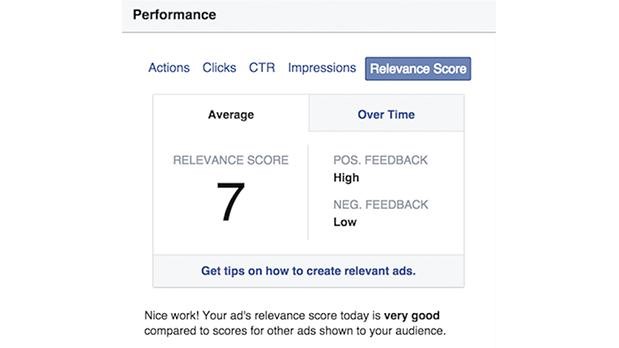
    Facebook introduced the ad relevance score in 2015 to help advertisers measure the effectiveness of their ad campaigns. Facebook explained at the time of introduction that the ad relevance score would be computed using the feedback received from the target audience. When an increased number of users engaged positively with the ad, the higher was the relevance score and vice versa.

    Image via Facebook

    The relevance score helped advertisers tailor their ad campaigns to deliver better performance and higher an ad’s relevance, the lower the cost for delivering it on Facebook.

    What’s Changing Now?

    Facebook recently explained that the relevance score is no longer sufficient to deliver actionable insight to advertisers. Hence, the social media giant plans to switch to more detailed metrics to evaluate ad performance.

    The company plans to roll out three brand new metrics in the coming weeks. They are:

    • Quality Ranking – This is a measure of the ad’s quality compared with similar ads that are targeting the same set of audience.
    • Engagement Rate Ranking – This is a measure of the ad’s expected engagement rates compared with similar ads targeting the same set of audience.
    • Conversion Rate Ranking – This is a measure of the ad’s expected conversion rates compared with similar ads targeting the same set of audience.

    Compared to the single metric used earlier, these three metrics will help advertisers get a clear idea of various elements of their ads like creativity, effective engagement and conversions. Thus, they can know which specific areas they should focus on boosting their ad performance.

    Facebook Also Retiring Other Less Used Ad Metrics

    Apart from the ad relevance score, Facebook is even shutting down other less used ad metrics and replacing them with better actionable options.

    Other Metrics that are Being Removed:

    • Offers Saved and Cost per Offers Saved

    This will be replaced with a “Post Saves” metric that will perform the work of both these metrics while offering you overall insights to monitor when your ads are saved.

    • Messaging Replies and Cost per Messaging Reply

    These two metrics will be replaced by “New Messaging Connections,” and “Messaging Conversations Started,” metrics correspondingly. You can still measure replies in your old conversations. However, the new metrics will offer more functionality for users interacting with your business for the first time, via a new messaging thread.

    • Mobile App Purchase ROAS and Web Purchase ROAS

    ROAS (Return on Ad Spends) will be aggregated into a single metric that will work for all channels – web, mobile and On-Facebook. The individual ROAS metrics will be replaced using a single holistic ROAS metric that will measure ROAS across channels.

    How Will These Changes Impact You?

    Facebook’s new metrics will help advertisers gain more insights for their ad performance campaigns. Advertisers can now build high-quality ad strategies to boost results and increase conversions.

  • Schedule Videos to Your Business Profiles with this New Feature from Instagram

    Schedule Videos to Your Business Profiles with this New Feature from Instagram

    Are you a social media manager or an influencer? Now, you can add video scheduling to your social media management apps, thanks to this latest tweak to Instagram’s API. 

    Instagram finally launches one of the most anticipated features by business Instagram account managers and social media influencers. The popular photo-sharing social media network updated the Instagram Graph API to facilitate video posts scheduling.

    Earlier the Instagram API allowed scheduling of only single-image posts and even third-party tools couldn’t schedule multi-image posts and videos. With the introduction of this feature, you can now use social media management apps to schedule your video posts, eliminating the need to log into the app frequently.

    Avoid the “Manual” Smartphone Workaround

    Before the availability of this feature, it was common for social media managers and influencers to set a mobile alert to remind them, it’s time to post on Instagram. As social media managers and business Instagram account owners, you would know that videos and images have to be posted at specific times to increase engagement rates.

    With the scheduling feature, now you can use third-party content publishing tools to schedule your videos, just like your single-image posts. Most of the popular scheduling tools like Hootsuite, Buffer, Social Report, and others are part of this video scheduling API.

    Video Scheduling Limited Only to Business Instagram Accounts

    Just like photo scheduling, video scheduling is available only to business Instagram accounts.If you are an influencer, you can easily migrate from a personal Instagram account to a business account. All you need is a corresponding Facebook page to link your business account.

    Video Guidelines for Instagram:

    Instagram is pretty strict with the specifications for videos that you can post on the platform, using this scheduling feature. Here’s what Instagram lists regarding specifications for the videos to be scheduled:

    • Format – MP4 or MOV
    • Audio Codec – AAC, mono or stereo, 48Khz sample rate maximum
    • Video Codec – H264 or HEVC, closed GOP, progressive scan, 4:2:0 subsampling
    • Frame Rates – 23 to 60 frames per second
    • Picture Size – 1920 (maximum horizontal pixels), maximum aspect ratio –16/9, minimum aspect ratio – 4/5
    • Duration – minimum: 3 seconds, maximum: 60 seconds
    • File Size – Maximum: 100 MB

    Your third-party scheduling tool will ensure that these limitations are implemented.

    Which Social Media Management Tools support Video Scheduling?

    While video scheduling has been one of the most requested updates from Instagram, it’s a surprise that Instagram made no formal announcements regarding this change to its API. Generally, Instagram announces new features and updates via its business blog. However, this API tweak was simply added to the features page during the end of December last year, without any formal announcements.

    Currently, Social Report, one of the popular social media management tools has implemented this feature. With that said, one can expect popular social media management tools like Buffer, Hootsuite and others to adapt to this change quickly.

    How will the New Feature Impact Users?

    Video scheduling was one of the most anticipated updates. This has the potential to change the social media game for business users and social media marketing houses. Instead of having to manually log into the app to post videos at odd hours or over the weekends, automatic scheduling takes care of it all.

    With video scheduling available, social media managers expect multi-image scheduling to follow suit.

  • How to Make Your Social Media Strategy Stronger For the Coming Year

    How to Make Your Social Media Strategy Stronger For the Coming Year

    With the end of 2018 approaching, it is that time of the year when you look back at all you have done throughout the year and improve for the year that awaits you. Social media strategies are far too dynamic, and can be hard to decipher.

    Here are some useful tips that help you improve your social media strategy for 2019.

    1. Review Your Current Social Media Performance
      The oldest trick in the book, you cannot know what your ails your social media output unless you review it thoroughly. You really need to take a step back and ask yourself which social media networks are you on, whether they are relevant to your brand’s goals, and most importantly, which of them are evidently sucking in time and yielding the least possible results.
    2. Optimise Your Social Media Networks
      Once you determine what is harming your social media strategy, the natural course of action would be to clean them off. You would need a cleaner and better social media bio entering into 2019.
      Ensure that your profile and header images are clear and that they include keywords in your “About us” section. Though all this is basic, it is more likely to be overlooked, and hence needs special attention.
    3. Know What You Are Aiming For
      By now you have a clearer understanding of what your social media plan lacks, and hence you fix those loose ends. But that cannot happen in the absence of goals you have in mind.
      Your social media goals do not have to be complicated. You need to set practical and achievable goals for yourself and push to achieve all that you set out to achieve.
    4. Create A Content Schedule
      Consistency is a major part of creating an online strategy that wins in the long run. When you have a content schedule, you will be able to notice the gaps in your earlier plans and target to close them off with better and more consistent content.
    5. Video Content Will Help
      Though a lot may have changed from last year to this, one thing remains – the hit ratio of video content. In the year ahead, there will be more reliance on online content, especially with the rise of Instagram stories and IGTV. Content is getting more and more visual, and you would have to ensure that you are ahead of the curve that matters.
    6. Repeat The Process
      Nothing can ever be achieved in the first go. But if you keep trying hard enough, you would eventually. You have to review the execution of your process, and keep going at it harder than before, filling more gaps than you did earlier.
      This way, you would soon have an effective fail-proof plan which will bring you better returns.

    In a dynamic industry like social media marketing, determining the elements in SMM that work for you is hard. These trends will be able to provide some guidance to marketers on how to best utilise the social media marketing campaign budget to generate maximum ROI in 2019.

  • Facebook introduces improved Analytics Capabilities for its Pages and further expands it for Instagram

    Facebook introduces improved Analytics Capabilities for its Pages and further expands it for Instagram

    Facebook has launched a beta version to bolster its own site analytics capabilities. It has also rolled out Instagram analytics for marketers to test their ad efficacy. The phase-wise rollout will span many weeks and would be visible on the Facebook analytics dashboard.

    Let’s take a look at what are the new features introduced with these two updates.

    1 – Advanced analytics (Facebook Pages)

    The current analytics concentrated on individual posts that were seen or acted upon by the users. However, the new features seek to go beyond post-level analytics and dig deeper into insights. The beta phase analytics page is designed to provide a broader level of data into KPIs including the different actions taken by users on the page.

    Some of these actions consist of Post Impression, Page follow/unfollow, Page like/unlike, among others. By capturing these valuable events, marketers get a complete picture of what users did after they landed on the particular page. This empowers the page admin and allows decision makers to get richer insights.

    The admins can now utilise the new analytics and blend it with the already existing data on the dashboard to carry out a lot of actions. These include the ability to build new audience segments, monitor the conversions happening from the page, and track the path followed in the buyer journey. The blend of new analytics with the existing dashboard can also help compare audience demographics by factors like activity and channel.

    2 – Instagram analytics

    Instagram analytics is a more significant improvement over the existing Instagram Insights. This gives a broader picture of how the users interact with a brand. Want to see how the new Instagram analytics is a step ahead of the existing analytics/insight reporting? Check out these two new instances that show the immense value add made by Instagram account analytics

    • The marketers can track far more number of metrics needed to gauge the efficacy of the Instagram ad campaign. Some of the essential KPIs tracked include retention rates and lifetime value (LTV). Users who interact with your brand ads and content will be a part of the analytics reports.
    • The admins will also be able to build new audience segments to target them better. Admins can also check out the overlap among users who have utilised various channels to interact with Instagram. These may include app installs, social media visits, or website visits.

    What do these updates mean?

    These updates denote Facebook’s attempt to help the marketers track their ad campaigns better. The social media giant also wants advertisers to use native tools within the analytics ecosystem in order to measure the value provided by the ads served on the social media platform. With 80% of Instagram users following a brand, it is the perfect time for Facebook to integrate high-performance analytics on the platform.

    It will be some time before we see how the new features on Facebook analytics and Instagram analytics shape up the campaign efficacy of marketers. But the new additions do look to be a step in the right direction.

  • Facebook Unveils New Ad Attribution System

    Facebook Unveils New Ad Attribution System

    The Ads Manager section for Facebook Business helps marketers to determine the right efficacy and right source of ad views. If a user takes action on an ad, it becomes difficult to understand which point of source is responsible for the action taken. Be it impressions or link clicks; it is important to know which parts of the advertising displayed in Facebook actually drive the expected outcomes from the ad.

    In order to improve its efficacy, the social media giant has now launched a new Attribution Dashboard. Re-christened simply as Facebook Attribution, the new ad measurement tool aims to provide more insights to ensure precise attribution for better ROI on marketing campaigns.

    What is new?

    For marketers who wish to optimise their ads, the new Facebook Attribution tool can provide some effective ways to measure the performance.  Facebook enables smarter decision making with the help of insights delivered in exciting ways. For instance, it helps you gauge the efficacy of each element of the Facebook presence. When used with Pixel Data (an analytics tool that helps marketers in retargeting), the tool can provide accurate data about how each of these elements is working in influencing your digital business revenue.

    Marketers can also detect the exact source which is driving the conversion. This helps them provide a more concrete connection between the ad viewed and the outcomes achieved. They will also be highly interested in the concept of data-driven attribution modeling. This lets them track, monitor, and measure the approximate impact of your marketing campaigns across multiple social media sites like Instagram, Audience Network, and of course, Facebook.

    What does it mean for marketers?

    Measuring ROI from social media campaigns has been tricky most of the times, especially when there can be multiple attributions to an action undertaken by a social media user. It is difficult to correlate which action translates to what kind of concrete action away from the digital landscape. So if you are looking for social media attribution for an in-store conversion, it is highly complex if not entirely impossible. In this scenario, it will be safe to say that Facebook Attribution can be of help in tracking how social media drives specific outcomes for businesses.

    For marketers, there is still a long way to go in terms of harnessing best results from the new reports and analytics presented by the Facebook Attribution tool. It is suggested to do some playing around with the tool to understand it in depth before assessing how useful it is for your specific use case in marketing and advertising.

    Facebook attribution comes in extremely handy for social ROI proof. So marketers can better look at the data points that impact the outcomes from specific ad campaigns. There is still a long way to go before it can accurately correlate online triggers to offline actions. But the fact remains that as compared to its earlier avatar, Facebook Attribution does provide much better clarity on the impacting factors around Facebook advertising.

  • Facebook’s Canvas Ads Gets a New Name and Updates

    Facebook’s Canvas Ads Gets a New Name and Updates

    Facebook had rolled out the ‘Canvas Ads’ feature in 2016 within the platform to help businesses advertise their product offerings in an eye-catching manner.  When activated, the section became a mini-site in itself with product listings displayed on the entire screen. With more and more purchasing decisions happening on the mobile currently, businesses find Canvas a viable channel within Facebook to get a creative outlet to display their brand online. It did help marketers compellingly tell brand stories, but Facebook thinks that the name itself doesn’t convey the gist of what the page does.

    To tackle this, it has now announced that it will be renaming the ‘Canvas Ads’ page to ‘Instant Experiences’, which is exactly what the social media platform does. The upgrade also consists of a few other back-end refinements in order to improve performance and page load speeds. Additionally, users now get to add in their contact details easily.

    What has changed?

    Here is a peek into the different changes brought about in the new ‘Instant Experiences’

    • Instant Storefront: allows businesses to display retail products in a grid format.
    • Instant Lookbook: prompts businesses to showcase their products in the context of a lifestyle image.
    • Instant Customer Acquisition: allows businesses to showcase the products and integrate a clear call to action for the user to carry out an action after seeing the ad.
    • Instant Storytelling: makes great use of graphics and video to let viewers know your brand better and connect with it.
    • Instant Form: allows people to quickly share their contact information for enquiries.

    Of these, the Instant Forms is a welcome addition. It helps users to leave behind an email or phone number so that the business can get back to you with a sales call.

    What’s in store for marketers?

    Marketers who want to track customer journey from initial view of the immersive ads right up to the conversion can now do so easily. This way they know when and how to re-engage with prospects. This is primarily driven by Facebook Pixel and third-party pixels into the campaign. If you are using Facebook Pixel on the website, it will automatically be integrated with the ‘Instant Experiences’ section as well. This tweak is expected to add substantial value to the marketing performance measurement function.

    It is indeed a refreshing change from the older interface provided by Canvas Ads. While the front end for “Instant Experiences” doesn’t undergo a radical transformation, there is a marked improvement in how the users respond to the interface. Especially with the Instant Forms options, the engagement part toward the buyer journey becomes easy to accomplish. For brands who haven’t tried out Canvas Ads in its previous avatar, the new “Instant Experiences” can be a great starting point to create Facebook ads and make an impact in front of Facebook users.

    Do write to us and let us know how your experience with the ‘Immersive Experiences’ ad display section within the social media platform was? We would love to hear from you.

  • Twitter Rolls Out Live Audio-Only Broadcast Feature for iOS

    Twitter Rolls Out Live Audio-Only Broadcast Feature for iOS

    Microblogging site Twitter has added exciting capabilities to the Twitter and Periscope platforms. It has been testing audio-only broadcast facility via the Periscope platform for a few weeks now. As a culmination of these efforts in the beta testing phase, the company announced this week that the audio-only feature is going live for all iOS users that utilise the Twitter platform and its live streaming app, Periscope.

    How to access this feature?

    The audio-only live streaming has an effective interface. Using the facility is simple and provides an elevated user experience. After the update, users can go to the ‘compose’ screen on the Twitter app and tap the ‘Go Live’ button. This opens up a regular live-streaming window. You will see a small microphone icon. This can be turned on to choose audio-only streaming. To turn it off, you need to tap the microphone icon again.

    Why the need for the change?

    Today the trend shows a very low response to audio-only live streaming. Even the popular video live streaming of content on Periscope has declined sharply in recent times. A primary reason for this is that public attention has shifted from viral moments, towards professionally generated content on other platforms like YouTube or Facebook.

    So, while Twitter had launched a broadcast facility within the app almost two years back, the public response to it has been tepid. Periscope had evidently lost substantial ground to Facebook and YouTube as far as live streaming of content is concerned. As a part of Twitter’s response to bring Periscope to the forefront again, it has re-oriented its focus on the live podcast and audio-only content that viewers can listen (but not see).

    Who would find this feature useful?

    Via the new feature, users can easily and quickly broadcast audio content on groups and individual walls. They can use the chatroom and other Periscope facilities at once. The app pitches in by designing a sound wave file that syncs with the audio being transmitted by the live sender. Even though the video is the go-to medium for generating, consuming, and sharing, Twitter hopes to do something different by going for audio-only content creation.

    This option can prove to be extremely useful in cases where the internet bandwidth is poor and hence video files may take a lot of time to be streamed live. In order to improve the experience in such problematic areas, it will be a smart move to go for audio-only content when doing live streaming. It can be useful in reporting live from areas that don’t have a good internet connection. It can also prove to be useful for someone who wants to be just heard (and not seen as is the case with live video streaming).

    The new update is now available for iOS users.

    Did you get a chance to use the audio-only broadcast feature? What are your views on this new feature? Do write to us and leave your comments in the box below.