LS Staging

Tag: SEO

  • SEO Technical Audit Checklist 2021: How to make your website crawler friendly

    SEO Technical Audit Checklist 2021: How to make your website crawler friendly

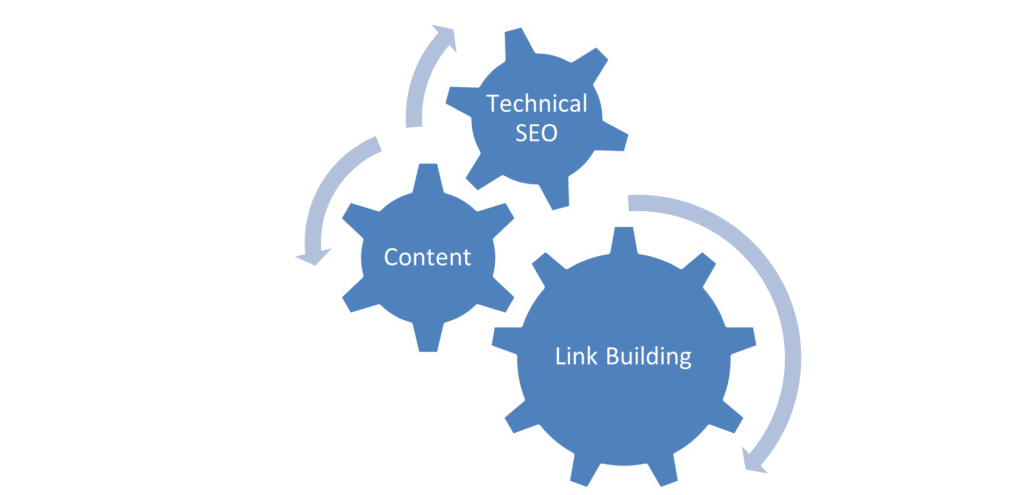
    SEO, as a process, basically consists of 3 important parts; Technical SEO, Content and Link Building.
    What is a Technical Audit?

    A technical audit is a process to check the crucial technical aspects of your website. Understanding and maintaining your website by identifying these technical aspects can help you rank prominently, drive organic traffic, and help achieve your goals.

    1. Content Visibility 

    Since content plays a huge role in targeting our keywords and providing relevant information for our product offering, it is imperative to ensure that the content is visible and available to the user and the web crawlers. This makes it a good first step for a technical audit.

    Ensure that the homepage, category pages, product pages, and all other high priority pages are visible to the user and available to the crawler.

    Given below are a few methods to check if the content is readable to the crawlers

    • Disabling JavaScript

    JavaScript can be disabled in Chrome to see if any critical elements of the webpage are not rendered. Unrenderable content, links or navigation elements could indicate that the crawler cannot view the webpage present. 
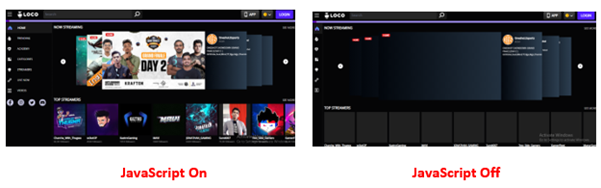
    Since Google has stated that it can render JavaScript websites now, a few additional checks need to be performed to ensure that the website’s content is renderable.

    • Cached version of the website

    A cached version of the website

    One way to check how the Googlebot views your page is to check the cached version. Checking the cached version of the webpage can help you identify if any essential content elements of the website are missing or not being rendered correctly.

    Given below are methods to check the same

    • Use the “site:” search operator in Google to find your page in the index (e.g., Site: example.com/abc)
    • Click on the three dots next to the page’s URL and click on ‘Cached

    This will show you the cached version of Google’s page in their index from the last time it was crawled.

    • The text-only version will help you understand if the content present in a webpage is rendered properly. 
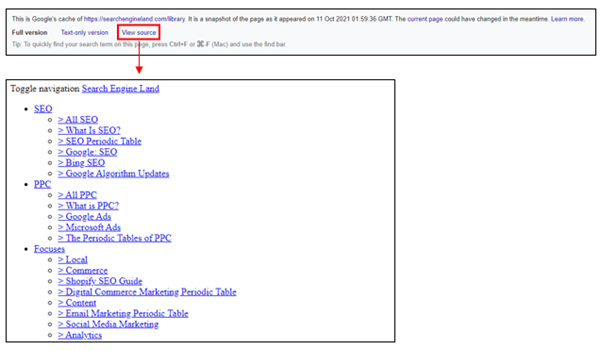
    Alternatively, you can check the cached version of a specific page using the “cache:” operator (cache: example.com/example-url)

    Content Rendering

    To analyse if the content on the webpage is visible, we also need to understand how content is rendered. Rendering is the process where Googlebot retrieves your pages, runs your code, and assesses your content to understand the layout or structure of your site.

    There are three different types of rendering for web pages that can be leveraged to present content to the user and bot

    • Client-Side Rendering
    • Server-Side Rendering
    • Dynamic Rendering

    The debate between client-side rendering, server-side rendering, or dynamic rendering is only relevant for websites that utilise JavaScript. If your website is purely HTML, there’s nothing that human users or search engine bots need to render.

    Refer to the below-mentioned link for more information about Content Rendering

    (Reference Link)

    2. Indexation Checks

    To rank for relevant terms, increase visibility, and improve organic traffic, one must ensure that all website’s important pages are indexed in Google. 

    Given below are a few checks that you must do to check indexation

    • Google site: query

    In the Google search field or browser Chrome search bar, you would type in the following:

    site:www.abc.com

    This, in turn, will give you a list of all the indexed pages of your website, thereby helping you understand any indexation issues if present.

    The site: query can also be filtered using different options for specific indexation checks

    site:www.abc.com/subdirectory/

    Only displays the indexed pages in the directory /subdirectory/

    site:www.abc.com Phrase of choice

    Only displays those indexed pages which contain the phrase of your choice

    site:www.abc.com inurl:phrase

    Only displays those indexed pages which contain the word “phrase” in the URL

    site:www.abc.com intitle:phrase

    Only displays those indexed pages which contain the word “phrase” in the title

    site:www.abc.com filetype:pdf

    Only displays those indexed files with the chosen filetype

    • Google Search Console

    Google Search Console provides an overview of the indexed pages. Indexation can be checked by clicking on the option ‘Coverage’ under the ‘Index’ section.
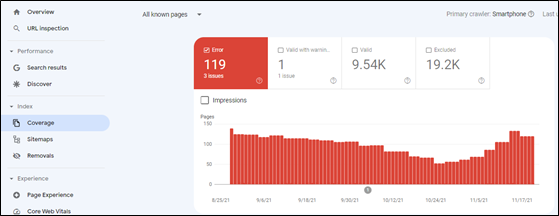
    As seen from the above illustration, Google Search Console also provides valuable insights concerning indexed pages, including the presence of ‘no index’ tags, 404 pages, and server errors.

    3. Duplicate Content Checks

    Duplicate content confuses Google in choosing the identical pages that it should rank in the top results. This, in turn, harms website ranking, thereby leading to a drop in organic traffic in the process.

    Given below are a few checks that you must do to prevent content duplication

    • On-Page Elements

    Make sure that all the pages have a unique page title and meta description in the HTML code of the pages. Also, headings (H1, H2, H3 etc.) should be unique for every page. 

    • Use of Proper Canonical URLs

    The canonical tag is an integral part of letting Google know which site is original and should be ranked and which pages should not be ranked. If there are multiple similar pages, Google will be confused concerning ranking. As a result, it is vital to ensure that a proper canonical tag is defined pointing towards the master page.

    • HTTP vs HTTPS or WWW vs non-WWW pages

    If your site has separate versions for abc.com and www.abc.com (non- WWW and WWW versions of the website), Google will identify both the versions as duplicate content, thereby negatively affecting indexation and rankings. Similarly, different versions for HTTP and HTTPS can also create duplicate content issues. Proper 301 redirect (Permanent Redirect) should be employed to prevent duplication issues.

    • Use of Hreflang tags

    Hreflang tags are code snippets that tell search engines what language the content on a page of your site is written in, what geographical region it’s intended for and its relation to other pages of the website.

    Example

    <link rel=”alternate” hreflang=”en-in” href=”http://www.abc.com/in/” />

    With respect to multilingual websites, it is highly imperative to implement hreflang tags correctly.

    Refer to the below-mentioned link for more information on Hreflang Tags

    (Reference Link)

    4. Secure Protocols (HTTPS)

    As per Google, HTTPS is a ranking signal. To capitalise on the same, one needs to ensure that non-secure versions (HTTP) are changed to HTTPS.

    Given below are a few checks you must do to get a sense of the overall security protocol of the website.

    • Check the website’s homepage, category pages and product pages for HTTPS. Try accessing the website using the Non-Secure Protocol (HTTP) and check if it is getting redirected to the relevant HTTPS version of the website. The presence of the HTTP version of the websites can create mixed content issues like content duplication.
    • You can use Google’s Lighthouse browser plugin to verify if HTTPS has been used across the website. With the plugin installed, click ‘Generate Report’. Once the report id is generated, check under Best Practices > Passed Audits
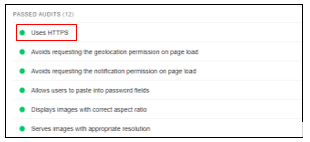
    Source – Lighthouse

    Refer the below mentioned link for more information about HTTPS

    (Reference Link)

    5. Scanning for Broken Links

    To ensure that we cater relevant pages to the crawler and user, we need to check for pages displaying a 404-error status code (Page Not Found). Broken links on indexation can lead the users to an error page, thereby having a negative impact on user experience. 

    The Search Console ‘Coverage’ report can help you identify any error pages present on the website. On selecting ‘Errors’, one can scroll down and check for pages displaying a 404-status code.
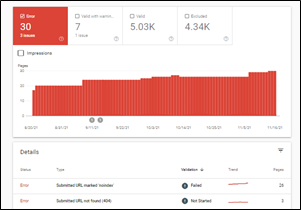
    Source – Google Search Console

    These pages can be redirected to other relevant pages within the website to ensure that we do not lose out on potential traffic.

    6. Auditing Robots.txt file

    A robots.txt file tells search engine crawlers which URLs the crawler can access on your site. It is mainly a directive to ensure that only relevant pages are presented to the crawler to ensure maximum coverage and avoid irrelevant indexing pages.

    The robots.txt file can be accessed by typing in the below-mentioned URL

    (Reference Link)

    The most common directive to ensure that all the pages are accessible to the crawler is as given below.

    User-Agent: *

    Disallow:

    Sitemaphttps://abc.com/sitemap.xml

    The asterisk symbol (*) denotes all user agents. Pages that need to be blocked can be added in the disallow directive. In contrast, the XML sitemap will present the crawler with all the website’s relevant pages, facilitating smooth crawling.

    Refer to the below-mentioned link for more information about how robots.txt works

    (Reference Link)

    7. Auditing XML Sitemap

    An XML Sitemap is a file that contains a list of all the crucial pages of the website to help Google find and index the same. The XML Sitemap can be accessed by typing in the below-mentioned URL

    (Reference Link)

    The exact URL of the XML sitemap can also be located in the robots.txt file.

    One must ensure that the XML Sitemap only contains relevant URLs that you want to get indexed.

    The XML Sitemap can also be added to Google Search Console by choosing the ‘Sitemap’ option under the ‘Index’ section to analyse if all the URLs present are valid and improve discoverability.
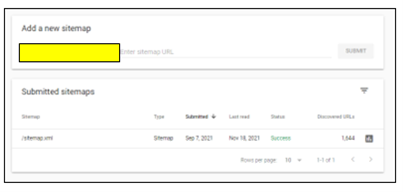
    Refer the below mentioned link for more information about XML Sitemaps

    (Reference Link)

    8. Auditing HTML Sitemap

    HTML Sitemap is an HTML file that contains all the website’s important pages and creates a general picture of the entire website. In simpler terms, XML Sitemap is for crawlers to understand the site structure, whereas an HTML Sitemap serves users with relevant pages of the website.

    The HTML Sitemap is usually located at the website’s footer section, helping users understand the site hierarchy in detail, thereby facilitating smooth navigation.
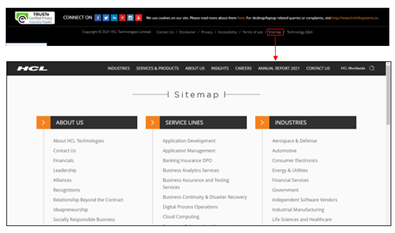
    Like XML Sitemap, one must ensure that only relevant pages are added in the HTML Sitemap.

    9. Page Speed Checks

    Page speed is a measurement of how fast the content on your page loads.

    Page speed is often confused with “site speed,” which is the page speed for a sample of page views on a site. Page speed can be described in either “page load time” (the time it takes to display the content on a specific page fully) or “time to first byte” (how long it takes for your browser to receive the first byte of information from the webserver).

    For both desktop and mobile search rankings, Google has announced that page speed is a ranking factor. Page speed also can poorly affect user experience, increase exits, and increase bounce rate.

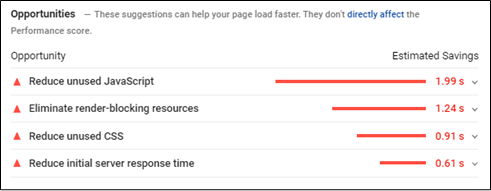
    Go to the Google PageSpeed Insights tool and enter your site’s URL

    The tool, in turn, will provide a score for your desktop and mobile version with specific recommendations to help improve the page score and eventually improve the website experience as well.
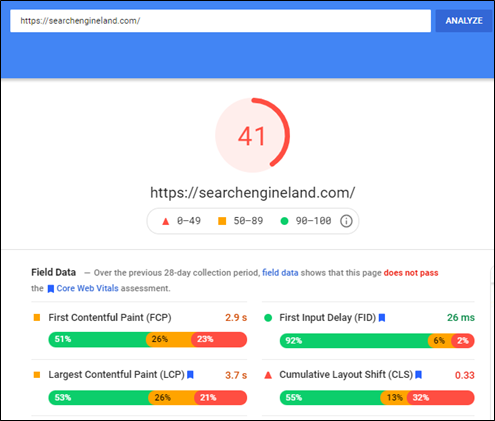
    Core Web Vitals

    Core Web Vitals are a set of specific factors that Google considers important in a webpage’s overall user experience. Core Web Vitals are made up of three specific page speed and user interaction measurements: LCP (Largest Contentful Paint), FID (First Input Delay), and CLS (Cumulative Layout Shift)

    Since Google has made Core Web Vitals an important ranking factor, ensuring that the scores meet the guidelines set is vital.

    Core Web Vitals can be checked using Google Search Console in the ‘Experience’ section.
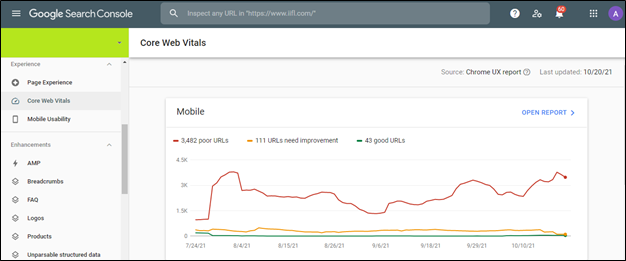
    Core Web Vital scores for all URLs on Mobile and Desktop is given in the above dashboard. This makes it easier to identify and optimise the pages based on three vital parameters.

    Refer to the below-mentioned link for more information about Google Search Console

    (Reference Link)

    1. Mobile Checks

    With the advent of mobile-first indexing and the increasing number of mobile phone users, it is imperative to ensure that the website is mobile-friendly for user experience, indexation and ranking purpose.

    Mobile Optimization ensures that mobile visitors have an experience optimised for their device and considers factors such as website design, site structure, page speed and more to ensure a seamless and quality mobile experience.

    Given below are a few vital mobile checks that you must do

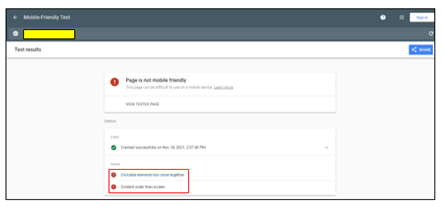
    • Use the Mobile-Friendly Test Tool

    The Google Mobile-Friendly Test is a free tool that allows you to type in the website URL and find out how mobile-friendly Google thinks their site is. It also gives specific recommendations concerning mobile checks, helping identify any issues (if any).
    Content Mismatch

    It is vital to ensure that the content present on the mobile device and desktop is the same. Keeping in mind the mobile-first approach taken by Google, if your mobile site has less content than your desktop version, Google might not get additional information about your website, thereby hampering the indexation and ranking of the website.

    Although different designs can be adopted for the mobile version to maximise user experience (Creation of accordions and tabs to show content), the content present should be exactly like that of the desktop version

    • Use Large Buttons

    Mobile-friendly websites need to have call to action buttons that are large enough to induce users to tap them rather than zoom. This, in turn, makes it easier for the user to navigate and increases user-friendliness in the process.

    Additionally, there needs to be spacing between hyperlinks. If links are placed too close to each other, users might attempt to click on a link and accidentally click on a different one, thereby hampering user experience in the process.

    • Make the text large enough to read

    The text on the website needs to be legible and large enough, thereby making it comfortable to read. Users should not have to zoom in and scroll left or right to read something as this might negatively affect user experience.

    • Navigation Mismatch

    The options present under the navigation in the mobile version should be similar to the desktop version to ensure accessibility. Missing options in the navigation menu can affect the website’s visibility, affect ranking, and hurt user-friendliness.

    • Simplification of Navigation Menus

    Since desktop website menus have a lot of space, they can take up the entire bar at the top of the screen with additional drop-down options without negatively impacting the user experience.

    There isn’t much space to incorporate the menu like the desktop version with respect to mobile devices.

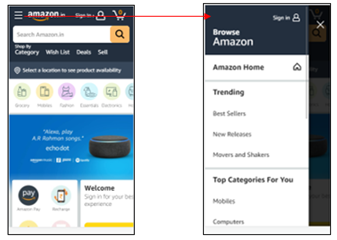
    Mobile-friendly websites must use simple menus that are easy to use and present an accurate overview of the website. Users can then use categories, filters, or the search functionality to navigate further.

    Most mobile-friendly websites use the hamburger menu. A hamburger menu, when clicked, opens to reveal a navigation menu, thereby not utilising a large amount of space.
    • Avoid Pop-Ups and Intrusive Interstitials

    In 2017, Google rolled out an algorithm change that penalizes websites that include specific types of pop-ups on mobile devices.

    As stated by Google, the below mentioned pop-ups can have a negative effect on the website by making content less accessible.
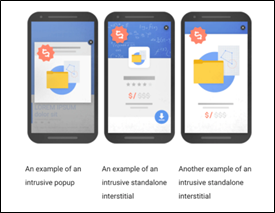
    Source – (Reference Link)

    As seen from the image, any pop-up or interstitial that makes it difficult to access the content is termed as intrusive and can lead to further penalties.

    Given below are the pop-ups that are not deemed as intrusive thereby having no negative effect on the website
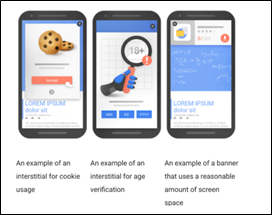
    Source – (Reference Link)

    As seen from the above image, pop-ups that do not take much space, add value to the user journey and cookie usage settings are not deemed as intrusive.

    11. Auditing Backlinks

    Backlink Audit is the process of analyzing links pointing your website. The process involves identifying good and bad backlinks and developing a robust strategy.

    Backlinks for your website can be downloaded from Google Search Console by choosing the ‘Links’ option.

    Backlinks can also be extracted by third party tools like Ahrefs and Majestic SEO.

    Given below are few steps to understand how backlinks need to be audited

    • Benchmark Your Backlink Profile Against Competitors

    With the help of third-party tools, we can analyze the backlinks for our competitors to understand the quality for the same. This can help you create a robust link building strategy for your website.

    • Find and Evaluate Each Backlink You Have

    Backlink portfolio of the website needs to be analyzed in order to identify and remove irrelevant and spammy links pointing to your website.

    Since, Google can penalize you for disavowing sites for no apparent reason, it is highly important to ensure that only spammy links are disavowed.

    Irrelevant backlinks can be divided into two separate categories: Low Quality Links and Spammy Links.

    In case of low-quality links, one can reach out to the site owner to get the link removed from their end. Whereas in case of Spammy links (Porn Sites, Casino Sites etc.) , they can be removed by submitting a list of URLs in Disavow Links (Reference Link)

    • Domain Authority (DA) Bifurcation of website

    Domain Authority of a website describes its relevance for a specific subject area or industry. The domain authority score helps us understand the authority of the website for that industry.

    Getting backlinks from high domain authority will not only help solidify our backlink portfolio but also help increase our domain authority in the process.

    • Anchor text diversification

    Anchor texts are the visible, clickable words used to link one page to another. Anchor texts can have a major influence on rankings in the search engine result pages since the crawler gets more information about your brand and product offering through the anchor text. As a result of which, it is highly important to ensure that we do not overuse terms like click here, learn more etc. Anchor texts should have a healthy mix of brand terms and relevant non brand terms to ensure relevancy and visibility.

    12. Analytics Set Up

    If Google Analytics is already set up, ensure that it is set up and working properly to get accurate data.

    Checks that can be done to ensure proper set up

    • Source Code

    Check your source code (Ctrl+U) of the Home Page, main category pages, and product pages for the presence of the tracking code associated with your Analytics account and property. Since some Content Management Systems handle page templates differently, it’s a good idea to check each kind to make sure tracking is consistent.

    The code should be installed in the head tags (between <head> and </head>) and usually includes an ID that you can match with your Analytics property/view.

    • Google Tag Assistant

    Google’s Tag Assistant browser plugin can help verify if the tracking code is installed correctly.

    • Analyze the Google Analytics Traffic

    If you see extreme shifts in data, then it could be an indication that the tracking code present is not firing properly when loaded.

    In your Google Analytics data, look for periods with no sessions, sudden change in traffic and very high/low bounce rate. These can be symptoms of potential tracking code issues

    13. Accessing Google Search Console

    Search Console is a free tool from Google that helps developers, website owners, and SEO professionals understand how their site is performing on Google Search.

    Search Console allows you to check indexing status and optimize visibility for the website. It also allows you to check for pages displaying server error, manual actions, page experience, core web vitals to help identify issues within the website.

    Refer the below mentioned link for more information about Google Search Console
    (Reference Link)

  • SEO in 2022 – Checklist for Brands and Marketers

    SEO in 2022 – Checklist for Brands and Marketers

    While hosting good content will always be a top priority, businesses today know that growing organic traffic to their website is equally important for increasing their online visibility. As a result, there has been a renewed interest and focus on SEO strategies that can help in growing website traffic.

    Digital marketers are keeping abreast of the latest trends and techniques in search engine optimisation and how to leverage them in recent times.

    So what do marketers need to focus on in 2022 when it comes to leveraging SEO? Let’s find out.

    Core Web Vitals

    The Google algorithm uses certain page experience signals to determine the quality of the websites and rank them accordingly. In June 2021, Google added three new page experience signals that are collectively called the Core Web Vitals. These three web vitals are-

    • Largest Contentful Paint (LCP)

    LCP measures the time taken by the largest visible image or block of text on the web page to load.

    • First Input Delay (FID)

    FID measures the time delay between the user’s first interaction and the browser’s response to the user interaction.

    • Cumulative Layout Shift (CLS)

    CLS measures the stability of the website content while the site is still loading.

    The emphasis is on page rendering speed and stability. While websites with simple and static contents are unlikely to be immediately affected by the core web vitals, dynamic websites that host advertisements can get affected in the google ranking algorithm.

    However, digital marketers can start reviewing their SEO strategy and make changes before they experience any drastic change in their ranking in Google search. Furthermore, Google had publicised these changes well in advance, showing the intent to help the SEO and developer community to better prepare their web content.

    Making Websites Mobile Friendly

    The smartphone penetration, along with affordable internet services, has been phenomenal even in developing economies. For instance, India has many households where there is a smartphone but no desktop or laptop PC.

    As a result, most internet surfing today is happening through mobile phones. Therefore, it was inevitable that the Google search algorithm would prioritise mobile-friendly websites.

    So, it is no surprise that starting from 2019, mobile-friendly websites are indexed first by default.

    Understanding MUM

    The Google Multitask Unified Model, or MUM, will use an AI-powered algorithm to improve the online search experience. MUM aims to remove the need for multiple searches by the user. Instead, it aims to interpret the search context through text, images, videos, and audio to understand the user’s needs.

    Furthermore, it understands 75 different languages. Thus, it has the potential to refine over time to understand complex queries used in human-to-human conversations.

    While MUM will be currently introduced as an update to Google Lens, it has a vast potential to change the online search experience completely.

    Therefore, digital marketers will be keeping an eye on how things turn out with MUM. But, for now, marketers need to focus on image optimisation through alt tags, geotagging, etc.

    Emphasise on Voice Search

    We have already witnessed the launch of some fascinating voice-based apps and products such as Amazon’s Alexa, Apple’s Siri, or Google Assistance. It is therefore imperative for businesses to make their websites more conversation-friendly.

    This means more query-based segregation of contents where conversational-style questions are framed to get favourable search results.

    For example, consider using the query “ How to open a bank account?” instead of using the traditional “Steps to open a bank account”.

    Google Does Not Want Searchers to Visit your Website

    About 49% of Google Searches lead to no-clicks. Google wants brands to answer people’s queries without taking them away from the search engine. Snippets can help you rank better, but it also is a double-edged sword as it could mean the visitor may not click on the link and may be satisfied with the answer provided. While this may seem detrimental for your SEO, featuring snippets can help you get a better ranking and build your brand value. This, in turn, can impact your overall SEO score.

    Rank Better in 2022 with SEO

    Creative advertisements, quality content, and storytelling will remain integral to brand-building and sustained business growth. However, SEO is likely to play an equally big part, if not more, in shaping the online visibility of businesses.

    With Google tweaking its algorithm every once in a while in addition to incorporating new features or parameters, the world of digital marketing will surely witness some interesting times ahead.

  • Unleash SEO to Build your Brand with these 9 Best-kept Secrets

    Unleash SEO to Build your Brand with these 9 Best-kept Secrets

    Marketers often use search Engine Optimization (SEO) to meet various marketing and business goals, such as;

    • Generate leads
    • Increase traffic
    • Improve sales
    • Increase ranking for some important keywords

    However, many marketers join the SEO bandwagon quite late in their business journey, which many experts advise against. Not implementing a solid SEO strategy while building your brand can cause a disconnect between your branding and SEO strategy, which might cost you later. Moreover, branding can have a positive impact on your SEO and vice versa.

    Let’s have a look at how good SEO can impact your brand awareness and visibility.

    1. Posting Awareness Stage Content

    The top-of-the-funnel contents such as blogs, social media updates, infographics, e-books, web pages, newsletters, primary researches, etc., facilitate awareness. The Google search algorithm prioritizes such contents to provide the most relevant information to a user’s query.

    Use long-tail key phrases that are closely related to your content and design your content around them. Add semantic key phrases and questions as subheadings.

    For example, if you are using a long-tail key phrase like cook traditional Goan Fish Curry, then use semantic key phrases like coconut milk, tamarinds paste, red onion. Some related graphics can also help.

    • Focus on the User Experience, Not on the Technology Employed

    Starting May 2021, Google has stopped differentiating between AMP (Accelerated Mobile Pages) and Non-AMP pages. This means any web page can have a shot at the top ranking depending upon its newsworthiness. All you need to do is submit your website to Google News. Along with great content and optimization, your website can rank in top stories.

    • The Right Mix of Organic and Paid Ads at the Right Time

    With smarter algorithms and SEOs, people are becoming smarter too. People prefer organic and natural search results to paid advertisements. However, this doesn’t necessarily mean paid ads are bad. In fact, when done right, paid ad campaigns can help you improve your brand awareness and expose your brand to a completely new set of audiences. The secret lies in using the right mix at the right time after evaluating your business goals, your budget and your marketing strategy.

    • Keep Yourself Updated with Google SEO Updates

    Google has never been so transparent in the past regarding its ranking methodologies. While it still shies away from sharing exceptional details regarding its new core web vitals, a dive into some of its blogs and tweets can give you a good idea of where it’s headed in the future. 

    • Target Long-Tail Keywords in the Beginning

    Many marketers commit the cardinal mistake of wasting too many resources trying to rank for primary keywords when building a brand. However, this is easier said than done. While the keyword’s search volume might attract you, it also means higher competition. It isn’t easy to compete with another site with a much higher domain score and authority and is already getting a lot of traffic for the keyword. So instead, focus on long-tail keywords and build your way up to rank for some of the primary keywords as well.

    • Don’t Take Voice Search Lightly

    We are not even considering smart speakers yet. But more and more people are using voice search through their smartphones. Therefore, you should consider including voice search in your SEOs. You can consider including answers to the most asked questions in a lucid manner. Above all, it should appear natural.

    • Use Snippets for Branding

    Let’s face it. Google wants us to answer searcher’s queries without us taking them to our website. Whether you look at the emergence of voice search or the snippets or even Google My Business, it’s pretty evident, people don’t want to visit a site unless they’re very sure and want to explore further. Now, this is both a challenge and an opportunity. Focusing on snippets can help you answer your searcher’s queries and win their trust. If you’ve helped them once, they’re more likely to trust you when they’re looking for a service or product that you offer.

    • Go Local Build Global with GMB

    Google My Business is a great way to build your brand from scratch locally. It offers many features such as recommendations, ratings, and product descriptions that can improve your local SEO and brand awareness. In fact, as more and more people look for genuine reviews, GMB is emerging as a trustworthy resource for searchers to find out the true information about a company.

    • Publish EAT (Expertise Authority Trustworthiness) Content

    The google search algorithm thrives on excellence. Therefore, try to publish original and trustworthy content that proves your authority and expertise on the subject matter. Keep consistency and regularity in publishing your data, and Google can catch you up on its search results.

    Rome was not built in a day. Neither do brands. However, SEO can help you build a brand that can outgrow itself into an idea or even a way of life. Use these tips to build your brand awareness and visibility early on. It can go a long way in improving your authority in the space and garner a bigger market share.

  • 3 Ways in Which Branding Impacts Your SEO and ROI

    3 Ways in Which Branding Impacts Your SEO and ROI

    When it comes to ranking in SERPs, bigger brands are generally given preferential treatment. Even with fewer links and keywords, they often rank higher than smaller brands. Whenever they are penalized, you’ll see them resurfacing only after a few days. But the same is not true for smaller companies.

    Sounds not fair? You can also get this unfair advantage by building your ‘B’ quotient.

    So, if you own a small business and working twice as hard on your SEO strategy, it might still be very challenging for you to enjoy the privileges of bigger brands. This, in itself, is a significant reason for smaller businesses to focus on their branding.

    More importantly, the advantage of branding is not limited to SEO. It is also one of the most effective ways to build customer loyalty and improve your ROI.

    Here are 3 different ways in which branding can boost your SEO and ROI-

    1. Branding Boosts Awareness

    Start-ups offering a never-heard-before product or service need to understand that people will not be searching for them as they don’t know something like that even exists. And if people are not searching for a brand, its products, or services, it will not get the clicks, traffic, or sales.

    Branding is the most commonly used strategy to improve brand awareness. It helps people know about your business, what you do, and what products/services you offer.

    When someone searches specifically for your brand or what you offer, it gets much easier to rank at the top spot in SERPs.

    2. Brand Recognition Key for Receiving Clicks

    While SEO aims to help you rank higher, you ultimately want people to click on your link and visit your webpages.

    Now, let us assume that there is a small sportswear brand that sells sports shoes. When someone searches for the term “sports shoes” on Google, the chances of them clicking on a result from a global brand like Nike is significantly higher even if the new brand is listed at one of the top positions.

    The point here is,

    While ranking is essential, brand recognition will many times outweigh the ranking especially.

    If searchers know your brand, there is a high possibility that they will click on your link in the search results even if you are at the 2nd or 3rd spot and not some rather unknown brand that holds a slightly higher position than yours.

    3. Branding Builds Customer Loyalty

    At the heart of it, branding is about building an emotional connection with the target audience. You don’t want people to shop from your brand just once. You want them to consider you every time they think or talk about products or services related to your industry.

    Brand loyalty aspect plays a significant role in your ROI too.  

    According to research by KPMG, 55% of Indian consumers have agreed to shop from their favourite brand even if there are other cheaper and more convenient options available. So, by working on your branding, you will not only be able to improve the results of your SEO strategy but also work your way towards an improved ROI.

    Improving Your SEO and ROI with Branding

    Modern consumers prefer shopping for products or services from brands that have an emotional appeal. If you are able to get this appeal right, your business can experience its extensive benefits, especially with regard to SEO and ROI.

    Branding is the most effective way to build your brand identity and create something your target audience could relate to. Brands can work with a reputable digital marketing company to build a custom branding strategy that fulfils their business objectives and customer expectations.

  • 3 SEO Trends Marketers Should Watch Out For in 2021

    3 SEO Trends Marketers Should Watch Out For in 2021

    No matter how small or extensive your digital goals are, Search Engine Optimization or SEO is one aspect that cannot be ignored. It is worth noting that according to a report on Search Engine Land, 70%-80% of the search engine users completely ignore paid ads. SEO thus becomes the only way to land a spot in top organic search results.

    But the dynamic SEO landscape requires marketers to effectively track every new trend for helping their employers and clients stay competitive and further improve their search rankings. Every new year introduces some significant changes in the world of SEO. 2021 is expected to be no different. Here are 3 SEO trends that marketers should watch out for in 2021-

    1. AI Gains Prominence

    RankBrain, Google’s AI algorithm, is expected to influence search results in the future significantly. Unlike other ranking metrics that are based on insights and discoveries, RankBrain has the unique ability to learn and improve itself.

    While Google has not provided any information with regard to how websites can be optimized for their AI algorithm, experts believe that signals related to user experience will be vital. Factors like clickthrough rate, engaging content, and time spent on the page are the metrics marketers should focus on more in 2021.

    2. Mobile Optimization Becomes More Vital

    According to a Hitwise study, almost 60% of Google searches are now done from mobile. As smartphone users are rapidly rising across the world, it can be expected that this percentage will only increase in the future. If you’ve avoided mobile optimization until now, 2021 can be the right time to begin.

    As Google now uses mobile-first indexing, the website’s mobile version is given priority over the desktop version when someone uses the search engine from a smartphone. If your website is not optimized for mobile, you’ll end up losing a lot of traffic and revenue. Google has also launched a free Mobile-Friendly Test to help you check how mobile-friendly your website is.

    3. Growing Importance of Voice Search

    According to a Voicebit.ai report, voice retail will be a $40 billion industry by 2022 in the US alone. The growing popularity of smart speakers, like Amazon Echo, Google Home, Apple HomePod, etc., will further contribute to making voice search the go-to method to use search engines in the future. In 2021, marketers should start optimizing their websites for voice search. 

    One of the most effective ways to do so is to make your content more conversational and target long-tail keywords. Improving the load time of your website, local listing, and mobile optimization are some other ways to optimize a website for voice search.

    Making the Best Use of SEO in 2021

    No matter if you’re starting with SEO or want to improve an existing strategy further, these are some trends that cannot be avoided in 2021. The best way to take advantage of these trends and rank better is to work with a reputable digital marketing company.

    Professional marketers are at the top of such SEO trends and have the expertise to take advantage of such changes. By teaming up with SEO experts, your website will be better equipped to keep up with the changing trends and rank higher in SERPs.

  • 3 Reasons Why SEO is Crucial for Increasing Brand Awareness

    3 Reasons Why SEO is Crucial for Increasing Brand Awareness

    According to a Statista report, there were more than 1.72 billion websites on the internet in 2019. Amid the rising competition, it might seem like you’ve made it once your brand is successfully established. While establishing a brand is in no way a small feat, there is still a long way to go.

    One of your primary tasks would be to create and retain brand recognition. This will help your brand carve a niche for itself, encouraging consumers to consider you for the products or services you offer. Search Engine Optimization (SEO) can play a vital role in the process. Take a look at 3 reasons why you should focus on SEO if you want to increase brand awareness and recognition-

    1. Spreading a Word About Your Brand

    While paid campaigns have grown in popularity in the last couple of years, not every brand has the resources to invest in paid campaigns. Even if they do, there is no guarantee that paid campaigns would deliver the expected results. Content marketing was and still is one of the most affordable and effective ways to spread the word about your brand.

    According to an eMarketer report, 60% of marketers create at least one piece of content each day. By combining SEO with high-quality brand-focused content, you might be able to attract target consumers. Try to understand how crawlers work and write fresh and informative content consistently to improve your ranking and reach more people.

    2. Increasing Website Traffic Through Relevant Keywords

    Every brand, irrespective of whether they use paid campaigns, lays a major emphasis on using relevant keywords throughout their website. It is one of the most effective ways to get presented in front of prospective customers.

    Look for keywords that users commonly use to search for information, products, or services you offer. Use these keywords in your brand-focused content and other places on your website to get ranked for them on search engines. While there are other SEO aspects that affect search engine ranking, using relevant keywords is one of the most important ones.

    3. Link Building

    Brand recognition is all about increasing the awareness and acknowledgement of your brand. In other words, you need to be at the digital locations frequently visited by your target consumers. Link building is one of the most vital tools to make your presence felt in the digital landscape.

    From acquiring hyperlinks, broken link building, participating in social conversations to creating infographics, there are several white hat techniques to make link building work for your brand. When done effectively, it can help you reach more people while also boosting your SEO and branding organically. 

    Role of SEO in Increasing Brand Awareness

    SEO continues to be one of the most effective ways for brands to increase their awareness and recognition. While SEO importance has grown over the years, optimization has become more complex, with search engines regularly updating their algorithms. In 2018 alone, Google made 3,200 changes to its algorithms, according to a SearchEngineLand post.

    Business owners and their decision-makers often do not have the time to track such changes, and this has a detrimental effect on their SEO strategy. A simple solution to this problem is working with a reputed digital marketing company.

    Marketing professionals keep themselves updated with search engine algorithms. As SEO is one of their specializations, they better understand the strategies and techniques to provide effective results to their clients. If creating, growing, and retaining brand recognition is what you’re aiming for, SEO professionals are sure to provide the best results.

  • 3 SEO Strategies That Could Deliver Robust Results in the Post-COVID World

    3 SEO Strategies That Could Deliver Robust Results in the Post-COVID World

    Having a robust SEO strategy has become more critical than ever. Due to the COVID-19 pandemic, businesses and consumers were forced to make some massive changes at very short notice.

    Due to this, even though the consumption of online content has increased in the last few months, not every business has been able to benefit from the surge in web traffic.

    A significant reason for this is that the pandemic has impacted not just the buying behaviors of the consumers but even their search behaviors. Every time the search behavior gets modified, it calls for some major changes in your SEO strategy as well.

    As the world prepares for COVID recovery, here are three strategies that could help boost your SEO campaigns-

    1. Look for New Keywords

    Keyword research is the most crucial aspect of any SEO campaign. Events like the current COVID pandemic often introduce an entirely new set of keywords that businesses can focus upon. For instance, keywords like COVID, corona, coronavirus, COVID precautions, lockdown, online training, etc. are currently the most searched terms on Google.

    Look for such popular terms and work out ways to use them with your current keywords, products, or services to rank higher on SERPs. For instance, if you have a restaurant, you can focus on terms like safety precautions, no-contact delivery, etc. to better comply with the new ways in which people now interact online.

    2. Create New, Preferably Long-Form Content

    Content marketing continues to be a crucial part of any solid SEO optimization strategies. If you have not started working on new content, now is the right time to begin. As people now spend more time on the internet, they are actively searching and reading content that answers their query. Even with regards to content, focus more on long-form content.

    Long-form content reduces the bounce rate and improves the average time a visitor spends on your website. This provides you with more opportunities to promote your offerings. Make sure that your content is detailed and offers an abundance of actionable value to the visitors. Topics that revolve around the pandemic, safety, precautions, etc. can do exceedingly well.

    3. Go Local

    While the pandemic locked people in their homes and limited their movements, the need for goods and services was and will always be present. People would need groceries, go to salons, and visit the nearest garages. Local SEO has been one of the most effective SEO strategies, especially for SMBs trying to compete with major brands and websites.

    The pandemic has increased the importance of local SEO as people search for products or services that are available closest to their locations. You can create or update your Google My Business profile with detailed information, like company name, address, working hours, website, etc. to boost your ranking in local results.

    Readying Your Business for the Post-COVID World with SEO

    SEO is a long-term marketing strategy that requires adjustments at regular intervals to keep up with the changing trends and consumer behaviors. But with an event like the COVID-19 pandemic that made the world stand still for a considerable duration, your SEO strategy will need something more than small adjustments to comply with the new world order.

    Focus on the SEO optimization tips listed in this post if you are looking for ways to improve your organic visibility and prepare your business for the post-COVID world. A digital marketing company can also be relied upon to help you achieve your SEO objectives and take your business to newer digital heights.

  • Why is SEO More Relevant Than Ever in 2020?

    Why is SEO More Relevant Than Ever in 2020?

    As a marketer who is concerned about the digital footprint of your business, you might regularly come across technologies, strategies, and tools that claim to be the next best thing. This often makes it challenging for you to stick to a strategy or decide what is right for your digital growth.

    If such modern strategies or tools are unable to deliver results, or at least lasting results, would you be better off with traditional digital strategies like SEO (Search Engine Optimization)?

    But is SEO still relevant in 2020? If professional marketers are to be believed, SEO is not only relevant but more important than ever.

    Why SEO in 2020?

    According to a recent post on SearchEngineLand, 51% of the people who visit B2B and B2C websites are driven by organic search. This means that you are missing out on a significant chunk of traffic by not optimizing your website for the search engines.

    Here are some other reasons why SEO is important for business in 2020-

    1. Optimizing Websites of Locally Focused Businesses

    If you are running a locally focused business, SEO continues to be the best way for client/customer acquisition. If done correctly, it can help you outrank the local competitors and reach more prospective customers.

    Search results on Google are customized as per the geographic location of the user. Your local business website can be optimized in a manner to dominate local search results with the help of SEO.

    1. Search Engines Are the Gateway for Browsing the Internet

    Most people find what they are looking for on the internet with the help of search engines. According to a study posted on SearchEngineJournal, 93% of the online experiences begin with a search engine.

    Considering this fact, a business could lose a lot of potential clients/customers by not getting listed in the search results. Understanding SEO importance and implementing it correctly is one of the most effective ways not just to get listed on SERPs (Search Engine Results Pages) but to land at one of the top spots on the first page.

    1. Implementing a Multi-Channel Marketing Approach

    Just like most things related to marketing, you cannot rely on any particular source for bringing in all the traffic. If you are already using other digital channels like social media and paid ads, SEO can be an excellent addition to your marketing strategy.

    While SEO is ever-evolving and you have to spend a lot of time and resources to get it right, it has a lot of potential to bring in highly targeted traffic.

    Consult a Reputed Digital Marketing Company to Harness the Power of SEO in 2020

    While there is no denying that a lot of traditional methods for online marketing are now obsolete, SEO is here to stay for good. The website optimize process, if done correctly, can help you reach potential clients and customers and bring in a lot of organic traffic.

    The best way to harness the power of SEO in 2020 is to work with a reputed digital marketing company. Marketing professionals better understand the ins and outs of SEO and have the skills and experience that can help your business reach newer heights in the digital world.

  • Weekend Digital Media Round-up: Google’s New Bidding Options in DV360, Facebook’s New Skippable Ad Format, YouTube’s New Premium Ad Option & more…

    Weekend Digital Media Round-up: Google’s New Bidding Options in DV360, Facebook’s New Skippable Ad Format, YouTube’s New Premium Ad Option & more…

    1. Google Adds Custom Bidding and Outcome-Based Buying Options for Display & Video 360 Campaigns

    Google has added two new ad bidding options for Display and Video 360 campaigns, giving marketers more control over how their ad budget is allocated through its programmatic process. [Source: Social Media Today]

    2. Facebook Begins Testing Skippable Mid-Roll In-Stream Video Ads

    Facebook began running a small test of skippable mid-roll in-stream video ads. This Ad test will enable viewers to skip in-stream video ads after five seconds. [Source: Adweek]

    3. YouTube is relaunching its premium ad offering as YouTube Select

    YouTube has announced a new way to buy advertising, which it’s calling YouTube Select. It is introducing a package focused specifically on YouTube and YouTube TV content that’s streaming to TVs. [Source: TechCrunch]

    4. Instagram Adds New ‘Guides’ Profile Section to Help users Connect with Resources and Products

    Instagram has launched a new ‘Guides’ option for profiles, which will enable selected business users and creators to highlight recommendations, tips, and other content in a new, dedicated tab. [Source: Social Media Today]

    5. Facebook and Instagram roll out Shops, turning business profiles into storefronts

    Both Facebook and Instagram are supporting a degree of e-commerce allowing consumers to browse and buy products directly from a business’ Facebook Page or Instagram profile. [Source: TechCrunch]

    6. Google Adds New Listing of Resources to Help Businesses Manage Campaigns During COVID-19

    Google has created a new, centralized hub of its various business resources and guides designed to help brands maximize their use of Google’s tools for marketing and outreach amid the COVID-19 pandemic. [Source: Social Media Today]

    7. Facebook Adds Post Creation Capacity to Creator Studio App

    Facebook has announced that it’s adding the capability to create posts within Creator Studio in the latest version of the app, allowing users to save post as a draft, post it, or schedule it for later. [Source: Social Media Today]

    8. Pinterest Adds New ‘Shopping Spotlights’ to Highlight Product Recommendations from Fashion Influencers

    Pinterest is rolling out a new product recommendation tool called Shopping Spotlights, which will showcase selections of Pin products as chosen by fashion influencers and publishers. [Source: Social Media Today]

    9. Google Ads Shortens Business Identity Verification Time

    Google Ads has updated their policy on their identity verification program, shortening the time frame to 21-day response time to submit documentation for their Business Operations Verification program. [Source: Search Engine Journal]

    10. Facebook Tests 3D Product Images in Marketplace Among Advanced AI and AR Shopping Initiatives

    Facebook has been evolving digital shopping tools, which are designed to make product recommendations more personalized. Now its testing out a new 3D-like option which enables Marketplace sellers to provide a full view of their items within their listings. [Source: Social Media Today]

  • Weekend Digital Media Round-up: Google’s New ‘Curbside Pick-Up’ Listing, Facebook’s New Messenger Rooms, YouTube’s New Tools for Creators & more…

    Weekend Digital Media Round-up: Google’s New ‘Curbside Pick-Up’ Listing, Facebook’s New Messenger Rooms, YouTube’s New Tools for Creators & more…

    1. Google Adds ‘Curbside Pick-Up’ Notifications on Business Listings to Facilitate Contact-Free Options

    Google has added a new ‘Curbside Pick-Up’ listing option for businesses, via both local inventory ads and Google My Business profiles in order to help facilitate contact-free shopping options amid COVID-19. [Source: Social Media Today]

    2. Facebook Adds Messenger Rooms for Groups and Events

    Facebook has announced that Messenger Rooms that will be available within groups and events, providing another engagement option within smaller audience subsets. The group admins will be able to host video chats for up to 50 people at a time. [Source: Social Media Today]

    3. YouTube Launches 4 New Features For Video Creators

    YouTube video creators are getting access to new features that will allow them to provide a better experience for viewers. Each of the new features were previewed in the latest edition of the company’s ‘Creator Insider’ videos. [Source: Search Engine Journal]

    4. LinkedIn Rolls Out New Updates for Sales Navigator, Including Detailed Link Tracking Insights

    LinkedIn has added some new tools to its Sales Navigator platform to help marketers glean more insights into their on-platform efforts and establish stronger connection with potentially interested users. [Source: Social Media Today]

    5. Google Chrome to crack down on battery- and data-sucking display ads

    Google’s Chrome browser will start blocking resource-heavy ads around the end of August. This move follows other efforts to filter or block certain ads from loading on sites in Chrome based on the Better Ads Standards. [Source: Search Engine Land]

    6. Facebook Continues Creating In-Stream Ad Transparency

    Facebook is continuing to expand an advertisers’ ability to control where their ads appear. Currently, four tools have been expanded, specific to the in-stream ad placements brands can run on as a placement option. [Source: Search Engine Journal]

    7. Pinterest Launches Updated Business Community to Facilitate Connection Between Business Owners

    Pinterest has announced the launch of its updated Pinterest Business Community platform, which aims to facilitate discussion about Pinterest tactics, and other business tips, among Pinterest users. [Source: Social Media Today]

    8. Google’s Monetization Policies for Publishers & Advertisers

    Google’s monetization policies are discussed in the latest instalment of ‘Google Lightning Talks.’ Google’s John Brown explained how the company’s monetization policies are created to meet the needs of publishers and advertisers. [Source: Search Engine Journal]

    9. LinkedIn adds polls and live video-based events in a focus on more virtual engagement

    LinkedIn is launching a new Polls feature for users to canvas opinions and get feedback; and it’s also launching a new “LinkedIn Virtual Events” tool that lets people create and broadcast video events via its platform. [Source: TechCrunch]

    10. Instagram Officially Launches Option to Share Instagram Live Broadcasts to IGTV

    Instagram has officially announced that all users can now save the video of their Instagram Live broadcast to IGTV and keep it available for viewing for as long as they choose. [Source: Social Media Today]