LS Staging

Tag: Search Engine Marketing

  • Native Ad Test in Google Discover Gets Visual Revamp

    Native Ad Test in Google Discover Gets Visual Revamp

    Marketers knew it as ‘Google Now’ in its earliest avatar; then it was re-christened to ‘Google Feed’. Now, the third wave of change has come across the platform and is known as ‘Google Discover’. Today we will cover how the ads being displayed on this platform have undergone substantial changes to give it a fresh look.

    A background of the platform rebranding

    The 20th anniversary in September 2018 event at Google saw a flurry of updates made. One such update covered Google Feed, which had 800 million active users at that time. Google has taken cognisance that the platform was becoming a revenue base for many third party advertisers considering the massive traffic on the platform. Hence it had gone ahead and renamed Google Feed to Google Discover. The mobile version of Google Home page will have this new change implemented.

    At the core of the update were some important changes like an improvement on the design layout and addition of new user controls along with new functionalities. Each new item started showing a topic heading (which was as good as a search query). There was also an additional emphasis on video content on the mobile version.

    You may ask – “Why is this coverage important”? The answer is simple. Efforts have been made to ensure that the new ad delivery interface appearance and layout matches the overall rebranding outcomes so that they work in sync for a user.

    What is the new look?

    Google had been conducting tests to best leverage the previously untapped source of mobile ad inventory. For this, it was testing native ads on Google Discover (or its earlier version – Google Feed)

    It focuses on a content card for each ad with three key elements – the heading, the image, and the description of the ad. Just like the PPC ads of Google search engine, the ads in the mobile version are depicted by an ‘ad’ marker to differentiate it from organic content that is displayed on the user’s feed. The look mimics the news cards content layout that is popular with mobile views. The ad label positioning next to the headline is the same as text ads we are accustomed to seeing in Google search results. The new look also sports the advertiser name in the topic header.

    Many marketers have confirmed that Google Discover is a previously unexplored revenue driver for them. With Google’s recent move to improve the visual appeal of the platform interface, it shows how serious Google is to bring more advertisers to have a look at this platform and display ads. It opens up yet another advertising medium within the Google ecosystem to permit the advertisers to reach users on both mobile and desktop.

    For its broader impact, we need to wait and see how the advertisers worldwide will embrace the new platform and the new look of the native ad delivery mechanism. But one thing that becomes amply clear from the small beta testing is this – the platform is a high volume traffic magnet. By advertising on this platform, both advertisers and Google will expect it to be a win-win proposition for them.
  • How to Influence Search Rankings with Right Search Intent?

    How to Influence Search Rankings with Right Search Intent?

    Today’s marketers face a deluge of information in the face of shifting Google ranking algorithms. With the pressure to keep all clients’ 1st-page ranking intact, they are often needed to work out strategies to improve search engine rankings, with intention, extension, and authority. When we optimise for intent, we influence SERP results in our favour and improve metrics like CTR for our campaigns.

    Here are 5 key strategies worth noting:

    1 – Focus on keyword research

    When users add in queries, they are looking for one of the following types of information

    1. Informational – It answers questions like what, how, and why.
    2. Commercial – It explains specific queries about a portal like directions or ratings, reviews.
    3. Transactional – For carrying out transactions online
    4. Navigational – The redirect happens to brand URL

    Sites like SEMRush and AskThePublic work well for information keywords while Google AdWords work best for transaction queries.  Then a self-analysis and competitor analysis will direct with the right keywords to be used.

    2 – Optimise existing content

    This also helps boost the alignment of your site content with user intent. You can find out if the efficacy of your meta description, URL, and title tag are aligning with the user intent for a particular search term. This can be seen by filtering Google Search Console to assess the CTR of the top ranking URLs. You can also go one step ahead and analyse session times, bounce rates along with the tracking code to execute conversion optimisation strategies that align with the intent and generate dollars for the company.

    3 – Let Google search provide contextual answers

    Remember the autocomplete feature when you type a query? This can be helpful in augmenting your intent determination exercise. Make sure to run the keywords in incognito approach so that the results remain impartial. The suggestions will show what words are deemed more important by the search engines like Google and Bing.

    4 – Factor in natural language

    Leading indicators like voice search terms or posts from the target audience’s social media profiles give vital clues on what words users would use for typing their search queries. By engaging with target market via surveys or social media questions, marketers can get a fair idea about the intent behind the terms and jargons they utilise.

    5 – Paid marketing analysis for competition

    It is important to factor in PPCs in addition to SEO. Tools like SpyFu and SEMRush can be vital in assessing the competition on the paid marketing side of things. You can concentrate on landing pages to examine how the competition is using meta description, URL, and title tag to rank better on paid searches. This helps you extract maximum value from the dollar spend on your paid marketing campaign.

    With these tips, you can give direction to your SEO strategy by emphasising on user query intent. Do let us know how was your experiment with user intent and if you need any help with it.

  • Google Comes Up With Two Brand New Feature Updates

    Google Comes Up With Two Brand New Feature Updates

    As the most popular and largest global network, Google has again managed to grab eyeballs and how! The platform has come up with brand new advertisement formats for advertisers as well as retail store owners. By leveraging these innovative ad formats, marketers will have the opportunity to reach out to potential consumers. Termed as ‘Shoppable Image Ads’ and ‘Shopping Showcase Ads’, these two formats are tailor-made for brand advertisers. They can simply leverage ‘Google Image Search’ or ‘Google Search’ and gain access to an extensive customer pool.

    Decoding the updates

    ‘Shopping Showcase Ads’ contains video that’s used to display the advertisers’ video assets. Since this new update is a part of ‘Google’s multi-image shopping’ style, it helps advertisers link videos to images within similar search networks. Google states that advertisers will now have the opportunity to extend video footprints by placing such content prominently on landing pages.

    What’s new in ‘shopping showcase ads’?

    Whenever users click on the link, they will be directed to the landing page hosted by Google that essentially features the product descriptions as well as promotions. The entire advertisement video will play and that too right at the top, thus displaying the list of offerings from the brand’s product feed. Here are some of the highlights Google has to share about this particular format:

    • Brand-specific: This particular feature can be used for broad category promotion as well as brand publicity.
    • Top-of-funnel marketing: Compared to average and general click-through rates, this particular format proved to be a stronger vehicle for bringing in customers. The traffic rate derived by users is almost 3.6 times higher than the average.
    • Increased conversion credit: With the first click, advertisers can earn 20% more credit than before.

    Comprehending Shoppable Image Ads

    Whenever a potential consumer looks for images on websites or ‘Google Image Search’, it is the ‘Shoppable Image Ads’ that can capture their attention. This particular ad format features product images with price tags. You will come across a ‘sponsored’ tag on these units as well as a ‘shopping’ icon will appear in the left corner. Customers can also view these updates on 3rd party sites and the format will come up with a range of product listing advertisements. Check out some of the notable updates by Google in this context:

    • Get products upfront: Eager and enthusiastic shoppers always check images before finalising their purchase process. This particular update will help them do that in a better and innovative way.
    • Expecting more mileage: As of now, not many are using this particular update by Google. However, the platform expects the numbers to pick up rapidly and numerous marketers will be leveraging the format quite soon.

    Google has been rolling out exclusive features and innovative updates for quite some time now. As two popular promotional channels, both these ad formats will help advertisers make the most of their resources. Shopaholics always look for the right inspirational avenues when it boils down to gaining inexplicable shopping experiences. With Google’s updates, marketers, as well as prospective customers, have some great news to enjoy!

  • Tips to Enable Digital Attribution Across Channels and Devices

    Tips to Enable Digital Attribution Across Channels and Devices


    There is no secret behind the fact that the legacy of attribution solution is limited. The digital path of a consumer gets more and more complicated as it constantly intertwines with other platforms and channels. This has kept the attribution providers from evolving and adapting to the current requirements of survival.

    This is actually a white sheet from Branch Metrics. For those of you who do not know this, Branch Metrics is a linking and business analytics platform that offers tools for independent mobile application companies. It generates smart deep links that enable the passage of data through applications which thereby facilitates conversion tracking. It also enables user engagement through targeted communications.

    In statistical terms, it provides deep links for over 6 billion monthly users across the globe and is a trusted solution for over 30,000 apps which rely on inter-platform and inter-channel attributions like – Airbnb, HBO Now, Pinterest, Tinder, Starbucks, and many others.

    There are a lot of things this white sheet from Branch Metric covers, like:

    1. An overview of web and app attribution just as they have developed.
    2. Challenges faced by today’s web and app attribution.
    3. The shortcomings of fingerprinting and cookie-based attribution methods considering how easily they could be manipulated by cybercriminals.
    4. An introduction to the various benefits of people-based attribution which is popular in the industry.

    There is a wide variety of models of attribution which are used by agencies all over to provide insights into the analysis and measurement of attribution. We enlist the most commonly used methods of attribution:

    1. Last click attribution

    In this model of attribution, it attributes the source of conversion to the last page or the organisation where the user clicked before the conversion occurred. Though this method can be problematic, it is one of the most commonly used methods.

    1. Post View attribution

    Post view, in ways more than one, comes across as the inferior version of last click attribution model, but it uses the very same principle. It gives conversion credit to the last person who showed the ad to the customer.

    1. Equal attribution

    Equal attribution takes into consideration every involvement that has led to the final sale. Though this is a good model in the sense that it brings equality to the process, it does not consider the idea that certain aspects of conversion have more weight than the others.

    1. Fractional attribution

    This is integrated and gives credit to a variety of different sources by allowing it to contribute to the conversion. This method determines duplicate attributions and this way it removes those factors that have not really contributed to the conversion. Thus, allowing the system to assign a higher weight to certain steps which played a significant role in the final conversion.

    Enabling attributions across multiple platforms would only make user experience all the more lucid and beneficial without having the hassle of endless verification processes and also at the same time having the assurance that the transactions you make online are safe and secure. This is a leap in terms of digitisation and it is about high time that we break free from the tradition chains of cookie-based attributions.

  • iPaaS – All the you need to know about it

    iPaaS – All the you need to know about it

    iPaaS or Integration Platform as a Service is a hosted service by a third-party software vendor, who delivers infrastructure and middleware to handle all the company’s data integration requirements. Generally, data integration happens between cloud applications or between a cloud and on-premise application.

    iPaaS provides a single platform for data integration, which allows to eliminate the need of huge manpower or specialised software to do manual data entry. Another advantage of iPaaS is simplified software multitenancy. Earlier cloud design models a single instance of a running software application, but with software multitenancy, a single instance can use resource sharing.

    Automation of data integration through iPaaS can provide numerous benefits which include;

    • Integrating systems through iPaaS enables to share data between teams ensuring they are working with accurate data. The result is that staff can spend less time questioning ‘which data is right?’ and more time taking action on the right data.
    • An iPaaS automates the integration process, putting data standardisation and governance procedures in place.
    • An iPaaS can connect systems in hours, not days or weeks, resulting in faster time to ROI on a variety of product, marketing and sales efforts.
    • Connecting CRM and marketing automation through an iPaaS can eliminate duplicate records and speed up data flow so sales or marketing follow up is more timely and useful.
    • iPaaS solutions are targeting business users, who need little or no coding experience to use the platform. As a result, accountability for marketing data integration, campaign execution and results flow in a straight line through the marketing organisation.
    • iPaaS solutions are scalable and can manage the growing volume of customer data now being collected by businesses – from SMBs to large enterprises. By automating the integration process, data moves faster into marketing campaigns and sales pipelines, enabling more agile business strategies.

    When evaluating iPaaS solutions, your business needs to answer the below crucial questions. This will help you pick the right type of integration platforms meant to solve your specific business needs.

    1. What is the project requirement? Do we require a single application or an enterprise-wide solution?
    2. What does the application function look like? What is the use case for the iPaaS? Is it to streamline a process or do you have a dynamic infrastructure for your iPaaS deployment need?
    3. Who would be the key users of the iPaaS system? Will they be coders or data scientists? Do all these users sit at central location or users are located in different locations with different skill sets? Do all these users require coding experience to use the platform?
    4. Will the multiple projects be supported by a team of limited IT resources? Is the self-service option available to a group of users?
    5. Does the platform support various connection protocols and data/messaging delivery styles?
    6. Are you transitioning from a legacy system or converting all the platforms to a centralised environment? Are you developing an entirely new system?
    7. What will be the overall cost of the integration platform over time? How many users are required to maintain this platform? What is the amount of training needed for the user to extract maximum benefit from the system via processes like integration flows?

    These questions would let you decide what type of iPaaS would generate the best ROI for your business.

    1. Are you a small business owner or a big enterprise stakeholder? Do you want a scalable system?
  • Google To Make Phrase-Free Service Ads Possible For Local Businesses

    Google To Make Phrase-Free Service Ads Possible For Local Businesses


    Google has made a few updates to the Adwords campaigns to favour local businesses on the basis of their verified locations instead of using targeted search queries. Some businesses have reported seeing a “Local Search Ads Experiment Campaign” link – a sign of Google’s emphasis on local businesses without the need for the traditional phrase based AdWords.

    The current scenario 

    Currently, Location Services and Google Maps searches are the predominant ways in which advertisers land with enquiries or customers. Of these, the former is available only to a few home service industries in a handful of US cities.

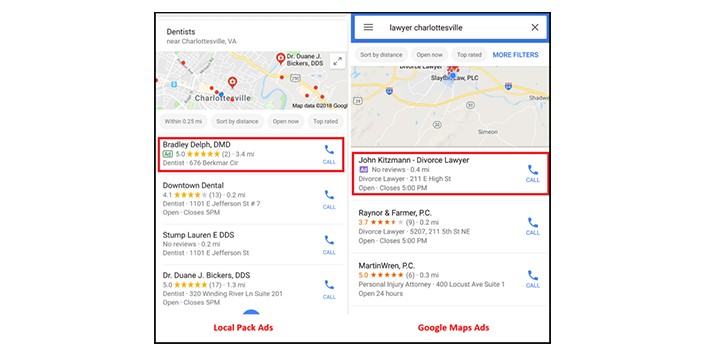
    Location extensions are the key to generating local advertisement results for many physical stores in many areas now. Location extensions aren’t a new concept. They are primarily used by physical stores to add more muscle to their SERP objectives. This is driven by providing helpful information about the local business in response to search queries. With this useful extensions, Google has been able to serve ad units on local pack and Maps. Advertisers aren’t left with many options to deal with this activity other than switching it on or off with the expansion or removal of location extensions.

    What does the new change mean?

    The likelihood of new locally exclusive programs works in favour of local businesses. They can deal with this search independently from traditional Google searches.

    One month after these experiments, Google rolled out two key improvements to Google My Business.

    1. Business Descriptions

    The first update introduced business descriptions to be entered into the GMB profile. Here GMB provides business owners with 750 characters to describe their products or services and on-going offers.

    1. Addition of Attributes

    The following update enabled organisations to indicate any business they give, making an organised mix of business name, thing name inside that service, item cost and item description. Such attribute based menus were already present for hotels since February this year. Now, can be accessible for more businesses in a diverse list of industries.

    What these changes denote?

    The absence of phrases in local campaigns offers sponsors the opportunity to target neighbourhood searchers without depending on existing efforts and active keywords. This denotes a step ahead for the business savvy marketer who wants better control of his campaigns than what the current setup allows.

    With these updates, business owners can feed in helpful information that will help them come up with relevant search queries on Google maps and google.com

    Regardless of whether such listings are sponsored or natural, one thing is sure. It allows Google to begin integrating the extra information into the Local Pack for more ventures than simply those indicating items. The extra data Google is currently set to gather from GMB for local stores in an assortment of enterprises will be the primary driver in this case.

  • Weekend Digital Media Round-up: Google Chrome’s ad-blocker, Facebook’s declining user growth, Instagram’s upgraded features and more..

    Weekend Digital Media Round-up: Google Chrome’s ad-blocker, Facebook’s declining user growth, Instagram’s upgraded features and more..


    1. Google Chrome launches default ad-blocker

    Google has launched an ad-blocker for its Chrome web browser that is designed to prevent “annoying” and “intrusive” ads being shown to users. [Source: BBC]

    1. Facebook’s user growth is dwindling – especially among young people

    Facebook’s struggle to attract young users is only getting worse, according to market forecasts. In its most recent quarterly results, Facebook revealed that its user base had basically come to a halt in North America, and that its daily active users had dropped by 1 million. [Source: Business Insider India]

    1. Instagram Upgrades Its Features With An Option To Share Other People’s Stories & More

    For quite a while, there has been a competition to be the top social media app among the major players. Instagram looks forward to acquiring that top position. For strengthening its impact profoundly among social media fanatics, the Facebook-owned app has added some new features to its directory, including a feature to share other people’s Stories posts. [Source: Logicserve Digital]

    1. Snapchat Opens its Advertising API to All, Expanding Ad Opportunities

    After posting better than expected revenue numbers in their latest performance report, Snap Inc., the parent company of Snapchat, is now taking the next step in its monetization efforts by opening up its advertising API to all. [Source: Social Media Today]

    1. Google buying IoT platform Xively from GoToMeeting parent LogMeIn

    Google announced that it’s buying IoT platform Xivley, which was owned by LogMeIn. The reported purchase price was $50 million. This acquisition will complement Google Cloud’s effort to provide a fully managed IoT service that easily and securely connects, manages, and ingests data from globally dispersed devices. [Source: MARTECH TODAY]

    1. Amazon could find a new revenue stream: digital advertising

    F or Amazon the largest part of its revenue still comes from retail, but some growth potential could lie in the overlooked income stream of advertising. [Source: Verdict]

    1. Google gets in on mobile ‘story craze’ with new AMP Stories format

    Google is releasing “AMP Stories,” a visually rich content format designed to provide publishers with new storytelling options for the mobile web (it also works on desktop). [Source: Search Engine Land

    1. Google announces AMP for Email – delivering Accelerated Mobile Pages experiences to your inbox

    Along with the new AMP Story format, Google announced a new way for developers to leverage the fast-loading, mobile-friendly AMP framework. Effective immediately, developers can sign up for preview access to the AMP for Email spec and begin developing rich, interactive, engaging email experiences within Gmail. [Source: Search Engine Land]

    1. Report: Facebook to introduce two smart assistant devices in July

    Facebook will be launching two smart speaker/display devices this July. According to DigiTimes, the two devices carry the code names “Fiona” and “Aloha.” They will reportedly also have 15-inch touchscreens, made by LG. [Source: MARTECH TODAY]

    1. Four Trending Searches That Indulge Users To Download Mobile Apps

    With so many apps being developed every other day, it gets hard to reach out to the users. If you are looking forward to developing mobile apps and would like to reach out to the users so that they download it, then this post will help you demonstrate four popular searches that will give you a better idea for the type of app you should focus on. [Source: Logicserve Digital]

  • Four Trending Searches That Indulge Users To Download Mobile Apps

    Four Trending Searches That Indulge Users To Download Mobile Apps

    With so many apps being developed every other day, it gets hard to reach out to the users. If you are looking forward to developing mobile apps and would like to reach out to the users so that they download it, then this post will help you demonstrate four popular searches that will give you a better idea for the type of app you should focus on.

    Popular trends for discovering mobile apps

    Google notes that users look forward to downloading apps that they find useful on a daily basis. In addition, apps require more than just a trending approach to keep them glued to mobile devices of users. App developers would need to follow productive methods to get it going. This is where Google comes in to save the day. A 2017 report filed by Google showed what the users search for the most when looking for apps. In addition, that is where four factors were deduced that triggered users to search for apps. These are:

    • Gaining convenience and productivity

    In this fast-paced world, nobody has time to slack off and perform a task with delays. This thinking is where people tend to search for apps that can provide convenience. For instance, grocery apps that will let users get options like a pickup or home delivery, or a restaurant app that permits them to reserve tables.

    • Learning and refining new skills

    Another popular trend that follows among app users is to learn and improve skills. This can relate to learning the piano or guitar, or learning a new language, etc. People have been keen to advance their skills, which is why many searches since last year have been focused on apps that help in teaching people something new.

    • Desiring a healthy mind and body

    To overcome the burdens of life, app users also like healthy bodies. Thus, many of the trending apps downloaded by millions were health-based ones. These apps were focused on teaching various exercises, nutritional plans, or yoga workouts for daily users. Some even come with synchronising abilities that let users monitor their heartbeats using external wearables such as smartwatches.

    • Improving their financial assets

    Another trending category among apps is the one that offers coupons to save on meals or other items. With a vision to save as much money as possible, people downloaded such apps and looked forward to saving more on their purchases.

    Not all apps, which are developed, can achieve the popularity standards of Snapchat, Pokémon Go or Candy Crush. That totally depends on the interaction between the app and the user. If the latter finds good use for the app, then there are chances that the app achieves recognition. Not to mention, a highly useful app may never be known to a user as it somewhat depends on luck as well. Another situation may arise where a user may find your app but may still not feel the compulsion to keep using it. Therefore, it is also necessary that the app developers use interactive methods to keep a user engaged to the app from time to time.

  • Weekend Digital Media Round-up: Google’s New Search Console, Facebook’s privacy center, Paytm’s business app and more..

    Weekend Digital Media Round-up: Google’s New Search Console, Facebook’s privacy center, Paytm’s business app and more..


    1. New Google Search Console may be rolling out for everyone now

    Google seems to have just fully released the new beta version of the Google Search Console to everyone who has verified access to the normal Google Search Console. We expected it to roll out shortly, and now it has. [Source: Search Engine Land]

    1. Facebook to launch privacy center ahead of GDPR deadline

    Social media giant Facebook announced that it will make it easier for users to manage their data. The move comes in advance of the May 2018 deadline for GDPR compliance, which outlines a wide variety of enhanced consumer digital rights for citizens in the EU. [Source: MARTECH TODAY]

    1. After WhatsApp, Paytm now launches its app for businesses

    Days after global messaging giant WhatsApp launched its standalone app for businesses, Paytm on Monday launched its Paytm for Business app on the Android Play Store. Paytm’s standalone app for businesses is using seamless payments as a hook to gather more merchants on its platform. [Source: YourStory]

    1. Google rolls out lightweight keyboard app to low-RAM Android devices

    Google has slowly but surely been introducing “Go” versions of its apps to phones that lack the processing prowess to handle its full offerings. The latest of these? Apparently, it’s Gboard. Google is currently rolling out a lightweight version called Gboard Go to phones with low RAM that run Android 8.1 or later. [Source: Digital Trends]

    1. Facebook Announces New Methods to Measure Page and Publisher Trust, Which Will Impact Reach

    In the second installment of their explanations of coming changes to the News Feed algorithm, Facebook’s detailed how it plans to rank news sites by trustworthiness, in order to determine whether they get a distribution boost, or penalty. [Source: Social Media Today]

    1. Salesforce And Google Join Hands To Make Customer Insights Better

    Salesforce has recently announced their partnership with Google, and the plan was to integrate Salesforce data with Google Analytics 360 and G Suite. With this partnership between Google and Salesforce, companies will now be able to connect sales, marketing and advertising using Salesforce cloud and Google Analytics 360. This also means that you can connect Salesforce with your G-suite to enhance your customer reach and boost sales. [Source: Logicserve Digital]

    1. Instagram Confirms Ability to Add GIFs to Stories, and to Upload Stories Content in Various Formats

    Instagram has now confirmed what was widely reported last week – they’re adding the ability to insert GIFs into Stories content as a new way to spice up your visuals. [Source: Social Media Today]

    1. Google AdSense adds style automation for native in-feed ads

    Publishers that want to run Google AdSense native in-feed ads on their sites can now opt to have Google’s machine learning take control of the creative look and feel of those units. [Source: Marketing Land]

    1. Facebook invented a new time unit called the ‘flick’ and it’s truly amazing

    A flick is one seven hundred and five million six hundred thousandth of a second. It’s a very clever way of dividing time that theoretically could make video and audio production much more harmonious. [Source: TechCrunch]

    1. 3 AdWords Features You’re Probably Underutilising

    AdWords gives companies the freedom to manage their ad campaigns themselves and provide their own preferences for the ads. Here are some AdWords features that you should utilise to get the best out of your investment. [Source: Logicserve Digital]

  • 3 AdWords features you’re probably underutilising


    Most of Google’s revenue is from online ads they provide on their search engine. Google is basically a search engine, and hence their primary focus is to expand their user base more, so much so that everyone starts using Google search. Google, however, provides search results for free, which poses a question of revenue. This is where AdWords come in the picture. Google AdWords are most definitely one of Google’s primary, most important service that generates most of Google’s revenue.

    Millions of businesses have used AdWords, and continue using them today, to gain as much exposure as possible on the most significant search engine platform today. AdWords gives companies the freedom to manage their ad campaigns themselves and provide their own preferences for the ads. This feature has attracted a lot of business owners over the years and made AdWords the best medium for expanding the audience. However, people who have been using AdWords for a long time sometimes get stuck in their ways and miss out on attractive features Google keeps rolling out regularly. These features can give you many extra benefits, and you can use AdWords to their full extent. Here are some AdWords features that you should utilise to get the best out of your investment.

    1. Gmail Ads

    Gmail ads have been available to companies for a long time, but not many have opted for them. This is because ads on Gmail have to be seen in the promotions tab, and not many people check that section. This has caused Gmail ads not to sell as efficiently. However, Google has started dynamic retargeting of Gmail ads, which means users won’t be able to ignore Gmail ad placements completely.

    Gmail ads, when paired with attractive images and redirect buttons, can urge people to directly go to your site, which is a significant advantage, considering your ad will be standalone and not with other ads. Hence, people should start considering Gmail ads as a viable option for advertising.

    1. Variations

    Google AdWords has been a staple advertising medium for many companies and the number continues to grow. Many companies have used AdWords for a long time and are set in their traditional way of advertising. But now, with Google rolling out new features for AdWords, people can essentially utilise AdWords to their maximum potential. The new features rolled out by Google allow the users to try variations and Google will provide regular analysis of how your variations fared, which saves an enormous amount of time and at the same time allows you to understand how you can better your ad campaigns.

    1. Experiment With AdWords

    AdWords has millions of companies using it and most of them have been using the same ad marketing strategies since they started using AdWords. This is synonymous with running the same experiment for years at a stretch. Sure running the same ad campaign is helping your company, but experimenting can actually boost your business. There is always something to test, and it should be because that test might be your new strategy for ad campaigning and surge your website traffic.

    AdWords are a powerful tool by Google, and you should keep trying variations and using all the features provided by Google for AdWords in order to utilise it optimally.