LS Staging

Tag: PPC Campaign

  • Top 10 PPC Trends to Leverage in 2020

    Top 10 PPC Trends to Leverage in 2020

    The poster boy of the paid marketing world, pay-per-click advertising is evolving with each passing year. The advances in AI, changing privacy guidelines, birth of new online platforms, increase in video content consumption, change in how digital users consume content, have led to digital marketers rethinking their PPC advertising strategies.

    Up your PPC marketing game by staying relevant and incorporating these trends into your campaign:

    1. Focus on Automation

    Although automation in CPC advertising is not new, how it will be used is changing. Automation will use statistical analysis to remove non-performing ads, boost the visibility of best performing ads, and identify and bid for ad auctions with the best potential. These otherwise labour-intensive tasks will be automated using AI and machine learning, to allow the human team to focus more on development strategy.

    2. Artificial Intelligence for efficacy

    Right from predicting the CTR on future ads to analysing bids that are most likely to generate high levels of traffic, AI is here to revolutionise how paid search marketing is done. The more it learns about the users’ behaviour, the more it will help to create targeted ads.

    3. Video ads

    Whether it is Instagram Stories or Google video ads, users are going to continue to throng to video ads to know about product or service. Marketers will need to design ads keeping in mind Google video ads’ vertical orientation. Another feature that marketers need to pay heed to is the Bumper Machine- the 6-second un-skippable video that plays before, within, or after a YouTube video. While the Bumper Machine utilises machine learning to create multiple bumper ad options for you, you can modify the video and sound as per your strategy. This often-overlooked component of a YouTube ad will be a focal point this year.

    4. Ads Data Hub

    The reliance on pixel technology to gain insights into your YouTube ad metrics will be overtaken by Google’s Ads Data Hub. Although the focus on Ads Data Hub was due to a greater need for security, the Hub is a comprehensive tool to understand the efficacy of a CPC across digital devices as opposed to the single screen insights that pixel technology was restricted to.

    5. Smart bidding

    AI is going to change the way marketers bid. Google has come up with some much-needed controls for smart bidding such as Campaign-level Conversion Setting which allow the advertiser to set campaign goals for campaigns instead of the earlier account-level goals. The ‘Maximum Conversion’ control will ensure that you optimise your daily budget to get a maximum number of conversions. ‘Seasonality Adjustments’ will adjust the bid if the AI predicts a higher conversion rate during let’s say, the holiday season. Furthermore, Google has initiated ‘value rules’ which allow the marketer to differentiate the different conversion values based on the variables such as audience, location, and device used.

    6. YouTube Masthead

    When YouTube launched the Masthead for TV in the last quarter of 2019, the decision was based on the increasing popularity of YouTube on TV. More than 250 million hours of content was consumed per day by TV YouTube users.

    7. Voice search

    One of the biggest PPC trends to watch out for is the shift in preference for voice searches than typed searches. It is estimated that 2020 will see 50% search queries being voice-based. Businesses need to design PPC campaigns that include this new trend. Digital marketers need to keep in mind that voice searches are more conversational, start with a question word (where, what, why, how), and are mainly commanded through smartphones than any other device. Develop campaigns that focus on the “where” and “when” keywords as these words indicate that the user is at the conversion stage rather than at an awareness stage as indicated by keywords such as “what” and “who”.

    8. Smarter mobile user segregation

    Google’s AdMob helps businesses analyse an app’s data and user behaviour. It provides key insights into users who are likely to make an in-app purchase and those who aren’t. This type of segmentation will help advertisers pick the right type of audience to advertise to. AdMob also identifies any significant changes in your metrics such as impressions and alerts you to ensure immediate action.

    9. Virtual Reality Advertisements

    Millennials and Gen Z are investing their time and effort in VR. The “click” here is through VR’s eye-tracking technology which plays the video when the user’s eyes linger on it for a couple of moments. Digital marketers can design VR ads that allow the user to experience the product before buying it. There is a range of possibilities for marketers to explore; users can “try” out a pair of shoes to know its benefits, or a potential buyer can try on clothes before buying.

    10. Alternative platforms

    While Google and Facebook are the hotbed for digital ads, platforms such as Quora and LinkedIn are fast gaining ground. For instance, more and more online users are spending time on Quora, literally looking for answers; digital marketers can develop native ads for popular Quora queries and highlight their product or service.

    CPC is one of the largest target marketing strategies that any digital marketer can use. Use this article as a starting point to get the best out of the growing trends in PPC, and to stay ahead of the curve.
  • How Can First-Party Data Be Used for Improving PPC Performance?

    How Can First-Party Data Be Used for Improving PPC Performance?

    The boundless world of online marketing brings with it a host of marketing options. While SEO continues to be one of the most cost-efficient marketing strategies, spending money on PPC campaigns is turning into a critical component of every digital marketing strategy.

    And marketers do have some pretty solid reasons to spend their budget on PPC. For instance-

    • As per a study, around 33% of people click on paid ads when they search for something on Google as the ads provide the most accurate answer to their query
    • Another research suggests that around 40% of the user clicks go to the top 3 paid ads on the search results page

    But while PPC is currently enjoying widespread popularity in the world of online marketing, brands need to have an innovative marketing approach to make the best use of the available opportunities.

    For instance, with Google now focusing on adding more automation to the PPC landscape, this is an excellent time for brands to use the first-party data to improve their PPC performance innovatively.

    What is First-Party Audience Data?

    While there are now many different ways for brands to collect all the different types of audience data, the data that a brand collects from its audience is the most valuable. This is exactly what first-party data is. It is the data that a brand collects from its audience through analytics, resource downloads, subscriptions, app, newsletters, events, and more.

    Unfortunately, seldom these data sources have any link to one another. For instance, a brand might be using CRM for collecting customer data and Google Analytics for tracking user behaviour on their website. The data from these sources is never effectively connected to help brands abstract the big picture.

    Strategies to Effectively Use First-Party Data

    In the world of digital marketing, every challenge is an opportunity to innovate. Fortunately, there are some time-proven strategies with regards to using first-party data for powering PPC campaigns.

    1. Integration Between Google Analytics and Data Sources

    While Google Analytics is by far one of the most advanced analytics tools, it lacks a few features. For instance, important data points like lead to sale conversion rate, sale value of leads, and lead scoring data is missing. This is where the integration between your data sources and Google Analytics can work its magic.

    There are many different ways to connect your data sources to Google Analytics. One of the easiest of them is to use a data connector tool. The tool can be used to connect a data source like the CRM system to your Google Analytics account. The overall goal here is to ensure that there is a way for the lead data on your Google Analytics panel to be traced back to its origination on your website.

    2. First-Party Data for Improved PPC Bidding

    Several brands are already using first-party data with Google Ads scripts to improve their bidding strategies. But combining conversion-focused bidding strategies along with Smart Bidding, a part of the Google automated bidding software, is proven to deliver improved results. Smart Bidding uses machine learning and uses data points like location, device, time, etc. to adjust bids.

    First-party data can be used to analyse campaign results, and the data points like business impact and campaign performance could be used to optimize bidding strategies. For instance, the data can be used for adjusting ROAS (Return-On-Ad-Spend) or CPA (Cost-Per-Acquisition) targets rather than adjusting ROAS/CPA targets based on the default Google Ads conversion report.

    3. Optimized Audience Expansion

    Google Customer Match allows you to target customers or prospects with the help of first-party audience data. For instance, you can import your email lists into Google Ads. Platforms like Facebook, LinkedIn, and Twitter now also offer this functionality. The goal here is to target people who are already aware of your brand as they are more likely to convert.

    Apart from targeting people who already know about your brand, you also have the option of building targeting lists based on characteristics that are common between your existing audience and new audience. For instance, the Audience feature on Google allows you to search for targets based on the search behavior of your existing audience.

    Utilizing First-Party Data for Boosting PPC Campaigns

    With regards to PPC, automation and machine learning will only get more popular in the future as it enables Google to manage things at scale humans, and even traditional machines cannot.

    This makes it an excellent time for brands to focus more on their first-party data so that valuable data could be fed to the automated systems, and their PPC campaigns are effectively optimized.

  • Can PPC be used for Lead Generation by SMEs?

    Can PPC be used for Lead Generation by SMEs?

    PPC-be-used-for-Lead-Generation-by-SMEs @LogicserveDigi

    Small and medium sized businesses often look for no-budget to low-budget marketing and promotion options to reach and acquire their local customers. They usually depend on organic online search rankings to build their online presence. So paying for online searches, through pay-per-click (PPC) advertising is often seen as an expensive option. Moreover, PPC is often thought of as helpful only to e-commerce players, to lead consumers to shop for products. That is, of course, a misconception.

    SMEs have a lot to gain from PPC, especially when it comes to businesses that need lead generation through targeted advertising. Lead generation is meant to get potential customers into the lead-tracking system in order for them to begin an information period with the company, in which the company learns more about customer’s needs, while the customers learn more about the company’s products and services. The ultimate goal is to strike a deal, and thus, acquire a customer.

    How does PPC fare against other lead generation methods?

    A typical lead funnel utilizes a variety of ways to generate leads. Let’s look at some of the prominent ones and analyse how PPC may be more effective:

    • Blogs: These are a good source of leads, but need constant replenishing with high shareability quotient and a good user base, which often takes a lot of time.

    Logicserve_Blog @LogicserveDisgi

    • Email: Communicating with existing subscribers, or targeting a new set of people through bought databases is possible via email, but often you can only hope to add new leads for your business.

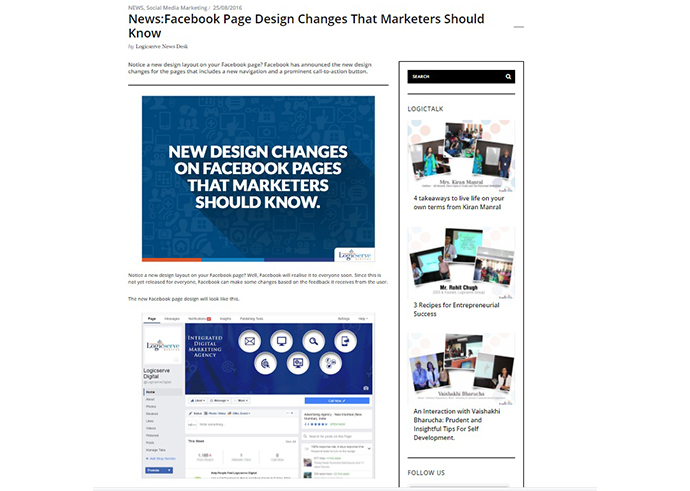
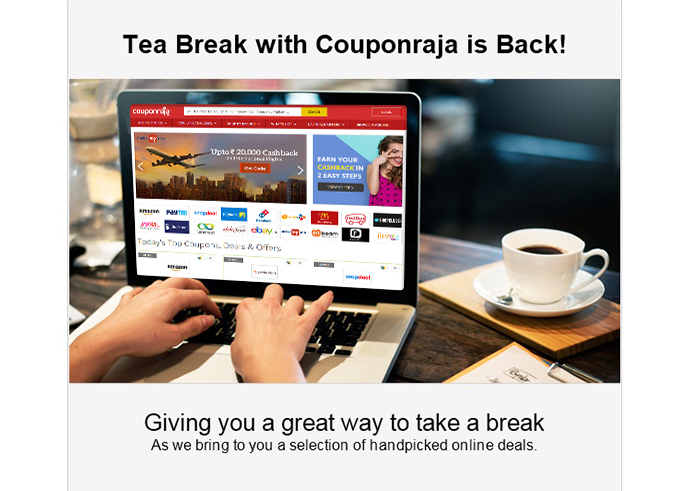
    Emailer @LogicserveDigi

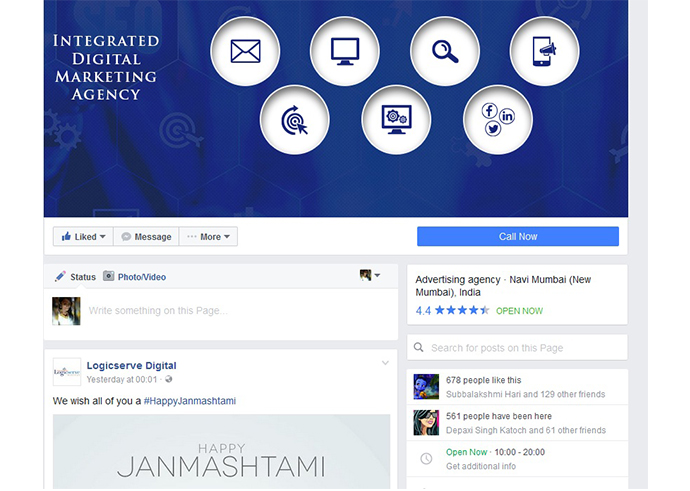
    • Social media: Facebook, Twitter and other social media networks can get business new followers build exposure to a large audience. But followers may not necessarily be your target audience who need your product or service.

    Facebook-Page @LogicserveDigi

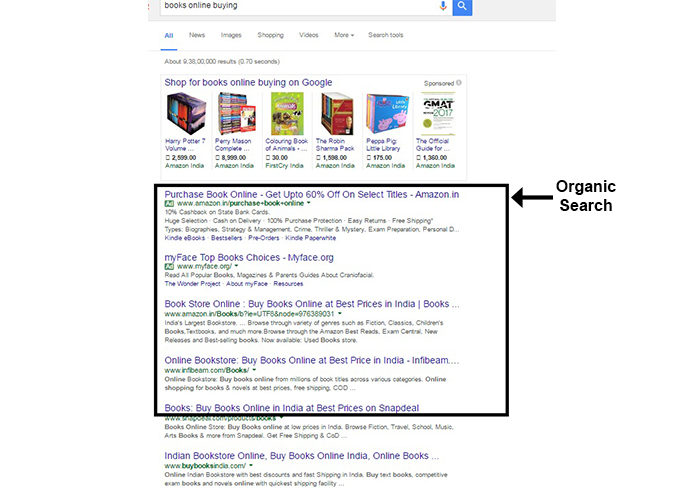
    • Organic search:  4 out of 5 search clicks come from organic listings on the first page, with the advantage of free clicks. But then you have a lot of competition, and it may take an unusually long time for your business to earn a place on the first page.

    Organic-search @LogicserveDigi

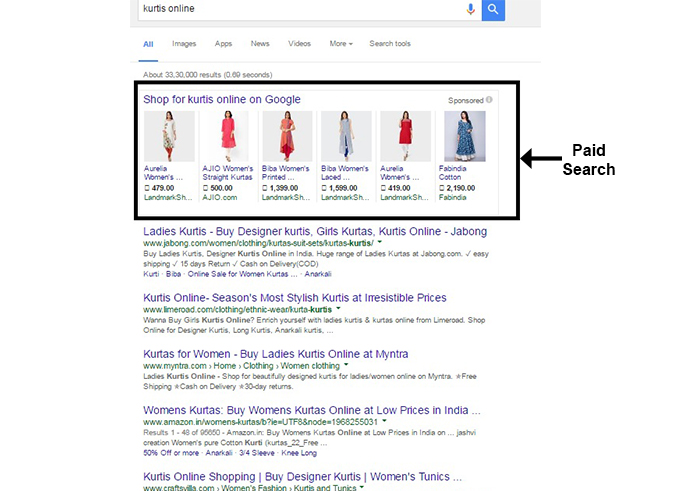
    • PPC: This allows your business to appear instantly on the first page to the most relevant audience, those who are searching for a solution to their problem. PPC increases awareness of your business to much higher levels than before.

    Paid-search @LogicserveDigi

    Yes, PPC is a paid search channel. But considering the costs involved in managing social media, blogging, search engine optimization, and e-mail marketing, PPC is comparatively an effective option for most businesses to reach a targeted audience online with full control of expenditure and return on investment.

    How to use PPC effectively for lead generation?

    • Direct potential customers to a landing page instead of the home page – While your home page may contain comprehensive information about your offerings, a well-designed landing page will generate a direct action from the customers for them to be converted into paying customers. A good PPC landing page may be independent of your website.
    • Offer something to your audience – Since you’re not leading your customers to shop instantly for any product or service in a lead generation campaign, and you’re asking for their information, you may as well offer them something they might find useful, like a whitepaper or a brochure.
    • Keep focused communication across touchpoints – The landing page should be able to continue the same story as you’d told your customers in the PPC ad. It should provide more information on the product or the service mentioned in the ad that they’ve clicked.
    • Optimize communication on the landing page – A PPC landing page will be the customer’s first point of contact with you it needs to have just the right information in a concise and visually appealing manner. Also, the lead generation form needs to just the relevant fields which can be filled up easily by the customers without any reluctance.

    PPC or Pay Per Click advertising is a dependable method of generating targeted leads to your business, provided you optimize the customers’ journey from point they click your PPC ad to the point they exit the landing page.

  • Negative keywords in Pay Per Click Campaign

    Negative keywords prevent your PPC ads from appearing in search engine results. Use of these often helps your pay per click ads not to show up in search engine results for non relevant keywords. Thus, adding negative keywords not only saves your money and but also draws quality targeted traffic to your web site. Negative keywords improve the performance of your PPC advertisement in search engines.

    For Example-

    Pet sitters – cinema, classics, cleaning etc…

    Hygiene product: reviews, travel, paints, wholesale, furniture etc…

    When to use negative keywords?

    Whenever you do a keyword research look for negative keywords related to that keyword, this is one of the easy steps to do it in the beginning of your keyword research which saves your time and money.

    Adding negative keywords help in qualified clicks preventing unnecessary displays of your ad. Use phrase and exact match for your keyword phrases, this helps on negative keywords and increase quality traffic.