LS Staging

Tag: PPC Advertising

  • 6 PPC Strategies You Cannot Ignore in 2022

    6 PPC Strategies You Cannot Ignore in 2022

    The COVID-19 pandemic has played a critical role in boosting digital adoption in India. According to a report, 61% of households used the internet in 2021 compared to 17% in 2017. PPC (Pay-Per-Click) ads can be an effective way for brands to present themselves in front of the rising internet population and improve brand awareness, visibility, and conversions.

    But just like any other digital initiative, brands and marketers should keep themselves updated with the latest strategies to make the most of their investment. 6 PPC marketing strategies that can help improve your ROI in 2022 are discussed below-

    1. Leverage First-Party Data

    Amid the rising demand for improved digital privacy and security, Google has decided to phase out 3rd party cookies on Chrome browser by 2023. Apple has already rolled out improved privacy protection for iOS, and Meta is also testing a new privacy control centre across apps. This has brought first-party data to the centre stage in 2022.

    To be precise, brands and marketers should work on strategies that can help them gather, organize, and leverage first-party data. For example, data from marketing activities such as email subscriptions, resource downloads, events, purchases, etc., can be proactively pursued as an alternative to 3rd party data. Professional analytics services can help brands gain valuable insights from such first-party data.  

    2. Mobile-Friendly PPC Ads

    According to the Global Payments Report 2021 by Worldpay FIS, the e-commerce market in India will be driven by mobile shopping, which is expected to grow at the rate of 21% annually for the next four years. This calls for a PPC strategy that is optimized for the mobile platform. Here are some tips that can help you optimize your PPC ads for mobile-

    • Choose the right ad extensions to make the ads more appealing and informative.
    • Ensure that the mobile landing page matches the PPC ad.
    • Use a strong CTA and rotate a few different ad variations.

    3. Ramp-Up Automation with AI and ML

    Artificial Intelligence (AI) and Machine Learning (ML) are expected to play a more critical role in PPC automation. With Expanded Text Ads retiring in June 2022, the two technologies can help brands and marketers test the assets and text copies that offer maximum traction in Responsive Search Ads.

    Google has also recently launched Performance Max campaigns that can complement keyword-focused search campaigns. The new campaign type utilizes machine learning and automation to help advertisers manage PPC campaigns across Search, Display, Maps, Gmail, Local, and Shopping through a single campaign. 

    4. Strategize for Voice Search

    As voice search is a rising trend on handheld devices, optimizing your ads for the same is another leading PPC strategy for 2022. When optimizing your PPC ads for mobile, ensure that you adjust them for voice search.

    Advertisers can view the “Search Terms” or “Search Query” report in the Google ads account to search for voice queries and long-tailed searches. As these are the terms your target audience is already using; your PPC campaigns can be optimized for the same. If you are optimizing your PPC ads for a specific location, focus on high intent phrases such as ‘Local,’ ‘Near Me,’ and ‘Nearby.’ 

    5. SEO Integration in PPC

    Search Engine Optimization (SEO) continues to be the leading rank booster in the digital world. The combination of SEO and PPC can significantly improve the chances of your ads ranking on the first page in Google searches. Integrating two of the most popular digital marketing initiatives can help brands better understand keyword intent and target the right keywords.

    Advertisers can also improve website traffic by targeting the clicks received by top-performing keywords in organic and paid strategies. The conversion and keyword data from PPC campaigns can also be used in SEO for improved organic rankings.

    6. Tap into Alternative PPC Platforms

    While Google is the most successful channel for paid ads, it is essential for advertisers to diversify in 2022. Video advertising on YouTube, Facebook Ads, and Bing Ads are some alternatives that brands can consider this year.

    Then there are short video sharing platforms such as Josh, Moj, MX TakaTak, and ShareChat that have amassed millions of users within a short span of time. If you can produce videos or already have video assets, paid advertisements on these platforms can deliver excellent results.

    Accelerating Your Digital Growth with PPC in 2022

    While several PPC strategies can boost your ROI in 2022, it is essential for brands and advertisers to thoroughly analyze their digital presence to select ones that best match their needs and expectations. A reputable PPC and SEO marketing agency can help brands create customized campaigns for maximum reach and growth.

    As ad and marketing professionals are well aware of all the latest trends in the industry and have vast experience of working with brands across industries, their expertise can guide businesses to take maximum advantage of their SEO and PPC campaigns.
  • Top 10 PPC Trends to Leverage in 2020

    Top 10 PPC Trends to Leverage in 2020

    The poster boy of the paid marketing world, pay-per-click advertising is evolving with each passing year. The advances in AI, changing privacy guidelines, birth of new online platforms, increase in video content consumption, change in how digital users consume content, have led to digital marketers rethinking their PPC advertising strategies.

    Up your PPC marketing game by staying relevant and incorporating these trends into your campaign:

    1. Focus on Automation

    Although automation in CPC advertising is not new, how it will be used is changing. Automation will use statistical analysis to remove non-performing ads, boost the visibility of best performing ads, and identify and bid for ad auctions with the best potential. These otherwise labour-intensive tasks will be automated using AI and machine learning, to allow the human team to focus more on development strategy.

    2. Artificial Intelligence for efficacy

    Right from predicting the CTR on future ads to analysing bids that are most likely to generate high levels of traffic, AI is here to revolutionise how paid search marketing is done. The more it learns about the users’ behaviour, the more it will help to create targeted ads.

    3. Video ads

    Whether it is Instagram Stories or Google video ads, users are going to continue to throng to video ads to know about product or service. Marketers will need to design ads keeping in mind Google video ads’ vertical orientation. Another feature that marketers need to pay heed to is the Bumper Machine- the 6-second un-skippable video that plays before, within, or after a YouTube video. While the Bumper Machine utilises machine learning to create multiple bumper ad options for you, you can modify the video and sound as per your strategy. This often-overlooked component of a YouTube ad will be a focal point this year.

    4. Ads Data Hub

    The reliance on pixel technology to gain insights into your YouTube ad metrics will be overtaken by Google’s Ads Data Hub. Although the focus on Ads Data Hub was due to a greater need for security, the Hub is a comprehensive tool to understand the efficacy of a CPC across digital devices as opposed to the single screen insights that pixel technology was restricted to.

    5. Smart bidding

    AI is going to change the way marketers bid. Google has come up with some much-needed controls for smart bidding such as Campaign-level Conversion Setting which allow the advertiser to set campaign goals for campaigns instead of the earlier account-level goals. The ‘Maximum Conversion’ control will ensure that you optimise your daily budget to get a maximum number of conversions. ‘Seasonality Adjustments’ will adjust the bid if the AI predicts a higher conversion rate during let’s say, the holiday season. Furthermore, Google has initiated ‘value rules’ which allow the marketer to differentiate the different conversion values based on the variables such as audience, location, and device used.

    6. YouTube Masthead

    When YouTube launched the Masthead for TV in the last quarter of 2019, the decision was based on the increasing popularity of YouTube on TV. More than 250 million hours of content was consumed per day by TV YouTube users.

    7. Voice search

    One of the biggest PPC trends to watch out for is the shift in preference for voice searches than typed searches. It is estimated that 2020 will see 50% search queries being voice-based. Businesses need to design PPC campaigns that include this new trend. Digital marketers need to keep in mind that voice searches are more conversational, start with a question word (where, what, why, how), and are mainly commanded through smartphones than any other device. Develop campaigns that focus on the “where” and “when” keywords as these words indicate that the user is at the conversion stage rather than at an awareness stage as indicated by keywords such as “what” and “who”.

    8. Smarter mobile user segregation

    Google’s AdMob helps businesses analyse an app’s data and user behaviour. It provides key insights into users who are likely to make an in-app purchase and those who aren’t. This type of segmentation will help advertisers pick the right type of audience to advertise to. AdMob also identifies any significant changes in your metrics such as impressions and alerts you to ensure immediate action.

    9. Virtual Reality Advertisements

    Millennials and Gen Z are investing their time and effort in VR. The “click” here is through VR’s eye-tracking technology which plays the video when the user’s eyes linger on it for a couple of moments. Digital marketers can design VR ads that allow the user to experience the product before buying it. There is a range of possibilities for marketers to explore; users can “try” out a pair of shoes to know its benefits, or a potential buyer can try on clothes before buying.

    10. Alternative platforms

    While Google and Facebook are the hotbed for digital ads, platforms such as Quora and LinkedIn are fast gaining ground. For instance, more and more online users are spending time on Quora, literally looking for answers; digital marketers can develop native ads for popular Quora queries and highlight their product or service.

    CPC is one of the largest target marketing strategies that any digital marketer can use. Use this article as a starting point to get the best out of the growing trends in PPC, and to stay ahead of the curve.

  • PPC 2018 in Review: How These Top 5 Trends will Impact Paid Advertisers in 2019

    PPC 2018 in Review: How These Top 5 Trends will Impact Paid Advertisers in 2019

    2018 was a huge year for PPC marketing. There were several massive changes in the paid search landscape – the launch of new campaigns, enhanced features, better targeting capabilities, new tools and more.

    How do these big changes and trends impact PPC advertisers in 2019? That’s one of the big questions in everyone’s mind. Here, in this article, we take a look at how the trends and changes of 2018, shape the way paid search marketers will work in 2019 and beyond.

    1. Google Ads Gets a New Name and a New UI

    Google announced the name change of Adwords to Google Ads, in June 2018. This name change reflects the platform’s move away from keywords. Going forward keywords will play a lesser role in paid search marketing and will be more focused on audiences. Additionally, the name change of the platform indicates Google’s growth beyond text ads to ads of different formats and across a variety of sites and apps.

    The new Google Ads UI is more of a command centre than the previous dashboard style. There’s a new YouTube reach planner, the ability to make changes right from the Overview section, notes and several other new features.

    Experts predict that this new UI will be the most significant change in PPC for 2019. There are several new ways to segment data, and finally, marketers will make the shift from keywords and text ads, to new categories of ads.

    2. Enter the Era of Amazon’s Advertising

    2018 was the year when Google, Bing, and Facebook recognised the role of the e-commerce giants when it came to PPC marketing. According to reports by eMarketer, Amazon is currently the third-largest digital ad marketplace in the US. Though it’s far behind Google and Facebook, Amazon’s ad revenue is expected to skyrocket in the coming years.

    What does this mean for paid advertisers? Experts predict that paid advertisers will lean towards Amazon, both in terms of budget allocations and campaign management.

    With the ad format in Amazon, different from Google and Bing, advertisers will have to develop distinct practices specifically for the platform. Though Amazon’s ad management and reporting capabilities are nowhere near Google, right now, experts expect to see significant progress this year and in the coming years.

    3. AI-Powered Insights

    While AI in marketing has been around for some time now, both Google and Bing allocated significant resources for AI-research in 2018. This helps in improving AI-driven recommendations in both the search engines.

    The Competition tab from Bing offers performance insights and other location-based recommendations, powered by machine learning networks. Google also offered better data visualisations, which help advertisers track the performance of their campaigns, effectively. 

    How do these impact the advertiser? With quicker insights powered by AI, advertisers will spend lesser time on analysing spreadsheets and instead focus on developing their marketing strategy and creative tactics.

    4. Increase in Cross-Channel Advertising

    Today, the digital marketing space is so varied, and there are plenty of channels and platforms, all offering different benefits to the advertiser. In the coming years, you can expect advertisers focusing on cross-channel and cross-device attribution.

    However, while it’s easy to build and co-ordinate multi-channel campaigns, reporting silos is still a major challenge for paid advertisers. Advertisers can expect new tools that make it easy to monitor and track performances for cross-channel advertising campaigns.  

    5. Video will Continue to Play a Significant Role

    Though video marketing has been around for a long time, the trend doesn’t seem to die away, anytime soon. PPC marketers should plan on including video into their strategies to gain coveted placements on SERPs.

    Even if you don’t want to increase spends on video marketing, you can still leverage YouTube audiences as part of your PPC search campaigns. And, experts predict that more platforms will adopt Google’s recent introduction of vertical video ads.  

    Looking Ahead for 2019

    2018 was a significant year for PPC. With the arrival of Amazon, depreciation of keywords and the increasing role of machine learning and AI, 2019 presents several new challenges and opportunities for paid advertisers. And, PPC advertisers have to embrace these new trends, to stay ahead of the pack and create successful campaigns.

  • Can PPC be used for Lead Generation by SMEs?

    Can PPC be used for Lead Generation by SMEs?

    PPC-be-used-for-Lead-Generation-by-SMEs @LogicserveDigi

    Small and medium sized businesses often look for no-budget to low-budget marketing and promotion options to reach and acquire their local customers. They usually depend on organic online search rankings to build their online presence. So paying for online searches, through pay-per-click (PPC) advertising is often seen as an expensive option. Moreover, PPC is often thought of as helpful only to e-commerce players, to lead consumers to shop for products. That is, of course, a misconception.

    SMEs have a lot to gain from PPC, especially when it comes to businesses that need lead generation through targeted advertising. Lead generation is meant to get potential customers into the lead-tracking system in order for them to begin an information period with the company, in which the company learns more about customer’s needs, while the customers learn more about the company’s products and services. The ultimate goal is to strike a deal, and thus, acquire a customer.

    How does PPC fare against other lead generation methods?

    A typical lead funnel utilizes a variety of ways to generate leads. Let’s look at some of the prominent ones and analyse how PPC may be more effective:

    • Blogs: These are a good source of leads, but need constant replenishing with high shareability quotient and a good user base, which often takes a lot of time.

    Logicserve_Blog @LogicserveDisgi

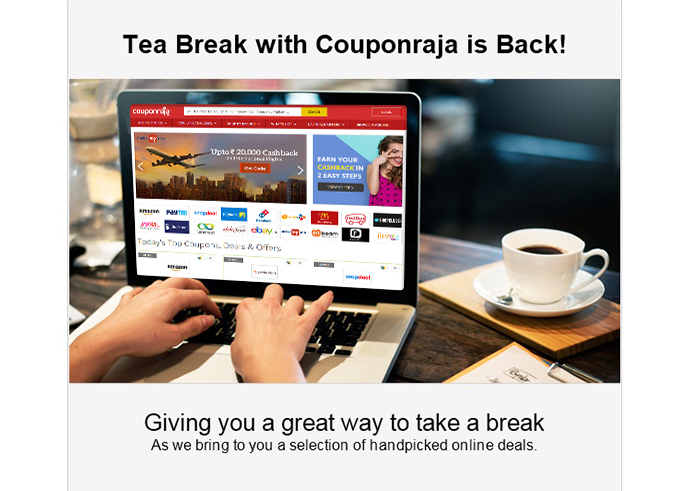
    • Email: Communicating with existing subscribers, or targeting a new set of people through bought databases is possible via email, but often you can only hope to add new leads for your business.

    Emailer @LogicserveDigi

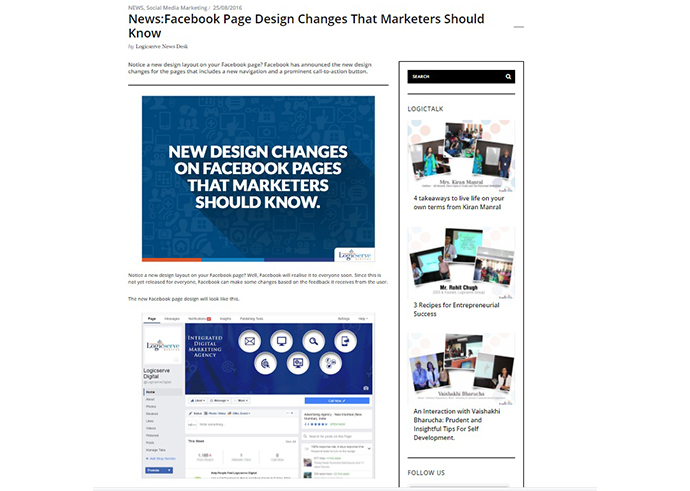
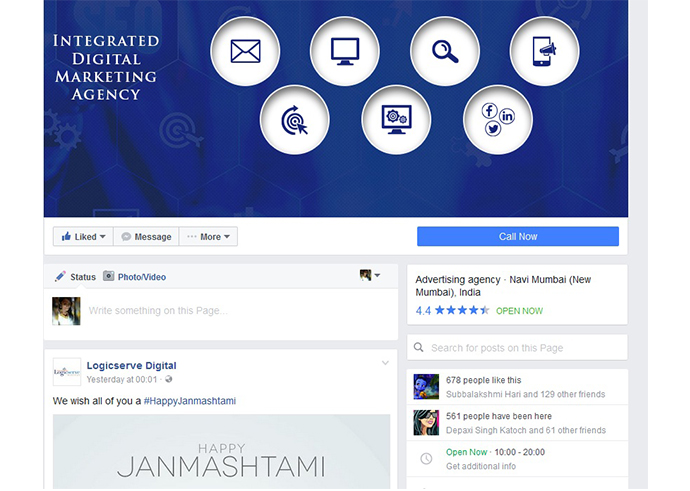
    • Social media: Facebook, Twitter and other social media networks can get business new followers build exposure to a large audience. But followers may not necessarily be your target audience who need your product or service.

    Facebook-Page @LogicserveDigi

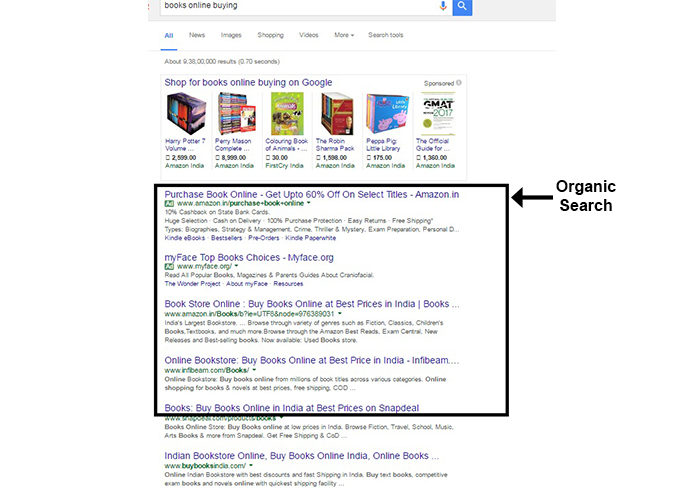
    • Organic search:  4 out of 5 search clicks come from organic listings on the first page, with the advantage of free clicks. But then you have a lot of competition, and it may take an unusually long time for your business to earn a place on the first page.

    Organic-search @LogicserveDigi

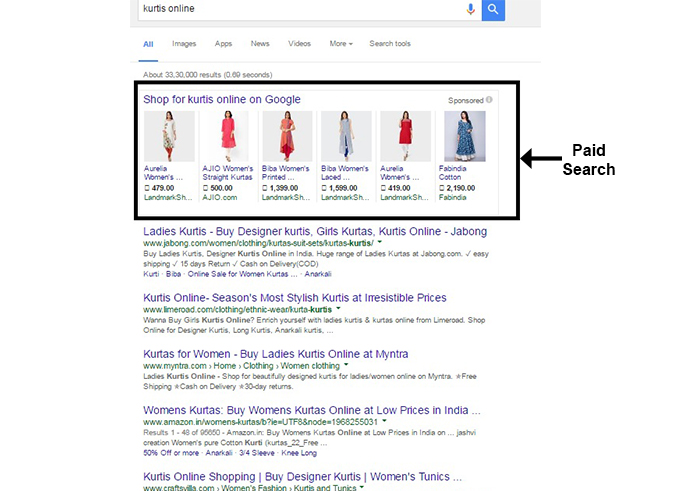
    • PPC: This allows your business to appear instantly on the first page to the most relevant audience, those who are searching for a solution to their problem. PPC increases awareness of your business to much higher levels than before.

    Paid-search @LogicserveDigi

    Yes, PPC is a paid search channel. But considering the costs involved in managing social media, blogging, search engine optimization, and e-mail marketing, PPC is comparatively an effective option for most businesses to reach a targeted audience online with full control of expenditure and return on investment.

    How to use PPC effectively for lead generation?

    • Direct potential customers to a landing page instead of the home page – While your home page may contain comprehensive information about your offerings, a well-designed landing page will generate a direct action from the customers for them to be converted into paying customers. A good PPC landing page may be independent of your website.
    • Offer something to your audience – Since you’re not leading your customers to shop instantly for any product or service in a lead generation campaign, and you’re asking for their information, you may as well offer them something they might find useful, like a whitepaper or a brochure.
    • Keep focused communication across touchpoints – The landing page should be able to continue the same story as you’d told your customers in the PPC ad. It should provide more information on the product or the service mentioned in the ad that they’ve clicked.
    • Optimize communication on the landing page – A PPC landing page will be the customer’s first point of contact with you it needs to have just the right information in a concise and visually appealing manner. Also, the lead generation form needs to just the relevant fields which can be filled up easily by the customers without any reluctance.

    PPC or Pay Per Click advertising is a dependable method of generating targeted leads to your business, provided you optimize the customers’ journey from point they click your PPC ad to the point they exit the landing page.

  • Managing Pay per Click Advertising

    Pay per Click is a lucrative marketing strategy which can be you business booster if properly managed. There are certain factors important to run a successful and profitable pay per click campaign.

    The primary aim of a pay per click campaign is to attract potential users to the concerned website through the search engine. Thus the most essential factor in a pay per click campaign is the selection of search engines. Unpopular engines will bring unwanted visitors, adding to your cost incurred and keeping ROI negligible.  Search engines like Google, Yahoo, and MSN are the most popular ones used for PPC campaigns.

    The next essential factor affecting pay per click campaigns is the selection of keywords. In pay per clicks it is the keywords that are the core of the campaign. The most popular keywords find the highest position in the search engine ranking pages increasing the ad popularity amidst high rate of conversion.

    Continuous campaign monitoring and proper bidding management also help in the marketing motto. Turning a pay per click campaign profitable needs carefully vigilance and calculated strategy.