LS Staging

Tag: PPC

  • Weekend Digital Media Round- AI-native advertising surges in India as report flags huge knowledge gap among consumers, How UX Professionals Can Lead AI Strategy, Has the marketing funnel reversed as content and commerce converge, & More….

    Weekend Digital Media Round- AI-native advertising surges in India as report flags huge knowledge gap among consumers, How UX Professionals Can Lead AI Strategy, Has the marketing funnel reversed as content and commerce converge, & More….

    1.AI-native advertising surges in India as report flags huge knowledge gap among consumers

    India is emerging as a global hub for AI-driven advertising, with rapid adoption of hyper-personalisation and vernacular AI. LS Digital’s report highlights strong trust in AI, growing social commerce, and the need for brands to balance innovation with consumer education amid a major knowledge gap. [Source: StoryBoard 18]

    2. How UX Professionals Can Lead AI Strategy

    UX professionals should proactively lead their organization’s AI strategy to ensure user needs and quality standards aren’t compromised. The article outlines a six-step framework: understand management’s goals, audit workflows, set principles, build and pitch an AI-UX strategy, run pilots, and demonstrate value—positioning UX expertise as essential for successful AI adoption. [Source: Smashing Magazine]

    3. Has the marketing funnel reversed as content and commerce converge?

    Marketing experts discussed how social commerce is reshaping brand strategies, emphasizing data-driven decisions, tailored content for platforms like TikTok and Reddit, and the growing convergence of content and commerce. The session highlighted that creativity and human connection remain crucial, with social commerce projected to drive $492 billion in global sales annually. [Source: The Drum]

    4. How Modern Contextual Targeting Is Reshaping Campaign Planning

    Modern contextual targeting is evolving into a privacy-first, cookie-free solution that blends audience precision with contextual relevance. By analyzing content consumption patterns, it enables marketers to reach receptive audiences efficiently, ensuring compliance and long-term adaptability in campaign planning. Ā [Source: AdWeek]

    5. AI’s Transformation of Online Shopping Is Just Getting Started

    AI is rapidly reshaping online shopping, with generative AI searches for products growing 4,700% between 2024 and 2025 and nearly a quarter of global consumers using AI as their primary shopping tool. Brands must adopt Generative Engine Optimization (GEO) alongside traditional SEO and prepare for the rise of autonomous AI shopping agents, which could drive a $3–5 trillion market by 2030. [Source: Business of Fashion]

    6. Well-Known SEO Explains Why AI Agents Are Coming For You & What To Do Now

    AI-driven workflows are set to transform SEO, shifting the focus from optimizing for search engines to creating and managing agentic systems. Marie Haynes emphasizes experimenting with tools like Gemini Gems and chaining agents to scale processes, predicting that businesses will adopt these workflows as they become profitable. Professionals who master AI agents now will hold a significant advantage in the future. [Source: Search Engine Journal]

    7. Brand protection in PPC: How to protect your brand and prevent risks

    Brand protection in PPC is about preventing unauthorized bidding, ad hijacking, and affiliate violations on branded keywords to safeguard traffic and reduce costs. A strong strategy involves monitoring, automation, strict affiliate rules, and consistent enforcement to maintain clean auctions and protect ROI. [Source: Search Engine Land]

    8. How zero-click and AI search are changing marketing

    AI-driven search and zero-click results are reshaping how users interact with search engines, reducing website traffic by providing instant answers directly on results pages. This shift challenges traditional SEO metrics and forces marketers to focus on visibility within AI summaries, brand presence, and deeper, trust-based content to stay relevant. [Source: Marketing Tech News]

    9. Google AI Mode Links Updated & Adds Contextual Introductions

    Google has enhanced AI Mode in search by increasing inline links and redesigning them for better usability. It also introduced contextual introductions—short statements explaining why a link might be helpful—to improve user engagement and encourage clicks. [Source: Search Engine Roundtable]

    10. How generative AI is transforming brand storytelling in the Middle East

    Agentic AI is transforming marketing by enabling autonomous research, comparison, and transactions, reducing reliance on traditional touchpoints. This shift requires marketing teams to optimize content for AI environments, update attribution models, and develop new skills in automation and hybrid experience design to stay competitive. [Source: CMS Wire]
  • Weekend Digital Media Round-Up The Agentic Web: How AI Agents Are Shaping the Web’s Future, YouTube makes its biggest pitch yet to advertisers: India’s ā€˜new TV’, How AI is impacting the SEO strategist role & More…

    Weekend Digital Media Round-Up The Agentic Web: How AI Agents Are Shaping the Web’s Future, YouTube makes its biggest pitch yet to advertisers: India’s ā€˜new TV’, How AI is impacting the SEO strategist role & More…

    1.The Agentic Web: How AI Agents Are Shaping the Web’s Future

    AI agents are rapidly transforming the web into what experts call the ā€œAgentic Web,ā€ where autonomous systems interact with websites to achieve user goals. Spearheaded by innovators like Tim Berners-Lee and supported by W3C initiatives, this shift builds on protocols like MCP and projects such as NLWeb and WebMCP, though much of the infrastructure is still in early development. [Source: The News Stack]

    2. YouTube makes its biggest pitch yet to advertisers: India’s ā€˜new TV’

    YouTube is positioning itself as India’s ā€œnew TVā€ by unveiling AI-driven tools, urban-rural audience targeting, and connected TV innovations to attract advertisers. With growing rural internet penetration and high ROI compared to traditional TV and OTT, brands are increasingly shifting their media spends to YouTube for better engagement and efficiency. [Source: Financial Express]

    3. How AI is impacting the SEO strategist role

    AI Overviews have reshaped the SEO landscape, pushing strategists to rethink their roles and adapt to new metrics like impressions over clicks. While some companies are pulling back from SEO, experts see opportunity in leveraging AI to guide strategy and enhance visibility in evolving search environments. [Source: ItBrew]

    4. How Smart Brands Orchestrate Authentic Experiences That Convert

    Retailers are shifting from superficial personalization to authentic, data-driven experiences by leveraging AI and continuous experimentation. This ā€œvirtuous cycleā€ of personalization and testing helps brands build trust, deepen engagement, and foster long-term customer loyalty. [Source: My Total Retail]

    5. Redefining Progress: What CX Leaders Can Learn From Analog Reinvention

    Innovation in customer experience (CX) isn’t just about speed or novelty — it’s about creating lasting, meaningful interactions. Drawing inspiration from analog technologies like LPs, landlines, and linear TV, the article emphasizes designing CX with depth, reliability, and shared engagement to build trust and loyalty. [Source: CMS Wire]

    6. Why the Future of Influence Sounds Like Audio

    Influencer marketing is evolving, with audio emerging as a powerful medium for deeper, more authentic brand connections. Podcasts and platforms like SoundCloud allow creators to build community and trust, offering brands a chance to engage audiences beyond social media through immersive storytelling and cultural relevance. [Source: AdWeek]

    7. How to produce a better PPC QBR for your stakeholders

    Effective PPC QBRs should prioritize clarity, audience alignment, and actionable insights to drive strategic growth. By focusing on business goals and forward motion, agencies can transform routine reviews into impactful planning sessions. [Source: Search Engine Land]

    8. Why AI Adoption is Critical for Digital Transformation

    AI is now essential for digital transformation, helping businesses automate tasks, improve decision-making, and personalize customer experiences. Companies that embrace AI gain a competitive edge, boost efficiency, and unlock innovation for long-term growth. [Source: Analytics Insights]

    9. The rise of the agentic economy: How autonomous AI is reshaping the future of work

    Autonomous AI agents are transforming the workplace by evolving from simple tools to proactive teammates capable of executing complex tasks independently. This shift is redefining job roles, boosting productivity, and creating new business models, while emphasizing the need for human-centric skills and ethical oversight. [Source: CIO]

    10. The State Of SEO 2026: How To Survive

    SEO professionals are adapting to AI disruption by choosing between automation, human authority, or hybrid strategies, with original content still driving the strongest results. Despite concerns about AI reducing website clicks, investment in E-E-A-T and AI training is helping teams maintain strong performance and secure budgets for 2026. [Source: Search Engine Journal]

  • Weekend Digital Media Round-Up: How Google AI Overviews are changing the PPC game, How e-commerce, q-commerce, and content are powering India’s $1 trillion digital future, Generative and agentic AI set to transform customer service into a strategic value driver for businesses & More

    Weekend Digital Media Round-Up: How Google AI Overviews are changing the PPC game, How e-commerce, q-commerce, and content are powering India’s $1 trillion digital future, Generative and agentic AI set to transform customer service into a strategic value driver for businesses & More

    1.How Google AI Overviews are changing the PPC game

    Google’s AI Overviews are reshaping the search landscape by pushing paid ads and organic listings down the page, leading to lower visibility and fewer clicks for advertisers. Adthena’s study highlights the impact across various industries, emphasizing the need for marketers to adapt their strategies to maintain brand visibility. [Source: Search Engine Land]

    2. How e-commerce, q-commerce, and content are powering India’s $1 trillion digital future

    India’s digital economy is set to reach $1 trillion, driven by internet penetration, evolving demographics, and policy changes. The rise of e-commerce, quick commerce, and content platforms like Swiggy, Urban Company, and short-form video platforms are key contributors to this growth. Additionally, consumer spending on health, wellness, and financial services is increasing, reflecting changing priorities.
    [Source: Best Media info]

    3. Generative and agentic AI set to transform customer service into a strategic value driver for businesses

    Generative and agentic AI are revolutionizing customer service by enhancing efficiency and empathy. While virtual agents offer speed, human agents are preferred for their empathy and problem-solving skills, suggesting a hybrid approach is essential. [Source: Marketing Tech News]

    4. What Is Prescriptive Analytics? Definition, Benefits and Real-World Example

    AI-enhanced prescriptive analytics is revolutionizing decision-making by providing real-time, actionable recommendations. It’s being integrated with generative AI to optimize operations across various industries, from finance to healthcare, making it a strategic necessity in 2025. [Source: CMS Wire]

    5. CTV is booming, but most brands don’t know how to use it right: MiQ

    Connected TV (CTV) is rapidly gaining traction in India, with ad spending expected to rise significantly. Despite its appeal, MiQ emphasizes that CTV isn’t always the best fit for every marketing strategy. They advocate for a data-driven approach, focusing on business objectives rather than defaulting to CTV. Their AI-powered platform, Sigma, helps harmonize disparate data for more effective campaign execution. [Source: Best Media Info]

    6. Website performance budgets are key to a more sustainable internet

    Website performance budgets are essential for creating a more sustainable internet by reducing digital carbon footprints and improving user experience. By setting constraints on aspects like page load time and file size, designers and developers can make resource-conscious choices that align with both user needs and environmental sustainability. Integrating performance budgets into every stage of a project encourages a commitment to efficient, environmentally responsible web design. [Source: Marketing Tech News]

    7. Finding success in the new programmatic era

    The digital advertising industry is dominated by tech giants like Google, Meta, and Amazon, creating ‘walled gardens’ that limit diversity and creativity. Quantcast offers a platform to overcome these challenges by promoting growth outside these walled gardens, using advanced AI and a proprietary live data set to reach audiences across various channels and cookieless environments. This approach helps smaller advertisers and independent agencies reduce costs and improve performance. [Source: Marketing Tech News]

    8. Cross-channel marketing strategies boost conversion rates by up to 31%

    Cross-channel marketing strategies can significantly boost conversion rates, with potential increases of up to 31%. It’s crucial to understand regional and industry-specific nuances to optimize these strategies, enhancing customer engagement and app stickiness. [Source: The Marketing Tech News]

    9. Why marketers are selling creativity as risk management to the C-Suite

    Marketers are repositioning brand investments as strategic risk mitigators to gain C-suite support. Strong creative and brand consistency are highlighted as key drivers of long-term commercial value and resilience. Additionally, adopting a portfolio-based ROAS approach is recommended to justify investments across the full purchase funnel. [Source: Best Media Info]

    10. Social media to overtake TV as India’s top ad format within five years: Magna

    India’s advertising market is projected to grow by 7.8% in 2025, driven by strong domestic demand and digital transformation. Digital advertising is expected to account for 51% of total ad spend, surpassing traditional formats. Social media advertising is emerging as the largest format, set to overtake television within five years. The growth aligns with India’s broader economic outlook, with GDP growth projected at 6.2% in 2025. [Source: Best Media Info]

  • Weekend Digital Media Round-Up: Why Linear TV and Streaming Work Better Together, How to use GA4 predictive metrics for smarter PPC targeting, Demand Gen Vs. Lead Gen: What Every CMO Needs To Know & More…

    Weekend Digital Media Round-Up: Why Linear TV and Streaming Work Better Together, How to use GA4 predictive metrics for smarter PPC targeting, Demand Gen Vs. Lead Gen: What Every CMO Needs To Know & More…

    1.Why Linear TV and Streaming Work Better Together

    ​Combining linear TV and streaming creates a more effective advertising strategy by balancing reach and precise targeting. A case study showed that relying solely on streaming increased costs, highlighting the importance of a dual-channel approach for better performance and efficiency. [Source: Adweek]

    2. How to use GA4 predictive metrics for smarter PPC targeting

    Google Analytics 4 (GA4) predictive metrics can enhance PPC targeting by translating raw behavioral data into actionable insights. These metrics help identify high-value users, optimize ad spend, and improve ROAS by predicting user behavior like purchase likelihood and churn risk. [Source: Search Engine Land]

    3. Demand Gen Vs. Lead Gen: What Every CMO Needs To Know

    Demand generation and lead generation are distinct strategies with different goals and impacts. Demand generation focuses on creating awareness and interest, while lead generation aims at capturing contact information for sales. Balancing both strategies is crucial for long-term growth and effective pipeline development. [Source: Search Engine journal]

    4. Meta brings ads to WhatsApp—will it reshape how brands engage consumers?

    Meta’s introduction of ads on WhatsApp’s Updates tab could revolutionize brand engagement, emphasizing personalized and respectful campaigns. While brands are cautiously optimistic, success will depend on balancing privacy concerns and delivering real value to users. [Source: Afaqs]

    5. Retargeting: How brands stay top of mind after you bounce

    Retargeting is a digital marketing strategy that uses display advertising to re-engage people who have shown interest in a brand but haven’t converted into a sale. It involves tracking user behavior, segmenting audiences, and delivering personalized ads across various platforms to boost conversions and ROI. Retargeting is a subset of remarketing, which uses broader strategies and data types. [Source: Search Engine Land]

    6. AI Isn’t A Trend—It’s The New Marketing Foundation

    AI has become the core of modern marketing, moving from the edge to the center due to its ability to solve real business problems efficiently. Economic pressures are driving this shift, with AI enabling faster, smarter decisions and providing clarity in volatile markets. Venture capital is also influencing this trend by prioritizing proven, high-performance solutions. [Source: Forbes]

    7. Strategic Marketing for Leaders: Equipping Professionals to Lead in the AI Age

    Professionals aiming for leadership roles in marketing need to stay relevant by integrating AI and data-driven approaches. IIM Calcutta’s programme equips them with tools like predictive analytics and Generative AI to lead in an AI-first business landscape. [Source: The Economic Times]

    8. Advanced agentic use cases for Digital Asset Management

    Autonomous AI agents are revolutionizing digital asset management by taking over tedious tasks and enabling intelligent automation. These agents go beyond simple automation, offering capabilities like advanced visual recognition, contextual understanding, and cultural localization, making them indispensable for modern enterprises. [Source: Search Engine Land]

    9. AI Is Rewriting the Value of Expertise—and Customer Experience Will Feel It

    AI is transforming professional services by reducing the time and cost of specialized tasks, pushing firms to rethink their pricing models and delivery methods. Trust and transparency are becoming crucial as AI makes expertise more accessible, requiring service providers to differentiate themselves and build strong client relationships. [Source: CMS Wire]

    10. How to build a traffic-first strategy in a fragmented search world

    Ranking well on Google doesn’t guarantee clicks anymore due to AI-infused search features. Brands need a unified SEO strategy that targets every SERP surface to drive real traffic and visibility. [Source: Search Engine Land]

  • Weekend Digital Media Round-Up: From Influence to Intelligence: The Rise of AI-Driven Creator Commerce, Answer Engine Optimization (AEO) — What Brands Need To Know, Turn real-time data into smarter customer journeys & More…

    Weekend Digital Media Round-Up: From Influence to Intelligence: The Rise of AI-Driven Creator Commerce, Answer Engine Optimization (AEO) — What Brands Need To Know, Turn real-time data into smarter customer journeys & More…

    1.From Influence to Intelligence: The Rise of AI-Driven Creator Commerce

    Creators are evolving into strategic commercial collaborators, leveraging AI to optimize product selection, automate audience engagement, and drive revenue. Economic pressures are pushing creators to adopt AI for efficiency, making sharper decisions and aligning with seasonal trends. Retail leaders must support creators with AI-powered tools and transparent data to thrive in this new landscape. [Source: Total Retail]

    2. Answer Engine Optimization (AEO) — What Brands Need To Know

    ​Answer Engine Optimization (AEO) is transforming how brands interact with consumers by structuring content for large language models (LLMs) like ChatGPT. Brands need to create dynamic, conversational content that LLMs can understand and reference, moving away from static, keyword-based SEO. This shift emphasizes authentic, helpful, and authoritative content to ensure brands are visible in AI-driven conversations. [Source: Forbes]

    3. Turn real-time data into smarter customer journeys

    Marketers are leveraging Customer Data Platforms (CDPs) to unify customer data, streamline operations, and create real-time profiles that drive growth. This approach helps replace disconnected tools, orchestrate smarter customer journeys, and prove ROI across channels. Join the live panel discussion to learn more about these strategies. [Source: Search Engine Land]

    4. Ecommerce advertising: Strategies to drive online sales

    Ecommerce advertising is crucial in today’s digital economy, allowing businesses to showcase products where customers spend most of their time online. This guide covers the basics, strengths, and limitations of current ecommerce platforms, along with strategies and tactics to drive online sales effectively. [Source: Search Engine Land]

    5. Omnichannel retail advertising: Connect with shoppers across every touchpoint

    Omnichannel retail advertising is essential for creating a consistent and connected experience for shoppers across various platforms. By leveraging multiple channels like display, video, connected TV, and audio, marketers can engage customers at every stage of their buying journey, enhancing conversion rates and building long-term loyalty. AI-powered technology helps optimize these efforts by delivering personalized ads to the right audience at the right time. [Source: Marketing Tech]

    6. How To Save PPC Campaigns From Poor Conversions & Wasted Budget

    Struggling with poor conversions and wasted budget in PPC campaigns often stems from lead leaks after the click. Meagan McLoughlin from CallRail shares practical tips to improve lead-nurturing and management strategies, including an exclusive look at VoiceAssist, an AI-powered assistant for handling inbound calls. [Source: Search Engine Journal]

    7. Beyond ChatGPT: What AI agents really do (and why it matters for customer experience)

    Autonomous AI is revolutionizing customer experience by not just responding but acting—planning, reasoning, and executing tasks across departments. This transformation enables brands to move faster, serve smarter, and scale customer impact without increasing headcount. The guide from Snowflake explores the unique aspects of AI agents, successful use cases, and considerations for deployment. [Source: Seach Engine Land]

    8. Small and Smart: How AI is powering SMEs in India’s e-commerce boom

    AI is revolutionizing India’s e-commerce sector by optimizing operations and enhancing customer experiences. It improves search capabilities, inventory management, and logistics, making shopping more efficient and personalized. Experts highlight AI’s role in transforming user behavior and driving higher operational efficiencies. [Source: The Economic Times]

    9. AI in Customer Experience: Powerful Use Cases You Shouldn’t Ignore

    AI is transforming customer experience by automating repetitive tasks, providing real-time contextual support, and personalizing interactions. Companies like Daily Harvest and Verizon are leveraging AI to enhance customer satisfaction, improve operational efficiency, and uncover valuable insights. [Source: CMS Wire]

    10. SEO KPIs to track and measure success in the age of AI

    Tracking and refining SEO strategies is crucial in the age of AI. Key performance indicators (KPIs) help measure SEO success by connecting marketing objectives to SEO reporting. Focusing on core metrics and integrating AI insights ensures a strategic approach to SEO in a rapidly changing landscape. [Source: Search Engine Land]

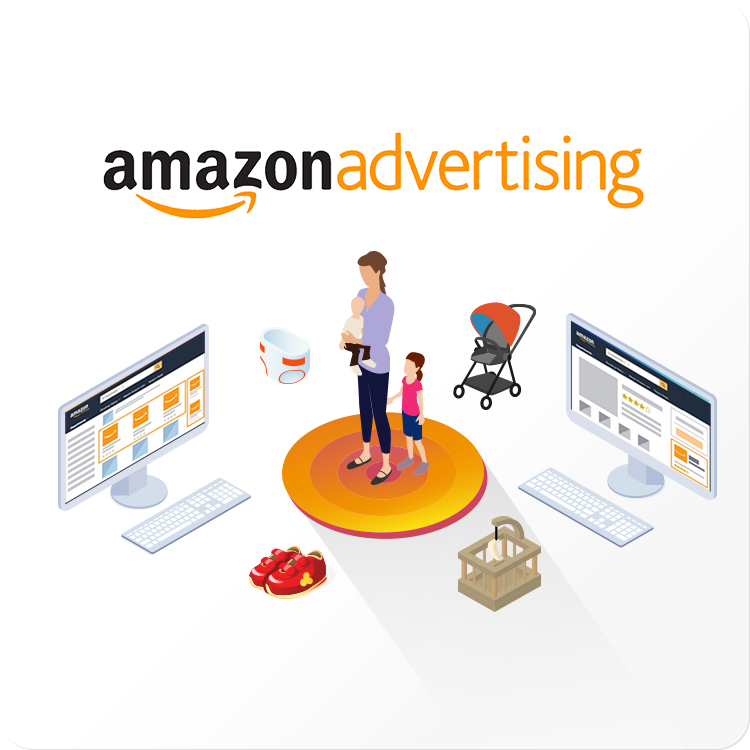
  • Mastering Amazon PPC: Top 5 Mistakes to Dodge for Effective Advertising

    Mastering Amazon PPC: Top 5 Mistakes to Dodge for Effective Advertising

    In the expansive world of online shopping, Amazon stands as the ultimate destination, attracting countless enthusiastic shoppers in search of various products. For businesses aiming to grow and boost sales within this platform, Amazon PPC (Pay-Per-Click) campaigns have become crucial. Yet, mastering this landscape requires careful handling, as even small errors can deeply affect how well your campaigns perform. Here, we’ll explore the top 5 blunders to avoid when guiding Amazon PPC campaigns towards achieving the best possible outcomes.


    Mistake 1: Overlooking Comprehensive Keyword Research

    The backbone of a successful Amazon PPC campaign lies in exhaustive keyword exploration. Keywords serve as the gateway to your ads, dictating their relevance and visibility. Neglecting this step poses the risk of overlooking your intended audience and wasting your ad budget.

    Take a deep dive into the specific keywords utilized by your potential buyers. Utilize Amazon’s tools, external resources, and competitor insights. Prioritize long-tail keywords for enhanced conversion rates and reduced competition.


    Mistake 2: Underestimating the Crucial Role of Ad Copy Optimization

    The effectiveness of your Amazon PPC campaign heavily relies on the potency of your ad copy. Astonishingly, many advertisers tend to overlook this critical aspect, resulting in disappointing click-through rates (CTR) and a subsequent lack of conversions.

    The solution lies in crafting ad copy that speaks directly to your target audience. This involves highlighting the unique, compelling features of your products & emphasizing their benefits. Use convincing language infused with specific details that differentiate your offerings from others. For instance, spotlight the eco-friendly attributes of your products to appeal to environmentally conscious consumers. By doing so, you’re likely to capture the attention and interest of your intended audience, significantly improving engagement and conversion rates in your Amazon PPC campaigns.


    Mistake 3: Unorganized Campaign Structure

    Having a disorganized campaign structure can spell trouble. When your setup lacks order, understanding what’s effective becomes a puzzle. It’s crucial not to cram too many products into a single campaign; instead, opt for a structured approach for clarity.

    Picture a scenario where a seller launches numerous campaigns without proper organization. It results in chaos, making it a daunting task to determine where to allocate funds and assess campaign performance accurately.

    To navigate this, establish a methodical and structured campaign setup. Divide your campaigns sensibly—perhaps by product categories or the specific audience you’re targeting. This systematic approach grants you greater command over budget allocation, enables strategic bid adjustments, and facilitates meticulous monitoring of each segment’s performance.


    Mistake 4: Neglecting Bid Monitoring and Adjustment

    Managing your bids effectively is key to getting the most out of your Amazon PPC campaigns. Sadly, many advertisers set their bids and then forget about them, missing chances for better performance.

    Imagine a seller in the Amazon, setting their bids sky-high and not keeping an eye on how they perform. Finding that sweet spot between high and low bids is like crafting a winning strategy, ensuring your ads get noticed without overspending.

    Stay on top of your campaign stats and use that data to tweak your bids. If certain keywords bring in sales at a good cost, think about raising those bids. For keywords that cost a lot but don’t bring in many sales, consider lowering bids or stopping those keywords. Keep analysing your data and adjusting your bids smartly to get the best results and make the most of your budget.


    Mistake 5: Overlooking Ongoing Performance Analysis and Enhancement

    One of the most impactful slip-ups in Amazon PPC is the lack of consistent review and enhancement of campaign performance. Advertisers who miss this crucial step risk losing out on valuable insights and chances to make things even better.

    Ensure you create a routine for analysing your Amazon PPC campaign performance regularly. Dive into the data to understand what’s working and what needs improvement. Use this information to tweak and refine your bid & keyword strategies. Don’t just set it and forget it—continuously optimize based on real-time insights to maximize your campaign’s effectiveness and reach.

  • Weekend Digital Media Round-up: Google’s 3D images in mobile search, LinkedIn’s Drawbridge acquisition, WhatsApp’s rolling out Status ads and More…

    Weekend Digital Media Round-up: Google’s 3D images in mobile search, LinkedIn’s Drawbridge acquisition, WhatsApp’s rolling out Status ads and More…

    1. Now live: Google 3D images and AR integration in mobile search

    Google announced a few weeks ago support for 3D images and AR within search — that feature is now live. Many searchers are able to search for objects such as [shark], [lion], [panda], [alligator] and so on and see those 3D objects in search and then project them into their environments with AR. [Source: Search Engine Land]

    2. LinkedIn looks to improve ad targeting, attribution capabilities with Drawbridge acquisition

    LinkedIn announced that it has entered a deal to acquire Drawbridge, an identity resolution platform that uses AI and machine learning technology to provide marketing, customer experience and security solutions. With the addition of Drawbridge’s technology, LinkedIn is aiming to boost ad engagement and ROI for marketers. [Source: MARTECH TODAY]

    3. WhatsApp Reveals First Look At Ads In Its Status Feature Which Will Roll Out In 2020

    Facebook, the parent company of WhatsApp, has officially stated that WhatsApp Status updates will begin revealing ads in 2020. At an annual Facebook Marketing Summit in Rotterdam, Netherlands, Facebook offered a first look at how its ads would look once implemented. [Source: Firstpost]

    4. Qualtrics and Adobe add new integration for improved data and customer experiences

    Experience management (XM) software firm Qualtrics announced new XM integration capabilities with Adobe’s Experience Platform Launch. This new integration with Qualtrics should help marketers using Launch to identify gaps and disparities in their consumer-facing digital experience. The extension allows users to monitor feedback from all digital channels, gathers the feedback and provides insights to users. [Source: MARTECH TODAY]

    5. Starting July 1, all new sites will be indexed using Google’s mobile-first indexing

    Google has announced that all new websites ā€œpreviously unknown to Google Searchā€ will be indexed using mobile-first indexing starting on July 1. Older web sites that are still not being indexed using mobile-first indexing will not be switched yet to mobile-first indexing on July 1st but be moved when those web sites are ready to be moved to mobile-first indexing. [Source: Search Engine Land]

    6. Facebook gives game developers new ad options within Audience Network

    Facebook is introducing new ad options for mobile gaming advertisers, now making rewarded video and playable ads for game apps available via its Audience Network. [Source: Marketing Land]

    7. Google to No Longer Display Text-Only AdSense Ads

    In an effort to modernize its advertising products, Google is retiring the text-only AdSense ad unit. Google AdSense will automatically rename existing ā€œText ads onlyā€ and ā€œDisplay ads onlyā€ to simply ā€œDisplay ads.ā€ [Source: Search Engine Journal]

    8. Time spent on Facebook, Snapchat remains flat, but Instagram sees growth

    eMarketer reports the average amount of time people spent per day on social networks in the U.S. dropped by nearly 1.5 minutes last year, a number that will remain ā€œvirtuallyā€ unchanged this year according to eMarketer’s forecasts. Ā [Source: Marketing Land]

    9. Twitter Officially Rolls Out ‘Go Live with Guests’ Option

    Twitter has this week officially announced its new live-streaming option, which will enable users to add audio-only guests into their streams. [Source: Social Media Today]

    10. Google sunsetting two bidding strategies in June

    Google will retire the Target Search Page Location and Target Outranking Share automated bidding strategies at the end of next month. Instead, advertisers will be encouraged to use Target Impression Share, which encompasses impression share for certain page position targets. [Source: Search Engine Land]

  • Moving up the Digital Arch with Integrated Digital Marketing focused on Customer-Centricity

    Moving up the Digital Arch with Integrated Digital Marketing focused on Customer-Centricity

    The new-age connected consumers are faced with a choice explosion. What does this mean for digital marketers? To give more choices to the consumer or improve the consumer’s choosing experience?

    As a brand, if you are looking to win the big share of the customer-base pie, it’s essential that you take an integrated digital marketing approach one that encompasses technology, creativity, data and analytics in digital advertising to create successful customer experiences.

    Here’s why you can no longer afford to ignore Customer Experience Management:

    Here are a few reasons why your brand is losing out on ROI as well as credibility by having a lackluster single-channel digital marketing strategy:

    • The Evolution of the Modern Consumer

    With increasing internet penetration in India, online buyers are rapidly increasing. m-Commerce is growing at an exponential pace especially the m-wallets transactions. They are aware of the marketing and advertising efforts of brands, and they no longer trust traditional advertising – especially from big corporations and celebrities. However, they trust brands that are organic, authentic, and honest.

    This means, your content, SEO, and other marketing efforts have to work together to create authoritative, authentic, and engaging content.

    • Customers trust other Customers

    Do you know whom your customers trust the best? Other users of your product. The growth of influencer marketing can be attributed to this.

    You need to work on digital marketing efforts that lead to the generation of customer reviews, social shares, and other user-generated content to build brand credibility and trust. Organic shares of your brand’s content increase engagement because your potential customers see other users interacting with your brand and are likely to follow suit.

    • Multi-device Multi-channel Lifestyles

    This is increasingly true for customers across generations. Your brand needs to develop a multi-channel, integrated marketing approach if you want to reach out to customers who effortlessly straddle more than one channel across multiple devices.

    According to data revealed by SalesForce, it was found that an average customer goes through 6 to 8 touchpoints, before they make a purchasing decision. This makes it crucial that your brand develops a unified, integrated digital marketing approach that focuses on customer experience. It’s time that your brand shifts its focus from CRM to CXM.

    Customer-Centricity – Easier Said than Done

    Though brands have been trying to shift to a customer-centric approach for nearly two decades now, the CMO states that only 14% of marketers believe that customer-centricity is what sets them apart.

    Why do most businesses fail to figure out customer-centricity? This is because the volume, variety, and velocity of customer data are challenging for businesses to handle. While some companies don’t have the tools and technology to divide customers into segments, others lack in targeting customers with the right personalized communications.

    Another huge barrier is lack of customer-centric culture at businesses. Most companies remain focused on sales, products, or services. The customer-centricity approach is only restricted to certain operations like marketing.

    Businesses can move to a customer-centric approach with data-driven marketing. To provide your customers with the best experience, you need to gain access to customer insights. Enterprises realize that customer-centric strategies, along with an integrated digital marketing approach are the best way forward.

    By gathering and analyzing customer data and tailoring your marketing efforts to focus on customer experience, you can surge ahead outpacing your competitors and build a brand that stands tall among your target audience.

    Logicserve Digital is a new-age digital marketing and digital consulting company with offices spanning across India. They have enabled leading brands to navigate through the new-world digital marketing challenges by driving communications across multichannel platforms and devices. Their in-depth knowledge, expertise and innovative ideas have helped brands to leap forward in digital ecosphere. With the right mix of data and optimum use of technology, Logicserve has created success stories for brands across varied sectors.

  • Weekend Digital Media Round-up: Google’s ā€˜Signed Exchange’ solution, Facebook’s updated Ads Manager, Twitter’s ā€˜Hide Replies’ feature and More…

    Weekend Digital Media Round-up: Google’s ā€˜Signed Exchange’ solution, Facebook’s updated Ads Manager, Twitter’s ā€˜Hide Replies’ feature and More…

    1. Google’s ā€˜Signed Exchange’ solution let’s publishers use their own URLs for AMP pages

    Google is formally rolling out a new solution which will still deliver AMP speed to publisher URLs. It involves use of Signed Exchanges, a technical framework that, as a practical matter, enables browsers to display publisher URLs on cached AMP results. [Source: Search Engine Land]

    2. Facebook Updates Ads Manager, Adds ‘Cost Cap Bidding’

    Facebook’s rolling out an updated version of its Ads Manager app, with a new presentation format and new features. In addition to various updated functions, the company is also adding a new ‘cost cap bidding’ option for campaigns, which is designed to improve efficiency and results. [Source: Social Media Today]

    3. Twitter’s ā€˜Hide Replies’ Feature is Set to Roll Out in June

    A new Twitter feature which allows users to hide replies to their tweets is set to launch this June. Twitter was spotted working on this feature back in February. A representative from Twitter later confirmed it would soon be rolling out publicly. [Source: Search Engine Journal]

    4. AMP Stories Now Have a Dedicated Section in Google Search Results

    Google is adding a new section to search results which is dedicated to AMP Stories. AMP Stories was announced over a year ago and now they’re rolling out in a big way. [Source: Search Engine Journal]

    5. Is Facebook Bringing Back Messenger into the Main App?

    A researcher & tech blogger noticed a new feature within Facebook’s app which indicated that Facebook might have plans to integrate the Messenger with the main app. [Source: Logicserve Digital]

    6. Snapchat is innovating in a big way

    Snapchat is introducing new extensions to the social media service. With the strengthening of originals lineup to Snap Games, Snap Lenses and new shows; users have some interesting features to explore within the platform. [Source: The Telegraph]

    7. Facebook confirms it’s working on an AI voice assistant for Portal and Oculus products

    Facebook has confirmed that it’s working on an artificial intelligence-based digital voice assistant in the vein of Amazon’s Alexa and Google Assistant. The news indicates Facebook isn’t giving up on a vision it first put out years ago, when it began developing an AI assistant for its Messenger platform simply called M. [Source: The Verge]

    8. LinkedIn Is a Newcomer to the Reactions Game, With 4 Options Joining Its Like Thumbs-Up

    The professional network introduced its own set of Reactions last week, with its already existing like thumbs-up joined by celebrate, love, insightful and curious. [Source: Adweek]

    9. Facebook Adds New Options for Posting 3D Photos, Including 3D Photos in Stories

    Facebook’s 3D posts haven’t gained huge traction as yet, but they do offer an interesting, engaging visual option, which is likely to see more take-up as more people revert to newer smartphones. And now, the company is adding some new ways to use the option. [Source: Social Media Today]

    10. YouTube Working on Two New Internal Metrics to Evaluate the Success of Videos on the Site

    Until now, YouTube solely relied on engagement criteria like the number of views, comments and likes for measuring the success of the video. It’s not yet known how YouTube will measure the content quality but reports state that YouTube is working on introducing two new metrics soon. [Source: Logicserve Digital]

  • Weekend Digital Media Round-up: Google Cloud’s Zero Trust framework, Facebook’s new brand safety ad filters, Pinterest’s conversion features and More…

    Weekend Digital Media Round-up: Google Cloud’s Zero Trust framework, Facebook’s new brand safety ad filters, Pinterest’s conversion features and More…

    1. Google Cloud unveils new identity tools based on Zero Trust framework

    Google Cloud announced some new identity tools designed to simplify identity Access Management within the context of the BeyondCorp Zero Trust security model. [Source: Tech Crunch]

    2. Facebook to replace Exclude Categories with new brand safety ad filters

    Facebook rolled out new brand safety inventory filters for Audience Network, Instant Articles and in-stream videos ads on Wednesday. The new filters — which include ā€œLimited,ā€ ā€œStandardā€ and ā€œFullā€ inventory options — will replace Facebook’s five exclusion categories. [Source: Marketing Land]

    3. Pinterest introduces new conversion features for Promoted Pins and Videos

    Pinterest launched two new conversion tools for advertisers offering conversion optimization for Promoted Pin campaigns and a new conversion goals feature for Promoted Videos. [Source: Marketing Land]

    4. Google Assistant Receives Rich Text, Handy Tools and Other Snippets

    The latest Google Assistant update will add variety to the information provided by the Assistant offering better visual responses and answers in the form of ā€œrich textā€ for queries. [Source: Logicserve Digital]

    5. New Chrome Feature May Hurt Publisher Revenues

    Google informally announced a new feature coming to Chrome. It will allow lazy-loading images and iframes with an HTML attribute, no JavaScript required. It will improve the user experience, which is good for publishers and site visitors. But there is also a potential negative impact to ad revenues. [Source: Search Engine Journal]

    6. YouTube Continues to Explore New Ways to Take on TV

    With digital video consumption rising, YouTube is trying out another way to further align with evolving trends, by adding in new “Choose Your Own Adventure” style content, while it’s also changing its pricing and options for its YouTube TV offering. [Source: Social Media Today]

    7. Google’s new Currents app is its enterprise replacement for Google+

    Now that Google+ is history, today, Google unveiled what will be offered to G Suite users in its place: Currents. The new app enables people to have meaningful discussions and interactions across your organization, helping keep everyone in the know and giving leaders the opportunity to connect with their employees. [Source: The Verge]

    8. Google Search Console adds Discover report

    Google announced it has added a new report to help publishers learn more about how searchers are finding their site through the Google Discover feature. [Source: Search Engine Land]

    9. Facebook’s Implementing New Rules and Processes to Stop the Spread of Harmful Content

    Facebook has announced a raft of new rule changes and tools which are designed to further limit the use of its platform for sharing misinformation and potentially harmful content. [Source: Social Media Today]

    10. Google Cloud goes after commerce market with Cloud for Retail solutions

    Google announced the launch of Google Cloud for Retail at Google Cloud Next, with a host of new solutions designed for the retailer vertical. The new solutions are aimed at helping retailers deliver personalized recommendations, unifying customer experiences across online and offline environments and more. [Source: MARTECH TODAY]