LS Staging

Tag: Pay Per Click Management

  • 5 Audiences to NOT Include in your PPC Campaigns

    5 Audiences to NOT Include in your PPC Campaigns

    Identifying the audiences NOT to reach is as important as identifying audiences you want to reach for PPC campaigns. By not showing ads to negative audiences, marketers can reduce spends and avoid tiring out potential customers by running irrelevant ads.

    Here, in this guide, you can take a look at the five audience categories to exclude from PPC campaigns.

    1. Support Seekers 

    People who are looking at your web pages for support are generally existing customers. They are not looking to purchase from you, but require extra assistance.

    Brands can build retargeting lists based on the URLs visited. Customers who visit the FAQ and other support section of the website can be excluded from PPC campaigns.

    2. Previous Customers 

    Including or excluding previous customers depends on business goals. Let’s understand this with an example. Consider a brand that has a multi-step funnel before customers convert.

    At the first point of contact with the brand, customers are offered an asset like free delivery on their first order when they sign up for the newsletter. Marketers can now include these customers to a retargeting list and entice them for a second transaction. On the other hand, marketers can exclude them from the campaign, since they already have the asset (free delivery coupon) in hand. However, marketers can decide to include them in another campaign, say a product demo campaign.

    This way, marketers can ensure that past customers are not retargeted for duplicate messages. Instead, it gets them to take the next step in the funnel.

    3. Job Seekers 

    It’s common knowledge that site visitors who are more interested in the career section of your website are not likely to purchase from you. So, it makes sense not to include this set of audience in your PPC campaigns’, and thereby avoid unnecessary spends.

    4. Present Customers – But it depends

    Current customers fall under the grey area of PPC campaigns. Some PPC marketers argue that they should be included while others believe otherwise.

    • Brands that are looking to upsell can include current customers for ad campaigns.
    • Alternatively, marketers can include customers who have purchased Product A for campaigns related to Product B and vice versa.
    • Existing customers provide recurring revenue to brands. You can segment them into smaller segments based on whether they are likely to repurchase or not.

    5. Audiences in non-retargeting Campaigns 

    It’s a good practice to avoid audiences from other campaigns in specific retargeting campaigns. For instance, if a brand is running an interest-creating campaign on Facebook. Make sure to include the audience from this campaign in one particular retargeting audience list so that you can send them specific messaging, getting them to convert.

    Define your Audience for Precise Targeting 

    While these are the top 5 audience categories to exclude from your PPC list, there may be several other categories based on your goals and objectives. Make sure to refine the audience list that you want to show and not show your ads. This way, you can avoid wasting money on the wrong audiences while getting the right audiences to convert.
  • 5 Reasons why Automated Bidding is NOT the Magic Potion to all PPC Challenges

    5 Reasons why Automated Bidding is NOT the Magic Potion to all PPC Challenges

    It’s no surprise that Google is pushing advertisers to make use of its machine learning tools and features. Automated bidding for PPC campaigns is one such strategy that Google is using to entice advertisers.

     What is Automated Bidding? 

    As the name implies, it’s an automatic bidding strategy used for Google AdWords campaigns. In automated bidding, Google monitors the performance of the campaign using advanced machine learning tools, which automatically sets and adjusts bids for every auction, based on the goals defined.

    Google currently offers six different automated strategies to meet different PPC goals. Here’s are different automated bidding strategies that PPC advertisers can use:

    S.No. Bid Strategy Goal
    1 Maximize clicks To increase traffic to the site
    2 Target impression share To increase site visibility
    3 Target CPA automatically To increase conversions
    4 Target ROAS To meet a target ROAS while assigning different values to each conversion
    5 Maximize conversions automatically Get more conversions within the budget
    6 Maximize conversion value automatically Get more conversion value


    Does this mean, PPC campaigns can be run automatically without the need for PPC experts? Well, No, in this guide, we take a look at why using automated PPC bidding strategies may not always be the right choice.

    #1: Automated Bidding doesn’t mean it’s a Completely Hands-off Approach 

    Advertisers falsely assume that once they set up automated bidding, the tool itself takes care of all the aspects of the campaign.

    To give an example, IS (Impression Share) is a metric that advertisers regularly monitor while using manual bidding. When switching to automated bidding, advertisers stop monitoring this key metric, which could lead to plenty of lost impression shares.

    One reason for lost IS with automated bidding is that when a competitor’s actions change the value per click, the automated bid strategy stays within the bounds set by the advertiser. This leads to losing impression shares to competitors.

     #2: Advertisers are likely to Miss Out on Key Insights 

    Let’s explain this with an example. For instance, if the conversion rate drops after launching a new landing page, automated bids will reduce the number of bids, so that it can remain within the target. The advertiser will not know why the bid values were dialled down.

    The result – they are likely to lose more impression shares.

    #3: Bid Automations do not Automatically Rectify all the Mistakes of Manual Bidding

    Majority of advertisers consider automated bidding as the solution to achieving results that they were not able to achieve manually. They think that once they set the target, the system will automatically reach the desired goal.

    This is a significant mistake. For instance, if advertisers set a low target, they could potentially lose volume. On the other hand, if the goal is too aggressive, it causes a loss of profitability.

    Just like manual bidding, advertisers have to monitor and change targets based on performance.

    #4: Automated Bidding Complicates the Math

    PPC advertisers are likely to be familiar with the basic math of PPC for manual bidding like:

    • Increase the CPC bids to become more aggressive
    • Increase the tROAS to become more aggressive and so on.

    With automated bidding, advertisers have to relearn the math once again to get it right, and the worst part is that the math is not transparent as with manual bidding.

    #5: Even Automated Bidding Requires Multiple ROAS

    Several advertisers falsely believe that with automated bidding, they can set a single target for the entire campaign. Sadly, it doesn’t work that way. Advertisers still have to set different goals for various ad group levels.

    The key takeaway – Advertisers should continue to keep an eye on Details, even while using Bid Automations

    While there’s no denying that automated bidding is a powerful tool, advertisers have to consider the following factors before they start using it:

    • Understand it inside out
    • Continue to keep an eye on details
    • Targets are still fluid goals that vary based on changing requirements
  • PPC 2018 in Review: How These Top 5 Trends will Impact Paid Advertisers in 2019

    PPC 2018 in Review: How These Top 5 Trends will Impact Paid Advertisers in 2019

    2018 was a huge year for PPC marketing. There were several massive changes in the paid search landscape – the launch of new campaigns, enhanced features, better targeting capabilities, new tools and more.

    How do these big changes and trends impact PPC advertisers in 2019? That’s one of the big questions in everyone’s mind. Here, in this article, we take a look at how the trends and changes of 2018, shape the way paid search marketers will work in 2019 and beyond.

    1. Google Ads Gets a New Name and a New UI

    Google announced the name change of Adwords to Google Ads, in June 2018. This name change reflects the platform’s move away from keywords. Going forward keywords will play a lesser role in paid search marketing and will be more focused on audiences. Additionally, the name change of the platform indicates Google’s growth beyond text ads to ads of different formats and across a variety of sites and apps.

    The new Google Ads UI is more of a command centre than the previous dashboard style. There’s a new YouTube reach planner, the ability to make changes right from the Overview section, notes and several other new features.

    Experts predict that this new UI will be the most significant change in PPC for 2019. There are several new ways to segment data, and finally, marketers will make the shift from keywords and text ads, to new categories of ads.

    2. Enter the Era of Amazon’s Advertising

    2018 was the year when Google, Bing, and Facebook recognised the role of the e-commerce giants when it came to PPC marketing. According to reports by eMarketer, Amazon is currently the third-largest digital ad marketplace in the US. Though it’s far behind Google and Facebook, Amazon’s ad revenue is expected to skyrocket in the coming years.

    What does this mean for paid advertisers? Experts predict that paid advertisers will lean towards Amazon, both in terms of budget allocations and campaign management.

    With the ad format in Amazon, different from Google and Bing, advertisers will have to develop distinct practices specifically for the platform. Though Amazon’s ad management and reporting capabilities are nowhere near Google, right now, experts expect to see significant progress this year and in the coming years.

    3. AI-Powered Insights

    While AI in marketing has been around for some time now, both Google and Bing allocated significant resources for AI-research in 2018. This helps in improving AI-driven recommendations in both the search engines.

    The Competition tab from Bing offers performance insights and other location-based recommendations, powered by machine learning networks. Google also offered better data visualisations, which help advertisers track the performance of their campaigns, effectively. 

    How do these impact the advertiser? With quicker insights powered by AI, advertisers will spend lesser time on analysing spreadsheets and instead focus on developing their marketing strategy and creative tactics.

    4. Increase in Cross-Channel Advertising

    Today, the digital marketing space is so varied, and there are plenty of channels and platforms, all offering different benefits to the advertiser. In the coming years, you can expect advertisers focusing on cross-channel and cross-device attribution.

    However, while it’s easy to build and co-ordinate multi-channel campaigns, reporting silos is still a major challenge for paid advertisers. Advertisers can expect new tools that make it easy to monitor and track performances for cross-channel advertising campaigns.  

    5. Video will Continue to Play a Significant Role

    Though video marketing has been around for a long time, the trend doesn’t seem to die away, anytime soon. PPC marketers should plan on including video into their strategies to gain coveted placements on SERPs.

    Even if you don’t want to increase spends on video marketing, you can still leverage YouTube audiences as part of your PPC search campaigns. And, experts predict that more platforms will adopt Google’s recent introduction of vertical video ads.  

    Looking Ahead for 2019

    2018 was a significant year for PPC. With the arrival of Amazon, depreciation of keywords and the increasing role of machine learning and AI, 2019 presents several new challenges and opportunities for paid advertisers. And, PPC advertisers have to embrace these new trends, to stay ahead of the pack and create successful campaigns.

  • Google Now Pays For Conversions Bidding In Display Campaigns

    Google Now Pays For Conversions Bidding In Display Campaigns

    In the ever-changing, ever-evolving world of Google, changes are not all that surprising. However, Google still manages to take people off-guard with some variation or another.

    The latest one in the line being, conversion-based bidding called “Pay-For-Conversions” available for display campaigns.  

    Why Should You Know About This?

    If you are an advertiser, basing your strategies on Google’s functioning, then this is important information. With the bidding functionality now available, advertisers will be charged when users convert from ads.

    This move is similar to Google’s search campaigns. Advertisers that want to pay by conversion rates would set for themselves a target Cost Per Acquisition or CPA that needs to be acquired in the bidding section of the campaign settings. To further clarify how this works, Google graced its confused audiences with an example.

    “Let’s say your target CPA is $10, and you drove 30 conversions over the weekend. You’ll pay exactly $300, with an actual CPA of $10.” Further, they said, “you’ll never pay above your target Cost Per Action.”

    Google, therefore, is trying to put it out that Pay-For-Conversions will use the same functionality (in algorithmic terms) as that of Click-based payment. This hints towards the goal which is to garner as many conversions as possible by the desired target threshold.

    For Those of You Who Are Still Wondering What Target CPA Is

    Formerly known as Conversion Optimizer, Target CPA bidding is an automated bidding strategy provided by Google Adwords. Target CPA optimises your bids so that you get the most conversions for your target CPA, which you set as a goal.

    Let’s put it this way, say you found out through intensive research and experience that you can pay up to $2 to gain a customer, and still have margins left to cover your costs, so you would then choose a target CPA of $2 and Google will then deploy algorithms to get you the best bids to reach that goal.

    Some Additional Information on Target CPA

    •    Target CPA is a lucrative option for high volume campaigns like the ones which promote products or services with identical margins.

    •    The upper limit on a target CPA is $200.

    •    In case you happen to get an error while trying to pay for conversions, then your account would be disqualified for “undisclosed reasons.” For added authenticity, Google says that eligibility is refreshed on a daily basis.

    •    What advertisers need to keep in mind is that Pay-For-Conversions don’t work on conversions imported from calls or Salesforce. They also do not work for cross-device conversions or shared budgets.

    •    There also happens to be an option called Smart Display Campaign, which offers pay conversions. Campaigns need to at least reach 50 conversions in the course of 30 days to be eligible for the Smart Display Campaign (which is basically an advertising solution to handle variables so as to acquire a larger customer base.

    Now that we have all the details about this update, advertisers need to make sure to set a target Cost Per Acquisition. This will help to make sure that the update works in their favour and they can make the most out of this new update announced by Google.

  • Revenue Boost Made Possible With These Innovative AdWords Strategies

    Revenue Boost Made Possible With These Innovative AdWords Strategies

    Although every digital venture is different from the other, they do share some common points of interest. Optimising sales, driving huge traffic, and generating high revenues is all that they wish for. It goes without saying that marketers are always striving hard to come up with new marketing methods and innovative advertising strategies, thus carving a distinctive niche in the digital arena. It would not be wrong to say that the competitiveness between brands is increasing with each passing day and marketers are continually looking forward to new innovations.

    What’s important?

    You have to get one thing straight, and that’s the need for creating innovative campaigns that help you make a difference. Even if you think that paid search strategies and PPC campaigns will fetch you qualified leads, you might go wrong. Everyone out there is putting their best efforts to captivate leads and turn them into potential consumers. If you wish to survive in this cut-throat competition, you will need to do something that works for your brand.

    Targeting the right leads

    Your venture’s popularity will depend on your efforts to capture highly qualified leads. Offering relevant updates and seamless experiences to target audiences will be critical to earning huge revenues. All you have to do is conceptualise, ideate, strategise and create personalised modes of paid marketing.

    Building a targeted and effective AdWords campaign will be the right thing to do. Since numerous business owners would be leveraging paid marketing modes, it’s high time to think differently and stand out from the rest of the crowd. Here are some ways to help you create innovative strategies with AdWords:

    1. Know your target group

    The business arena and professional landscape is filled with leads that have potential to be qualified customers. However, all of them aren’t the right resource for your venture. It is highly imperative to identify the target group and develop crystal clear idea of their needs. Once you are aware of what your customers want, carving targeted and specific strategies won’t be difficult.

    1. Leverage Geo-customizers

    Since you are relying on paid search, why not opt for geo-customizers. Personalisation is the key, and there’s no way you can ignore that. This particular feature will prepare and update your ad copies according to searcher’s interests. That’s quite beneficial for a business and there’s reliable stats to prove it. Geo-customizers boost CTR by a whopping 30%. That’s not the end of the story; the feature also brought down CPA rates by 50% and that too within a span of two weeks.

    1. Rely on social media

    When it comes to targeting potential audience and targeted visitors, there’s no denying that the role played by social media platforms is critical. With Twitter and Facebook’s support, you will have the opportunity to target a specific group of audience. Other than that, you can classify your consumer-base according to demographics thus making business promotions even more effective than ever.

    Revenue generation and uninhibited amounts of web traffic are essential for your dream enterprise. It is quite evident that you will only get that after creating personalised, customised, and dynamic paid campaigns. Identify your targeted leads and get going right now.

  • Google AdWords Responsive Search Ads Now Allows 3 Headlines

    Google AdWords Responsive Search Ads Now Allows 3 Headlines

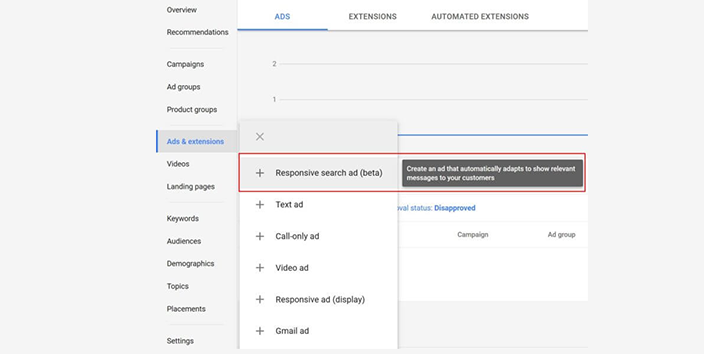
    The development team at Google AdWords seems to be coming up with new and exciting updates for its beta version of responsive test ads. In the most recent update, advertisers are now allowed to provide more than one headline for an ad. The new ad format is in sync with the proliferation of machine learning and hence offers more space for advertisers to build their headline.

    As many marketers would have seen – once they use the standard dynamic ads, they will start seeing recommended responsive ads built into their dynamic campaigns. With the dynamic nature, Google Machine Learning algorithm takes over to serve the most relevant ad likely to generate the best possible ROI on the advertising costs.

    Responsive ads are introduced to improve the overall efficacy of dynamic remarketing campaigns. It has the capability to automatically adjust to a banner ad or a dynamic text ad based on the available ad real estate.

    The changes in the new ad format

    As a part of Google initiative to let machine learning to optimise ads, it has added a slew of measures in place since last year. Be it getting rid of manual A/B testing, dynamic search ads, or automated ad rotation optimisation; there are quite a few initiatives taken by Google in this regard.

    The rationale behind multiple ads is simple – your group gets to participate in a higher volume of ad auctions. This is applicable when there are more options for the keywords to deliver the ads. Additionally, it means handing over more control from the humans to the AI-based computer systems. All these updates point to one key effect – manual A/B testing will no longer be as effective as it was before.

    The two key changes to the headlines in responsive ads are as below:

    1. Show a max of three headlines in place of the current two headlines

    2. Show a max of two descriptions (90 alphabets) in place of the current one description (max 80 alphabets) 

    Best practices for writing effective headlines

    1 – Advertisers can integrate a maximum of 15 headlines plus 4 descriptions. With this, advertisers need to add different flavours and varieties – all leading ultimately to the singular goal of achieving brand visibility

    2 – You need to provide different headlines and descriptions – such as varying between the headlines on product USP, value propositions, benefits, call to action, and features.

    3 – Remember to follow the current guidelines of writing headlines that are relevant to the keywords and having at least one keyword present in the headline

    4 – Use ‘pinning’ option when dealing with sensitive categories. Make sure to pin more than one headline and description to make the dynamic matching more effective.

    5 – Make use of the ad type column in the reporting metrics view. Under this, you can filter results for only responsive search ads. This will allow you to see the performance of the dynamic ads served by Google machine learning algorithm working in the background.

    What are your thoughts on the new updates to responsive ads on Google AdWords? Do write to us and let us know.

  • All you need to know about AdWords Conversion Linker

    All you need to know about AdWords Conversion Linker

    When you open your Google tag manager account, you might have noticed a small banner at the bottom of the screen. It is the upcoming Safari update. The new Safari update will see the introduction of the Intelligent Tracking Prevention (ITP).

    This move is a great start to improve people’s privacy. With the help of machine learning tools, the domains are determined which helps to track people across multiple websites. By only letting cookies which are acting in a third party context, it helps to limit the tracking of the ‘allowed’ Domains. The below points will help you to quickly understand the impact of the new Conversion Linker and why you need to implement it.

    Understand the functioning of cookies

    A cookie contains many bits of information along with the domain name. The other bits of information may include name, content and the expiration date. One important thing to remember is that the cookie can only talk to the domain it has been specifically written for.

    For example when you visit a website for Astra fashions, then the cookie written for www.astrafashions.com will be deemed as a first party cookie. If the website has a cookie which sends the data to another website, then it would be considered as a third party cookie. It is essential to understand that cookies are not naturally listed as a first or third party, it is determined at runtime by the browser.

    What’s the relation with AdWords?

    First, it is to be understood that, as AdWords cookies send all the data to www.googleadservices.com, they are considered to be third-party cookies. More and more browsers are attempting to block third-party cookies to protect their consumers’ privacy. Leading browser companies like Safari and Firefox are taking the lead in its implementation. This means more and more people are not tracked through the regular Adwords conversion tag. With the ITP update on Safari on the horizon, it’s going to get a lot worse than before. It can have a cascading effect as the Adwords conversion data may get lost due to non-tracking.

    Google, as we know, has a solution for every problem. In September it had released a new Adwords conversion tracking option which has replaced the old cookie with a supplementary Google analytics cookie. Due to this the cookies will now be considered as the first party, and thereby the above limitation can be bypassed easily. The updated Google Tag Manager Conversion Linker helps to set a cookie in your own browser and therefore even in third-party browsers it can be tracked appropriately. This way you can track all the users of browsers who have third-party cookie blocking by default and also those who have purposely chosen to block the third party cookies.

    It is very easy to setup your GTM Conversion Linker Tag:

    Step 1: Firstly click on add a new tag and thereafter click on conversion linker.

    Step 2: Set the appropriate default trigger for all pages, and it’s all done.

    With these steps, conversion can be tracked conveniently even for browsers that have blocked third-party cookies.

  • 3 Effective Ways to Better Personalise Programmatic Ads

    3 Effective Ways to Better Personalise Programmatic Ads

    The policy of personalising ads according to a user’s preferences and transactions has been gaining ground over the last few years. But it’s essential to distinguish and draw a line between the truly personalised and being obnoxious.

    With almost unlimited data at our disposal, it sometimes becomes challenging as to where to draw the line. Businesses think that the ultimate use of their advertising resources would be where they are able to send users unique content and messages at the right time on the right platform and in proper context.

    What has changed is the scale of programmatic ads

    While this was done in small proportions previously, it has truly gained an enormous traction in the last few months. The reason for its emergence is personalisation engines and way more digital marketing platforms. With ad blocking growing 41% year over year, it was imperative for the advertisers to bring something new to the table to counter it.

    Silly things like blocking users who use the ad blocking software or trying new tricks to get around ad blockers wouldn’t be able to solve the problem. It is no wonder that some firms like the New York Times even went to the extent of requesting users to avoid the ad-blocking softwares.

    How to enhance the personalisation within programmatic?

    Programmatic personalisation strategy should be more than pure data and technology. It should enable advertisers to create more lasting and memorable user experiences, make messages more relevant to them and even facilitate effective conversations with their current and prospective customers. There are multiple marketing touchpoints which can be utilised efficiently to get the most output for the advertiser’s money.

    1) Start with data

    By carefully analysing data you can reward scintillating outcomes in marketing. By carefully examining the data, advertisers can progress to make more personalised ads and messages for individual users. The relevancy of the ads with unique users is of prime importance. The key for delivering the relevant media to users is through an efficient data analysing strategy.

    2) Nothing’s more effective than real-time advertising

    By providing unique content to individual users on a real-time basis sharply increases the effectiveness of programmatic advertising. A person’s shopping profile and a history based on previous transactions can be used efficiently to create ads based on his interest.

    3) Technology is the key

    Technology is one of the wheels along with data that can help solve the personalisation in programmatic. With the help of efficient, reliable and scalable technology, data can be turned into a value of enormous proportions. By helping to create stronger ties between you and the consumer, technology can be of the great essence.


    Now is the time for companies to increase their share of programmatic with personalisation. The entry of big players into marketing technology has given this market a kind of buzz. Most of these players already have significant consumer data along with industry data. For them monetising this information for personalised advertising will be the next logical step.

  • Take your PPC advertising to the next level with Artificial Intelligence

    Take your PPC advertising to the next level with Artificial Intelligence

    At a time when the world is raving about Apple’s Siri, Microsoft’s Cortana and Google Now, Is Artificial Intelligence all ready to take over the PPC world by storm?

    Let us see how machine learning will dominate the future of PPC and how the businesses can leverage from it.

    Machines will not ultimately take over the job of PPC professionals, but it will change their role, by automating processes. PPC can soon be a winning strategy for an organisation’s overall digital marketing programs. Below are some of the machine learning features from Adwords that can help you take that leap in your PPC advertising by being more strategic:

    1. Smart bidding: Google’s smart bidding is a machine based bidding with the ability to analyse voluminous data thus maximising conversions for your client campaigns. It comprises of smart bidding strategies such as Target CPA, Target ROAS, Max Conversions and Enhanced CPC. Under this method, Google can process a large amount of real-time data in a jiffy and analyse “signals” to get a clear understanding of your audience and how to convert them.

    However, you cannot expect results overnight with smart bidding; you need to give the system a considerable amount of time to learn, grow and optimise on the new strategies. Over time, you will notice efficiency in CPA and growth in volume.

    1. Smart display campaigns: Sit back and relax as Google’s Artificial intelligence completely controls your campaigns. All you need to do is mention your Target CPA and Budget; Google will do the rest!

    For example; A popular hotel search platform, Trivago used Smart display campaigns to reach audiences looking for travel packages around the world and reported an increase in conversions by 36%. They only provided creatives such as headlines like “Find Great Hotel Deals”, striking images of the places to travel, target CPA, a daily budget and Adwords did the rest for them.

    Credit Karma, a financial management website reported 37% higher conversions using Smart display campaigns and witnessed increased signups on their page.

    Hulu Japan, a subscription video service, used Smart display campaigns to increase their subscriber base and got a whopping 37% increased conversion rate.

    1. In-Market audiences: Looking for your favourite brand of perfume and it shows up right in front of you, does that feel great? Oh yes! This is exactly what this feature does. It helps you reach out to potential customers who are actively researching, browsing and seeking out for the products or services that you have to offer them. This feature helps you to target the right customer at the right time, just before they make that crucial decision to buy. Google classifies and connects you to potential customers based on their in-market behaviour and purchase intention.

    So why wait? Optimize machine learning to execute swiftly and strategise your marketing campaigns better. There are things which you can do but artificial intelligence can’t! Translate the insights available from machine learning and convert them into effective strategies for your business, to increase the impact of your digital marketing campaigns.

  • SEO+PPC = the perfect recipe for new age search marketing

    SEO+PPC = the perfect recipe for new age search marketing

    Not sure how to decide between SEO and PPC for your business campaigns? Find out how a “Single source of truth” may be your answer.

    It has been a long-debated topic whether paid or organic search marketing, which of the two can really get conversions and benefit your business.

    However, a liaison of both these methods of search marketing can go a long way in driving traffic to your website that can convert into a customer. Let us find out how:

    1. A right mix of PPC and SEO

    Displaying ads which don’t cater to the information that the user is looking for is a complete no-no.

    For example: If a user is searching for “the best mobile phone of 2017” and your paid ads are simply displaying iPhone X then that will not tempt the user to click on the Ad. Though these ads display on the top of search results, the user may overlook it since it does not serve his purpose. The user here will instead click on the reviews and recommendations of the best phones, displayed in organic search results.

    On the other hand, if a user has made up his mind as to which phone he wants to purchase, he will click on the paid ads that can serve his purpose.

    Insight: Integrating organic search content with paid results can be the key to conversions.

    1. Outsmart competitors organically

    Your website should be a storehouse of information that drives users via both paid and organic search results. A small amount of research as to which websites, blogs or forums are driving the most traffic in your niche sector can be useful in deciding the most engaging topics.

    Using search tools such as search metrics, SEMrush, spyfu, etc can help you find out the most engaging keywords for your business.

    1. The Speed and flexibility of PPC

    Once you know the topics and keywords, you can use it to run broad matched paid search campaigns.

    Pay Per Click approach can be your trial and error method to find out which terms not to opt for. Once you select the “broad match” option for keywords, you will get a clearer picture as to which keywords engages users to click on the links.

    The crux of the matter is that combining both SEO and PPC strategy is a skill that every marketer should try to incorporate into businesses. The right approach is to create a synergy between SEO enhanced content and paid traffic for a powerful and profitable result.