LS Staging

Tag: Online marketing

  • Unleashing Amazon’s A10: A Game Changer for Sellers

    Unleashing Amazon’s A10: A Game Changer for Sellers

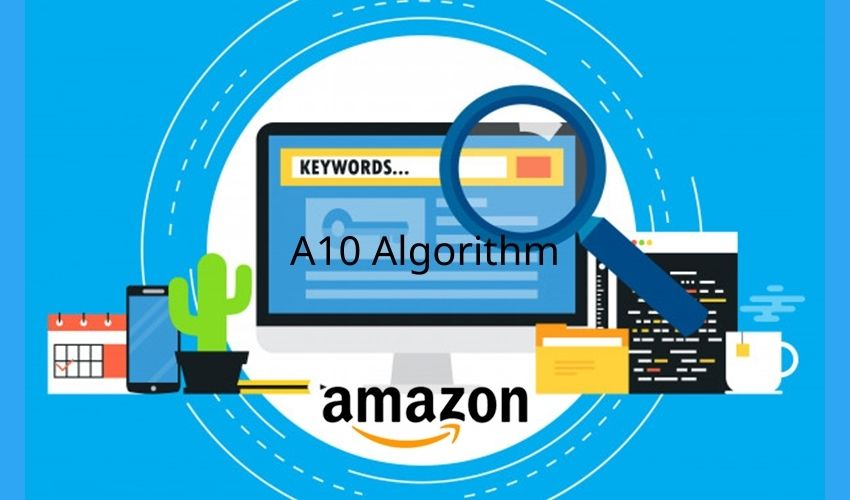
    Amazon’s A9 algorithm, a cornerstone of the platform for years, has been the driving force behind product rankings for search queries. It decides which product to show when you search for something on Amazon. It’s the art of tweaking your product listings so they show up higher in Amazon’s search results. A9 takes into account a bunch of stuff like how relevant a product is to your search, its past performance (like how often it’s sold), whether it’s in stock, how it’s priced, and how it’s fulfilled (whether it’s shipped by Amazon or the seller).

    While A9 has done a pretty good job, the e-commerce world has been changing, and Amazon needed to step up its game. That’s where A10 comes in. This evolutionary algorithm still considers the previous criteria but introduces novel elements such as seller authority, organic sales, offsite traffic from social media and external websites, internal sales, and click-through rates.

    A9 looks at factors like relevance (titles, descriptions, and keywords), performance (sales history, conversions, and reviews), availability, price, and fulfilment methods. While A9 has been a game-changer, the A10 algorithm has now entered the scene, promising even more exciting changes for sellers. It builds on A9’s success by delivering relevant search results but adapts to the ever-changing e-commerce landscape.

    The A10 algorithm’s mission is to deliver even more personalized and precise search results, with a significant emphasis on mobile users. For Amazon sellers, comprehending and optimizing for the A10 algorithm is now essential for competitiveness and success on the platform.

    A10 Algorithm: Revolutionizing Amazon SEO

    The A10 algorithm represents a seismic shift in Amazon SEO, designed to address A9’s limitations and enhance the overall search experience for Amazon’s users. It introduces several novel factors into the ranking equation:

    1. Seller Authority: A seller’s reputation and performance metrics, including feedback ratings, customer service, and fulfilment speed, now influence product rankings.
    2. Organic Sales: The number of organic sales a product achieves, without external promotions or advertising, holds significant weight.
    3. Offsite Traffic: A10 takes into account traffic directed to a product listing from social media and external websites.
    4. Internal Sales: The volume of sales a product garners within a specific category is now considered.
    5. Click-through Rates: Product listing click-through rates play a pivotal role. Listings with higher click-through rates secure better rankings.

    By incorporating these fresh factors, A10 tailors search results even more precisely, aligning with customer behaviour and preferences. With the rise of online shopping, it’s crucial for brands to stand out and connect with their target audience. By actively managing online reputation and encouraging positive feedback, brands can enhance their visibility on the platform and drive more traffic to their product pages. Furthermore, A10 is optimized for mobile devices, acknowledging the growing mobile user base. With an increasing number of customers shopping on mobile devices, it’s essential for brands to ensure that their product listings are optimized for mobile viewing. By implementing responsive design and optimizing content and images for mobile screens, brands can boost their mobile search rankings and provide a better user experience.

  • Online or Offline – Preferred Mode of Buying Mobile Phones

    Online or Offline – Preferred Mode of Buying Mobile Phones

    Shopping habits have evolved immensely over the last few decades. Buyers generally follow a pattern while purchasing a product, one of which is the mode of buying; either online or offline. Nowadays, new age consumers are relying mostly on the online mode of shopping, as it’s convenient and feasible. However, marketers are still curious to discern the thought process of the consumer while shopping. Although the online mode is popular, how many of us are actually preferring this mode? Last week, we asked people – where they purchased their last mobile phone. Here’s a look at the results.

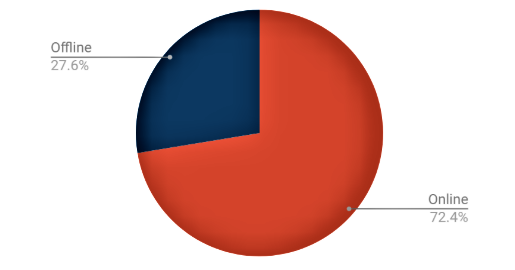
    Where did you buy your last mobile phone?

    Well, the results are very clear from the image above,

    • Almost 72% of the respondents said that they have purchased their last mobile phone online  
    • The number of people who have purchased their mobile phone from offline stores is not too less at around 28%
    • Buyers are inclined towards the online mode of shopping for a necessity like a mobile phone. This could possibly be because of the freedom they get to look at multiple options and compare for the best price & features, all of this from the comfort of their home or on the go as per an individual’s preference
    • However, there are still a lot of people who possibly want to physically see the options and pick the one that best suits their needs. These set of buyers are more inclined towards buying products from offline stores

    Marketers can safely consider online platforms to canvass their products aggressively. However, they also need to have some robust strategies in place to attract users who prefer the offline shopping mode.

  • A Paradigm Shift in the Ad Industry: From Cookie-Based Remarketing to People-Based Targeting

    A Paradigm Shift in the Ad Industry: From Cookie-Based Remarketing to People-Based Targeting

    Just a few years ago, cookie-based remarketing was the biggest trend among marketers. It helped advertisers and marketers retarget customers effectively and helped to close the deal.

    However, the biggest problem with cookie-based ads is that they are getting increasingly irrelevant and ineffective, thanks to the popularity of mobile apps, and other walled networks like Facebook, Google, and Amazon.

    Studies report that over 66% of mobile devices that are in use don’t accept cookies. That presents a significant loss in traffic volumes. Additionally, today users access the internet across devices – smartphones, desktops, laptops, tablets and more. Apart from devices, they are also using different browsers (Firefox, Chrome, Safari, and others) for each device, making cookie-based ad targeting irrelevant.

    So, what does this mean for marketers?

    Cookie-based advertising is fading fast. This is where people-based targeting comes into the picture. As the name implies, people-based targeting helps you track an individual across devices, browsers, and apps.

    Here, let’s show you two significant initiatives that are currently being deployed for people-based targeting: the IAB Tech Lab’s DigiTrust and the Advertising ID Consortium.

    Though both these methods are different, they have a similar goal – avoid relying on cookies, and ultimately improve the speed and relevancy of ads.

    The Advertising ID Consortium: What it is and what does it do?

    The Advertising ID Consortium came into existence in 2017 and was initially founded by AppNexus, MediaMath, and LiveRamp. Initially, the project aimed to avoid the hassles of cookie syncing. However, now the mission of the project has extended to include the creation of a “people-based” identity that works across devices.

    LiveRamp is an identity resolution provider that has created a solution known as IdentityLink. This connects large datasets that contain information about millions of users to create an anonymous profile, based on a person’s interactions in the online and offline world.

    Right now, the Consortium focuses on just a few cookies, and the identifiers in these cookies are available to the exchange partners of the consortium. Participating companies can connect the identifiers and track a user across channels.

    DigiTrust from the IAB TechLab: What it is and what does it do?

    DigiTrust is a non-profit ad platform that is a part of the IAB (Interactive Advertising Bureau) TechLab. While it participates with the Consortium, it uses its own ecosystem.

    It issues a cookie that can be read by participating organizations using the DigiTrust API. Additionally, this cookie can be issued by websites, thereby allowing the cookie to be considered as first-party. The DigiTrust cookie contains an identifier for the user, along with the user’s preferences and consent.

    DigiTrust states that it is 100% accurate in identifying a particular user. This rate is much higher than what is possible with cookie matching.

    Audience Reach

    Currently, nearly 50 platforms are participating in the DigiTrust initiative. On the other hand, the coverage of the Consortium is limited to a dozen ad platforms, right now.

    What does this mean for the future of ad retargeting?

    According to studies by Forbes and Forrester Research, people-based marketing is the future of digital ads. Instead, of targeting specific devices, the focus will be on targeting people across devices, browsers, and platforms. With the move away from cookie-based remarketing, marketers will be able to reach a person across platforms and devices.

  • News: Government Launches B2C E-com Market Place

    News: Government Launches B2C E-com Market Place

    LogicNews 4.08.14

    The National Small Industries Corporation (NSIC) has joined the online venture bandwagon that offers e-commerce market pace for Micro, Small and Medium Enterprises (MSME) to connect with consumers. The site can be checked out here .

    The main aim of the portal is to facilitate online marketing and retail selling services where MSME’s can have direct access to millions of buyers across the country. According to the article at Tech Circle , it is clear that the NSIC seeks to promote MSMEs.

    The site has a total of six categories such as stationery and books, fashion and apparel, consumer, health and beauty, machinery and industry supplies. Its unique feature is that the portal can be accessed in 11 languages. It uses Google translator to provide language support. Currently the site offers only cash on delivery services.

    LogicSpeak: This is no surprise. The Government is also joining the e-commerce bandwagon. This definitely seems a positive move for the B2C sphere.

    Source: https://bit.ly/1pSNBYv


  • How effective is Affiliate Marketing?

    How effective is Affiliate Marketing?


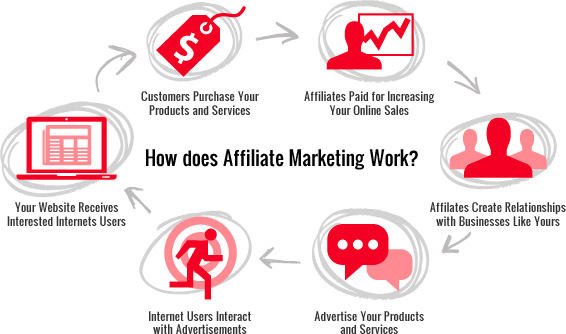
    Undoubtedly, effective implementation of Affiliate marketing can make you earn lots of money. There are numerous benefits for your company when operating an affiliate program that consist of driving Targeted traffic to your site, increased sales, plus increased brand awareness.

    To take advantage of affiliate marketing, you must understand what all goes into it?

    Affiliate marketing is an Online marketing practice in which a business treats and motivates one or more affiliates for online customers brought about by the affiliate’s marketing efforts. In other words, affiliate marketing is a great method for making profits all the way through revenue sharing associations involving online merchants and content web sites.

    This online marketing technique drives products and services out to the customer across the World Wide Web. This creates more opportunities for the merchants to generate sales, for the affiliates to make income from their web sites, and for consumers to easily locate the products and services they want to buy online.

    Moreover, merchants go for affiliate marketing because in the majority cases it uses a “pay for performance” method. In this method the merchant does not incur any marketing expenses unless results are accrued. A number of businesses, such as Amazon.com owe much of their success to this online marketing method.

    What’s more, affiliate marketing method offers an efficient and scalable market network. An affiliate program enables you to collect some assessable data on each affiliate or the affiliate program all together. This will help you to estimate the performance of the affiliate program.

    Thus, it would be apt to say that affiliate marketing is a cost-efficient as well as measurable method of delivering long-term results.