 With more than half the globe’s population having access to the internet, the nature of content has changed fundamentally. More and more consumers are getting information and forming opinions about brands from digital content sources rather than offline content sources such as newspapers and magazines.
This poses challenges for businesses and marketers. Those who have observed this trendline and where this is going are already focused on creating quality content to meet the requirements of their target audience.
Whether it’s a B2B or B2C organization, they’ve all joined the content bandwagon. This nevertheless creates a problem of plenty — some 92,000 new articles published on the internet every day. Add to that the millions of blog posts on millions of WordPress and Blogger blogs.
Quality Content is the Key
How to stand out in this avalanche of new content? The basic and minimum requirement is to produce content that is free from grammatical errors and is original. Such content will not only appeal to the readers but will also pass muster with all the content-focused Google algorithm changes the latest round of which was Google Panda 4.0 which was rolled out recently.
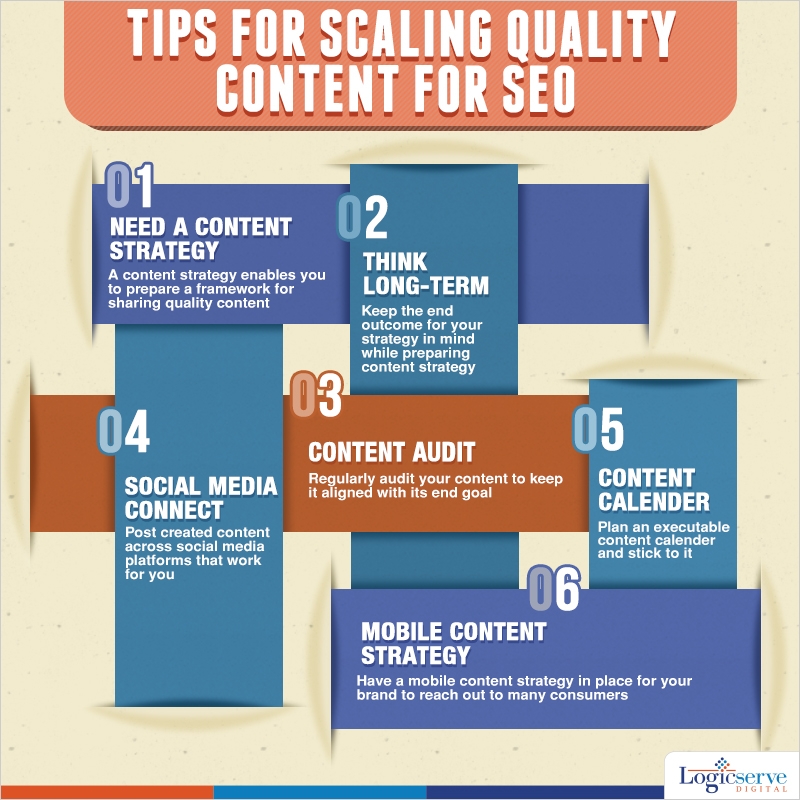
Everybody Needs a Content Strategy
If you want to compete in your local city marathon (or the New York City or Boston marathon if you wish), you need to put a strategy in place — you will surely fail if you just decide to sign up for a marathon one fine day without having prepared for the rigors of a marathon.
Think Long-Term
Similarly, content marketing is a marathon that requires long-term planning. Determine your content marketing platforms — blogs, email newsletters, social media and so on — and learn as much about your readers as possible (what percentage of them use mobile devices and their age-wise and financial break up and so on). Having this knowledge ensures that you will generate the content that will appear to your target demographic.
Content marketing is distinct from in-your-face sales or advertising. Content marketing is not about selling stuff. You need to keep that in mind for your content strategy to succeed. Using the marathon metaphor again, a marathon is different than a 100 meter sprint. If you start running at the top of your capacity, you will run a very fine 100 meter sprint but won’t be able to even complete a marathon.
So as you measure the ROI of content marketing efforts, remember not to focus on pure sales numbers. Content marketing will likely take longer to convert leads as it’s designed and focused primarily to pull potential customers into the marketing funnel.
Part of having a long-term strategy is to be persistent and consistent with your content strategy. This means you need to have a solid plan — spanning months if not years — for your content marketing initiative. Of course you can keep measuring the reach and impact of each piece of content marketing — each blog post and email newsletter and so on — on a daily basis or as appropriate.
Content Audit
To maintain a regular pipeline of content, make sure to audit all your departments to get a sense of what content your company and its different departments have and how much of that is current and how much is outdated. Once you make the audit, you will get to know if there are any missing areas in terms of content that needs to be filled — some products that don’t have brochures or a need to create an FAQ, etc.
Content Calendar
Then comes an editorial calendar that should have inputs from every department of the company. Having a calendar has multiple benefits including avoiding any duplication in efforts, a unified location where all content-related effort is tracked and getting the maximum impact out of your content effort.
Content Planning
To make the optimum utilization of your time and resources, content creation and content marketing should happen as part of a detailed plan. This ensures synergy in efforts — such as those between the marketing, corporate communication and content marketing. Similarly, you need to have a plan for how to distribute the content in the most effective manner across different content platforms — sometimes long-form content will appeal to your consumers and readers while at other times, shorter forms and byte-sized content will do the trick.
The Critical Role of Social Media
Every brand has a presence on Facebook by now. But clever brands will go beyond just bland Facebook posts. Businesses need to be present on multiple social media platforms to reach the widest audience possible and their social media content strategy needs to take account of who their audience is. Facebook pages are great for sharing pictorial content — and never forget to include the right-sized picture with every Facebook post — but that content is only visible to those who already like the page. Twitter posts, on the other hand, are visible to everyone who is on Twitter. Pinterest and Instagram are similarly must-use platforms for brands whose products are targeted to women consumers who tend to frequent these platforms preferentially.
How to Create Viral Content
As you seek to create stellar content that stands out in the clutter, you can take inspiration from different sources including current events — whether it’s an ongoing football World Cup or the Olympics or the Super Bowl. Keep in mind your audience as you seek to tie your content to current and trending topics. Social media platforms such as Facebook and Twitter will help you know what the “trending topics” are and these tend to change rather often too and they tend to reflect the interests of the users of those social media platforms. Quora and Hootsuite are also places where you can get ideas for creating content for your blog.
Refer to competitors’ websites in your domain and see what are the popular topics and posts on their blog. That can give you an idea or a starting point for a blog post of your own. Remember that every piece of content cannot go viral. You have to keep at it — it takes 10,000 hours of practice to become good at something as Malcolm Gladwell put it. Similarly, it will take a while to develop a unique corporate identity or voice and to develop an emotional connect with the readers.
Sometimes, it’s okay to take a position on a controversial topic — remember how Tim Cook advised a shareholder to sell Apple stock if he didn’t feel comfortable with Apple’s focus on human rights or environmental activism or other social missions. You too can decide to “stick your neck out” — if it can be called that — and declare that indeed you and your company believes humans have caused climate change.
Mobile Content Strategy
You got nothing if you don’t have a mobile strategy — in fact some are going so far as to have a “mobile first” strategy. It depends on your business vertical how much you need to focus on having a mobile content strategy but it’s pretty much an indispensable part of an overall content strategy.
If you are a B2C organization, you should have come to terms already with the fact that your website must be mobile-friendly — if you don’t want to lose a ton of business. Even Google has tweaked its algorithms — Google Hummingbird — to be better prepared to answer long-tail queries and natural language or spoken queries. This is designed to meet the needs of mobile users. Since Google is adapting to a world where mobile internet users have already overtaken or will soon overtake desktop internet users, so should you.
What you need to do in terms of having a mobile content strategy is remember that many of your readers will be reading your blog posts and email newsletters and other content on mobile devices. So, you need to have a few short blog posts that only has a bullet points and highlights and links to a longer post which is of course essential for SEO as Google tends to give more weight to articles longer than 2,000 words.
The key to effective mobile content is large fonts, lots of images and videos that users can watch while making their commute to the office via the subway or other public transport. For mobile users with typically short attention spans, content that is easy to grasp is appealing. You should try to keep your content at the level of an eighth-grader — this is not to be condescending to the reader of course but just acknowledging the reality that all of us with busy lives may not quite be up for dry or academic prose that reads like a scientific or literary journal extract. The Fleisch-Kincaid readability score helps in this regard and it’s built right into Microsoft Word — so, you might want to put your content through that metric and see if you need to reduce the number if it appears to be too high.
Content Curation is Good
Don’t be afraid or shy about repurposing content or pointing your readers to top-quality content that is not generated by you. You can profitably use tools such as Curata to help you with content curation and you can use content curation in your email marketing or blogging.