LS Staging

Tag: mobile

  • Four Trending Searches That Indulge Users To Download Mobile Apps

    Four Trending Searches That Indulge Users To Download Mobile Apps

    With so many apps being developed every other day, it gets hard to reach out to the users. If you are looking forward to developing mobile apps and would like to reach out to the users so that they download it, then this post will help you demonstrate four popular searches that will give you a better idea for the type of app you should focus on.

    Popular trends for discovering mobile apps

    Google notes that users look forward to downloading apps that they find useful on a daily basis. In addition, apps require more than just a trending approach to keep them glued to mobile devices of users. App developers would need to follow productive methods to get it going. This is where Google comes in to save the day. A 2017 report filed by Google showed what the users search for the most when looking for apps. In addition, that is where four factors were deduced that triggered users to search for apps. These are:

    • Gaining convenience and productivity

    In this fast-paced world, nobody has time to slack off and perform a task with delays. This thinking is where people tend to search for apps that can provide convenience. For instance, grocery apps that will let users get options like a pickup or home delivery, or a restaurant app that permits them to reserve tables.

    • Learning and refining new skills

    Another popular trend that follows among app users is to learn and improve skills. This can relate to learning the piano or guitar, or learning a new language, etc. People have been keen to advance their skills, which is why many searches since last year have been focused on apps that help in teaching people something new.

    • Desiring a healthy mind and body

    To overcome the burdens of life, app users also like healthy bodies. Thus, many of the trending apps downloaded by millions were health-based ones. These apps were focused on teaching various exercises, nutritional plans, or yoga workouts for daily users. Some even come with synchronising abilities that let users monitor their heartbeats using external wearables such as smartwatches.

    • Improving their financial assets

    Another trending category among apps is the one that offers coupons to save on meals or other items. With a vision to save as much money as possible, people downloaded such apps and looked forward to saving more on their purchases.

    Not all apps, which are developed, can achieve the popularity standards of Snapchat, Pokémon Go or Candy Crush. That totally depends on the interaction between the app and the user. If the latter finds good use for the app, then there are chances that the app achieves recognition. Not to mention, a highly useful app may never be known to a user as it somewhat depends on luck as well. Another situation may arise where a user may find your app but may still not feel the compulsion to keep using it. Therefore, it is also necessary that the app developers use interactive methods to keep a user engaged to the app from time to time.

  • Twitter Adds New Automated Customer Response Tools to DMs and more : This week in Digital Marketing

    Logicserve Digital brings to you a curated round-up of important digital marketing updates this week. For further queries, you can write to us at: newsbulletin@logicserve.com

    1. Twitter Adds New Automated Customer Response Tools to DMs

    With all the focus on direct messaging for business – with Facebook, in particular, looking to improve their customer experience options through the use of messaging

    1. Measure Your Conversions And Track The Ads On Facebook

    Do you regularly advertise on Facebook? But are your ads getting you the value? Or do you properly track and measure your return on investment on these ads?

    1. Report: 93 percent of brands and retailers misaligned, harming omnichannel efforts

    Brands are spending to drive offline sales, but not partnering with retailers or properly measuring the in-store impact of digital.

    1. Instagram Adds Shopping Tags to Boost Product Discovery

    Instagram’s looking to up their eCommerce game with the addition of new shoppable tags in photos.

    1. When going HTTPS, don’t forget about local citations!

    Columnist Andrew Shotland shares some common problems that occur during site migrations to HTTPS and explains the importance of updating your citations.

    1. Reinforce Your Online Presence By Adhering To This App Permission Guide

    Hacking, phishing, and incidents of identity thefts have become a regular phenomenon not only for PCs but also for Android mobile devices.

    1. Mobile internet use passes desktop for the first time, study finds

    More users around the world are accessing the internet from mobile devices than from desktop computers for the first time, according to internet monitoring firm StatCounter.

    1. 5 ways to use personalized video in your next marketing campaign

    Personalized video is the happy, and very effective, marriage of two of today’s hottest marketing trends: personalization and video.

    1. Should you be using LinkedIn Ads?

    All too often, I hear two complaints about LinkedIn Ads: it’s too expensive or it doesn’t work. Generally, when I hear this feedback, it’s from those who don’t have the right business to be advertising on LinkedIn.

    1. Apple Search Ads are driving installs with high retention rates

    A few weeks into Apple debuting search ads in the App Store, mobile analytics firm AppsFlyer has released some early results.

  • Must know mobile advertising trends

    Must know mobile advertising trends

    Mobile marketing @LogicserveDigi

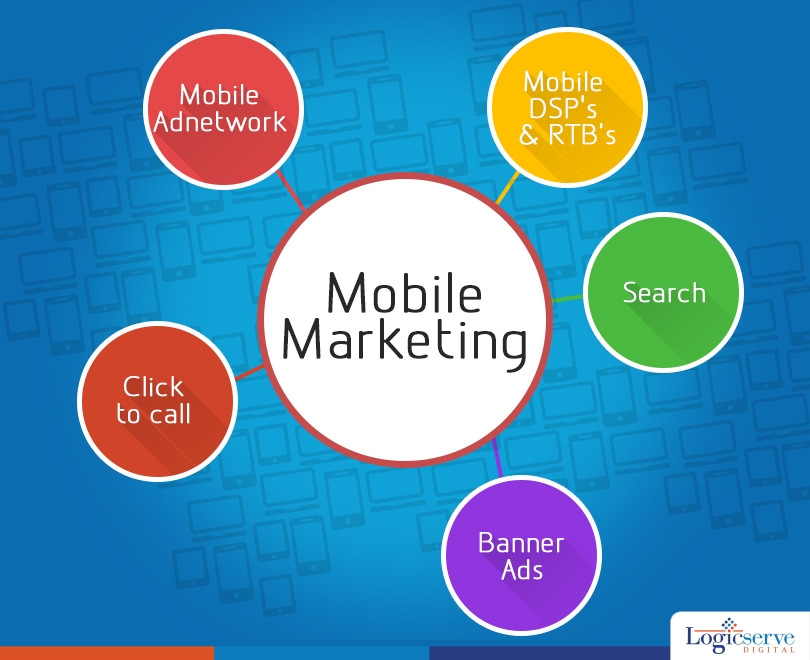
    With 1.3 billion Facebook users and more than 500 million Twitter users, marketers are increasing their focus on online advertising to reach the billions of customers who are always online. While 81% of people in the 25 to 34 age group in the U.S. own a smartphone, 70% of teens do so and about half of the people who are 55 and older own a smartphone. No wonder about 751 million Facebook users access the social network from a mobile device one time or the other while nearly 200 million FB users access it exclusively from a mobile device. Nearly a quarter of Americans connect to the Internet only from a mobile device.

    Geographies

    The Asia Pacific region has the most mature mobile advertising markets represented by Japan and South Korea, two nations that have had historically high adoption rates of handsets.

    However, North America and Europe will see enormous growth in mobile advertising simply because of the huge advertising budgets of the companies located in these two continents. As the developing economies of China and India grow, so will the sales and penetration of smartphones in these two nations leading to a simultaneous growth in mobile advertising. Russia and Brazil are a couple of other countries that will witness good growth rates of mobile advertising, particularly in 2015 and beyond.

    Types — Display Ads Vs. RTB

    Among the different mobile advertising options, display advertising is a preferred format of digital marketers. It’s expected to hit $74.4 billion in 2016 with an annual growth rate of 21% per year. Programmatic buying such as Real Time Bidding (RTB) is helping the growth of display advertising. Social media platforms such as Facebook and Twitter are benefiting from the growth of RTB and enjoying growth rates of 29% per year. RTB is expected to keep growing and reach $8.69 billion by 2017, according to eMarketer, constituting 29% of total digital display ad spending. Other studies by IDC shows that RTB is expected to reach $20.8 billion worldwide by 2017. For example, programmatic advertising in the U.S. is expected to grow from $2 billion in 2012 to $14.4 billion in 2017 maintaining a scorching pace of growth of 48% per year. Western Europe and Japan will also see similar growth in RTB as a form of display advertising.

    Mobile advertising is witnessing six times faster growth rates compared to desktop online advertising. And in the U.S. in particular, RTB on mobiles is expected to reach $1 billion in 2015 and $3 billion in 2017. The Weather Channel gets 600 to 700% higher click through rates on mobile display ads compared to desktop ads.

    Mobile Video Ads

    Mobile video ads are growing fast and becoming a significant part of mobile advertising. Tablet users are the ones who tend to watch longer videos. Mobile video ad expenditure amounted to half a billion dollars in 2013 which was 13% of the total digital video ad market.

    With the rise in popularity of mobile video ads, marketers are coming up with clever product promotion videos. Think of viral videos such as the Game of Thrones and House of Cards mash-up which was a promotional campaign; another marketing video which went viral was 20 strangers kissing and yet another was a fake job ad for the toughest job in the world which was a marketing video for an e-greeting card company on the occasion of Mothers Day.

    SMS

    This is an effective advertising format over mobiles as 90% of text messages are read within three minutes of delivery and 95% of mobile users can be reached by brands using SMS advertising. A February 2013 report by Mobile Marketer says that 42.3% of consumers prefer SMS deals over bar-code scans or push message coupons.

    Mobile Search Ads

    Since 70% of searches on mobiles lead to action within one hour, search ads on mobile platforms are more effective than search ads on desktops.

    Mobile couples also enjoy higher rates of redemption compared to print coupons.

    Click To Call

    Lots of smartphone users perform local search on their smartphones. Up to 95% of smartphone users have looked up local information over the internet using their smartphones. Out of them, 61% proceeded to make calls to the business establishment. Hence, click to call features should be prominently displayed in mobile websites as well as in any form of a mobile advertisement.

    LogicSpeak:

    Hence the bottom-line is a continuing growth of mobile devices and mobile ads which will continue for the foreseeable future.

    Previous Post: Tips to Increase Blog Traffic

  • Mobile Ecosystem and Statistics

    Mobile Ecosystem and Statistics

    Mobile eco system and statistics @LogicserveDigi

    The most significant and sudden technological change of the last 20 years has been the rapid growth of the mobile phone. Mobile phones have transformed from being niche devices meant only for the rich to being easily affordable and used by pretty much everyone. The key reason why this has been possible is because of the continuous decline in the cost of processing power and memory which led to the explosion of the PC business first and now powers the relentless growth of mobiles and smartphones.

    A Billion Smartphones

    In a new record, the global smartphone market crossed a billion units in 2013. Smartphones constituted about 55.1% of total mobile phone shipments in 2013 which was up from 41.7% of total mobile shipments that smartphones accounted for in 2012. Global smartphone shipments in the fourth quarter of 2013 were 284.4 million which was up by 24.2% from the 229.0 million units shipped in the fourth quarter of 2012. The dominance of the Android ecosystem continues as Android-based smartphones make up about 75% while Apple iOS powers only about 15% of the smartphones. Samsung with its wide range of high-end and mid-range smartphones is the largest vendor while Apple comes in second with a plethora of other smartphone brands who do solid business in the low-end of the smartphone market in developing nations constitute the rest of the market.

    With the spread of the internet and roll out of 3G and 4G LTE networks, smartphones will be able to do more with the availability of broadband internet.

    Growth of Mobile Internet

    Internet user base is growing across the world with Asia constituting 44.8% of internet users in the world as of the second quarter of 2012. Europe and North America constitute 21.5% and 11.4% of global internet users. Even as the penetration of the internet grows across the globe, the user base of mobile internet users grows faster than wired internet users.

    Just as many people in developing countries such as India used mobiles without ever going through a period of using landline phones, huge numbers of people in the Middle East and Africa access the internet via mobile phones. The eMarketer estimate suggests that 94.0% of internet users in these two geographies will go online via the little mobile phone screen rather than a large desktop screen.

    The percentage of internet users who use their mobiles to access the internet is lower in more developed parts of the world such as North America and Europe where it is 64.3% and 67.8% respectively. The global percentage of mobile internet users this year is estimated to be around 79.1% which will grow to 90.1% by 2017.

    So, more and more web traffic is flowing to and from smartphones and other mobile devices and this has reached 17.4% of total web traffic as of 2013.

    Despite this massive growth, significant swatches of the world’s population in poor countries in Africa, Asia and Latin America continue to remain without access to the internet. Tech entrepreneurs such as Mark Zuckberberg are trying to spread the internet to these areas of the world through their projects such as internet.org.

    Google Hummingbird Update

    The evolving nature of web access has also impacted the nature of web searches. People who use mobile phones are more inclined to use voice search capabilities offered by Google. Google in turn has changed its algorithms continuously and the latest of those changes emphasize natural language search and semantic search which focuses on the meaning of words and their context rather than just being keyword-driven.

    To reach the growing percentage of mobile internet users, websites are being redesigned and revamped to make them more suitable for display on mobile devices. Website search engine optimization (SEO) experts are taking into account the requirements of Hummingbird in conducting site SEO. One of the key aspects of making a website get a good rank in a post-Hummingbird world is to have good content which should be natural and focused on the audience. Other applicable rules include having page URLs that reflect the content on that web page. Also, websites should have simple architecture which will help website visitors and search engines.

    Growth of Mobile Marketing

    Online marketers are changing their marketing strategies to keep up with changing customer habits. Hence, more marketing dollars are being allocated to online mobile marketing and digital marketing that is tailored specifically for the small screens of smartphones.

    Gartner predicts that mobile advertising worldwide will reach $18.0 billion in 2014 compared to $13.1 billion in 2013 and will become as much as $41.9 billion by 2017. According to Gartner, most of the mobile advertising will be display advertising but mobile video advertising will show the largest growth rates.

    In a similar report, eMarketer says that global mobile advertising increased by 105.0% to reach $17.96 billion last year. In 2014, eMarketer predicts mobile ads will rise 75.1% to reach $31.45 billion. Predictably, Facebook and Google get most of this mobile ad spend. These two advertising platforms combined, cornered more than two-thirds of mobile ad spends in 2013.

    Mobiles are becoming more indispensable Than Ever

    For a technology that that is only about two or three decade old, mobile phones have grown in importance as an essential part of our lives. Add the 20-year-old World Wide Web accessible from a mobile screen, and the combination becomes unbeatable.

    What can mobiles do?

    It seems now a days that it would be more appropriate to ask: what cannot mobiles do?

    Short of teleporting humans from one location to another, mobiles have become pretty versatile equipments that go far beyond their primary role of being just a telephone.

    Enabling Financial Inclusion

    With banks offering net banking facilities via dedicated mobile websites, banking customers get the benefit of accessing their bank account conveniently. Since it’s easier to have a great telecommunications network that is useful for many purposes rather than setting up extensive banking networks, banks are obviously eager to connect with their customers via mobile banking facilities. With just a smartphone and an internet connection, people have access to a bank at their fingertips.

    Healthcare Innovations

    The role that mobiles will play in improving the lives of people by helping folks keep track of their own health is immense. This is an area where innovation is happening right now and the future will see much more happening as smartphones evolve into wearable computers with smart sensors that can measure the blood sugar level, monitor the heart rate, pulse and other health parameters of the person wearing the device.

    Right now, smart watches are a niche product that are being targeted to people who frequent gyms and like to keep tabs on their exercise activity. However, soon enough the role of mobiles in healthcare might grow with the possible launch of devices like Apple’s rumored iWatch.

    Mobile Shopping

    Mobiles have become a friend of the smart shopper and people are eager to do shopping from their smartphone screens. Mostly, it’s the e-commerce companies who have fallen behind the rapidly changing consumer tastes and now they are scrambling to come up with mobile-friendly websites and Apps to cater to smartphone shoppers.

    Showrooming remains a popular activity with shoppers and physical stores are finding it a challenge to compete with the low prices offered by online retailers such as Amazon. But with mobiles enabling such on-the-spot comparisons, retailers and e-retailers will need to get smart and come up with attractive offers to draw in consumers.

    Another aspect of showrooming is comparison shopping which is becoming popular with multiple online retailers trying to out-do one another in offering discounts and offers. This has created a market for coupon sites such as Couponraja and Compareraja.

    Previous Post: How to use Analytics for tracking PPC performance

  • Mobile Marketing — The Way Ahead

    Mobile Marketing — The Way Ahead

    Mobile Marketing @Logicserve Digi

    The world is going mobile in a big way. In 2013, mobile devices outsold PCs nearly six times. While roughly 300 million desktop and notebook PCs were shipped worldwide last year, the total volume for mobile devices was 1.8 billion. More and more of these mobile devices will be smartphones with internet connectivity. Mobile marketing, therefore, is a key challenge for marketers and brands if they want to send their message across to their customers who are spending more and more of their waking hours looking at a mobile device screen.

    What are the big mobile marketing trends for 2014?

    Thomas Husson of Forrester Research makes these predictions for 2014:

    • Big Data and Analytics will continue to grow in importance. Marketers who understand the behavior or their customers best will benefit from Big Data. Companies have to get better at understanding the context of user searches and other activities of consumers on their mobile devices. Marketers will have to tailor their mobile ads and product discounts and other offers accordingly.
    • Mobile contextual data will even impact other marketing channels. Smart marketers will develop ways to interpret the data generated by how consumers use their mobile devices to gather better insights about the consumers’ needs and preferences. So, mobile marketing needs to be viewed in combination with other marketing channels.
    • Mobile advertising will mature with the emergence of new mobile-centric ad formats. But user identification will continue to remain a challenge.

    Additional mobile marketing trends include greater personalization of advertising. Grocery stores could analyze a regular customer’s purchase behavior via maintaining a tally of the items purchased using the lists generated during checkout. Advertising can then be tweaked to appeal to individual customers based on their purchase history; for example, their food choices such as organic food, or vegetarian food and so on.

    Also, location-based mobile marketing will make mobile marketing relevant and useful for consumers. Think of a grocery store ad about discounts for the day being shown to a mobile user when the user is physically close to the store. Similarly, a pizza store could show an ad about their special offer for the day when the mobile user is in the vicinity during the hours of the day when the restaurant is open.

    Advertisers will have to learn how to make use of shorter content such as those looping six-second Vine videos or Instagram videos. Mobile ads will continue to use gamification concepts where users accumulate points, badges, and so on. Apart from competing with friends, people also love good deals. Mobile marketers will offer unique and personalized deals that are redeemable from customers’ mobile phones.

    For businesses for whom events (product launches, birthdays and other special occasions) are important, the mobile marketing strategy has to include an ability to target the right audience. Customers should be able to easily add the marketer’s event to their calendar. Loyalty programs offered through a mobile device are perfect since people have their mobiles with them all the time and there is no risk of losing their loyalty cards. Customer referral programs are ideal for the mobile platform since a customer’s contacts are already stored on the mobile device.

    India has a burgeoning user base of mobile users. At last count, there are more than 600 million mobile users and more than 150 million internet users. As smartphone prices come down and breach the $100 mark, more youth will go for smartphones connected to the internet. This presents a golden opportunity for mobile marketing innovation.

    With the growth of online retailers in India, there are thousands and tens of thousands of discount coupons available at any point of time across various retailers such as Amazon India, eBay India, Flipkart, MakeMyTrip, Yatra, Cleartrip, Jabong, Myntra, and others.

    Sites like Couponraja aim to provide “visitors and members the latest coupon codes promotional codes from leading retailers/ merchants in India.” Couponraja has seen tremendous growth since its launch in October 2011 with an active customer base of hundreds of thousands and more than 350,000 subscribers on Facebook.

    Compareraja is a similar site which helps users find the best online deals by comparing prices at different online retailers such as Home Shop 18, Amazon, Flipkart, eBay, Indiatimes, and so on.

    LogicSpeak :

    There will be more innovations such as Couponraja and Compareraja as the penetration of mobiles and smartphones increases in India. Mobile marketing will get smarter and mobile marketers will learn to better target their ads to the intended customer for a win-win situation for both the retailer and the customer.

  • Growth and Trends in e-commerce India 2014 – Key factors for e-retailers to concentrate on!!

    Growth and Trends in e-commerce India 2014 – Key factors for e-retailers to concentrate on!!

    E-commerce trends 2014 @L

    Apart from metros, people residing in Tier II and Tier III cities are accessing the Internet through their mobile phones to browse and shop online. This growing trend presents every e-commerce site with ample number of opportunities to reach out to consumers.

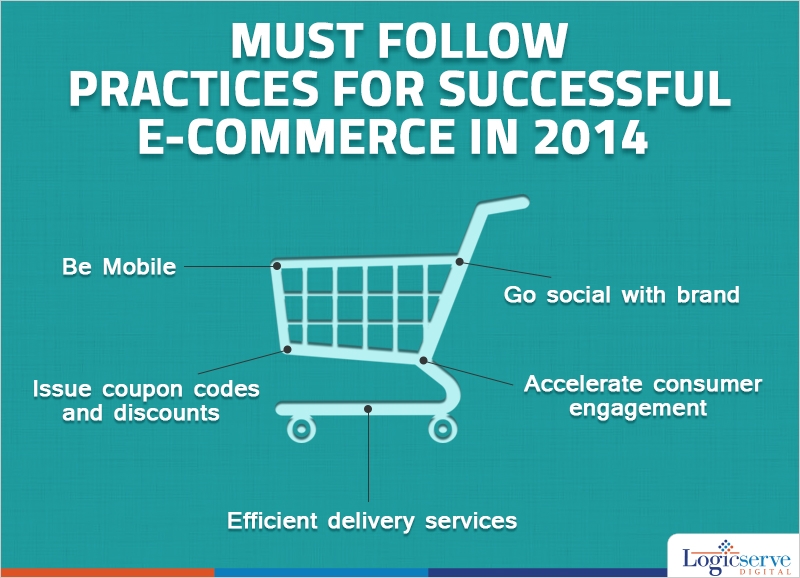
    While being online is the key factor for growth, here are a few pointers that can help every e-commerce portal post their initial set-up.

    Be Mobile – The availability of 3G services, cheap broadband plans, affordable smartphones and the purchasing power has lead to Indians being highest users of mobile phones across the world. Surprisingly they have begun to access the Internet through the phone for shopping which means your website should be mobile friendly.

    Delivery Services – Flipkart gained popularity amongst nascent Indian online shoppers by offering them free delivery on their purchases. Over the time, free deliveries were restricted to billings above a predetermined amount. With the foray of Amazon and other growing Indian e-retailers, the race to deliver first has got even more competitive as customers can enjoy multiple delivery options. Online retailers have expanded their areas of delivery to include Tier II and Tier III cities along with Tier 1 cities.

    Customer Support and After Sales Service – After-sales is the key once the consumer receives your product. Online retailers have to offer hassle-free options and quality customer support to consumers whereby they can return the goods if they are unsatisfied with them. This generates a feeling of trust amongst customers. Once the level of trust is gained, customers will feel confident about ordering higher value items such as refrigerators, microwaves, other home appliances, and even more expensive jewellery products online.


    Coupon Codes and Discount offers

    Currently, India is witnessing a transition towards online shopping which can be capitalized by offering attractive discounts, bargain offers, freebies and much more to online shoppers. Coupon codes and different deals can be designed in collaboration with specific brands or coinciding with festive occasions. If you are looking for an example, you could browse through www.couponraja.com, India’s premier coupon aggregator on latest coupon deals and offers including some exclusive ones.

    Targeted Customer Segment – The ASSOCHAM report predictably shows how the youth segment (18 to 35 years age group) dominates online shopping in India. The items that get sold and bought online therefore cater to this youth segment. The same demographic is the predominant user of both social media (Facebook, Twitter and Pinterest) and online shopping portals.

    Active Social Media Presence – An Active social media presence extends to more than just creating a page or a profile. It is essential to interact with customers, acknowledge their posts, offer useful tips and guidelines through social media platforms and others help you to build up customer engagement, an absolute must in today’s digital market space. In short, be there and be proactive.

    LogicSpeak:

    While there are 900 million cell phones in India, the number of mobiles connected to the internet is no more than 150 million. As Internet penetration via mobiles grows in India, more and more people will continue to buy gift items, electronic products, accessories, apparel, computers and peripherals online.

    Wondering how engaging is mobile technology vis-a- vis online shopping in the Indian scenario? Well as of now, Android and iOS apps of Couponraja and Compareraja have crossed the 20,000 mark in downloads month after month post their formal launch.