LS Staging

Tag: marketing

  • 10 Digital Marketing Trends Savvy Marketers Should Look Out For in 2021

    10 Digital Marketing Trends Savvy Marketers Should Look Out For in 2021

    The COVID-19 pandemic and the lockdowns imposed by governments across the world have dramatically transformed consumers. The shopping habits have changed, and so has consumer expectations from brands. The digital marketing landscape continued to evolve throughout 2020 to keep up with the changing trends.

    With 2021 around the corner, what are the digital marketing trends skilled marketers should watch out for? Here is a list of top 10-

    1. Short-Form Videos

    In many ways, TikTok can be considered the star performer of 2020. This video-sharing social platform’s popularity has been such that the likes of Instagram, Snapchat, and YouTube have adopted short-form videos in their own ways. Marketers should reimagine their video ads and serve them in bite-sized pieces for improved engagement in 2021.

    2. Digital Marketing Maturity

    Digital marketing maturity is all about the ability of brands or marketers to deliver the right message to the right person at the right time. As consumer expectations are increasing, marketers should look for ways to use technologies and data insights to achieve a level of marketing maturity that helps them improve the relevance of their content, ads, and services.

    3. Voice Assistants

    According to Statista, there will be more than 8.4 billion voice assistants in use by 2024. From smartphones, homes, offices, to even vehicles, voice assistants are expected to become a vital component of our day to day lives. Your website, app, and ads can be optimized for voice search to reach more people.

    4. Taking a Stand

    Modern consumers, especially millennials, want brands to take a stand on social issues. From racial injustice, sustainability to climate change, consumers now expect the brands they deal with to be socially conscious. Social platforms can be an excellent place for brands to demonstrate their support for such causes and improve their engagement with the consumers.

    5. Brand Transparency

    In this digital world, it is no longer difficult or time-consuming for consumers to find a good amount of information about global businesses. A simple solution to avoid fake news or inaccurate information is to be more transparent. In the following year, try to be more transparent about your values, goals, products, and practices as it could help improve customer loyalty.

    6. Image SEO

    While text-based content has its place, the demand for visual content is on the rise. According to a post on MOZ, around 19% of the search queries on Google return image results. This is an unavoidable statistic for any marketer. Focus on combining text with visual content to rank higher on search engines in this visual age.

    7. Customer Experience Strategy for Mobile

    Consumers no longer only want to purchase great products. They also want the purchase experience to be smooth and worth their time. As mobile sales are reaching new heights, 2021 will be the time for brands to work on their mobile customer experience. Understanding mobile interactions and investing in technologies like PWA and AMP are some ways to enhance the mobile experience.

    8. AI and ML

    Google now uses an artificial intelligence system known as RankBrain for search results. With regard to digital marketing, AI and ML have vast implications, ranging from improving customer experience, creating new business streams, content optimization, improved personalization, and more. As we move forward, look for ways to make use of these technologies for improved digital results.

    9. Personalization at Scale

    It is no longer adequate to personalize your marketing approach. You should personalize at scale for improved reach and engagement. If done right, you will be able to enhance the customer journey while also creating loyalty and engagement with personalized messages that are tuned as per their expectations.

    10. Data-driven Ad Campaigns

    Just like your website content, you should also focus your ad campaigns on the needs of your target consumers. Take advantage of tools such as Google Analytics and YouTube analytics to gather audience insights that you can use to improve your ads further. Learn, rehearse, and implement to increase the ability of your ads to strike a chord with the consumers.

    Achieving Digital Marketing Goals in 2021

    Every new year introduces several new digital marketing trends and changes. But thanks to the pandemic, 2021 is not expected to be one of the regular new years. Consumer habits have massively changed, and 2021 is expected to be a year full of understanding these changes and adjusting digital strategies to fulfil their expectations.

    Focus on the digital marketing trends discussed in this post to start working on your marketing strategy and make 2021 a year full of growth and success.
  • 10 Social Media Trends for Driving Your Marketing Strategy in 2021

    10 Social Media Trends for Driving Your Marketing Strategy in 2021

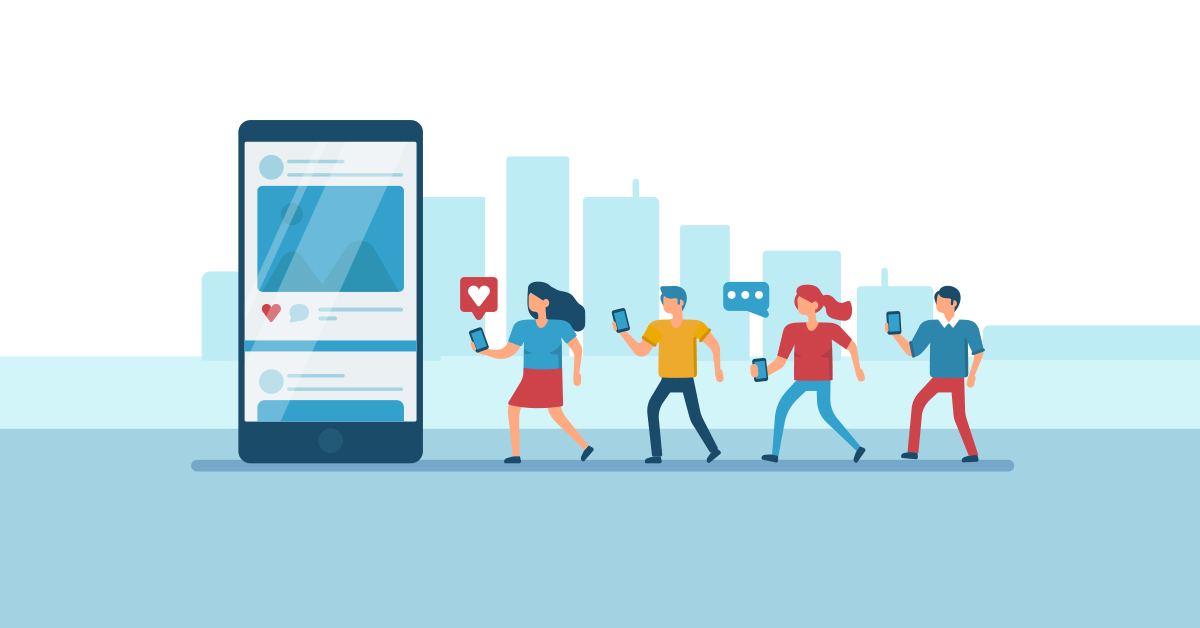
    As lockdowns due to the COVID-19 pandemic forced people to remain indoors, social platforms witnessed an unexpected surge in the amount of time people spend on these platforms. From communicating, accessing the latest news, entertainment to shopping, popular platforms like Facebook, Instagram, Twitter, TikTok, and more turned into the go-to destination.

    According to a report on SocialMediaToday, people spent at least 20% more time on social media apps during the lockdown. Thus, businesses can no longer look away from social media in 2020 while creating an effective digital marketing strategy.

    As 2021 is about to begin, what are the top social media trends that businesses and marketers should watch out for? Here is a list of top 10-

    1. People-first Marketing

    Brands are understanding the importance of two-way communication on social platforms. Regularly posting relevant content and engaging with your audience is an effective way to boost your brand on social platforms organically.

    2. Connect Emotionally

    At times like these, when the majority of people are struggling financially and are in a constant state of fear and anxiety, brands can help provide that emotional support and sentimental boost. Consumers are looking for ways to connect with the happier past, and nostalgia marketing can be the solution.

    3. The Age of Misinformation

    Fake news and inaccurate information are on the rise on social platforms. In 2021, popular social platforms will look for ways to curb them. Brands can futureproof themselves by being transparent with their consumers and avoid being victims of false or inaccurate rumors.

    4. Diversify

    TikTok turned into a social media star in 2020. As compared to platforms like Facebook and Instagram, TikTok witnessed significantly higher downloads throughout the lockdown. Brands should diversify their social media strategies to take advantage of such new platforms. On the flip side, with the ban on TikTok in many countries, businesses relying solely on the platform for their social media strategy were severely impacted. All the more reason to not focus on just one social media platform.

    5. Consider Video Marketing

    As compared to text or images, consumers engage more with video content. Moreover, as people had more time during the lockdown, the consumption of video content has increased significantly. In 2021, brands should focus on regularly posting information video content to better engage with consumers.

    6. Memetic Messaging

    Social media users love memes. Brands and marketers can use them creatively to boost their social media strategy. Users also love sharing memes on social platforms. All the shares, likes, and comments can also help improve the organic ranking of your posts on social platforms.

    7. Go Live on Social Platforms

    Almost every social platform now allows you to stream live videos. Live streaming is engaging and also helps you create unique content. From QnA sessions, product launches, collaborations, announcements, to interviews, conduct them live to delight your audience.

    8. Talk About Important Issues

    There has been a growing awareness of social, political, and environmental issues in 2020. A lot of conversations regarding these issues takes place on social platforms. Consumers like brands that take a stand or at least talk about such problems. Talking about such topics will help you connect with your audience emotionally.

    9. Think About Social Commerce

    Social commerce flourished in 2020. An increasing number of brands now sell their products directly through social platforms, eliminating the need to redirect consumers to their websites. It is easy and helps consumers save a lot of time. In 2021, more brands will focus on growing their social shops.

    10. Listening is Vital to Communication

    It has only become more important for the brands to listen to how the consumers react to their content on social platforms. By closely following social conversations, brands and marketers can get excellent insights about how they can further improve their marketing strategy.

    Social Media Marketing in 2021

    2020 has helped us realize the importance of staying prepared for the unexpected. While there is no saying as to how 2021 will unfold, the trends discussed above will probably have a significant impact on social media marketing trends in the following year.

    Use a few or all of the tips discussed in this post to make social media marketing work for your brand in a world that is adjusting to the new normal.

  • The Rise of Video Marketing in the Digital Era

    The Rise of Video Marketing in the Digital Era

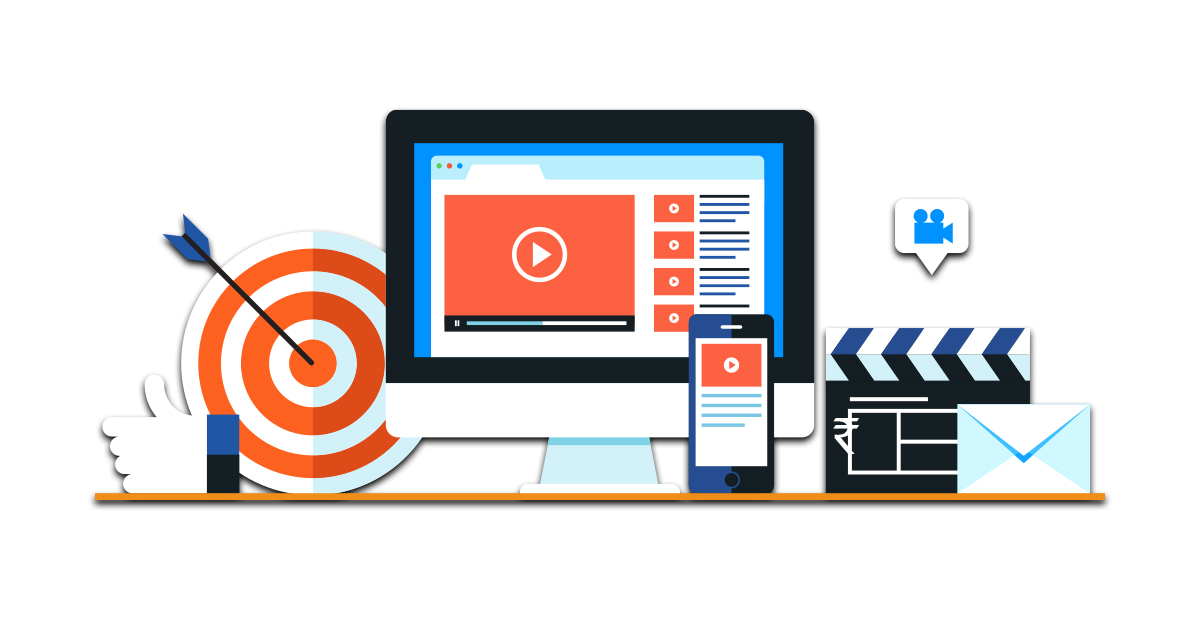
    Video content was already growing in popularity in the last few years. But the pandemic imposed lockdown, which forced people to remain indoors, has surged video content consumption to unprecedented levels.

    According to a Nielsen study, home-bound consumers have led to an increase of 60% in the amount of video content watched globally. And this surge is not temporary. While the consumption will not grow at the same rate in the post-COVID world, video content still has a bright future. As per a CISCO study, online videos will make up more than 82% of all the internet traffic by 2022.

    The unexpected rise of video content has encouraged marketing teams across the world to integrate video marketing into their digital strategies. But what makes video content such an effective marketing medium? Take a look-

    1. Video Content is the New King

    Humans are visual creatures. Multimedia content, especially in the video format, are easily digestible, convenient, and highly informative too. According to a Google study, almost 50% of the people in the 18-34 age bracket would instantly watch a video from their favourite YouTuber as soon as it is posted.

    As video content is only expected to get more popular in the future, this can be the right time to add video content marketing to your digital strategy.

    2. Videos Offer High Brand Recall

    No matter what form of marketing you prefer, brand recall or recognition is one of the primary motives. As compared to text-based content, video content can sometimes deliver significantly higher brand recall. According to an Insivia report, viewers can retain up to 95% of the message when they watch it in a video. But only 10% of the message is retained when conveyed through text.

    While text-based online marketing has its role, too, with regard to brand recall and recognition, video content delivers considerably better results.

    3. Videos Get More Shares

    If pictures speak louder than words, videos can amplify the message to a thousand times more. In many cases, videos are more impactful than text or image-based content. If viewers are affected by something they watch, the chances of them sharing the content are high too. And with video content, the chances are astonishingly high.

    According to a report on SmallBizTrends, videos can generate more than 12 times the shares than text and images combined. As social shares have become crucial for enhancing brand reach, it is through video content that brands have higher chances of reaching more people.

    Adding Video Marketing to Your Digital Marketing Mix

    Several reasons make video content vital for the digital marketing future. With video content consumption at an all-time high, this can be an excellent opportunity for brands to jump on the bandwagon and use video content in an effective and creative manner to promote their products and services.

    The expert assistance of a reputed digital marketing company could be of essence in the process. Work with digital marketing professionals to create a video marketing strategy that is capable of grabbing the attention of your target consumers.

  • How Can Purpose-Driven Social Media Campaigns Help Brands Better Connect with Target Audience?

    How Can Purpose-Driven Social Media Campaigns Help Brands Better Connect with Target Audience?

    Modern consumers are driven to grow, connect, and make an impact. The idea of taking a stand and being part of something bigger has now become a global phenomenon.

    Brands can take advantage of this growing trend of purpose-driven marketing to better connect with the target audience and turn them into passionate brand ambassadors.

    What is Purpose-Driven Marketing?

    Put simply, purpose-driven marketing is all about connecting a brand to a larger cause, generally a charity, a global movement, or issues affecting the world. By supporting such brands, consumers feel that they, too, are positively contributing towards a cause or change.

    According to a study by Accenture, 63% of the surveyed global consumers agreed to prefer brands that take a stand for a purpose which reflects their own beliefs and values. As social media is currently the most popular method for reaching consumers, popular networking platforms are relied upon by the brands for their purpose-driven marketing strategy.

    But should you consider a purpose-driven strategy for your social media marketing campaign? Here are some of the top reasons why you should-

    1. Connecting with the Audience is Now a Must

    In the past, marketing used to be product-driven. It was all about promoting your products and services. It was followed by a customer-driven marketing trend. Brands used customer data for creating marketing strategies that could help them reach their target market. But the current marketing trend is purpose-driven.

    It is no longer adequate just to sell the best products or services. Brands now need to build a personal connection with the target audience to be competitive. Purpose-driven social media marketing campaigns make this possible.

    2. Humanizing Your Brand

    Brands now need to build trust among the audience so that they will choose them over the competitors. Humanizing your brand is an effective way of building trust. When your marketing efforts are focused on a purpose that the audience can relate to, it automatically makes your brand more transparent and human-like.

    It will help you better engage with the audience, encourage them, and inspire them. When all of this takes place on a popular social networking platform, it can bring in a lot of publicity and improve brand awareness.

    3. Attract Top Talent, Investments, and Partnerships

    Apart from helping you strike a chord with the audience, focusing on the better good of the industry, society, or the world can also help brands in many other ways. For instance, it could attract and retain top talent from across the globe. Employees would like to work for an organization that believes in the values and purposes close to them.

    Brands focused on a particular cause can also witness a boost in brand recognition, attracting more investments and partnerships, which can open new opportunities for growth and expansion.

    Build Real Connection with Target Audience with Purpose-Driven Social Media Marketing

    Purpose-driven marketing is more than a social media trend. If done effectively, it can help brands take a meaningful spot in the minds of the consumers, encouraging them to consider you over your competitors. The positive impact of a carefully built purpose-driven social media marketing strategy can have a long-term impact on brand reputation, turning the audience into loyal brand advocates.

    Professional assistance of a reputed digital marketing company can be relied upon to reap the benefits of this marketing strategy that can not only boost your growth but also encourage you to make a difference.

  • Google Now Supports Regional Video Structured Data: 4 Things You Should Know

    Google Now Supports Regional Video Structured Data: 4 Things You Should Know

    Adding structured data is one of the most effective ways to improve the readability of your web page for search engines like Google, ultimately leading to improved SERP rankings. The structured data is a type of standardized information markup format that works as clues for search engine bots to better understand what a web page is about.

    Google has recently introduced ‘regionsAllowed,’ a new type of structured data that can be used by websites for specifying the region where they want the search results of their website video to be available. Take a look at four of the most important things about this new data structure

    1. What is the New ‘regionsAllowed’ Data Structure?

    The VideoObject structured data format enables websites to let search engines know that a particular data script is about a video. Until now, there was no way to specify the regions where websites wanted the search results of their videos to be available. With the new ‘regionsAllowed’ structure, this is now possible.

    For instance, let us assume that you’ve used the new video data format to limit the availability of a website video to the USA. Based on this information, Google will restrict the display of rich results of that video to the USA. The rich results for the video will not be shown in other regions. If any video has no ‘regionsAllowed’ mentioned, its search result will be shown everywhere.

    2. What Types of Search Results Support the New Video Structure Data?

    As per the latest SEO updates, the ‘regionsAllowed’ data structure supports different types of search results, like-

    • Organic Search Results
    • Google Images
    • Video Search Results
    • Google Discover

    3. Is It Mandatory to Use ‘regionsAllowed’ Property?

    When it comes to structured data formats for search results, like featured snippets, there are two different categories- Required and Recommended. The Required properties are ones that are mandatory for featured snippets, like-

    • datePublished
    • bestRating
    • worstRating
    • name

    The recently introduced ‘regionsAllowed’ is not a Required but a Recommended data structure property for SERP results. In other words, you can use it only if required. Irrespective of whether or not you use the new video data structure, your VideoObject structure will still be validated.

    4. Who Should Use the ‘regionsAllowed’ Property?

    The ‘regionsAllowed’ property is ideal in cases of websites that have different versions of a video for different regions. In such cases, you can use this new data property for limiting the regions where you want to show rich result of a particular video.

    If the video is not targeted towards any particular region, you can avoid using ‘regionsAllowed’ property.

    Control How Google Uses Your Data with the New Regional Video Structured Data

    The recently introduced ‘regionsAllowed’ video structured data is an excellent way for websites to control how their website videos are displayed in search results, especially if they have video targeting specific regions. While it is not a recommended data structure property, it can help boost video SERP results if you are targeting a particular region.

    Consult a reputed digital marketing company to take advantage of all the latest SEO trends and improve your rankings in local and global search results.

  • Weekend Digital Media Round-up: Google’s Mobile Web Voice Search, LinkedIn’s ‘Lookalike Audiences’, Quora’s Search-Like Keyword Targeting and More…

    Weekend Digital Media Round-up: Google’s Mobile Web Voice Search, LinkedIn’s ‘Lookalike Audiences’, Quora’s Search-Like Keyword Targeting and More…

    1. Google Adds Voice Input and Spoken Results to Mobile Web Search

    Google has initiated an interesting move that users could already do voice search on the mobile web, with the Android keyboard microphone. [Source: Search Engine Land]

    1. LinkedIn is Working on a New ‘Lookalike Audiences’ Feature

    According to a recent report from Digiday, LinkedIn is working on a “lookalike audiences” feature “which would help advertisers target users who may be potential customers because they’re similar to the company’s existing customers.” [Source: WeRSM]

    1. Quora Adds Search-Like Keyword Targeting, Auction Insights for Advertisers

    To help advertisers better understand how they’re performing against others in the ad auctions, Quora introduced three new metrics on Thursday. [Source: Search Engine Land]

    1. Instagram Denies Rumors Claiming That Posts Reach Only 7% of Followers

    Instagram users, especially business account holders, have been complaining of late that Instagram has made some tweaks to its algorithm, that limit post visibility. Instagram in a series of tweets from its official Twitter handle clarified the issue. [Source: Logicserve Digital]

    1. Google’s Best Practices For Improving Your Google Ads Optimization Score

    Users can manage their Google Ads account more efficiently by prioritizing which actions have the highest potential improve optimization score. Google Ads makes this easy by recommending the most impactful optimizations for an account. [Source: Search Engine Journal]

    1. LinkedIn Launches Water Cooler Report to Highlight the Most Popular Posts

    With LinkedIn currently seeing ‘record high levels’ of engagement, the professional social network has this week launched a new initiative to help marketers maximize their content performance, by highlighting the most popular, most engaging LinkedIn Publisher posts each month. [Source: Social Media Today]

    1. Facebook To Allow Communication Between Messenger, Instagram and WhatsApp

    Facebook is reportedly working on a solution for users on Messenger, Instagram, and WhatsApp to message each other between platforms. Each service would still exist is a standalone app, so users will not be forced to download another new app. [Source: Search Engine Journal]

    1. Google Search Console to Alert Users About Site Hacks and Malware

    Google added a ‘Security Issues’ tab in Search Console that will report on harmful activities like site hacks and malware. Within this tab, Search Console will notify webmasters about anything on their site that prompts Google Chrome to display a warning to visitors. [Source: Search Engine Journal]

    1. Marketers are Shifting Advertising Budgets to LinkedIn

    Marketers are reportedly shifting advertising budgets away from platforms like Facebook and Twitter, and spending more on LinkedIn ads. According to a programmatic advertising survey conducted by DigiDay, 42% of media buyers plan to increase their ad spending on LinkedIn. [Source: Search Engine Journal]

    1. Google Search Ads Can Show on YouTube Search Results Too

    Google is incorporating YouTube into its Search Partners network. When Search text ad campaigns are opted-into Search Partners, your text ads may appear on YouTube search results pages. [Source: Search Engine Land]

  • Internet of Things and Blockchain – The Intersection of Success

    Internet of Things and Blockchain – The Intersection of Success

    The Internet Of Things aka IoT has been advancing at a quick pace in the recent years. Nowadays, everything is connected to the internet through various sensors and embedded systems. IoT utilises the millions of objects connected over the net, and facilitates information passing and evolves over time, learning each and every second.

    The ever-existing flow of information has enabled IoT to make businesses more service-oriented, by connecting the customer and the product both with the manufacturer. Blockchain, on the other hand, makes it possible to record each and everything that has been communicated between objects, at that instant, and make the information available to everyone present in the Blockchain network.

    How will the blend provide value?

    Tech gurus have predicted that the IoT and Blockchain together can provide coordinated, secure and transparent tracking of transactions and activities. This, in turn, can improve the overall value offered by IoT to a whole new level. The decentralised tracking provided by Blockchain can be used for supply chain management, scheduling, repair histories, end-user authentication, asset sharing networks and many other things. This can provide a wide scope of advancement in today’s world, where almost everything is connected.

    Many companies have implemented a combination of IoT and Blockchain to measure the potential and scope for improvement. For example, an organisation has started implementing these two to track objects like diamonds to make their forgery nearly impossible. Car companies have used this to track owners and the car itself, to provide a more superior service.

    What to take care of in this marriage of technologies?

    The idea of IoT and Blockchain together can be a game changer, but there are some issues with Blockchain that can hinder this near perfect combination.

    1. Processing

    Blockchains are relatively slow in processing data if the current generation is considered, which is why it may be too much data for blockchains to handle efficiently. The processing speed remains a serious issue, but experts say that can be overcome with technologies like Tangle, which are essentially distributed ledgers.

    It is essential to solve this issue because IoT generates a lot of data every second, and blockchains should be able to handle the data efficiently and record it every instant to make the information available to the people in the Blockchain network.

    2. Scalability

    There is also a scalability problem that blockchains are facing at the moment because blockchains process transactions provided to them through machines run by miners. This issue can be resolved by ledgers that do not require human assistance, are completely automatic in nature, and are only software based. This can solve the scaling problem faced by blockchains and make them better suited for processing transactions, as there will be no humans keeping an eye on the transactions. Since the present model of Blockchain has been experiencing trust issues because there is always a possibility that human miners can always check the data obtained for processing.

    At a high level, the combination of IoT and Blockchain seems like a great idea. It can add tremendous value to a company’s bottom-lines provided the apparent drawbacks with Blockchain are solved.

  • Must know mobile advertising trends

    Must know mobile advertising trends

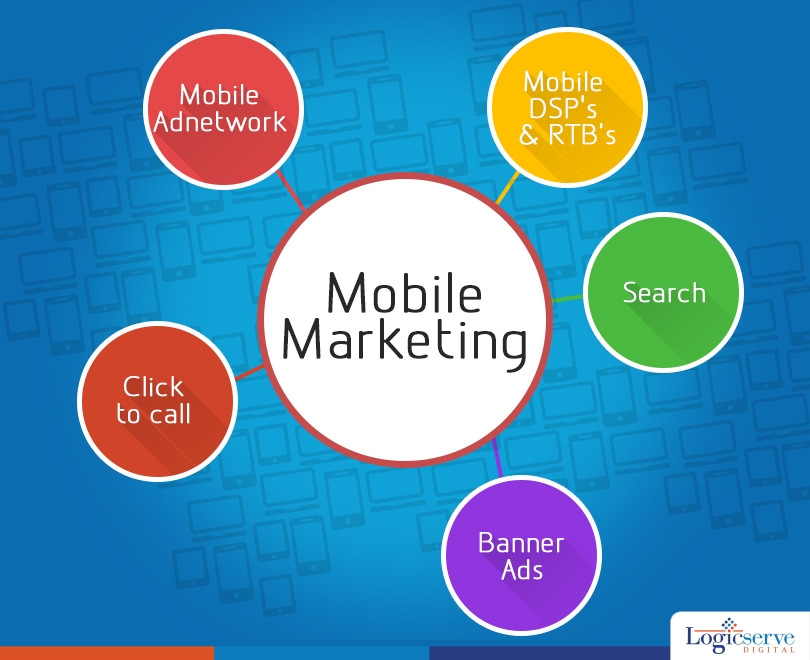
    Mobile marketing @LogicserveDigi

    With 1.3 billion Facebook users and more than 500 million Twitter users, marketers are increasing their focus on online advertising to reach the billions of customers who are always online. While 81% of people in the 25 to 34 age group in the U.S. own a smartphone, 70% of teens do so and about half of the people who are 55 and older own a smartphone. No wonder about 751 million Facebook users access the social network from a mobile device one time or the other while nearly 200 million FB users access it exclusively from a mobile device. Nearly a quarter of Americans connect to the Internet only from a mobile device.

    Geographies

    The Asia Pacific region has the most mature mobile advertising markets represented by Japan and South Korea, two nations that have had historically high adoption rates of handsets.

    However, North America and Europe will see enormous growth in mobile advertising simply because of the huge advertising budgets of the companies located in these two continents. As the developing economies of China and India grow, so will the sales and penetration of smartphones in these two nations leading to a simultaneous growth in mobile advertising. Russia and Brazil are a couple of other countries that will witness good growth rates of mobile advertising, particularly in 2015 and beyond.

    Types — Display Ads Vs. RTB

    Among the different mobile advertising options, display advertising is a preferred format of digital marketers. It’s expected to hit $74.4 billion in 2016 with an annual growth rate of 21% per year. Programmatic buying such as Real Time Bidding (RTB) is helping the growth of display advertising. Social media platforms such as Facebook and Twitter are benefiting from the growth of RTB and enjoying growth rates of 29% per year. RTB is expected to keep growing and reach $8.69 billion by 2017, according to eMarketer, constituting 29% of total digital display ad spending. Other studies by IDC shows that RTB is expected to reach $20.8 billion worldwide by 2017. For example, programmatic advertising in the U.S. is expected to grow from $2 billion in 2012 to $14.4 billion in 2017 maintaining a scorching pace of growth of 48% per year. Western Europe and Japan will also see similar growth in RTB as a form of display advertising.

    Mobile advertising is witnessing six times faster growth rates compared to desktop online advertising. And in the U.S. in particular, RTB on mobiles is expected to reach $1 billion in 2015 and $3 billion in 2017. The Weather Channel gets 600 to 700% higher click through rates on mobile display ads compared to desktop ads.

    Mobile Video Ads

    Mobile video ads are growing fast and becoming a significant part of mobile advertising. Tablet users are the ones who tend to watch longer videos. Mobile video ad expenditure amounted to half a billion dollars in 2013 which was 13% of the total digital video ad market.

    With the rise in popularity of mobile video ads, marketers are coming up with clever product promotion videos. Think of viral videos such as the Game of Thrones and House of Cards mash-up which was a promotional campaign; another marketing video which went viral was 20 strangers kissing and yet another was a fake job ad for the toughest job in the world which was a marketing video for an e-greeting card company on the occasion of Mothers Day.

    SMS

    This is an effective advertising format over mobiles as 90% of text messages are read within three minutes of delivery and 95% of mobile users can be reached by brands using SMS advertising. A February 2013 report by Mobile Marketer says that 42.3% of consumers prefer SMS deals over bar-code scans or push message coupons.

    Mobile Search Ads

    Since 70% of searches on mobiles lead to action within one hour, search ads on mobile platforms are more effective than search ads on desktops.

    Mobile couples also enjoy higher rates of redemption compared to print coupons.

    Click To Call

    Lots of smartphone users perform local search on their smartphones. Up to 95% of smartphone users have looked up local information over the internet using their smartphones. Out of them, 61% proceeded to make calls to the business establishment. Hence, click to call features should be prominently displayed in mobile websites as well as in any form of a mobile advertisement.

    LogicSpeak:

    Hence the bottom-line is a continuing growth of mobile devices and mobile ads which will continue for the foreseeable future.

    Previous Post: Tips to Increase Blog Traffic

  • Mobile Ecosystem and Statistics

    Mobile Ecosystem and Statistics

    Mobile eco system and statistics @LogicserveDigi

    The most significant and sudden technological change of the last 20 years has been the rapid growth of the mobile phone. Mobile phones have transformed from being niche devices meant only for the rich to being easily affordable and used by pretty much everyone. The key reason why this has been possible is because of the continuous decline in the cost of processing power and memory which led to the explosion of the PC business first and now powers the relentless growth of mobiles and smartphones.

    A Billion Smartphones

    In a new record, the global smartphone market crossed a billion units in 2013. Smartphones constituted about 55.1% of total mobile phone shipments in 2013 which was up from 41.7% of total mobile shipments that smartphones accounted for in 2012. Global smartphone shipments in the fourth quarter of 2013 were 284.4 million which was up by 24.2% from the 229.0 million units shipped in the fourth quarter of 2012. The dominance of the Android ecosystem continues as Android-based smartphones make up about 75% while Apple iOS powers only about 15% of the smartphones. Samsung with its wide range of high-end and mid-range smartphones is the largest vendor while Apple comes in second with a plethora of other smartphone brands who do solid business in the low-end of the smartphone market in developing nations constitute the rest of the market.

    With the spread of the internet and roll out of 3G and 4G LTE networks, smartphones will be able to do more with the availability of broadband internet.

    Growth of Mobile Internet

    Internet user base is growing across the world with Asia constituting 44.8% of internet users in the world as of the second quarter of 2012. Europe and North America constitute 21.5% and 11.4% of global internet users. Even as the penetration of the internet grows across the globe, the user base of mobile internet users grows faster than wired internet users.

    Just as many people in developing countries such as India used mobiles without ever going through a period of using landline phones, huge numbers of people in the Middle East and Africa access the internet via mobile phones. The eMarketer estimate suggests that 94.0% of internet users in these two geographies will go online via the little mobile phone screen rather than a large desktop screen.

    The percentage of internet users who use their mobiles to access the internet is lower in more developed parts of the world such as North America and Europe where it is 64.3% and 67.8% respectively. The global percentage of mobile internet users this year is estimated to be around 79.1% which will grow to 90.1% by 2017.

    So, more and more web traffic is flowing to and from smartphones and other mobile devices and this has reached 17.4% of total web traffic as of 2013.

    Despite this massive growth, significant swatches of the world’s population in poor countries in Africa, Asia and Latin America continue to remain without access to the internet. Tech entrepreneurs such as Mark Zuckberberg are trying to spread the internet to these areas of the world through their projects such as internet.org.

    Google Hummingbird Update

    The evolving nature of web access has also impacted the nature of web searches. People who use mobile phones are more inclined to use voice search capabilities offered by Google. Google in turn has changed its algorithms continuously and the latest of those changes emphasize natural language search and semantic search which focuses on the meaning of words and their context rather than just being keyword-driven.

    To reach the growing percentage of mobile internet users, websites are being redesigned and revamped to make them more suitable for display on mobile devices. Website search engine optimization (SEO) experts are taking into account the requirements of Hummingbird in conducting site SEO. One of the key aspects of making a website get a good rank in a post-Hummingbird world is to have good content which should be natural and focused on the audience. Other applicable rules include having page URLs that reflect the content on that web page. Also, websites should have simple architecture which will help website visitors and search engines.

    Growth of Mobile Marketing

    Online marketers are changing their marketing strategies to keep up with changing customer habits. Hence, more marketing dollars are being allocated to online mobile marketing and digital marketing that is tailored specifically for the small screens of smartphones.

    Gartner predicts that mobile advertising worldwide will reach $18.0 billion in 2014 compared to $13.1 billion in 2013 and will become as much as $41.9 billion by 2017. According to Gartner, most of the mobile advertising will be display advertising but mobile video advertising will show the largest growth rates.

    In a similar report, eMarketer says that global mobile advertising increased by 105.0% to reach $17.96 billion last year. In 2014, eMarketer predicts mobile ads will rise 75.1% to reach $31.45 billion. Predictably, Facebook and Google get most of this mobile ad spend. These two advertising platforms combined, cornered more than two-thirds of mobile ad spends in 2013.

    Mobiles are becoming more indispensable Than Ever

    For a technology that that is only about two or three decade old, mobile phones have grown in importance as an essential part of our lives. Add the 20-year-old World Wide Web accessible from a mobile screen, and the combination becomes unbeatable.

    What can mobiles do?

    It seems now a days that it would be more appropriate to ask: what cannot mobiles do?

    Short of teleporting humans from one location to another, mobiles have become pretty versatile equipments that go far beyond their primary role of being just a telephone.

    Enabling Financial Inclusion

    With banks offering net banking facilities via dedicated mobile websites, banking customers get the benefit of accessing their bank account conveniently. Since it’s easier to have a great telecommunications network that is useful for many purposes rather than setting up extensive banking networks, banks are obviously eager to connect with their customers via mobile banking facilities. With just a smartphone and an internet connection, people have access to a bank at their fingertips.

    Healthcare Innovations

    The role that mobiles will play in improving the lives of people by helping folks keep track of their own health is immense. This is an area where innovation is happening right now and the future will see much more happening as smartphones evolve into wearable computers with smart sensors that can measure the blood sugar level, monitor the heart rate, pulse and other health parameters of the person wearing the device.

    Right now, smart watches are a niche product that are being targeted to people who frequent gyms and like to keep tabs on their exercise activity. However, soon enough the role of mobiles in healthcare might grow with the possible launch of devices like Apple’s rumored iWatch.

    Mobile Shopping

    Mobiles have become a friend of the smart shopper and people are eager to do shopping from their smartphone screens. Mostly, it’s the e-commerce companies who have fallen behind the rapidly changing consumer tastes and now they are scrambling to come up with mobile-friendly websites and Apps to cater to smartphone shoppers.

    Showrooming remains a popular activity with shoppers and physical stores are finding it a challenge to compete with the low prices offered by online retailers such as Amazon. But with mobiles enabling such on-the-spot comparisons, retailers and e-retailers will need to get smart and come up with attractive offers to draw in consumers.

    Another aspect of showrooming is comparison shopping which is becoming popular with multiple online retailers trying to out-do one another in offering discounts and offers. This has created a market for coupon sites such as Couponraja and Compareraja.

    Previous Post: How to use Analytics for tracking PPC performance

  • How to integrate social media into your marketing strategy

    How to integrate social media into your marketing strategy

    Social media and marketing

    In the marketing sphere, social media and conversation marketing are considered to be brand changers. This combination is like no other method because it has the ability to change the fundamental nature or composition of the brand/customer relationship.

    Although many marketing experts say that social media and conversation marketing work fine for companies; they are still insufficient vehicles when propagated individually. Marketers are finding it very difficult to attain economies of scale when they are building relationships with buyers on an individualized or tiny group basis. Therefore, social media cannot be termed as a solo act, but it is best when it is combined with conversation marketing. If you are thinking or planning to use social media as a free standing strategy, you will have to first consider adding some integral social media components to your existing marketing initiatives.

    To achieve cross-media synergy with social media, you will have to amalgamate social media with search marketing. For this, you will have to create good quality content for your brand and then distribute it widely. Always plan where you are going to target your content; you can get more bait in the water. Additionally, you will have to optimize each and every piece of content for search.

    Another way to achieve cross-media synergy with social media is by combining it with e-mail. When you have good e-mail and good social media, you will get a perfect blend that will create positive awareness of your brand in a marketplace. You will have to use your social initiatives to check out some novel content approaches. So, make sure to add the most successful content to your email messages.

    Merging virtual events with social media will also help you in your marketing success on the internet. You need to understand that your audience is not a few customers in a single room, but several customers in the world. If you have a marketing presentation that is just out of the world, you should broadcast it to the world. You can use some slide sharing websites where you can upload your presentation for free.

    If your organization is planning some live events, you can use social media to create awareness about it. Likewise, you can also merge market research with social media and take the advantage of the latest trends in the market. You can directly talk to a set of customers and ask them how they feel about your product. You can even modify your product on the basis of the feedback that you received.  

    LogicSpeak :

    In addition to these strategies there are several strategies use social media for your marketing gains. But always keep in mind that you have to select the best strategy that suits the needs and budgets as well. There are several challenges that marketers are facing these days, but with the right strategy, all targets are achievable.