LS Staging

Tag: marketing

  • Weekend Digital Media Round- Building A Brand Is Not A Strategy, It Is A Starting Point, 2026 will change marketing more than the last five years combined, When knowing omnichannel matters wasn’t enough to make it happen & More….

    Weekend Digital Media Round- Building A Brand Is Not A Strategy, It Is A Starting Point, 2026 will change marketing more than the last five years combined, When knowing omnichannel matters wasn’t enough to make it happen & More….

    1.Building A Brand Is Not A Strategy, It Is A Starting Point

    SEO can’t magically create demand — it captures it. The piece explains how true brand building comes from consistent visibility, helpful content, and long‑term trust signals rather than vague instructions to “build a brand.” It highlights that SEO, content, and digital PR work together to increase mental availability and reinforce brand perception over time. [Source: Search Engine Journal]

    2. 2026 will change marketing more than the last five years combined

    Marketing in 2026 is shifting into a fully unified, AI‑driven system where channels, measurement, and creative work together in real time. AI becomes the transparent engine powering optimization, while silos disappear as brands move toward connected, journey‑based planning. Overall, the year marks a major inflection point where unified intelligence replaces fragmented marketing practices.  [Source: The Drum]

    3. When knowing omnichannel matters wasn’t enough to make it happen

    Companies long understood the value of omnichannel experiences, but most failed because their systems couldn’t actually connect customer data across channels. The piece shows how true success comes from integration—not just collecting data—since unified systems drive higher retention, smoother experiences, and long‑term competitive advantage. [Source: DM News]

    4. The Performance Gap Is Widening in 2026

    Programmatic advertising budgets are rising, but many teams are losing up to 30% of spend due to fragmented tools and siloed execution. Top-performing marketers are pulling ahead by consolidating their tech stacks and investing more heavily in AI across creative, data, and optimization. The gap between unified and fragmented strategies is expected to widen even further in 2026. [Source: Ad Week]

    5. What it takes to be a CMO in 2026 (spoiler: it’s complicated)

    Marketing leaders in 2026 are navigating a complex role that blends AI-driven transformation with the need to preserve creativity and human authenticity. CMOs are expected to act as both tech strategists and brand storytellers while balancing speed, strategy, and accountability. The research shows they must evolve into cross‑functional leaders who unite performance, platforms, and creativity. [Source: The Drum]

    6. Why Paid Search Foundations Still Matter In An AI-Focused World

    AI tools like Google’s PMax can scale campaigns, but they still depend heavily on solid fundamentals—clear structure, strong audience signals, and well‑defined intent—to perform well. Marketers who provide clean data, meaningful audience insight, and aligned intent signals enable AI to optimize far more effectively instead of guessing. [Source: Search Engine Journal]

    7. AI’s Greatest Problem Isn’t The Technology — It’s The Missing Data

    AI failures in enterprises aren’t caused by weak technology but by missing human-centric data that shows how work actually happens. Companies that capture real-time human signals—like collaboration, trust, and recognition—gain a competitive edge, while others relying only on static organizational data fall behind. The message for 2026: AI impact will depend on integrating technology with genuine human context.  [Source: Forbes]

    8. Google launches Universal Commerce Protocol for agent-led shopping

    Google has introduced the Universal Commerce Protocol, a new open standard that enables AI agents to manage the entire shopping journey across platforms. Alongside this, Google is rolling out branded retail AI agents and new ad formats like Direct Offers to boost conversions in AI-driven shopping. The updates aim to simplify checkout, reduce cart abandonment, and give retailers more control as agent-led commerce grows. [Source: Search Engine Journal]

    9. What Contact Center Operations Reveal About Your Customer Experience

    Operational assessments help contact centers uncover hidden inefficiencies, compliance gaps and technology issues that quietly weaken customer experience. Strengthening processes, data practices and agent support leads to faster resolution, better satisfaction and long‑term loyalty. [Source: CMS Wire]

    10. Shejale & Tamboli: Solving the 2026 Signal Crisis

    Brand leaders Prasad Shejale and Vinay Tamboli explain that the real challenge of the post‑cookie era isn’t replacing technology but rebuilding a unified, privacy‑first signal foundation. They argue that strong first‑party data, improved signal quality, and organisational alignment will separate high‑performing brands from those struggling in 2026. CMOs who prioritise measurement and owned data now will gain lasting strategic advantage. [Source: Adtech Today]
  • Weekend Digital Media Round- LLMs contain a LOT of parameters. But what’s a parameter, 7 Digital Marketing Trends to Watch for in 2026, Rebuilding performance for the privacy era & More….

    Weekend Digital Media Round- LLMs contain a LOT of parameters. But what’s a parameter, 7 Digital Marketing Trends to Watch for in 2026, Rebuilding performance for the privacy era & More….

    1.LLMs contain a LOT of parameters. But what’s a parameter?

    Large language models rely on billions or even trillions of parameters—such as embeddings, weights, and biases—that are fine-tuned during training to interpret and generate text. These parameters encode meaning, context, and relationships between words in high-dimensional space, enabling models to perform complex tasks. Recent advances focus on efficiency, using techniques like overtraining, distillation, and mixture of experts to make smaller models outperform larger ones. [Source: Technology Review]

    2. 7 Digital Marketing Trends to Watch for in 2026

    Digital marketing in 2026 will be shaped by seven major trends: short-form video will dominate engagement, AR glasses will open new advertising opportunities, and AI-generated content may reduce trust and sharing. Additionally, Threads is expected to surpass X, algorithm opt-outs could become standard, Reddit may face brand fatigue, and new teen-focused apps are likely to emerge. [Source: Social Media Today]

    3. Rebuilding performance for the privacy era

    LS Digital is focusing on rebuilding performance measurement for the privacy-first era through its SynapseSync platform, built on the DataQuark framework. The initiative aims to help brands shift from fragmented, intuition-based decisions to measurable, intelligence-driven growth, emphasizing first-party data infrastructure and omnichannel measurement for sustainable performance gains. [Source: Adgully]

    4. Personalization now a viable tactic for Bharat, not just metros

    Creative AI and Generative AI transformed marketing in 2025, enabling hyper-personalized, vernacular content at scale and driving real-time campaign optimization. The rise of Agentic AI introduced autonomous full-funnel orchestration, while growing privacy regulations set the stage for a major personalization-versus-privacy challenge in 2026. [Source: MediaBrief]

    5. You Have Six Seconds to Grab My Attention. Are Micro-Moments Your Marketing Edge?

    Winning brands now compete on speed and relevance by leveraging micro-moments—brief, high-intent interactions where consumers seek instant solutions. Success hinges on delivering value in under ten seconds through context-aware, seamless experiences that prioritize usefulness over impressions. [Source: Entrepreneur]

    6. Everybody Is Using AI. Why Aren’t Businesses Seeing Meaningful Returns?

    Most businesses are using AI, but only 5% of generative AI pilots deliver measurable financial impact because the challenge isn’t technology—it’s leadership and workflow integration. Success comes from embedding AI into core decision-making, providing clear context, and redesigning roles to align with measurable outcomes. [Source: Forbes]

    7. How Influencer Marketing Is Changing in 2026

    Influencer marketing in 2026 is shifting from one-off paid posts to deeper, long-term collaborations where creators act as consultants. Brands are investing more in these strategic partnerships as influencer budgets continue to grow. [Source: Vogue]

    8. Why Global Search Misalignment Is An Engineering Feature And A Business Bug

    Google’s AI Overviews have shifted search from localized ranking to semantic synthesis, prioritizing factual completeness over regional relevance. This design reduces hallucination risk but causes “geographic leakage,” where international sources appear for local queries, creating commercial blind spots. Businesses must adapt with Generative Engine Optimization (GEO) by ensuring semantic parity, retrieval-aware structuring, and reinforcing market-specific signals. [Source: Search Engine Journal]

    9. How to earn brand mentions that drive LLM and SEO visibility

    Brand mentions have become a critical factor for SEO and AI search visibility, surpassing traditional backlink strategies. They help LLMs associate brands with relevant topics, improving rankings. To succeed, brands should create referenceable assets, engage in visible platforms, and build relationships for mentions, prioritizing this after technical SEO fundamentals are in place. [Source: Search Engine Land]

    10. AI rewired marketing. Leadership is next.

    AI is rapidly transforming marketing strategies, and businesses that haven’t placed it at the core of their approach are already falling behind. The next big shift will be in leadership, as AI begins to influence decision-making at the highest levels. [Source: Campaign India]

  • Weekend Digital Media Round-India’s ESG narrative has moved beyond green claims to measurable, regulated impact: Report, Why media mix modeling is becoming essential for predictive ROAS measurement, From SaaS to AI: the technological and cultural shifts leaders must confront, & More….

    Weekend Digital Media Round-India’s ESG narrative has moved beyond green claims to measurable, regulated impact: Report, Why media mix modeling is becoming essential for predictive ROAS measurement, From SaaS to AI: the technological and cultural shifts leaders must confront, & More….

    1. India’s ESG narrative has moved beyond green claims to measurable, regulated impact: Report

    India’s sustainability approach is shifting from marketing-driven green claims to regulation-led, measurable impact. Enhanced policies like SEBI’s BRSR mandate and anti-greenwashing penalties are driving operational accountability, verified disclosures, and hard metrics, making transparency and digital tracking key to building trust and competitive advantage. [Source: ET Brand Equity]

    2. Why media mix modeling is becoming essential for predictive ROAS measurement

    Marketers are moving beyond last-touch attribution due to its limitations in capturing full-funnel impact and adapting to privacy changes. Media mix modeling (MMM) now complements attribution by providing a holistic, predictive, and privacy-safe approach, revealing platforms like TikTok deliver far greater ROI than previously measured. Combining both methods enables more accurate ROAS forecasting and efficient budget allocation. [Source: Digi Day]

    3. From SaaS to AI: the technological and cultural shifts leaders must confront

    The piece highlights the shift from SaaS-driven workflows to AI-powered operations, emphasizing that this transition is both technological and cultural. It explores challenges like employee fears, uneven adoption, and communication gaps, while stressing that successful leaders must reframe AI as a growth opportunity, invest in training, and lead by example to build trust and resilience. [Source: Tech Radar]

    4. Meta Shares Tips on Reels Hooks, Creative Diversification in Ads and Threads

    Meta recommends focusing on strong hooks in Reels, using audio for better engagement, and embracing creative diversification in ads to improve reach and performance. It also suggests leveraging AI tools for varied ad assets and provides tips for maximizing Threads activity. [Source: Social Media Today]

    5. The B2B Buyer Is Already in the Future. Are You?

    AI is transforming the B2B buying process, making decisions faster and more data-driven through tools like Google Search, YouTube, and AI-powered features such as AI Overviews. Brands that adopt AI-driven marketing solutions like Performance Max can stay visible and relevant as conversational and complex queries dominate the purchase journey. [Source: AdWeek]

    6. How Marketing Can Be Authentic In The Age Of AI

    AI is transforming holiday shopping, with Google focusing on research and reviews while ChatGPT acts as a virtual sales associate prioritizing transactions. Trust in AI tools is growing, but consumers still prefer authentic, human-created content, making transparency crucial for brands using AI. Disney’s partnership with OpenAI and recent AI missteps by McDonald’s and Amazon highlight both opportunities and risks in AI-driven marketing. [Source: Forbes]

    7. Who Benefits When The Line Between SEO And GEO Is Blurred

    The search industry is shifting from a click-driven model to an answer-driven one, where AI-generated summaries dominate user behavior. Traditional SEO fundamentals still matter, but businesses must adapt to GEO (Generative Engine Optimization), which focuses on content blocks, retrieval, and visibility within AI answers rather than page rankings and clicks. [Source: Search Engine Journal]

    8. Why AI agents are moving into enterprise marketing operations

    AI agents are increasingly being integrated into enterprise marketing operations, shifting from creative tools to embedded systems that automate routine tasks like campaign setup and optimization. This trend aims to reduce manual work, improve scalability, and enhance efficiency, while raising governance challenges around control, accountability, and compliance. [Source: Marketing Tech News]

    9. The End of the Click: The First Touchpoint Is No Longer Your Website

    Search is shifting from clicks to conversations as large language models (LLMs) become the primary discovery engines. Brands now compete for visibility inside AI-generated answers, requiring strategies that target both humans and machines, rethink metrics beyond traffic, and design content optimized for clarity, authority, and adaptability. [Source: CMS Wire]

    10. How to measure brand visibility in AI search (before you disappear)

    AI search is rapidly overtaking traditional search, making brand visibility in AI-generated answers critical. The article explains why rising AI traffic doesn’t guarantee brand recognition, introduces metrics like AI visibility score, citation share, sentiment, and authority weight, and outlines tools and strategies to track and improve your presence in AI responses compared to competitors. [Source: Search Engine Land]

  • Weekend Digital Media Round- AI-native advertising surges in India as report flags huge knowledge gap among consumers, How UX Professionals Can Lead AI Strategy, Has the marketing funnel reversed as content and commerce converge, & More….

    Weekend Digital Media Round- AI-native advertising surges in India as report flags huge knowledge gap among consumers, How UX Professionals Can Lead AI Strategy, Has the marketing funnel reversed as content and commerce converge, & More….

    1.AI-native advertising surges in India as report flags huge knowledge gap among consumers

    India is emerging as a global hub for AI-driven advertising, with rapid adoption of hyper-personalisation and vernacular AI. LS Digital’s report highlights strong trust in AI, growing social commerce, and the need for brands to balance innovation with consumer education amid a major knowledge gap. [Source: StoryBoard 18]

    2. How UX Professionals Can Lead AI Strategy

    UX professionals should proactively lead their organization’s AI strategy to ensure user needs and quality standards aren’t compromised. The article outlines a six-step framework: understand management’s goals, audit workflows, set principles, build and pitch an AI-UX strategy, run pilots, and demonstrate value—positioning UX expertise as essential for successful AI adoption. [Source: Smashing Magazine]

    3. Has the marketing funnel reversed as content and commerce converge?

    Marketing experts discussed how social commerce is reshaping brand strategies, emphasizing data-driven decisions, tailored content for platforms like TikTok and Reddit, and the growing convergence of content and commerce. The session highlighted that creativity and human connection remain crucial, with social commerce projected to drive $492 billion in global sales annually. [Source: The Drum]

    4. How Modern Contextual Targeting Is Reshaping Campaign Planning

    Modern contextual targeting is evolving into a privacy-first, cookie-free solution that blends audience precision with contextual relevance. By analyzing content consumption patterns, it enables marketers to reach receptive audiences efficiently, ensuring compliance and long-term adaptability in campaign planning.  [Source: AdWeek]

    5. AI’s Transformation of Online Shopping Is Just Getting Started

    AI is rapidly reshaping online shopping, with generative AI searches for products growing 4,700% between 2024 and 2025 and nearly a quarter of global consumers using AI as their primary shopping tool. Brands must adopt Generative Engine Optimization (GEO) alongside traditional SEO and prepare for the rise of autonomous AI shopping agents, which could drive a $3–5 trillion market by 2030. [Source: Business of Fashion]

    6. Well-Known SEO Explains Why AI Agents Are Coming For You & What To Do Now

    AI-driven workflows are set to transform SEO, shifting the focus from optimizing for search engines to creating and managing agentic systems. Marie Haynes emphasizes experimenting with tools like Gemini Gems and chaining agents to scale processes, predicting that businesses will adopt these workflows as they become profitable. Professionals who master AI agents now will hold a significant advantage in the future. [Source: Search Engine Journal]

    7. Brand protection in PPC: How to protect your brand and prevent risks

    Brand protection in PPC is about preventing unauthorized bidding, ad hijacking, and affiliate violations on branded keywords to safeguard traffic and reduce costs. A strong strategy involves monitoring, automation, strict affiliate rules, and consistent enforcement to maintain clean auctions and protect ROI. [Source: Search Engine Land]

    8. How zero-click and AI search are changing marketing

    AI-driven search and zero-click results are reshaping how users interact with search engines, reducing website traffic by providing instant answers directly on results pages. This shift challenges traditional SEO metrics and forces marketers to focus on visibility within AI summaries, brand presence, and deeper, trust-based content to stay relevant. [Source: Marketing Tech News]

    9. Google AI Mode Links Updated & Adds Contextual Introductions

    Google has enhanced AI Mode in search by increasing inline links and redesigning them for better usability. It also introduced contextual introductions—short statements explaining why a link might be helpful—to improve user engagement and encourage clicks. [Source: Search Engine Roundtable]

    10. How generative AI is transforming brand storytelling in the Middle East

    Agentic AI is transforming marketing by enabling autonomous research, comparison, and transactions, reducing reliance on traditional touchpoints. This shift requires marketing teams to optimize content for AI environments, update attribution models, and develop new skills in automation and hybrid experience design to stay competitive. [Source: CMS Wire]

  • Weekend Digital Media Round-From Transactions To Intelligence: The Future Of Retail Transformation, AI is making your website irrelevant, How AI is rewriting the rules of search and shopping – by the numbers & More…

    Weekend Digital Media Round-From Transactions To Intelligence: The Future Of Retail Transformation, AI is making your website irrelevant, How AI is rewriting the rules of search and shopping – by the numbers & More…

    1.From Transactions To Intelligence: The Future Of Retail Transformation

    Retail is evolving from transactional to intelligent, driven by AI, generative technologies, and multi-agent systems that personalize customer experiences and optimize operations. Success lies in strategic implementation—breaking data silos, piloting wisely, reskilling teams, and building trust through governance—to create human-centered, tech-enabled ecosystems. [Source: Forbes]

    2. AI is making your website irrelevant

    AI is fundamentally changing how users discover and evaluate brands—often before they even visit a website. With tools like Google’s AI Overviews and GPT-style models sourcing answers from forums, videos, and reviews, traditional web traffic is declining, making it crucial for businesses to optimize content for both humans and machines. [Source: Fast Company]

    3. How AI is rewriting the rules of search and shopping – by the numbers

    Generative AI is transforming how people shop online, with 68% of global shoppers using tools like ChatGPT instead of traditional search engines. While marketers recognize the shift, many are struggling to adapt due to fragmented tech stacks, unclear measurement strategies, and slow adoption of AI-focused optimization techniques. [Source: DigiDay]

    4. Instagram Introduces Reels-First Trial On Mobile App For Indian Users

    Instagram is piloting a Reels-first layout for its mobile app in India, where users land directly on the Reels tab upon opening the app. This test aims to boost engagement by simplifying navigation and emphasizing short-form video, especially given India’s vibrant Reels community. [Source: Mashable]

    5. How Quick Commerce is Changing Travel Marketing. Plus: Skift Global Forum East Returns

    Air India has partnered with Zomato to integrate its Maharaja Club loyalty program, allowing users to earn points on food deliveries. This move reflects a broader trend where Indian travel brands are collaborating with quick commerce platforms to tap into a convenience-driven customer base, following similar efforts like IndiGo’s tie-up with Swiggy. [Source: Skift]

    6. Why Your Brand Should Be Top Priority In The AI-Driven Advertising Era

    Generative and agentic AI are transforming advertising, with brands like BMW, Cadbury, and Coca-Cola using them to create personalized, large-scale campaigns. While AI boosts creativity and efficiency, the article emphasizes that authenticity, transparency, and strategic human input remain essential for building consumer trust and brand loyalty. [Source: Forbes]

    7. Why experiential is central to winning consumer trust in the age of AI

    In an age where AI can fabricate nearly everything, experiential marketing stands out as a powerful tool to build genuine consumer trust. Real-life brand experiences—like live events and immersive activations—create emotional connections that digital content alone can’t replicate, making them essential in today’s authenticity-starved landscape. [Source: The Drum]

    8. How OpenAI and Stripe’s latest move could blow up online shopping as we know it

    OpenAI and Stripe are revolutionizing e-commerce by integrating instant shopping directly into AI chat experiences, allowing users to go from idea to purchase in seconds. This move challenges traditional online shopping flows and even tech giants like Google. [Source: Fortune]

    9. Dinosaurs, Asteroids and AI: Which Kind of CMO Are You?

    AI is reshaping marketing leadership, with only 5% of enterprise AI pilots showing measurable success, pushing CMOs to evolve or risk obsolescence. The article emphasizes that true transformation requires fluency, strategic orchestration, and new metrics—not just tools or enthusiasm. [Source: CMS Wire]

    10. How AI Elevates the CMO’s Role in the Golden Era of Marketing 

    AI is transforming the role of the Chief Marketing Officer (CMO) from brand steward to strategic growth architect. By integrating AI into marketing workflows, CMOs can drive personalized customer engagement, optimize performance, and lead enterprise-wide innovation while balancing human creativity and machine intelligence. [Source: AdWeek]

  • Why Google Certification Matters in Today’s Digital Marketing Space?

    Why Google Certification Matters in Today’s Digital Marketing Space?

    The digital marketing space is a competitive battlefield, constantly evolving with new technologies and strategies. To stay ahead, businesses need a partner with the expertise and knowledge to navigate this ever-changing terrain. That’s where Google Certifications come in. We are thrilled to announce that LS Digital has received Google Digital Guru Certification. Google Digital Guru is an access only platform given to their premiere partners. There are 4 categories in this platform: video, data and technology, DV360, and performance.

    Why Google Certification Matters

    A Google Certification isn’t just a fancy badge – it’s a symbol of proven expertise and up-to-date knowledge in Google’s advertising platforms and best practices. Here’s how partnering with a Google Certified Company like LS Digital elevates your digital marketing experience:

    • Expert Guidance: Combined, our team has over 250 Google Certifications across crucial areas like video marketing, performance marketing, display advertising, data analysis, and technology integration. This translates to expert guidance for you, ensuring your campaigns are tailored to your specific needs and goals.
    • Data-Driven Decisions: Every decision we make is backed by robust data analysis, a hallmark of Google Certifications. This ensures your campaigns are backed by informed decisions and are optimized to maximum performance.
    • Credibility and Trust: Earning Google Certification demonstrates our company’s deep understanding of the tools and techniques that drive results. This translates to increased trust and confidence from potential clients.
    • Staying Ahead of the Curve: Google constantly updates its platforms and introduces new features. This certification is only valid for 1 year, ensuring that we are equipped with the latest knowledge, allowing us to implement cutting-edge strategies for our clients.


    Achieving Google Digital Guru certification equips us with a diverse set of skills vital for excelling in the digital marketing landscape, including:

    • Video Marketing: Learning to create captivating video content that grabs attention and drives conversions.
    • Performance Marketing: Develop data-driven strategies that maximize our return on investment (ROI) through optimized campaigns.
    • DV360 Advertising: Learn to design eye-catching display ads that capture your target audience and boost brand awareness.
    • Data Analysis and Technology Integration: Gain expertise in deciphering complex data sets, allowing you to refine your marketing strategy for optimal results. Stay ahead of the curve by integrating the latest technological advancements into your digital marketing mix.


    Achieving certification for the modules requires meeting two criteria. First, you must pass all assessments within a module with a minimum score of 80%. Second, you need to demonstrate engagement by achieving a video completion rate of at least 85% for all videos in the module. Once you’ve fulfilled both these requirements, you’ll be awarded a Digital Guru Certification, valid for one year.

    In today’s competitive digital marketing landscape, keeping pace with innovation is crucial. Google Certifications offer a valuable path to stay informed and develop expertise in Google’s advertising platforms. Whether you’re an agency or an individual marketer, pursuing Google Certifications is an investment in your professional growth and a testament to your dedication to achieving the best possible results.

  • 3 Ways to Use Data for Boosting Your Ecommerce Business

    3 Ways to Use Data for Boosting Your Ecommerce Business

    Ecommerce businesses are tirelessly searching for new ways to reach more people and improve customer experiences. But a powerful solution could possibly be available at their fingertips, and many are either unaware or don’t know how to leverage it.

    Data is steadily becoming the new frontier of competition and innovation in eCommerce.

    With 74 zettabytes of data generated by the end of 2021 (1 zettabyte=1 trillion gigabytes), there’s plenty of data that online stores can use to boost their business. Here are 3 effective ways to leverage data in eCommerce –

    1. Creating Buyer Personas

    According to a study by IBM, almost 90% of the marketers agree that personalized customers experiences are critical to their success. However, 80% of the consumers believe that the average brand fails to understand them as individuals. Creating buyer personas could help change the statistic.

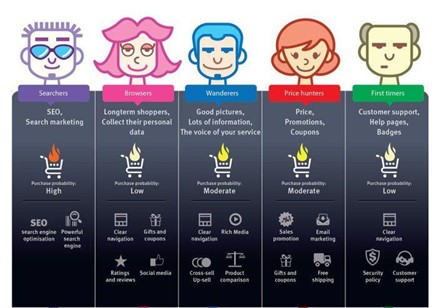
    Marketers can collect, compile, and analyse data from multiple sources and divide it into segments for creating buyer personas. These are comprehensive profiles of ideal customers to improve decision-making and ensure that marketing initiatives target every audience segment adequately.

    The buyer persona and journey map above offers an excellent overview of how online stores can approach this strategy to better understand their customers.

    1. Predicting New Trends

    Product trends change swiftly in the e-commerce world. For instance, while air fryers are currently selling like hotcakes, it might be something else in the near future. Knowing such trends in advance could be a gamechanger for any online retailer. And it is now possible to accurately predict “the next best product” with the help of demand forecasting solutions.

    These tools can identify trends and patterns in sales data to estimate future demand. It can enable online stores to maintain adequate stock levels, generate higher revenue, and gain a competitive edge. Short-term and long-term demand can be forecasted at a micro or macro level to predict the future and keep up with the changing trends.

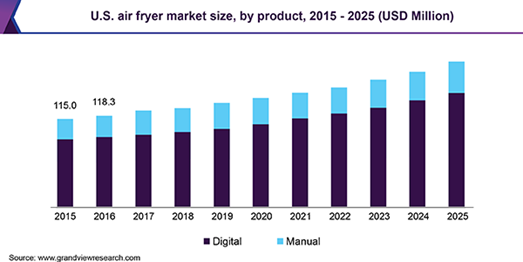
    For instance, a simple demand forecast for air fryers suggests that their market size will continue to grow well into the future.

    1. Boost Customer Service

    Finding and converting new customers is challenging for smaller online stores. But after making the first purchase, their chances of doing it again are considerably higher. In other words, instead of selling your products to a new customer, you are 60%-70% more likely to sell to existing customers. And repeat customers are vital for any business as they spend up to 67% more than new customers.

    The quality of your customer service plays a critical role in boosting customer loyalty. Ecommerce businesses can collect an extensive range of data and build it into their CRM strategy to improve customer service and satisfaction. Some of the data points they can consider are-

    • Website cart abandonment rates, bounce rates, and conversion rates
    • Customer satisfaction survey results
    • Customer service response times
    • Overall social sentiment

     Leveraging Data in Ecommerce

    There are several ways for online stores to leverage data for improving their operations. Moreover, there’s also an extensive range of advanced analytics software and tools to help businesses make sense of their collected data. But as data now plays such a critical role in the eCommerce landscape, it’d be wise to trust only the experts.

    Experienced digital marketing professionals can help online stores explore the possibilities and create custom data-driven strategies that are equipped to deliver the best results.


  • Why Animated Video Marketing Should Be a Part of Your Digital Strategy in 2021?

    Why Animated Video Marketing Should Be a Part of Your Digital Strategy in 2021?

    The digital landscape is dynamic and ever-growing. Hit by the pandemic and lockdowns, 2020 has been a challenging year for brands and marketers. But one trend that made its presence felt this year was video marketing.

    From brand videos, tutorials, product reviews, webinars to vlogs, brands and digital agencies took advantage of this growing trend in many different ways. In fact, according to a market forecast report on Statista, video ad spending is expected to grow at a rate of 9% between 2020 and 2025 in India.

    While video marketing is here to stay, it will continue to bifurcate and grow. Currently, animated video marketing is at the top of the to-do list among brands and marketers across the country. Check out three of the top reasons why you too should consider animated videos to market your offerings to the consumers-

    1. Story Execution Done Right

    With every video you create, your primary aim is to tell a story about your brand, product, or service. The video content should be such that it persuades, convinces, and compels the audience to take the desired action. Execution plays the most critical role in the process.

    This is where animated videos get into the picture. Animated videos are one of the most engaging and cost-efficient ways to execute a story. With animation, any concept can be brought to life, which is often impossible, expensive, or time-consuming with traditional visual mediums.

    2. Improve Conversion Rates

    Apart from helping brands execute the story, animation videos are also very useful in compelling the audience to take action. People love animation, and through this medium, it is easier for brands and marketers to clearly show, dissect, and describe their offerings. Complicated products or services are easier to explain through animation as compared to using a performer or spokesperson.

    This is one of the top reasons why several tech companies across the world now use animated explainer videos. Only when people understand your product or service will they be encouraged to make the purchase.

    3. Adding More Emotion and Interest to the Subject Matter

    The animation market is one of the largest in the world. This is because animated videos are very effective when it comes to conveying emotions. Animators and illustrators can exaggerate emotions through animation to make the marketing message distinct and expressive.

    Moreover, as the videos combine sound and visuals, they simultaneously interact with the audience at multiple levels of perception. Using animated videos, brands can offer a more aesthetic and emotional appeal that can strike a chord with the audience.

    2021: The Year of Animated Video Marketing

    With the help of animated videos, brands can take their audience to places that standard visuals simply cannot. Real videos are closely related to the reality of our world. Not to forget that they can also be costly.

    Animated videos can help brands execute the stories in a way that it interacts with the audience on a personal level and compels them to take action. Moreover, their cost-efficiency means that even smaller brands can use them very effectively.

    If you are looking for ways to use video marketing in 2021, animated videos is one trend you should definitely consider.

  • 2021 Digital Marketing Guide: 3 Trends No Marketer Should Ignore

    2021 Digital Marketing Guide: 3 Trends No Marketer Should Ignore

    While the number of internet users was continually increasing in India, the COVID-19 pandemic caused a sudden surge in the number of people accessing the world wide web.

    According to a Kantar report on LiveMint, the pandemic is expected to increase India’s monthly active internet user base to 639 million. Not just the number of users but also the amount of time people spend online has increased.

    The digital growth in 2020 has been such that no business, big or small, could afford to not have a digital marketing strategy. With a new year around the corner, what digital trends brands and marketers should focus upon? Here is a list of top 3-

    1. Sell with Social Commerce

    In the past, social platforms such as Facebook were used by brands to help consumers discover their products or services. For instance, people used to discover products through Facebook ads. After clicking on the product, they were redirected to the seller’s website to complete the purchase. But 2021 is expected to be the year of social commerce.

    Consumers no longer need to visit any other webpage to complete their purchase as it can be directly done on the social platform where they discover the product. According to Bain and Company study, social commerce is expected to be a $70 billion industry in India by 2030.

    2. Increased Brand Authority with “Position Zero” Listing

    Over the years, SEO has been about getting listed at the number one position for the target keyword. But as per the recent trends, marketers should try to get listed in “position zero” or “featured snippet” if the digital goal is increasing brand authority. These snippets from the post are listed above the search rankings in a separate box.

    Long-tail query phrases, such as questions, generally trigger the snippet. Often, these snippets are read by voice assistants when a user uses voice search.

    However, as the user will find the answer to their query directly from the snippet, there is a possibility that he/she might not visit the webpage. But this is still a great way for brands to get recognized as a leader in the industry and improve brand authority.

    3. Make Your Content Interactive

    Brands should also consider making their content more interactive to provide more value to their audience and engage with them. For instance, a finance company can use an interest rate calculator on their website. Similarly, e-commerce portals can experiment with virtual try-on solutions to keep the audience engaged.

    Marketers can also use quizzes, polls, games, contests, surveys, etc., to boost visibility and reach. For instance, you can use a referral contest wherein the people who share the content with their friends are offered a voucher or a discount coupon. This a cost-effective way to reach more people.

    Achieve Your Business Objectives with Digital Marketing in 2021

    As more and more people are spending a considerable amount of time on the internet in India, this is a golden opportunity for businesses to grow and increase their bottom line.

    As 2020 is coming to an end, take a proactive approach, and start working on your digital strategy for 2021. While working on your strategy, do not forget the trends discussed in this post. 

  • Enter 2021: These 9 Digital Marketing Trends Deserve Your Attention

    Enter 2021: These 9 Digital Marketing Trends Deserve Your Attention

    2020 started like any other new year. Marketers were excited and prepared to take on digital opportunities. But it only took about a couple of months for this enthusiasm to subside.

    As the COVID-19 pandemic started making its presence felt across the world, marketers were back to their drawing boards, trying to figure out the next course of action. While internet consumption increased significantly during the lockdowns, the way consumers shop changed drastically.

    Coupled with the technological advancements and search engines updating their algorithms, 2020 didn’t turn out as expected for most marketers. But with the year about to end, it is time to start working towards the future.

    What are the digital marketing trends marketers should watch out for in 2021? Here is a list of top 9-

    1. Video Marketing Critical for Digital Growth

    Online video consumption has doubled in the last two years in India.

    Consumption has grown to the extent that video marketing has become a vital element of every successful digital strategy. From boosting conversions and sales, building trust to higher ROI, marketers can experience several valuable benefits with this addition.

    2. The Age of AI is Now

    We’ve all heard how Artificial Intelligence (AI) will rule the world of technology in the future. But look closely, and you’ll see that AI is already being used massively across the digital landscape.

    One of the biggest examples is Google’s RankBrain algorithm, which uses a machine-learning AI. Marketers should focus on using AI-powered tools to jump this technological bandwagon as early as possible.

    3. Hello, Voice Integration

    With the growing popularity of smart devices such as Amazon Alexa, Google Home, and Apple’s Siri, 2021 should be an excellent starting point to start working on voice optimization.

    India has been witnessing a huge surge in the usage of voice assistants through smartphones and smart devices. Marketers should look for ways to adapt and optimize for voice search to remain relevant.

    4. The Rise of Customer Data Analytics

    Customer data analytics is all about technologies and processes that provide organizations with a sort of customer insight which is vital for delivering anticipated, timely, and relevant content.

    While customer analytics has been around for some time, marketers should ditch traditional practices and look for advanced solutions that can better understand the customer journey.

    5. Social Media for Advertising, Engaging and Retaining

    Social media became the go-to destination for people to not only communicate but to get entertained, connect with brands, and even access the latest news throughout the pandemic. As social media usage has increased, marketers should focus on using these platforms to advertise, engage, and retain customers.

    According to a report on Statista, social media ad spending in India is expected to grow at an annual growth rate of 8.7% between 2020 and 2025. If you don’t already have a presence on social platforms, 2021 can be the year to make a move.

    6. Local SEO and Listings Are More Important Than Ever

    Marketers working for small businesses cannot overlook local SEO and listings anymore in 2021. Improved reputation, customer feedback, and digital presence boost are some of the critical advantages of getting a business listed on Google My Business and other directories. 

    Small businesses wanting to remain competitive at the local level should focus on local SEO to experience a host of valuable benefits.

    7.The Future is Programmatic Advertising

    While programmatic advertising is a branch of AI, it deserves a special mention. A simple example of this technology-driven ad buying process is real-time bidding or RTB, which takes into consideration hundreds of different signals to display relevant ads to specific consumers.

    According to a report on Exchange4Media, programmatic advertising is growing at a rate of 70% in India. With the digital ecosystem looking for effective ways to deliver relevant ads to target consumers, programmatic advertising could be the most vital piece of the online marketing puzzle.  

    8. Master Visual Search with Video and Image SEO

    While text search is how most people use search engines, visual search is getting increasingly popular. Search engines like Google are also introducing features to encourage people to use visual search. For instance, Google now allows users to use their original photos to search for content online.

    As more people will discover these features, it will have a considerable impact on the overall SEO landscape. Take a proactive approach for capitalizing on the rising popularity of visual search. If you’re an e-commerce brand, do try to know more about Google Lens.

    9. Blocking Ad-Blockers

    As per an eMarketer report, around 28% of internet users will use ad blockers in 2021. These ad blockers often cut off the source of your traffic, including PPC campaigns. As people will continue using these ad blockers, marketers should look for ways to adjust their strategies accordingly.

    For instance, if they see that their strategies are being affected by ad blockers, marketers can focus on other forms of marketing, such as sponsored content or influencer marketing, that are not affected by such obstacles.

    Making the Most of Your Digital Strategy in 2021

    Every new year brings with it a host of digital marketing possibilities. While 2021 is not expected to be a usual new year like the past, one thing is for sure- there will be no shortage of opportunities if you know what to do.

    If you’re looking for ways to make the most of 2021, these are some of the top digital marketing strategies you should watch out for.