LS Staging

Tag: machine learning

  • 3 Reasons Why You Should Use Predictive Analytics for Media Planning

    3 Reasons Why You Should Use Predictive Analytics for Media Planning

    Modern consumers are an enigma. A standard buying decision now includes hours of online research, a visit to a physical store, plus a detailed discussion with the customer service executive.

    Sometimes, consumers might use a complex combination of these methods, and other times, they might simply rely on a single channel to make the buying decision.

    But even though the consumers are now channel-agnostic, the media industry has progressed exceptionally in understanding what is in their mind.

    While there are technologies and tools that help you better cater to the current needs of the consumers, predicting the future is still an unaccomplished dream. With the help of predictive analytics, this might very well be possible.

    What is Predictive Analytics?

    Predictive analytics can be defined as a branch of data analytics that focuses on making future predictions by analyzing historical data. It uses machine learning and analytics techniques such as statistical modeling to make future predictions that are highly reliable and accurate as compared to traditional technologies.

    According to a report by Allied Market Research, the predictive analytics market size was valued at $7.32 billion in 2019. By 2027, it is expected to surpass $35 billion, growing at a CAGR of 21.9% from 2020 to 2027.

    But what makes predictive analytics such an integral component of modern media planning strategies? Take a look-

    1. Utilize Big Data

    As a growing media business, you might know how vast and valuable the data collection and analysis opportunities are with technologies like Big Data and the Internet of Things (IoT). But it is with the help of predictive analytics that you can strategically leverage the data for driving consumer insights.

    While there are new technologies and tools for collecting behavioral audience data, demographics data, 3rd party intent data, to competitor performance data, all of this data is only useful if you can unlock their hidden meaning. Predictive analytics can make this possible.

    2. Effective Audience Targeting

    Delivering the right message to the right people at the right time is now a must for every media business. Predictive analytics can use user existing customer data and even 3rd party behavioral data for identifying new customers that you can target.

    The level of correlation that this technology draws between the behavioral factors and demographics of potential customers is simply not possible with traditional practices and tools. This is one of the biggest reasons predictive analytics is now leveraged even by Google and Facebook in their Similar Audience feature.

    3. Optimize Advertising Budget

    The entire process of manually collecting consumer data and then analyzing it is an expensive affair. Predictive advertising helps you reduce and optimize your marketing budget. If you already have an end-goal for the data analysis, predictive technologies enable you to define the parameters on which actions can be taken through automation.

    This not only helps eliminate the complexities associated with making sense of your data but can also significantly reduce your marketing budget, enabling you to spend money where it matters.

    Achieving Marketing Goals with Predictive Analytics

    A large number of media businesses across the world have adopted predictive analytics into their marketing operations and are already witnessing positive outcomes. If you want to grow your media business and are willing to invest the funds and time, there is no reason why you cannot implement and benefit from this next-gen data analytics technology.

    Look for a reputed digital marketing company that can help you better understand predictive analytics and assist you in getting started.

  • 5 Steps to SEM Success in the Era of Machine Learning

    5 Steps to SEM Success in the Era of Machine Learning

    It’s no secret that AI and machine learning have made it challenging for SEM marketers to create new advertising strategies that work. In a recent conference at the SMX Advanced seminar held in Seattle, the keynote speaker, Nicolas Darveau – Garneau, Google’s Chief Search Evangelist listed the ways to optimize SEM campaigns in the era of machine learning and AI.

    Here, are the five steps outlined by Darveau – Garneau to help marketers outsmart the machine learning and other smart tools.

    1. Combined Measuring

    Instead of looking at customer interactions and data in separate platforms and modes, marketers have to combine data from across channels to get the bigger picture. Standalone data has to be integrated holistically, to get a clear idea of the customer profile and position in the funnel.

    Darveau – Garneau recommends marketers to measure ROI on each campaign and pool it together across ROI in all Google tools. This will help marketers to spot opportunities quickly and make the best use of it, across campaigns.

    2. Fix the Right Goals

    In his address, Darveau – Garneau illustrated this point using an analogy he picked from car insurance companies. He stated that though different car insurance companies sell similar products, each company has hugely varying goals. For instance, company A may focus on capturing the maximum number of leads, while company B might focus on selling the maximum number of policies. While company C may be focused on selling only premium policies.

    It’s essential that businesses identify their unique goals, using their market value and niche audience. Once you have identified the unique goal of your business, you can use machine learning tools, to help you target ideal customers who match your specific goals.

    3. Track the Right Metrics

    Darveau – Garneau stated that metrics vary depending on the goals being targeted. Hence, it’s essential for all businesses to know the right metrics they should be targeting to evaluate the performance of a specific campaign.

    For instance, the objective of your campaign may be boosting brand awareness, while the objective of your competitor may be increasing conversions. You cannot use the same metric to measure the efficiency of both these campaigns. Identify the right metric and then feed it to your machine learning tools to get the complete picture of the campaign.

    4. Focus on Long-term Goals

    Darveau – Garneau states that brands that focus only on short-term goals are missing out on key opportunities. When you focus on short-term goals, you aim only for acquisition. Marketers must focus on other key elements like – loyalty building, loyalty optimization, customer retention, brand value if they want to remain successful in the long run.

    5. Spend more for Acquiring the Best Customers

    It’s not just about increasing leads but pulling in high-quality leads, which adds to the customer lifecycle value. Darveau – Garneau suggests that brands use machine learning to pinpoint the ideal audience. He further stated that the extra time, resources and effort you put in to generate high-quality leads is totally worth it.

    The Takeaway:

    There’s no way that marketers can reverse or stop the progress of machine learning. It’s here to stay. Instead of fighting against it, SEM marketers should learn how to harness their capabilities for their advantage. And, they must learn it quick, if they wish to thrive and taste success in the automated digital landscape of the near future.

  • Weekend Digital Media Round-up: Google’s new search console, Facebook Messenger’s new features, Bing ads’ rebranding and More…

    Weekend Digital Media Round-up: Google’s new search console, Facebook Messenger’s new features, Bing ads’ rebranding and More…

    1. Google Introduces Three New Search Console Reports

    Google is bringing three new reports to Search Console which are all related to structured data. New enhancement reports for the ‘Sitelinks searchbox’ and ‘Logo’ structured data join existing reports on Recipe, Event, Job Posting, and others. [Source: Search Engine Journal]

    2. Facebook Messenger to get new lead gen templates, appointment booking

    Messenger is rolling out two new features for businesses: lead generation templates and an appointment booking interface that will integrate with calendar platforms. [Source: Marketing Land]

    3. Bing Ads rebrands as Microsoft Advertising

    First there was Microsoft adCenter. Then there was Bing Ads. Now there is Microsoft Advertising. The rebrand emphasizes a focus on personalization and AI. [Source: Search Engine Land]

    4. Is Facebook Working on Launching an Exclusive Creator Studio for Instagram?

    Facebook is working on releasing a brand-new ‘Creator Studio’ app exclusively for Instagram users. Social media industry consultants & commentators are waiting to see what this exclusive studio creator has to offer. [Source: Logicserve Digital]

    5. Instagram officially tests hiding Like counts

    Instagram will now hide Like counts from posts as part of an experiment. If rolled out, the change would refocus Instagram on self-expression instead of being a popularity contest. [Source: Tech Crunch]

    6. Shopify adds new Facebook, Snapchat ad buying options from the e-commerce platform

    Shopify is giving Facebook and Snapchat advertisers new ways to purchase ads through its e-commerce platform. Shopify is also launching new integrations with Snapchat, making it possible for clients to create Story Ads campaigns via a Snapchat Ads App from Shopify. [Source: MARTECH TODAY]

    7. Quora, Pinterest ads pixel integrations now available in Google Tag Manager

    Pinterest and Quora are now approved Google Tag Manager vendors, making it easy for marketers to manage their Pinterest and Quora Pixels via Google’s platform. [Source: MARTECH TODAY]

    8. Facebook F8 2019: New Tools for Messenger and WhatsApp

    Facebook has announced new features for its messaging tool which is where, according to Facebook, social interactions are increasingly headed. These includes Messenger Desktop App, Limiting Your Messenger Content to Close Friends Only, etc. [Source: Social Media Today]

    9. Google launches new video series: SEO Mythbusting

    Google is launching a new video series on its Webmaster YouTube channel, called “SEO Mythbusting.” The video series will feature Martin Splitt from the Google Webmaster Trends Team, who will speak with developers and SEOs on common misconceptions. [Source: Search Engine Land]

    10. Microsoft launches a drag-and-drop machine learning tool

    Microsoft announced three new services that all aim to simplify the process of machine learning. These range from a new interface for a tool that completely automates the process of creating models, to new no-code visual interface for building, training and deploying models, all the way to hosted Jupyter-style notebooks for advanced users. [Source: Tech Crunch]

  • Use Facebook’s Machine Learning For Ad Campaigns The Right Way

    Use Facebook’s Machine Learning For Ad Campaigns The Right Way


    Any good marketer would corroborate the fact that data is the lifeblood of any marketing campaign. By collecting the right data at the right time, fine-tuning the campaign for better efficacy is easily possible. With Facebook, the potential is enormously high simply because of the staggering amount of data it has at its disposal.

    Irrespective of the recent data usage scandals engulfing the social media giant, the fact remains that it sits on a vast treasure trove of user data that simply needs to be harnessed by smart marketers. And what better way to do that than the social media platform’s in-house machine learning algorithms?

    Going beyond the norms

    It is interesting to note that just targeting efficiently shouldn’t be the end game of data at FB’s disposal. As a smart marketer, you can also use this extensive data to optimise your automation options. In turn, this helps to run more effective Facebook ad campaigns.

    Here’s how you can go about it with machine learning:

    1. Set the objective

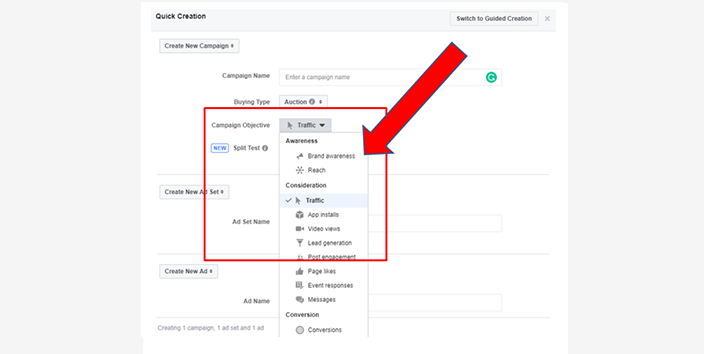
    Rather than spreading yourself thin and ineffective with multiple objectives in a single campaign, Facebook does it the better way. It asks you to set a singular objective per campaign.

    ‘Awareness’, ‘consideration’, ‘conversion’ – these are some of the broad categories you get to choose from when you create a new campaign on FB.

    With proper selection, you inform the machine learning algorithm which set of audience should it present the ads to.  For example, it will place ads in front of those who are more likely to complete viewing a video, in case your campaign objective is set to ‘video views’

    2. Get the placement right

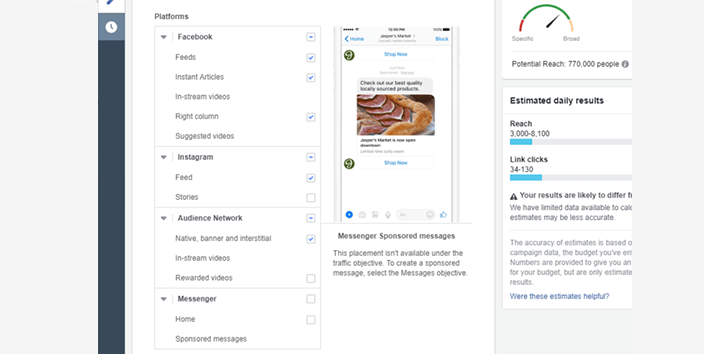
    You can optimise placements by looking to target multiple channels. In addition to the hugely popular Facebook platform, you can also pick Instagram and Messenger to expand your ads outreach (and thus improve its likelihood to perform better).

    You can explore these channels as additional inventory to use along with Facebook and Audience Network. The algorithm computes the cost per thousand impressions (CPM) and serves the ad to that channel where the CPM is the lowest, thereby improving ROI substantially.

    However make sure to utilise it judiciously, though. When you create a new campaign, you can select all placements for the ads. Later on, depending on the success rates, you can add or drop individual placements as per its performance.

    3. Optimise ad delivery

    You can also select various options from the ‘Optimisation and delivery’ menu. Be it website conversions or placing ads to those people who are most likely to load the landing page by clicking on the ad link,  there are quite a few optimisation choices presented to you in this menu. Keep testing with different selections and see which option gives you the maximum bang for your advertising dollars.

    Facebook machine learning power has proven its mettle with many successful ad campaigns. With these factors, you manage to improve the success rate of your FB ad campaign with a smart utilisation of machine learning.