LS Staging

Tag: Google

  • Weekend Digital Media Round-up: Google’s enhancements for ads, Facebook’s new in-app 360 photos, LinkedIn’s native videos for all users and more..

    Weekend Digital Media Round-up: Google’s enhancements for ads, Facebook’s new in-app 360 photos, LinkedIn’s native videos for all users and more..

    1. Google announces AMP speed and viewability enhancements for ads

    Google’s AMP (Accelerated Mobile Pages) group announced enhancements to ads served in AMP. Specifically, the project has entered phase two of its three-phase plan for supporting comprehensive advertising functionality in AMP. [Source: Search Engine Land]

    1. Facebook’s Adding Publisher Logos to News Links to Reduce the Reach of Misleading Content

    As part of their ongoing efforts to combat fake and misleading content on their platform, Facebook has announced the latest option to better inform users – the addition of publisher logos next to links in Trending and Search. [Source: Social Media Today]

    1. IAB releases its first ‘Podcast Playbook’ guide for marketers

    The podcast has taken another step toward becoming just another marketing channel, with the release today of the Interactive Advertising Bureau (IAB)’s first buyer’s guide for podcast advertising. [Source: MARTECH TODAY]

    1. LinkedIn’s Rolling Out Native Video to All Users

    LinkedIn has now announced that all users will soon be able to post video to the platform, moving in-line with the broader video content shift. [Source: Social Media Today]

    1. Facebook now lets you take 360 photos in-app, use them as Cover Photos

    Facebook has been a big supporter of 360-degree photos and video, adding support for the immersive media formats early on Facebook itself. Now, the social tech company is adding support for capturing 360-degree photos right within the Facebook app itself. [Source: TechCrunch]

    1. Walmart offering voice shopping via Google Assistant and Home

    Google and Walmart have announced a partnership to bring Walmart voice shopping to the Google Assistant and Google Home. Free delivery will also be available through Google Express, which is changing its pricing structure. [Source: Search Engine Land]

    1. Google making renewed effort to help news publishers drive more subscriptions

    Google has always been treated by the news industry as a kind of frenemy. Many news organizations have a tortured history with Google, including some who’ve successfully lobbied against Google in Europe. Yet for roughly a decade Google has been trying to help publishers make more money while continuing to try and serve users and its own commercial interests. [Source: Search Engine Land]

    1. WhatsApp adds new coloured text-based Status, brings it to desktop as well

    WhatsApp has announced the coloured text-based Status updates for its users. The feature is similar to how it works on Facebook, where users can add a coloured background when uploading a text based status update. [Source: Indian Express]

    1. Google auto-playing video previews in search results carousel on Android

    Google announced they have added video previews to the video carousel that shows up in the search results. Currently, this only occurs when you are using the Google app for Android or using Chrome on Android. [Source: Search Engine Land]

    1. Google May Lose Trademark Rights to Its Own Name, Here’s Why

    A trademark lawsuit before the Supreme Court alleges the word “Google” has become too generic, and is therefore no longer eligible for trademark protection. [Source: Search Engine Journal]

    Expert Opinion:

    1. Data driven Personalization is the key to effective digital marketing campaigns

    Personalization in marketing has been the most talked about topic recently and is quickly gaining popularity as an effective marketing tool for brands. Technology has enabled consumption of content at a personal level. The consumer preference is often revealed voluntarily and sometime with incentives. And the same technology has enabled recording & analyzing those preferences, quirks, behaviours, moods, mood swings, for most touch points. With new technologies and advances in the digital marketing field, the possibilities of personalizing marketing communication and campaigns are also expanding. According to a recent study conducted by PWC’s Digital Services group, 94% of senior-level executives believe delivering personalization is critical or important to reaching customers.

    Amongst the clutter of each touch point, if we believe that personalized communication is the only way to gain that fleeting moment of attention, then data driven personalization is the only medium which can help achieve that objective and thereby make Marketing dollar more effective.

    Personalization helps you understand your consumers well which enables you to assist them in providing a seamless customer journey, and helps you differentiate yourself from your competitors. Having said that Every data point recorded doesn’t and will never create a ‘conversion’ or a result that has a monetary value attached to it. But every data point is a building block in the path to the holy grail of personalization where we have true one to one communication and continuous optimization basis behaviour or preferences that are revealed

    Some of the benefits you can reap from data driven personalized digital marketing campaigns are:

    – Drive conversions and increase sales

    – Build long-term and stronger relationships with customers

    – Significant boost in customer engagement

    – Improved customer experience

    – Better customer retention

    – Increased customer loyalty

    Brands need to cautiously use customer data and understand their preferences. This will assist the brand in designing effective marketing strategies that can promote positive communication with their consumers. This, in turn, can help them with improved conversions.

    In a landscape where customer touch points are competing with each other to get customer attention, it is imperative for a marketer to measure the success of each such points of contact Quantifying results of a marketing intervention & then connecting it to business levers is hence a necessity for the marketer to function effectively

    With the rising popularity of digital media and the customers’ inclination towards using multiple devices, the scope of data driven personalization is not limited to selection of the Target Audience or the point of contact or the relevance of the communication – it has to cover the entire life-cycle of a marketing intervention to provide a flawless experience across multiple devices/ touch points.

    Econsultancy’s Internet Statistics Compendium suggests that programmatic and personalization experiences which emphasize on customers could provide anywhere from 2x to 14x more incremental revenue per visitor (RPV) compared to traditional optimization efforts that focus mainly on cosmetic changes.

    In the rapidly growing digital age, brands who thrive on user insights and data to drive customer engagement and sales for the businesses are sure to stand out in the future.

    Manish Dureja, Managing Director, JetPrivilege

  • Weekend Digital Media Round-up: Google’s native ad blocker for Chrome, Facebook’s updated NewsFeed Algorithm, Snapchat’s new feature allowing brands to track the impact of their ads and more…

    Weekend Digital Media Round-up: Google’s native ad blocker for Chrome, Facebook’s updated NewsFeed Algorithm, Snapchat’s new feature allowing brands to track the impact of their ads and more…

    1. Google updates quality raters guidelines with details around non-English language web pages

    Google updated their search quality raters guidelines PDF document a few days ago. The core change is the new guidelines around non-English language pages. [Source: Search Engine Land]

    1. The IAB releases its new standard ads portfolio with multi-screen sizing

    The Interactive Advertising Bureau has released the final version of new standard ad units that incorporate the industry group’s LEAN guidelines for lightweight ads as well as the Coalition for Better Ads’ set of ad guidelines developed in response to the use of ad blockers. [Source: MARTECH TODAY]

    1. Facebook Updates News Feed to Penalize Non-Mobile Optimized Websites

    Facebook has announced another News Feed algorithm update, this time focused on reducing the reach of websites which are not optimized for mobile devices. [Source: Social Media Today]

    1. Facebook will let brands target ads to people who RSVPed to their Pages’ events

    Facebook plans to let brands target ads to people who RSVPed to events posted by a brand’s Page. The event-based targeting will be a new option within Facebook’s Custom Audiences ad-targeting product, which originated as a way for brands to convert their existing customer bases into an audience to target on Facebook and has expanded to doing the same for brands’ followings on Facebook and Instagram. [Source: Marketing Land]

    1. Google’s native ad blocker for Chrome shows up in Android developer build

    Google will reportedly debut a built-in ad blocking feature for its Chrome browser next year, and now we have the first concrete look at this addition to the web navigation software in action. [Source: TechCrunch]

    1. Snapchat will let brands measure its ads’ impact on sales, results against rivals

    Snapchat rolled out a program to allow third-party measurement firms to track its ads’ impact on a brand’s sales and to include that data in the dashboards that marketers use to evaluate where they’re spending their money and, of those places, where they’re getting the best bang for their bucks. [Source: Marketing Land]

    1. This script creates Google Slides with AdWords data to automate your presentation-making

    Google just introduced its latest advanced API integration for AdWords Scripts: Google Slides. That means you can now programmatically connect AdWords with Google Slides. [Source: Search Engine Land]

    1. Instagram Releases New Stats on Stories Use to Celebrate Stories’ First Anniversary

    It took a little more than a week, but effectively, this is what Instagram has done. They did release a tool called ‘Eraser Brush’ a few days later (though not the same functionality as Snapchat’s tool), and now, on the one year anniversary of the release of Instagram Stories, they’ve reported that users under the age of 25 are spending 32 minutes per day in the app, up from 21 minutes per day at last official report. [Source: Social Media Today]

    1. Report: Facebook working on video-chat device and smart speaker

    Facebook is working on an Echo Show competitor and possibly on a second device, a smart speaker to compete with similar units from Amazon, Google and Apple. [Source: MARTECH TODAY]

    1. Not ad creep: Images labeled ‘Product’ in Google Images part of new badges markup

    Users searching for products on Google Image search will now notice that sometimes images appearing at the top of the results are labeled with a “Product”. This is part of the new badge markup Google introduced earlier this week. [Source: Search Engine Land]

    Expert Opinion:

    1. Why brands should focus on improving mobile consumer experience?


    Off late, digital user experience has become the need of the hour for brands. Consumers want everything quick and instant. Thus, providing the best digital experience becomes a key differentiator for brands to maintain brand loyalty and improve the overall brand image.

    With newer technologies and increased penetration of mobile devices across markets, marketers need to be on their toes by coming up with innovative ways to provide a delightful experience to their customers every time they interact with a brand. The latest report by Google suggests that 89% of users are likely to recommend a brand after a positive experience on mobile. Customers are highly demanding on mobile, and organisations need to invest a lot to match up with the service and experience demands. Companies need to provide highly customizable mobile experiences based on individual likes and dislikes.

    Also, with the increase in the usage of smartphones and the decreasing cost of data, mobile has become the preferred medium for users to connect with brands for their needs.

    Some simple and efficient ways to provide a seamless experience to the customers on mobile are:

    –  To prioritize customer relationship and integrate their insights into all the processes followed by a brand

    – To understand your customers well by analyzing the data available and the logic behind why a particular customer prefers a particular route and continuously improving on the problem areas

    – To adopt a customer-centric approach across all the departments in the organisation so that all the functions work towards providing the best of the best experience to the end users

    As per the latest mobility report published by Ericsson, there will be 6.1 billion smartphone users globally by 2020. Also, nowadays customers have more choices than ever. It is vital for brands to be at the top of their game and provide a superior experience to the mobile users.

    Aniruddha Dange, President – Chief Strategy Officer, IIFL (India Infoline Group)

  • Did You Know? Google Ranks the Videos Differently than YouTube.

    Did You Know? Google Ranks the Videos Differently than YouTube.

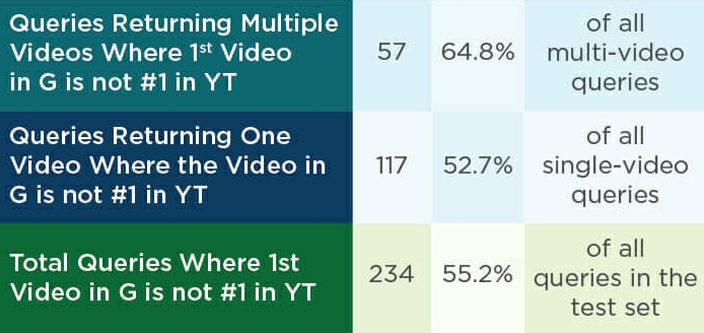
    Have you ever noticed that while searching something online, Google shows a certain kind of YouTube videos in its search results, however, if you use the search term on YouTube, you would get different search results. This happens because according to a report from the Stone Temple Consulting, Google and YouTube rank the videos differently. As a matter of fact, the videos that you would yield on Google and YouTube search results for any given keyword would be different 56.8%.

    Eric Enge from Stone Temple Consulting conducted a thorough research on the subject and some of the findings that he has pointed out has been outright startling. For a few the study may be a revelation in knowing how the two biggest companies function differently. Some of the key findings by Eric Enge is explained the image below:

    Apart from discovering that nearly more than 50% of the time the Google search results show different YouTube videos that has different ranking on YouTube, Enge also figured out that even when Google showed up only one video, more than 55% of the time, the same video would not show up first on YouTube for the same search query. In his hypothesis, Enge suggested that the ranking of the videos is different because the different websites have different goals that they have their own KPIs.

    Whilst the search engine giant, Google tires to provide the users the most relevant content for their search queries, YouTube has a different job to do, it is more focused on providing the best entertainment. The study conducted by Enge points out the approach of YouTube and Google in analyzing the videos as well as the differences in their ranking systems.

    If you are a business owner and are looking for tips to get higher rankings for your videos on both Youtube and Google, the following optimization tips will greatly help you.

    Optimization checklist for YouTube:

    The most fundamental thing to do for optimizing your video on YouTube is to do a little bit of research on the keyword; you would need to determine the keyword that is related to your video and yet the ones that are used the most by the users. Make sure that the keywords you choose are relevant to your business. You can use the various keyword research tools to identify the most popularly used keywords and at the time, it would be make sense to type a few keywords on the YouTube search bar and see the autocomplete suggested terms.

    Another important thing to consider is to check the top videos that appear on the search result for the keywords that you want to target. If you are a small business owner and if the top ranked videos have a large number of views and also have many subscribers, then the keyword might be very competitive and it would be difficult to get high ranking for your video. Once you have created, the next step would be:

    • Provide a good descriptive file name for the video
    • Provide a simple yet compelling title
    • Choose a set of related keywords that have high rankings. It is best advised to use long tail keywords
    • Write good, descriptive description of what the video is about; the description should have minimum 200 words
    • Place the video in the appropriate category

    Optimization checklist for Google

    All the fundamental things that are used for optimizing videos for YouTube like providing a good description, having a good title and a description for the video are also applicable for optimization on Google. However, the keyword research process for Google is different. Since Google is a broad-based platform, its video usage is quite limited as compared to YouTube. Another important aspect optimizing videos on Google is choosing the right topic. Since Google is used to search a wide range of things, it would be best advised to do a bit of research to figure out the areas that have the most potential; there are certain areas where having one or more than one videos, the chances of getting your video ranked on the first page will be higher.

    Some of the most popular areas where your videos can get higher ranking are:

    • Informational videos
    • Reviews
    • Tutorials
    • How to do videos
    • Entertainment

    From the keyword research perspective, it is imperative that you target only the keywords that have a good search volume and also are relevant to your business. Another important thing to consider for getting high rankings for your videos is to create videos to suit your business goals. For instance, if you want to build a strong reputation about your business, then having some information and tutorial kind of videos would be the best approach. This would help you create an impression that you are an expert in the field and it would help you build trust among the targeted audience.

    To conclude, the ranking algorithm of Google and YouTube is different and the returns on your investment will greatly depend on the strategy you adopt for both the platform and how well you execute them.

  • Weekend Digital Media Round-up: Google’s new call bid adjustments in AdWords and changed Sitelinks design, Instagram’s new analytics for brands’ organic posts, LinkedIn’s Website Demographics and more…

    Weekend Digital Media Round-up: Google’s new call bid adjustments in AdWords and changed Sitelinks design, Instagram’s new analytics for brands’ organic posts, LinkedIn’s Website Demographics and more…

    1. Google has dropped Google Instant Search

    After launching Google Instant — Google’s method of showing search results as you type them — several years ago, Google has removed the feature from search. [Source: Search Engine Land]

    1. LinkedIn Provides Capacity to Add Multiple Images in a Single Post

    LinkedIn continues to add new tools and features, improving the user-experience in tiny increments, as opposed to adding in wide-scale changes. The latest addition comes in the form of multi-image posting. [Source: Social Media Today]

    1. Instagram starts sharing analytics for brands’ organic posts, Stories through API — but there’s a catch

    Instagram started sharing analytics for brands’ organic posts and Stories through the Instagram Platform API, so that brands can pull up these stats within the marketing dashboards they use to manage and monitor their various social accounts. [Source: MARTECH TODAY]

    1. Google officially changes Sitelinks design to carousel format

    Google has been testing a carousel format for these Sitelinks for over a year and today has confirmed they are now rolling out the new carousel-based design for mobile search results. [Source: Search Engine Land]

    1. Google testing list format for AdWords enhanced sitelinks

    Google is now testing a list format for enhanced sitelinks. The link font is smaller, but taken together, the list of four enhanced sitelinks takes up more real estate than the column format. [Source: Search Engine Land]

    1. YouTube Adds New Tools to Help Publishers Moderate Comments

    Over on the YouTube Help forum, the platform has announced that publishers will now be able to have comments with links or hashtags included within them to be held for review. [Source: Social Media Today]

    1. LinkedIn’s Website Demographics lets brands analyze site visitors using LinkedIn data

    LinkedIn is going to give businesses a better idea of who’s visiting their sites, such as those visitors’ job titles, company names and locations. [Source: MARTECH TODAY]

    1. Google intros new call bid adjustments in AdWords

    Google is adding a bid adjustment in AdWords specifically for calls. The bid adjustment for calls informs how often call information appears in mobile search ads. [Source: Search Engine Land]

    1. Linqia unveils ‘first’ platform for predicting influencer engagement

    Linqia is out this week with a new version of its platform that it says offers the first predictive analysis of influencers’ performance. [Source: Marketing Land]

    1. Google confirms testing auto-play videos in the search results

    Google has confirmed that they are running a small experiment where they auto-play videos in the search results page. When you do a search for some movies (and possibly television shows), Google will begin autoplaying a video in the right hand sidebar, appearing within the knowledge panel. [Source: Search Engine Land]

    Expert Opinion:

    1. Make the most out of your marketing budgets with cross-device marketing.

    Cross-device targeting is the practice to identify and deliver ads to a specific set of audience across various devices they use. Cross-device marketing is a very effective approach that marketers can use to reach the correct audience and achieve the desired results from their campaigns. Combined with device graphs, marketing professionals can correctly identify various consumer devices to connect with and measure every interaction. Combining the data from different customers across different devices, marketers can plan the campaigns efficiently and achieve positive returns on the ad spends.


    Cross-device marketing can help marketers to:

    – Deliver personalised content and provide delightful experience

    – Accurately target the audience and reduce wasted ad spends

    – Optimise business results with correct attribution

    Mastering cross-device data and managing campaigns using this data can be a game changer for making the most out of the marketing budgets. Also, with the understanding of cross-device identity, marketers can be future ready with the introduction of new devices which will open up more opportunities to target the customers in different ways.

    According to IHS, there were around 15.4 billion connected devices in 2015, and this number is projected to go up to 30.7 billion by 2020, ranging from watches to TVs to cars to home appliances. Each of these devices is an opportunity for the marketers to interact with the consumers digitally and gain possible conversions for their activities.

    Subhrangshu Neogi, Director, Head – Group Marketing & Brand, Religare

  • Will Google’s Natural Language and Machine Learning Democratize Analytics?

    Will Google’s Natural Language and Machine Learning Democratize Analytics?

    Last week, the world’s leading search engine, Google announced that it would integrate the voice-activated assistance feature in the Google Analytics in its mobile app. This comes as a great news for the users as they would now be able to ask queries in the tool using the natural language; this would make the previous structured query system outdated.

    The users can access the feature by clicking on the ‘ask a question’ section, which would soon be integrated into GA. However, Google announced that the ‘ask a question’ feature, for now, will only be available in English and it will be rolled out for all the users globally. While the feature is now going to be a reality, the concept was first announced by Google at its advertising and analytics events in San Francisco in 2016. The feature is built on the Analytics Intelligence, which was rolled out in September 2016.

    Babak Pahlavan, the head of Measurement and Analytics at Google, said that the company was highly motivated to the Analytics more user-friendly and increase its accessibility through machine learning. He further said, the machine learning capabilities of Google has significantly accelerated the development and the launch of the natural language feature.

    Several surveys have corroborated that nearly 70% of the small and medium sized (SMEs) business from around the world do not use the analytics. It is thus apparent that there is a lot of room to simplify the tool to make it more accessible for the SMEs and help the take advantage of the analytics to improve their business prospects. Pahlavan, said that with regards to the survey results, the voice-activated assistance feature would be a great boon for business owners as it would help them get answers to many of the usual business related questions.  However, you need to know that the GA voice system will not be able to answer all the questions as yet.

    For the time being, the GA voice assistance system is equipped to answer only the ‘what’ question, however, soon, Google will improve the feature to answer the ‘why’ questions, said Pahlavan. The measurement and analytics head stated that Google sees the voice assistance and machine learning as a way to simplify the GA usage and to make it more democratic in the near future. It is estimated that nearly 700,000 people from around the world use GA on their mobile devices every month, with a vast majority of the users using it every day. With the new ‘ask a question’ feature integrated on the GA app, it is sure to increase the engagement and the usage over the mobile.

  • Google Can See the JavaScript Links that No One Can See

    Google Can See the JavaScript Links that No One Can See

    In what may come as a revelation for many small and medium sized organisations, Google is now parsing Javascript and processing content within the DOM. Google has tested and confirmed that many tools available that provide data backlinks and can only see the HTML elements that are classically formatted within the source code of a particular page. These tools do not capture the link referrals from JavaScript redirects that are dynamically inserted <a> tag link or the URLs that are associated with JavaScript onclick events.

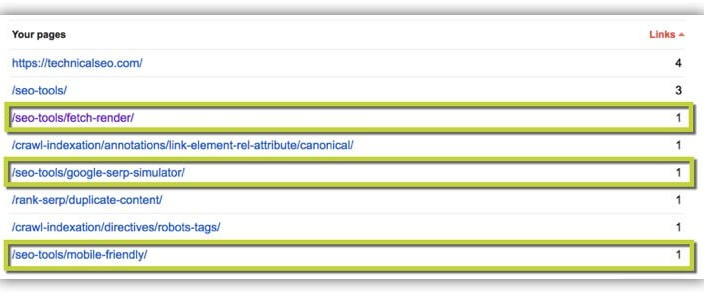
    Apart from the GSC or the Google Search Console that has limited backlink data, the top players in backlink data providers like Ahrefs, Majestic SEO and Moz Open Site Explorer are not reporting on the JavaScript-based link referrals currently. In a test setup to point the JavaScript-based links at TechnicalSEO.com, the links to the targeted pages were not present on the referring site previously.

    While the URL ‘strings’ are found in the page’s source code, they are linked to the onclick events and not within the href attribute of the <a> element. The links in the above imaged are picked up and are reported within the GSC. It is thus quite clear that Google has much understanding of the things that can be classified as ‘link referral’ in today’s digital ecosystem. However, it is quite unfortunate that the same links are not reported by the top data providers that are mentioned earlier.

    Some of the most common concerns that SMEs may have are addressed below:

    Is it really something to worry about?

    The lack of visibility for JavaScript-based link referrals could be an area of concern for webmasters. Since Google can parse the JavaScript, the JavaScript based link referrals are able to be considered while analysing the profiles for webspam. It is highly likely that Google is considering the JavaScript-based links within the link penalties, its inability to view the data within the backlink data tools can hinder the webmasters’ ability to make sure that the profiles are as per the rules.

    Since the Google is providing the links, GSC data should be enough to work from because it is the data owned by Google. Isn’t it?

    It is quite unfortunate that the ‘links to your site’ data will not show you everything that you would need to see to be able to conduct a thorough review of the backlink profile. The data is quite limited; it provides only about 1,000 rows per example and the sample report. As the best measure, people who are trying to review and monitor the backlink profiles, they are encouraged to use the multiple data providers and not just GSC. There have been many instances where the example links that is provided by the Google Webspam Team in a Manual Action message which was not found by any backlink tools including the GSC.

    Do the JavaScript-based link referrals have the same weightage as the conventional redirects?

    Yes. Google not only looks at the JavaScript redirects but Mariya Moeva, a team member at Google, looks at the DOM rather than the source code of a page. This was confirmed by the Mariya Moeva, a Search Quality Team member at Google. It is therefore clear that the elements that the dynamically inserted <a> would have the same weightage as they would be located within the source code.

    What would be the number of backlinks affected by this?

    It would be hard to provide the exact number, but in a survey conducted by OverStack it was noted that in 2016 more than 56,000 developers from around the world Javascript was the most popular technology; it was used by 90.5% of the front-end developers and 54.4% back-end developers.

    What do I do with this knowledge?

    For now, the SMEs owners can wait for the backlink data providers to catch up the JavaScript-based link referral reporting. Today, there are many tools that are going against the wide web and are appreciating the JavaScript for each page in their indices.

  • Weekend Digital Media Round-up: Google’s New Messaging Feature within Google My Business, Facebook Messenger Ads, CommuteStream’s native ads offer and more…

    Weekend Digital Media Round-up: Google’s New Messaging Feature within Google My Business, Facebook Messenger Ads, CommuteStream’s native ads offer and more…

    1. Google bars AdSense publishers from using pop-under ads

    Google is shoring up its AdSense policies regarding pop-under and pop-up ads. [Source: Marketing Land]

    1. CommuteStream now offers native ads for dozens of transit apps around the US

    For a marketer, the daily commute of a passenger on public transportation is an ideal targeting time. The passenger travels the same route, at the same times, and might regularly check a phone app for schedule updates. [Source: MARTECH TODAY]

    1. Facebook Makes Messenger Ads Available Globally

    Facebook just added a new advertising feature into the mix. After finalizing testing in Australia and Thailand, Messenger ads are now available to all advertisers worldwide. [Source: Social Media Today]

    1. Facebook’s Latest News Feed Tweak Curbs The Activities Of Individual Spammers

    In the purview of the Facebook’s battle against spam links invading the newsfeed of the users worldwide, the social networking giant is being proactive to curb the issue and is now targeting the individual users to post the maximum number of spam links. [Source: Logicserve Digital]

    1. Google begins rolling out messaging feature within Google My Business

    When you go to the Google My Business home page, you will see this new section for “Messaging” on the left and an option in the middle promoting it saying, “Message with customers.” [Source: Search Engine Land]

    1. Instagram is turning the screws on Snapchat by handing advertisers free trials and credits

    Instagram appears to be turning the screws on Snapchat, baiting marketers and advertisers by offering them a chance to test brand new ad products free of charge. [Source: Business Insider]

    1. WhatsApp now allows for sharing all file types on the app

    WhatsApp has rolled out an update that allows users to share any type of files, documents on its platforms. Just open the chat window and click on attach to send the file. [Source: Indian Express]

    1. Google enables YouTube remarketing audiences for RLSA to retarget video viewers in search

    Advertisers have been able to retarget people who engage with their YouTube channels when they watch other videos on the site with YouTube retargeting lists. Advertisers have also been able to use Search retargeting lists to reach people on YouTube. Now, YouTube retargeting lists can be carried over to target video viewers when they search on Google.com. [Source: Marketing Land]

    1. War Of The Stories – Snapchat Vs Instagram Vs Facebook

    The two of the biggest social networking companies in the world, Facebook and Snap Inc. are currently involved in a Silicon Valley tech battle, which is referred as ‘The Battle of the Stories.’ [Source: Logicserve Digital]

    1. Google My Business updates insights email sent to businesses

    Google My Business has updated its monthly insights email, the email they send business owners summarizing the statistics and analytics around how well their Google local listing is performing. [Source: Search Engine Land]

    Expert Opinion

    1. How will Machine Learning help brands with better customer engagement?

    A lot of marketers are using machine learning these days to derive helpful insights from the data available with them for enhanced marketing strategies.

    Organizations and brands are using machine learning in various ways to minimize guesswork and boost the marketing actions. As per EMC, it is predicted that the digital universe is predicted to grow from 130exabytes to 40,000exabytes, or 40tn gigabytes by 2020. This vast data, if analyzed and used in correct ways, can help brands garner huge gains from their marketing campaigns. This is exactly where machine learning can play a key role in assisting marketers with their activities and help them make the right choices for their campaigns and strategies.

    Machine learning can help marketers in:

    –          Detailed segmentation for personalization of marketing strategies

    –          Providing apt recommendations for enhanced customer experience

    –          Detecting and utilizing changes in customer behavior which will eventually maximize the revenue

    –          Checking the effectivity of marketing campaigns and predicting the customer life cycle using data insights to improve ROI, campaign management, resource allocation

    The ability of a good marketer is the ability to interpret learnings from data and customize ROI driven communication. Marketers believe that Machine Learning will transform the way they put across their campaigns in a more personalized and appealing format. With Machine Learning expected to generate revenue of 13.7% billion by 2020, it is surely a profitable option that will change the way marketers design their activities to get optimal results.

    Peshwa Acharya, Chief Marketing Officer, Sterling Holidays, A Fairfax company.

  • Weekend Digital Media Round-up: Twitter Adds Privacy Controls, 7 Unannounced Updates To Google My Business, Visible History of Quality Score & more…

    Weekend Digital Media Round-up: Twitter Adds Privacy Controls, 7 Unannounced Updates To Google My Business, Visible History of Quality Score & more…

    1. Distil Buys Are You A Human, Launches Free Bot Detection Plug-In For Google Analytics

    The San Francisco-based Distil is now launching a free bot detection plug-in for Google Analytics, called Distil Bot Discovery, based in part on Human’s acquired tech. Deal terms were not made public. The companies said that the new plug-in is the first of its kind for Google Analytics (Source:  MARTECH TODAY)

    1. 7 Unannounced Updates To Google My Business We’ve Seen In 2017

    We all know that Google is constantly launching updates to their products (over 1,600 last year), and some of these changes are well covered and some slip by unnoticed. Google has been quietly rolling out new features and updates to Google My Business over the last several months, and columnist Joy Hawkins has compiled these underreported changes.  (Source: Search Engine Land)

    1. Google Analytics Is Making It Easier To See Users Across AMP And Non-AMP Pages

    Currently, the way Google Analytics separates users on AMP and non-AMP pages can make it difficult to get a full picture of user behavior across the two page formats. Now, Google is updating the way it counts and reports site visitors to AMP and non-AMP pages in Google Analytics by unifying user IDs. (Source: Marketing Land)

    1. In AdWords, Google Advertisers can now see the history of quality score data

    By bifurcating the data on the day by day basis, the advertisers can see how end-of-day Quality Scores have change over a period of time. However, take note that ‘Qual. Score’ column will provide you the details of the current quality score even as you are looking at the score in a different date range. (Source: Logicserve Digital)

    1. Facebook Updates News Feed Algorithm to Further Limit the Reach of Clickbait

    Facebook’s rolling out a new News Feed algorithm update which focuses on reducing the reach of clickbait, which is still one of the most complained about elements of The Social Network.  Facebook’s been working to eliminate clickbait for years – in fact, ever since its inception back in 2013. (Source: Social Media Today)

    1. Four Valuable Tips to Turn Curious Shoppers into Customers

    With such huge growth expectation, it has become more than important than ever before for the retailers to keep the customers engaged throughout their entire shopping experience. For all the retailers out there, the following four tips will greatly help you in accomplishing this. (Source : Logicserve Digital)

    1. Google Adds More Ads To Play Store, And Other App Ads News From I/O

    Google will now show app ads on the Google Play Store home page and app listings pages. The company made several app ad announcements at the I/O developer conference Wednesday, including bidding options and a redesigned AdMob. (Source: Marketing Land)

    1. Google Confirms Jobs For Search Is Rolling Out

    A couple of weeks ago we reported Google was testing a jobs search feature directly in the search results. This would allow you to search Google for [jobs] or specific types of jobs or location of jobs and get job listings directly in the search results. (Source: SEO Round Table)

    1. Adroll Launches ABM Capabilities For Personalized Programmatic Ad Campaigns

    AdRoll has launched a set of account-based marketing capabilities. AdRoll ABM is designed to enable B2B marketers to target accounts with personalized programmatic advertising. Targeting is powered by advertisers’ own CRM data, as well as AdRoll IntentMap data for lookalike targeting. (Source: MARTECH TODAY)

    1. Twitter Adds Advanced Privacy Controls, New Data Collection Methods

    Twitter has announced a new set of advanced privacy options which provide more insight into how your data is being used by the platform, and more control over such information, while they’re also boosting their capacity to collect similar insights, based on your web usage. (Source : Social Media Today)

    EXPERT OPINION
    1. Funnel wise strategy for digital marketing – what should marketers know?

    Just because you are on digital, doesn’t mean that time worn marketing principals are irrelevant. They are more so relevant now than ever. Digital allows us to collect, track, monitor and analyse data to make better-informed marketing decisions.

    Digital mediums are only one facet of this transformation. The challenge before the marketer is to use this data, as it matures, for facilitating an omni-channel consumer journey.

    –    Mr Jaimit Doshi, CMO, Coverfox Insurance

  • Weekend Digital Media News Roundup: Is Google Testing New Mobile Search Interface, Amazon’s Digital Day, Can Tweets Be Edited, 2017 Trends & More…

    Weekend Digital Media News Roundup: Is Google Testing New Mobile Search Interface, Amazon’s Digital Day, Can Tweets Be Edited, 2017 Trends & More…

    Logicserve Digital brings to you a curated round-up of important digital marketing updates this week. For further queries, you can write to us at: newsbulletin@logicserve.com

    1. Google Tests New Mobile Search Results Interface?

    Looks like Google is testing yet another Google user interface for the mobile search results. Tejas Thakkar posted a screen shot of the test on Twitter showing search snippets showing the URL (or breadcrumb) at the top, then the title/headline, followed by the snippet/description. (Source: Search Engine Roundtable)

    1. Amazon Launches Digital Day, A New Sales Holiday For Digital Products

    Over the past two years we’ve seen Amazon excel at creating demand for Prime Day, a Amazon-generated sales holiday. This week Amazon is launching a new sales day on digital media dubbed “Digital Day.” (Source: Marketing Land)

    1. Four Essential Content Marketing Tips To Help You Thrive In 2017

    Content marketing tactics are constantly evolving. Moreover, every brand is different and calls for different content marketing strategy; thus, it is imperative for digital marketers to determine what works well for their brand and what does not, so as to evolve their own digital marketing strategy. (Source: Logicserve Digital)

    1. Google Launches A New Look For Recipes In The Mobile Search Results

    Google has launched a new look and feel for the recipe search results done over a smartphone device. Alex Chitu first noticed the change that shows richer images and content for recipe-related queries. (Source: Search Engine Land)

    1. 2017 Global Consumer Trends Marketers Need to Know

    While the U.S. election brought some new attention to the power of rural residents, there is no denying the fact that the globe continues to urbanize. A projected 55% of the planet’s people are forecast to live in cities next year. (Source: Ad Age India)

    1. How To Improve Website Conversion Rates?

    The term ‘conversion’ not only implies ‘sales’ but also refers to the specific actions of online visitors on your site such as— purchasing a product, subscribing to your emails, downloading a whitepaper, or filling out a contact form. (Source: Logicserve Digital)

    1. Twitter Introduces Live 360 Video On Twitter And Periscope

    At Twitter’s recent #WhatsNext event – in which they outlined the future developments coming for the platform – the company’s VP of Ad Development John McFarland noted that they were working on 360 video. (Source: Social Media Today)

    1. Amazon Begins Testing Product Listing Ads On Adwords

    In 2012, Google’s Product Search was transformed from an organic product search tool into a pay-to-play shopping destination. Since the removal of Product Search, Amazon has not participated with Google’s Product Listing Ads. (Source: Search Engine Land)

    1. Could Editing Be Coming To Tweets?

    You think you’ve crafted the perfect Tweet. You hit the big blue button to set it live — only to realise you’ve made an “unpresidented” typo. Editing is something many of us would like to see on microblogging social network Twitter. (Source: CNET)

    1. Duolingo Goes Social With Language Clubs For Mobile App

    Duolingo is getting social. Yes — the language learning app just debuted Language Clubs, which encourage users to share their learning achievements with friends. Adding a bit of competition to the mix, users can also check out weekly leaderboards. (Source: Media Post)

  • How to Put Your Data into Action?

    How to Put Your Data into Action?

    In a data-driven society, data plays a crucial role in digital transformation. We dwell in a multi-device world where data acts as the most important asset for countless marketers. It goes without saying that organizations that count on data to stimulate decision-making, drive superior growth compared to those that do not. In this post, we will discuss how you can make your brand more data-driven for enhancing customer experience and driving competitive advantage.

    1. Build up Data and Integrate:

    With countless pieces of data hovering around us, it becomes a challenging task for companies to swim in the oceans of data. A lot of data is generated on a daily basis from countless sources such as— screens, channels, mobiles, touchpoints, etc., and the accumulated data is stored in different formats in different places. Thus, the biggest challenge faced by even the high performing organizations is the challenge of integrating the accumulated data.

    However, data-driven organizations have been successfully dealing with this difficult situation by streamlining the procedure of data collection and integration. By exploring advanced technologies that support your current platform, you too can systematise relevant data, thus transforming information into insights.

    1. Discover Important Insights By Using Analytics Solutions and Machine Learning Technology:

     The method of processing a humongous amount of data makes the procedure of extracting insights quite intimidating for analysts. Despite this, brands leave no stone unturned to discover those virtual bits and bytes of wisdom as it goes a long way in empowering their future business decisions. By leveraging machine learning and other sophisticated tools such as Google Analytics 360 Suite, you can easily discover useful insights for improving the impact of your marketing so as to drive business growth.

    Analytics solutions can help businesses combine data sources and machine leaning for analysing the digital footprints or data traces created by their customers constantly. Moreover, analytics solutions help accumulate more valuable insights to enhance customer experience, and that too without any human interference. For example, Progressive, one of the oldest insurance players had initially unveiled its mobile app to help users only to obtain a quote. However, data generated by Google Analytics revealed that people were keener on purchasing insurance directly from the mobile app; thus, Progressive added in-app purchase option to its app to cater to the needs of its customers.

    Machine learning technology can help organizations attain a higher level of efficiency by helping them concentrate on things that truly matter. Machine learning technology is a great way to keep your customers engaged and that is why more and more organizations are counting on this technology at present. Machine learning makes predictions based on the available data to understand customer behaviour so that you can take appropriate measures to satisfy your customers. Moreover, it also helps identify and prioritize issues so as to solve the issues automatically as fast as possible.

    1. Turning Data Into Action For Better Customer Experience:

     Data is insignificant unless it improves your business performance. By transforming data into insights, organizations can drive marketing performance besides differentiating themselves from their competitors. Thus, top practitioners emphasize on arranging, sharing, and gleaning key insights to derive real value from data.

     You too can generate value from data by transforming data into action in a prompt and repeatable way.  In order to generate outstanding results, businesses need to speak the language of ‘big data’ throughout the entire organization. Data specialists or analytics officers of an organization should collaborate with workers at every level to motivate them to connect with the required data. By identifying goals and setting Key Performance Indicators that helps drive growth, analytics officers can find out how data analysis can help them accomplish their goals. The data can then be used for determining how to touch base with the target audience at the right time with the right creative.

    At the present time, the power of data is intensely transforming the business landscape worldwide. Thus, executives of every big and small company should emphasize on targeted efforts to creatively source data that addresses specific business problems. At the same time, it should be kept in mind that involvement of senior management is equally important as it is the key factor that assists in selling the value of analytics throughout an organization.