LS Staging

Tag: google update

  • Google Analytics Updated with 4 New Powerful Features for Marketers

    Google Analytics Updated with 4 New Powerful Features for Marketers

    Google introduced the App + Web property for its analytics platform in 2019. This property combined the app and web data to provide unified reporting and analysis. The reports generated by this property uses a common set of metrics and dimensions for seamless integration of app and web data.

    While the App + Web property made it easier for the marketers to track their app and web data from a single dashboard, accessing detailed customer information and insights continued to be a hassle. The recent October 2020 Google Analytics update has introduced four new features to help marketers get detailed insights for making smarter decisions.

    Take a look at what these four new features are-

    1. Smarter Insights Using ML

    The machine learning models of Google can now alert marketers about the changing data trends. In other words, Google Analytics can now make use of the website data for identifying products that are in high demand as per the customer needs. With this feature, it will be easier for marketers to take measures and predict future actions of the consumers proactively.

    For instance, the new feature can calculate Churn Probability. This can help marketers by enabling them to focus on customers with a higher purchase probability. In the current scenario where businesses are cutting their marketing budgets, investing in customers who are more likely to make a purchase can help generate more sales even with a limited budget.

    2. Deep Google Ads Integration

    Google Analytics now has improved integration with Google Ads for more efficient cross-platform decision-making. For instance, marketers can now create custom audiences and deliver more helpful and relevant experiences to them every time they engage with their business.

    The improved integration provides marketers a better overall view of their marketing efforts, including Google Search, YouTube video views, email, social media, and other paid Google and non-Google channels.

    3. Customer-Centric Data Measurement

    The majority of the data measurements done by Google Analytics are based on the devices and platforms used by the customers. The recent update has a more customer-centric data measurement approach. It uses unique Google signals and multiple identity spaces for improved ad personalization.

    With this update, it is now possible for the marketers to know if a particular customer discovered their business through a web ad and then completed the purchase through their mobile app. In the longer run, this will provide marketers a holistic view of the entire customer journey and how the customers interact with their business.

    4. Improved Data Controls

    Even the data controls have been considerably changed to make them more granular. This is done to enable marketers to have improved control over how they want to manage and retain the collected customer data. This flexibility can be valuable for advertising as marketers can now decide whether or not they want to use customer data for optimizing ads.

    The current internet trend suggests that cookies or identifiers might get severely limited in the future. With improved data controls, it will be easier for the marketer to adapt to such changes in the future.

    Using the New Google Analytics Features

    The App + Web property, which is now known as Google Analytics 4 property, is already updated with these new features by default.

    Along with the existing properties, marketers can create a Google Analytics 4 property to access these four new features and future updates.

  • Google Now Supports Regional Video Structured Data: 4 Things You Should Know

    Google Now Supports Regional Video Structured Data: 4 Things You Should Know

    Adding structured data is one of the most effective ways to improve the readability of your web page for search engines like Google, ultimately leading to improved SERP rankings. The structured data is a type of standardized information markup format that works as clues for search engine bots to better understand what a web page is about.

    Google has recently introduced ‘regionsAllowed,’ a new type of structured data that can be used by websites for specifying the region where they want the search results of their website video to be available. Take a look at four of the most important things about this new data structure

    1. What is the New ‘regionsAllowed’ Data Structure?

    The VideoObject structured data format enables websites to let search engines know that a particular data script is about a video. Until now, there was no way to specify the regions where websites wanted the search results of their videos to be available. With the new ‘regionsAllowed’ structure, this is now possible.

    For instance, let us assume that you’ve used the new video data format to limit the availability of a website video to the USA. Based on this information, Google will restrict the display of rich results of that video to the USA. The rich results for the video will not be shown in other regions. If any video has no ‘regionsAllowed’ mentioned, its search result will be shown everywhere.

    2. What Types of Search Results Support the New Video Structure Data?

    As per the latest SEO updates, the ‘regionsAllowed’ data structure supports different types of search results, like-

    • Organic Search Results
    • Google Images
    • Video Search Results
    • Google Discover

    3. Is It Mandatory to Use ‘regionsAllowed’ Property?

    When it comes to structured data formats for search results, like featured snippets, there are two different categories- Required and Recommended. The Required properties are ones that are mandatory for featured snippets, like-

    • datePublished
    • bestRating
    • worstRating
    • name

    The recently introduced ‘regionsAllowed’ is not a Required but a Recommended data structure property for SERP results. In other words, you can use it only if required. Irrespective of whether or not you use the new video data structure, your VideoObject structure will still be validated.

    4. Who Should Use the ‘regionsAllowed’ Property?

    The ‘regionsAllowed’ property is ideal in cases of websites that have different versions of a video for different regions. In such cases, you can use this new data property for limiting the regions where you want to show rich result of a particular video.

    If the video is not targeted towards any particular region, you can avoid using ‘regionsAllowed’ property.

    Control How Google Uses Your Data with the New Regional Video Structured Data

    The recently introduced ‘regionsAllowed’ video structured data is an excellent way for websites to control how their website videos are displayed in search results, especially if they have video targeting specific regions. While it is not a recommended data structure property, it can help boost video SERP results if you are targeting a particular region.

    Consult a reputed digital marketing company to take advantage of all the latest SEO trends and improve your rankings in local and global search results.

  • Don’t be baffled by BERT: Here’s what Brands should know about this Latest Google Algorithm Update

    Don’t be baffled by BERT: Here’s what Brands should know about this Latest Google Algorithm Update

    In October 2019, Google announced a search algorithm update known as BERT that helps the search engine improve the contextual understanding of queries. While Google is known for making frequent updates to its search algorithm, BERT gained prominence as it was estimated that nearly 10% of all search queries would be impacted by it.

    What is BERT all about? 

    BERT is the acronym for Bidirectional Encoder Representations from Transformers. Let’s understand what BERT is with real-world examples. This update helps Google better understand the context of the search query, rather than just relying on keywords.

    Let’s say, a searcher uses the query “visa for travel to the USA from India.” Before BERT, the results could include visa instructions for travelers from the USA to India. It’s the opposite of what the searcher is looking for. It’s because Google used to focus only on the keywords: visa + travel + USA + India.

    With the BERT update, the results are more relevant as the search engine accounts for prepositions like “to” “from” “for” to better understand user intent.

    Google’s Pandu Nayak, the Vice President of search, explains the reason behind this update in a blog post. He states that though Google has improved understanding language complexities over the years, there were plenty of times when the search engine failed to get the context right, especially for conversational and complex queries. With the BERT update, the search engine is better able to decipher natural language questions that are becoming more relevant in this era of voice search.

    BERT Update: The Key Takeaways for Brands, Marketers and SEO Strategists 

    Traditionally search, and SEO strategies were based on keywords. While the relevancy of keywords hasn’t gone away entirely, there are a few tweaks to be done in light of this update.

    • The primary objective of this update is to provide users with relevant and high-quality search results. To meet this objective, brands must focus on developing excellent content that is authoritative, informational, and relevant to the end-user.
    • Long-tailed keywords that use connector terms and hierarchies gain more prominence. Additionally, long-tailed keywords make the content more relevant to natural queries used by voice searchers.
    • While keywords lose a bit of their relevancy, note that a large percentage of the search remains unaffected by this change. Marketers don’t have to do away with keyword-based strategies for now. Instead, marketers can monitor incoming search referral traffic and make changes based on search volume differences.
    • Developing localized content in native languages (instead of translating from English to another language or vice versa) has a better impact on SEO.

    Finally, marketers have to keep in mind; whether it’s BERT or any other algorithm updates from Google, the best SEO strategy is always the same – providing valuable and high-quality content that is relevant to what your audience is searching.

  • Google Launches ‘Allo’—A Messaging App with A Difference

    Google Launches ‘Allo’—A Messaging App with A Difference

    Tech giant Google, known for its sophisticated tech innovation, has added another feather in its cap by announcing the launch of its brand new smart messaging app— ‘Google Allo’ for iOS and Android smartphone users, worldwide.  The myriad exciting features of Allo, such as photo sharing and smart reply option with heaps of stickers and emojis make it stand out as the most brilliant messaging app in the market today.

    Google_Launches_Allo_Messaging_App

    Besides this, Allo also allows you to text your friends who are not yet using this app, via SMS. What’s more, Google Allo also features Google Assistant to assist users in making plans or finding relevant information or videos, as and when required.

    All You Need to Know about Google Allo’s Innovative Features—

    • An Extensive Assortment Of Emojis and Stylish Stickers:

    When it comes to emojis and stickers, Google Allo has the potential to outsmart all other existing messaging apps available on Play Store. To make chat sessions engaging and cheerful, Allo features a vast collection of emojis and over 25 downloadable sticker packs to suit your different moods. Allo also enables you to resize your text and the emojis you send as per your choice.

    • Share Your Photos With Friends And Family In Style:

    Google Allo not only allows you to share photos but you can also use its Doodle feature to scribble on your photos before sending them to your near and dear ones.

    Smart-reply feature: Allo’s smart-reply feature adds the ‘fun-factor’ to your chat sessions by suggesting emojis and words to include. Moreover, it also analyses photos received by you and suggests replies such as “You look beautiful”. This feature suggests texts and emojis based on your personality and the frequency of specific words used by you while chatting, such as ‘LOL’ instead of ‘Haha’, or ‘TTYL’ or ‘catch you soon’.

    • Sends Encrypted Texts To Secure Your Privacy:

    Google is concerned about your privacy. To keep your interactions safe and secure, Google Allo makes use of TLS (Transport Layer Security) technology which helps in encrypting your texts.

    • Incognito Mode to Enable You to Chat Anonymously:

    Google Allo also features an ‘Incognito’ mode to protect your privacy. By chatting in Incognito mode, you can enjoy privacy features such as—

    (i) Discreet notifications

    (ii) End-to-end encryption

    (iii)Message Expiration that automatically makes your texts disappear once the texts have expired. The expiry time ranges from five seconds to 1 week.

    • Get A Smart Personal Assistant Via Google Assistant:

    Chats generally entail making plans with friends, colleagues or clients. For example, if you are planning for a weekend luncheon with your friends or a movie date, Google Assistant will assist you by suggesting restaurants nearby, including movie times. At the same time, you can also have a one-on-one interaction with your Google Assistant in Allo.

    Though WhatsApp is already ruling the market today as the most-preferred messaging app, Google Allo’s new additional features may soon steal the limelight and take the lead globally. However, only time will tell if Allo will succeed in replacing WhatsApp or get lost in the muddle of bandwagon messaging apps.

  • 5 major announcements in today’s #GoogleForIndia 2016 event you should know

    5 major announcements in today’s #GoogleForIndia 2016 event you should know

    googleforindia @LogicserveDigi

    Today, at the first session of #Google for India, the growth and scope of using Google products was discussed. Here are five major news that you shouldn’t miss.

    1. Google India launches Google Station

    How popular is #Railwire?

    2. Improving chrome services in India

    Also, while searching if you lose connectivity then results will be displayed when user gets connected again. #GoogleForIndia

    3. Google Allo – The Google Assistant will come in Hindi soon


    Another feature that you should know is:

    4. #YouTubeGo to be launched next year


    Check the sign up details below:

    5. GoogleDuo – A video calling app for everyone


    Other news:
    1. Google provides Indic keyboard for 11 Indian languages
    2. Google Tab search for local languages will be provided
    3. To sort the connectivity issue, a lite mode will be introduced in search.

    Our CEO, Prasad is attending the event, a lover of all things digital, this is what he is up to next:

  • SEARCH COMPANION ADS – An efficient way to expand targeting options on GDN

    Google as the largest search engine is constantly on toes to develop and offer advertisers ground-breaking ways to turn up in front of the customers. Now, it has come up with a new method which targets users based on their intent, called as Search Companion Marketing or SCM on the GDN (Google Display Network).

    THE IDEA!

    The idea behind SCM is to make targeting users easier by showing ads based on the intent of the search. This is made possible by showing image and text ads on the GDN to users that put a search query on search engines such as Google, Yahoo and Bing.

    On the GDN, advertisers can choose to target keywords that are highly relevant and reach the users efficiently. For an extensive Display Ad campaign, advertisers can smoothly transition from their Display Advertising to Search Companion Ads.

    For example, a user types a query, say, “Biryani recipe”. When the search engine displays the result, he clicks on any of the organic links that are a part of the GDN. The user will see several ads about the nearby restaurants that specialize in Biryani, or the history of the Biryani and so on. Depending on which link the user chooses to click, Google AdWords will analyze your intent and signal the most relevant ad to the said intent.


    How to implement SCM in Google AdWords?

    You first need to create a campaign with keywords by targeting the GDN, to get started with SCA. Next, you need to contact the Google Representative to enable the SCM feature.


    What makes SCA’s different from Display Ads?

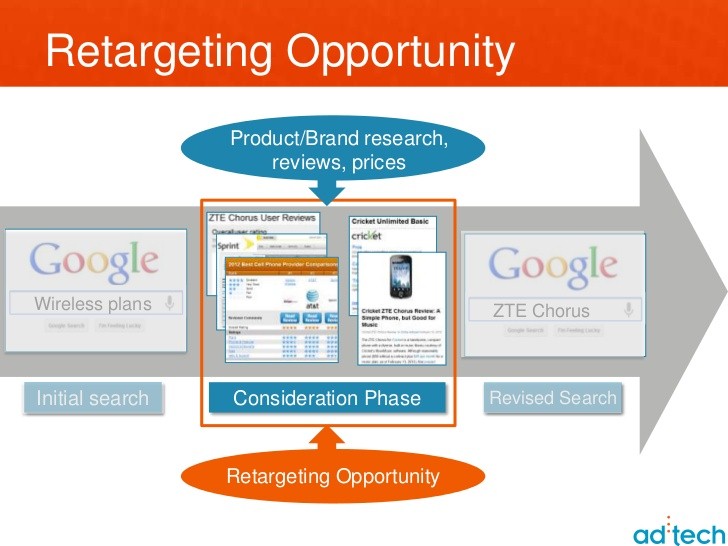
    Search Companion Marketing is about ‘remarketing’ which is more concerned about the search query of the users instead of the advertisers pages or links or forms. The user is remarketed only for the period of the online session.


    search companion ads


    Key takeaways:

    • If you have adequate conversions to get Google tracking and optimization, SCM can work efficiently for lead generation with enhanced CPC bidding
    • Advertisers who focus on lead generation can use SCA optimally
    • SCA displays ads to the searchers who have already expressed interest in the advertisers’ ad, so it flawlessly ranks them higher in the conversion funnel.