LS Staging

Tag: Google Assistant

  • Google Assistant Receives Rich Text, Handy Tools and Other Snippets

    Google Assistant Receives Rich Text, Handy Tools and Other Snippets

    Google recently announced via a blog post that it’s releasing a new update for Google Assistant on android mobiles. The latest update will add variety to the information provided by the Assistant offering better visual responses and answers in the form of “rich text” for queries.

    Since Google introduced the Assistant in 2016, the search giant has been providing constant updates to the digital assistant – adding features, functionalities and improving visual appearance.

    What’s new?

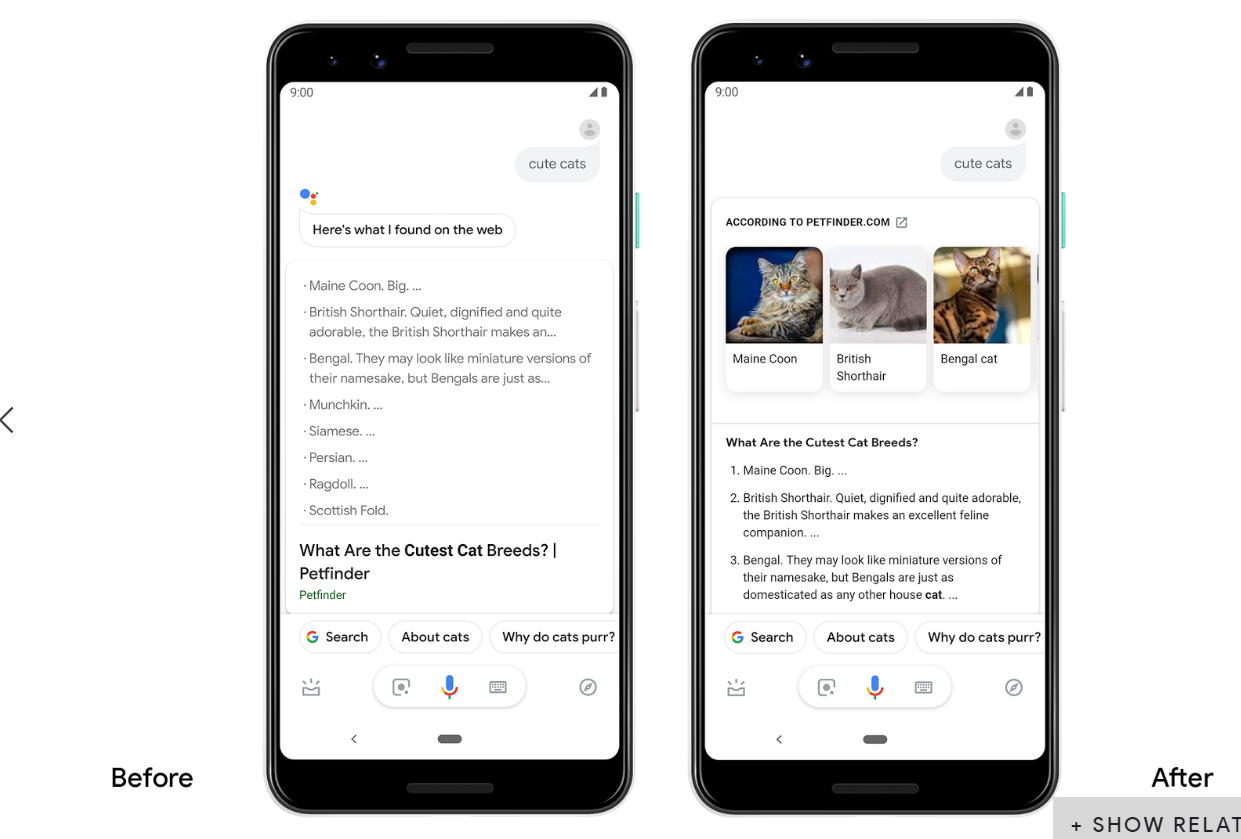
    The latest Google Assistant update includes response cards that present vital information that users are looking for in an easy-to-read format.

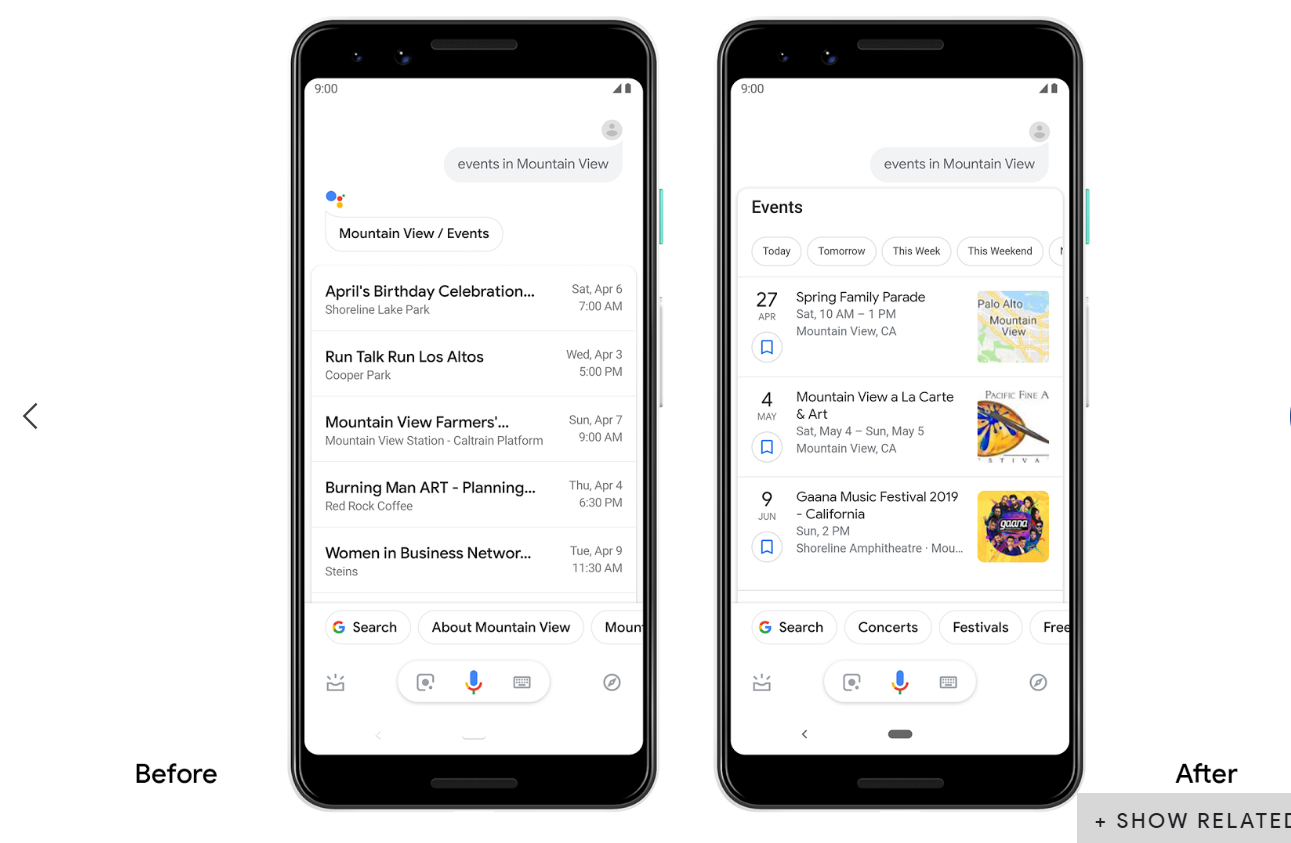
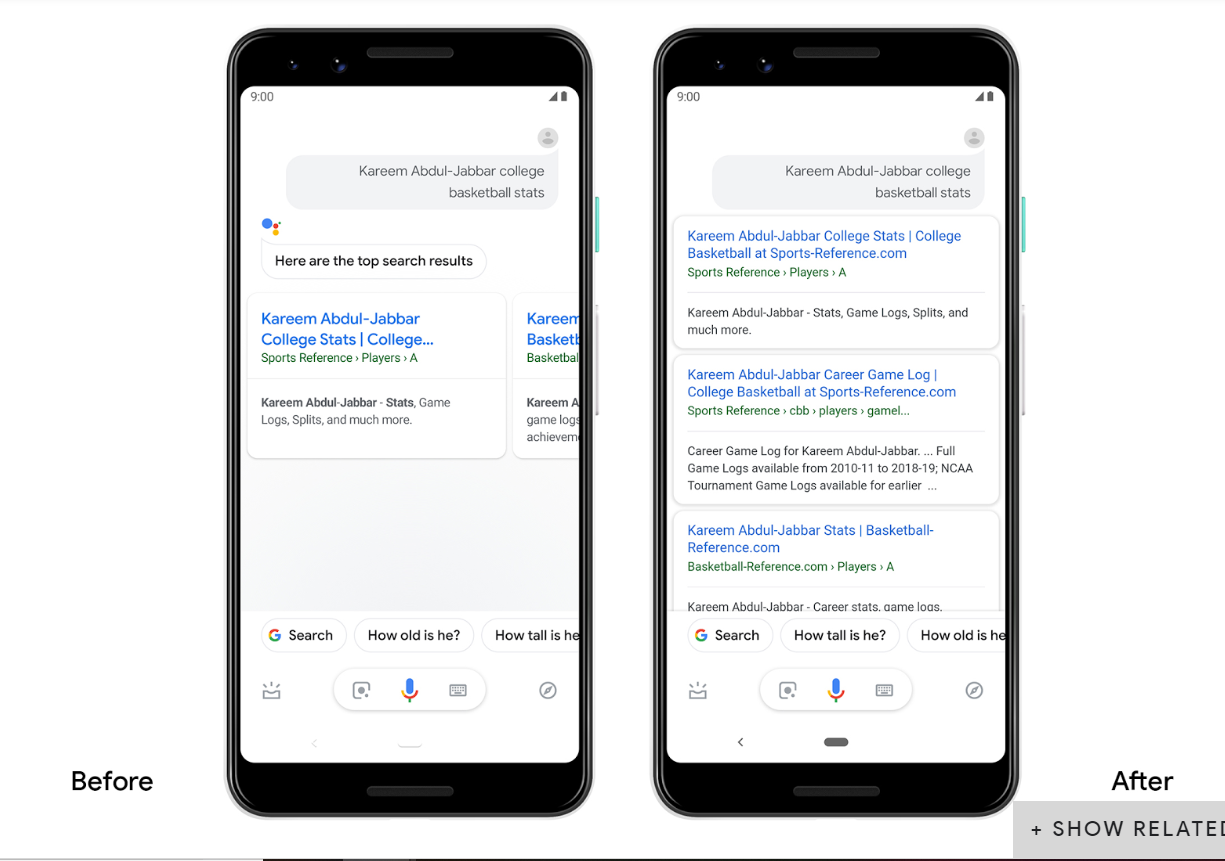
    Look at the before and after Images for some queries:
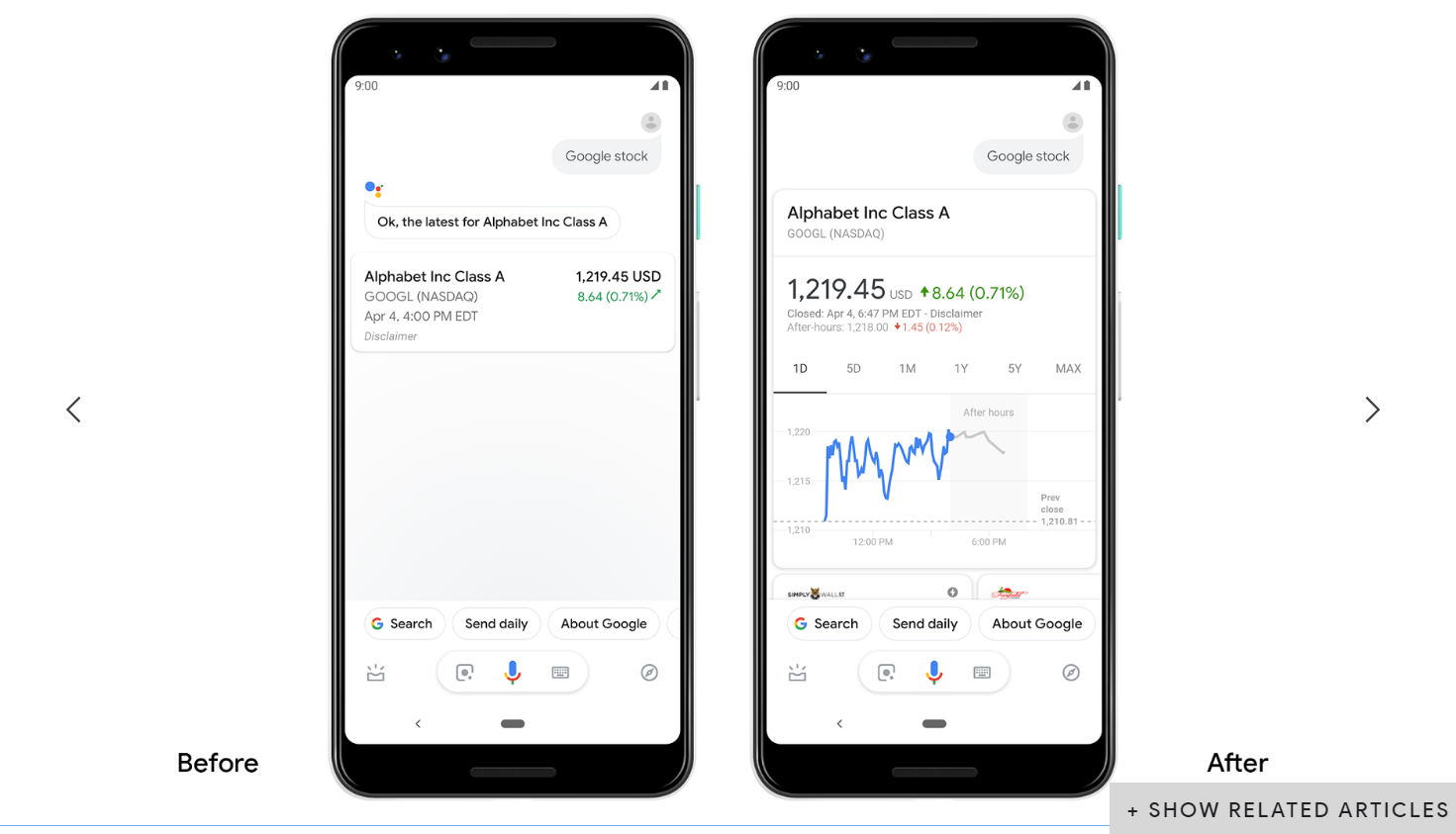
    As you can see, the new update provides a new interface for specific categories like events. Events now include saving buttons and thumbnails for each event. For categories like stock prices, the latest update provides a detailed stock price chart, along with other enhanced content.

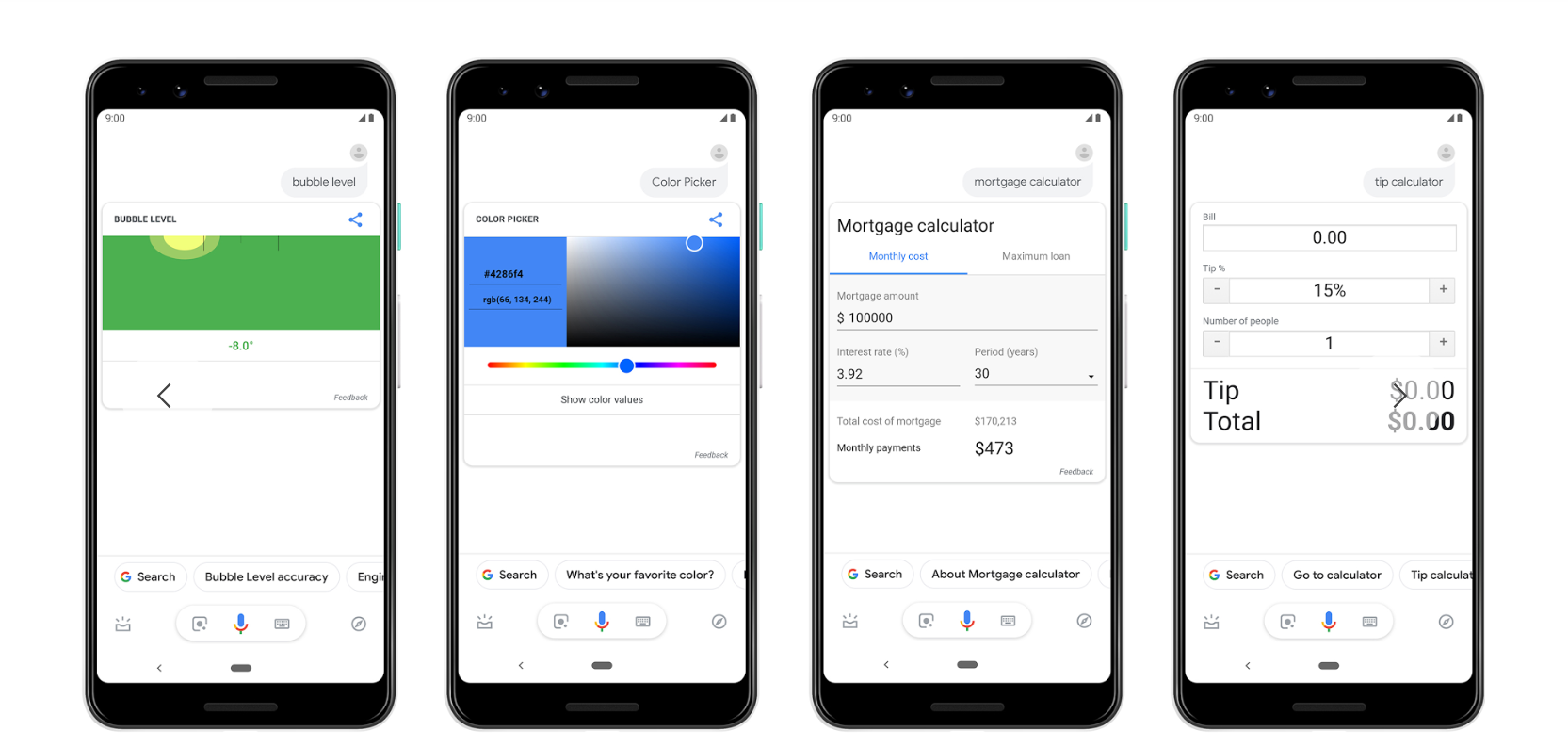
    Apart from the new visual interface for specific categories, the update also provides several handy tools like the metronome music pacer, tip calculator and bubble level as part of the Assistant’s interface.
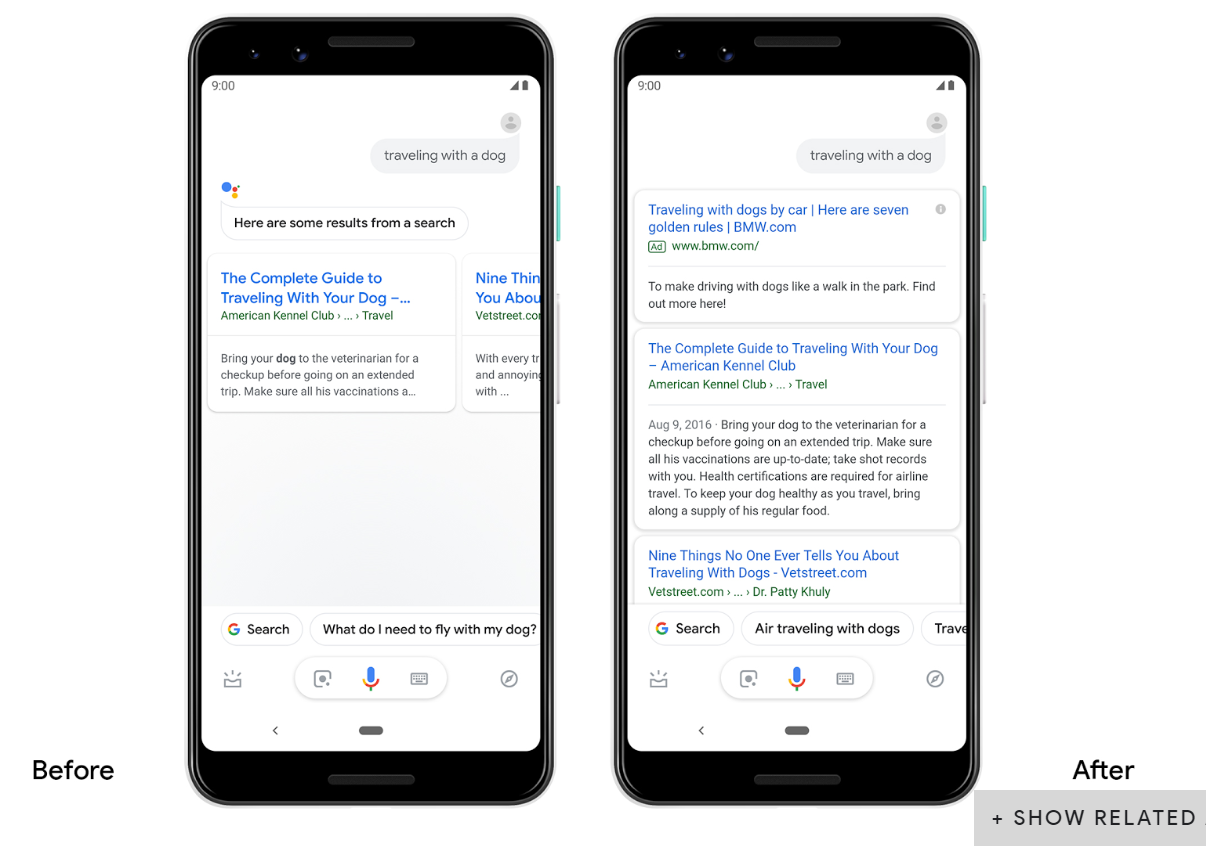
    Additionally, for some queries, the response at the top includes links to a variety of related sources across the web, helping you learn more about the topic. Earlier, the Assistant only displayed the top result. Now, you can see the full set of search results as you would see on a desktop. Additionally, the Assistant may also include relevant ads that you would see on the Google Search app.
    This latest update is available on all Android phones, thereby helping users get enhanced search results.

    Why this update matters?

    This latest update with its variety of content is part of the search giant’s initiative to add functionality to the Assistant and to harmonise results offered by the Assistant and general Google mobile search results.

    According to stats revealed by MarketingLand, Google Assistant is now available on more than a billion devices worldwide. And, with an increasing number of users using Google Assistant to help them with their daily tasks, these latest functionalities are sure to appeal to users.

    Digital marketing experts predict that as significant percentage of search queries migrate from Google search to the Assistant, Google will work on monetising this space and brands will vie for space in this premium real-estate on users’ smartphones.

    Recently Google started test runs of local ads in Google Assistant results. As of now, the results shown by Google Assistant are ad-free. However, with more search queries migrating to the Assistant, Google will start working on monetising the results shown by the Assistant. And, adding functionalities is the first step.

    Is this update available for all?

    Yes, you can expect to see rich text in your Google Assistant. Try out this feature by searching for queries like, “Why is the grass green?” “Events in Orange County” using the Google Assistant on your Android smartphone.


    [Images via Google Blog]


  • Positive News Stories Now Made Available by Google Assistant

    Positive News Stories Now Made Available by Google Assistant

    The occurrences of depressing news stories is a way of life we surely want to avoid. Google too feels the same way and has made efforts to empower its tech solutions towards the same. Its voice-based Google Assistant will now dole out feel-good stories that will make you feel good and positive all around you.

    How does it work?

    Google Assistant users will have to request ‘Ok Google, tell me something good’ to get their daily dose of motivating stories that look on the bright side of life. The stories are curated from Solutions Journalism Network, a US-based non-partisan organisation that collects uplifting and feel-good news from across the globe. The not-for-profit organisation helps train journalists on enabling better coverage of how people are responding to problems and how their efforts are leading to motivating results.

    The results link to stories that come from diverse media sources like NY Times and BBC. The tech giant maintains that the organisation is a great fit to get started as it empowers and energises journalism and thus, helps to tackle negative news fatigue.

    When you say “Hey Google, Tell Me Something Good”, you get a stream of good news like how more volume of voluntary health information is aiding research on Parkinson’s and Alzheimer’s or how Utah managed to reduce its homelessness by 91 per cent.

    Why the need for this move?

    Talking about the new feature, the Creative producer of Google Creative Lab, Ryan Burke said that the users need to have a well-balanced media consumption diet. But currently, the scale is heavily skewed towards bad happenings and depressing news stories. The need of the hour was to rectify this skew and have users get some good stories as well that help inspire and motivate people all over the world. This is how the feature of receiving daily good news wad conceptualised and implemented. This new feature comes on the heels of steady expansion of voice-tech device range offered by Google.

    From another angle, it may also have some positive impact. Psychologists are of the opinion that such uplifting news stories would have a great effect on mental health, bring down stress, and reduce anxiety in some cases. They commented that there is a better scope for improvement in case the readers come to know about the emotional angle of the stories they present.

    Try it out now

    Currently, the service is in a trial but may be expected to reach Google Home devices soon. Even phones that have this technology (for example Android phones) will be able to use this new roll-out.

    Check out the official Google announcement here.

  • Google Duplex to have built-in disclosure about its ‘Bot’ status

    Google Duplex to have built-in disclosure about its ‘Bot’ status

    Google’s recent update created quite a stir when it unveiled the AI based Duplex system at the I/O Conference 2018. The system can actually make phone calls in a human voice for tasks like booking a movie ticket or booking a restaurant table. Instead of the reactive chatbot conversation utilised in customer support functions, the Duplex is designed to be more proactive voice assistant to the users.

    However, with this news came a public outcry against the ethical implications associated with Google Duplex. The AI-based system will have voice like capabilities to book an appointment on behalf of the user. This has been criticised as it is prone to hacks and abuse.  Google has been quick to refute these criticisms by saying that a fully working product was not yet developed. They also mentioned that the AI human-like voice will positively identify itself before making these appointments. This in-built disclosure is said to be a hopeful answer to the ethics and privacy concerns shared by people world over after its CEO Sundar Pichai launched the product on stage at the 2018 annual developer conference.

    The concern about the AI based Duplex System

    Google employs Deep Mind’s new WaveNet Audio Generation technique to mimic a human voice and carry out the scheduling tasks over phone calls. It doesn’t identify itself as a human bot and purposefully trick a person on the other line (for example a receptionist at a haircut salon or the restaurant manager) with surprisingly effective human voice, complete with natural ticks like ‘umm’ and ‘aahh’!   

    This caused significant outrage from general audience and the followers of the I/O conference the world over. They feel that such AI systems are being created without appropriate regulation or protocols. Tech critics have gone on to say that the development is not positive and the lack of alarm demonstrated by the audience seems troubling.

    The workaround to this dilemma

    Google has mentioned that transparency in technology is critical. Hence, it will take all steps to ensure that an in-built disclosure is prompted before the conversation. They also said that the demonstration in the conference was an early product demo and is not a full-scale product awaiting launch. Readers would recollect that on-stage, the product demo consisted of a pre-recorded phone call to showcase the product features to the audience.

    Another blog from Google Engineers Yossi Matias and Yaniv Leviathan mentions that Google’s prerogative was always on delivering the best customer experience with this product. They wanted to make it clear about what the call’s intention will be so that users and businesses can recognise the value of the system.  They wrapped up by saying that Google is yet to figure out how to eventually roll it out and has been testing with quite a few experiments to integrate it with its voice technology based Assistant platform.

    What are your thoughts on the Duplex system that makes phone calls on behalf of the users in a human-like voice? Do write in with your comment and let us know.


  • Google Assistant Gets Exciting Updates in Language Support and Routines

    Google Assistant Gets Exciting Updates in Language Support and Routines


    In a significant push to fend competition in the AI-based voice tech space, Google recently announced a slew of measures for Google Assistant. With this move, the compatibility with Google Assistant will now reach 95% of the eligible Android devices in terms of language support.

    Users who speak more than one language can now interact with Google Assistant. If you are a person who is comfortable conversing in one language at home and another at work, then this new change will be a good fit for your multi-language skills. The first few languages to be paired with Google Assistant include Hindi, Thai, Swedish, Danish, Dutch, and Norwegian.

    What this also means is greater scope for deeper integration of voice into devices other than the Pixel. With such deeper integration into devices from OEMs like Samsung, Xiaomi, and LG, the Assistant can answer user’s questions around carrier related services and plans bundled with the device. So, the mobile carriers too can look forward to delegating some of the routine interaction tasks to the Assistant.

    Routines and Reminders too have expanded

    Among a slew of announcements (which included the above update), the other exciting change was an increase in the number of ‘Routines’. Routines are nothing but a string of actions stitched together for a better user experience. For example, if you say ‘Ok Google, I am home’, it will carry out a series of steps like turning on the AC, putting on some music, configuring your residence’s thermostat etc.

    With location-based reminders, users get to carry out tasks based on their location. So, for example, they can build a shopping list for Walmart and be reminded of this list when they are actually at a Walmart store.

    Why the need for this change?

    Clearly, Google is ramping up its voice tech initiatives against competitors like Amazon Alexa. By the end of 2018, its supported language list will spike from eight to thirty. This will take the number of devices with Google Assistant far beyond the 400 million devices as reported recently by the search engine giant.

    Another need for this change is that Android is gaining a strong foothold in multiple countries through a global footprint. This makes it necessary to integrate its voice services that have been localised for better user experience for the regions where English is not the native language.

    In 2017, Amazon Alexa’s market share was pegged anywhere between 70% and 76%. While it may have had the first mover advantage in the voice tech space, Google is making sure that it is not left far behind. The multiple initiatives around Google Assistant announced recently is a testimony to this fact.

    By providing support to far more languages than Alexa and improving adoption rates among native Android users, the company is making sure that it catches up with Amazon and comes up as a leader in the voice-based AI-powered personal assistant technology domain. Stay tuned as we continue to track this exciting and evolving space and keep you posted on the latest developments here.

  • Google Promotes Local Search And Lead Generation In ‘Google Home’ And ‘Google Assistant’

    Google Promotes Local Search And Lead Generation In ‘Google Home’ And ‘Google Assistant’

    ‘Google Home’ and ‘Google Assistant’ has come up with innovative local search procedures. With its efforts in working with local home service providers such as ‘Porch’ and ‘HomeAdvisor,’ effective interactions will become easier than ever. If you are using a platform where ‘Google Assistant’ is available, you can ask for the services of local contractors. Say, for instance, the request goes like this ‘Ok Google, find a plumber for me’. The command gives rise to structured information which further generates leads and helps you contact the local service provider.

    Things to note

    Right from the point of its introduction, this particular feature has garnered considerable attention. Local home services are of paramount importance for every family. The traditional search procedure involved breezing through business listings and looking for appropriate services. With Google taking the search procedure one step ahead, things will inevitably become easier for those looking for such services! Here are some of the highlights you should be aware of:

    1. Refined leads: Users have the opportunity to go through inexplicable user experience. If they are looking up popular directories such as Angie’s List or ‘IAC-owned Home Advisor’, users will have the opportunity to build connections through a phone. They can also get a comprehensive list of pre-selected contractors. The presence of structured conversations and targeted Q&A refines the leads to a great extent.

    2. Highly structured: This new feature rolled out by the company strikes a perfect balance between structured communication and lead generation. The benefits are diverse and bidirectional. Users will get in touch with appropriate service providers, and search results will get structured and streamlined to a great extent.

    Crucial points

    As the largest and most popular Global network, Google never fails to surprise its followers. The feature launched by the company is a significant step towards successful interactions. Google’s association with ‘Porch’ and ‘HomeAdvisor’ will undoubtedly bring unique opportunities for individuals. Those looking for local services will have the best chance to get in touch with popular contractors.

    What is of great interest is that the search process takes place through structured Q&A. That streamlines the entire search process. If you are planning to leverage this feature, here are some points you should know and note:

    · Prioritisation: Google needs to come up with crystal clear explanations about the significance of HomeAdvisor and Porch. It is imperative to understand how both these platforms will be prioritised.

    · Third party directories: Google needs to be specific about the involvement of 3rd party directories. It’s also unclear whether Google will demand a share of the prices or just collect a ‘toll.’

    · Personalised results: Through this particular feature, the company aims at producing personalised search results. Users will get customised and personalised information on targeted home services.

    There’s no denying the benefits and advantages offered by this new feature. As far as the functionality and user experience goes, we have to wait and watch how it works!

  • Highlights from Google’s Pixel event

    Held in San Francisco, Google’s Pixel event saw a wide range of products and services showcased by the company. Below are the listed products:

    Google Pixel and Google Pixel XL: They run on the latest version of Android, Nougat.  One gets the chance to store unlimited images on the cloud.  The 12.3 megapixel camera is one of the highlights of the phones. These devices are focused to deliver pure Google experience to their users

    Google Assistant: They also demonstrated Google Assistant, that will soon be  live on all of Google’s devices. It can be used as a chatbot, TV, and anywhere and everywhere you need its assistance.

    Daydream view headset: This is a step towards taking virtual reality to the next level. There is a compact VR controller with motion sensors. It will be up for buying this November.

    Google Wifi:  You can buy their routers and place them throughout your house to enjoy wireless signal.  Its companion app helps you with seeing the devices that are connected to your network and if you find any of them suspicious, you can turn them off.

    Google Home:  It is believed to be an answer to Amazon’s Echo. It can support by abiding to your request such as playing a song, sharing recipes etc. Google’s knowledge graph is one addition that makes it more interesting.

    Source: TechCrunch ( https://goo.gl/Tj80uz)