LS Staging

Tag: facebook marketing

  • Weekend Digital Media Round-up: Google AdSense’s Auto ads without code, Facebook’s New Holiday Marketing Tools, YouTube’s Ad Buying Tool and more…

    Weekend Digital Media Round-up: Google AdSense’s Auto ads without code, Facebook’s New Holiday Marketing Tools, YouTube’s Ad Buying Tool and more…

    1. Google AdSense publishers can now turn on Auto ads without new code

    Google announced updates to Adsense Auto ads designed to make them easier to implement and customize. AdSense publishers will be notified via email when the updates, which will be rolling out over the next several weeks, are live in their accounts. [Source: Marketing Land]

    2. Facebook Launches New Tools to Help With Holiday Marketing

    Facebook has released several new tools to assist businesses with their holiday marketing efforts. The company will be continually sharing tips, such as customizable story templates, enhancements to messenger and Instagram direct, to help businesses use its services to achieve their holiday marketing goals. [Source: Search Engine Journal]

    3. YouTube testing ad buying tool that lets you reserve ad placement 120 days out

    YouTube is testing a new Instant Review tool in Google Ads that allows advertisers to reserve ad space on a 120 day-rolling window via an automated process with no minimum spend. [Source: MarTech Today]

    4. Google showing mobile ‘search by photos’ option in selected local verticals

    Google is starting to show a new option to “search by photos” box in certain local verticals. It appears only in mobile results right now and is distinct from “interesting finds” and “discover more places,” which are also photo-centric boxes in SERPs. [Source: Search Engine Land]

    5. Instagram Updates its Stories Camera with New ‘Create’ Mode to Highlight Creative Options

    Instagram’s now rolling out a new format for its Stories Camera, which will make the app’s various Stories tools – including GIFs, Countdown Stickers and Polls – easier to access and apply, direct from the main function bar. [Source: Social Media Today]

    6. Adobe is redesigning Creative Cloud’s desktop app as a hub for tools and assets

    Adobe’s Creative Cloud desktop app, once just a drop-down tab for downloading and updating Adobe apps, is getting turned into an assets library. The new desktop experience will feature tutorials for all apps in one hub. It basically looks like the current Creative Cloud website, but now in a desktop app form. [Source: The Verge]

    7. Pinterest Launches ‘Pinterest Academy’ Education Resource for Marketers

    Pinterest launched a new set of platform education course for marketers, under the umbrella of the ‘Pinterest Academy’. The new Pinterest Academy offers a range of education courses, and links to various other tools and reference studies, in order to help you get a better handle on how to utilize Pins for your business. [Source: Social Media Today]

    8. Google is Testing Search Results Without URLs

    Google has slowly been moving away from showing full URLs since the introduction of breadcrumbs a few months ago. The company appears to be testing the complete removal of URLs from search results, displaying only the website name instead. [Source: Search Engine Journal]

    9. Facebook’s Adding Post Topics to More Groups, Helping to Better Organize Relevant Discussion

    Facebook announced that it’s expanding its post topics tags for groups, which will enable group members and admins to categorize group posts accordingly. [Source: Social Media Today]

    10. Snapchat Enables In-Game Purchases for First Time in New Campaign with Adidas

    Adidas has launched a new, interactive campaign on Snapchat which, for the first time, will enable users to purchase a product via a game in the app. [Source: Social Media Today]


  • Weekend Digital Media Round-up: Google Search Console’s additional structured data in Report, Facebook’s New Ad Units, Instagram’s Spark Tool & More…

    Weekend Digital Media Round-up: Google Search Console’s additional structured data in Report, Facebook’s New Ad Units, Instagram’s Spark Tool & More…

    1. Google Search Console Now Reports on More Types of Structured Data

    Google is adding three more types of structured data to the rich results report in Search Console. Now, owners of e-commerce sites can use Search Console to easily check if Google can read all of their product markup. [Source: Search Engine Journal]

    2. Facebook to launch two new ad units; movie reminder and movie showtime

    Facebook is launching two new ad units named movie reminder ads and movie showtime ads which aims to help movie studios promote their latest releases. With movie reminder ads, when people see an ad for a film in their News Feed, they can now tap on the ‘Interested’ button to receive a reminder in their Facebook notifications when the movie hits theatres. [Source: ET Brand Equity]

    3. Instagram Opens AR Filter Creation Tools to All Users

    Instagram is once again following the lead of Snapchat by opening up its Spark AR filter creation platform to all users, while also introducing a new library of user-created visual tools. [Source: Social Media Today]
    4. Google to Remove Average Position Metric in Google Ads from 30th September 2019

    Google had announced that the company is planning to retire the average position metric from the Google Ads platform. In a recent post published by the search engine giant, the company has now revealed the deadline for the removal of this metric which is 30th September 2019. [Source: Logicserve Digital]

    5. Twitter Discusses Coming Features, Including Topic-Based Streams and Searchable DMs

    Twitter rolls out new tweaks and updates designed to boost usage. The platform is also looking at some larger-scale initiatives designed to help users – particularly new ones – find more relevant tweet content. [Source: Social Media Today]
    6. LinkedIn Expands Content Curation and Sharing Options in Sales Navigator

    LinkedIn continues to add more ways to utilize its data insights, this time through a new integration between its Sales Navigator platform and its employee advocacy system ‘Elevate’. [Source: Social Media Today]
    7. Instagram is Working on Layouts for Stories, New Boomerangs, More

    Instagram has been found testing several upgrades to stories that include a layout mode, new boomerangs, and redesigned icons. The new types of boomerangs give users 5 more options to choose from and the new layout mode for stories works similar to Instagram’s Layouts app. [Source: Search Engine Journal]

    8. Twitter Announces Removal of Third-Party Data Sources from Ad Targeting Options

    Twitter has confirmed that it will remove third-party data options from its ad targeting process, following Facebook’s lead in distancing itself from outside data sets, and the methods in which such may have been collected. [Source: Social Media Today]
    9. LinkedIn launches Audience Engagement Insights with addition of 5 new marketing partners

    LinkedIn is launching a new Audience Engagement Insights category as part of its marketing partner program and adding five new third-party analytics platforms that integrate with the LinkedIn Audience Engagement API: Amobee, Annalect, Hootsuite, Ogilvy and Sprinklr. [Source: MarTech Today]

    10. Facebook’s Testing New Third-Party VOD Subscription Partnerships to Boost its Video Offerings

    Facebook is working on a new, TV-connected video device, which would not only enable consumers to view Facebook Watch content on their home TV screens, but would also enable streamlined connection to third-party VOD providers, like Netflix and Disney – the latter of which will soon launch its own digital subscription offering. [Source: Social Media Today]

  • Should my Business Worry about Libra, the new cryptocurrency from Facebook?

    Should my Business Worry about Libra, the new cryptocurrency from Facebook?

    After months of speculations, last week, Facebook announced that the social media giant would lift the curtains on “Libra,” a brand-new cryptocurrency, sometime in 2020. Facebook announced that Calibra is a newly formed subsidiary to the parent company and aims to provide seamless and secure financial services by using the Libra network.

    Calibra and Libra: A Quick Explanation

    While Libra is a digital currency, it doesn’t have much in common with Bitcoin, the original cryptocurrency. The value of Bitcoin is basically because of its scarcity, and though it has been around for nearly a decade, it’s still considered a niche currency, not used for daily, everyday payments.

    Libra, is like Bitcoin, in that it will be tied into a blockchain (this blockchain is currently under development by Facebook). The similarities end there. Unlike Bitcoin, you cannot mine Libra. Instead, you must pay for it and purchase it.

    Facebook believes that Libra will become the global currency standard, like the popular currencies USD, GBP, and EUR.

    Coming to the all-important question: how will the value of Libra be determined, since it doesn’t have real-world assets like a country backing it?

    This is where things turn interesting. The value of Libra will be guaranteed by real assets provided by the partners that buy into Facebook-cofounded Libra association. Facebook has managed to rope in industry biggies, including venture capitalists, tech companies, and non-profit associations.

    eBay, Lyft, Spotify, Uber, Union Square Ventures, PayPal, Visa, and Mastercard are some of the top names in the association. You can find more about the founding members of the Libra Association in the whitepaper published by Libra. The company will have its headquarters in Geneva, Switzerland.

    What does this mean for Regular Users?

    Will it bite the dust like that time when Facebook was trying developing nations to use its platform for all their internet access by offering them free internet? Or will Libra become the first-ever digital currency to go mainstream?

    While that needs to be seen, Facebook’s goal here is to make Libra the go-to currency for transferring funds to friends and family in other countries and to make it the number one payment option for both online and offline purchases.

    Initially, Facebook will offer Libra as part of WhatsApp and Facebook Messenger, with plans to move it into a stand-alone app, later.

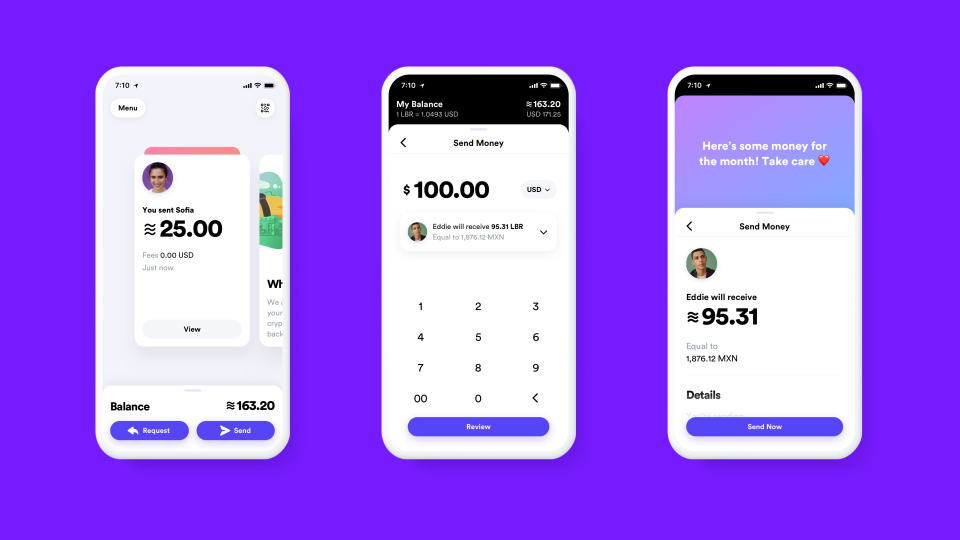
    This is where Calibra comes into the picture. Calibra is a digital wallet that will help users to save, spend, and send Libra. Initially, you can use the Calibra wallet to send and receive money instantly to anyone with a smartphone. Later Facebook plans to extend the functionality of Calibra to provide financial services for small businesses like paying bills, etc.

    sneak peek into Calibra’s interface, courtesy of Facebook.

    Calibra will use anti-fraud, and verification processes used by all leading credit cards, and provide live support to people who misplace their smartphone. Calibra even promises refunds if you lose your Libra because of fraudulent activities. Calibra will also value user privacy and will not share financial data with Facebook or other third-parties.

    Facebook claims that they are still a long way from launching Calibra. Interested users can sign up here to join the newsletter to be the first to receive information about the progress of Calibra and Libra.

    How will Libra and Calibra impact Businesses that sell via/on Facebook?

    Industry experts believe that entrepreneurs using Facebook pages for information about their products will not be impacted much. However, if you sell goods via Facebook, then you would have to make changes to include Libra as one of the payment currencies.

    However, since Facebook has an enormous reach, at least a few of your customers will be using the new crypto coin. Hence, it makes sense to include it in your payments page.

    When should you start making changes to include Libra?

    No hurries. Facebook is still in the process of development, and nothing has been confirmed yet. So, businesses need not panic and spend the interim time reading up on the merits and drawbacks of this brand-new venture from Facebook.

  • Facebook Ads are Getting Smarter: Here’s What Marketers Must Do to Thrive

    Facebook Ads are Getting Smarter: Here’s What Marketers Must Do to Thrive

    Facebook is a critical marketing channel for businesses of all sizes and across industries. With nearly 2.38 billion active users (stats for the first quarter of 2019), Facebook offers great opportunities for businesses to target current and potential customers.

    When done the right way, Facebook ads help businesses boost brand awareness, launch new products and services, sell more, and increase revenue. However, advertising on Facebook is not exactly what it may seem. Today, Facebook ads have grown smarter, and there’s a need for smarter paid ad strategies to meet your advertising objectives. Read on to know about what has changed and what you can do about it.

    What has Changed?

    There’s no denying the fact that Facebook feed has become oversaturated with ads. Similar ads are served to the same users, meaning brands lose out on their effectiveness and attention-grabbing abilities. Not to forget, the organic reach of the posts and ads on Facebook have taken a hit, thanks to recent algorithm changes.

    This means, today, most marketers on Facebook are forced to invest in paid campaigns or abandon the platform altogether. Despite the declining popularity of Facebook, the social media network managed to generate a whopping $16.6 billion in advertising revenue for the last quarter of 2018, which is a 30% increase compared to the previous year.

    This clearly shows that Facebook advertising is not dead as speculated. Rather what has changed is that Facebook ads have gotten smarter, and it is high time that marketers revised their advertising strategies on Facebook. In the cluttered social-media landscape of today, it’s essential that brands integrate robust paid strategies along with high-quality content generation to be successful.

    Shifting Advertising Goals – The Need of the Hour for Facebook Marketers

    According to Susan Wenograd, the Vice President of Marketing Strategy of Aimclear, for brands to thrive in the new era of social media advertising, there is a pressing need to revise the campaign goals. She believes that brands must re-examine their objectives and understand that conversion is just a part of the bigger picture.

    Brands must shift their focus away from CPA (Cost per Acquisition – Conversion) to CPM (Cost per thousand Impressions). Marketers must concentrate on building a more engaged and more qualified audience pool, to get the best ROI from their ad spends.

    It’s not just about picking the low-hanging fruit, but, brands must enhance their Facebook ad strategies to build qualified leads that improve brand awareness. Once advertisers have this data, they can use it for retargeting. Brands must build remarketing pools so that they can convert leads on all stages of the purchase funnel, helping them generate more revenue.

    Brands that can measure and understand user triggers are the ones that will be sustainable in the long run. Furthermore, brands must leverage cross-channel data to improve retargeting opportunities. Utilizing UTM parameters, tagging structures are some ways to streamline and segment data across channels.

    Not to Forget Quality Content

    All the above-discussed strategies may not yield the desired results, if the marketers do not have a high-quality content to back it up. With the social media landscape rapidly evolving, audiences demand high-quality, optimized content. Simply put, brands need to adapt to smarter Facebook ads with efficient strategies and high-quality creative content if they want to survive in the evolving social landscape of Facebook and Instagram paid ads.

  • Facebook’s Experimenting with Third-party Ad Display Integrations to Watch

    Facebook’s Experimenting with Third-party Ad Display Integrations to Watch

    Facebook is pilot testing delivering ads on Watch using third-party technologies already used by digital media publishers.

    Is Watch Opening up to Third-party Ad Technologies?

    The social media giant introduced Watch in the US in late 2017 and globally in 2018. ‘Watch’ is a Facebook-owned platform for shows on the social media site. It’s available on desktop, laptop, mobile and even as a smart TV app. Shows on Watch can either be recorded or live and follow a particular storyline or theme. Watch is seen as the social media giant’s answer to YouTube. However, until now, the service hasn’t caught on as expected by Facebook.

    In a series of attempts to woo the audience and digital media publishers, Facebook has introduced several new changes. The latest of which is allowing digital media publishers and TV networks, who have shows aired on Watch to display ads using the technology, they already use on other video platforms.

    Since its launch, Watch had a reputation of being a closed garden, with content publishers not having any authority. Facebook is now trying to be friendlier with TV networks and media publishing houses. Advertising and technology executives state that Facebook is working with a select group of media houses to test delivering ads using the technology of the publishers.

    Until now, the ads displayed during the shows were delivered directly by Facebook. With this latest test, the media publisher could directly handle the ad inventory on their show, instead of routing it via Facebook.

    Most digital publishers and TV networks use third-party ad technology like the Google Ad Manager and Comcast’s Freewheel to deliver and manage their ad inventory. For example, Disney recently switched from Freewheel and adopted Google ad manager as the backbone system for all its internet ads. Till now, digital publishers had to miss out on their preferred ad delivery platforms while using Watch.

    Facebook’s recent stance on working with digital publishers and opening up the platform for integration of third-party ad services is an indication that the social media giant is getting more responsive to the needs of digital media publishers on Watch. Additionally, the Watch platform hasn’t been a huge success as expected by Facebook.

    Even though it’s more than a year since the platform was launched, it has failed to win the attention and patronage of the audience.

    The Current Performance Levels of Watch

    According to Facebook, Watch has over 75 million viewers who use the platform daily and over 400 million viewers per month. Facebook also reports that on average people spend over 20 minutes on the platform daily.

    Despite these numbers, it’s no secret that Watch falls severely behind other video streaming platforms and apps like YouTube, Netflix, and others. In an earnings call with Wall Street analysts, Mark Zuckerberg admitted that though Watch is growing quickly, it’s still well behind YouTube and the social media giant is working to make it more people-centric.

    Just like other streaming platforms, Facebook is also investing in original shows for Watch. This includes reality shows with popular sports stars and even scripted dramas. Despite, original shows, Watch needs TV networks and other digital media publishers to fill the platform with content, so that it can bring in more advertisers to the platform.

    Right now, there is no clear idea of which media houses have been invited to this test by Facebook and what they are currently testing. It’s speculated that third-party ad integrations on Watch are being tested, as Facebook wants to make the platform friendlier to digital publishers.

    Allowing publishers to run their ad campaigns across different video platforms like YouTube and Facebook will make it easier for publishers to track the performance of ads and make corresponding changes.

    Till now, Facebook had a reputation of being a walled garden, and it had kept its ad operation locked down internally, without the interference of third-party apps. This test will see whether Facebook is ready to change all that.

  • What Instagram Users Expect from Brands: Study by Facebook IQ

    What Instagram Users Expect from Brands: Study by Facebook IQ

    Facebook, the parent company that owns Instagram recently published a post on its blog offering key insights to marketers on how to connect with new audiences via the popular photo-sharing social media platform.

    Why is it Difficult for Brands to build their Audience Base on Instagram?

    Instagram is the most popular social media platform, right now, not just for individual users – but also for social media influencers and brands. However, businesses and influencers find it challenging to grow their audience base on Insta compared to other platforms.

    This is because Instagram users are highly selective and they don’t want their feed to be peppered with posts that they don’t enjoy or connect with. On the other hand, once a user connects with a brand on Instagram, they are far more likely to become customers.

    Facebook tries to Understand User Behavior on Insta

    Facebook IQ recently commissioned two studies to find out why people choose to follow brands on Instagram and the type of content they desire from their preferred brands. The studies tracked the behaviour of users who use Instagram several times a day, across nine countries – US, UK, Canada, Germany, Australia, Korea, Japan, France, and Brazil.

    Here are a Few Key Findings from the Studies

    Users prefer connecting with Brands on Insta – 2 in 3 people surveyed stated that Instagram is their preferred platform to connect and engage with brands.

    Instagram usage is on the rise – 57% of the people who took part in the survey responded that they use Insta more than they did a year ago. 44% of respondents stated that their Insta usage is likely to increase in this year. Facebook IQ attributes the huge growth of Insta among users of all ages to several new features like Instagram Stories and  IGTV.

    The reason for the increase in Insta usage varies from country to country – For instance, in the US most people used Instagram to connect with friends and family. While in Japan, the primary reason for Insta usage was to stay on top of trends. Additionally, users across all countries use Instagram to connect with celebrities and influencers.

    38% of respondents believe that ads on the platform are relevant to their interests.

    Instagrammers surveyed use the platform multiple times each day, and Instagram usage is distributed across all age groups.

    Non-TV viewers (people who don’t watch TV regularly) are more likely to see ads on Instagram. This is a crucial marketing opportunity for businesses. By advertising on Insta, they can reach out to audiences who are not available on regular marketing channels like TV. However, 16% of Instagrammers responded that they prefer to see ads tailored for the platform and not just regular ads that were available across channels.

    The Takeaways of the Studies by Facebook IQ: What it means for Marketers?

    These studies reveal that Instagram usage is definitely on the rise and it isn’t just restricted to a group of people. With the right marketing strategies, brands can reach out to a niche and hard-to-reach audience via Instagram. Make use of the Audience Insights tool to target a specific audience group.

    Generate content that is mobile-friendly. The maximum Instagram usage occurs via smartphones. So any content you should create should be short, relevant and custom-made for Instagram.

    Explore all the features of Instagram– like Stories, IGTV, polls via stories, and more – to reach out to hard-to-reach audiences.

  • Weekend Digital Media Round-Up: Google’s 15-second non-skippable ads, Facebook’s new tools to control ads, LinkedIn’s new targeting tool and more…

    Weekend Digital Media Round-Up: Google’s 15-second non-skippable ads, Facebook’s new tools to control ads, LinkedIn’s new targeting tool and more…

    1. All advertisers can now buy Google’s 15-second non-skippable video ads

    Google announced that it will make 15-second non-skippable video ads available to all advertisers, not just those buying through the YouTube reservation process and its premium Google Preferred network of top YouTube channels. [Source: Marketing Land]

    2. Facebook’s Adding New Ways for Advertisers to Control Where Their Ads Appear

    As Facebook looks to expand its video advertising business, it’s also working on new tools which will enable advertisers to control where their ads appear. [Source: Social Media Today]

    3. LinkedIn’s new targeting tool tailor’s campaigns to match users’ interests

    LinkedIn is launching a new marketing solution in Campaign Manager called Interest Targeting, which aims to help marketers reach members with relevant ads that match their interests based on the content they share and engage. [Source: Marketing Dive]

    4. Single and Exclusive Search Advertising Platform for Bing and Yahoo Ads

    Yahoo ads will now be available via the Bing Ads platform, providing advertisers and marketers with a single, integrated platform. [Source: Logicserve Digital]

    5. Google is Creating Featured Snippets from PDF Content

    Google has been spotted pulling content from PDFs to create featured snippets. The most important takeaway for SEOs is that PDFs can now receive featured snippet placement, also referred to as “position zero.” [Source: Search Engine Journal]

    6. Google offers improved GMB sign-up flow for service-area businesses

    Enterprising SEOs have used and recommended a wide range of tactics to rank in areas SAB serve without a storefront. Fortunately, Google has been focused on improving the process and options for SABs. [Source: Search Engine Land]

    7. Facebook’s Working on a New Feature to Appeal to Younger Users

    Facebook has tried to win back the youth – they’ve released Snapchat clones, group video chat apps, even, more recently, a challenger for rising short video app TikTok. [Source: Social Media Today]

    8. Facebook launches brand safety certification program with DoubleVerify, OpenSlate as launch recipients

    DoubleVerify and OpenSlate are the first ad tech companies to receive certification in Facebook’s new brand safety program for marketing partners. Both are launching new Facebook safety brand tools. [Source: Martech Today]

    9. Google Chrome API changes may disable most ad blockers

    Google believes these changes are needed to speed up page load times and make the browser more secure because extensions can both slow down pages and be malicious. [Source: Martech Today]

    10. Google Ads to Manage Users’ Campaigns Unless They Opt Out

     Google Ads is sending emails to select users notifying them of a major change that will be implemented unless they opt-out. [Source: Search Engine Journal]

  • Measure your conversions and track the ads on Facebook

    Measure your conversions and track the ads on Facebook

    Do you regularly advertise on Facebook? But are your ads getting you the value? Or do you properly track and measure your return on investment on these ads? It is essential that you meet the objective you are setting on Facebook to understand the value. Let’s dive in the pool of Facebook conversion and pixels that keep tracking your ads.

    measure-conversions-on-facebook


    What is Facebook ROI?

    You must have often heard that you cannot measure return on investment on Facebook. You can measure all the efforts you put in for Facebook advertising, especially the one that drives an action and assigns a value to it. This is done through the following parameters:

    • Conversion Tracking
    • Offsite parameters

    What is known as Conversion Tracking?

    With this Facebook allows tracking all the conversions that have happened on your FB ad.

    For example: If you ran an ad and your conversions went up 40%. But do have proof to show that these conversions were because of your ads you did on Facebook? Or could it be something that would have driven it?

    This is where conversion tracking comes into the picture. With this, you are aware along with Facebook that users visited your site from the Facebook ad. With Facebook’s pixel you also get to know that your ad was performed.

    What is a Pixel Code?

    As the name suggests, it is a code provided by Facebook to track the ad objectives and parameters. This code is placed on the desired page, to understand that users have visited the page through Facebook.

    For example- You are running a Facebook ad to sell black dresses, when a user clicks on your ad, Facebook records an ad click. The users is taken to the assigned landing page after the user has shown interest and clicked on the ad. Facebook can follow the person anywhere to a different page using the snippet of the code.

    If the Facebook pixel is placed on the web page of the black dress and if the user visits that page through the Facebook ad, then the ad is termed to be successful. The Facebook pixel can also be placed on pages that the advertiser keen to convert. It can be the information page, basket page, contact us page, payment gateway or any other page.

    Different types of Conversions and Optimized CPM

    The most amazing part about this conversion tracking is that Facebook utilizes Optimized CPM to regulate who your ad reaches out to.

    This CPM will allow all advertisers to arrange all marketing goals regarding priority and then delivers all these ads against the goals in the most efficient way. Allows the users to maximize the budget value.

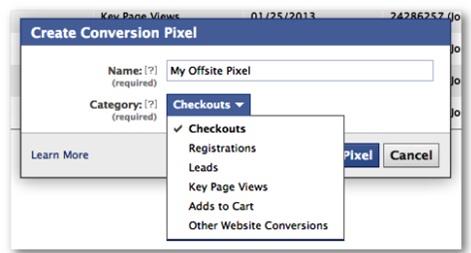
    Following are the different types of conversions:

    • Checkouts
    • Leads
    • Registrations
    • Page views
    • Add to cart
    • Other website conversions/visits


    Conversion Tracking

    Facebook users perform the above-desired actions through ads that use the conversion tracking. This targets ads to consumers who are most likely to convert to sales.


  • Facebook launches Marketplace to support local communities in buying and selling

    In recent times, Facebook groups are being extensively used for businesses other than connecting with people. Many groups help local communities connect with one another and also conduct businesses.

    With the launch of ‘Marketplace’, Facebook is making it easier to discover, buy and sell. You can explore it by tapping the shop icon at the bottom of the app.  Features you must know:

    –    Since it is for local communities, it helps you discover various items that have been listed in your nearby locality. Once you shortlist the item you want to buy, you can directly message the seller

    –    Posting items for sale just got easier. All you have to do is take a picture, add product name, details and price. You have to confirm your location and make the posting

    Marketplace will be rolled out to above 18-year-olds in US, UK, New Zealand and Australia.  With time it will be expanded to other countries.

    Read more about the announcement:  https://bit.ly/2dmqHxn

  • Four Brands using Facebook Marketing for their Benefits – Part 2

    Four Brands using Facebook Marketing for their Benefits – Part 2

    Using Facebook Marketing @LogicserveDigi

    Our previous post shared examples of two brands that are making optimim use of Facebook marketing, to establish an audience connect.  Here are the other two you must check, to know what works for them

    1.Fastrack

    Total Fans: 9151208

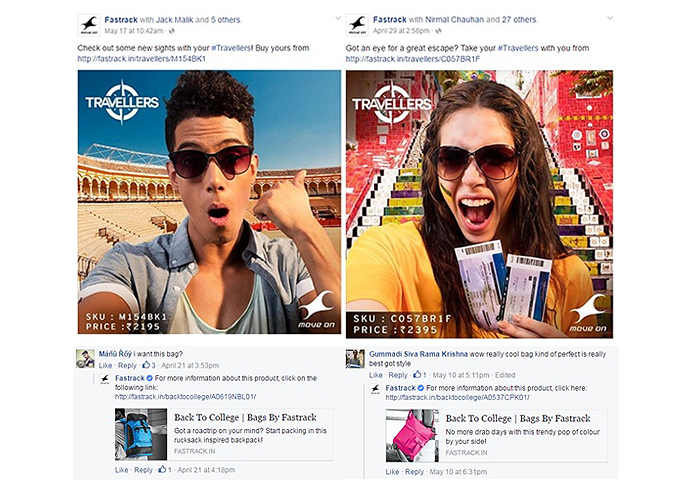
    Fastrack stays true to its tagline “Move On.” An early adopter of social media, Fastrack has managed to deliver quality content, engaging campaigns and build a strong online community. With their experimental and innovative approach, Fastrack has managed to use Facebook for increasing its revenue. Essentially a youth brand with a target audience of 15-25 year olds, Fastrack is a community of over 9 million fans with a monthly engagement of close to 170,000. The current content theme revolves around “Travelers” which is also in sync with its ongoing TVC campaign.

    Facebook Marketing @logicserveDigi

    Fastrack majorly uses Facebook for product promotion and awareness. The brand interacts with its audience through posts and comments resolving queries pertaining to the product. However, almost all interactions lead the user to the website leaving any room for real conversation between the users and the brand.

    2.Kingfisher:

    Total Fans: 7345856

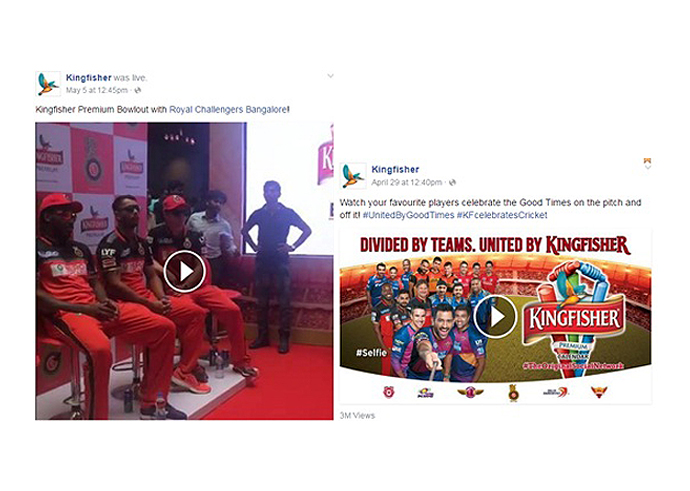
    The King of good times is also the king of social media in the beverage section. Kingfisher’s online community is 6 times bigger than its nearest competitor. As compared to other sectors, alcohol brands have always struggled to grow their community at a faster rate in India. The reason for this could be the culture and the fact that people do not like to publicize their association with alcohol. It is interesting to note how Kingfisher managed to lead this race with a greater margin. Most brands in India rely heavily on Cricket and Bollywood as the main component to connect with the audience. Kingfisher takes a similar route and makes it relevant. The content theme is a mix of party, music, good times and lots of sports. With the ongoing IPL season, the page is filled with real-time posts and videos from the live matches.

    kingfisher social network @LogicserveDigi

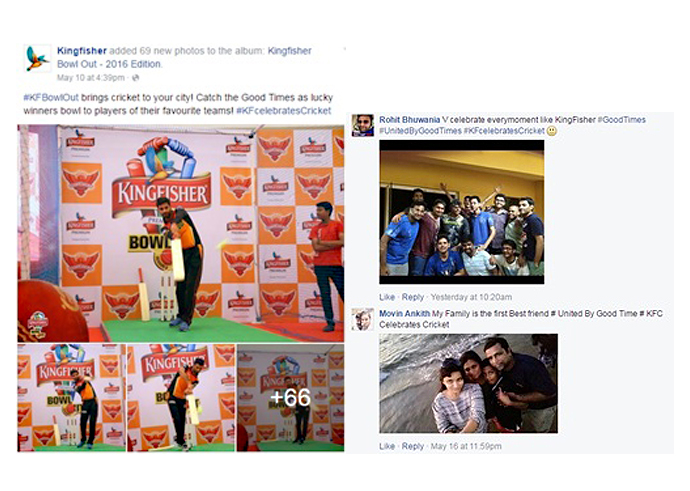
    Simultaneously, Kingfisher also runs offline engagement mapped with online activities. One such ongoing campaign is #KFCBowlOut. As seen on the page, users are also posting their photos from the stadium.

    kingfisher social media @LogicserveDigi

    When it comes to consumer interaction, Kingfisher’s Facebook page receives over 160000 monthly engagements. At this stage, Kingfisher is doing everything right with its content and campaign. Without having to hard sell any products, Kingfisher has managed to create a huge community, effectively engage with them and set a benchmark for other brands in alcohol sector.

    Conclusion:

    Based on above learning, what accounts for a successful Facebook marketing strategy?

    1. Relevant Content – Make sure the content is relevant to the audience as well as the brand.
    2. Interesting Campaigns – Engage the audience in fun and interactive campaigns. Gratify them for their interaction with the brand.
    3. Response Management – Tap into the right conversations and convert them into leads. Every fan is a potential consumer.
    4. Paid Campaigns – None of the above brands managed to build a large community with an organic strategy. At some point, every brand has to have a paid campaign strategy. Reach out to the correct audience and engage them with interesting content and campaigns.