LS Staging

Tag: digital transformation

  • Weekend Digital Media Round-Up The Agentic Web: How AI Agents Are Shaping the Web’s Future, YouTube makes its biggest pitch yet to advertisers: India’s ‘new TV’, How AI is impacting the SEO strategist role & More…

    Weekend Digital Media Round-Up The Agentic Web: How AI Agents Are Shaping the Web’s Future, YouTube makes its biggest pitch yet to advertisers: India’s ‘new TV’, How AI is impacting the SEO strategist role & More…

    1.The Agentic Web: How AI Agents Are Shaping the Web’s Future

    AI agents are rapidly transforming the web into what experts call the “Agentic Web,” where autonomous systems interact with websites to achieve user goals. Spearheaded by innovators like Tim Berners-Lee and supported by W3C initiatives, this shift builds on protocols like MCP and projects such as NLWeb and WebMCP, though much of the infrastructure is still in early development. [Source: The News Stack]

    2. YouTube makes its biggest pitch yet to advertisers: India’s ‘new TV’

    YouTube is positioning itself as India’s “new TV” by unveiling AI-driven tools, urban-rural audience targeting, and connected TV innovations to attract advertisers. With growing rural internet penetration and high ROI compared to traditional TV and OTT, brands are increasingly shifting their media spends to YouTube for better engagement and efficiency. [Source: Financial Express]

    3. How AI is impacting the SEO strategist role

    AI Overviews have reshaped the SEO landscape, pushing strategists to rethink their roles and adapt to new metrics like impressions over clicks. While some companies are pulling back from SEO, experts see opportunity in leveraging AI to guide strategy and enhance visibility in evolving search environments. [Source: ItBrew]

    4. How Smart Brands Orchestrate Authentic Experiences That Convert

    Retailers are shifting from superficial personalization to authentic, data-driven experiences by leveraging AI and continuous experimentation. This “virtuous cycle” of personalization and testing helps brands build trust, deepen engagement, and foster long-term customer loyalty. [Source: My Total Retail]

    5. Redefining Progress: What CX Leaders Can Learn From Analog Reinvention

    Innovation in customer experience (CX) isn’t just about speed or novelty — it’s about creating lasting, meaningful interactions. Drawing inspiration from analog technologies like LPs, landlines, and linear TV, the article emphasizes designing CX with depth, reliability, and shared engagement to build trust and loyalty. [Source: CMS Wire]

    6. Why the Future of Influence Sounds Like Audio

    Influencer marketing is evolving, with audio emerging as a powerful medium for deeper, more authentic brand connections. Podcasts and platforms like SoundCloud allow creators to build community and trust, offering brands a chance to engage audiences beyond social media through immersive storytelling and cultural relevance. [Source: AdWeek]

    7. How to produce a better PPC QBR for your stakeholders

    Effective PPC QBRs should prioritize clarity, audience alignment, and actionable insights to drive strategic growth. By focusing on business goals and forward motion, agencies can transform routine reviews into impactful planning sessions. [Source: Search Engine Land]

    8. Why AI Adoption is Critical for Digital Transformation

    AI is now essential for digital transformation, helping businesses automate tasks, improve decision-making, and personalize customer experiences. Companies that embrace AI gain a competitive edge, boost efficiency, and unlock innovation for long-term growth. [Source: Analytics Insights]

    9. The rise of the agentic economy: How autonomous AI is reshaping the future of work

    Autonomous AI agents are transforming the workplace by evolving from simple tools to proactive teammates capable of executing complex tasks independently. This shift is redefining job roles, boosting productivity, and creating new business models, while emphasizing the need for human-centric skills and ethical oversight. [Source: CIO]

    10. The State Of SEO 2026: How To Survive

    SEO professionals are adapting to AI disruption by choosing between automation, human authority, or hybrid strategies, with original content still driving the strongest results. Despite concerns about AI reducing website clicks, investment in E-E-A-T and AI training is helping teams maintain strong performance and secure budgets for 2026. [Source: Search Engine Journal]
  • Weekend Digital Media Round-Up Approaching Digital Transformation With a Marketing Mindset, The dawn of the “Godlike” enterprise: How AI is redefining business strategy, Advertising in the Age of Emotion & More…

    Weekend Digital Media Round-Up Approaching Digital Transformation With a Marketing Mindset, The dawn of the “Godlike” enterprise: How AI is redefining business strategy, Advertising in the Age of Emotion & More…

    1.Approaching Digital Transformation With a Marketing Mindset

    Digital transformation shouldn’t be confined to IT—marketers play a vital role in shaping immersive, customer-centric digital experiences. By adopting a marketing mindset, businesses can enhance brand awareness, foster loyalty, and create engaging virtual touchpoints that mirror in-person interactions. [Source: MarketingProfs]

    2. The dawn of the “Godlike” enterprise: How AI is redefining business strategy

    Deepak Bhosale of Asian Paints envisions businesses evolving into “Godlike Enterprises” powered by AI—autonomous, predictive, and deeply personalized. He emphasizes modular AI agents managing tasks like marketing, while still valuing human empathy and creativity as irreplaceable. [Source: ET Brand Equity]

    3. Advertising in the Age of Emotion

    Digital advertising is evolving from keyword-based targeting to emotion-driven strategies, where understanding how content makes people feel is key. Advances in AI now allow advertisers to align brand messages with the emotional states induced by content, making placements more impactful and resonant. [Source: AdWeek]

    4. How legacy CPG brands can crack the social-first marketing code

    Legacy CPG brands are rapidly shifting to social-first marketing strategies to better connect with Gen Z, driven by the decline of traditional TV and the rise of platforms like TikTok. Companies like Unilever and PepsiCo are investing heavily in influencer partnerships, AI-powered content creation, and acquisitions of socially native brands to stay culturally relevant and competitive. [Source: Marketing Dive]

    5. Maturing AI, business impact, and agents galore: How the CAIO role has evolved over the past year

    Chief AI Officers (CAIOs) are now focusing less on just developing AI tech and more on driving real business impact. Over the past year, their roles have evolved to include managing mature AI systems and exploring the potential of AI agents in enterprise settings. [Source: Fortune]

    6. AI Agents Are The New Personal Shoppers In Online Fashion

    AI-powered fashion agents like Gensmo are transforming online shopping by offering deeply personalized styling experiences, simulating try-ons, and tailoring suggestions based on lifestyle and preferences. This shift is helping retailers reduce return rates and boost conversions, while also redefining the relationship between consumers and fashion platforms. [Source: Forbes]

    7. Rethinking the IT organization for the agentic AI era

    Agentic AI is prompting CIOs to rethink IT structures, emphasizing human-AI collaboration, agile team evolution, and embedded governance. As AI agents reshape workflows and responsibilities, IT must shift from infrastructure management to orchestrating intelligence across the enterprise. [Source: CIO]

    8. Marketing: An Art or a Science?

    Marketing is neither purely art nor science—it’s a social science that blends creativity with data to shape human behavior and build lasting brand relationships. The most effective strategies center on customer needs, delivering value, trust, and long-term growth through meaningful engagement. [Source: Nairametrics]

    9. The CMO Survey: Marketing leaders rise to direct digital transformation for their firms

    Marketing leaders are increasingly being tasked with spearheading digital transformation, with 73% leading such efforts in their firms. As their visibility grows, so does the pressure from CEOs and CFOs to prove marketing’s long-term value, especially as digital marketing now takes up 58% of budgets. [Source: Forbes India]

    10. The CMO & SEO: Staying Ahead Of The Multi-AI Search Platform Shift

    AI-driven search is rapidly transforming the digital landscape, with platforms like ChatGPT, Claude, and Perplexity reshaping how users find and interact with content. CMOs must now optimize across multiple AI engines, focusing on structured data, brand authority, and cross-team integration to stay visible and influential in this evolving multi-AI search world. [Source: Search Engine Journal]

  • Weekend Digital Media Round-Up: Agentic AI will change everything – including marketing, Interoperability’s Role in Creating a Successful Digital Transformation Strategy, LinkedIn Highlights its Advancing Ad Targeting Tools in New Campaign & More….

    Weekend Digital Media Round-Up: Agentic AI will change everything – including marketing, Interoperability’s Role in Creating a Successful Digital Transformation Strategy, LinkedIn Highlights its Advancing Ad Targeting Tools in New Campaign & More….

    1. Agentic AI will change everything – including marketing

    Agentic AI, the next wave of artificial intelligence, goes beyond prediction and creation to autonomously perform tasks, potentially transforming marketing by enabling hyper-personalization and autonomous campaign management. This shift could collapse traditional marketing funnels into a single step, requiring brands to adapt quickly. The rise of agentic AI presents both significant opportunities and challenges for marketers. [Source: The Drum]

    2. Interoperability’s Role in Creating a Successful Digital Transformation Strategy

    Interoperability is crucial for digital agility, allowing businesses to integrate flexible, composable technologies across ecosystems. It supports the incorporation of innovations like generative AI into existing systems and can be implemented incrementally. This approach helps companies stay agile, competitive, and responsive to market changes. [Source:  CMS Wire]

    3. LinkedIn Highlights its Advancing Ad Targeting Tools in New Campaign

    LinkedIn has launched a new campaign to showcase its advanced ad targeting tools by highlighting common targeting mistakes. The campaign emphasizes LinkedIn’s ability to connect advertisers with the right audience, leveraging its extensive user base. Despite LinkedIn’s claim of one billion users, it is important to note that this figure includes total sign-ups, not active users. [Source: Social Media Today]

    4. How the Next Generation Will Drive AI Adoption 

    AI tools are still in their early stages, but their potential applications are expanding rapidly. Younger generations, who are growing up with these tools, are expected to lead the way in AI adoption, as highlighted in an infographic from MSCI / Visual Capitalist. [Source: Social Media Today]

    5. Google Announces Advanced AI Options for Retailers

    Google has introduced new AI tools for retailers, showcased at the 2025 National Retailers Federation Big Show. These tools include customizable AI agents for personalized customer experiences and operational efficiency, as well as enhancements to Vertex AI Search for Commerce and image generation tools. [Source: Social Media Today]

    6. Exploring e-Commerce Excellence in D2C Marketing

    Emerging e-commerce players and tech enablers are transforming consumer interactions in India’s digital economy. Cashfree Payments has introduced a free program to help businesses scale, with Surat leading the e-commerce revolution beyond metro cities. [Source: MoneyControl]

    7. Brand Positioning and Market Strategies for 2025: Experts Weigh In

    Experts discuss the evolving landscape of brand positioning and market segmentation for 2025, emphasizing the importance of understanding dynamic consumer behaviors and leveraging AI-powered tools. They highlight the need for brands to focus on value, authenticity, and meaningful connections with consumers to stay competitive. [Source: WWD]

    8. Kumbh Mela: India Inc. turns holy dips into marketing goldmines 

    Companies are investing 70% of their marketing budgets on the Kumbh Mela, focusing on six holy dips to engage with pilgrims through digital innovation and influencer collaborations. Major brands like ITC, Coca-Cola, and Dabur are leveraging this event to reach tier 2 and 3 city consumers, as well as international visitors. [Source: The Economic Times]

    9. Younger generations are more drawn to visual quality in AI ads

    Younger generations, especially Gen Z and millennials, are more attracted to high-quality visuals in AI-generated ads, while celebrity endorsements are less effective. Despite this, a significant portion of Gen Zers express distrust towards companies using AI for ad creation. [Source: Emarketer]

    10. The CIO-CMO Collaboration: Powering Ethical AI and Customer Engagement

    The collaboration between Chief Information Officers (CIOs) and Chief Marketing Officers (CMOs) is crucial for ethical AI adoption and enhanced customer engagement. By aligning their efforts, they can balance innovation with responsibility, ensuring compliance and fostering personalized experiences. [Source: The National Law Review]

  • Weekend Digital Media Round-Up: From Local to National: How sellers from small towns are transforming India’s e-commerce with Qikink, Gen Z, luxury and the undeniable pull of ‘interestingness’, How To Reach People At The Right Time With Personalization Strategies& More….

    Weekend Digital Media Round-Up: From Local to National: How sellers from small towns are transforming India’s e-commerce with Qikink, Gen Z, luxury and the undeniable pull of ‘interestingness’, How To Reach People At The Right Time With Personalization Strategies& More….

    1.From Local to National: How sellers from small towns are transforming India’s e-commerce with Qikink

    Small-town sellers are transforming India’s e-commerce by leveraging innovative business models like Print On Demand and Dropshipping. Their unique products and cultural influences are reshaping the online marketplace and demonstrating the national impact of local ideas [Source: Zeebiz]

    2. Gen Z, luxury and the undeniable pull of ‘interestingness’

    Gen Z is reshaping luxury marketing by valuing “interestingness” over traditional ads. Luxury brands must create engaging, authentic content to capture their attention [Source:  The Drum]

    3. How To Reach People At The Right Time With Personalization Strategies

    Consumers expect personalized experiences, with 71% valuing recognition and tailored interactions. Hyper-personalization, driven by AI, is transforming customer engagement across various sectors. Businesses must continuously innovate their personalization strategies to stay competitive and foster customer loyalty. [Source: Forbes]

    4. How SMB Leaders Can Pursue Digital Transformation—And Stay Ahead Technologically

    Small and medium-sized businesses (SMBs) often struggle with digital transformation due to limited budgets, staffing, and time resources. Despite these challenges, pursuing digital transformation is crucial for staying competitive and meeting customer demands. SMBs can achieve digital maturity by focusing on high-impact digital investments and leveraging existing resources effectively. [Source: Forbes]

    5. Navigating digital transformation: the pivotal role of the Chief Data Officer

    Organizations face a complex landscape for digital transformation, influenced by technological advances, economic uncertainty, and geopolitical challenges. Chief Data Officers (CDOs) play a crucial role in aligning data management with strategic goals, leveraging AI and collaboration. Effective digital transformation requires a blend of advanced technology, robust data practices, and strong collaboration. [Source: Tech Radar]

    6. Programmatic in the real world: trends helping advertisers differentiate in 2025

    Programmatic out-of-home (OOH) advertising is evolving from a tactical add-on to a strategic pillar in media planning, driven by data-driven targeting and creative innovation. Agencies are leveraging proprietary data and new creative capabilities to deliver high-value campaigns. The combination of precision and creativity in programmatic OOH offers a competitive edge for advertisers and agencies. [Source: The Drum]

    7. Mobile-first indexing: Everything you need to know

    Mobile-first indexing is crucial for search visibility as Google now prioritizes mobile-friendly sites for indexing and ranking. Key practices include optimizing mobile performance, ensuring content parity, and maintaining technical SEO elements. Regular testing and monitoring are essential to adapt to evolving user behavior and maintain search rankings. [Source: Search Engine Land]

    8. Optimizing LLMs for B2B SEO: An overview

    Optimizing LLMs for B2B SEO involves understanding user intent and creating content that directly answers conversational queries. Key strategies include semantic SEO, technical SEO, and authority building through structured data and credible backlinks. Continuous testing and adaptation are essential to stay ahead in the evolving search landscape. [Source: Search Engine Land]

    9. AI in 2025: Five trends for marketing, media, enterprise and e-commerce

    AI advancements in 2025 will drive significant changes in marketing, media, and e-commerce. Companies are expanding AI content creation, improving workflows, and deploying AI agents for better performance. Key trends include generative AI, social commerce, and immersive technologies like AR and VR. [Source: DigiDay]

    10. From Creativity To Compliance: The Digital Shift Of 2025

    Marketers and creatives face increased pressure to deliver more content quickly, making AI and digital asset management (DAM) systems essential. Healthcare organizations are adopting DAM tools to manage content efficiently and comply with regulations. Cybersecurity and content authenticity are becoming priorities across industries, with AI assistants and self-regulation leading the way. [Source: Forbes]

  • How AI-Powered Dynamic Pricing is Changing the E-commerce Landscape

    How AI-Powered Dynamic Pricing is Changing the E-commerce Landscape

    As the AI revolution sweeps across industries worldwide with its seemingly limitless applications, the e-commerce industry stands out as one experiencing some of the most profound and tangible impacts. Every single aspect of an ecommerce business, right from creating the right brand name, logo, and website, to managing inventory, processing orders, and running marketing campaigns is now optimizable through AI.

    There are some extremely powerful AI tools now available which can help a person achieve their e-commerce business goals with minimal time and effort. Picture this: you want to get organic traffic on your website but don’t want to hire an SEO agency to do so? Well, AI tools like ChatGPT, Claude, and Perplexity can not only help you research topics, but will also craft detailed SEO content for you, which will optimize your efforts.

    However, despite using the power of AI tools to create a seamless brand experience for consumers across every stage of the purchase decision, the final consideration still hinges on one important factor: Price. This is particularly true in the case of Indian consumers and is also a major factor for consumers across the globe. Without the right price, all the marketing efforts a brand employs will bear no fruit, simply because it has the most tangible impact in a customer’s purchase journey. Thankfully, AI has an answer to that as well.

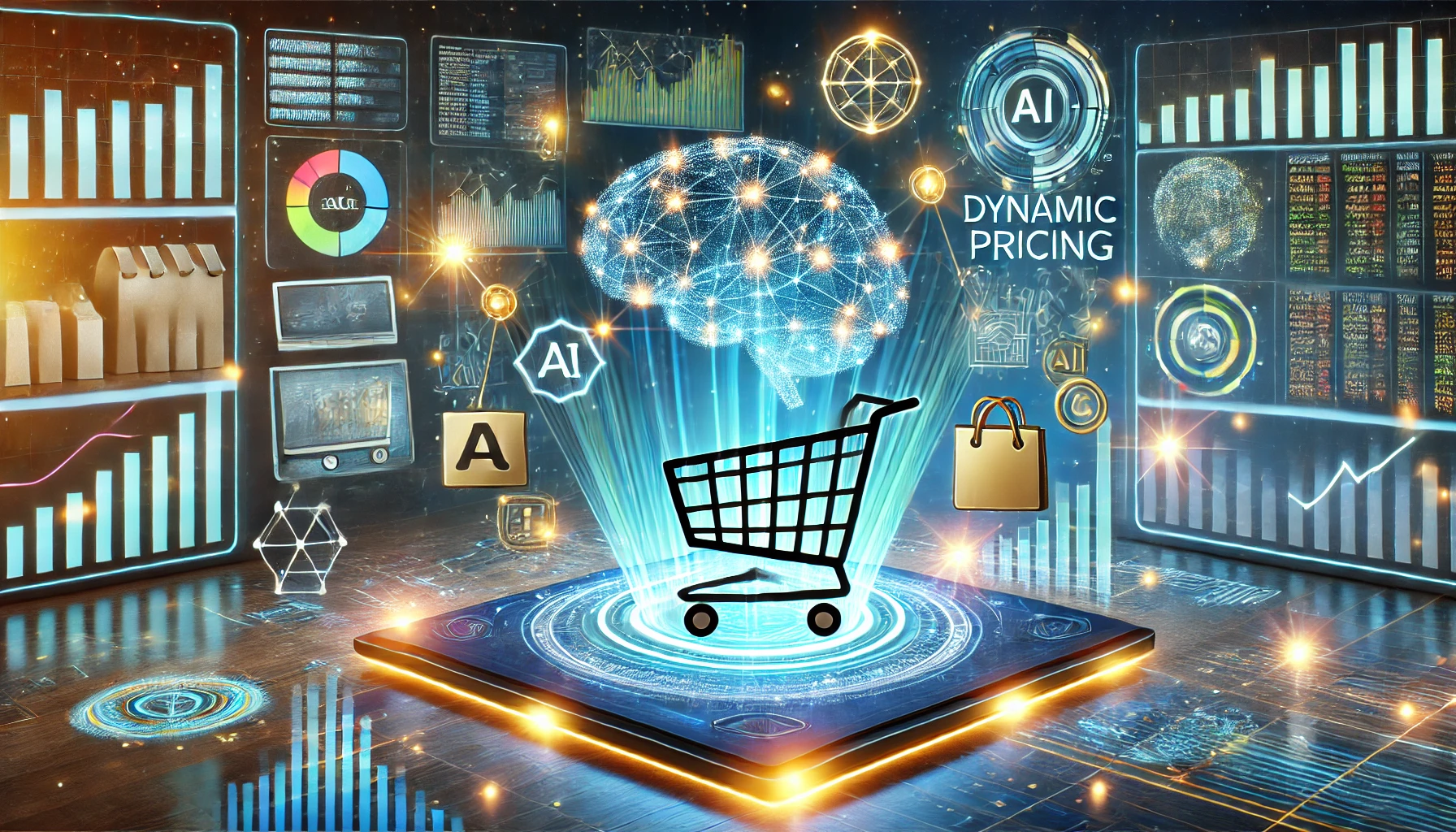
    Enter: Dynamic Pricing. AI-powered dynamic pricing helps e-commerce businesses adjust their prices in real-time, based on factors such as demand, competition, consumer behaviour, and many more. This AI-driven dynamic pricing not only helps brands provide tailored prices to each customer, but also improves customer satisfaction, market competitiveness, while also building brand awareness and salience.


    Understanding dynamic pricing: 

    Dynamic pricing is a strategy where prices of a particular product are tweaked in real-time in response to market conditions. Unlike static pricing, where prices need to be adjusted manually, dynamic pricing is an automated process which allows businesses to adapt their prices based on real-time data analysis. Some key factors influencing dynamic pricing are:

    Supply and Demand: Prices can increase when inventory is low

    Competitive pricing: Monitoring competitors’ prices and adjusting accordingly can be a good strategy to stay competitive.

    Customer behaviour: Insights into purchasing patterns enable personalized pricing strategies.


    The Intelligence Behind Price Tags

    At the heart of modern dynamic pricing lies a complex web of artificial intelligence systems that work tirelessly to optimize pricing strategies. These systems process vast amounts of data, from local festival schedules to weather patterns, creating a comprehensive understanding of market dynamics. In the Indian context, this means tracking competitor prices across platforms like Flipkart, Amazon India, and JioMart, while also considering local market conditions and regional preferences that make each state and city unique.

    The predictive capabilities of these AI systems extend far beyond simple competitor analysis. By analysing historical data, these systems can anticipate demand surges during significant events like Diwali or wedding seasons. In a country where weather patterns vary dramatically from region to region, these systems also factor in seasonal changes to adjust pricing strategies accordingly. Social media trends and local events are woven into the pricing fabric, ensuring that prices reflect not just market conditions but cultural moments as well.

    Perhaps most importantly, these systems understand the diverse nature of Indian consumers. From price-sensitive shoppers in tier-3 cities to premium urban consumers, AI-powered pricing engines create sophisticated segmentation strategies. This understanding translates into personalized pricing approaches that consider factors like customer loyalty, first-time purchases, and regional purchasing power.


    Impact on Indian Business Landscape

    The implementation of AI-powered pricing has transformed business outcomes across India’s retail sector. Companies consistently report significant profit increases, often ranging from 15% to 25%. This improvement comes not just from better pricing strategies but from more efficient inventory management and reduced wastage – particularly crucial in India’s tropical climate where perishable goods require careful handling.

    The system’s ability to adapt to market conditions has proven invaluable during India’s numerous festivals and local celebrations. Whether it’s Durga Puja in Bengal or Pongal in Tamil Nadu, retailers can now adjust their pricing strategies to reflect local demand patterns and cultural preferences. This regional sensitivity has helped businesses maintain competitive positions while respecting local market dynamics.


    Navigating Challenges in the Indian Market

    The implementation of dynamic pricing in India faces unique challenges rooted in cultural and technological realities. Price sensitivity varies significantly across regions, and the traditional bargaining culture remains strong in many parts of the country. Building trust in automated pricing systems requires careful communication and transparency, particularly in markets where personal relationships have historically driven business transactions.

    Technical challenges persist, particularly in tier-2 and tier-3 cities where internet connectivity can be inconsistent. Many businesses still operate with legacy systems that require significant upgrades to implement dynamic pricing effectively. Data quality and availability also remain concerns, particularly for smaller businesses entering the digital ecosystem.


    A Glimpse at the Future

    The future of dynamic pricing in India is closely tied to the country’s digital payment revolution. Integration with UPI and other digital payment systems opens new possibilities for real-time pricing adjustments based on payment methods. The government’s ONDC (Open Network for Digital Commerce) initiative promises to create new opportunities for implementing dynamic pricing across a unified digital marketplace.

    As India’s retail landscape continues to evolve, we’re seeing the emergence of hyperlocal pricing strategies that consider micro-market dynamics. These systems are becoming increasingly sophisticated in their ability to understand and respond to community-specific needs, including communication in local languages and consideration of regional economic factors.

    The story of AI-powered dynamic pricing in India is more than just a technological advancement – it’s a testament to the country’s ability to adapt global innovations to local needs. Through real-time data analysis and predictive analytics, companies across India are optimizing their pricing strategies to enhance profitability while maintaining customer satisfaction. This revolution is enabling businesses to respond swiftly and effectively to market changes, a crucial capability in India’s diverse and dynamic marketplace.

    As India continues its digital transformation, these systems will play an increasingly important role in creating a more efficient, responsive, and inclusive retail environment. The future lies in finding the perfect balance between technological advancement and cultural sensitivity, between profit optimization and customer satisfaction. With more businesses adopting these technologies, the competitive landscape continues to evolve, making dynamic pricing not just an option but an essential strategy for success in India’s digital marketplace. This balance will be crucial as India’s retail sector continues to grow and evolve, setting new standards for how technology can be adapted to serve one of the world’s most diverse and complex markets.

  • Weekend Digital Media Round-Up: X Launches Audio And Video Calls On Android, Google Rolls Out New Performance Max Guide And Updates Several Others, LinkedIn Launches Sponsored Articles; Details& More…

    Weekend Digital Media Round-Up: X Launches Audio And Video Calls On Android, Google Rolls Out New Performance Max Guide And Updates Several Others, LinkedIn Launches Sponsored Articles; Details& More…

    1.X Launches Audio And Video Calls On Android

    If you want, you can make a more direct connection with someone via your X DMs. So long as you’re a paying user, as it’s only available on X Premium subscribers. [Source: Social Media Today]

    2. Google Rolls Out New Performance Max Guide And Updates Several Others

    Google Ads now provides a new “Getting Started” Performance Max guide, assisting advertisers with step-by-step instructions for building more effective campaigns. The platform has updated various other guides to enhance the overall experience of creating, managing, and reporting on PMax campaigns using the Google Ads API. [Source: Search Engine Land]

    3. Linkedin Launches Sponsored Articles

    LinkedIn has introduced sponsored articles, providing marketers with an additional tool that may contribute to enhancing brand awareness, increasing engagement, and driving lead generation. [Source: Search Engine Land]

    4. How Conversational AI Is Shaping The Future Of UX

    Since personal computing’s inception in the 80s, we’ve shifted from command-line to graphical user interfaces. The recent advent of conversational AI has reversed the ‘locus of control’: computers can now understand and respond in natural language. It’s shaping the future of UX. [Source: UX Magazine]

    5. Meta Rolls Out New And Updated Tools To Improve Brand Safety Controls

    Meta introduced new tools and features to existing tools that enable brands to monitor their reputation across its platforms. These tools make it easier for businesses to monitor brand impersonation, prevent scams, report intellectual property infringement, and block infringing content across Facebook and Instagram. [Source: Search Engine Land]

    6. Google Introduces AI-Powered Conversational Features To Enhance Search Ads

    Google has recently launched a new feature in Google Ads. With the help of this feature, the users will be able to enjoy a more conversational experience with the advanced Gemini AI model. [Source: Digital Information World]

    7. Meta Adds New Brand Protection Tools, Including Improved Product Image Matching Processes

    Meta’s adding some new measures to help brands protect their IP, with an update to its Brand Rights Protection Manager tool, which detects replicas in product listings, and a new Intellectual Property Reporting Center. [Source: Social Media Today]

    8. Marketing And Generative AI: The Next Level Of Brand Communication

    The future of generative AI in B2B marketing holds immense promise. As this technology continues to advance, we can anticipate the development of even more sophisticated and captivating marketing campaigns. [Source: Brand Equity]

    9. Meta Looks To Get More Advertisers Utilizing Targeting Automation With Latest Marketing API Update

    Meta’s looking to lean further into AI for ad targeting, with the expansion of its automated “Advantage” targeting to all campaign objectives and optimizations. The update comes as part of Meta’s Marketing API v.19 update, which also includes various revisions and changes designed to improve campaign performance. [Source: Social Media Today]

    10. 7 Out Of 10 Ceos Are Planning To Invest In Gen-AI This Year: Report

    This report explores the evolving dynamics of consumer behavior and their impact on marketing strategies. It provides an in-depth analysis of current consumer preferences, needs and trend-setting behaviors, highlighting the main MarTech trends for 2024. [Source: Brand Equity]