LS Staging

Tag: digital marketing

  • Weekend Digital Media Round-up: Google’s upgraded Adwords mobile extensions, Facebook’s video hub ‘Watch’, Pinterest’s new promoted videos and more..

    Weekend Digital Media Round-up: Google’s upgraded Adwords mobile extensions, Facebook’s video hub ‘Watch’, Pinterest’s new promoted videos and more..

    1. Google updating site category exclusion options for Google Display Network campaigns

    Google is refining the options it gives advertisers for excluding categories of sites from their display network campaigns on the Google Display Network. [Source: Marketing Land]

    1. LinkedIn adds analytics, audience management & media buying solutions to its partner program

    LinkedIn added 19 more integrations and three new categories — Marketing Analytics, Audience Management and Media Buying — to its three-year-old Marketing Partner program. [Source: MARTECH TODAY]

    1. Facebook Announces New News Feed Update to Further Restrict Spammers

    Facebook’s continuing to expand its efforts to restrict the reach of spam and misleading content, announcing yet another News Feed algorithm change, this time solely focused on a practice called ‘cloaking’. [Source: Social Media Today]

    1. AdWords mobile extensions get major upgrades with tappable sitelinks & more visible content

    Google AdWords extensions are more powerful than ever, and they just got another major mobile upgrade. Mobile sitelinks are becoming interactive, while callouts and structured snippets are gaining more real estate. [Source: Search Engine Land]

    1. Google Outlines Problematic Ad Types in New Report, as a Precursor to Chrome Ad Blocker

    Google has launched tools like their Ad Experience report, which provides data on how the ads on your site fare in regards to the Coalition’s recommendations. Google also says that they’re reviewing sites daily and recording videos of poor ad experiences so they can include further visual guides within the Ad Experience report to help advertisers update their sites in-line with user expectations. [Source: Social Media Today]

    1. Twitter uses Foursquare, Nielsen to show impact of ads on offline store visits, sales

    Twitter wants you to know that its ads work — offline. To demonstrate Twitter ads impact real-world behavior, the company tapped Foursquare and Nielsen to show how telco campaigns on Twitter produced a meaningful effect on store visitation and sales. [Source: MARTECH TODAY]

    1. Facebook debuts Watch, its home for original shows

    Facebook announced on Wednesday that it will begin rolling out a revamped version of its existing home for videos that caters to the original, episodic shows Facebook has been licensing to make people think of it as a digital video service on par with YouTube, Netflix and Hulu. [Source: Marketing Land]

    1. Pinterest Rolls Out Promoted Video to All Advertisers

    A year after Pinterest first started testing promoted video, the platform’s now opening the option to all advertisers, giving brands a new way to connect with the Pinterest audience. [Source: Social Media Today]

    1. Bing Ads now shows potential conversion impact with budget suggestions

    Bing Ads advertisers that have the Universal Event Tag (UET) implemented may now see estimated conversion impact when looking at budget suggestions in their accounts. [Source: Search Engine Land]

    1. Facebook looks to clean up Audience Network with higher standard for counting clicks

    After appraising Audience Network publishers’ ad placements last year and this year offering advertisers more control over where their ads are placed within the ad network, Facebook is now instituting a higher standard when charging for clicks on brands’ ads. [Source: Marketing Land]

    Expert Opinion:

    1. Improved customer experiences can reap long term benefits for brands

    Customer experience is one of the most important factors affecting the overall revenue generation of a brand. Despite understanding the importance, marketers often seem to lack a robust customer experience strategy for their brands.

    The latest study done by Salesforce suggests that 75% of users expect a consistent experience wherever they interact with brands and 64% of users demand immediate interaction. Customers expect a proactive approach and personalised experiences from companies.


    Enhanced customer experience can benefit the brands with:

    – increased preference from customers to purchase your offerings

    – brand loyalty with higher chances of repurchasing

    – improved customer retention

    – stronger word-of-mouth publicity

    Although no proven theories suggest the impact of customer experience on revenue, marketers believe that it plays a significant role in increasing the ROI and improving the overall performance of a company.

    With the rapid rate of digital innovations and varied experiences provided by various brands, it becomes crucial for marketers to work on building a strong customer experience strategy in order to gain their customers’ trust and flourish their businesses.

    Sai Narayan, Associate Director & Head of Marketing, Policybazaar.com and Paisabazaar.com

  • Protect Your Brand’s Ads on Facebook to Prevent Bad Publicity

    Protect Your Brand’s Ads on Facebook to Prevent Bad Publicity

    In the digital marketing parlance, the concept of knowing how the customers perceive your brand has been prevalent for a long time. The brands from around the world, over the years, have been cautious about creating a positive image about themselves to the potential and existing customers. However, it is only recently that the concept of brand safety has emerged greatly and is being taken quite seriously by marketers around the world, especially in the digital sector.

    Earlier in February 2017, The Times published an article, which claimed that Google funded world terrorism by allowing YouTube ads to feature in the extremist video content. However, soon the brands started to notice that their ads have been appearing on various radical news sites through Facebook Audience Network. In this write-up, we would take a closer look at different mechanisms that allow the reputation maligning mistakes that occur on Facebook and what the advertisers can do to avoid being victims.

    What are the risks of bad publishing of ads?

    In theoretical terms, the advertisers should not be worried more about advertising on social platforms as all their online activities are on display for public viewing. Millions of websites can display your ads, however, if you publish your ad on Facebook, it would typically be visible on Facebook alone. This is a general belief, right? But this the most common mistake that most advertisers commit.

    If Facebook had to rely on the newsfeed alone for ad placement, they would be limiting the ad revenue. They have come up with other sources to resolve this situation.

    FAN – Facebook Audience Network

    Facebook launched this network in 2014, which is essentially a network of varied mobile sites and apps that can be chosen as a placement at ad set level. This allows your advertisements to feature outside the Facebook system.

    Instant Articles

    Instant articles, which are meant for mobile web allows quick loading of articles on Facebook. The instant articles were initially criticized for affecting the revenue value of the publishers. However, in its recent updates, Facebook has rolled out ad units that are placed at the bottom of the articles.

    In-Stream Video

    The video format allows delivery of five to 15 seconds video ads within the live and non-live videos.

    With the availability of more space for placing your ads, it directly translates into more revenue for Facebook. However, the problem with these placements is that while it enables you to choose whether to use the space or not, you are not allowed to choose the videos or articles that you want to appear on Facebook.

    Why take the risk?

    One of the best ways to avoid being victims is to refrain from targeting these placements. If you notice that your ads are visible only in people’s newsfeed, then there is no risk.

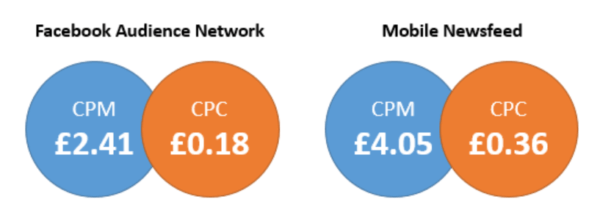
    From the above image, there are two crucial things to consider. However, you must note that this will vary from client to client. If FAN doesn’t prove to be efficient for you, it would only make sense for you to avoid targeting this placement. Secondly, with the video performance, the natural in-stream video will fetch you more views since your ad will be visible only when someone is watching a video. The users would have to watch your ad to be able to see the video of their interest.

    How can advertisers protect themselves?

    Until 2016, Facebook had no means for brand protection. FAN was an entirely blind network that did not have the capacity to suggest where the ads appeared or even block the risky ads. It is no surprise then that this did not go well with the global advertisers. In 2016, the social networking giant released the ability to block ads of a few categories like gambling and dating.

    However, in June 2017, Facebook rolled out few controls (Pre-campaign transparency, Blocking at account level) that allowed the advertisers to have better control over their ad placements. In the purview of these new controls, here is how Facebook has categorized the safety levels:

  • Are Autonomous Vehicles the Next Big Marketing Avenue?

    Are Autonomous Vehicles the Next Big Marketing Avenue?

    Recently, talks have been doing the rounds everywhere about autonomous vehicles being the next big thing. If it becomes a reality, as a pedestrian it would be frightening to see vehicles whizzing past you down the road, and there is no one behind the steering. However, from the marketing perspective, autonomous vehicles come as a good news as it opens up a broad new marketing avenue for publishers. This implies that the screens of vehicles will now become the space or platform where publishers and advertisers will compete against each other.

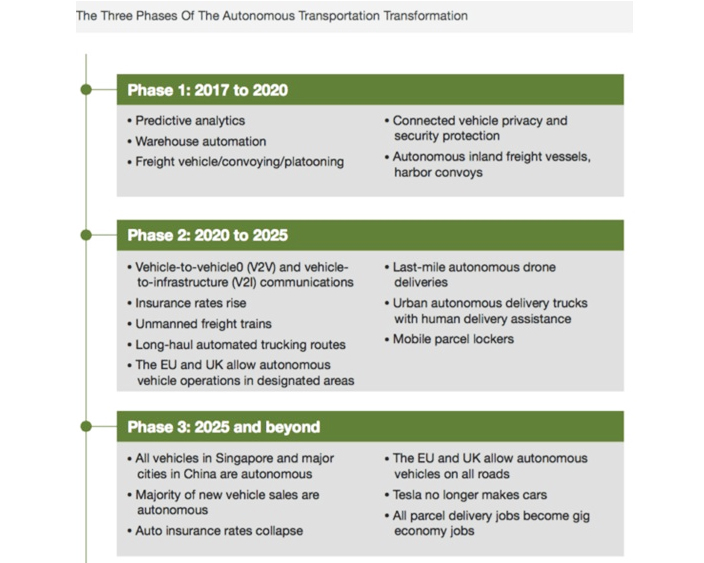
    A new report from Forrester suggests that these vehicles, if and when becomes a reality, are sure to have a massive impact on the global economy. The report further states that it would be no surprise if global brands become sponsors for the rides in the near future. You may see ads like your next vacation is sponsored by XYZ brand.

    For instance, a family vacation to Disney Land in Florida can be sponsored by Disney and can provide the customers with an experience of their lifetime. The screens inside the vehicle can play Disney videos, and even the vehicle itself can be turned into a pirate ship. The report claims that autonomous cars would give the advertisers a belief that the interiors of the vehicle that are equipped with screens, speakers and interactive sensors would resemble a living room or dens. With autonomous vehicles plying on the roads, according to the reports, in the future, the automakers would evolve into publishers and feed the consumer with car-based news and entertainment and also develop a direct relationship with the customer who are essentially the owners of mobile theatre.

    The different possibilities of marketing and advertising through autonomous vehicles is only one aspect of the report, which quintessentially focuses on the impact that autonomous vehicles are likely to have on various businesses including logistics, shipping, insurance and data privacy.

    Apart from the marketing point of view, there are many other pros and cons of autonomous vehicles. While, it could significantly reduce the traffic on roads, on the other side, it could lead to massive loss of employment, especially for truck drivers. According to Forrester’s reports, the self-driving vehicles would have inherent features such as obstacle avoidance technology, image recognition, road sensors and vehicle-to-vehicle communication system. Not to mention, in the wake of Tesla testing the self-driving cars, it is reported that nearly 94% of all road accidents are caused due to human errors. Having said about the pros and cons of autonomous vehicles, the technology is not going to be implemented tomorrow; it still has a long way to go before it becomes a reality.

  • Weekend Digital Media Round-up: Google’s native ad blocker for Chrome, Facebook’s updated NewsFeed Algorithm, Snapchat’s new feature allowing brands to track the impact of their ads and more…

    Weekend Digital Media Round-up: Google’s native ad blocker for Chrome, Facebook’s updated NewsFeed Algorithm, Snapchat’s new feature allowing brands to track the impact of their ads and more…

    1. Google updates quality raters guidelines with details around non-English language web pages

    Google updated their search quality raters guidelines PDF document a few days ago. The core change is the new guidelines around non-English language pages. [Source: Search Engine Land]

    1. The IAB releases its new standard ads portfolio with multi-screen sizing

    The Interactive Advertising Bureau has released the final version of new standard ad units that incorporate the industry group’s LEAN guidelines for lightweight ads as well as the Coalition for Better Ads’ set of ad guidelines developed in response to the use of ad blockers. [Source: MARTECH TODAY]

    1. Facebook Updates News Feed to Penalize Non-Mobile Optimized Websites

    Facebook has announced another News Feed algorithm update, this time focused on reducing the reach of websites which are not optimized for mobile devices. [Source: Social Media Today]

    1. Facebook will let brands target ads to people who RSVPed to their Pages’ events

    Facebook plans to let brands target ads to people who RSVPed to events posted by a brand’s Page. The event-based targeting will be a new option within Facebook’s Custom Audiences ad-targeting product, which originated as a way for brands to convert their existing customer bases into an audience to target on Facebook and has expanded to doing the same for brands’ followings on Facebook and Instagram. [Source: Marketing Land]

    1. Google’s native ad blocker for Chrome shows up in Android developer build

    Google will reportedly debut a built-in ad blocking feature for its Chrome browser next year, and now we have the first concrete look at this addition to the web navigation software in action. [Source: TechCrunch]

    1. Snapchat will let brands measure its ads’ impact on sales, results against rivals

    Snapchat rolled out a program to allow third-party measurement firms to track its ads’ impact on a brand’s sales and to include that data in the dashboards that marketers use to evaluate where they’re spending their money and, of those places, where they’re getting the best bang for their bucks. [Source: Marketing Land]

    1. This script creates Google Slides with AdWords data to automate your presentation-making

    Google just introduced its latest advanced API integration for AdWords Scripts: Google Slides. That means you can now programmatically connect AdWords with Google Slides. [Source: Search Engine Land]

    1. Instagram Releases New Stats on Stories Use to Celebrate Stories’ First Anniversary

    It took a little more than a week, but effectively, this is what Instagram has done. They did release a tool called ‘Eraser Brush’ a few days later (though not the same functionality as Snapchat’s tool), and now, on the one year anniversary of the release of Instagram Stories, they’ve reported that users under the age of 25 are spending 32 minutes per day in the app, up from 21 minutes per day at last official report. [Source: Social Media Today]

    1. Report: Facebook working on video-chat device and smart speaker

    Facebook is working on an Echo Show competitor and possibly on a second device, a smart speaker to compete with similar units from Amazon, Google and Apple. [Source: MARTECH TODAY]

    1. Not ad creep: Images labeled ‘Product’ in Google Images part of new badges markup

    Users searching for products on Google Image search will now notice that sometimes images appearing at the top of the results are labeled with a “Product”. This is part of the new badge markup Google introduced earlier this week. [Source: Search Engine Land]

    Expert Opinion:

    1. Why brands should focus on improving mobile consumer experience?


    Off late, digital user experience has become the need of the hour for brands. Consumers want everything quick and instant. Thus, providing the best digital experience becomes a key differentiator for brands to maintain brand loyalty and improve the overall brand image.

    With newer technologies and increased penetration of mobile devices across markets, marketers need to be on their toes by coming up with innovative ways to provide a delightful experience to their customers every time they interact with a brand. The latest report by Google suggests that 89% of users are likely to recommend a brand after a positive experience on mobile. Customers are highly demanding on mobile, and organisations need to invest a lot to match up with the service and experience demands. Companies need to provide highly customizable mobile experiences based on individual likes and dislikes.

    Also, with the increase in the usage of smartphones and the decreasing cost of data, mobile has become the preferred medium for users to connect with brands for their needs.

    Some simple and efficient ways to provide a seamless experience to the customers on mobile are:

    –  To prioritize customer relationship and integrate their insights into all the processes followed by a brand

    – To understand your customers well by analyzing the data available and the logic behind why a particular customer prefers a particular route and continuously improving on the problem areas

    – To adopt a customer-centric approach across all the departments in the organisation so that all the functions work towards providing the best of the best experience to the end users

    As per the latest mobility report published by Ericsson, there will be 6.1 billion smartphone users globally by 2020. Also, nowadays customers have more choices than ever. It is vital for brands to be at the top of their game and provide a superior experience to the mobile users.

    Aniruddha Dange, President – Chief Strategy Officer, IIFL (India Infoline Group)

  • Understanding the Customers’ Device Graphs is the key for Targeted Marketing

    Understanding the Customers’ Device Graphs is the key for Targeted Marketing

    In the purview of the growing usage of the different mobile devices among the consumers globally, cross-device identity matching has gained a huge significance among the marketers. The modern day marketers are taking the device graph serious since it provides them a solid foundation for profiling the different users based on their mobile device usage for different purposes. Today, it is nearly impossible for a business owner to get a complete picture of their existing or potential customer unless and until they track their daily activities across all devices.

    There are two major players specializing in the Device Graph, vis-à-vis Tapad and Drawbridge. There are also other companies like Criteo, which specializes in retargeting that develops Device Graphs as essential marketing tools. The big cloud companies like Adobe, Salesforce and Adobe have either developed their own tools or they have a partnership deal with vendors who develop device graphics as an integral part of their platforms.

    Mike Murphy, the Senior Marketing Manager at Drawbridge suggests that all the Device Graphs are built on a single fundamental idea, however, each developer has a different formula in terms of providing weightage to a certain attribute. Typically, there are to major techniques, which are probabilistic and deterministic and most Device Graphs use both techniques in some way or the other.

    The Deterministic technique are considered to be a gold standard since they  provide definitive results on which device the customer uses the most. This data is usually collected through the logins of the users. For instance, if the customer regularly uses his smart phone or the tablet device to log onto a particular website or portal, the brands can easily conclude that the user is most associated with that particular device. The Probabilistic technique on the other hand user the most common probable data points such as the time of the day when the device is used the most by the customer, the physical location of the device, which is derived by the IP address and the browsing patterns of the user. Murphy stated that Drawbridge has the potential to identify the device usage of an individual even if the same device is shared by other members in a household for different purposes.

    In the video below, Tapad shows the Device Graph process which are largely derived using the probabilistic technique:

    https://youtu.be/M-0P-_lFVq0

    More often than not, Device Graphs are made using both deterministic and probabilistic techniques. For example, the user’s multiple device usage can be determined with a high degree of accuracy only if one the devices was used to log into the brand’s site. That one particular device, which is used by the customer becomes the definitive association and the other devices, which are placed at the same location may be used for visiting the same website on a daily basis. This and other attributes of the device usage pattern can give the Graph-maker sufficient data to conclude that the devices belong to the same users even though he/she has used only one device to login.

    Whilst it is known that the deterministic-based approach yields more accurate results, there are many vendors who claim that the probabilistic approach has provided results that are 80 to 90% accurate. Retargeter Criteo has claimed that it considers Device Graphs to be a vital tool for its businesses and it has built the largest global scale mapping of email addresses to Cookies.

    Murphy considers the usage of Device Graphs will continue to rise in the near future and it will continue to use a combination of both deterministic and probabilistic techniques. However, one of the possible exceptions would be the usage of biometric identification for logging into the aps or the website.

  • Did You Know? Google Ranks the Videos Differently than YouTube.

    Did You Know? Google Ranks the Videos Differently than YouTube.

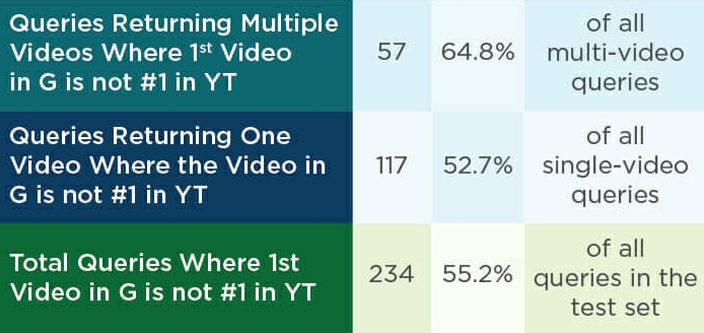
    Have you ever noticed that while searching something online, Google shows a certain kind of YouTube videos in its search results, however, if you use the search term on YouTube, you would get different search results. This happens because according to a report from the Stone Temple Consulting, Google and YouTube rank the videos differently. As a matter of fact, the videos that you would yield on Google and YouTube search results for any given keyword would be different 56.8%.

    Eric Enge from Stone Temple Consulting conducted a thorough research on the subject and some of the findings that he has pointed out has been outright startling. For a few the study may be a revelation in knowing how the two biggest companies function differently. Some of the key findings by Eric Enge is explained the image below:

    Apart from discovering that nearly more than 50% of the time the Google search results show different YouTube videos that has different ranking on YouTube, Enge also figured out that even when Google showed up only one video, more than 55% of the time, the same video would not show up first on YouTube for the same search query. In his hypothesis, Enge suggested that the ranking of the videos is different because the different websites have different goals that they have their own KPIs.

    Whilst the search engine giant, Google tires to provide the users the most relevant content for their search queries, YouTube has a different job to do, it is more focused on providing the best entertainment. The study conducted by Enge points out the approach of YouTube and Google in analyzing the videos as well as the differences in their ranking systems.

    If you are a business owner and are looking for tips to get higher rankings for your videos on both Youtube and Google, the following optimization tips will greatly help you.

    Optimization checklist for YouTube:

    The most fundamental thing to do for optimizing your video on YouTube is to do a little bit of research on the keyword; you would need to determine the keyword that is related to your video and yet the ones that are used the most by the users. Make sure that the keywords you choose are relevant to your business. You can use the various keyword research tools to identify the most popularly used keywords and at the time, it would be make sense to type a few keywords on the YouTube search bar and see the autocomplete suggested terms.

    Another important thing to consider is to check the top videos that appear on the search result for the keywords that you want to target. If you are a small business owner and if the top ranked videos have a large number of views and also have many subscribers, then the keyword might be very competitive and it would be difficult to get high ranking for your video. Once you have created, the next step would be:

    • Provide a good descriptive file name for the video
    • Provide a simple yet compelling title
    • Choose a set of related keywords that have high rankings. It is best advised to use long tail keywords
    • Write good, descriptive description of what the video is about; the description should have minimum 200 words
    • Place the video in the appropriate category

    Optimization checklist for Google

    All the fundamental things that are used for optimizing videos for YouTube like providing a good description, having a good title and a description for the video are also applicable for optimization on Google. However, the keyword research process for Google is different. Since Google is a broad-based platform, its video usage is quite limited as compared to YouTube. Another important aspect optimizing videos on Google is choosing the right topic. Since Google is used to search a wide range of things, it would be best advised to do a bit of research to figure out the areas that have the most potential; there are certain areas where having one or more than one videos, the chances of getting your video ranked on the first page will be higher.

    Some of the most popular areas where your videos can get higher ranking are:

    • Informational videos
    • Reviews
    • Tutorials
    • How to do videos
    • Entertainment

    From the keyword research perspective, it is imperative that you target only the keywords that have a good search volume and also are relevant to your business. Another important thing to consider for getting high rankings for your videos is to create videos to suit your business goals. For instance, if you want to build a strong reputation about your business, then having some information and tutorial kind of videos would be the best approach. This would help you create an impression that you are an expert in the field and it would help you build trust among the targeted audience.

    To conclude, the ranking algorithm of Google and YouTube is different and the returns on your investment will greatly depend on the strategy you adopt for both the platform and how well you execute them.

  • Weekend Digital Media Round-up: Google’s new call bid adjustments in AdWords and changed Sitelinks design, Instagram’s new analytics for brands’ organic posts, LinkedIn’s Website Demographics and more…

    Weekend Digital Media Round-up: Google’s new call bid adjustments in AdWords and changed Sitelinks design, Instagram’s new analytics for brands’ organic posts, LinkedIn’s Website Demographics and more…

    1. Google has dropped Google Instant Search

    After launching Google Instant — Google’s method of showing search results as you type them — several years ago, Google has removed the feature from search. [Source: Search Engine Land]

    1. LinkedIn Provides Capacity to Add Multiple Images in a Single Post

    LinkedIn continues to add new tools and features, improving the user-experience in tiny increments, as opposed to adding in wide-scale changes. The latest addition comes in the form of multi-image posting. [Source: Social Media Today]

    1. Instagram starts sharing analytics for brands’ organic posts, Stories through API — but there’s a catch

    Instagram started sharing analytics for brands’ organic posts and Stories through the Instagram Platform API, so that brands can pull up these stats within the marketing dashboards they use to manage and monitor their various social accounts. [Source: MARTECH TODAY]

    1. Google officially changes Sitelinks design to carousel format

    Google has been testing a carousel format for these Sitelinks for over a year and today has confirmed they are now rolling out the new carousel-based design for mobile search results. [Source: Search Engine Land]

    1. Google testing list format for AdWords enhanced sitelinks

    Google is now testing a list format for enhanced sitelinks. The link font is smaller, but taken together, the list of four enhanced sitelinks takes up more real estate than the column format. [Source: Search Engine Land]

    1. YouTube Adds New Tools to Help Publishers Moderate Comments

    Over on the YouTube Help forum, the platform has announced that publishers will now be able to have comments with links or hashtags included within them to be held for review. [Source: Social Media Today]

    1. LinkedIn’s Website Demographics lets brands analyze site visitors using LinkedIn data

    LinkedIn is going to give businesses a better idea of who’s visiting their sites, such as those visitors’ job titles, company names and locations. [Source: MARTECH TODAY]

    1. Google intros new call bid adjustments in AdWords

    Google is adding a bid adjustment in AdWords specifically for calls. The bid adjustment for calls informs how often call information appears in mobile search ads. [Source: Search Engine Land]

    1. Linqia unveils ‘first’ platform for predicting influencer engagement

    Linqia is out this week with a new version of its platform that it says offers the first predictive analysis of influencers’ performance. [Source: Marketing Land]

    1. Google confirms testing auto-play videos in the search results

    Google has confirmed that they are running a small experiment where they auto-play videos in the search results page. When you do a search for some movies (and possibly television shows), Google will begin autoplaying a video in the right hand sidebar, appearing within the knowledge panel. [Source: Search Engine Land]

    Expert Opinion:

    1. Make the most out of your marketing budgets with cross-device marketing.

    Cross-device targeting is the practice to identify and deliver ads to a specific set of audience across various devices they use. Cross-device marketing is a very effective approach that marketers can use to reach the correct audience and achieve the desired results from their campaigns. Combined with device graphs, marketing professionals can correctly identify various consumer devices to connect with and measure every interaction. Combining the data from different customers across different devices, marketers can plan the campaigns efficiently and achieve positive returns on the ad spends.


    Cross-device marketing can help marketers to:

    – Deliver personalised content and provide delightful experience

    – Accurately target the audience and reduce wasted ad spends

    – Optimise business results with correct attribution

    Mastering cross-device data and managing campaigns using this data can be a game changer for making the most out of the marketing budgets. Also, with the understanding of cross-device identity, marketers can be future ready with the introduction of new devices which will open up more opportunities to target the customers in different ways.

    According to IHS, there were around 15.4 billion connected devices in 2015, and this number is projected to go up to 30.7 billion by 2020, ranging from watches to TVs to cars to home appliances. Each of these devices is an opportunity for the marketers to interact with the consumers digitally and gain possible conversions for their activities.

    Subhrangshu Neogi, Director, Head – Group Marketing & Brand, Religare

  • Will Google’s Natural Language and Machine Learning Democratize Analytics?

    Will Google’s Natural Language and Machine Learning Democratize Analytics?

    Last week, the world’s leading search engine, Google announced that it would integrate the voice-activated assistance feature in the Google Analytics in its mobile app. This comes as a great news for the users as they would now be able to ask queries in the tool using the natural language; this would make the previous structured query system outdated.

    The users can access the feature by clicking on the ‘ask a question’ section, which would soon be integrated into GA. However, Google announced that the ‘ask a question’ feature, for now, will only be available in English and it will be rolled out for all the users globally. While the feature is now going to be a reality, the concept was first announced by Google at its advertising and analytics events in San Francisco in 2016. The feature is built on the Analytics Intelligence, which was rolled out in September 2016.

    Babak Pahlavan, the head of Measurement and Analytics at Google, said that the company was highly motivated to the Analytics more user-friendly and increase its accessibility through machine learning. He further said, the machine learning capabilities of Google has significantly accelerated the development and the launch of the natural language feature.

    Several surveys have corroborated that nearly 70% of the small and medium sized (SMEs) business from around the world do not use the analytics. It is thus apparent that there is a lot of room to simplify the tool to make it more accessible for the SMEs and help the take advantage of the analytics to improve their business prospects. Pahlavan, said that with regards to the survey results, the voice-activated assistance feature would be a great boon for business owners as it would help them get answers to many of the usual business related questions.  However, you need to know that the GA voice system will not be able to answer all the questions as yet.

    For the time being, the GA voice assistance system is equipped to answer only the ‘what’ question, however, soon, Google will improve the feature to answer the ‘why’ questions, said Pahlavan. The measurement and analytics head stated that Google sees the voice assistance and machine learning as a way to simplify the GA usage and to make it more democratic in the near future. It is estimated that nearly 700,000 people from around the world use GA on their mobile devices every month, with a vast majority of the users using it every day. With the new ‘ask a question’ feature integrated on the GA app, it is sure to increase the engagement and the usage over the mobile.

  • Google Can See the JavaScript Links that No One Can See

    Google Can See the JavaScript Links that No One Can See

    In what may come as a revelation for many small and medium sized organisations, Google is now parsing Javascript and processing content within the DOM. Google has tested and confirmed that many tools available that provide data backlinks and can only see the HTML elements that are classically formatted within the source code of a particular page. These tools do not capture the link referrals from JavaScript redirects that are dynamically inserted <a> tag link or the URLs that are associated with JavaScript onclick events.

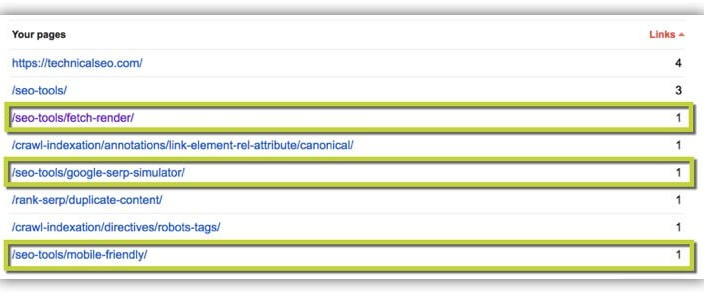
    Apart from the GSC or the Google Search Console that has limited backlink data, the top players in backlink data providers like Ahrefs, Majestic SEO and Moz Open Site Explorer are not reporting on the JavaScript-based link referrals currently. In a test setup to point the JavaScript-based links at TechnicalSEO.com, the links to the targeted pages were not present on the referring site previously.

    While the URL ‘strings’ are found in the page’s source code, they are linked to the onclick events and not within the href attribute of the <a> element. The links in the above imaged are picked up and are reported within the GSC. It is thus quite clear that Google has much understanding of the things that can be classified as ‘link referral’ in today’s digital ecosystem. However, it is quite unfortunate that the same links are not reported by the top data providers that are mentioned earlier.

    Some of the most common concerns that SMEs may have are addressed below:

    Is it really something to worry about?

    The lack of visibility for JavaScript-based link referrals could be an area of concern for webmasters. Since Google can parse the JavaScript, the JavaScript based link referrals are able to be considered while analysing the profiles for webspam. It is highly likely that Google is considering the JavaScript-based links within the link penalties, its inability to view the data within the backlink data tools can hinder the webmasters’ ability to make sure that the profiles are as per the rules.

    Since the Google is providing the links, GSC data should be enough to work from because it is the data owned by Google. Isn’t it?

    It is quite unfortunate that the ‘links to your site’ data will not show you everything that you would need to see to be able to conduct a thorough review of the backlink profile. The data is quite limited; it provides only about 1,000 rows per example and the sample report. As the best measure, people who are trying to review and monitor the backlink profiles, they are encouraged to use the multiple data providers and not just GSC. There have been many instances where the example links that is provided by the Google Webspam Team in a Manual Action message which was not found by any backlink tools including the GSC.

    Do the JavaScript-based link referrals have the same weightage as the conventional redirects?

    Yes. Google not only looks at the JavaScript redirects but Mariya Moeva, a team member at Google, looks at the DOM rather than the source code of a page. This was confirmed by the Mariya Moeva, a Search Quality Team member at Google. It is therefore clear that the elements that the dynamically inserted <a> would have the same weightage as they would be located within the source code.

    What would be the number of backlinks affected by this?

    It would be hard to provide the exact number, but in a survey conducted by OverStack it was noted that in 2016 more than 56,000 developers from around the world Javascript was the most popular technology; it was used by 90.5% of the front-end developers and 54.4% back-end developers.

    What do I do with this knowledge?

    For now, the SMEs owners can wait for the backlink data providers to catch up the JavaScript-based link referral reporting. Today, there are many tools that are going against the wide web and are appreciating the JavaScript for each page in their indices.

  • Twitter’s Timeline is Becoming More Algorithm-Influenced – Here’s How It Can Benefit Brands

    Twitter’s Timeline is Becoming More Algorithm-Influenced – Here’s How It Can Benefit Brands

    If you haven’t checked Twitter recently, you ought to check it out. Twitter has changed the way tweets are displayed on a user’s timeline. You will see much more tweets compared to its earlier avatar. Also, Twitter has started showing more relevant tweets now. By virtue of more tweets and thereby more user engagement, its revenue and earnings have increased by 14% and 12% in the first two-quarters of 2017.

    What are the changes?

    One of the primary changes Twitter has deployed to make the tweets relevant and display those tweets at the top is the use of an algorithm. It takes into account, the tweets you are tweeting as well as replying and that way it decides your area of interest. On the explore tab, it displays popular tweets of the subjects in which your Twitter activity had shown interest. Suppose if I had recently typed Kevin Durant, it would show the popular NBA or results tweet.

    One of the most important things to be considered is, it takes into account only the recent activity and not your old timeline. This way the algorithm is able to generate latest tweets according to your interest.

    Now the logical question would be how to take advantage of the new algorithm based system.

    What’s in it for you?

    The new algorithm on Twitter timeline shows two key takeaways:

    1) It heavily focuses on your recent Twitter activity

    2) It can be largely influenced by user actions

    Although these are just two of the factors a Twitter algorithm works with, we can safely say it’s not complex like Facebook. So it’s an obvious candidate for manipulation. We can definitely take advantages of this new update. Below are two nifty ways:

    • Generate more buzz with your tweets

    The algorithm displays more tweets on top, which are largely engaged by users and which produce more conversation among them. You can jump in the conversation by talking about that particular subject and inspire them to talk more.

    • Like and reply

    After the Twitter algorithm started working, you must have seen much more tweets from people you don’t know or follow. Even if you respond to unknown individuals and like their tweet, you will generate significant exposure, and that would help you to market your products or services better.

    But a random conversation with random people can alienate your loyal audience. So you will have to do it smartly, thereby not offending your followers.

    Use these Twitter timeline algorithm changes to your advantage and improve your brand and personal visibility substantially.