LS Staging

Tag: digital advertising

  • Weekend Digital Media Round-up: Google testing new lightweight version of search for slow speed networks, AdWords Universal App Campaigns take over, Facebook’s selling in-stream-only video ads and more..

    Weekend Digital Media Round-up: Google testing new lightweight version of search for slow speed networks, AdWords Universal App Campaigns take over, Facebook’s selling in-stream-only video ads and more..

    1. Google is testing a new lightweight search app for slow internet networks

    Google is testing a new lightweight version of their search app in Indonesia and maybe India, to see how they can speed up their search services in locations where internet speeds are on the slower side. [Source: Search Engine Land]

    1. Facebook Adds New Branded Content Tools to Better Facilitate Influencer Marketing

    With influencer marketing on the rise, Facebook’s adding some new tools to make it easier for businesses to get the most out of their influencer collaboration efforts – while also providing transparency in the process. [Source: Social Media Today]

    1. Facebook will penalize fake videos in latest news feed algorithm update

    Facebook’s news feed algorithm will start penalizing photo posts that mimic video thumbnails — play button and all — as well as video posts that solely feature a static image. [Source: Marketing Land]

    1. AdWords app-install campaigns to sunset as Universal App Campaigns take over

    The company is moving all app-install ads under the umbrella of UAC. Google said that as of October 16, all app-install campaigns will run as UAC ads. All current app-install campaigns will stop running on November 15; so developers and publishers need to convert their campaigns accordingly. [Source: Search Engine Land]

    1. Report: ‘Asset tracking’ now a primary use case for indoor location and beacons

    Proximity and beacon data platform Unacast has released its Q2 Proximity.Directory report. The report goes beyond marketing use cases to look at how proximity sensors are being deployed for “asset tracking” (people and places) across industries such as healthcare, logistics, manufacturing and others (marijuana is one of the featured categories). [Source: MARTECH TODAY]

    1. Facebook Updates News Feed Layout to Improve On-Platform Engagement

    Facebook has announced an update to their News Feed layout which will help cater to common user concerns and make the Facebook process easier and more clear-cut. [Source: Social Media Today]

    1. Dynamic Search Ads pilot in Bing Ads now open to all US advertisers

    Bing Ads’ testing of Dynamic Search Ads (DSA) is expanding to and now available to US advertisers. [Source: Search Engine Land]

    1. Pinterest Adds Pinch to Zoom, Updated Visual Search

    As Pinterest works to evolve its visual search options, they’re also looking to put more emphasis on their search tools and functions, in line with user demand. Their latest advances on this front see them introducing pinch to zoom, already a common function on many other sites, and moving the visual search button to make it more prominent. [Source: Social Media Today]

    1. Facebook offers in-stream-only video ad buys as it looks to rival YouTube, TV

    Facebook has started selling video ads that will only appear in videos that people watch on its social network or across its ad network of third-party sites and apps. In other words, video-hungry advertisers can finally buy video ads from Facebook that will only run in the same context as the ads they buy from YouTube, Hulu and TV networks — in-stream video ads that people will be more likely to watch, and watch with the sound on. [Source: Marketing Land]

    1. Google Questions and Answers for local businesses now available For Android

    Google has launched a new feature for businesses within Google Maps to answer commonly asked questions from prospects and customers directly over their Android devices. [Source: Search Engine Land]

    Expert Opinion:

    1. How will brands benefit from micro-influencers?

    Influencer marketing is one of the widely used marketing strategies by brands worldwide. However, rather than using celebrities and influential personalities, a lot of brands are shifting the focus towards micro-influencers. At Videocon, we have had a lot of success in boosting sales with micro-influencers.

    Micro-influencers, who are local people with smaller but relevant and loyal set of audience, prove to be a better medium to reach the correct set of target audience while achieving better results for brands. Also, since micro-influencers have a more valued and trusted set of followers, the brands can achieve long-term results. Studies suggest that 94% of consumers consider micro-influencers highly knowledgeable and 82% consumers follow a micro-influencer’s recommendation.

    Contrary to the higher costs involved for campaigns with celebrities and influential personalities, micro-influencers also lower the overall costs of the marketing campaigns and provide the flexibility to engage with multiple influencers for a single campaign. It is observed that the users with 1000-4000 followers showcase 4.5% engagement while the ones with more followers showcase lesser engagement.

    With so many benefits and better engagement, micro-influencers should be an important part of your digital marketing strategy.

    Shikher Gupta, Head – Brand and Digital Marketing, Videocon.

  • Weekend Digital Media Round-up: Google’s upgraded Adwords mobile extensions, Facebook’s video hub ‘Watch’, Pinterest’s new promoted videos and more..

    Weekend Digital Media Round-up: Google’s upgraded Adwords mobile extensions, Facebook’s video hub ‘Watch’, Pinterest’s new promoted videos and more..

    1. Google updating site category exclusion options for Google Display Network campaigns

    Google is refining the options it gives advertisers for excluding categories of sites from their display network campaigns on the Google Display Network. [Source: Marketing Land]

    1. LinkedIn adds analytics, audience management & media buying solutions to its partner program

    LinkedIn added 19 more integrations and three new categories — Marketing Analytics, Audience Management and Media Buying — to its three-year-old Marketing Partner program. [Source: MARTECH TODAY]

    1. Facebook Announces New News Feed Update to Further Restrict Spammers

    Facebook’s continuing to expand its efforts to restrict the reach of spam and misleading content, announcing yet another News Feed algorithm change, this time solely focused on a practice called ‘cloaking’. [Source: Social Media Today]

    1. AdWords mobile extensions get major upgrades with tappable sitelinks & more visible content

    Google AdWords extensions are more powerful than ever, and they just got another major mobile upgrade. Mobile sitelinks are becoming interactive, while callouts and structured snippets are gaining more real estate. [Source: Search Engine Land]

    1. Google Outlines Problematic Ad Types in New Report, as a Precursor to Chrome Ad Blocker

    Google has launched tools like their Ad Experience report, which provides data on how the ads on your site fare in regards to the Coalition’s recommendations. Google also says that they’re reviewing sites daily and recording videos of poor ad experiences so they can include further visual guides within the Ad Experience report to help advertisers update their sites in-line with user expectations. [Source: Social Media Today]

    1. Twitter uses Foursquare, Nielsen to show impact of ads on offline store visits, sales

    Twitter wants you to know that its ads work — offline. To demonstrate Twitter ads impact real-world behavior, the company tapped Foursquare and Nielsen to show how telco campaigns on Twitter produced a meaningful effect on store visitation and sales. [Source: MARTECH TODAY]

    1. Facebook debuts Watch, its home for original shows

    Facebook announced on Wednesday that it will begin rolling out a revamped version of its existing home for videos that caters to the original, episodic shows Facebook has been licensing to make people think of it as a digital video service on par with YouTube, Netflix and Hulu. [Source: Marketing Land]

    1. Pinterest Rolls Out Promoted Video to All Advertisers

    A year after Pinterest first started testing promoted video, the platform’s now opening the option to all advertisers, giving brands a new way to connect with the Pinterest audience. [Source: Social Media Today]

    1. Bing Ads now shows potential conversion impact with budget suggestions

    Bing Ads advertisers that have the Universal Event Tag (UET) implemented may now see estimated conversion impact when looking at budget suggestions in their accounts. [Source: Search Engine Land]

    1. Facebook looks to clean up Audience Network with higher standard for counting clicks

    After appraising Audience Network publishers’ ad placements last year and this year offering advertisers more control over where their ads are placed within the ad network, Facebook is now instituting a higher standard when charging for clicks on brands’ ads. [Source: Marketing Land]

    Expert Opinion:

    1. Improved customer experiences can reap long term benefits for brands

    Customer experience is one of the most important factors affecting the overall revenue generation of a brand. Despite understanding the importance, marketers often seem to lack a robust customer experience strategy for their brands.

    The latest study done by Salesforce suggests that 75% of users expect a consistent experience wherever they interact with brands and 64% of users demand immediate interaction. Customers expect a proactive approach and personalised experiences from companies.


    Enhanced customer experience can benefit the brands with:

    – increased preference from customers to purchase your offerings

    – brand loyalty with higher chances of repurchasing

    – improved customer retention

    – stronger word-of-mouth publicity

    Although no proven theories suggest the impact of customer experience on revenue, marketers believe that it plays a significant role in increasing the ROI and improving the overall performance of a company.

    With the rapid rate of digital innovations and varied experiences provided by various brands, it becomes crucial for marketers to work on building a strong customer experience strategy in order to gain their customers’ trust and flourish their businesses.

    Sai Narayan, Associate Director & Head of Marketing, Policybazaar.com and Paisabazaar.com

  • Protect Your Brand’s Ads on Facebook to Prevent Bad Publicity

    Protect Your Brand’s Ads on Facebook to Prevent Bad Publicity

    In the digital marketing parlance, the concept of knowing how the customers perceive your brand has been prevalent for a long time. The brands from around the world, over the years, have been cautious about creating a positive image about themselves to the potential and existing customers. However, it is only recently that the concept of brand safety has emerged greatly and is being taken quite seriously by marketers around the world, especially in the digital sector.

    Earlier in February 2017, The Times published an article, which claimed that Google funded world terrorism by allowing YouTube ads to feature in the extremist video content. However, soon the brands started to notice that their ads have been appearing on various radical news sites through Facebook Audience Network. In this write-up, we would take a closer look at different mechanisms that allow the reputation maligning mistakes that occur on Facebook and what the advertisers can do to avoid being victims.

    What are the risks of bad publishing of ads?

    In theoretical terms, the advertisers should not be worried more about advertising on social platforms as all their online activities are on display for public viewing. Millions of websites can display your ads, however, if you publish your ad on Facebook, it would typically be visible on Facebook alone. This is a general belief, right? But this the most common mistake that most advertisers commit.

    If Facebook had to rely on the newsfeed alone for ad placement, they would be limiting the ad revenue. They have come up with other sources to resolve this situation.

    FAN – Facebook Audience Network

    Facebook launched this network in 2014, which is essentially a network of varied mobile sites and apps that can be chosen as a placement at ad set level. This allows your advertisements to feature outside the Facebook system.

    Instant Articles

    Instant articles, which are meant for mobile web allows quick loading of articles on Facebook. The instant articles were initially criticized for affecting the revenue value of the publishers. However, in its recent updates, Facebook has rolled out ad units that are placed at the bottom of the articles.

    In-Stream Video

    The video format allows delivery of five to 15 seconds video ads within the live and non-live videos.

    With the availability of more space for placing your ads, it directly translates into more revenue for Facebook. However, the problem with these placements is that while it enables you to choose whether to use the space or not, you are not allowed to choose the videos or articles that you want to appear on Facebook.

    Why take the risk?

    One of the best ways to avoid being victims is to refrain from targeting these placements. If you notice that your ads are visible only in people’s newsfeed, then there is no risk.

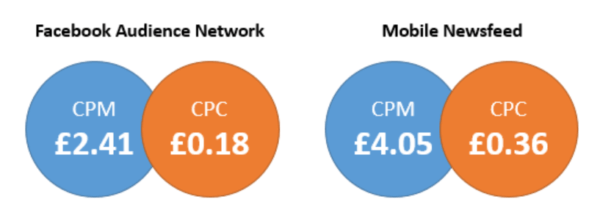
    From the above image, there are two crucial things to consider. However, you must note that this will vary from client to client. If FAN doesn’t prove to be efficient for you, it would only make sense for you to avoid targeting this placement. Secondly, with the video performance, the natural in-stream video will fetch you more views since your ad will be visible only when someone is watching a video. The users would have to watch your ad to be able to see the video of their interest.

    How can advertisers protect themselves?

    Until 2016, Facebook had no means for brand protection. FAN was an entirely blind network that did not have the capacity to suggest where the ads appeared or even block the risky ads. It is no surprise then that this did not go well with the global advertisers. In 2016, the social networking giant released the ability to block ads of a few categories like gambling and dating.

    However, in June 2017, Facebook rolled out few controls (Pre-campaign transparency, Blocking at account level) that allowed the advertisers to have better control over their ad placements. In the purview of these new controls, here is how Facebook has categorized the safety levels:

  • Are Autonomous Vehicles the Next Big Marketing Avenue?

    Are Autonomous Vehicles the Next Big Marketing Avenue?

    Recently, talks have been doing the rounds everywhere about autonomous vehicles being the next big thing. If it becomes a reality, as a pedestrian it would be frightening to see vehicles whizzing past you down the road, and there is no one behind the steering. However, from the marketing perspective, autonomous vehicles come as a good news as it opens up a broad new marketing avenue for publishers. This implies that the screens of vehicles will now become the space or platform where publishers and advertisers will compete against each other.

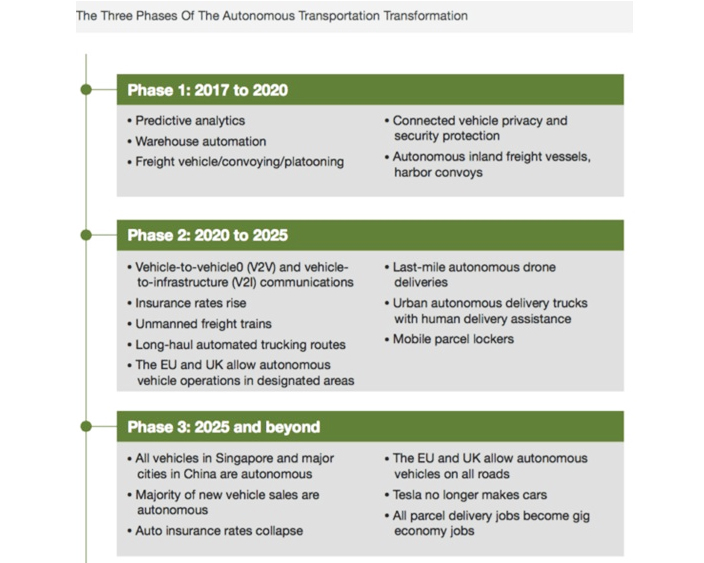
    A new report from Forrester suggests that these vehicles, if and when becomes a reality, are sure to have a massive impact on the global economy. The report further states that it would be no surprise if global brands become sponsors for the rides in the near future. You may see ads like your next vacation is sponsored by XYZ brand.

    For instance, a family vacation to Disney Land in Florida can be sponsored by Disney and can provide the customers with an experience of their lifetime. The screens inside the vehicle can play Disney videos, and even the vehicle itself can be turned into a pirate ship. The report claims that autonomous cars would give the advertisers a belief that the interiors of the vehicle that are equipped with screens, speakers and interactive sensors would resemble a living room or dens. With autonomous vehicles plying on the roads, according to the reports, in the future, the automakers would evolve into publishers and feed the consumer with car-based news and entertainment and also develop a direct relationship with the customer who are essentially the owners of mobile theatre.

    The different possibilities of marketing and advertising through autonomous vehicles is only one aspect of the report, which quintessentially focuses on the impact that autonomous vehicles are likely to have on various businesses including logistics, shipping, insurance and data privacy.

    Apart from the marketing point of view, there are many other pros and cons of autonomous vehicles. While, it could significantly reduce the traffic on roads, on the other side, it could lead to massive loss of employment, especially for truck drivers. According to Forrester’s reports, the self-driving vehicles would have inherent features such as obstacle avoidance technology, image recognition, road sensors and vehicle-to-vehicle communication system. Not to mention, in the wake of Tesla testing the self-driving cars, it is reported that nearly 94% of all road accidents are caused due to human errors. Having said about the pros and cons of autonomous vehicles, the technology is not going to be implemented tomorrow; it still has a long way to go before it becomes a reality.

  • Weekend Digital Media Round-up: Google’s native ad blocker for Chrome, Facebook’s updated NewsFeed Algorithm, Snapchat’s new feature allowing brands to track the impact of their ads and moreâ€Ĥ

    Weekend Digital Media Round-up: Google’s native ad blocker for Chrome, Facebook’s updated NewsFeed Algorithm, Snapchat’s new feature allowing brands to track the impact of their ads and moreâ€Ĥ

    1. Google updates quality raters guidelines with details around non-English language web pages

    Google updated their search quality raters guidelines PDF document a few days ago. The core change is the new guidelines around non-English language pages. [Source: Search Engine Land]

    1. The IAB releases its new standard ads portfolio with multi-screen sizing

    The Interactive Advertising Bureau has released the final version of new standard ad units that incorporate the industry group’s LEAN guidelines for lightweight ads as well as the Coalition for Better Ads’ set of ad guidelines developed in response to the use of ad blockers. [Source: MARTECH TODAY]

    1. Facebook Updates News Feed to Penalize Non-Mobile Optimized Websites

    Facebook has announced another News Feed algorithm update, this time focused on reducing the reach of websites which are not optimized for mobile devices. [Source: Social Media Today]

    1. Facebook will let brands target ads to people who RSVPed to their Pages’ events

    Facebook plans to let brands target ads to people who RSVPed to events posted by a brand’s Page. The event-based targeting will be a new option within Facebook’s Custom Audiences ad-targeting product, which originated as a way for brands to convert their existing customer bases into an audience to target on Facebook and has expanded to doing the same for brands’ followings on Facebook and Instagram. [Source: Marketing Land]

    1. Google’s native ad blocker for Chrome shows up in Android developer build

    Google will reportedly debut a built-in ad blocking feature for its Chrome browser next year, and now we have the first concrete look at this addition to the web navigation software in action. [Source: TechCrunch]

    1. Snapchat will let brands measure its ads’ impact on sales, results against rivals

    Snapchat rolled out a program to allow third-party measurement firms to track its ads’ impact on a brand’s sales and to include that data in the dashboards that marketers use to evaluate where they’re spending their money and, of those places, where they’re getting the best bang for their bucks. [Source: Marketing Land]

    1. This script creates Google Slides with AdWords data to automate your presentation-making

    Google just introduced its latest advanced API integration for AdWords Scripts: Google Slides. That means you can now programmatically connect AdWords with Google Slides. [Source: Search Engine Land]

    1. Instagram Releases New Stats on Stories Use to Celebrate Stories’ First Anniversary

    It took a little more than a week, but effectively, this is what Instagram has done. They did release a tool called ‘Eraser Brush’ a few days later (though not the same functionality as Snapchat’s tool), and now, on the one year anniversary of the release of Instagram Stories, they’ve reported that users under the age of 25 are spending 32 minutes per day in the app, up from 21 minutes per day at last official report. [Source: Social Media Today]

    1. Report: Facebook working on video-chat device and smart speaker

    Facebook is working on an Echo Show competitor and possibly on a second device, a smart speaker to compete with similar units from Amazon, Google and Apple. [Source: MARTECH TODAY]

    1. Not ad creep: Images labeled ‘Product’ in Google Images part of new badges markup

    Users searching for products on Google Image search will now notice that sometimes images appearing at the top of the results are labeled with a “Product”. This is part of the new badge markup Google introduced earlier this week. [Source: Search Engine Land]

    Expert Opinion:

    1. Why brands should focus on improving mobile consumer experience?


    Off late, digital user experience has become the need of the hour for brands. Consumers want everything quick and instant. Thus, providing the best digital experience becomes a key differentiator for brands to maintain brand loyalty and improve the overall brand image.

    With newer technologies and increased penetration of mobile devices across markets, marketers need to be on their toes by coming up with innovative ways to provide a delightful experience to their customers every time they interact with a brand. The latest report by Google suggests that 89% of users are likely to recommend a brand after a positive experience on mobile. Customers are highly demanding on mobile, and organisations need to invest a lot to match up with the service and experience demands. Companies need to provide highly customizable mobile experiences based on individual likes and dislikes.

    Also, with the increase in the usage of smartphones and the decreasing cost of data, mobile has become the preferred medium for users to connect with brands for their needs.

    Some simple and efficient ways to provide a seamless experience to the customers on mobile are:

    –  To prioritize customer relationship and integrate their insights into all the processes followed by a brand

    – To understand your customers well by analyzing the data available and the logic behind why a particular customer prefers a particular route and continuously improving on the problem areas

    – To adopt a customer-centric approach across all the departments in the organisation so that all the functions work towards providing the best of the best experience to the end users

    As per the latest mobility report published by Ericsson, there will be 6.1 billion smartphone users globally by 2020. Also, nowadays customers have more choices than ever. It is vital for brands to be at the top of their game and provide a superior experience to the mobile users.

    Aniruddha Dange, President – Chief Strategy Officer, IIFL (India Infoline Group)

  • Weekend Digital Media Round-up: Google’s new call bid adjustments in AdWords and changed Sitelinks design, Instagram’s new analytics for brands’ organic posts, LinkedIn’s Website Demographics and moreâ€Ĥ

    Weekend Digital Media Round-up: Google’s new call bid adjustments in AdWords and changed Sitelinks design, Instagram’s new analytics for brands’ organic posts, LinkedIn’s Website Demographics and moreâ€Ĥ

    1. Google has dropped Google Instant Search

    After launching Google Instant — Google’s method of showing search results as you type them — several years ago, Google has removed the feature from search. [Source: Search Engine Land]

    1. LinkedIn Provides Capacity to Add Multiple Images in a Single Post

    LinkedIn continues to add new tools and features, improving the user-experience in tiny increments, as opposed to adding in wide-scale changes. The latest addition comes in the form of multi-image posting. [Source: Social Media Today]

    1. Instagram starts sharing analytics for brands’ organic posts, Stories through API — but there’s a catch

    Instagram started sharing analytics for brands’ organic posts and Stories through the Instagram Platform API, so that brands can pull up these stats within the marketing dashboards they use to manage and monitor their various social accounts. [Source: MARTECH TODAY]

    1. Google officially changes Sitelinks design to carousel format

    Google has been testing a carousel format for these Sitelinks for over a year and today has confirmed they are now rolling out the new carousel-based design for mobile search results. [Source: Search Engine Land]

    1. Google testing list format for AdWords enhanced sitelinks

    Google is now testing a list format for enhanced sitelinks. The link font is smaller, but taken together, the list of four enhanced sitelinks takes up more real estate than the column format. [Source: Search Engine Land]

    1. YouTube Adds New Tools to Help Publishers Moderate Comments

    Over on the YouTube Help forum, the platform has announced that publishers will now be able to have comments with links or hashtags included within them to be held for review. [Source: Social Media Today]

    1. LinkedIn’s Website Demographics lets brands analyze site visitors using LinkedIn data

    LinkedIn is going to give businesses a better idea of who’s visiting their sites, such as those visitors’ job titles, company names and locations. [Source: MARTECH TODAY]

    1. Google intros new call bid adjustments in AdWords

    Google is adding a bid adjustment in AdWords specifically for calls. The bid adjustment for calls informs how often call information appears in mobile search ads. [Source: Search Engine Land]

    1. Linqia unveils ‘first’ platform for predicting influencer engagement

    Linqia is out this week with a new version of its platform that it says offers the first predictive analysis of influencers’ performance. [Source: Marketing Land]

    1. Google confirms testing auto-play videos in the search results

    Google has confirmed that they are running a small experiment where they auto-play videos in the search results page. When you do a search for some movies (and possibly television shows), Google will begin autoplaying a video in the right hand sidebar, appearing within the knowledge panel. [Source: Search Engine Land]

    Expert Opinion:

    1. Make the most out of your marketing budgets with cross-device marketing.

    Cross-device targeting is the practice to identify and deliver ads to a specific set of audience across various devices they use. Cross-device marketing is a very effective approach that marketers can use to reach the correct audience and achieve the desired results from their campaigns. Combined with device graphs, marketing professionals can correctly identify various consumer devices to connect with and measure every interaction. Combining the data from different customers across different devices, marketers can plan the campaigns efficiently and achieve positive returns on the ad spends.


    Cross-device marketing can help marketers to:

    – Deliver personalised content and provide delightful experience

    – Accurately target the audience and reduce wasted ad spends

    – Optimise business results with correct attribution

    Mastering cross-device data and managing campaigns using this data can be a game changer for making the most out of the marketing budgets. Also, with the understanding of cross-device identity, marketers can be future ready with the introduction of new devices which will open up more opportunities to target the customers in different ways.

    According to IHS, there were around 15.4 billion connected devices in 2015, and this number is projected to go up to 30.7 billion by 2020, ranging from watches to TVs to cars to home appliances. Each of these devices is an opportunity for the marketers to interact with the consumers digitally and gain possible conversions for their activities.

    Subhrangshu Neogi, Director, Head – Group Marketing & Brand, Religare

  • Weekend Digital Media Round-up: Brand new Google search console, Amazon’s new Spark social feed, Snapchat’s Snap Publisher and moreâ€Ĥ

    Weekend Digital Media Round-up: Brand new Google search console, Amazon’s new Spark social feed, Snapchat’s Snap Publisher and moreâ€Ĥ

    1. Original Programming is Set to Make a Big Splash on Social Media

    With the recent announcement that Snapchat is diving into more original news programming in partnership with NBC, we’re seeing more and more investment dollars being put into custom content. Don’t expect that to slow down anytime soon. [Source: Social Media Today]

    1. Facebook plans to start testing Instant Article subscriptions as soon as October

    Facebook’s Instant Articles format may not be the revenue rainmaker that publishers had hoped for, but the company is readying another method for media companies to make money. [Source: Marketing Land]

    1. Google Analytics rolling out ‘ask a question’ to get answers instantaneously

    A little over a year ago, Google teased using natural language to get data from Google Analytics just by asking. That “asking a question” functionality has now arrived in Google Analytics and Google Analytics 360 globally. [Source: Search Engine Land]

    1. Google Introduces New, Personalized Information Feed to Improve the Utility of Their App

    As web search evolves into more predictive, intelligent models, Google’s working to evolve their app to meet the rising demands of the modern consumer. [Source: Social Media Today]

    1. Amazon’s new Spark social feed wants to be ‘Instagram for products’

    Amazon has introduced Amazon Spark, a very Instagram-like social shopping feed. Not all of the images and posts are tied to products but most are — and can be purchased on Amazon. [Source: MARTECH TODAY]

    1. LinkedIn Adds New Data Tools to Help Advertisers Maximize their on-Platform Efforts

    LinkedIn’s introducing a range of new data tools which will provide more transparency on performance, and more data for improved targeting on the platform. [Source: Social Media Today]

    1. Snapchat releases Snap Publisher: self-serve ad creation tool converts horizontal videos, websites into vertical video ads

    One of the knocks against advertising on Snapchat is that it’s hard to make ads for Snapchat. The mobile app’s insistence on vertical video compels advertisers to create campaigns from scratch rather than reusing ads that ran elsewhere. Now Snapchat is addressing that obstacle. [Source: Marketing Land]

    1. Facebook’s Removing the Ability to Edit Link Previews – Here Are Your Alternatives

    Facebook announced a pending change to their Graph API which would remove the ability for Pages to edit link previews attached to posts – that change comes into effect this week, but the backlash has lead to Facebook providing a stay of execution, of sorts, on the feature for some Pages, with a new option that will enable publishers to maintain the capacity to edit previews. [Source: Social Media Today]

    1. Google beta testing brand-new Google Search Console design

    Google is currently testing a new design and user interface for the Google Search Console. The new user interface takes a design look from the revised mobile-friendly testing tool that launched less than a year ago. [Source: Search Engine Land]

    1. Snapchat Enables Recording Beyond 10-Seconds, Adds New Creative Options

    Keeping up their pace of adding new features and tools, Snapchat’s launching two new updates this week, one of which could fundamentally change the Snap process. [Source: Social Media Today]

    Expert Opinion:

    1. How can brands use immersive marketing to provide unique customer experience and maintain brand credibility?

    Storytelling has always been an important factor for any campaigns and ads to engage with the audience, and convey the brand message effectively. However, the 2D story approach is winding down, and a three dimensional, fully immersive approach is gaining pace these days.

    Immersive technology combines virtual reality (VR), augmented reality (AR) and mixed reality (MR) to create a unique experience for the customers which is relatable, impactful, memorable and fun. VR has played a major role in changing the way marketers can play with the campaigns and provide an impactful immersive experience to the audience. As per Statista Inc., the virtual reality console market is estimated to reach 4.5 billion U.S. dollars in 2018.

    Immersive marketing can help marketers to:

    – provide a seamless experience to customers and improve brand credibility

    – provide unique content to the individual customers’ basis their preferences

    – tackle language barriers through immersive visual solutions

    – provide detailed and precise customer analytics

    Immersive marketing is changing the marketing world at a fast pace. Reports by Statista Inc. suggest that, by 2018, the number of active VR users is estimated to reach 171 million. Considering the changing customer behaviour & expectations and the way audience is adopting newer technologies, it is high time that the marketers get themselves accustomed to the immersive marketing techniques and use them to achieve optimal customer engagement and brand reputation.

    Vishwajeet Parashar, Group Marketing Head, Bajaj Capital Ltd.

  • Using Social Media Ad Space for Promoting Brand Loyalty

    Using Social Media Ad Space for Promoting Brand Loyalty

    Research conducted by Sprout Social on the consumers buying patterns has indicated that people are more likely to buy things from brands that they follow on different social media platforms. The study further revealed that 75.3% of the people buy new things just because they saw or read about the product online, especially on the social media channels. Thus, it is quite obvious that having a good presence on the social networking sites can prove to be a great boon for promoting brand loyalty.

    There are an estimated 2.34 billion people worldwide who use social media platforms every day and rely on such platforms to be informed about the latest happenings of their favourite brands. Not to mention, the consumers use the platforms to connect and share with the friends about all the things they like and enjoy. With such a huge avenue of marketing on social, it is high time (for those who have not already used the social media to its optimum capacity) for the brands to pull up their socks and use the social media platform to its fullest potential and garner loyalty among both their existing and prospective customers. If you are a business owner, it would greatly help you to understand how you can benefit from brand loyalty.

    Do you know what brand loyalty exactly is?

    As per the text book definition, brand loyalty is the tendency of the customers to buy things from a particular brand over and over again rather than purchasing a similar product from a competitor brand. In simple words, brand loyalty implies that a consumer has a higher preference to an individual brand over the other similar brands. Last year, in November, Facebook conducted a study wherein they found out that nearly 77% of people have some degree of brand loyalty. In the social media parlance, a loyal customer can be identified by the number of times he or she likes the posts and comments on the posts put by a certain brand.

    Social Media and Brand Loyalty

    About 53% of Americans who follow certain brands on social media are more loyal to the brand than other customers. However, brands should know that the social media platforms are used by the customers only for communication, and it does not affect their decision making to buy their goods or subscribe for their services. The follower of brands on the social networking sites expect a prompt reply from the brand, as marketers, it is best to respond to the customers’ queries or comments within 30 minutes. However, in reality, it is quite sad that nearly seven out of eight messages sent by customers go unaddressed by the marketers and when it happens, the chances of the customers switching loyalty increases by almost 50 %. With social media now playing a pivotal role in influencing the purchase decision of the customers, the marketers should take the following steps to promote brand loyalty through social platforms.

    Define the way you communicate

    It is pivotal to establish your own voice across all social media platforms; it should be uniform, consistent and in line with your brand personality.

    Keep your ears wide open

    One of the keys to succeeding in converting a casual visitor to your brand page into a loyal customer is to listen to the customers’ problems and provide an instant solution to solve their problems. People generally expect the brands to respond to their questions, complaints, inquiries, and reviews in the same way as they communicate with their friends. As a marketer, you need to be proactive and listen carefully to what people are talking about and don’t be shy to retweet or repost the things shared by the followers of your brand. Make sure to be courteous and thank people if they have said or shared something about your brand. Remember, being thankful for their patronage is sure to win their loyalty. Also, another important aspect of promoting brand loyalty through social media is to provide the users quality content, which is not only relevant to them but also is useful.

    Tell a tale

    It would be foolish to assume that your customers are experts in their respective industries and that they know everything going around in your sector. It is therefore important to provide valuable evidence in the form of illustrations and statistics to underpin your claim. This will have a massive influence in projecting yourself as a trustworthy brand in the market. Remember to engage with the audience as much as possible to get an insight on what they think about your brand and what is the type of content they like to consume the most. Once you learn that, you can increase the customer engagement by sharing more content of their choice.

    Try to build a community

    Having a regular interaction with the followers of your brand on the social media helps in creating a sense of importance among the customers, they feel their opinions matter, which can you can use to build a community. You can use the community to your own advantage by rewarding their loyalty with special offers and discount coupons. You can use the paid ads to promote the discount offers and attract new customers, who can eventually become your loyal followers.

  • Weekend Digital Media Round-up: Google’s New Messaging Feature within Google My Business, Facebook Messenger Ads, CommuteStream’s native ads offer and moreâ€Ĥ

    Weekend Digital Media Round-up: Google’s New Messaging Feature within Google My Business, Facebook Messenger Ads, CommuteStream’s native ads offer and moreâ€Ĥ

    1. Google bars AdSense publishers from using pop-under ads

    Google is shoring up its AdSense policies regarding pop-under and pop-up ads. [Source: Marketing Land]

    1. CommuteStream now offers native ads for dozens of transit apps around the US

    For a marketer, the daily commute of a passenger on public transportation is an ideal targeting time. The passenger travels the same route, at the same times, and might regularly check a phone app for schedule updates. [Source: MARTECH TODAY]

    1. Facebook Makes Messenger Ads Available Globally

    Facebook just added a new advertising feature into the mix. After finalizing testing in Australia and Thailand, Messenger ads are now available to all advertisers worldwide. [Source: Social Media Today]

    1. Facebook’s Latest News Feed Tweak Curbs The Activities Of Individual Spammers

    In the purview of the Facebook’s battle against spam links invading the newsfeed of the users worldwide, the social networking giant is being proactive to curb the issue and is now targeting the individual users to post the maximum number of spam links. [Source: Logicserve Digital]

    1. Google begins rolling out messaging feature within Google My Business

    When you go to the Google My Business home page, you will see this new section for “Messaging” on the left and an option in the middle promoting it saying, “Message with customers.” [Source: Search Engine Land]

    1. Instagram is turning the screws on Snapchat by handing advertisers free trials and credits

    Instagram appears to be turning the screws on Snapchat, baiting marketers and advertisers by offering them a chance to test brand new ad products free of charge. [Source: Business Insider]

    1. WhatsApp now allows for sharing all file types on the app

    WhatsApp has rolled out an update that allows users to share any type of files, documents on its platforms. Just open the chat window and click on attach to send the file. [Source: Indian Express]

    1. Google enables YouTube remarketing audiences for RLSA to retarget video viewers in search

    Advertisers have been able to retarget people who engage with their YouTube channels when they watch other videos on the site with YouTube retargeting lists. Advertisers have also been able to use Search retargeting lists to reach people on YouTube. Now, YouTube retargeting lists can be carried over to target video viewers when they search on Google.com. [Source: Marketing Land]

    1. War Of The Stories – Snapchat Vs Instagram Vs Facebook

    The two of the biggest social networking companies in the world, Facebook and Snap Inc. are currently involved in a Silicon Valley tech battle, which is referred as ‘The Battle of the Stories.’ [Source: Logicserve Digital]

    1. Google My Business updates insights email sent to businesses

    Google My Business has updated its monthly insights email, the email they send business owners summarizing the statistics and analytics around how well their Google local listing is performing. [Source: Search Engine Land]

    Expert Opinion

    1. How will Machine Learning help brands with better customer engagement?

    A lot of marketers are using machine learning these days to derive helpful insights from the data available with them for enhanced marketing strategies.

    Organizations and brands are using machine learning in various ways to minimize guesswork and boost the marketing actions. As per EMC, it is predicted that the digital universe is predicted to grow from 130exabytes to 40,000exabytes, or 40tn gigabytes by 2020. This vast data, if analyzed and used in correct ways, can help brands garner huge gains from their marketing campaigns. This is exactly where machine learning can play a key role in assisting marketers with their activities and help them make the right choices for their campaigns and strategies.

    Machine learning can help marketers in:

    –          Detailed segmentation for personalization of marketing strategies

    –          Providing apt recommendations for enhanced customer experience

    –          Detecting and utilizing changes in customer behavior which will eventually maximize the revenue

    –          Checking the effectivity of marketing campaigns and predicting the customer life cycle using data insights to improve ROI, campaign management, resource allocation

    The ability of a good marketer is the ability to interpret learnings from data and customize ROI driven communication. Marketers believe that Machine Learning will transform the way they put across their campaigns in a more personalized and appealing format. With Machine Learning expected to generate revenue of 13.7% billion by 2020, it is surely a profitable option that will change the way marketers design their activities to get optimal results.

    Peshwa Acharya, Chief Marketing Officer, Sterling Holidays, A Fairfax company.

  • Weekend Digital Media Round-up: Google’s New AdSense Format, Snapchat’s New Creative Tools, WeLens Video VR Software and moreâ€Ĥ

    Weekend Digital Media Round-up: Google’s New AdSense Format, Snapchat’s New Creative Tools, WeLens Video VR Software and moreâ€Ĥ

    1. IAB Tech Lab Releases MRAID 3.0 For Creating In-App Rich Media Ads Across Platforms

      The IAB Tech Lab announced the release of MRAID 3.0. This version of the Mobile Rich Media Ad Interface Definitions builds on the universal specs for creating in-app rich media ads that can automatically run in any MRAID-capable app, across devices and operating systems. [Source: MARTECH TODAY]

    1. Snapchat Adds New Creative Tools, Including Links In Snaps

      Originally, only verified users had access, but that option is becoming more widely available – now, verified users and business profiles with more than 10k followers can also use it. But still, those are fairly restrictive requirements, especially since it’s not possible to request verification. [Source: Social Media Today]

    1. 10 Simple Ways To Improve The Accuracy Of Google Analytics Data

      Often, business owners find themselves staring at the Google analytics data and are sceptic about its accuracy. The objective of this post is to help you identify the most common errors of the Google analytics data and provide you ways to fix the errors. [Source: Logicserve Digital]

    1. Google Goes After Mobile Native Advertising With New AdSense Formats

      Google is plugging the hole that has remained a key weakness in mobile advertising: native ads. On Wednesday, the company announced the launch of native ads for all AdSense publishers. [Source: Marketing Land]

    1. Google Maps Will Use Crowdsourcing To Identify Wheelchair-Accessible Locations

      Google Maps has rolled out a new editing feature that crowdsources accessibility details about locations or business listings — making it possible for anyone to add details on whether or not a place is wheelchair-accessible. [Source: Search Engine Land]

    1. WeLens Introduces Software To Manage Group Screenings Of 360-Degree Video VR

      VR is rapidly becoming a way for brands to directly demonstrate the user experience of their products, or to visualize the care with which their products were created. But, since 360-degree video VR was initially created as a solo experience, the management of group screenings has not been a top priority. [Source: MARTECH TODAY]

    1. Facebook Introduces 7 Critical Changes To Make It A Real Local Search Player

      The leading global search engine, Google has been dominating the search market shares for several years now, and all the efforts by the competitors to steal the market share has been futile. Not to mention, in the mobile search sector, Google with its 95% share holds a monopoly. [Source: Logicserve Digital]

    1. Google Posts Are Removed After 7 Days, With One Exception

      Google has confirmed that most Google Posts are removed seven days after they are first published. The exception to this rule is Google Posts that are based on upcoming events. Event-based Google Posts are removed after the event date. [Source: Search Engine Land]

    1. New Evidence Highlights The Conversion Lift Of Mobile Optimization

      No one doubts that the future of marketing is mobile. We reached a significant tipping point late last year, when mobile internet usage exceeded desktop for the first time, and usage worldwide continues to soar. Today we’re spending about 70 percent of our media time and 79 percent of our social media time on mobile. [Source: Marketing Land]

    1. Facebook Continues Video Push, Adding New Group Video App And TV-Like Content

      Back in 2014, Facebook CEO Mark Zuckerberg said that Facebook would be ‘mostly video’ within five years. Zuckerberg has described video as a ‘mega trend’, of the same magnitude as mobile, which is why they’ve made video a key focus moving forward – and why we can expect to see more video-aligned products and options added to Facebook’s repertoire as the platform advances. [Source: Social Media Today]

      Expert Opinion

    1. How can brands enhance lead generation and closure using data science?


    Data science is changing the way marketers and salespeople are approaching customers.

    It involves a variety of techniques, machine learning, data mining and statistical analysis to enable brands to understand their customers closely. These support in analyzing consumer behavioral patterns and accordingly craft communication to reach out to them. The three most common lead generation strategies utilized by brands are email marketing, search and display marketing and content marketing. All these strategies provide a lot of insightful data which can eventually help companies with their sales conversions, thanks to data science technology.

    Brands must cull various insights, build and test their hypothesis around the following:
    · Who they should target?
    · What will be the type of communication?
    · Specific landing page based on user journey.

    In the long run brands will also be able to discover statistically meaningful correlations between buyer behavior and conversion. Once the lead is generated, marketers can enhance the opportunity by researching about their customers on social media to understand their interests, likes, etc. and giving inputs to the sales team to make the interactions more meaningful.

    In future, marketing automation, nurture marketing, predictive analytics, content automation, etc. will help brands engage with their customers effectively and improve conversion.

    Mr. Siddhartha Singh, General Manager Digital & eCommerce, Eureka Forbes Ltd