LS Staging

Tag: customer

  • Weekend Digital Media Round: AI Is Reshaping Marketing: Why CMOs Must Lead The Transformation, Why Most Enterprise SEO Operating Models Are Structurally Broken, Ads that sell what isn’t in stock: Quick commerce media’s hidden flaw? & More….

    Weekend Digital Media Round: AI Is Reshaping Marketing: Why CMOs Must Lead The Transformation, Why Most Enterprise SEO Operating Models Are Structurally Broken, Ads that sell what isn’t in stock: Quick commerce media’s hidden flaw? & More….

    1.AI Is Reshaping Marketing: Why CMOs Must Lead The Transformation

    AI is pushing marketing organizations to confront leadership, governance, and structural gaps rather than simply automate work. The piece argues that CMOs must lead with clarity—defining decision rights, accountability, and alignment—so AI scales effectively instead of amplifying chaos. Ultimately, AI becomes a competitive advantage only when treated as an operating-model transformation, not a tools rollout. [Source: Forbes]

    2. Why Most Enterprise SEO Operating Models Are Structurally Broken

    Enterprise SEO often fails not because of weak tactics, but because it’s positioned too late in the workflow, acting as a reactive reviewer instead of shaping decisions upfront. The piece argues that SEO must be embedded into product, content, and development processes—especially in the AI-driven search era—since structural foundations, not post-launch fixes, now determine visibility.  [Source: Search Engine Journal]

    3. Ads that sell what isn’t in stock: Quick commerce media’s hidden flaw?

    Sponsored listings on quick‑commerce apps often promote products that aren’t actually available locally, leading to wasted ad spend and frustrated users. As retail media grows rapidly in India, experts argue that ad delivery must become tightly linked with real‑time inventory data to ensure ads run only where fulfilment is possible. The next phase of quick‑commerce advertising is expected to shift from impression‑led buying to availability‑led optimisation. [Source: Exchange4Media]

    4. From SEO And CRO To Agentic AI Optimization (AAIO): Why Your Website Needs To Speak To Machines

    Web optimization is shifting beyond traditional SEO and CRO as autonomous AI agents increasingly research, decide, and transact on behalf of users. The concept of Agentic AI Optimization (AAIO) emphasizes structuring websites to be understandable, trustworthy, and actionable for machines—not just humans. Businesses that adapt to this change can stay visible and relevant as AI-driven discovery and commerce become mainstream. [Source: Search Engine Journal]

    5. ‘We’re building the future of advertising on infrastructure we don’t control’ – and no one’s talking about it

    The piece argues that digital advertising’s next phase is being built on third‑party AI infrastructure the industry doesn’t own or control, raising serious questions about data security, privacy, and decision‑making. It highlights how signal loss, stricter privacy rules, and the rise of agentic AI are converging, fundamentally reshaping attribution, monetization, and the marketing funnel. [Source: The Drum]

    6. Emerging technology trends brands and agencies need to know about

    Google’s Campaign URL Builder helps marketers create trackable links by adding UTM parameters like source, medium, and campaign name. These tagged URLs make it easier to analyze traffic sources, campaign performance, and experiment results in Google Analytics. [Source: Adage]

    7. How new infrastructure, like the Model Context Protocol, is reshaping marketing workflows

    AI agents are becoming central to marketing workflows, but their effectiveness depends on better infrastructure that connects them seamlessly with existing systems.The Model Context Protocol (MCP) introduces an open standard that adds structured context on top of APIs, enabling AI agents to plan, execute and optimize marketing tasks end‑to‑end across platforms like Amazon Ads, while reducing friction and manual effort. [Source: DigiDay]

    8. The Real Customer Churn Problem? You’re Measuring It Too Late

    Customer churn is rarely a sudden customer decision; it is the final outcome of unresolved issues across product, service, and overall experience. Companies often fail by measuring churn too late, focusing on exit data instead of identifying early warning signals embedded in day‑to‑day customer interactions. Preventing churn requires proactive, system‑wide accountability rather than last‑minute retention tactics.  [Source: CMS Wire]

    9. The New SEO: From Rankings To Recommendations In AI Search

    Marketing campaigns often underperform not because of weak creative or channel choices, but due to gaps in identity data that prevent brands from reaching the right people. Fragmented profiles and missing or inconsistent identifiers reduce reach and relevance across touchpoints. Solving this requires strong identity resolution and enrichment to connect data accurately and activate audiences more effectively across platforms. [Source: AdWeek]

    10.What’s the Missing Link in Consumer AI Agents?

    Google’s Campaign URL Builder allows marketers to create trackable links by adding UTM parameters, making it easier to monitor where traffic comes from and how campaigns perform in Google Analytics. It helps standardize campaign data, enabling clearer analysis of user behavior, conversions, and overall marketing effectiveness. [Source: My Total Retail]


  • Weekend Digital Media Round- AI Is Collapsing the Shopping Funnel, The Precision Payoff, Privacy UX as the New Personalization: How Trust Builds Customer Loyalty & More….

    Weekend Digital Media Round- AI Is Collapsing the Shopping Funnel, The Precision Payoff, Privacy UX as the New Personalization: How Trust Builds Customer Loyalty & More….

    1.AI Is Collapsing the Shopping Funnel

    AI is compressing the entire shopping journey into a few seconds, shifting customer research and decision‑making into AI-driven prompts and distributed channels. As a result, checkout becomes the only moment where brands can still influence relevance, offers, and revenue. SMBs now need strong product, payments, and data infrastructure to adapt and win in this new distributed commerce model. [Source: INC.]

    2. The Precision Payoff

    Personalised advertising is shifting from single big ideas to adaptive campaigns that use real-time data to deliver hundreds of tailored variations. Brands like Bajaj Finserv and Britannia are seeing higher engagement, better conversions, and improved ROI—though success depends heavily on high‑quality first‑party data and disciplined execution. When applied strategically, personalisation boosts efficiency by reducing wasted spend rather than increasing budgets. [Source: ET Brand Equity ]

    3. Privacy UX as the New Personalization: How Trust Builds Customer Loyalty

    Brands are shifting from surveillance-style personalization to privacy‑first engagement as consumers increasingly reject hidden data tracking. Transparency, consent, and clear value exchange now drive stronger trust, loyalty, and long-term customer relationships. Companies that prioritize privacy build more resilient data ecosystems and outperform on reputation, engagement, and lifetime value. [Source: CMS Wire]

    4. How to use AI for SEO without losing your brand voice

    AI can streamline data-heavy SEO tasks, but relying on it without a strong brand voice leads to generic, forgettable content. The key is letting AI handle structure and scale while humans shape tone, identity, and emotional connection. Brands that blend AI efficiency with clear human-led strategy will stay distinctive and competitive. [Source: Search Engine Land]

    5. When a 30-second clip overtakes a 60-minute conversation

    Altman’s viral 30‑second AI analogy sparked discomfort online, but the full hour-long conversation showed a more nuanced, human‑centred perspective. He highlighted the difference between technical explanations and human value, stressing that empathy, connection, and lived experience remain uniquely human. The episode ultimately reflected how fragile public trust in AI communication has become in a world dominated by short clips. [Source: Marketing Mind]

    6. Content marketing in an AI era: From SEO volume to brand fame

    Content marketing is shifting as AI answers most informational queries directly, making traditional SEO-driven traffic far less effective. To stand out, brands must prioritize distinctiveness, original research, strong distribution, and fame-building over high-volume content. Success now depends on creating memorable, signal-rich work that earns attention rather than relying on being discovered through search. [Source: Search Engine Land]

    7. The Top Challenges Facing CMOs in 2026

    Marketing leaders in 2026 are navigating tougher privacy rules, shrinking data visibility, economic pressure and rising expectations around AI. CMOs must justify budgets continuously, rebuild measurement models and manage AI responsibly while keeping brands visible in an increasingly fragmented digital landscape. The role has expanded beyond marketing into enterprise-wide growth leadership. [Source: CMS Wire]

    8. The Evolution Of UI/UX Design And The AI Impact

    UI/UX design has evolved from static layouts to data‑driven, behavior‑focused experiences, and AI is now reshaping that evolution. Conversational interfaces are reducing the need for traditional navigation, shifting design priorities toward intent interpretation, human‑AI interaction, and ethical personalization. While user flows simplify, building effective AI-driven systems requires deeper collaboration across design, engineering and data teams. [Source: Forbes]

    9. Why you’re no longer marketing to a person, but to an ‘assemblage’

    Modern consumers behave as shifting “assemblages,” influenced by group chats, algorithms, communities, and AI assistants rather than acting as isolated individuals. Robert Kozinets argues that marketers must rethink loyalty, identity, and engagement in an age where digital culture and AI deeply shape decisions. The future of marketing lies in understanding these networked behaviors instead of targeting a single person. [Source: The Drum]

    10. Your Customer Signals Aren’t the Problem. Your Operating Model Is.

    Real‑time customer signals are abundant, but most companies fail to act on them due to weak operational models, fragmented identity, and unclear decision ownership. Success comes from building a strong operational layer—identity resolution, orchestration, activation and governance—to turn insights into timely, consistent actions. AI accelerates decision-making but demands strict guardrails, human oversight and outcome‑based measurement to maintain trust and drive real business impact. [Source: CMS Wire]

  • Weekend Digital Media Round-Up: 120% of quick commerce growth and India’s leadp into the millisecond economy- Report, Immersive technologies are shaping the future of e-commerce right now, How is Predictive Analytics Reshaping Global Tech & More…

    Weekend Digital Media Round-Up: 120% of quick commerce growth and India’s leadp into the millisecond economy- Report, Immersive technologies are shaping the future of e-commerce right now, How is Predictive Analytics Reshaping Global Tech & More…

    1.120% of quick commerce growth and India’s leadp into the millisecond economy- Report

    ​India’s festive retail landscape is rapidly evolving with quick commerce and the “millisecond economy” driving demand for instant delivery and seamless shopping experiences. Tier 2+ cities and Gen Z are fueling growth, while retailers embrace omnichannel strategies and digital transformation to meet rising expectations for speed and cultural relevance. [Source: Brand Equity]

    2. Immersive technologies are shaping the future of e-commerce right now

    Immersive technologies like augmented reality are transforming e-commerce by bridging the gap between online and in-store experiences. Retailers are leveraging AR for virtual try-ons, product visualization, and personalization, driving higher engagement, conversion rates, and customer loyalty. [Source: The Drum]

    3. How is Predictive Analytics Reshaping Global Tech?

    Predictive analytics is transforming technology strategies by combining historical data with machine learning to forecast outcomes and reduce risks. Core techniques include regression, decision trees, and neural networks, while major players like Google, IBM, and Harvard are advancing tools for applications such as fraud detection, asset optimization, and long-term planning. [Source: Technology Magazine]

    4. How Holiday Shoppers Are Using Generative AI and What It Means for Retailers

    Between 15% and 30% of online shoppers are expected to use generative AI for holiday shopping this year, mainly for product research and recommendations rather than purchases. ChatGPT leads as the most cited AI shopping tool, followed by platforms like Perplexity and Claude. [Source: AdWeek]

    5. India’s retail media boom now runs on fulfilment, not discounts

    India’s retail media growth is now driven by fulfilment speed rather than discounts, with platforms like Amazon, Flipkart, and quick-commerce players gaining ad budgets by ensuring rapid delivery. Fast delivery boosts conversions by up to 40% during festive periods, making operational reliability the key differentiator for brands and platforms. [Source: Exchange4Media]

    6. New markets, new customers: why digital accessibility is now a growth strategy

    Digital accessibility is emerging as a key growth strategy, not just a compliance requirement. Research shows that 61% of consumers abandon purchases due to poor accessibility, costing businesses over €50 billion annually. Accessible websites also gain 23% more organic traffic and better keyword rankings, making inclusivity a clear competitive advantage. [Source: Marketing Tech News]

    7. Media and creative convergence – the long-awaited shakeup

    Creative agencies are undergoing a major transformation as traditional models give way to digital-first strategies. Brands now thrive through countless personalized interactions across devices, but many agencies still resist fully embracing this shift despite its clear potential. [Source: The Drum]

    8. Use content chunking to structure information for better UX, rankings, and AI visibility

    Content chunking organizes information into smaller, digestible sections to improve readability, reduce cognitive load, and boost SEO performance. It helps search engines and AI systems extract precise answers, increasing chances for featured snippets and AI Overviews while enhancing user engagement and dwell time. [Source: Search Engine Land]

    9. How performance teams are taking over influencer marketing in 2025

    Influencer marketing is shifting from a brand-focused activity to a performance-driven strategy, with companies integrating creators directly into paid funnels for measurable growth. Platforms like The Cirqle enable brands to automate workflows, leverage AI-powered insights, and scale creator-generated content for high-performing ads across Meta, TikTok, and other channels. [Source: Marketing Tech News]

    10. SEO, GEO, or ASO? What to call the new era of brand visibility in AI [Research]

    AI-driven search is reshaping brand visibility, introducing terms like GEO, AEO, and AISO alongside traditional SEO. Surveys and trend data show GEO and AISO gaining the most traction, with AISO dominating job postings, signaling that SEO is evolving—not disappearing—into frameworks optimized for generative AI platforms. [Source: Search Engine Land]

  • How to leverage First-party data for Better Personalization

    How to leverage First-party data for Better Personalization

    In 2017, The Economist described data as the world’s most valuable resource, even more valuable than oil. While this might have seemed exaggerated at the time, it has become a reality today, with data centers holding some of the planet’s most valuable information. Data not only fuels digital systems worldwide but also plays a crucial role in determining a business’s success. For businesses today, data is indispensable, providing insights into everything from the viability of a business plan to customer preferences. With most businesses having a digital presence, they rely on data from various sources to analyze and optimize marketing efforts, ultimately enhancing customer service through data-driven personalization.

    There are different sources from which a business gathers data for its activities. These can be broadly divided into three separate categories: first-party data, second-party, and third-party data. Let us understand how each of these categories differs:

    First-party data: Data that businesses obtain directly from their customers.

    Second-party data: Data that two businesses collect and share with each other.

    Third-party data: Data collected by a single entity and sold to different businesses (e.g., Google).

    Out of these three sources, the most reliable is first-party data. There will always be a sense of doubt when businesses use second- and third-party data, as it may not always provide accurate information. However, first-party data is something businesses can fully trust since they are directly involved in obtaining it from their customers or potential customers.

    Why is gathering first-party data so important? 

    There are many reasons behind the importance of gathering first-party data, with one being the push toward a cookie-less world, which is changing the scope of digital advertising. When the world’s biggest search engine, Google, announced its plans to move away from cookies, which are primarily used to capture third-party data, it signaled that brands would have to build their own reliable databases. Privacy and security concerns are driving the shift away from third-party data, a welcome change considering the numerous data breaches that have affected millions worldwide.

    One drawback of not using third-party data is that conducting competitive analysis will be more challenging, as brands will no longer have access to data from the same sources as their competitors. However, there are several benefits to relying on first-party data, especially when it comes to data-driven personalization, which allows brands to tailor content more effectively for each customer. This makes it even more important for brands to start building their own first-party databases.

    How can brands gather first-party data? 

    Brands can gather first-party data through several key touchpoints in their interactions with customers. Website or app analytics provide insights into user behavior, tracking data points such as demographics, location, page views, clicks, purchases, and time spent on the site. Email marketing lists offer valuable subscriber information from campaigns, newsletters, and other email interactions. Customer relationship management (CRM) systems store essential data like customer profiles, purchase history, and customer service records. Social media accounts also serve as a source for gathering data from user interactions and engagements. Additionally, surveys offer direct feedback, capturing demographic details and contact information. Customer feedback, whether collected through online chat, product reviews, or other channels, further enriches a brand’s first-party data pool.

    How can brands use first-party data for personalization? 

    Once data starts flowing in through these various sources, it becomes a valuable asset since brands have a direct connection with their customers or potential customers. Additionally, no one else has access to this data, giving businesses an advantage in a highly competitive market. With such an edge, let’s explore how brands can leverage first-party data for data-driven personalization in their marketing communications:

    Segmentation and Targeting  

    Organizing data after it is collected is crucial. This process helps brands identify key data points to segment their customers into different groups, such as by age, gender, location, or buying patterns. Proper segmentation allows brands to craft distinct buyer personas, incorporating behavior and attributes. With correctly segmented data, brands can concentrate their marketing efforts and tailor personalized messaging for each group. First-party data simplifies identifying customer preferences, ensuring marketing spends are optimized for maximum impact.

     Customer Retention  

    Brands can use first-party data to boost customer retention by delivering personalized experiences based on individual preferences. By analyzing purchase history and behavior, companies can offer targeted recommendations and incentives that keep customers engaged. For example, a fashion retailer might send personalized notifications about similar or complementary items based on a customer’s previous purchases, encouraging repeat business and fostering loyalty.

    Cross-Selling and Upselling  

    First-party data is invaluable for identifying opportunities to cross-sell and upsell. By analyzing customer preferences and behaviors, brands can recommend related products or premium versions of items they’ve already purchased. For instance, an electronics retailer could suggest accessories for a recently purchased smartphone or promote a higher-end model based on the customer’s browsing history.

    Optimizing Ad and Email Marketing  

    Personalization in ad and email marketing becomes more effective when driven by first-party data. By understanding customer preferences, brands can craft targeted ads and emails that resonate with specific audience segments. For example, a travel company could send personalized vacation offers based on a customer’s previous destinations or interests, improving engagement and conversion rates.

     Increase User Acquisition  

    Brands can also use first-party data to refine their user acquisition strategies by identifying characteristics and behaviors of their most loyal customers. This data helps brands design targeted campaigns that appeal to potential customers with similar traits. For example, a fitness brand could analyze its top customers and use that data to target similar audiences through personalized social media ads.

     A/B Testing  

    First-party data is essential for effective A/B testing. Brands can use this data to experiment with different approaches in website design, product recommendations, or marketing messaging, determining which versions resonate most with their audience. For instance, an e-commerce site might test two versions of a product page and use customer interaction data to identify which version leads to more conversions, enabling continuous optimization.

    As we look to the future, first-party data is essential for businesses looking to stay competitive and build lasting customer relationships. By harnessing this reliable and personalized data, brands can optimize their marketing strategies, improve customer engagement, and drive growth in a world where privacy and precision are paramount. As the shift away from third-party data continues, those who invest in building robust first-party databases will be better equipped to deliver personalized experiences that resonate with their audiences.

  • Audience Activation in GA4

    Audience Activation in GA4

    In today’s digital landscape, reaching the right audience at the right time is a critical aspect of any marketing strategy. Here’s where segmenting audience becomes important in delivering more relevant and personalized experiences according to the characteristics, behaviours, and preferences of target audiences.

    This goal is now achievable through Audience Activation with GA4 (Google Analytics 4) where Google allows marketers to build custom audiences based on specific user behaviours, preferences, and attributes. These audiences can then be used to create highly targeted marketing campaigns that reach the right people at the right time with the right message. Whether it be through targeted search ads, display ads, video ads, or personalized website experiences.

    By leveraging this power, marketers can drive higher conversions and improve overall user experiences. Here are some of the many ways you can activate audiences in the GA 4:

    1.Target Customers Within Specific CRM Segment

    Reach users who fall into sub-segments of your observable customer base, defined by regions, preferred product categories or most-frequent retailer chains.

     Examples

    1. Users who purchase your items at discount in your offline stores post online visit
    2. Customers who are responsive to CRM communications about a particular product category

    2.Optimize Bids Towards Users with Specific Intent

    Define an audience trigger to fire conversion events based on specific intent signals such as adding items to cart and use this event as optimization signals for your campaigns.

    Examples

    1. Users who spent at least 1 minute on product- related pages & screens within last 7 days regression Model’ provided by Big Query to build
    2. Users adding items to shopping cart or users initiating checkout process
    3. Users repeatedly viewing product detail pages

    3. Target Recently Inactive Customers

    Reach users who have been active in the past but no longer are, such as lapsed purchasers or app users. Re-engage them with specific incentives and personalised offers.

    Examples

    1. Users who abandoned shopping cart within last week
    2. Users who initiated signup process, but did not complete
    3. Users with items in basket, yet to initiate checkout
    4. Users who installed app, and stopped utilizing app

    Marketers can use the advanced targeting capabilities not only to improve customer engagement but also to boost conversions and ROI by putting the right hat on the right head at the right time.

    Not to forget, the above are just a few examples, and the possibilities of such customized audiences’ creation are limitless.

  • 3 Ways to Use Data for Boosting Your Ecommerce Business

    3 Ways to Use Data for Boosting Your Ecommerce Business

    Ecommerce businesses are tirelessly searching for new ways to reach more people and improve customer experiences. But a powerful solution could possibly be available at their fingertips, and many are either unaware or don’t know how to leverage it.

    Data is steadily becoming the new frontier of competition and innovation in eCommerce.

    With 74 zettabytes of data generated by the end of 2021 (1 zettabyte=1 trillion gigabytes), there’s plenty of data that online stores can use to boost their business. Here are 3 effective ways to leverage data in eCommerce –

    1. Creating Buyer Personas

    According to a study by IBM, almost 90% of the marketers agree that personalized customers experiences are critical to their success. However, 80% of the consumers believe that the average brand fails to understand them as individuals. Creating buyer personas could help change the statistic.

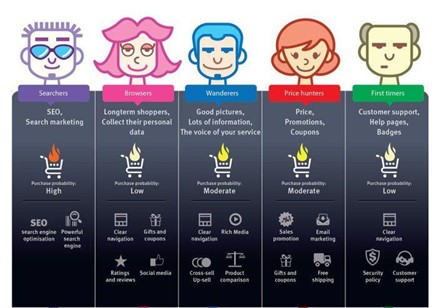
    Marketers can collect, compile, and analyse data from multiple sources and divide it into segments for creating buyer personas. These are comprehensive profiles of ideal customers to improve decision-making and ensure that marketing initiatives target every audience segment adequately.

    The buyer persona and journey map above offers an excellent overview of how online stores can approach this strategy to better understand their customers.

    1. Predicting New Trends

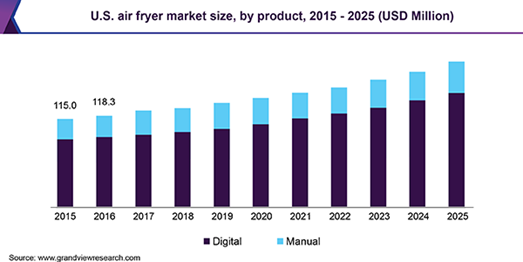
    Product trends change swiftly in the e-commerce world. For instance, while air fryers are currently selling like hotcakes, it might be something else in the near future. Knowing such trends in advance could be a gamechanger for any online retailer. And it is now possible to accurately predict “the next best product” with the help of demand forecasting solutions.

    These tools can identify trends and patterns in sales data to estimate future demand. It can enable online stores to maintain adequate stock levels, generate higher revenue, and gain a competitive edge. Short-term and long-term demand can be forecasted at a micro or macro level to predict the future and keep up with the changing trends.

    For instance, a simple demand forecast for air fryers suggests that their market size will continue to grow well into the future.

    1. Boost Customer Service

    Finding and converting new customers is challenging for smaller online stores. But after making the first purchase, their chances of doing it again are considerably higher. In other words, instead of selling your products to a new customer, you are 60%-70% more likely to sell to existing customers. And repeat customers are vital for any business as they spend up to 67% more than new customers.

    The quality of your customer service plays a critical role in boosting customer loyalty. Ecommerce businesses can collect an extensive range of data and build it into their CRM strategy to improve customer service and satisfaction. Some of the data points they can consider are-

    • Website cart abandonment rates, bounce rates, and conversion rates
    • Customer satisfaction survey results
    • Customer service response times
    • Overall social sentiment

     Leveraging Data in Ecommerce

    There are several ways for online stores to leverage data for improving their operations. Moreover, there’s also an extensive range of advanced analytics software and tools to help businesses make sense of their collected data. But as data now plays such a critical role in the eCommerce landscape, it’d be wise to trust only the experts.

    Experienced digital marketing professionals can help online stores explore the possibilities and create custom data-driven strategies that are equipped to deliver the best results.