LS Staging

Tag: content marketing

  • Opt For The Emotional Route To Create Loyal Brand Advocates

    Opt For The Emotional Route To Create Loyal Brand Advocates

    Irrespective of the business objectives, goals, and profit margins, every entrepreneur shares a common target with his contemporaries. Yes, you’ve hit the bull’s eye! It is sales and revenue generation. Business owners will like to add to their revenues and profits, which isn’t possible unless they have access to crucial and effective strategies. It is right here that the creation of unmatched consumer experiences plays the vital role.

    You have to develop a strong follower-base for your brand, who will serve as dedicated and loyal brand advocates. No points for guessing that nothing other than targeted CX strategies will work in this context.

    Comprehending the nitty-gritty

    As a brand owner, you might not be successful in comprehending consumers’ needs. It’s highly imperative to get into their skin and make realistic assumptions. Say, for instance, a customer uses:

    • Wearable and smartphones of a particular brand
    • Shoes from a reputed company
    • Apparels manufactured by a specific brand

    Now, that says a lot about his preferences and choices. It is during these occasions that we term such people as ‘brand loyalists.’ No matter what happens, loyalists will always go with their brands. Here’s the catch for you! If you wish to emerge as a brand and turn your dream venture into a force to reckon with, brand advocate creation will be significant.

    Tips to follow

    Turning followers into loyal brand advocates happen to be an intensive process. You have to follow strategic approaches and tips thus delivering actionable results. The following steps will help you to a great extent:

    1. Personalization is the key

    Personal messages and marketing approaches are great ways to captivate consumers. However, it’s highly imperative to leverage these strategies and create special experiences. Try imitating or replicating a one-to-one exchange. Your consumers should have a clear idea of your goals, and you should make them understand how much you care for them. Consumers turn into advocates only when they realise a particular brand cares for their needs and understands their requirements.

    1. The power of anticipation

    Data analytics and Big Data have revolutionised various sectors. Businesses across the globe can leverage the power of data thus gaining crucial insights into consumer behaviour. You can do the same thing by accelerating the anticipation process. Track your consumers’ purchase actions and trends, which will give you crystal clear ideas of their preferences. Give them buying options and meet their demands before they place a request.

    Once your target consumer adds a particular item to the shopping cart, make sure you present a slew of related products. Attach special offers and discounts as that will help them recognise their exact needs.

    1. Emotions are powerful

    When it comes to creating experiences for consumers, always emphasise on the significance of emotions. Your CX strategies and approaches shouldn’t be restricted to creating exceptional User Interface. Add powerful emotions that help you tug at the right strings at the right time. When a compelling marketing message gets added with emotional content, the results are always positive for your brand.

    Parting thoughts

    These factors will give you brief insights into the process of creating powerful brand advocates. If you want to make it big in the professional arena, you can’t be just another service provider. Branding is the key, and the above tips will definitely help you in the long run to achieve your goals.

  • How Brands Can Benefit From Digital Sales Transformation

    How Brands Can Benefit From Digital Sales Transformation

    Just like selling procedures, buying processes have undergone massive transformations, thanks to tech innovations and social selling. These approaches play a pivotal part in influencing purchase behavior of consumers.

    Whether you buy an everyday essential or medical equipment, digitised sales processes have completely transformed the way you plan your purchase. Quite naturally, sales officials, marketers, and product developers have to stay abreast of these emerging technologies. Before we dive deep into the nuances, let’s track the significant changes in this regard!

    Noticeable Transformations

    Digital selling is at an all-time high nowadays. Look around, and you will find a majority of buyers making smart purchase decisions. Purchasers are no longer unaware of the current trends, technologies, and product availability. Everyone can make informed moves depending on these crucial factors:

    • Peer reviews
    • Social recommendations
    • Product comparisons
    • Effective and targeted content marketing

    Buyers have come a long way when it comes to taking information-backed purchase actions. It’s right here that sales people need to take the initiative and embrace digital sales transformation. Here’s how to make the most of this emerging technology!

    Systematic approaches

    Cold calls, one-to-one marketing, and unidirectional mails are no longer enough. You have to strengthen the marketing arsenal with social selling strategies. Digitized sales processes are the perfect remedies, but you need to adopt them systematically. Here’s how you can go about it.

    1. Strengthen your brand

    Branding is one of the most impactful digital sales approaches. If you are planning to embrace social selling strategies, it’s highly imperative to build a remarkable presence on popular social media channels. Leave positive and indelible impressions on the minds of your target consumers through following ways:

    • Elaborate on your brand and services
    • Share an interesting story
    • Highlight achievements, accolades, certifications, and rewards thus building social proofs
    1. Content is the king

    High-quality, engaging, and compelling content has always been the need of the hour. However, the art of creating, developing, and publishing them has undergone huge metamorphosis. You don’t need to create lengthy and detailed content anymore. Powerful, dynamic, and high-quality content will serve the purpose. Quality has replaced ‘quantity’, and that’s a significant change worth considering.

    1. Building targeted and reliable networks

    Reaching out to target audience becomes easier when your venture is present in a robust network. Building impressive and remarkable social networks are of paramount significance, as it gives your business the maximum outreach. Your business profile in Facebook or LinkedIn will bring huge benefits for the venture. You will not only capture leads but also convert them into prospects. Here are some information fields you need to fill up:

    • Experience
    • Functionality
    • Performance
    • Company Type
    • Years served
    1. Leverage social selling

    Once you have a remarkable and captivating social presence, you will surely want to use it to your business’ advantage. Leverage social selling by introducing your services and products to a group of like-minded buyers. Or else, you can also work out partnerships with like-minded business ventures.

    1. Nurturing the network

    Personalized marketing approaches and customised advertising is the key to creating a strong network. It’s not just enough to create it; you must develop and nurture it at regular intervals.

    Signing off

    These important tips will surely help you embrace digital sales transformation in a bigger and better way.

  • Weekend Digital Media Round-up: Google’s enhancements for ads, Facebook’s new in-app 360 photos, LinkedIn’s native videos for all users and more..

    Weekend Digital Media Round-up: Google’s enhancements for ads, Facebook’s new in-app 360 photos, LinkedIn’s native videos for all users and more..

    1. Google announces AMP speed and viewability enhancements for ads

    Google’s AMP (Accelerated Mobile Pages) group announced enhancements to ads served in AMP. Specifically, the project has entered phase two of its three-phase plan for supporting comprehensive advertising functionality in AMP. [Source: Search Engine Land]

    1. Facebook’s Adding Publisher Logos to News Links to Reduce the Reach of Misleading Content

    As part of their ongoing efforts to combat fake and misleading content on their platform, Facebook has announced the latest option to better inform users – the addition of publisher logos next to links in Trending and Search. [Source: Social Media Today]

    1. IAB releases its first ‘Podcast Playbook’ guide for marketers

    The podcast has taken another step toward becoming just another marketing channel, with the release today of the Interactive Advertising Bureau (IAB)’s first buyer’s guide for podcast advertising. [Source: MARTECH TODAY]

    1. LinkedIn’s Rolling Out Native Video to All Users

    LinkedIn has now announced that all users will soon be able to post video to the platform, moving in-line with the broader video content shift. [Source: Social Media Today]

    1. Facebook now lets you take 360 photos in-app, use them as Cover Photos

    Facebook has been a big supporter of 360-degree photos and video, adding support for the immersive media formats early on Facebook itself. Now, the social tech company is adding support for capturing 360-degree photos right within the Facebook app itself. [Source: TechCrunch]

    1. Walmart offering voice shopping via Google Assistant and Home

    Google and Walmart have announced a partnership to bring Walmart voice shopping to the Google Assistant and Google Home. Free delivery will also be available through Google Express, which is changing its pricing structure. [Source: Search Engine Land]

    1. Google making renewed effort to help news publishers drive more subscriptions

    Google has always been treated by the news industry as a kind of frenemy. Many news organizations have a tortured history with Google, including some who’ve successfully lobbied against Google in Europe. Yet for roughly a decade Google has been trying to help publishers make more money while continuing to try and serve users and its own commercial interests. [Source: Search Engine Land]

    1. WhatsApp adds new coloured text-based Status, brings it to desktop as well

    WhatsApp has announced the coloured text-based Status updates for its users. The feature is similar to how it works on Facebook, where users can add a coloured background when uploading a text based status update. [Source: Indian Express]

    1. Google auto-playing video previews in search results carousel on Android

    Google announced they have added video previews to the video carousel that shows up in the search results. Currently, this only occurs when you are using the Google app for Android or using Chrome on Android. [Source: Search Engine Land]

    1. Google May Lose Trademark Rights to Its Own Name, Here’s Why

    A trademark lawsuit before the Supreme Court alleges the word “Google” has become too generic, and is therefore no longer eligible for trademark protection. [Source: Search Engine Journal]

    Expert Opinion:

    1. Data driven Personalization is the key to effective digital marketing campaigns

    Personalization in marketing has been the most talked about topic recently and is quickly gaining popularity as an effective marketing tool for brands. Technology has enabled consumption of content at a personal level. The consumer preference is often revealed voluntarily and sometime with incentives. And the same technology has enabled recording & analyzing those preferences, quirks, behaviours, moods, mood swings, for most touch points. With new technologies and advances in the digital marketing field, the possibilities of personalizing marketing communication and campaigns are also expanding. According to a recent study conducted by PWC’s Digital Services group, 94% of senior-level executives believe delivering personalization is critical or important to reaching customers.

    Amongst the clutter of each touch point, if we believe that personalized communication is the only way to gain that fleeting moment of attention, then data driven personalization is the only medium which can help achieve that objective and thereby make Marketing dollar more effective.

    Personalization helps you understand your consumers well which enables you to assist them in providing a seamless customer journey, and helps you differentiate yourself from your competitors. Having said that Every data point recorded doesn’t and will never create a ‘conversion’ or a result that has a monetary value attached to it. But every data point is a building block in the path to the holy grail of personalization where we have true one to one communication and continuous optimization basis behaviour or preferences that are revealed

    Some of the benefits you can reap from data driven personalized digital marketing campaigns are:

    – Drive conversions and increase sales

    – Build long-term and stronger relationships with customers

    – Significant boost in customer engagement

    – Improved customer experience

    – Better customer retention

    – Increased customer loyalty

    Brands need to cautiously use customer data and understand their preferences. This will assist the brand in designing effective marketing strategies that can promote positive communication with their consumers. This, in turn, can help them with improved conversions.

    In a landscape where customer touch points are competing with each other to get customer attention, it is imperative for a marketer to measure the success of each such points of contact Quantifying results of a marketing intervention & then connecting it to business levers is hence a necessity for the marketer to function effectively

    With the rising popularity of digital media and the customers’ inclination towards using multiple devices, the scope of data driven personalization is not limited to selection of the Target Audience or the point of contact or the relevance of the communication – it has to cover the entire life-cycle of a marketing intervention to provide a flawless experience across multiple devices/ touch points.

    Econsultancy’s Internet Statistics Compendium suggests that programmatic and personalization experiences which emphasize on customers could provide anywhere from 2x to 14x more incremental revenue per visitor (RPV) compared to traditional optimization efforts that focus mainly on cosmetic changes.

    In the rapidly growing digital age, brands who thrive on user insights and data to drive customer engagement and sales for the businesses are sure to stand out in the future.

    Manish Dureja, Managing Director, JetPrivilege

  • Weekend Digital Media Round-up: Google’s new call bid adjustments in AdWords and changed Sitelinks design, Instagram’s new analytics for brands’ organic posts, LinkedIn’s Website Demographics and more…

    Weekend Digital Media Round-up: Google’s new call bid adjustments in AdWords and changed Sitelinks design, Instagram’s new analytics for brands’ organic posts, LinkedIn’s Website Demographics and more…

    1. Google has dropped Google Instant Search

    After launching Google Instant — Google’s method of showing search results as you type them — several years ago, Google has removed the feature from search. [Source: Search Engine Land]

    1. LinkedIn Provides Capacity to Add Multiple Images in a Single Post

    LinkedIn continues to add new tools and features, improving the user-experience in tiny increments, as opposed to adding in wide-scale changes. The latest addition comes in the form of multi-image posting. [Source: Social Media Today]

    1. Instagram starts sharing analytics for brands’ organic posts, Stories through API — but there’s a catch

    Instagram started sharing analytics for brands’ organic posts and Stories through the Instagram Platform API, so that brands can pull up these stats within the marketing dashboards they use to manage and monitor their various social accounts. [Source: MARTECH TODAY]

    1. Google officially changes Sitelinks design to carousel format

    Google has been testing a carousel format for these Sitelinks for over a year and today has confirmed they are now rolling out the new carousel-based design for mobile search results. [Source: Search Engine Land]

    1. Google testing list format for AdWords enhanced sitelinks

    Google is now testing a list format for enhanced sitelinks. The link font is smaller, but taken together, the list of four enhanced sitelinks takes up more real estate than the column format. [Source: Search Engine Land]

    1. YouTube Adds New Tools to Help Publishers Moderate Comments

    Over on the YouTube Help forum, the platform has announced that publishers will now be able to have comments with links or hashtags included within them to be held for review. [Source: Social Media Today]

    1. LinkedIn’s Website Demographics lets brands analyze site visitors using LinkedIn data

    LinkedIn is going to give businesses a better idea of who’s visiting their sites, such as those visitors’ job titles, company names and locations. [Source: MARTECH TODAY]

    1. Google intros new call bid adjustments in AdWords

    Google is adding a bid adjustment in AdWords specifically for calls. The bid adjustment for calls informs how often call information appears in mobile search ads. [Source: Search Engine Land]

    1. Linqia unveils ‘first’ platform for predicting influencer engagement

    Linqia is out this week with a new version of its platform that it says offers the first predictive analysis of influencers’ performance. [Source: Marketing Land]

    1. Google confirms testing auto-play videos in the search results

    Google has confirmed that they are running a small experiment where they auto-play videos in the search results page. When you do a search for some movies (and possibly television shows), Google will begin autoplaying a video in the right hand sidebar, appearing within the knowledge panel. [Source: Search Engine Land]

    Expert Opinion:

    1. Make the most out of your marketing budgets with cross-device marketing.

    Cross-device targeting is the practice to identify and deliver ads to a specific set of audience across various devices they use. Cross-device marketing is a very effective approach that marketers can use to reach the correct audience and achieve the desired results from their campaigns. Combined with device graphs, marketing professionals can correctly identify various consumer devices to connect with and measure every interaction. Combining the data from different customers across different devices, marketers can plan the campaigns efficiently and achieve positive returns on the ad spends.


    Cross-device marketing can help marketers to:

    – Deliver personalised content and provide delightful experience

    – Accurately target the audience and reduce wasted ad spends

    – Optimise business results with correct attribution

    Mastering cross-device data and managing campaigns using this data can be a game changer for making the most out of the marketing budgets. Also, with the understanding of cross-device identity, marketers can be future ready with the introduction of new devices which will open up more opportunities to target the customers in different ways.

    According to IHS, there were around 15.4 billion connected devices in 2015, and this number is projected to go up to 30.7 billion by 2020, ranging from watches to TVs to cars to home appliances. Each of these devices is an opportunity for the marketers to interact with the consumers digitally and gain possible conversions for their activities.

    Subhrangshu Neogi, Director, Head – Group Marketing & Brand, Religare

  • Weekend Digital Media Round-up: Brand new Google search console, Amazon’s new Spark social feed, Snapchat’s Snap Publisher and more…

    Weekend Digital Media Round-up: Brand new Google search console, Amazon’s new Spark social feed, Snapchat’s Snap Publisher and more…

    1. Original Programming is Set to Make a Big Splash on Social Media

    With the recent announcement that Snapchat is diving into more original news programming in partnership with NBC, we’re seeing more and more investment dollars being put into custom content. Don’t expect that to slow down anytime soon. [Source: Social Media Today]

    1. Facebook plans to start testing Instant Article subscriptions as soon as October

    Facebook’s Instant Articles format may not be the revenue rainmaker that publishers had hoped for, but the company is readying another method for media companies to make money. [Source: Marketing Land]

    1. Google Analytics rolling out ‘ask a question’ to get answers instantaneously

    A little over a year ago, Google teased using natural language to get data from Google Analytics just by asking. That “asking a question” functionality has now arrived in Google Analytics and Google Analytics 360 globally. [Source: Search Engine Land]

    1. Google Introduces New, Personalized Information Feed to Improve the Utility of Their App

    As web search evolves into more predictive, intelligent models, Google’s working to evolve their app to meet the rising demands of the modern consumer. [Source: Social Media Today]

    1. Amazon’s new Spark social feed wants to be ‘Instagram for products’

    Amazon has introduced Amazon Spark, a very Instagram-like social shopping feed. Not all of the images and posts are tied to products but most are — and can be purchased on Amazon. [Source: MARTECH TODAY]

    1. LinkedIn Adds New Data Tools to Help Advertisers Maximize their on-Platform Efforts

    LinkedIn’s introducing a range of new data tools which will provide more transparency on performance, and more data for improved targeting on the platform. [Source: Social Media Today]

    1. Snapchat releases Snap Publisher: self-serve ad creation tool converts horizontal videos, websites into vertical video ads

    One of the knocks against advertising on Snapchat is that it’s hard to make ads for Snapchat. The mobile app’s insistence on vertical video compels advertisers to create campaigns from scratch rather than reusing ads that ran elsewhere. Now Snapchat is addressing that obstacle. [Source: Marketing Land]

    1. Facebook’s Removing the Ability to Edit Link Previews – Here Are Your Alternatives

    Facebook announced a pending change to their Graph API which would remove the ability for Pages to edit link previews attached to posts – that change comes into effect this week, but the backlash has lead to Facebook providing a stay of execution, of sorts, on the feature for some Pages, with a new option that will enable publishers to maintain the capacity to edit previews. [Source: Social Media Today]

    1. Google beta testing brand-new Google Search Console design

    Google is currently testing a new design and user interface for the Google Search Console. The new user interface takes a design look from the revised mobile-friendly testing tool that launched less than a year ago. [Source: Search Engine Land]

    1. Snapchat Enables Recording Beyond 10-Seconds, Adds New Creative Options

    Keeping up their pace of adding new features and tools, Snapchat’s launching two new updates this week, one of which could fundamentally change the Snap process. [Source: Social Media Today]

    Expert Opinion:

    1. How can brands use immersive marketing to provide unique customer experience and maintain brand credibility?

    Storytelling has always been an important factor for any campaigns and ads to engage with the audience, and convey the brand message effectively. However, the 2D story approach is winding down, and a three dimensional, fully immersive approach is gaining pace these days.

    Immersive technology combines virtual reality (VR), augmented reality (AR) and mixed reality (MR) to create a unique experience for the customers which is relatable, impactful, memorable and fun. VR has played a major role in changing the way marketers can play with the campaigns and provide an impactful immersive experience to the audience. As per Statista Inc., the virtual reality console market is estimated to reach 4.5 billion U.S. dollars in 2018.

    Immersive marketing can help marketers to:

    – provide a seamless experience to customers and improve brand credibility

    – provide unique content to the individual customers’ basis their preferences

    – tackle language barriers through immersive visual solutions

    – provide detailed and precise customer analytics

    Immersive marketing is changing the marketing world at a fast pace. Reports by Statista Inc. suggest that, by 2018, the number of active VR users is estimated to reach 171 million. Considering the changing customer behaviour & expectations and the way audience is adopting newer technologies, it is high time that the marketers get themselves accustomed to the immersive marketing techniques and use them to achieve optimal customer engagement and brand reputation.

    Vishwajeet Parashar, Group Marketing Head, Bajaj Capital Ltd.

  • 10 Simple Ways to Improve the Accuracy of Google Analytics Data

    10 Simple Ways to Improve the Accuracy of Google Analytics Data

    Often, business owners find themselves staring at the Google analytics data and are sceptic about its accuracy. The objective of this post is to help you identify the most common errors of the Google analytics data and provide you ways to fix the errors.

    No view filters

    View filters are of great use to segment the vast data into different relevant buckets for easy analysis. However, the amateur users do not use the filters to its fullest potential. The search and replace filters functionality greatly help in making the page requests URI easily readable. The upper and lower case filters help in making sure that the report rows do not split because of their case sensitivity. It is advisable for all the business owners and marketers to use the various filters while using the Google analytics; it will help you clean up the data and not just segment it. The view filters offer a perfect solution for cleaning up all your data.

    Filters

    While using filters is a great way to clean the data, on the flip side, the filters, if used incorrectly can be destructive. The irrevocably alter the data as it comes into the Google Analytics reporting database. The best solution to avoid losing data is always to have a single view that is not filtered by any destructive options in the configuration. You can create a quick and dirty testing view and throw all your filters there first and filter the data. Deploying the filters incorrectly can be detrimental, especially if you are dealing with historical data.

    Self-referring

    If you check the referral report and see your domain as a referral, then you would have a self-referring issue. This problem occurs because you would have no idea of the source of the traffic, which literally translates to not being able to attribute the traffic to your marketing endeavours. It would be worse if you have spent money on online marketing and you have no idea about what percentage of traffic makes up for the self-referrals.

    There is literally a sea of information available on the internet on how to fix this issue. However, experts suggest that the most common reason why this happens is that one or more than one page on your website lacks the GATC or the Google Analytics Tracking Code. The problem with not having GATC is that, if a user over the course of the time they spend on the website, visits a certain page that does not have the tracking code, then the GA would consider the previous page as exit and the next page would be considered as the entrance with your domain as the referral. GA experts have corroborated that the most common page that lacks tags is the 404 error page.

    No stripped query parameters

    The query parameters are simple, the values that are added to the URL in the format of ?key=value&key2=value2. You can strip out the view-by-view query parameters through the view setting page on the admin menu. These values mean many things and it is very common for the content management systems to use the values and the external tracking applications. The query parameters, not necessarily always dictate the content on the page; sometimes it is just the session or the user data the CMS needs to shuffle the page around. An important note – as an analyst, they hold no significance for you.

    You must know that every reporting row in your content report is unique and every combination of query parameter will have its own row, which will split the data for a page into different rows. It is quite possible that you would only look at the row for a particular page that is utilised the most and it surfaced by column sorting.

    Not having default view page

    Another effective and easy technique to clean up the day is to set the default page in the view settings. What this essentially does is, it aggregates the root domain “/” with any page that you set as the default page. For example, if you set “index.php” as the default page, the “/index.php” in the content report will be combined in with “/” into one clean row. All the query parameters that you have added will break into their own separate rows.

    A bad architecture

    Apart from the bad data, the odds are quite high that you might be looking at the wrong place. While setting up the account make sure that you name the account so that, is easily identifiable; you must know which web property or account you are referring to within 10 seconds. Setting up an account can be very basic or complex; you need to figure out a way to know how everything ties together.

    No annotations

    One of the major benefits of having annotations is that it compensates for the changes you have made to the account while viewing the historical data. You may probably remember the last couple of changes that you have made to the GA account. However, it is not possible for you to remember the changes made over the course of one year. It is literally not possible to remember all the filters that you have applied. This is where the annotation plays a vital role. While you are building historical data, the annotation will give a clear log of what the data means so that you get the right insights.

    Case sensitive campaign fumbles

    One of the best features in GA is the campaign tracking feature. However, you must know that the campaign tagging is always case-sensitive, which means that if you are launching three different campaign and you list the medium as EMAIL, Email and email, these will show as completely different mediums. It is therefore highly advisable that you have some kind of reference document that the marketing professionals can access and collaborate while creating campaign tags.

    Adding the code at the wrong place

    The best way to place the GATC on the website is quite dynamic and it keeps changing. While you are creating a web property or within your GA admin panel where the tracking code is located there is always a brief description where it exactly needs to be placed.

    Using GATC that is outdated

    This is another very common reason why the data is messed up. The javascript tracking code that you place on the page calls the Google mothership and references, which can be best described as a little web program. This program, just like any other computer program is constantly improved and on some occasions, you would need to update the GATC and take advantage of the new features of GA. Make sure that the GA code is up to date.

  • Facebook Introduces 7 Critical Changes to Make it a Real Local Search Player

    Facebook Introduces 7 Critical Changes to Make it a Real Local Search Player

    The leading global search engine, Google has been dominating the search market shares for several years now, and all the efforts by the competitors to steal the market share has been futile. Not to mention, in the mobile search sector, Google with its 95% share holds a monopoly. The only closest competitor and the dark horse in the race is another global platform, Facebook, which has the capacity to be a match to the Google’s massive audience share and resources. Facebook has all the vital components including location data, millions of users from around the world, demographic information, millions of business pages, behaviour data, and social networks to assist the users to search for local products and services and also help the business be found by the local audience.

    Although Facebook has huge potential to pose a serious threat to Google in the local search business, it has not been a very effective competitor. In a research conducted by The Local Search Association on how the customers in 12 different cities with varying population search for the local business, it is reported that the search engines account for 80% usage as compared to 48% usage for all social networking platforms.

    In the past couple of years, Facebook has been steadily working to build a robust search function; below mentioned are seven ways by how Facebook is changing how search works on the platform:


    Facebook is focusing on the effective use of the location

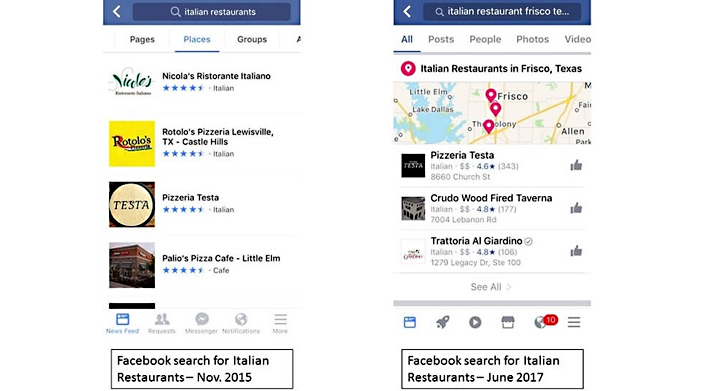
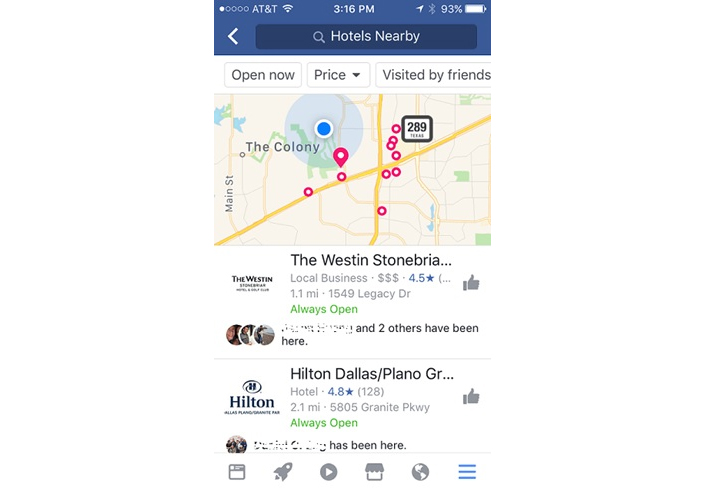
    As documented by Google’s emphasis on proximity and physical address in getting higher local search results, location is the most important aspect of local search. In this purview, Facebook is focusing on highlighting the map at the top of the local business pages in the about us page as well as the home page. In a test conducted by Facebook where the location was not specified by the users, the got results from far off places. However, today, with the improvement in local searches, if you search for restaurants in India, you may get the results of the restaurants within two miles of your current location. Moreover, the results also include the address and the map location. The below image is a comparison of search results in November 2015 and June 2017, which demonstrates the differences in the local listing:


    Priority is given to the place

    With Facebook focusing more on the search result, it is not only using the location more efficiently but also giving much importance to places. Earlier, the places tab was not given any importance by Facebook, however, the tab is highly functional today and it provides the most relevant information for all searches. For example, if a user searches for the best plumbing service Bangalore, the search results show the returned places at the top of the results page and the local business follows next.

    The search results are more specific and robust

    The search results today are not only relevant to the search term but also they provide in-depth information. For instance, if your search for the best lawyer Mumbai, the search result will not only list the lawyers in the vicinity but also would show their address, distance from your current location, their office hours, rating points and even the profile picture. The listing also provides information on the type of lawyer they are and their field of expertise like criminal law, family law or real estate law.

    Improved indexing of information

    One of the major problems that Facebook previously had was with that the indexing of the information was pretty poor. However, Facebook has fixed this problem, which is in line with its focus on improving the local search. The social networking platform has also helped improve the search functionality by adding suggested search terms when the user is trying to search for a particular thing in the search box. The suggested terms frequently pull up the various business categories that Facebook offers to its business users and help them identify the type of business they are into.

    Facebook is testing its beta version of new features including local search and integrating friend posts

    In its bid to make the search unique than Google search, Facebook is trying to incorporate the social media data in its search results. The global social networking giant has been testing with a few users who have mini profile pictures to place the listings of their friends who have either checked in at a certain place or have posted about a particular place or business organisation.

    It is a known fact that the users are prone to trust their friends when it comes to providing reviews. Knowing that a particular person has chosen to subscribe to the services of a certain business, it becomes easier for the users to make their decision. With the huge volume of users on Facebook and the vast information available Facebook could literally change the face of the local search business.


    Facebook is building its database through crowdsourcing

    Facebook, undoubtedly has a huge user base and it is leveraging that manpower for free, just as Google did with its ‘local guide’ plan, which proved to be quite successful. Facebook has been asking its users to provide details about the different places that they have checked into through the Facebook editor. At a time when the user check-in or tries to tag a place, the person will be prompted to answer a series of simple Yes-or-No questions, such as does the place have a parking lot? Is the place open on Monday’s?

    Introducing City Guides

    One of the most popular subjects that most users love to post on Facebook is travel. It has been reported that the social media platforms like Facebook, Twitter, Instagram and Snapchat are helping boost the people’s spending on things like travel, food and entertainment; people love to share with their friends new experiences about their travel adventures and the exotic places they dined at.

    In this regards, the Facebook created city guide to provide people information on the most popular places and the most frequently visited places by people from around the world. One of the distinct features of city guides is that it provides information about the user’s friends who have been to the place they are looking for and when the users tap on the friend, the city guide will bring up a list of the places they have visited. Also, the city guide is designed in a way that it provides information on the local favourites.


    How to be found on Facebook search

    With Facebook introducing all the above improvements to its search functionality, users now have all the reason to spend more time on the platform and consume more content. Thankfully, Facebook has realised the importance of penetrating the local search business, which can greatly help the small businesses to cater better to the audience. So, if you are a business owner, it would be the best time for you to review the About Us Page on your website and look how the information is showing up on the search result and ensure that the page picks up the increasing traffic through Facebook. Here is how you can get started:

    First and foremost review the business profile on Facebook and make sure that the profile is complete including contact information and other vital details about the business.

    Ensure that the local information is accurate and a physical map location show up at the top of the business profile when the page is displayed.

    To describe your business better and get higher traffic, add business categories. Although when you create your own Facebook page, you would be asked to mention just one business category, you can later edit the About section and 2-3 more business categories. This will greatly help in improving the visibility based on the search terms used.

    Activate the buttons on your Facebook profile like call-to-click and appointment schedulers. This will have a significant impact on conversion rate.

    Never leave any sections on the page blank. This may lead Facebook to crowdsource answers. If the question is not relevant to your business, you can answer NO or indicate that the question is not applicable to your business.

    To conclude, Facebook is making some serious in-roads in implementing changes that would improve its local search; especially in melding social media data with local search results. This may put Facebook right at the top as one of the major search players and a leader in the local search business.
  • Weekend Digital Media Round-up:  Google’s new tools for advertising models, Amazon’s shoppable stickers, Pinterest’s autoplay video ads, Google Attribution and more…

    Weekend Digital Media Round-up: Google’s new tools for advertising models, Amazon’s shoppable stickers, Pinterest’s autoplay video ads, Google Attribution and more…

    1. Google Confirms It’s Rolling Out New Reviews Format For Hotels

    Google has confirmed with Search Engine Land that it is now rolling out a new user interface and feature set around local reviews for hotels. Earlier this month, we saw Google begin testing new hotel reviews features, and now Google has begun to roll them out.  (Source: Search Engine Land)

    1. Taboola’s Grid Of Recommended Stories Is Now An Infinite, Scrolling Feed

    Taboola, the grid of content discovery that appears at the end of many online stories, is today giving publishers the option of using a continuous scrolling feed. CEO and founder Adam Singolda told me that this launch represents “a whole new Taboola. (Source: MARTECH TODAY)

    1. Amazon Introduces Shoppable Stickers To Its iOS App

    The social networking apps like Instagram, Facebook, Twitter, and Snapchat have redefined the way people communicated through chat. The addition of several stickers has made talking more fun as well as there is an animation to express almost every feeling. (Source: Logicserve Digital)

    1. Pinterest Introduces Autoplay Video Ads, New Opportunities for Video Ad Exposure

    Now, when you scroll through your Pinterest feed, video content will autoplay – previously, with Pinterest’s Promoted Video and Cinematic Pins, video content would move as you scroll, but not play as such, just shift in response to your movement. (Source: Social Media Today)

    1. Google Sets Up New Tools To Power Up Its Advertising Model

    Google is expanding its local ad efforts and its store visits technology to video, allowing consumers to discover nearby retail outlets, leading to a direct path from a video ad to shopping offline. It will also help advertisers track the offline effectiveness of their video spends. (Source: Brand Equity)

    1. Google Is Extending In-Market Audience Targeting To Search Campaigns

    Google is continuing to extend its audience targeting capabilities into Search. The company announced Tuesday that In-market audiences, currently only available for Display Network and YouTube campaigns, will be coming to Search campaigns. (Source: Search Engine Land)

    1. Instagram Introduces Story Search for Locations

    In the purview of Snapchat adding the new search functionality for the stories, Instagram follow suits, and it is now giving the users the ability to search stories based on location and hashtag through their Explore section. (Source: Logicserve Digital)

    1. Types of Google AdSense Policy Violations & New Page Level Policy Action

    Google stopped serving ads on the whole site that violates AdSense policies. Google will now remove ads only from a particular page that violates Adsense policy guidelines. Having said so, Google will impose Site level actions if needed. (Source: SEO in Short)

    1. At IAB Programmatic Symposium, digital advertising looks to grow up

    About 80 percent of all online advertising is now programmatic, a status that would be cause for celebration of technological progress in any other industry. But, as Barrett and other speakers pointed out, any other industry wouldn’t have brands wondering how much their ads actually cost. (Source: MARTECH TODAY)

    1. ‘Give credit where it’s due’ says Google, as it launches Google Attribution- a free tool for marketers

    Tech giant Google has just made some key announcements at Marketing Next – its annual event where the company unveils its latest innovations for ads and analytics with insights and trends across mobile, analytics, video and platforms. (Source: AFAQS)

    EXPERT OPINION

    Q.Influencer marketing is a big buzz word right now, how do brands measure their ROI?

    Measuring the ROI of your influencer marketing activities mainly depends on the digital brief and the objective of the activity.   Influencer marketing is here to stay, as per a report from ion.co 70 percent of teenage YouTube subscribers trust influencer opinions over traditional celebrities. These influencers play a vital role in the audience’s buying decisions. However, every brand should have their objective set. You can use any of the following goals to measure ROI:-


    • If the goal of your activity is Visibility– 71 % of consumers are more likely to make a purchase based on a social media reference. Hence, it is vital to have social media and blogger influencers who also have a wider audience base along with Google Analytics on their blog. This will enable brands to know if the impressions are targeted well, along with the right communication tone
    • If the goal of your activity is Engagement– 86 % of women turn to social networks before making a purchase. Hence, Influencer marketing also is a good tactic to engage with audience. The most vital aspect is cost-per-engagement. It can be measured in the amount spent per like, comment or video view or click through, etc. Engagement is a strong indicator of how consumers perceive the brand. This insight can be used to create brand loyalists in the long run
    • If the goal of your activity is  revenue –   51 percent of marketers say that video content produces the best ROI.  Tracking revenue is quite easier than you think. These three ways can help brands-
    1. a)Use an Affiliate Link:  The unique affiliate link will help you in tracking online sales that are made through either blog posts or social media platforms.
    2. b)Use a promo code: A custom promo code will help with tracking the impact of your campaign
    3. c)Use Google Analytics: Create an event to keep a track on user journey. You can see which of your customers visited your site (e-commerce) from an influencer’s social and blog platform

    Gaurav Chopra, VP, Internet And Mobile Association of India

  • Four Valuable Tips to Turn Curious Shoppers into Customers

    If you are into retail advertising, one of primary objectives for you would be to reach to the potential customers at the right time and with the right product. The best way to accomplish this and to increase sales in to be visible the customer at the exact time when they are deciding to purchase the product or not. Currently, retail business is huge in the US and also one of the fastest-growing industries in the Europe. Analysts suggest that the retail business is expected to grow by £215.38 billion in 2017.

    With such huge growth expectation, it has become more than important than ever before for the retailers to keep the customers engaged throughout their entire shopping experience. For all the retailers out there, the following four tips will greatly help you in accomplishing this.

    • Create a Sales funnel

    First and foremost, determine exactly what you want actions you want your potential customers to take and accordingly create smaller steps that would turn them into your customers. Always remember that you would have different people in different stages of the buying cycle at different time.

    Set up a funnel where the people who are yet apprehensive about the purchase so don’t push them to purchase. To convert them into your customers provide them some value for sales by capturing their details and then later re-target and re-engage them.

    • Make the checkout process easy

    The ultimate goal for any retailer is to convert the visitors into customers. Make sure that the checkout page simple without any clutter. Provide a clear direction to the customers and guide them through the payout process.

    Don’t pester them with too many questions; ask them only for the essential details. Make sure that you don’t make it mandatory for the customers to register at the website or create an account to make purchase.

    • Make it seem genuine

    Make sure that you publish customer reviews so that it would give the customers a sense of genuinity and give than extra push to complete the purchase.

    • Make it lucrative for the customers

    Attract customers with time-based incentives or stock-based goodies, create a sense of urgency in the minds of customers; this would persuade them to take immediate action.

  • Weekend Digital Media News Roundup: Is Google Testing New Mobile Search Interface, Amazon’s Digital Day, Can Tweets Be Edited, 2017 Trends & More…

    Weekend Digital Media News Roundup: Is Google Testing New Mobile Search Interface, Amazon’s Digital Day, Can Tweets Be Edited, 2017 Trends & More…

    Logicserve Digital brings to you a curated round-up of important digital marketing updates this week. For further queries, you can write to us at: newsbulletin@logicserve.com

    1. Google Tests New Mobile Search Results Interface?

    Looks like Google is testing yet another Google user interface for the mobile search results. Tejas Thakkar posted a screen shot of the test on Twitter showing search snippets showing the URL (or breadcrumb) at the top, then the title/headline, followed by the snippet/description. (Source: Search Engine Roundtable)

    1. Amazon Launches Digital Day, A New Sales Holiday For Digital Products

    Over the past two years we’ve seen Amazon excel at creating demand for Prime Day, a Amazon-generated sales holiday. This week Amazon is launching a new sales day on digital media dubbed “Digital Day.” (Source: Marketing Land)

    1. Four Essential Content Marketing Tips To Help You Thrive In 2017

    Content marketing tactics are constantly evolving. Moreover, every brand is different and calls for different content marketing strategy; thus, it is imperative for digital marketers to determine what works well for their brand and what does not, so as to evolve their own digital marketing strategy. (Source: Logicserve Digital)

    1. Google Launches A New Look For Recipes In The Mobile Search Results

    Google has launched a new look and feel for the recipe search results done over a smartphone device. Alex Chitu first noticed the change that shows richer images and content for recipe-related queries. (Source: Search Engine Land)

    1. 2017 Global Consumer Trends Marketers Need to Know

    While the U.S. election brought some new attention to the power of rural residents, there is no denying the fact that the globe continues to urbanize. A projected 55% of the planet’s people are forecast to live in cities next year. (Source: Ad Age India)

    1. How To Improve Website Conversion Rates?

    The term ‘conversion’ not only implies ‘sales’ but also refers to the specific actions of online visitors on your site such as— purchasing a product, subscribing to your emails, downloading a whitepaper, or filling out a contact form. (Source: Logicserve Digital)

    1. Twitter Introduces Live 360 Video On Twitter And Periscope

    At Twitter’s recent #WhatsNext event – in which they outlined the future developments coming for the platform – the company’s VP of Ad Development John McFarland noted that they were working on 360 video. (Source: Social Media Today)

    1. Amazon Begins Testing Product Listing Ads On Adwords

    In 2012, Google’s Product Search was transformed from an organic product search tool into a pay-to-play shopping destination. Since the removal of Product Search, Amazon has not participated with Google’s Product Listing Ads. (Source: Search Engine Land)

    1. Could Editing Be Coming To Tweets?

    You think you’ve crafted the perfect Tweet. You hit the big blue button to set it live — only to realise you’ve made an “unpresidented” typo. Editing is something many of us would like to see on microblogging social network Twitter. (Source: CNET)

    1. Duolingo Goes Social With Language Clubs For Mobile App

    Duolingo is getting social. Yes — the language learning app just debuted Language Clubs, which encourage users to share their learning achievements with friends. Adding a bit of competition to the mix, users can also check out weekly leaderboards. (Source: Media Post)