LS Staging

Tag: consumer

  • Weekend Digital Media Round: AI Is Reshaping Marketing: Why CMOs Must Lead The Transformation, Why Most Enterprise SEO Operating Models Are Structurally Broken, Ads that sell what isn’t in stock: Quick commerce media’s hidden flaw? & More….

    Weekend Digital Media Round: AI Is Reshaping Marketing: Why CMOs Must Lead The Transformation, Why Most Enterprise SEO Operating Models Are Structurally Broken, Ads that sell what isn’t in stock: Quick commerce media’s hidden flaw? & More….

    1.AI Is Reshaping Marketing: Why CMOs Must Lead The Transformation

    AI is pushing marketing organizations to confront leadership, governance, and structural gaps rather than simply automate work. The piece argues that CMOs must lead with clarity—defining decision rights, accountability, and alignment—so AI scales effectively instead of amplifying chaos. Ultimately, AI becomes a competitive advantage only when treated as an operating-model transformation, not a tools rollout. [Source: Forbes]

    2. Why Most Enterprise SEO Operating Models Are Structurally Broken

    Enterprise SEO often fails not because of weak tactics, but because it’s positioned too late in the workflow, acting as a reactive reviewer instead of shaping decisions upfront. The piece argues that SEO must be embedded into product, content, and development processes—especially in the AI-driven search era—since structural foundations, not post-launch fixes, now determine visibility.  [Source: Search Engine Journal]

    3. Ads that sell what isn’t in stock: Quick commerce media’s hidden flaw?

    Sponsored listings on quick‑commerce apps often promote products that aren’t actually available locally, leading to wasted ad spend and frustrated users. As retail media grows rapidly in India, experts argue that ad delivery must become tightly linked with real‑time inventory data to ensure ads run only where fulfilment is possible. The next phase of quick‑commerce advertising is expected to shift from impression‑led buying to availability‑led optimisation. [Source: Exchange4Media]

    4. From SEO And CRO To Agentic AI Optimization (AAIO): Why Your Website Needs To Speak To Machines

    Web optimization is shifting beyond traditional SEO and CRO as autonomous AI agents increasingly research, decide, and transact on behalf of users. The concept of Agentic AI Optimization (AAIO) emphasizes structuring websites to be understandable, trustworthy, and actionable for machines—not just humans. Businesses that adapt to this change can stay visible and relevant as AI-driven discovery and commerce become mainstream. [Source: Search Engine Journal]

    5. ‘We’re building the future of advertising on infrastructure we don’t control’ – and no one’s talking about it

    The piece argues that digital advertising’s next phase is being built on third‑party AI infrastructure the industry doesn’t own or control, raising serious questions about data security, privacy, and decision‑making. It highlights how signal loss, stricter privacy rules, and the rise of agentic AI are converging, fundamentally reshaping attribution, monetization, and the marketing funnel. [Source: The Drum]

    6. Emerging technology trends brands and agencies need to know about

    Google’s Campaign URL Builder helps marketers create trackable links by adding UTM parameters like source, medium, and campaign name. These tagged URLs make it easier to analyze traffic sources, campaign performance, and experiment results in Google Analytics. [Source: Adage]

    7. How new infrastructure, like the Model Context Protocol, is reshaping marketing workflows

    AI agents are becoming central to marketing workflows, but their effectiveness depends on better infrastructure that connects them seamlessly with existing systems.The Model Context Protocol (MCP) introduces an open standard that adds structured context on top of APIs, enabling AI agents to plan, execute and optimize marketing tasks end‑to‑end across platforms like Amazon Ads, while reducing friction and manual effort. [Source: DigiDay]

    8. The Real Customer Churn Problem? You’re Measuring It Too Late

    Customer churn is rarely a sudden customer decision; it is the final outcome of unresolved issues across product, service, and overall experience. Companies often fail by measuring churn too late, focusing on exit data instead of identifying early warning signals embedded in day‑to‑day customer interactions. Preventing churn requires proactive, system‑wide accountability rather than last‑minute retention tactics.  [Source: CMS Wire]

    9. The New SEO: From Rankings To Recommendations In AI Search

    Marketing campaigns often underperform not because of weak creative or channel choices, but due to gaps in identity data that prevent brands from reaching the right people. Fragmented profiles and missing or inconsistent identifiers reduce reach and relevance across touchpoints. Solving this requires strong identity resolution and enrichment to connect data accurately and activate audiences more effectively across platforms. [Source: AdWeek]

    10.What’s the Missing Link in Consumer AI Agents?

    Google’s Campaign URL Builder allows marketers to create trackable links by adding UTM parameters, making it easier to monitor where traffic comes from and how campaigns perform in Google Analytics. It helps standardize campaign data, enabling clearer analysis of user behavior, conversions, and overall marketing effectiveness. [Source: My Total Retail]


  • Weekend Digital Media Round- AI Is Collapsing the Shopping Funnel, The Precision Payoff, Privacy UX as the New Personalization: How Trust Builds Customer Loyalty & More….

    Weekend Digital Media Round- AI Is Collapsing the Shopping Funnel, The Precision Payoff, Privacy UX as the New Personalization: How Trust Builds Customer Loyalty & More….

    1.AI Is Collapsing the Shopping Funnel

    AI is compressing the entire shopping journey into a few seconds, shifting customer research and decision‑making into AI-driven prompts and distributed channels. As a result, checkout becomes the only moment where brands can still influence relevance, offers, and revenue. SMBs now need strong product, payments, and data infrastructure to adapt and win in this new distributed commerce model. [Source: INC.]

    2. The Precision Payoff

    Personalised advertising is shifting from single big ideas to adaptive campaigns that use real-time data to deliver hundreds of tailored variations. Brands like Bajaj Finserv and Britannia are seeing higher engagement, better conversions, and improved ROI—though success depends heavily on high‑quality first‑party data and disciplined execution. When applied strategically, personalisation boosts efficiency by reducing wasted spend rather than increasing budgets. [Source: ET Brand Equity ]

    3. Privacy UX as the New Personalization: How Trust Builds Customer Loyalty

    Brands are shifting from surveillance-style personalization to privacy‑first engagement as consumers increasingly reject hidden data tracking. Transparency, consent, and clear value exchange now drive stronger trust, loyalty, and long-term customer relationships. Companies that prioritize privacy build more resilient data ecosystems and outperform on reputation, engagement, and lifetime value. [Source: CMS Wire]

    4. How to use AI for SEO without losing your brand voice

    AI can streamline data-heavy SEO tasks, but relying on it without a strong brand voice leads to generic, forgettable content. The key is letting AI handle structure and scale while humans shape tone, identity, and emotional connection. Brands that blend AI efficiency with clear human-led strategy will stay distinctive and competitive. [Source: Search Engine Land]

    5. When a 30-second clip overtakes a 60-minute conversation

    Altman’s viral 30‑second AI analogy sparked discomfort online, but the full hour-long conversation showed a more nuanced, human‑centred perspective. He highlighted the difference between technical explanations and human value, stressing that empathy, connection, and lived experience remain uniquely human. The episode ultimately reflected how fragile public trust in AI communication has become in a world dominated by short clips. [Source: Marketing Mind]

    6. Content marketing in an AI era: From SEO volume to brand fame

    Content marketing is shifting as AI answers most informational queries directly, making traditional SEO-driven traffic far less effective. To stand out, brands must prioritize distinctiveness, original research, strong distribution, and fame-building over high-volume content. Success now depends on creating memorable, signal-rich work that earns attention rather than relying on being discovered through search. [Source: Search Engine Land]

    7. The Top Challenges Facing CMOs in 2026

    Marketing leaders in 2026 are navigating tougher privacy rules, shrinking data visibility, economic pressure and rising expectations around AI. CMOs must justify budgets continuously, rebuild measurement models and manage AI responsibly while keeping brands visible in an increasingly fragmented digital landscape. The role has expanded beyond marketing into enterprise-wide growth leadership. [Source: CMS Wire]

    8. The Evolution Of UI/UX Design And The AI Impact

    UI/UX design has evolved from static layouts to data‑driven, behavior‑focused experiences, and AI is now reshaping that evolution. Conversational interfaces are reducing the need for traditional navigation, shifting design priorities toward intent interpretation, human‑AI interaction, and ethical personalization. While user flows simplify, building effective AI-driven systems requires deeper collaboration across design, engineering and data teams. [Source: Forbes]

    9. Why you’re no longer marketing to a person, but to an ‘assemblage’

    Modern consumers behave as shifting “assemblages,” influenced by group chats, algorithms, communities, and AI assistants rather than acting as isolated individuals. Robert Kozinets argues that marketers must rethink loyalty, identity, and engagement in an age where digital culture and AI deeply shape decisions. The future of marketing lies in understanding these networked behaviors instead of targeting a single person. [Source: The Drum]

    10. Your Customer Signals Aren’t the Problem. Your Operating Model Is.

    Real‑time customer signals are abundant, but most companies fail to act on them due to weak operational models, fragmented identity, and unclear decision ownership. Success comes from building a strong operational layer—identity resolution, orchestration, activation and governance—to turn insights into timely, consistent actions. AI accelerates decision-making but demands strict guardrails, human oversight and outcome‑based measurement to maintain trust and drive real business impact. [Source: CMS Wire]

  • Weekend Digital Media Round- How AI give ability to think about its ‘thinking’, Beyond the click: How brands can influence visibility in AI-generated answers, PrDOOH 2.0: What is the future of programmatic digital out of home & more….

    Weekend Digital Media Round- How AI give ability to think about its ‘thinking’, Beyond the click: How brands can influence visibility in AI-generated answers, PrDOOH 2.0: What is the future of programmatic digital out of home & more….

    1.How AI give ability to think about its ‘thinking’

    Metacognition—thinking about and regulating one’s own thinking—is presented as a missing but critical capability in today’s AI systems. Introducing this ability could allow generative AI to assess its confidence, recognize confusion or contradictions, and adapt its reasoning, reducing risks in sensitive areas like medicine, finance, and autonomous decision‑making. [Source: Fast Company]

    2. Beyond the click: How brands can influence visibility in AI-generated answers

    Online discovery is rapidly shifting toward AI‑generated answers that reduce the need for users to click through to websites, forcing brands to rethink visibility and success metrics. To stay relevant, companies must create structured, authoritative, and up‑to‑date content that AI systems can easily interpret and reuse, while learning to measure influence beyond traditional traffic and click‑based analytics. [Source: The Next Web]

    3. PrDOOH 2.0: What is the future of programmatic digital out of home?

    Programmatic digital out-of-home (prDOOH) is emerging as a major growth driver in advertising, powered by data, automation, and omni‑channel integration. As cookies phase out, DOOH’s reliance on first‑party and location data positions it well to attract premium budgets, improve ROI, and deliver more targeted, creative, and sustainable campaigns. [Source: The Drum]

    4. Add to bot: how AI agents could reshape online retail

    AI agents from platforms like OpenAI and Google are transforming online shopping by letting consumers browse, compare, and purchase products directly within chat interfaces, removing the need for apps or marketplaces. This shift could reduce fees and disrupt traditional ecommerce platforms, with rapid expansion expected beyond the US into regions like Southeast Asia. [Source: TechAsia]

    5. Remixing the Marketing Mix for 2026 and Beyond

    Earned media should lead the marketing mix because it builds trust and has a far stronger influence on brand consideration than paid or owned channels. Data shows that prioritizing earned media not only delivers credibility but also multiplies the impact of paid and owned efforts, making campaigns more effective in today’s complex marketing environment. [Source: AdWeek]

    6. How Do You Compete In Agentic Commerce?

    Agentic commerce shifts competition away from marketing tactics toward data accuracy, product truth, and machine‑readable trust, as AI agents increasingly decide what to buy on behalf of users. Brands that win are those with clean feeds, transparent pricing, and verifiable product information that AI systems can confidently recommend, while marketing‑first shortcuts lose effectiveness. [Source: Search Engine Journal]

    7. Conversational AI will force a rethink of how search is monetized

    Conversational AI is changing how people discover and evaluate information, pushing platforms like Google to rethink how search interactions are measured and monetized. While Google is likely to create new ad models for exploratory AI-driven searches, tools like ChatGPT are moving toward subscription-based productivity and workflow value rather than advertising. [Source: The Drum]

    8. Is the Metaverse Making a Comeback in Agentic Commerce?

    The metaverse didn’t fail—it shifted focus from humans to AI. Instead of consumer adoption, its real value is emerging as a spatial infrastructure where autonomous AI agents can train, negotiate, and transact at machine speed. This evolution positions the metaverse as the backbone of agent‑to‑agent commerce rather than a human‑centric virtual world. [Source: CMS Wire]

    9. Are Indian advertisers rewriting the rules of programmatic outsourcing?

    Indian advertisers are increasingly moving away from fully outsourced programmatic advertising toward hybrid models that keep strategy, data ownership, and measurement in-house while relying on agencies for execution and scale. This shift is driven by the need for greater transparency, regulatory compliance, and tighter linkage between media spends and business outcomes, rather than a loss of confidence in agencies. [Source: Exchange4Media]

    10. What Is Prompt-Driven Analytics? A Practical Guide for CX Leaders

    Prompt‑driven analytics is transforming customer experience by replacing static dashboards with real‑time, conversational insights that business users can access through natural‑language queries. Its success depends on clean, well‑governed data, enabling CX teams to act faster, measure new AI‑driven metrics, and make more informed decisions without waiting on traditional reports. [Source: CMS Wire]

  • 6 Digital Content Consumption Preferences Of A Classic Consumer

    6 Digital Content Consumption Preferences Of A Classic Consumer

    With the evolution of technology and increasing digital literacy, the way we consume content has evolved. For brands, this has become an opportunity to create content for engaging customer experience. The growth of digital content consumption is driven by the proliferation of different content formats consumed. As digital content consumed by the new-age customer is on a rise and so is the consumer’s preferences and expectations.

    Here are 6 new-age consumer preferences for viewing and sharing content:

    1. Sharing on social media

    Although there is a general love-hate relationship between social media and users due to privacy issues, most millennials and Gen Z look to social media when they wish to share, promote or simply browse through content. With social media platforms such as Facebook offering a host of engagement options in the form of multiplayer games, live cast, an online marketplace, its billion+ users are spending countless hours every day on Facebook.

    2. Engaging with podcasts

    Consumers have a new voice. Quite literally. Be it a political podcast or a podcast listing new fashion trends, consumers are finding it easier to learn more about something they are interested in by simply downloading digital audio files of their favourite podcast. The ease of downloading the files coupled with the ability to listen to them anytime, anywhere appeals to digital content consumers.

    3. Seeking help from voice technology

    Whether it is Alexa, Siri or Cortana, more and more users are turning to voice technology such as voice assistants and smart speakers to help them through the day. Making calls, playing a song from your music app or knowing the traffic situation in your city has all beco

    me the work of advanced AI in the form of voice technology. Century old conventions such as reading a newspaper have become “old news” with Alexa playing the daily news for the consumer on request.

    4. Preference for personalisation

    A generic email from a consumer’s favourite e-commerce clothing store isn’t going to receive any acknowledgment from the consumer. However, a tailored response or email, for example, stating the name of the consumer, is more likely to engage the consumer.

    At the same time, there’s a caveat- too much personalisation may unsettle the consumer as they prefer a certain hold over their personal information and value confidentiality.

    5. Disengaging with poor quality content

    In this day and age of instant gratification, consumers do not like waiting for a video to load. Quick to load and high- quality videos are preferred. Another pet- peeve for consumers is content that is not optimised for the particular device; for example, consumers will be annoyed with a website that is not optimised to be viewed on a mobile. Consumers are spoilt for choice which means that they can easily switch content if the interface is not user-friendly or the content is dissatisfactory.

    6. Expansion of reality

    Immersive gaming is being taken to a whole new level with consumers investing in VR sets. Augmented reality is the ‘escape’ people need, and high-quality VR and AR wearables are providing the consumers just that.

    With billions being pumped into creating digital content and digital content delivery platforms, consumers have no dearth of options. They choose, like, dislike, and move on quickly, making the digital content space a uniquely fast-paced, diverse, and competitive universe.

  • Growth and Trends in e-commerce India 2014 – Key factors for e-retailers to concentrate on!!

    Growth and Trends in e-commerce India 2014 – Key factors for e-retailers to concentrate on!!

    E-commerce trends 2014 @L

    Apart from metros, people residing in Tier II and Tier III cities are accessing the Internet through their mobile phones to browse and shop online. This growing trend presents every e-commerce site with ample number of opportunities to reach out to consumers.

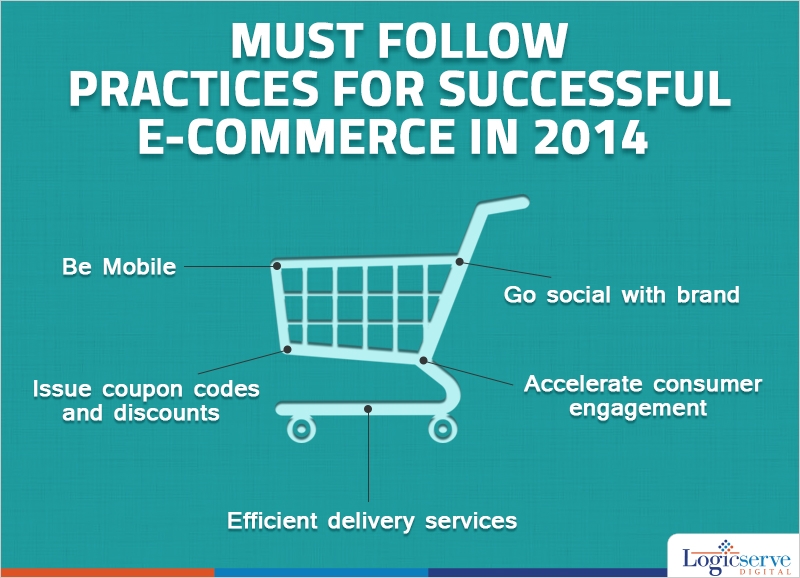
    While being online is the key factor for growth, here are a few pointers that can help every e-commerce portal post their initial set-up.

    Be Mobile – The availability of 3G services, cheap broadband plans, affordable smartphones and the purchasing power has lead to Indians being highest users of mobile phones across the world. Surprisingly they have begun to access the Internet through the phone for shopping which means your website should be mobile friendly.

    Delivery Services – Flipkart gained popularity amongst nascent Indian online shoppers by offering them free delivery on their purchases. Over the time, free deliveries were restricted to billings above a predetermined amount. With the foray of Amazon and other growing Indian e-retailers, the race to deliver first has got even more competitive as customers can enjoy multiple delivery options. Online retailers have expanded their areas of delivery to include Tier II and Tier III cities along with Tier 1 cities.

    Customer Support and After Sales Service – After-sales is the key once the consumer receives your product. Online retailers have to offer hassle-free options and quality customer support to consumers whereby they can return the goods if they are unsatisfied with them. This generates a feeling of trust amongst customers. Once the level of trust is gained, customers will feel confident about ordering higher value items such as refrigerators, microwaves, other home appliances, and even more expensive jewellery products online.


    Coupon Codes and Discount offers

    Currently, India is witnessing a transition towards online shopping which can be capitalized by offering attractive discounts, bargain offers, freebies and much more to online shoppers. Coupon codes and different deals can be designed in collaboration with specific brands or coinciding with festive occasions. If you are looking for an example, you could browse through www.couponraja.com, India’s premier coupon aggregator on latest coupon deals and offers including some exclusive ones.

    Targeted Customer Segment – The ASSOCHAM report predictably shows how the youth segment (18 to 35 years age group) dominates online shopping in India. The items that get sold and bought online therefore cater to this youth segment. The same demographic is the predominant user of both social media (Facebook, Twitter and Pinterest) and online shopping portals.

    Active Social Media Presence – An Active social media presence extends to more than just creating a page or a profile. It is essential to interact with customers, acknowledge their posts, offer useful tips and guidelines through social media platforms and others help you to build up customer engagement, an absolute must in today’s digital market space. In short, be there and be proactive.

    LogicSpeak:

    While there are 900 million cell phones in India, the number of mobiles connected to the internet is no more than 150 million. As Internet penetration via mobiles grows in India, more and more people will continue to buy gift items, electronic products, accessories, apparel, computers and peripherals online.

    Wondering how engaging is mobile technology vis-a- vis online shopping in the Indian scenario? Well as of now, Android and iOS apps of Couponraja and Compareraja have crossed the 20,000 mark in downloads month after month post their formal launch.