LS Staging

Tag: B2B

  • Weekend Digital Media Round- What actually drives paid media performance (beyond targeting and optimization), UX can no longer exist as a purely ‘user happiness’ function, Beyond speed: How real-time marketing actually enables personalization & More….

    Weekend Digital Media Round- What actually drives paid media performance (beyond targeting and optimization), UX can no longer exist as a purely ‘user happiness’ function, Beyond speed: How real-time marketing actually enables personalization & More….

    1.What actually drives paid media performance (beyond targeting and optimization)

    Paid media performance depends far more on creative quality and human attention than on targeting or algorithmic optimization. Rising ad fatigue and oversaturated digital spaces mean that even sophisticated targeting cannot compensate for weak content. Brands succeed when they prioritize standout creative, understand audience psychology, and use paid media to amplify what genuinely deserves attention. [Source: DMNews]

    2. UX can no longer exist as a purely ‘user happiness’ function

    UI/UX in 2026 is shifting from flashy visual experimentation to intentional, accountable, and outcome‑driven design. Calm interfaces, accessibility as a core craft, and transparent, trust‑building experiences are becoming essential. Designers are now expected to think in systems, leverage AI as an accelerator, and focus on behavior across entire user journeys rather than isolated screens. [Source: MediaBrief]

    3. Beyond speed: How real-time marketing actually enables personalization

    Real-time marketing succeeds only when organizations pair fast, behavior‑based responses with unified data, integrated systems, and aligned teams. While AI tools promise automation, most personalization fails due to poor infrastructure and siloed processes. Companies that get the basics right—clean data, clear workflows, and timely relevance—are the ones seeing real results. [Source: DMNews]

    4. Programmatic’s 19% surge signalling a structural shift in digital media buying?

    Programmatic advertising is rapidly evolving into core digital infrastructure, driven by AI‑powered efficiency, safer premium inventory, and the rise of CTV and OTT. Industry leaders say the real shift is a balance of automation with strong human governance, making programmatic a full‑funnel, audience‑first approach rather than just a performance tool. The projected 19% CAGR reflects a broader structural transition toward transparent, curated ecosystems and outcome‑driven media planning. [Source: Exchange4Media]

    5. The Halo Effect: Your Paid Media Went Offline, Can You Survive Without It?

    Turning off paid media caused a major decline in total traffic, online orders, and revenue, revealing how strongly paid channels amplify organic and direct performance. Organic search did rise when ads were paused, but nowhere near enough to make up for the lost paid and halo-driven traffic. Overall, the business missed out on more than $180K in revenue, showing that paid media doesn’t just drive direct conversions—it boosts all channels, proving brands perform best when paid and organic efforts work together. [Source: Search Engine Journal]

    6. What are the forces driving retail media’s 56% YoY surge in digital ad spends?

    Retail media is rapidly reshaping how brands allocate digital ad dollars, with e-retail platforms turning into full-funnel media networks that combine rich first-party data, shoppable formats and closed-loop measurement to connect discovery with purchase intent. This evolution helped ad spends on e-retail platforms jump about 56% year-on-year, reaching ₹17,601 crore and accounting for nearly a quarter of total digital media spending in India by end of 2025. [Source: Exchange4Media]

    7. Why IPL 2026 is a turing point for mobile advertising

    Mobile advertising around the IPL is evolving beyond just experimenting for budgets to becoming a central part of marketers’ plans, with brands demanding predictable scale, measurable outcomes and interactive formats that align with real fan behaviour on phones rather than just standard video ads. This shift suggests IPL 2026 could be a defining moment where mobile ad spends move closer to traditional TV in value by demonstrating clear performance and engagement metrics [Source: Best Media Info]

    8. How AI is fundamentally changing the role of the B2B creative director

    AI is reshaping the role of the B2B creative director from traditional idea-generation toward AI-augmented strategy and output management, where leaders now need to orchestrate tools that scale creative work while preserving human insight, judgment and brand voice. This shift demands a blend of strategic oversight, ethical decision-making and collaboration with AI systems, rather than relying on old “best practice” playbooks for creativity in B2B marketing. [Source: The Drum]

    9. Why video is the canonical source of truth for AI and your brand’s best defense

    Video content offers richer, higher-fidelity data for AI models than text, making it a powerful way to establish your brand’s identity and factual details so large language models and AI search can reference you accurately rather than hallucinate or fill in gaps. By serving as a clear “source of truth,” authoritative videos help protect your brand from misrepresentation in AI-generated outputs and improve visibility in AI-driven discovery. [Source: Search Engine Land]

    10. Designing For Agentic AI: Practical UX Patterns For Control, Consent, And Accountability

    Designing agentic AI — systems that act autonomously for users — requires UX patterns that prioritise trust, transparency, consent and meaningful user control rather than hidden automation. Practical approaches such as intent previews, adjustable autonomy levels, clear explanations, confidence signals and easy undo options help balance powerful AI capabilities with accountability and user confidence. [Source: Smashing Magazine]
  • Weekend Digital Media Round-India’s ESG narrative has moved beyond green claims to measurable, regulated impact: Report, Why media mix modeling is becoming essential for predictive ROAS measurement, From SaaS to AI: the technological and cultural shifts leaders must confront, & More….

    Weekend Digital Media Round-India’s ESG narrative has moved beyond green claims to measurable, regulated impact: Report, Why media mix modeling is becoming essential for predictive ROAS measurement, From SaaS to AI: the technological and cultural shifts leaders must confront, & More….

    1. India’s ESG narrative has moved beyond green claims to measurable, regulated impact: Report

    India’s sustainability approach is shifting from marketing-driven green claims to regulation-led, measurable impact. Enhanced policies like SEBI’s BRSR mandate and anti-greenwashing penalties are driving operational accountability, verified disclosures, and hard metrics, making transparency and digital tracking key to building trust and competitive advantage. [Source: ET Brand Equity]

    2. Why media mix modeling is becoming essential for predictive ROAS measurement

    Marketers are moving beyond last-touch attribution due to its limitations in capturing full-funnel impact and adapting to privacy changes. Media mix modeling (MMM) now complements attribution by providing a holistic, predictive, and privacy-safe approach, revealing platforms like TikTok deliver far greater ROI than previously measured. Combining both methods enables more accurate ROAS forecasting and efficient budget allocation. [Source: Digi Day]

    3. From SaaS to AI: the technological and cultural shifts leaders must confront

    The piece highlights the shift from SaaS-driven workflows to AI-powered operations, emphasizing that this transition is both technological and cultural. It explores challenges like employee fears, uneven adoption, and communication gaps, while stressing that successful leaders must reframe AI as a growth opportunity, invest in training, and lead by example to build trust and resilience. [Source: Tech Radar]

    4. Meta Shares Tips on Reels Hooks, Creative Diversification in Ads and Threads

    Meta recommends focusing on strong hooks in Reels, using audio for better engagement, and embracing creative diversification in ads to improve reach and performance. It also suggests leveraging AI tools for varied ad assets and provides tips for maximizing Threads activity. [Source: Social Media Today]

    5. The B2B Buyer Is Already in the Future. Are You?

    AI is transforming the B2B buying process, making decisions faster and more data-driven through tools like Google Search, YouTube, and AI-powered features such as AI Overviews. Brands that adopt AI-driven marketing solutions like Performance Max can stay visible and relevant as conversational and complex queries dominate the purchase journey. [Source: AdWeek]

    6. How Marketing Can Be Authentic In The Age Of AI

    AI is transforming holiday shopping, with Google focusing on research and reviews while ChatGPT acts as a virtual sales associate prioritizing transactions. Trust in AI tools is growing, but consumers still prefer authentic, human-created content, making transparency crucial for brands using AI. Disney’s partnership with OpenAI and recent AI missteps by McDonald’s and Amazon highlight both opportunities and risks in AI-driven marketing. [Source: Forbes]

    7. Who Benefits When The Line Between SEO And GEO Is Blurred

    The search industry is shifting from a click-driven model to an answer-driven one, where AI-generated summaries dominate user behavior. Traditional SEO fundamentals still matter, but businesses must adapt to GEO (Generative Engine Optimization), which focuses on content blocks, retrieval, and visibility within AI answers rather than page rankings and clicks. [Source: Search Engine Journal]

    8. Why AI agents are moving into enterprise marketing operations

    AI agents are increasingly being integrated into enterprise marketing operations, shifting from creative tools to embedded systems that automate routine tasks like campaign setup and optimization. This trend aims to reduce manual work, improve scalability, and enhance efficiency, while raising governance challenges around control, accountability, and compliance. [Source: Marketing Tech News]

    9. The End of the Click: The First Touchpoint Is No Longer Your Website

    Search is shifting from clicks to conversations as large language models (LLMs) become the primary discovery engines. Brands now compete for visibility inside AI-generated answers, requiring strategies that target both humans and machines, rethink metrics beyond traffic, and design content optimized for clarity, authority, and adaptability. [Source: CMS Wire]

    10. How to measure brand visibility in AI search (before you disappear)

    AI search is rapidly overtaking traditional search, making brand visibility in AI-generated answers critical. The article explains why rising AI traffic doesn’t guarantee brand recognition, introduces metrics like AI visibility score, citation share, sentiment, and authority weight, and outlines tools and strategies to track and improve your presence in AI responses compared to competitors. [Source: Search Engine Land]

  • Weekend Digital Media Round- Google Launches Ads Advisor & Analytics Advisor Globally, Getting Human-driven, AI-assisted Marketing Right, Leading with Logic and Instinct: The Dual-Compass for Every Leader & More….

    Weekend Digital Media Round- Google Launches Ads Advisor & Analytics Advisor Globally, Getting Human-driven, AI-assisted Marketing Right, Leading with Logic and Instinct: The Dual-Compass for Every Leader & More….

    1.Google Launches Ads Advisor & Analytics Advisor Globally

    Google is rolling out Ads Advisor and Analytics Advisor, two AI-powered tools built on Gemini, to all English-language Google Ads and Analytics accounts starting early December. Ads Advisor provides optimization recommendations and can apply approved changes, while Analytics Advisor offers conversational insights, visualizations, and growth opportunities through key-driver analysis. [Source:  Search Engine Journal]

    2. Getting Human-driven, AI-assisted Marketing Right

    Marketing is undergoing a major transformation as AI reshapes creativity, discovery, and brand authenticity. The emerging approach combines human insight with AI assistance, emphasizing owned media channels, trust-building, and iterative strategies like “loop marketing.” HubSpot advocates for human-driven, AI-assisted content to enhance personalization and long-term audience value. [Source: AD Week]

    3. Leading with Logic and Instinct: The Dual-Compass for Every Leader

    Leadership in today’s world requires balancing two “compasses”: logic and intuition. Logic provides data-driven clarity and strategic alignment, while intuition enables bold decisions, empathy, and adaptability in uncertainty. The most effective leaders integrate both to navigate complexity and foster trust. [Source: Brand Wagon]

    4. How To Prepare Your Brand For Agentic AI Commerce

    Agentic AI is revolutionizing e-commerce by enabling personalized shopping experiences, automated decision-making, and frictionless purchasing through AI-powered assistants. To stay competitive, brands should focus on structured data, API integration, AI-driven content optimization, accessibility, and secure payment systems. [Source: Forbes]

    5. Marketers Still Love Awareness — and It’s Costing Them

    Marketers often overinvest in awareness, mistaking visibility for value, which leads to wasted budgets and poor ROI. Modern strategies emphasize activation—measurable actions like acquisition, retention, and revenue—over exposure, replacing outdated models like AIDA with performance-driven frameworks that tie marketing spend directly to business outcomes. [Source: CMS Wire]

    6. Future of Marketing Briefing: The agentic turn inside programmatic advertising

    Agentic AI is rapidly reshaping programmatic advertising, with three new standards emerging in less than a month: Ad Context Protocol, User Context Protocol, and the Agentic RTB Framework. This shift signals a major acceleration in AI-driven automation for ad auctions and targeting. [Source: DigiDay]

    7. AI in B2B: ‘The market’s confused implementation with innovation’

    Most B2B companies are misusing AI by focusing on efficiency rather than transforming customer experience, leading to disconnected and inconsistent journeys. Research shows leadership misalignment, talent gaps, and organizational silos are major barriers, while true innovation requires unified data, customer-first strategies, and shifting AI budgets toward CX for long-term growth. [Source: The Drum]

    8. Beyond deals, inclusive design is shaping India’s festive e-commerce

    Inclusive design is reshaping India’s festive e-commerce by making online shopping accessible and culturally relevant. Brands are adopting multilingual interfaces, adaptive layouts, and AI-driven personalization to ensure every user—regardless of language or ability—feels welcome and engaged during peak festive seasons. [MediaBrief]

    9. Which Is Broken: Your CDP or Your Customer Data Management?

    Customer Data Platforms (CDPs) often fail to deliver promised benefits for mid-sized businesses, amplifying existing data and resource issues instead of solving them. Success depends on strong data governance and infrastructure, which most firms lack, making CDPs an expensive distraction unless preceded by multi-year data readiness efforts. [Source: CMS Wire]

    10. How to measure your AI search brand visibility and prove business impact

    Brand visibility in AI search is becoming the key metric for SEO, replacing traditional rankings. The article explains how to calculate a Brand Visibility Score, benchmark competitors, and track sentiment to prove business impact, offering a three-step framework and tools for monitoring and improving visibility across AI platforms like ChatGPT, Perplexity, and Google AI Overviews. [Source: Search Engine Land]

  • Weekend Digital Media Round-Up How AI Is Changing Marketing Communications, What drives AI adoption in SMEs? Key factors for sustainable innovation, CMO reinvented: ‘You can’t build tomorrow’s brand with yesterday’s marketing’& More…

    Weekend Digital Media Round-Up How AI Is Changing Marketing Communications, What drives AI adoption in SMEs? Key factors for sustainable innovation, CMO reinvented: ‘You can’t build tomorrow’s brand with yesterday’s marketing’& More…

    1.How AI Is Changing Marketing Communications

    ​AI is revolutionizing marketing communications by enabling hyper-personalized messaging, predictive analytics, and intelligent content creation, transforming it from a creative art into a data-driven science. While AI enhances efficiency and scale, human oversight remains essential to ensure ethical, emotionally resonant, and value-aligned communication. [Source: Forbes]

    2. What drives AI adoption in SMEs? Key factors for sustainable innovation

    AI adoption in SMEs is driven by a mix of cognitive, emotional, and contextual factors, with trust, AI knowledge, and passion playing key roles. The study emphasizes that responsible personalization, workplace integration, and ethical practices are essential for fostering sustainable innovation and aligning with broader sustainability goals. [Source: Devdiscourse]

    3. CMO reinvented: ‘You can’t build tomorrow’s brand with yesterday’s marketing’

    AI is reshaping marketing from the ground up, demanding CMOs evolve into hybrid creative-technologist leaders. Top executives from brands like Microsoft, Unilever, and Skoda shared how AI is transforming strategy, creativity, and audience engagement—raising urgent questions about ethics, trust, and the future of brand leadership. [Source: The Drum]

    4. Why You Should Know (And Use) The Marketing Efficiency Ratio Metric

    Marketing Efficiency Ratio (MER) is gaining traction as a broader alternative to ROAS, measuring total revenue against total marketing spend to assess overall efficiency. While it’s useful for high-level benchmarking, brands vary in how they define and apply it, leading to some confusion in its interpretation and usage. [Source: AdExchanger]

    5. How Can UX Help In Creating Inclusive Digital Experiences

    Empathetic and inclusive UX design can bridge the digital divide by making platforms accessible to people with disabilities, low digital literacy, and limited connectivity. It’s not just a moral imperative but a smart business strategy, helping companies reach wider audiences and build lasting engagement. [Source: Marketing Mind]

    6. How GA4 Helps Marketers Stay On Top Of Campaign Performance

    Google Analytics 4 (GA4) empowers marketers with deeper insights into user behavior, engagement, and campaign performance through flexible, real-time reporting tools. The author highlights how GA4 helped optimize marketing strategies for a case study on Valor Coffee, bridging the gap between data collection and actionable decisions. [Source: WordPress]

    7. Vibe Coding And The “Platformification” Of Market Insights

    Vibe coding, powered by AI and large language models, is revolutionizing market research by enabling non-experts to gain deep consumer insights quickly and efficiently. Platforms like Discuss automate tasks from interview creation to analysis, offering scalable, multilingual, and customizable solutions that save time and enhance understanding across departments. [Source: Forbes]

    8. How Agentic AI is changing the game in CX and beyond

    Agentic AI is revolutionizing customer experience by enabling autonomous, goal-driven interactions that anticipate user needs and personalize services in real time. It’s transforming industries like telecom, finance, healthcare, and logistics, while also raising ethical concerns around data bias, transparency, and human oversight. [Source: MSN]

    9. Smarter Decisions, Faster: The Future of Real-Time Data Analytics

    Businesses in 2025 are leveraging real-time data analytics to make faster, smarter decisions, replacing outdated dashboards with instant insights. This shift enhances operational efficiency, customer experience, and cross-department collaboration across industries like retail, healthcare, and finance. [Source: Analytics Insight]

    10. From B2B & B2C To B2Me: How AI Is Revealing The True Potential Of Individual-Centric Marketing

    AI-driven B2Me marketing shifts focus from static demographics to dynamic individual behaviors, enabling real-time personalization and emotional resonance. Brands that embrace this approach—like Coca-Cola’s autonomous campaign—see higher engagement, but must balance precision with trust to avoid crossing into “surveillance marketing.” [Source: Search Engine Journal]

  • Customer-Centric Marketing – The Need of the Hour for B2B Businesses in 2019 & Beyond

    Customer-Centric Marketing – The Need of the Hour for B2B Businesses in 2019 & Beyond

    If you think that “customer centricity” doesn’t matter for B2B businesses, then you are missing out on crucial opportunities for growth and development. Here are a few reports that reinforce this point:

    With that said, only 12% of B2B marketers consider themselves as “effective” in delivering a compelling customer experience.

    Why should B2B businesses migrate to a customer-centric approach?

    In today’s digital world, customer experience is crucial. The B2B landscape is rapidly changing. Apart from product price and quality, B2B customers are looking for enhanced CX (Customer Experience). With increasing competition in the B2B market space, today’s customers are likely to shift their loyalties if they don’t get the service they require.  

    Here are a few points to keep in mind to deliver customer-centric marketing in B2B

    1. Know Your Buyers

    To provide your customers with enhanced and quality customer experience, you should first understand who you are working with. The sad truth is that today’s B2B customers are hesitant to interact with B2B salespersons.  

    As per a Forrester report, 59% of B2B buyers state that they prefer conducting sales research online, instead of dealing with a sales rep. This is because they feel that the reps are more likely to push their own agenda, instead of trying to solve the customer’s problems.

    Hence, it’s imperative that you understand the unique needs of each B2B buyer to offer them an enhanced CX. Make use of the latest data analysis tools to know more about your customers. Learn the critical factors like – the industry of the customer, their geographic focus, their point in the sales funnel, and what problems are they looking to solve.

    By understanding your customer’s goals and objectives, you are likely to provide a successful customer experience that delivers and converts.  

    2. Build a Customer-Centric Vision from Top-down

    You can score on CX at all points of customer interaction. Right from initial sales calls to delivering the product, everything is part of the customer experience.Create a customer-centric approach for your entire business. Every interaction the customer has with your business should be positive and make them feel valued.

    Excellent customer experience doesn’t happen by accident. It’s intentional and takes effort. Empower your employees to deliver an enhanced customer experience at all interactions with the customer.

    3. Deliver Personalised Experiences

    Just like B2C customers don’t want to be sold the same thing like everyone else, B2B customers hate businesses that push “one-size-fits-all” solutions.With increased competition in the B2B market space, an easy but efficient way for your B2B business to stand out is by – offering personalised services.

    Personalisation should occur at all stages in the customer journey. From establishing customer information to offering them the best product recommendations, customisation must be at the focus at all times.

    4. Embrace New Technology

    Today’s B2B customers are highly tech-savvy and roughly more than 73% of B2B buyers today are millennials or digital natives who start their company’s purchase by searching the internet. It’s essential for B2B businesses to modernise their marketing by using the latest technologies like AI, machine learning, big data and more. This helps you gain a competitive advantage over your peers.

    Using chatbots to interact with customers is a great way to ensure that customers receive the relevant and required information instantly. Work on building your database to offer customers tailored product and service recommendations.

    The possibilities of integrating new technologies in B2B marketing to deliver customer-centric experiences are endless. Keep a pulse on new technology and stay ahead of the curve.  

    5. Offer a Consistent Experience

    The backbone of delivering a delightful B2B customer experience is consistency. Consistency is not repeating the same thing over and over again in all your marketing campaigns. Instead, consistency is about delivering a uniform CX at every point in the customer journey. Consistency helps B2B customers recognise and connect with your brand.

    It’s Time for B2B Marketers to BecomeCustomer-Centric

    B2B marketing today is at crossroads and is rapidly evolving. As a B2B business, it’s essential that you take the right steps on delivering positive customer experience, and focus on becoming a customer-centric organisation, to stay ahead of the curve in 2019 and beyond.

  • Leveraging B2B For Increased Sales Opportunities In Your Venture

    Leveraging B2B For Increased Sales Opportunities In Your Venture

    Targeting potential prospects and helping them navigate through the purchase lifecycle is an integral part of the B2B sales process. Your ability and power to engage targeted buyers turns out to be the determining factor in the sales process. A majority of marketers and brand advertisers struggle to gain optimum momentum from their B2B marketing approaches. It also becomes difficult to measure the ROIs and its impact on the sales funnel.

    It’s here that brand advertisers need to adopt a completely different approach. Developing ABA or ‘account-based advertising’ strategies is crucial. If you are planning to make it big in the B2B sector, here are three most crucial considerations that will help you generate increased ROIs, strengthen the sales team, as well as reach out to targeted purchasers.

    1. Identifying key accounts

    Developing targeted campaigns for B2B advertising and laying a strong foundation for business marketing is imperative. You have to tailor marketing strategies according to your key buyers, and that’s exactly where you need to identify the major accounts. Some of the key approaches include:

    • Create effective lists: Most of the sales team have vertical accounts that help them gain a strategic advantage over competitors. This existing list will help marketers develop innovative ways to kick-start their advertising projects.
    • Rely on existing data: The CRM system will have a comprehensive record of targeted accounts. You can leverage the existing datasets and pull those user accounts directly.
    • Merging marketing approaches: The perfect way to gain increased traction for your sales team is by complementing intuition-based advertising and data-based marketing. It is highly crucial to merge both the marketing approaches for exceptional outcomes.
    1. Advertising to key buyers

    Reaching out to key accounts is an important thing to do. You have to look for high-value accounts and create marketing strategies accordingly. Precise approaches will prove to be the key and not traditional advertising approaches. Here’s how to do it:

    • Narrow down to targeted accounts: Leverage IP-derived information thus narrowing down to the right set of audience.
    • Leverage real-time data: Intuition or intent-based marketing can work wonders. You can rely on and leverage these data sets to identify early buying signs.
    • Reaching out to buying committees: Account-based advertising can also help you reach out to targeted buying communities.
    1. Measuring at account levels

    Click-through-rates and other means of measuring advertising metrics will fail to gauge the actual scenario in the B2B landscape. You have to get the hang of the real situation and measure the actual ROIs. The parameters for this calculation will be as follows:

    • Number of accounts engaged
    • Closed revenue
    • Closing rates
    • Cost-per-engaged-buyer accounts
    • Account-reach level metrics
    • Measuring short-term campaigns
    • Assessing the long-term revenues

    It’s always imperative to keep a tab on the impact of your marketing campaigns. Right from awareness and audience engagement to revenues and growth impacts, quite a few factors demand careful consideration. To derive maximum momentum from your B2B campaigns, you have to measure the marketing strategies as well as focus on creating segmented plans. That will help you strengthen the sales team and ensure a successful B2B promotion plan.

  • Must know mobile advertising trends

    Must know mobile advertising trends

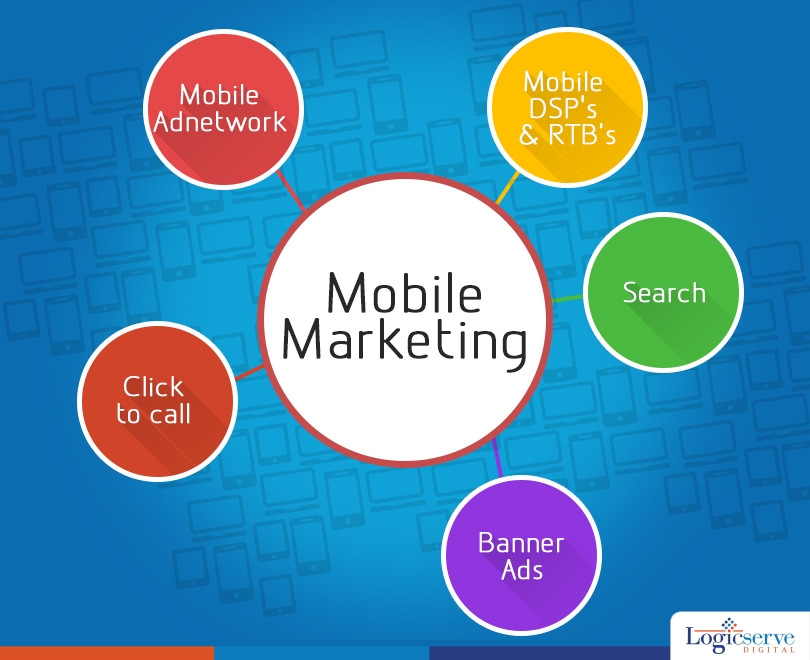
    Mobile marketing @LogicserveDigi

    With 1.3 billion Facebook users and more than 500 million Twitter users, marketers are increasing their focus on online advertising to reach the billions of customers who are always online. While 81% of people in the 25 to 34 age group in the U.S. own a smartphone, 70% of teens do so and about half of the people who are 55 and older own a smartphone. No wonder about 751 million Facebook users access the social network from a mobile device one time or the other while nearly 200 million FB users access it exclusively from a mobile device. Nearly a quarter of Americans connect to the Internet only from a mobile device.

    Geographies

    The Asia Pacific region has the most mature mobile advertising markets represented by Japan and South Korea, two nations that have had historically high adoption rates of handsets.

    However, North America and Europe will see enormous growth in mobile advertising simply because of the huge advertising budgets of the companies located in these two continents. As the developing economies of China and India grow, so will the sales and penetration of smartphones in these two nations leading to a simultaneous growth in mobile advertising. Russia and Brazil are a couple of other countries that will witness good growth rates of mobile advertising, particularly in 2015 and beyond.

    Types — Display Ads Vs. RTB

    Among the different mobile advertising options, display advertising is a preferred format of digital marketers. It’s expected to hit $74.4 billion in 2016 with an annual growth rate of 21% per year. Programmatic buying such as Real Time Bidding (RTB) is helping the growth of display advertising. Social media platforms such as Facebook and Twitter are benefiting from the growth of RTB and enjoying growth rates of 29% per year. RTB is expected to keep growing and reach $8.69 billion by 2017, according to eMarketer, constituting 29% of total digital display ad spending. Other studies by IDC shows that RTB is expected to reach $20.8 billion worldwide by 2017. For example, programmatic advertising in the U.S. is expected to grow from $2 billion in 2012 to $14.4 billion in 2017 maintaining a scorching pace of growth of 48% per year. Western Europe and Japan will also see similar growth in RTB as a form of display advertising.

    Mobile advertising is witnessing six times faster growth rates compared to desktop online advertising. And in the U.S. in particular, RTB on mobiles is expected to reach $1 billion in 2015 and $3 billion in 2017. The Weather Channel gets 600 to 700% higher click through rates on mobile display ads compared to desktop ads.

    Mobile Video Ads

    Mobile video ads are growing fast and becoming a significant part of mobile advertising. Tablet users are the ones who tend to watch longer videos. Mobile video ad expenditure amounted to half a billion dollars in 2013 which was 13% of the total digital video ad market.

    With the rise in popularity of mobile video ads, marketers are coming up with clever product promotion videos. Think of viral videos such as the Game of Thrones and House of Cards mash-up which was a promotional campaign; another marketing video which went viral was 20 strangers kissing and yet another was a fake job ad for the toughest job in the world which was a marketing video for an e-greeting card company on the occasion of Mothers Day.

    SMS

    This is an effective advertising format over mobiles as 90% of text messages are read within three minutes of delivery and 95% of mobile users can be reached by brands using SMS advertising. A February 2013 report by Mobile Marketer says that 42.3% of consumers prefer SMS deals over bar-code scans or push message coupons.

    Mobile Search Ads

    Since 70% of searches on mobiles lead to action within one hour, search ads on mobile platforms are more effective than search ads on desktops.

    Mobile couples also enjoy higher rates of redemption compared to print coupons.

    Click To Call

    Lots of smartphone users perform local search on their smartphones. Up to 95% of smartphone users have looked up local information over the internet using their smartphones. Out of them, 61% proceeded to make calls to the business establishment. Hence, click to call features should be prominently displayed in mobile websites as well as in any form of a mobile advertisement.

    LogicSpeak:

    Hence the bottom-line is a continuing growth of mobile devices and mobile ads which will continue for the foreseeable future.

    Previous Post: Tips to Increase Blog Traffic