LS Staging

Tag: AI

  • Weekend Digital Media Round-Up: OpenAI Releases New Version of GPT, Generative AI coming to Docs, Gmail in Workspace, YouTube Adds Multi-Language Audio Analytics, New Shorts Music Sharing & More…

    Weekend Digital Media Round-Up: OpenAI Releases New Version of GPT, Generative AI coming to Docs, Gmail in Workspace, YouTube Adds Multi-Language Audio Analytics, New Shorts Music Sharing & More…

    1.OpenAI Releases New Version of GPT, as Generative AI Tools Continue to Expand

    OpenAI has released GPT-4, which is the next iteration of the AI model that ChatGPT was built upon and OpenAI says that GPT-4 can achieve ’human-level performance’ on a range of tasks. [Source: Social Media Today]

    2. Google: Generative AI coming to Docs, Gmail in Workspace

    Users will be able to generate text directly on Docs and Gmail and across its other apps including Slides, Sheets, Meet, and Chat with the Google AI updates. [Source: Search Engine Land]

    3. YouTube Adds Multi-Language Audio Analytics, New Shorts Music Sharing

    YouTube’s adding some additional insights data for creators using its new multi-language audio (MLA) feature, while it’s also looking to help musicians make better use of Shorts. [Source: Social Media Today]

    4. LinkedIn is adding AI tools for generating profile copy and job descriptions

    LinkedIn is expanding its suite of artificial intelligence features, this time adding tools that will generate content for user profiles and job descriptions. [Source: The Verge]

    5. Meta Winds Down NFT Projects to Focus on Other Elements

    Meta has announced that it’s ending its NFT display projects, across both Facebook and Instagram, as it re-aligns its resources around evolving priorities. [Source: Social Media Today]

    6. YouTube has added new features to help increase the number of views as well as give more monetization opportunities

    Creator Insider, an informal YouTube channel known for sharing insights on the latest developments made by developers to help their YouTube creators as well as their community, is back again with another video highlighting some of the latest updates being added to the platform. [Source: Digital Information World]

    7. LinkedIn debuts its own podcast network

    LinkedIn’s looking to help foster the next generation of podcasting talent, with the launch of a new LinkedIn Podcast Academy, which will provide participants with the knowledge they need to launch a successful podcast. [Source: Tech Crunch]

    8. Meta Releases New Dataset to Help AI Researchers Maximize Inclusion and Diversity in their Projects

    Meta’s looking to help AI researchers make their tools and processes more universally inclusive, with the release of a massive new dataset of face-to-face video clips [Source: Social Media Today]

    9. Google publishes its Generative AI ā€˜prohibited use policy’ and other terms

    Ahead of generative AI coming to Gmail and Docs, as well as third parties, Google has published a ā€œprohibited use policyā€ for those using its upcoming products and capabilities. [Source: 9to5Google]

    10. Snap Provides New Insight Into its Content Moderation Rules, Additional Controls for Parents

    Snapchat has added a new element to its Family Center, which will enable parents to restrict the content that their kids see in the app. [Source: Social Media Today]
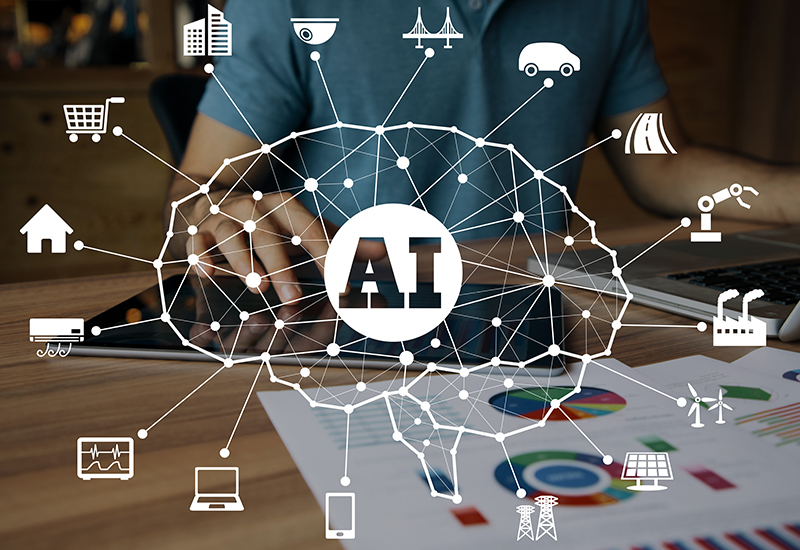
  • How can AI Drive Marketing Automation and Personalisation?

    How can AI Drive Marketing Automation and Personalisation?

    Artificial Intelligence (AI) has increasingly been in the news for quite some time now. Be it unleashing new business potential or making digital marketers’ work more effective; there are multiple interesting applications of AI. Key components of AI include artificial neural network, deep learning, and machine learning. It would not be wrong to say that these fields have emerged as separate ecosystems by themselves.

    For marketers, the key aspect that showcases a promising future of the blend of digital marketing with AI is customer data. This data is available across multiple sources, in different formats, and across various types (like structured and unstructured data). The primary challenge for today’s marketer is to make sense of the seemingly random pieces of information and weave it together to generate previously hidden insights.

    The best part about such data is that it doesn’t need a full tech stack of AI-based solutions to make sense. Even a smaller subset of AI like machine learning will be fully capable of delivering tremendous business value with the help of processes like parsing of customer data from a diverse source, data prediction, and other features that fulfil the marketing automation objectives.

    However, one common theme comes out of this exciting partnership between marketing and AI. As more and more sources are being tapped to know the target customer better, the role of AI applications in making sense of the broader spectrum of data will keep on increasing.

    Making sense of the numbers with AI prowess

    Given the immense potential, it is not surprising to see many marketers today looking at using AI into their marketing campaigns, especially in content marketing. Even machine learning is proving to be valuable in tapping into newer audiences and boosting the user base for a particular brand based on their buyer persona objectives. It helps in sifting through massive troughs of big data that on first glance, look unrelated, but when explored from the eyes of machine learning, yield phenomenal insights. These may be in the form of information on rewarding markets, segments, or patterns that give better direction to your marketing campaigns.

    How will AI help marketing?

    It is interesting to note the key objective with which these initiatives are driven. Marketers would need the massive influence of AI to meet a prime goal – that of personalised customer experiences. Also, there are other exciting avenues. Let’s discuss them below –

    1 – Customer experiences at the heart of AI adoption

    Marketers focusing on segmentation and personalisation of ad campaigns reported positive yields for their campaigns. AI and machine learning can easily traverse through billions of data points, and help the marketers to create better market segments. They can facilitate more impactful ad delivery to improve the conversion rate on the basis of personalised marketing messages.

    2 – Better recommendationsĀ 

    AI will analyse the kind of content users would be interested in. This helps marketers to generate bespoke content that is deeply tailored and looks more natural to individual preferences. This will impact different marketing activities like loyalty programs and promotions.

    3 – Leveraging data in real time

    A third area where AI can deliver exemplary impact will be marketing automation. Of course, this won’t mean that the marketer’s job would be reduced to nothing. Here, AI would work with up-to-date data and use predictive modelling to deliver real-time deals and offers that the customer is actually looking for at that time.

    It will be wrong to term AI as the ā€˜magic pill’ that cures all ills (for the marketers). But yes, it is true that in its current form, AI has the capabilities to boost the marketer’s efficacy and generate better outcomes.

  • Voice Clip Now Available In Facebook Status Update

    Voice Clip Now Available In Facebook Status Update

    Facebook takes cognisance that a voice clip is easier to create than a video, yet it is more intimate than mere text for a Facebook user. This underlying principle is driving the social media giant to introduce voice clips as a part of its status update feature present on the Facebook page.

    While users will view this as a radical new move, the update was bound to happen, considering that a whopping 60.5 million Americans currently use digital assistants. Facebook is not one to be left behind with all the hype generated by voice technology. Hence, this move doesn’t seem very surprising from a purely business perspective. (more…)

  • Salesforce and Google Join Hands to Make Customer Insights Better

    Salesforce and Google Join Hands to Make Customer Insights Better

    Salesforce has been a global name in customer relationship management and has innovated tirelessly to provide new ways for companies to connect with people. With 1,50,000 customers and 19.7% market share in CRM worldwide, Salesforce has undoubtedly become a force to reckon with.

    Salesforce has recently announced their partnership with Google, and the plan was to integrate Salesforce data with Google Analytics 360 and G Suite. Google analytics provides companies all-round analysis of their marketing and sales, and provide useful insights.

    With this partnership between Google and Salesforce, companies will now be able to connect sales, marketing and advertising using Salesforce cloud and Google Analytics 360. This also means that you can connect Salesforce with your G-suite to enhance your customer reach and boost sales. The partnership between Google and Salesforce can certainly prove to be a game-changing move when it comes to managing customer service and marketing.

    What Does This Partnership Mean?

    According to this partnership, Google will list Salesforce as its preferred sales cloud which will help Salesforce grow its customer base, while Salesforce lists Google cloud as its preferred public cloud in order to support the massive customer base that Google has. Also, Salesforce data can be used with G-suite and help customers to enjoy perfect customer service experience through G-mail, Hangouts, Docs, etc.

    Additionally, new customers will be able to use G-suite for free for up to a year under the partnership. The primary purpose, however, is to connect Google Analytics with Salesforce Sales Cloud in order to provide impeccable user experience, connecting sales, marketing, and advertising.

    Why it is Great for Customers?

    According to this partnership, Google will list Salesforce as its preferred sales cloud which will help Salesforce grow its customer base, while Salesforce lists Google cloud as its preferred public cloud in order to support the massive customer base that Google has. Also, Salesforce data can be used with G-suite and help customers to enjoy perfect customer service experience through G-mail, Hangouts, Docs, etc.

    Additionally, new customers will be able to use G-suite for free for up to a year under the partnership. The primary purpose, however, is to connect Google Analytics with Salesforce Sales Cloud in order to provide impeccable user experience, connecting sales, marketing, and advertising.

    When Will the Data from This Partnership be Available?

    As announced, Google and Salesforce will start rolling out integrations this year. While some of these integrations for G-suite are already available, more elaborate and deeper integrations will roll out early this year. Integration between Quip by Salesforce and Drive by Google is set to roll out early this year which will cost you $25 per month.

    Customers who are verified by Salesforce can avail the G suite integration for free for up to a year. The integration between Salesforce Sales Cloud and Google Analytics 360 is set to roll out early this year and will be available at no extra cost.

    All in all, Google Analytics and Salesforce together can revolutionise the sales and marketing sector by providing cutting-edge customer intelligence. Stay tuned as we bring more updates on this exciting partnership.

  • Unpartial – the AI-powered Chrome extension to spot fake news

    Unpartial – the AI-powered Chrome extension to spot fake news

    The world is advancing fast in the field of Artificial Intelligence, and various tech giants such as Google and Microsoft come up with new frameworks and AI-powered devices which have made it possible to use the technology across multiple industry verticals.

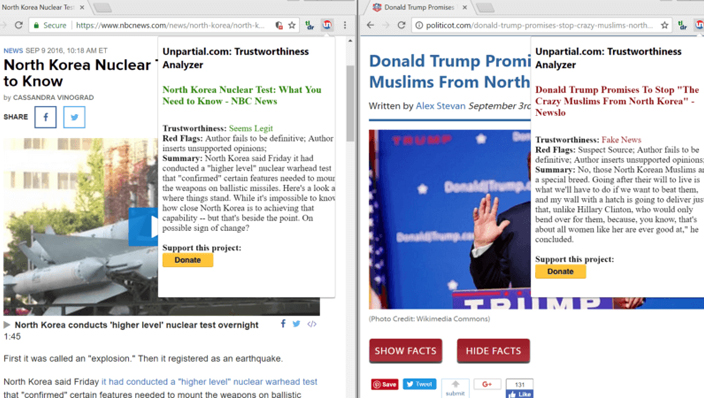
    This week, an AI company called Recognant, based in San Jose, California has released an extension for Chrome that informs users if the news they are viewing on the browser is fake. The AI tool is said to have a function which tests the ā€˜trustworthiness’ of an article or a story.Ā  Recognant has named the AI tool ā€˜Unpartial’, and as said by the developers at Recognant, the primary purpose of Unpartial is to check the ā€˜trustworthiness’ of a story, ultimately telling if the story is fake or not.

    How does the AI work?

    The principal question that arises here is how does it judge whether a story is ā€˜trustworthy’ or not? Well, according to its developers, Unpartial doesn’t check the source or facts of the story but uses generated rules to check the internal validity of the given story. The tool can only work for articles which have more than three hundred words.

    When given an article, Unpartial checks it by cross-checking it with a variety of factors like checking the grammar, the volume of facts, and if the math makes sense. After passing the article through all the generated procedures, it gives its verdict of whether or not the article is false. The extension, if needed, can be accessed by clicking on the UN button on the Chrome toolbar. The ratings by Unpartial go from ā€˜Seems Legit’, which means the article is trustworthy, to ā€˜fake news’, which means fake story. The extension also dubs articles as ā€˜seems sketchy’ or ā€˜super shady’.

    How this extension delivers value?

    Recognant says that it focuses on making AI that is used mostly for NLP (Natural Language Processing) and the software they have developed have been used by multiple organisations like cancer research organisations, to collect knowledge on cancer and various ways to advance their research. It has also been used by several Non-Profit Organizations to find out which online ads are marketing human trafficking.

    Developers at Recognant developed Unpartial because they believed that misleading news and articles can have adverse effects on the society and can prove harmful as they provide wrong information about things, which lead people to believe in false theories. If a website presents false information about cancer treatment or AIDS virus, this will implant false knowledge in the reader’s mind, and that can be bad for people and those around them.

    Developers say that unlike IBM’s Watson, Unpartial is an AI called mind simulation, wherein the AI is programmed with an initial set of rules, and then goes on to test the article using the software’s generated rules.

    Hence, as compared to Watson, which uses neural nets, Unpartial proves to be more efficient in identifying the real stories from the false ones. This is because, in case of mind simulation, you can actually check why an article has been given a ā€˜false news’ tag by Unpartial. In short, this tool provides transparency, unlike neural net.

    What do we think?

    The accuracy of Unpartial is almost spot on, as it was tested by Recognant, by giving Unpartial a hundred thousand articles to go through and judge their authenticity, and the AI got the results correct 99 percent of the time.

    With about 1/4th of users sharing fake news (irrespective of whether they knew at that time or not), this extension is sure to curb the rising menace of fake news and give proper perspective to news as it should be shown online.

  • Secrets Of Successfully Using AI In Your Ad Agency

    Secrets Of Successfully Using AI In Your Ad Agency

    Artificial Intelligence is becoming more and more valuable in all industries. The search marketing and advertising can obtain incredible opportunities to act upon. Especially in PPC, the agencies can redefine their work and success with machine learning and AI.

    Here are all the secrets that can help ad agencies in successfully leveraging AI.

    1. Combine automation with manual work

    Only automated work might decrease the value of the services that you offer. There are definitely some parts of the job that require human intelligence. Hence, you need to combine manual work with the AI automation. This way, you can keep the high value of your service packages and ensure the AI involvement as well.

    1. Collaborate instead of competing

    Studies and research in digital marketing and PPC have presented unique outcomes regarding AI. The experts now know that human factor is still an essential part of deciding the success of AI. Machine learning is like another human being. Just like a person obtains better knowledge by talking to experienced people. Similarly, machines and AI learn better with skilled professionals working behind them. This is why you need to collaborate with AI to enhance the efficiency of advertising strategies.

    1. Hire professional data scientists

    Moving forward towards the AI collaboration, an ad agency should hire skilled data scientists. They are the professionals who can make a clear sense of the data that is provided by machines. It can be said that the data scientists become a complementing factor to the use of AI in the business. They help the bid management experts to move in the right direction according to what AI says.

    1. Test new ideas with AI

    AI presents an excellent opportunity to test new ideas faster and gain conclusions. The predictions provided by AI can help in deciding the future steps for a particular project. The importance of the experienced professionals is visible in this process too. It is an experienced team of professionals that initiate the idea. Then, the testing is conducted with the help of AI that leads to potential results.

    Indulging your team in such tests definitely allows the company to become more confident with the strategies. Plus, you can prioritise the tasks at hand according to the data and results obtained from AI.

    A team of extraordinary professionals and a reliable AI. This is the formula for a perfect Ad agency work environment. The machine takes you very close to the desired results at a faster pace. Then, it all comes down to the experts who complete the rest of the journey with their skills. Hence, you don’t only need AI, but also require a well-experienced team in your ad agency.

    Google and other search engines are pushing boundaries with new AI technologies. Hence, PPC management companies and ad agencies need to integrate these technologies into their daily work too. It will improve the accuracy and pace of the work for sure.