When you realize and accept the fact that Google is here to serve both its users as well maximize advertising revenue for itself, the logic used by Google to target its ads becomes clear and so does the reasoning behind why it’s making the changes to Ad Rank.
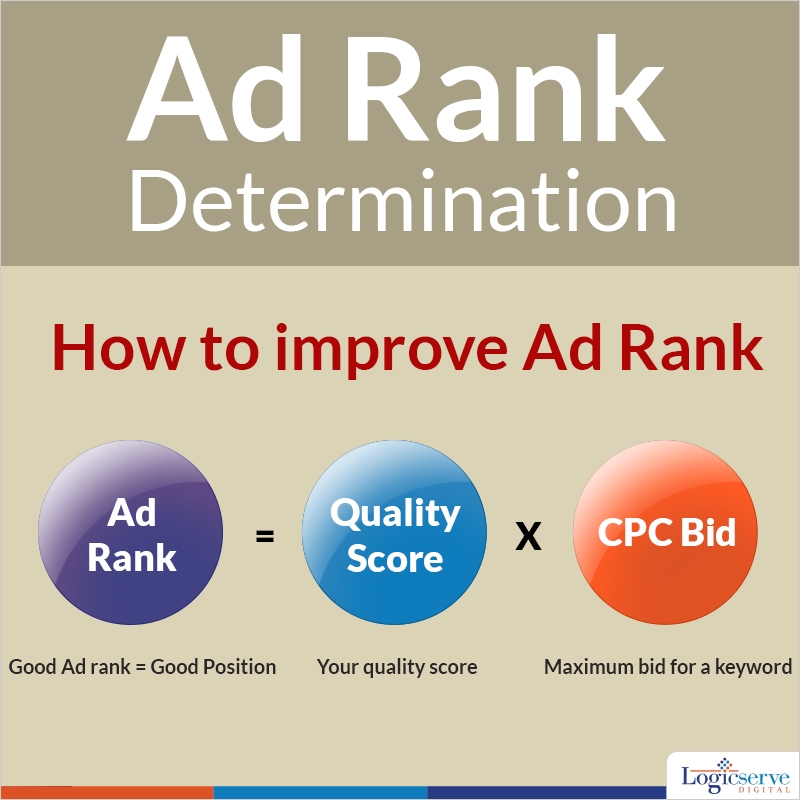
Ad Rank is of course, the system Google uses to order competing ads on the search result pages. Over the past few months, Google has implemented significant updates to its AdWords program. Whereas till now Google was taking into account the max CPC bid and Quality Score to calculate the Ad Rank, henceforth ad extensions and formats will also a play a role in where your ads end up on the search results page. As Google puts it, they’ve “increased the importance of Ad Rank in determining whether your ad is eligible to be displayed with extensions and formats.”
Use Ad Extensions for Your Own Benefit
Google justifies ad extensions as being beneficial to your ads since they improve the ad’s visibility. “If two competing ads have the same bid and quality,” according to Google, “the ad with greater expected impact from extensions will generally appear in a higher ad position than the other.”
As ad extensions lead to higher click through rates (CTR) for your ads, they represent a better return on investment. This makes sense — even though Google is saying this.
Look at some of the types of ad extensions Google is offering — app extensions that show links to the app store or call extensions that let people click a button to give your business a call (especially relevant for mobile devices).
According to research, 70% of mobile searchers are known to call a business from the search results page. Other extensions include consumer ratings annotations or location extensions, offer extensions and review extensions. Social annotations such as showing the number of Google+ followers for your Google+ business page are meaning social indicators since Google is supposed to use social indicators even in determining organic search rankings.
Clearly an ad which displays average ratings (say for restaurants), location/map/directions (for any brick and mortal business — be it a restaurant or a store), or ongoing offers (a physical retailer with a time-constrained 50% clearance sale discount) will be more useful to searchers and will accomplish higher CTRs.
Use Ad Extensions or Suffer
Using ad extensions is not really an option — not when not using them will lead to direct penalties for your ads.
Consider a scenario where your competitors have wised up to the changes and benefits and have incorporated the changes and extensions but you have not. Remember that use of ad extensions leads to better CTR and Quality Score for you; hence effectively reducing your CPC. Suppose your competitor uses all the beneficial ad extensions improving their Ad Rank; then, if you have the same CPC bid and Quality Score as your competitor, your ad position will go down and your CPC will go up since the formula Google uses to calculate your actual CPC factors in the Ad Rank of your competitors.
On the other hand, for those with the relevant ad extensions leading to improvements in CTR, they’ll be rewarded with a decrease in average CPC.
Likely Effects of Ad Rank Changes
Since this is clearly not an optional change, the effects of Ad Rank changes are inevitable. Some of these changes include:
- A likely increase in average CPCs. As more advertisers implement ad extensions, they’ll get better ad ranks, increasing the overall average ad rank. Since your CPC is proportional to the ad rank of your nearest competitor, obviously CPCs will go up.
- Less room for organic results in the SERPs. It seems Google wants to push searchers towards clicking on more of those ads. As ads with extensions in them occupy more search real estate at the top, the organic results will obviously get pushed down, sometimes even below the fold. So, paid advertising will occupy more space leaving less space for organic results.
- Adoption will increase. Now that Google has cracked the whip, so to say, everyone will hurry to implement ad extensions so that they do not suffer.
Conclusion
Marketers have to be smart enough to figure out what are the ad extensions that are relevant for them. Once they’ve figured that out and implemented the extensions, they can expect better impact from their PPC ads. Clearly, Google sees a strong correlation between ad extensions and CTR and how their use leads to searchers interacting more with the ads as well as taking desired actions. So make sure you implement ad extensions with great copy and SEO-optimized landing pages to get the best out of your PPC campaign.
Previous Post: Understanding YouTube Remarketing