LS Staging

Blog

  • Weekend Digital Media Round-Up CX as a competitive advantage: Practices that are redefining market leadership strategies, What is the Knowledge Graph? How it affects SEO and visibility, Don’t Break The Funnel: Why OLV Still Matters In A CTV-First World & More…

    Weekend Digital Media Round-Up CX as a competitive advantage: Practices that are redefining market leadership strategies, What is the Knowledge Graph? How it affects SEO and visibility, Don’t Break The Funnel: Why OLV Still Matters In A CTV-First World & More…

    1.CX as a competitive advantage: Practices that are redefining market leadership strategies

    Customer experience (CX) has become a key differentiator in saturated markets, with top enterprises leveraging AI, cross-functional collaboration, and cultural alignment to deliver personalized, consistent interactions. Overcoming fragmented data, siloed teams, and resistance to change is crucial for turning CX into a competitive advantage. [Source: CIO]

    2. What is the Knowledge Graph? How it affects SEO and visibility

    Google’s Knowledge Graph is a massive database that connects entities—people, places, things, and concepts—through semantic relationships to improve search accuracy and relevance. It powers features like knowledge panels, AI Overviews, and semantic search, helping Google understand user intent and deliver more meaningful results. Optimizing for it involves structured data, entity-focused content, and maintaining consistent online presence. [Source: Search Engine Land]

    3. Don’t Break The Funnel: Why OLV Still Matters In A CTV-First World

    Marketers are mistakenly pulling back from online video (OLV) due to new classification standards, despite its continued strong performance. OLV remains essential in bridging the reach of CTV and the conversion power of social, enabling full-funnel campaign cohesion. [Source: Adexchanger]

    4. How Can You Build Customer Dashboards That Drive Experience and Growth?

    Startup customer dashboards are most effective when they tell a story—aligning metrics with customer journey stages to reveal insights and drive growth. By integrating AI, startups can predict churn, segment users intelligently, and surface actionable insights even with limited resources. [Source: CMS Wire]

    5. Generative Engine Optimization, GEO, A Playbook For Online Retailers

    AI assistants like ChatGPT and Claude are reshaping e-commerce by replacing traditional search and homepage browsing with direct, conversational product recommendations. To stay visible, brands must adopt Generative Engine Optimization (GEO), focusing on structured, authentic content that answers real user questions. [Source: Forbes]

    6. AI is rewriting the rules of B2B marketing with a human touch

    AI is transforming B2B marketing by blending data-driven precision with human-centric storytelling, making emotional connection and trust key to big-ticket decisions. Experts from LinkedIn and Sprinklr highlight how AI enables faster, personalized campaigns while emphasizing creativity, transparency, and brand safety. [ Source: StoryBoard18]

    7. From data to decisions: How Indian BI platforms are redefining analytics

    Indian Business Intelligence (BI) platforms are transforming analytics by offering cost-effective, localized, and scalable solutions tailored to India’s unique business environment. Unlike global tools, these homegrown platforms address regional diversity, compliance complexity, and the need for quick, AI-powered insights—empowering even small businesses to make data-driven decisions. [Source: MSN]

    8. Ecommerce: The new R&D lab for India’s consumer companies

    Ecommerce in India is evolving from a distribution channel into a strategic innovation hub, enabling consumer brands to test and refine products quickly and with minimal risk. Quick commerce platforms like Blinkit and Instamart offer real-time feedback, helping companies like Marico validate new offerings before scaling. [Source: Forbes India]

    9. How AI Is Shaping Business Strategies For 2025?

    AI is set to become a core driver of business strategy in 2025, enhancing operations, customer experience, and decision-making through technologies like generative AI, predictive analytics, and hybrid cloud integration. Companies embracing these innovations will gain a competitive edge, while those that resist digital transformation risk falling behind. [Source: Business World]

    10. Rethink Reach to Unify Your Linear and Streaming Advertising Strategies

    Marketers are shifting from simply counting impressions to measuring reach as a performance metric that drives engagement and revenue. By unifying data across linear TV and streaming, advertisers can eliminate duplication, uncover missed audiences, and optimize campaigns for greater impact. [Source: Adweek]

  • Weekend Digital Media Round-Up You’re Not Being Replaced By AI — You’re Being Exposed. Here’s How to Make Your Brand Bulletproof, ROI of UX: Why CFOs and CEOs need to prioritise design, The Role of AI and Automation in Modern Digital Marketing & More…

    Weekend Digital Media Round-Up You’re Not Being Replaced By AI — You’re Being Exposed. Here’s How to Make Your Brand Bulletproof, ROI of UX: Why CFOs and CEOs need to prioritise design, The Role of AI and Automation in Modern Digital Marketing & More…

    1.You’re Not Being Replaced By AI — You’re Being Exposed. Here’s How to Make Your Brand Bulletproof

    ​The article emphasizes that in an AI-driven world, personal brand clarity, consistency, and authenticity are crucial for building trust and standing out. While AI can replicate style and speed, it cannot replace your unique story, values, and lived experience — making your personal brand your most powerful and defensible asset. [Source: Entrepreneur]

    2. ROI of UX: Why CFOs and CEOs need to prioritise design

    Strong UX design is a strategic asset that directly impacts revenue, retention, and customer satisfaction, yet many CEOs and CFOs still undervalue its role. Companies that prioritize UX—like Apple and Airbnb—outperform competitors, with studies showing up to 100x ROI on UX investments and significantly higher shareholder returns. [Source: BestMedia Info]

    3. The Role of AI and Automation in Modern Digital Marketing

    AI and automation are revolutionizing digital marketing by enabling hyper-personalized customer experiences and streamlining repetitive tasks like email campaigns and lead nurturing. These technologies empower marketers to make smarter, data-driven decisions while improving efficiency and ROI. [Source: TECHBI]

    4. Digital Marketing in the AI Era: Navigating Trends and Opportunities in 2025

    Digital marketing in 2025 is being reshaped by AI integration, emerging platforms like Threads and BlueSky, and evolving consumer behaviors. Marketers are focusing on authentic content, employee advocacy, and AI-powered tools to enhance personalization, campaign efficiency, and search visibility. Soft skills, business acumen, and generative engine optimization are becoming crucial for staying competitive.  [Source: ChimpReports]

    5. Navigating the digital tide: How CTV is reshaping media

    Connected TV (CTV) is rapidly gaining traction in India, offering brands precision targeting, immersive storytelling, and measurable engagement, especially in Tier-3 markets. While traditional TV still holds value for mass reach, marketers are increasingly adopting a hybrid strategy, using CTV for personalized, data-driven campaigns and TV for broad awareness. [Source: Pitch]

    6. The New Ad Tech Compass: How To Guide Media Performance With Precision

    Marketers face growing complexity and declining confidence in digital advertising due to fragmented platforms and opaque metrics. Double Verify proposes a unified framework—DV Media AdVantage Platform—that integrates media verification, performance optimization, and outcome measurement to restore transparency, efficiency, and trust.  [Source: adexchanger]

    7. Why your website needs a GEO audit now

    Geoptie’s free GEO audit helps websites assess their readiness for AI-powered search by analyzing six key dimensions like citation readiness, answer alignment, and content authority. Unlike traditional SEO, GEO focuses on how AI systems understand, trust, and cite content, offering actionable insights to improve AI visibility and stay competitive in the evolving search landscape. [Source: Search Engine Land]

    8. The Guardrails Are Down: It’s Time For Advertisers To Rethink Social Targeting

    Social platforms are loosening content moderation policies, expanding ad inventory and enabling brands to connect with more diverse audiences. While this shift introduces risks to brand safety, it also offers opportunities for advertisers to embrace nuance, define their own suitability frameworks, and engage more meaningfully with communities. [Source: adexchanger]

    9. Agentic AI in Contact Centers: The Next Big Shift in Customer Experience

    Agentic AI is transforming contact centers by enabling autonomous, real-time decision-making and task execution, going beyond traditional chatbots. It enhances customer experience through intelligent routing, proactive support, and seamless integration with live systems, while also reducing operational costs. [Source: CMS Wire]

    10. What’s next for SEO in the generative AI era

    SEO is rapidly evolving in the generative AI era, shifting from traditional tactics to a broader, more complex discipline that includes AI-driven search, multimodal content, and brand perception across platforms. Experts emphasize the need for SEOs to adapt by learning new skills, embracing omnichannel strategies, and rethinking measurement and visibility in AI-powered environments. [Source: Search Engine Land]

  • Weekend Digital Media Round-Up Unlocking AI Traffic Insights: Create a Custom Channel in GA4 to Stay Ahead, Making your peace with zero-click searches, Digital Audio Is Effective Across the Funnel—Here’s How to Measure Its ROI & More…

    Weekend Digital Media Round-Up Unlocking AI Traffic Insights: Create a Custom Channel in GA4 to Stay Ahead, Making your peace with zero-click searches, Digital Audio Is Effective Across the Funnel—Here’s How to Measure Its ROI & More…

    1.Unlocking AI Traffic Insights: Create a Custom Channel in GA4 to Stay Ahead

    ​AI-driven traffic from tools like ChatGPT and Gemini is often misclassified in Google Analytics 4, leading to skewed SEO data and missed insights. By setting up a custom channel in GA4 to track this traffic separately, marketers can better understand user behavior and optimize strategies accordingly. [Source: DigiTrendz]

    2. Making your peace with zero-click searches

    SEO is evolving in response to the rise of zero-click searches, driven by AI Overviews and answer boxes that provide users with information directly on search pages. While traditional click throughs are declining, marketers can still build brand visibility and trust by focusing on earned media, authoritative mentions, and optimizing for AI-driven discovery. [Source: Marketing Tech News]

    3. Digital Audio Is Effective Across the Funnel—Here’s How to Measure Its ROI

    Digital audio is proving to be a powerful, measurable tool for advertisers, offering personalized, on-demand experiences that outperform traditional media in attention and engagement. With advanced targeting, real-time analytics, and publisher-level insights, it drives results across the marketing funnel—from awareness to sales. [Source: AdWeek]

    4. AI Can’t Run Your Marketing on Autopilot

    AI tools can streamline marketing tasks, but over-reliance can dilute brand identity and waste resources. Success lies in using AI to enhance—not replace—human creativity and strategic thinking. [Source: DigiTrendz]

    5. Building Brand Identity: How To Define Who You Are

    Brand identity is the foundation of a successful business strategy, guiding everything from marketing to product development. Mordy Oberstein emphasizes that authentic identity—rooted in meaningful reflection and aligned actions—helps brands connect deeply with their audience and avoid chasing trends that don’t fit. [Source: Search Engine Journal]

    6. Don’t Be Fooled by ‘Big, Bad Data’—Marketing Insights Drive Better Consumer Experiences

    Marketing data service providers help brands deliver personalized experiences by ethically collecting and analyzing consumer data, improving both marketing efficiency and customer satisfaction. While concerns about privacy persist, regulations like the CCPA empower consumers to control their data, ensuring transparency and responsible use. [Source: AdWeek]

    7. Future-proofing ad spend: How marketers can combat the rise of AI-powered ad fraud

    Marketers face rising threats from AI-powered ad fraud, especially during high-investment festive seasons. To protect ROI and brand trust, experts recommend a layered defense strategy involving pre-bid filtering, post-bid verification, and continuous threat intelligence. [Source: Storyboard 18]

    8. Structured vs unstructured citations for local SEO

    Structured citations—like listings on Google Business Profile or Yelp—help establish a business’s legitimacy and visibility in local search results. Unstructured citations, such as mentions in blogs or social media, build authority and trust, and are increasingly important for AI-driven discovery in 2025. A strong local SEO strategy requires both types to maximize online presence and consumer engagement. [Source: Search Engine Land]

    9. World Wide Web Day 2025: Is India Ready for Web 4.0?

    India’s move toward Web 4.0—an AI-driven, decentralized digital ecosystem—faces hurdles like uneven Web 3.0 adoption, rural connectivity gaps, and low digital literacy. Experts emphasize that inclusive policies, public-private collaboration, and localized tech solutions are key to ensuring equitable digital progress. [Source: Entrepreneur India]

    10. Brands triple Q-comm ad spends as platforms turn full-funnel powerhouses

    Brands are rapidly increasing their ad spend on quick-commerce platforms like Zepto, Blinkit, and Swiggy Instamart, transforming them into full-funnel advertising ecosystems. These platforms now offer high-intent, performance-driven environments with real-time data and hyperlocal targeting, making them essential for FMCG and impulse-buy categories. [Source: Exchange4Media]

  • Weekend Digital Media Round-Up How AI Is Changing Marketing Communications, What drives AI adoption in SMEs? Key factors for sustainable innovation, CMO reinvented: ‘You can’t build tomorrow’s brand with yesterday’s marketing’& More…

    Weekend Digital Media Round-Up How AI Is Changing Marketing Communications, What drives AI adoption in SMEs? Key factors for sustainable innovation, CMO reinvented: ‘You can’t build tomorrow’s brand with yesterday’s marketing’& More…

    1.How AI Is Changing Marketing Communications

    ​AI is revolutionizing marketing communications by enabling hyper-personalized messaging, predictive analytics, and intelligent content creation, transforming it from a creative art into a data-driven science. While AI enhances efficiency and scale, human oversight remains essential to ensure ethical, emotionally resonant, and value-aligned communication. [Source: Forbes]

    2. What drives AI adoption in SMEs? Key factors for sustainable innovation

    AI adoption in SMEs is driven by a mix of cognitive, emotional, and contextual factors, with trust, AI knowledge, and passion playing key roles. The study emphasizes that responsible personalization, workplace integration, and ethical practices are essential for fostering sustainable innovation and aligning with broader sustainability goals. [Source: Devdiscourse]

    3. CMO reinvented: ‘You can’t build tomorrow’s brand with yesterday’s marketing’

    AI is reshaping marketing from the ground up, demanding CMOs evolve into hybrid creative-technologist leaders. Top executives from brands like Microsoft, Unilever, and Skoda shared how AI is transforming strategy, creativity, and audience engagement—raising urgent questions about ethics, trust, and the future of brand leadership. [Source: The Drum]

    4. Why You Should Know (And Use) The Marketing Efficiency Ratio Metric

    Marketing Efficiency Ratio (MER) is gaining traction as a broader alternative to ROAS, measuring total revenue against total marketing spend to assess overall efficiency. While it’s useful for high-level benchmarking, brands vary in how they define and apply it, leading to some confusion in its interpretation and usage. [Source: AdExchanger]

    5. How Can UX Help In Creating Inclusive Digital Experiences

    Empathetic and inclusive UX design can bridge the digital divide by making platforms accessible to people with disabilities, low digital literacy, and limited connectivity. It’s not just a moral imperative but a smart business strategy, helping companies reach wider audiences and build lasting engagement. [Source: Marketing Mind]

    6. How GA4 Helps Marketers Stay On Top Of Campaign Performance

    Google Analytics 4 (GA4) empowers marketers with deeper insights into user behavior, engagement, and campaign performance through flexible, real-time reporting tools. The author highlights how GA4 helped optimize marketing strategies for a case study on Valor Coffee, bridging the gap between data collection and actionable decisions. [Source: WordPress]

    7. Vibe Coding And The “Platformification” Of Market Insights

    Vibe coding, powered by AI and large language models, is revolutionizing market research by enabling non-experts to gain deep consumer insights quickly and efficiently. Platforms like Discuss automate tasks from interview creation to analysis, offering scalable, multilingual, and customizable solutions that save time and enhance understanding across departments. [Source: Forbes]

    8. How Agentic AI is changing the game in CX and beyond

    Agentic AI is revolutionizing customer experience by enabling autonomous, goal-driven interactions that anticipate user needs and personalize services in real time. It’s transforming industries like telecom, finance, healthcare, and logistics, while also raising ethical concerns around data bias, transparency, and human oversight. [Source: MSN]

    9. Smarter Decisions, Faster: The Future of Real-Time Data Analytics

    Businesses in 2025 are leveraging real-time data analytics to make faster, smarter decisions, replacing outdated dashboards with instant insights. This shift enhances operational efficiency, customer experience, and cross-department collaboration across industries like retail, healthcare, and finance. [Source: Analytics Insight]

    10. From B2B & B2C To B2Me: How AI Is Revealing The True Potential Of Individual-Centric Marketing

    AI-driven B2Me marketing shifts focus from static demographics to dynamic individual behaviors, enabling real-time personalization and emotional resonance. Brands that embrace this approach—like Coca-Cola’s autonomous campaign—see higher engagement, but must balance precision with trust to avoid crossing into “surveillance marketing.” [Source: Search Engine Journal]

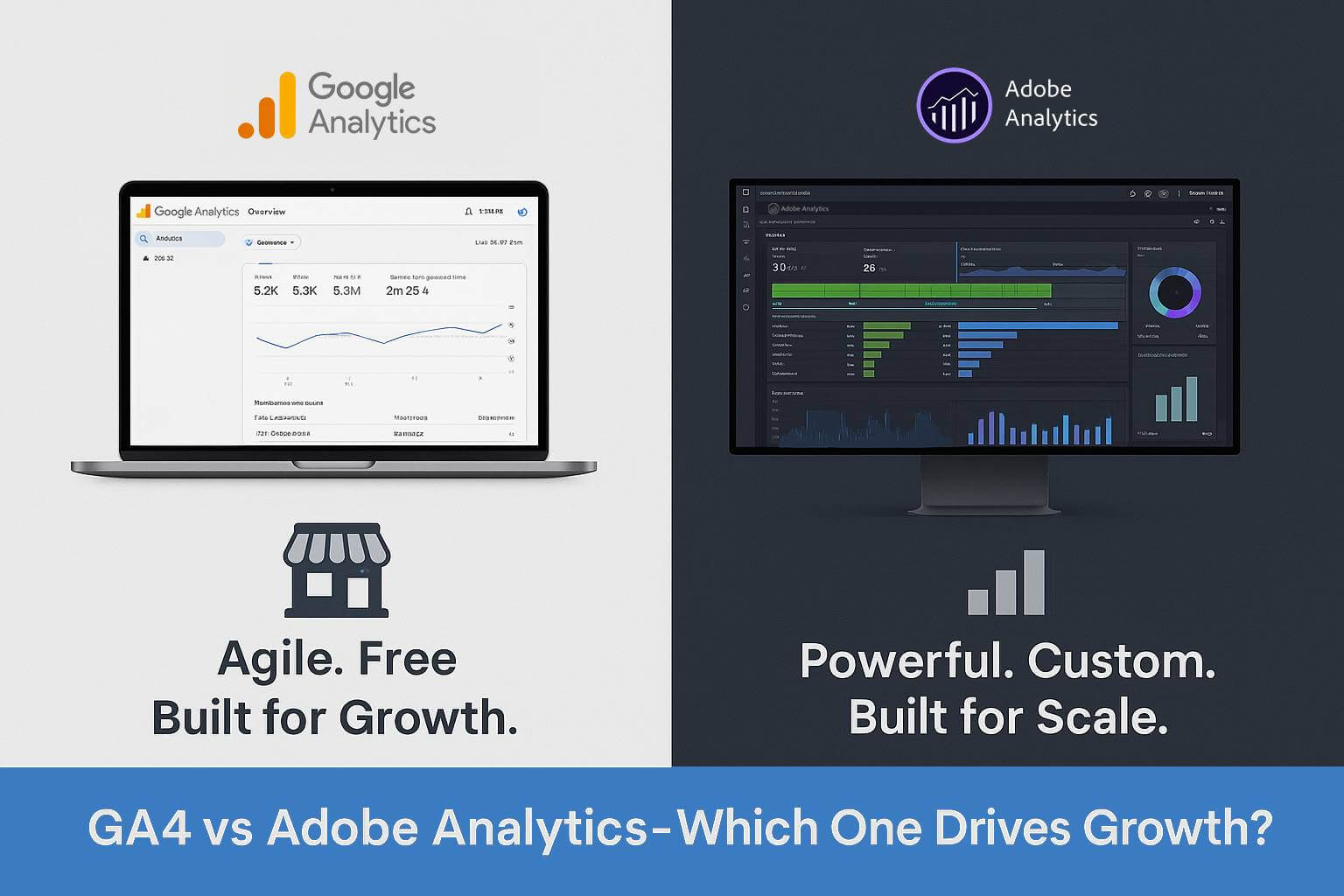
  • GA4 vs. Adobe Analytics: Which Is the Right Fit for Your Business?

    GA4 vs. Adobe Analytics: Which Is the Right Fit for Your Business?

    In the age of data-driven everything, choosing the right analytics platform can shape the way your business grows. But with two major contenders – Google Analytics 4 (GA4) and Adobe Analytics – the question isn’t just which is better? It’s which is better for you?

    Each tool offers powerful capabilities – but they serve different levels of marketing maturity, goals, and team structures. So, let’s break it down.


    What they are (in simple terms)

    Google Analytics 4 (GA4)

    GA4 is Google’s free, privacy-forward analytics platform. It’s event-based, cross-platform (web + app) – integrates deeply with Google Ads and BigQuery, and perfect for small to mid-sized teams who want to track performance across the user journey without heavy setup. And most important of all, is free to use (with a paid GA360 version for enterprises).


    Adobe Analytics

    Adobe Analytics is a high-end, enterprise-grade solution built for companies with complex data needs. With deep customization, real-time data visualization, and integration with the Adobe Experience Cloud, it’s a beast – but one that needs skilled hands.


    Feature Face-Off: Where they differ


    Feature GA4 Adobe Analytics
    Cost Free (GA4), Paid (GA360) Premium, high-cost enterprise tool
    Ease of Use Beginner-friendly Complex; requires training
    Data Model Event-based, user-centric Custom variables (eVars, props)
    Data Sampling Sampling in free version No sampling—always full data
    Reporting Basic dashboards, limited customization Advanced, drag-and-drop workspaces
    Attribution Basic models Custom, multi-touch attribution
    Integrations Google Ads, BigQuery, Looker Adobe Target, Campaign, Audience Manager
    Support Large community, many free resources Dedicated consultants, premium tech support


    Choose GA4 if you’re…


    -A startup or mid-sized business

    -Already using Google Ads, YouTube, or Search Console

    -Looking for a cost-effective solution that grows with you

    -Operating without a full-time data analytics team

    GA4 makes it easy to:

    • Track cross-platform performance
    • Monitor conversions and user paths
    • Stay GDPR-compliant
    • Tap into predictive insights (like churn probability)


    Best fit: D2C brands, publishers, SaaS startups, lean marketing teams


    Choose Adobe Analytics if you’re…

    A large enterprise with multi-channel campaigns

    Working with dedicated analysts or developers

    Prioritizing unsampled data and real-time tracking

    Ready for custom dashboards, micro-segmentation, and A/B testing insights


    Adobe Analytics gives you:

    • Fully customized, layered reports
    • Robust attribution modelling
    • Deep audience segmentation
    • Seamless tie-in with personalization tools like Adobe Target

    Best fit: Retail majors, BFSI, telecom, airlines, large marketing orgs


    Final Thoughts: It’s not a battle – It’s a Fit Check

    There’s no universal winner here. Think of GA4 and Adobe Analytics as different vehicles.

    • GA4 is your agile city car: smart, efficient, easy to manoeuvre
    • Adobe is your enterprise SUV: built for scale, loaded with tech, but requires more to maintain

    What matters most is what you plan to do with the data—and whether the tool matches your marketing roadmap.

    Need help picking the right analytics stack?

    Whether you’re just getting started with GA4 or planning to scale with Adobe, we’ll help you choose, set up, and optimize the platform that fits your goals.

    Let’s Connect

  • Weekend Digital Media Round-Up: Ecommerce SEO: Start where shoppers search, CTV is Gen Z’s new crush. Are marketers getting the hint, Audio Advertising Has Changed More Than You Realize & More…

    Weekend Digital Media Round-Up: Ecommerce SEO: Start where shoppers search, CTV is Gen Z’s new crush. Are marketers getting the hint, Audio Advertising Has Changed More Than You Realize & More…

    1.Ecommerce SEO: Start where shoppers search

    ​Ecommerce SEO in 2025 focuses on aligning site content with shopper intent across all stages of the buying journey, from discovery to conversion. With AI reshaping search results and reducing organic clicks, brands must optimize product and category pages, site architecture, and structured data to remain visible and competitive. [Source: Search Engine Land]

    2. CTV is Gen Z’s new crush. Are marketers getting the hint?

    Connected TV (CTV) is rapidly becoming the preferred medium for engaging Gen Z in India, thanks to its subtle, immersive, and context-driven advertising approach. With rising adoption among premium households and strong brand engagement metrics, marketers now see CTV as essential for building credibility and emotional resonance with younger, values-driven audiences. [Source: Exchange4Media]

    3. Audio Advertising Has Changed More Than You Realize

    Audio advertising has evolved far beyond traditional radio, now offering dynamic, measurable, and omnichannel capabilities through digital platforms like podcasts and streaming. With innovations like programmatic buying and host-read ads, digital audio delivers deeper audience engagement and proves its value across the entire marketing funnel. [Source: Adweek]

    4. How e-commerce sites need to change for the AI era

    AI is revolutionizing online search in 2025, challenging traditional SEO strategies and prompting brands to rethink how their products are discovered. Major tech players like Apple, Google, and OpenAI are reshaping e-commerce, making it crucial for businesses to adapt quickly to stay visible and competitive. [Source: Vogue Business]

    5. Better AI Starts With Strong Data and Identity

    AI is revolutionizing marketing by enabling personalization, efficiency, and cost savings, but its success hinges on high-quality data and identity solutions. Despite widespread adoption, marketers face challenges like model accuracy, integration issues, and data gaps, making vendor selection and foundational data strategies crucial for scalable results. [Source: Adweek]

    6. From Prompts To Products: The Business Of No-Code AI Is Booming

    No-code AI platforms are empowering solo entrepreneurs and small teams to build scalable, monetizable products without traditional coding or venture capital. Tools like Vertical AI enable users to fine-tune and deploy models quickly, turning niche expertise into profitable businesses with minimal infrastructure costs. [Source: Forbes]

    7. AI for marketing when to use it and when to lose it

    AI in marketing is most effective when used to enhance research, streamline production tasks, and accelerate insights—not replace strategic thinking or creativity. Marketing leaders should balance AI’s capabilities with deep business understanding and human intuition to drive impactful, agile campaigns. [Source: Fast Company]

    8. In GEO, brand mentions do what links alone can’t

    Generative Engine Optimization (GEO) is reshaping SEO by prioritizing brand mentions over traditional link-building, as language models rely on contextual signals to reduce ambiguity. Strategic media outreach, community engagement, and influencer marketing are key to building authority and visibility in generative search environments. [Source: Search Engine Land]

    9. AI Doesn’t Ruin Creative—Bad Creative Ruins Creative

    AI-generated voices in audio ads aren’t inherently problematic—it’s how they’re used that determines their impact. When applied thoughtfully and ethically, especially in hybrid models combining human and synthetic voices, they can enhance emotional resonance and scale without compromising creativity. [Source: Adweek]

    10. Martech mistakes are costing brands their customers

    Many brands are losing customers due to poorly integrated or mismanaged marketing technology (martech) systems, with 97% of CMOs reporting issues in the past year. AI tools, in particular, are causing problems when added to outdated systems, and marketers are overwhelmed by tools that don’t work well together or lack vendor support. [Source: Marketing Tech News]

  • Weekend Digital Media Round-Up: Why Person-First Media Buying Is the Future of Programmatic Advertising, Enterprise AI Strategy: Moving From Ambition To Scaled Impact, How to make ecommerce product pages work in an AI-first world & More…

    Weekend Digital Media Round-Up: Why Person-First Media Buying Is the Future of Programmatic Advertising, Enterprise AI Strategy: Moving From Ambition To Scaled Impact, How to make ecommerce product pages work in an AI-first world & More…

    1.Why Person-First Media Buying Is the Future of Programmatic Advertising

    ​Brands are shifting toward a person-first approach in programmatic advertising by leveraging identity resolution and AI to deliver personalized, relevant content across platforms. This strategy enhances engagement, improves ad effectiveness, and enables more meaningful measurement of business outcomes. [Source: AdWeek]

    2. Enterprise AI Strategy: Moving From Ambition To Scaled Impact

    AI adoption in enterprises often falls short due to misaligned strategies, lack of infrastructure, and insufficient focus on people and trust. The article emphasizes shifting from flashy experiments to purposeful scaling by aligning AI with business goals, empowering teams, and measuring real impact—not just technical metrics. [Source: Forbes]

    3. How to make ecommerce product pages work in an AI-first world

    AI is transforming ecommerce by acting as a virtual sales rep, filtering and recommending products based on user context rather than just keywords. To stay visible, product pages must offer rich, context-driven descriptions that answer who the product is for and what problems it solves. [Source: Search Engine Land]

    4. Brands talking unified screen strategy: Time to retire TV vs Digital debate?

    Brands and marketers are increasingly embracing a unified screen strategy, combining the mass reach of linear TV with the precision of digital and Connected TV (CTV) to optimize campaign outcomes. As media consumption habits evolve, especially among younger audiences, the focus is shifting from channel-based planning to audience-centric approaches, with integrated budgets and dynamic content strategies leading the way. [Source: Exchange4Media]

    5. Scaling PPC Campaigns Sustainably: Use The SCALE Framework To Move Beyond Actionism

    PPC campaigns often fail due to reactive decision-making and lack of strategy. The SCALE framework—Stabilize, Capture, Amplify, Layer, Evolve—offers a structured, data-driven approach to sustainable growth by focusing on performance, market insights, and disciplined execution. [Source: Search Engine Journal]

    6. How to use Performance Max for high-value customer acquisition and retention

    Performance Max (PMax) in Google Ads is proving to be a powerful tool for acquiring and retaining high-value customers by leveraging automation, audience segmentation, and conversion value layering. By assigning incremental values to new and lapsed customers, marketers can optimize bidding strategies and improve campaign performance—though careful reporting is essential to avoid inflated ROAS. [Source: Search Engine Land]

    7. Tech as the new creative calculus: Rethinking advertising in the age of AI

    India’s leading creatives at Cannes Homecoming explored how AI is reshaping advertising, emphasizing the need to balance technological efficiency with human empathy. The discussion highlighted that the future of storytelling lies in harmonizing innovation with emotional resonance.  [Source: Campaign India]

    8. LLM perception match: The hurdle before fanout and why it matters

    Brands are now being filtered by AI systems based on how well they align with user intent, even before relevance or content quality is considered. This concept, called LLM perception match, determines whether a brand is eligible to be recommended by language models like ChatGPT, making it a critical factor in AI-driven visibility—especially for B2B companies with complex sales cycles. [Source: Search Engine Land]

    9. The 10 Commandments For CMOs In The Age Of AI

    In the age of AI, marketing is evolving from traditional strategies to dynamic, data-driven ecosystems. Aditi Sinha outlines ten key principles for CMOs, emphasizing AI-powered simulations, brand voice training, prompt engineering, and cultural relevance as essential tools for future-ready marketing leadership. [Source: Forbes]

    10. Clicks or Connections? How to crack the MarTech balancing code

    Indian brands are increasingly leveraging MarTech tools like AI and personalization to boost engagement, but many still prioritize short-term conversions over long-term customer loyalty. Experts argue that while the technology is effective, true brand advocacy depends on trust, value, and a cultural shift in marketing strategies toward sustained relationships. [Source: Exchange4Media]


  • Turn Likes into Leads: The Smart Way to Do Social Media Optimisation

    Turn Likes into Leads: The Smart Way to Do Social Media Optimisation

    We’re all familiar with the ultimate advice – “Consistency is the key on Social Media.” But what happens when consistency doesn’t translate into conversions?

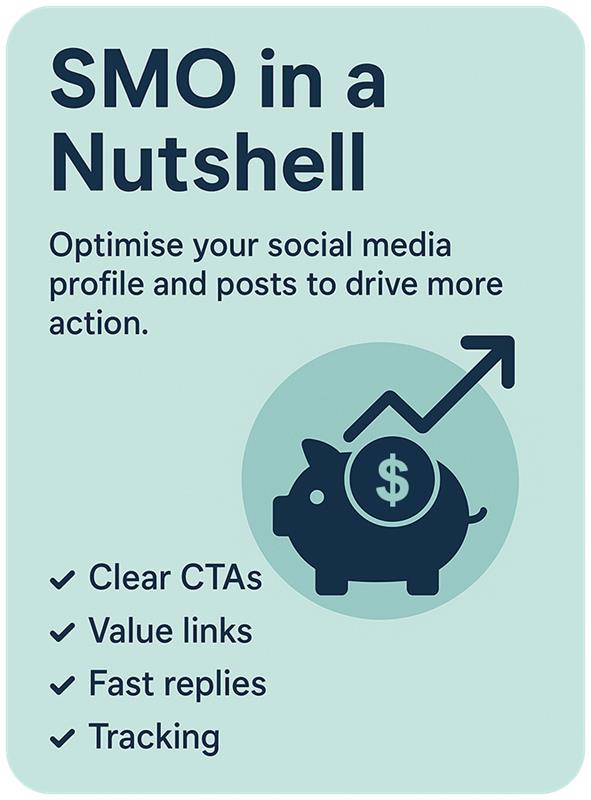
    Now here’s where Social Media Optimisation (SMO) steps in.

    SMO isn’t about posting more. It’s about structuring your presence so that every post, profile update, or interaction nudges someone closer to action – whether it’s a sign-up, inquiry, or purchase.

    Let’s break down how brands today can turn likes into leads on platforms such as LinkedIn, Instagram, and Facebook.


    Why SMO Matters for Lead Generation!

    Think of your social feed as a storefront. Without the right lighting, layout, or signage, even the best product might go unnoticed.

    SMO helps you:

    • Capture attention with clarity
    • Deliver value through content
    • Guide users towards conversion – subtly and strategically

    And the best part? You don’t need to post more – you need to post smarter.


    LinkedIn: Where Authority meets Action

    This platform isn’t just for recruiters. LinkedIn is where decision-makers scroll with intent. Which means, if you’re a B2B business, your optimisation game needs to speak their language.


    Profile tweaks that build Credibility:

    • Use a crisp headshot and branded banner
    • Craft a headline that solves a problem, not just lists your title
    • Add a call-to-action (CTA) in your About section like “Let’s connect to explore collaboration”


    Content That Drives Conversation (and Leads):

    • Share thought leadership posts, case studies, and customer success stories
    • Include CTAs like “DM us to know more” or “Download our guide”
    • Try PDF carousels or native documents as mini lead magnets


    Quick Wins:

    • Pin high-value content to your featured section
    • Join discussions in your niche
    • Keep hashtags focused (3-5 max)


    Instagram: Visual funnels that Convert

    This is your space for storytelling and micro-conversions. Especially useful for D2C brands, creators, or service-led businesses.


    Optimise your Bio:

    • Add a link-in-bio tool (Linktree, Beacons, etc.)
    • State who you help and what problem you solve—in 150 characters


    Post formats that prompt action:

    • Use Reels to answer FAQs or demo your product
    • Carousels are great for explaining services or customer pain points
    • Caption CTAs like “DM us to know more” or “Save this for later” do wonders


    Leverage stories for lead collection:

    • Use Highlights for testimonials, pricing, and FAQs
    • Run Lead Ads or promote your top-performing posts
    • Engage in DMs after polling or quizzes – those warm leads are gold


    Facebook: Retarget and Reconnect

    Facebook might not be the shiny new thing, but for local businesses, retargeting, and community-led marketing, it’s still a conversion powerhouse.


    Get your page in shape:

    • Use a CTA button like “Book Now” or “Send Message”
    • Fill out the About section with contact details and URLs


    Content ideas that nurture:

    • Post video explainers or blogs with lead forms
    • Go live for demos or interviews—then pin the replays
    • Share gated content (ebooks, guides) and track downloads


    Turn Ads into Actions:

    • Facebook lead ads pre-fill forms, reducing drop-offs
    • Set up retargeting for users who interacted with your Instagram or site


    Your SMO Checklist for All Platforms

    No matter where you post, ask:

    • Is there a clear CTA in your bio or caption?
    • Are you linking to value-driven content (like playbooks or downloads)?
    • Are you responding to comments and DMs promptly?
    • Are you measuring performance based on conversions, not just likes?
    • Are your social and CRM/email journeys connected?


    In Conclusion: Don’t just post – Optimise with Purpose

    You’re already showing up online. Now, make it count.

    When you approach social with intentionality – optimising not just your content, but also your bios, links, and CTAs – you don’t just increase engagement. You improve lead quality.

    Because the goal isn’t visibility. It’s action.


    Need a tailored SMO playbook that fits your audience and goals?

    Let’s start the conversation

  • Weekend Digital Media Round-Up: Smarter Security, Smarter Stores: How AI and Cloud Technology Are Powering the Next Generation of Loss Prevention, OpenAI Quietly Adds Shopify As A Shopping Search Partner, Bringing GenAI into the database changes everything about app development& More…

    Weekend Digital Media Round-Up: Smarter Security, Smarter Stores: How AI and Cloud Technology Are Powering the Next Generation of Loss Prevention, OpenAI Quietly Adds Shopify As A Shopping Search Partner, Bringing GenAI into the database changes everything about app development& More…

    1.Smarter Security, Smarter Stores: How AI and Cloud Technology Are Powering the Next Generation of Loss Prevention

    AI-powered, cloud-based security platforms are transforming retail loss prevention by integrating data from various sources, enabling predictive strategies. Shoplifting and organized retail crime have surged, leading to significant financial losses and increased concerns about staff safety. Unified platforms provide real-time intelligence, reducing investigation times and improving operational efficiency.

    [Source: Total Retail]

    2. OpenAI Quietly Adds Shopify As A Shopping Search Partner

    ​OpenAI has added Shopify as a third-party search partner for its shopping search features. This integration allows ChatGPT to show shopping-rich results from Shopify, Bing, and other platforms. Merchants can apply to have their products included in these results.

    [Source: Search Engine Journal]

    3. Bringing GenAI into the database changes everything about app development

    Embedding generative AI directly into databases, like RavenDB, transforms app development by enabling real-time, intelligent actions on data without needing extensive AI expertise. This integration allows for faster, more efficient, and secure application development, democratizing AI capabilities for organizations of all sizes [Source: Venture Beat]

    4. From pilot to profit: The real path to scalable, ROI-positive AI | VentureBeat

    The Fortune 500 companies like Walmart and JPMorgan Chase have successfully scaled AI initiatives from pilot phases to production-grade systems, generating substantial ROI. Key strategies include executive mandates, platform-first infrastructure, disciplined use case selection, cross-functional teams, and rigorous risk management.
    [Source: Venture Beat]

    5. The 4 Cs Of AI Fluency: Preparing For The Jobs Of The Future

    Fortune 500 companies like Walmart and JPMorgan Chase have successfully scaled AI initiatives from pilot phases to production-grade systems, achieving significant ROI. Key strategies include executive mandates, platform-first infrastructure, disciplined use case selection, cross-functional teams, and rigorous risk management.
    [Source: Forbes]

    6. AI Agents Vs RPA: What Every Business Leader Needs To Know

    RPA (Robotic Process Automation) uses rule-based instructions for repetitive tasks, while AI agents handle complex tasks involving human language and behavior. Businesses should choose based on task complexity and data structure or consider a hybrid approach for efficiency. [Source: Forbes]

    7. Future Forecasting The AGI-To-ASI Pathway Giving Ultimate Rise To AI Superintelligence

    The progression from Artificial General Intelligence (AGI) to Artificial Superintelligence (ASI) is predicted to occur between 2040 and 2050. Key milestones and challenges in achieving ASI are highlighted, emphasizing AGI’s potential to surpass human intellect and operate autonomously. [Source: Forbes]

    8. The Democratization Of Graph Data For Business Users

    Graph databases are becoming more accessible to business users, allowing them to work with data relationships without needing to write complex queries. Advances in tooling, such as visual outputs and drag-and-drop workflows, are democratizing graph technology and enabling faster, more intuitive analysis [Source: Forbes]

    9. The advertising market has changed- Here’s what belongs in your cart

    In today’s competitive ad landscape, traditional ads struggle to engage consumers. Reward-based advertising, which offers value in exchange for attention, is emerging as a more effective strategy. This approach not only drives engagement but also generates valuable first-party data, making it a sustainable and privacy-aligned model.

    [Source: Adweek]

    10. How Enterprise Search And AI Intelligence Reveal Market Pulse

    Reward-based advertising, offering value for consumer attention, is proving more effective than traditional ads. This strategy boosts engagement and provides valuable first-party data, aligning with privacy standards.
    [Source: Search Engine Journal]

  • Weekend Digital Media Round-Up: How Google AI Overviews are changing the PPC game, How e-commerce, q-commerce, and content are powering India’s $1 trillion digital future, Generative and agentic AI set to transform customer service into a strategic value driver for businesses & More

    Weekend Digital Media Round-Up: How Google AI Overviews are changing the PPC game, How e-commerce, q-commerce, and content are powering India’s $1 trillion digital future, Generative and agentic AI set to transform customer service into a strategic value driver for businesses & More

    1.How Google AI Overviews are changing the PPC game

    Google’s AI Overviews are reshaping the search landscape by pushing paid ads and organic listings down the page, leading to lower visibility and fewer clicks for advertisers. Adthena’s study highlights the impact across various industries, emphasizing the need for marketers to adapt their strategies to maintain brand visibility. [Source: Search Engine Land]

    2. How e-commerce, q-commerce, and content are powering India’s $1 trillion digital future

    India’s digital economy is set to reach $1 trillion, driven by internet penetration, evolving demographics, and policy changes. The rise of e-commerce, quick commerce, and content platforms like Swiggy, Urban Company, and short-form video platforms are key contributors to this growth. Additionally, consumer spending on health, wellness, and financial services is increasing, reflecting changing priorities.
    [Source: Best Media info]

    3. Generative and agentic AI set to transform customer service into a strategic value driver for businesses

    Generative and agentic AI are revolutionizing customer service by enhancing efficiency and empathy. While virtual agents offer speed, human agents are preferred for their empathy and problem-solving skills, suggesting a hybrid approach is essential. [Source: Marketing Tech News]

    4. What Is Prescriptive Analytics? Definition, Benefits and Real-World Example

    AI-enhanced prescriptive analytics is revolutionizing decision-making by providing real-time, actionable recommendations. It’s being integrated with generative AI to optimize operations across various industries, from finance to healthcare, making it a strategic necessity in 2025. [Source: CMS Wire]

    5. CTV is booming, but most brands don’t know how to use it right: MiQ

    Connected TV (CTV) is rapidly gaining traction in India, with ad spending expected to rise significantly. Despite its appeal, MiQ emphasizes that CTV isn’t always the best fit for every marketing strategy. They advocate for a data-driven approach, focusing on business objectives rather than defaulting to CTV. Their AI-powered platform, Sigma, helps harmonize disparate data for more effective campaign execution. [Source: Best Media Info]

    6. Website performance budgets are key to a more sustainable internet

    Website performance budgets are essential for creating a more sustainable internet by reducing digital carbon footprints and improving user experience. By setting constraints on aspects like page load time and file size, designers and developers can make resource-conscious choices that align with both user needs and environmental sustainability. Integrating performance budgets into every stage of a project encourages a commitment to efficient, environmentally responsible web design. [Source: Marketing Tech News]

    7. Finding success in the new programmatic era

    The digital advertising industry is dominated by tech giants like Google, Meta, and Amazon, creating ‘walled gardens’ that limit diversity and creativity. Quantcast offers a platform to overcome these challenges by promoting growth outside these walled gardens, using advanced AI and a proprietary live data set to reach audiences across various channels and cookieless environments. This approach helps smaller advertisers and independent agencies reduce costs and improve performance. [Source: Marketing Tech News]

    8. Cross-channel marketing strategies boost conversion rates by up to 31%

    Cross-channel marketing strategies can significantly boost conversion rates, with potential increases of up to 31%. It’s crucial to understand regional and industry-specific nuances to optimize these strategies, enhancing customer engagement and app stickiness. [Source: The Marketing Tech News]

    9. Why marketers are selling creativity as risk management to the C-Suite

    Marketers are repositioning brand investments as strategic risk mitigators to gain C-suite support. Strong creative and brand consistency are highlighted as key drivers of long-term commercial value and resilience. Additionally, adopting a portfolio-based ROAS approach is recommended to justify investments across the full purchase funnel. [Source: Best Media Info]

    10. Social media to overtake TV as India’s top ad format within five years: Magna

    India’s advertising market is projected to grow by 7.8% in 2025, driven by strong domestic demand and digital transformation. Digital advertising is expected to account for 51% of total ad spend, surpassing traditional formats. Social media advertising is emerging as the largest format, set to overtake television within five years. The growth aligns with India’s broader economic outlook, with GDP growth projected at 6.2% in 2025. [Source: Best Media Info]