LS Staging

Category: Social Media Optimization (SMO)

  • Facebook Has A ‘List’ Option Now To Encourage More Interaction

    Facebook Has A ‘List’ Option Now To Encourage More Interaction

    Facebook has already shown their clear intentions to make some valuable changes in their social media platform. Moving forward in that direction, there is a new update called ‘list’.

    The list option has been designed to make updates easier and more engaging for the users. A user gets to pick a list from multiple list options available. That list helps in updating status with more appeal. The features of list option also include multiple coloured templates, number of items, ability to include emojis and others.

    Why this new upgrade?

    With time, the list comments have become really popular among the social media users. People make customised lists in their status along with pictures and other content. That popularity has made it essential for Facebook to help users with what they want. This is another step of Facebook towards revising the algorithms and upgrading tools for the audiences. The idea is to create better interaction opportunities among the Facebook users.

    Can it be helpful for businesses?

    Yes. This new list option can become a great asset for the businesses as well. For instance, companies can make creative lists of their products and promote them on Facebook. Presenting the business insights will also become convenient with the list option. With that, businesses can obtain more interactions and understand more about their audiences. So, marketers, advertisers and business owners, they all have a chance to get benefited from this new change.

    Here are all of the ways the new list option can help businesses.

    1. Better branding opportunities

    Brands have a chance to enhance their value with conversation driving lists. They can provide a list of their new arrivals and present them publicly to generate excitement.

    1. Influencer marketing opportunities

    For businesses, this list option can open gates for better influencer marketing. Providing valuable lists related to industry, product or services, companies can attract the attention of the influencers. This will help in creating more engagement. More influencers will start commenting on such lists, which will improve the opportunity to increase awareness, consumer reach, and authority.

    1. Local business promotion

    Facebook has proven to be a reliable platform to market local businesses. And this new upgrade can add to that. Local businesses can get more engagement with the lists created by the consumers. For instance, a local restaurant can get more promotion if a person creates a list of top local restaurants. Encouraging such lists would become helpful for the local businesses to find visibility without spending too much.

    What about pure engagement purpose?

    In terms of pure engagement, the tool has potential too. People have the opportunity to share their plans, favourites and other lists. This presents the chance for other people to share their thoughts, which can enhance the engagement of Facebook users.

    All the mentioned factors present an enormous potential of this new upgrade on Facebook. However, the future will present a clear picture of how this list option works out. Right now, both businesses and general users are feeling excited about this new upgrade.
  • Instagram Upgrades Its Features with an option to Share Other People’s Stories & More

    Instagram Upgrades Its Features with an option to Share Other People’s Stories & More

    For quite a while, there has been a competition to be the top social media app among the major players. Instagram looks forward to acquiring that top position. For strengthening its impact profoundly among social media fanatics, the Facebook-owned app has added some new features to its directory, including a feature to share other people’s Stories posts.

    New features available through the settings menu

    Instagram plans to test the latest features that will let users share posts with the touch of a button. As it is in a testing phase, the feature is still not completely available to all. The small group of testers, who are able to use it, can also toggle it off from the Instagram’s setting menu at will. The app has also added features that allow a user modify the design of the shared stories. Some of these include – changing the colour of the background as to match with the primary colour of the image, changing the size of the image, adding stickers to the posts, etc. While it may not be considered a revolutionary feature, it was still shared around the social media by the testers. Even though the response to the feature was not groundbreaking, it did highlight the appreciation from the users. With such features, Instagram may look forward to taking Snapchat head on.

    Instagram’s Cinemagraphs and more

    What may excite Instagram fans is the feature called Cinemagraphs, where a part of an image can stay animated. The feature may make many curious to try it out, even if it is just for fun. Another notable feature that Instagram is working on is a map-based tool that will optimise the shared stories for users.

    Instagram owner Mark Zuckerberg confirmed that these features would also be added to Facebook’s push tool. According to him, these features are a step towards the new age of social media sharing. He further noted that Stories would be trending among users, as it becomes the primary sharing feature, obscuring feeds. This could give some serious competition to Instagram’s rival Snapchat. Albeit, the latter has shown a decrease in Stories sharing, yet there has been an increase in the use of messaging features by users.

    While Snapchat may possibly not be able to threaten Facebook’s reign, it still may have time to revive its lost numbers. In the end, it all depends on creativity among the developers of such apps. Users will be lured towards the one that can provide better features in their apps.

    Snapchat still remains popular among the teens, even more than Instagram. This concern has made Facebook take such steps to add new features, which may give fruitful results. We can just look forward to the results once the tools are available for usage to all users. Who knows, maybe Instagram’s new features will take over the users who are enticed by its cinemagraphic presentations. It will all be clear really soon.

  • Facebook’s video ads’ watch time – how it works across different formats

    Facebook’s video ads’ watch time – how it works across different formats

    Social networking giant Facebook believes that different ads have different values based on the context under which it is played. The tech team at Facebook says that an ad experience is not just a single experience, but a variety of unique and different experiences.

    How was this determined?

    Facebook goes so far as to provide charts to show how many people watch ads and how the ads’ watch times fluctuate according to its environment. However, Facebook does not provide the exact facts and figures with the charts, which don’t make them absolutely conclusive. The data provided, however, is Facebook’s internal data and contains most of the information from this source. There is some information from YouTube and some other companies who place ads on their products, such as Instagram, and Spotify, which makes this data more reliable in terms of data authenticity.

    Usually, companies placing ads on their videos and products evaluate the ad quality based on how many people completed the ad or how many people watched more percentage of the ad which was placed. This is called completion rate, and companies usually use this to judge an ad’s ability to keep the audience engaged. However, at Facebook, the ad’s quality is determined by exactly how many seconds the ad was viewed by a person before skipping it, and then using all the collected data to determine how many people watched the ad up to the same second.

    What does the data show?

    Facebook has started placing ads on videos pretty recently, and they mostly have two types of ads, pre-roll ads, and mid-roll ads. Pre-roll ads are non-skippable and are needed to be completed by the user in order to continue watching the video. Mid-roll ads are longer, skippable ads, which are usually fifteen seconds long, and can be skipped after five seconds.

    After collecting all the data on the number of people who completed pre-roll ads and the people who completed mid-roll ads, Facebook observed that majority of people skipped mid-roll ads after five to six seconds, which meant that most of the people on the social network had around six-second attention span toward the ads.

    This data primarily meant that in-stream ads put up by Facebook mostly ended up being watched for six seconds, in case of pre-roll and mid-roll ads, both.

    Data depiction made easy with charts

    Facebook released various charts depicting how their ads have fared over time. The charts mainly consisted of standalone ads which Facebook inserted in people’s news feed, skippable and non-skippable ads placed in-stream, story ads added in people’s Instagram stories, and Live TV ads which were embedded in live streams.

    The charts indicate that Facebook’s pre-roll ads, which are the non-skippable ads, perform better than any other type of ad provided by Facebook. This basically suggests that brands can redirect all the money they have put in other kinds of ads and put them into placing pre-roll ads on Facebook.

    Why the need for this exercise?

    Facebook says they want investors to look at the time for which their ads are being viewed, and invest more money into it, rather than getting caught up in comparing completion rates and deciding where to invest more money for ads.

    With these stats and charts, Facebook tries to make sense of the value of tying up experiences to an ad and how it delivers value to a brand.

  • Snapchat Wants To Expand Snaps’ Exposure With A Feature To Share Content Outside the App

    Snapchat Wants To Expand Snaps’ Exposure With A Feature To Share Content Outside the App

    Snapchat has been undergoing significant changes to become more and more relevant to what the market needs. According to reports, there is another interesting change coming in Snapchat.

    With the idea of spreading snaps everywhere, Snapchat is trying to launch “Stories Everywhere” option in their platform. The social media platform wants to provide content that can last longer than just a few hours. Though the option called “Memories” is already there, Stories Everywhere would allow the snaps to appear on websites and applications outside the native Snapchat app.

    Snap content shareable on other platforms

    With the new sharing option, Snapchat wants to enhance the exposure of the snap content and let it be discovered by people who aren’t a part of the Snapchat ecosystem. The users would get the ability to share their snaps on their own app or website. With this move, the company wants to increase the reach and improve their revenues.

    The sharable Snaps would allow the creators to have them forever. The content won’t just disappear after a few hours of creation. This comprehensive presence will give more visibility to Snapchat. More ways would become available for the users to come to Snapchat from other platforms.

    Benefits for brands and influencers

    Snapchat has always been questioned by the brands, companies, and influencers regarding the disappearance of the content. The businesses put a lot of effort into their Snap content pieces. But they all last for only a few hours.

    Snapchat has answered these questions by providing ‘Memories’ option that allows the creators to repost their Snaps. Now, with the new ‘Stories everywhere’ option, Snapchat would improve the abilities of the businesses to promote their content. So, it would not be wrong to say that this feature is going to drive positive results for brands and influencers.

    A step further away from the core idea

    The core idea of Snapchat was the disappearing content. But the social media platform has understood the requirement of everlasting content requirement. That is why the company launched the Memories option a year ago. The reposting of the Snaps allows users to have their content available for a longer time.

    The ‘Stories Everywhere’ would allow users to make the content existing outside Snapchat too. It is one step away from the core idea of the social media platform. But it would definitely be for the best. As the feature will help all sorts of users to promote and exist, more users will come to the platform.

    Other platforms shifting towards everlasting content

    It is not just Snapchat; other platforms have understood the importance of everlasting content. Instagram is also moving away from the temporary content with new features.

    Social media is not just about the general users anymore. The influencers and brands have become an important part, and are giving business to social media platforms.

    It is going to be interesting to see how ‘Stories Everywhere’ changes Snapchat for companies and websites. The content creation will definitely obtain a growth for sure. More brands would include Snapchat in their social media and content strategy.

  • Snap Accelerate: Snapchat’s Latest Program Targeting Mobile Start-ups

    Snap Accelerate: Snapchat’s Latest Program Targeting Mobile Start-ups

    Snapchat has always been concerned about its advertising business. As a standalone application, it is known to follow/imitate Facebook over the years. With the latest update released from Snapchat, it won’t be wrong to state that Snapchat in 2017 replicates Facebook as was seen in 2012.

    The latest add-on from Snapchat targets the same marketers which Facebook did to expand its mobile ad business. The new program dubbed the Snap Accelerate will enable mobile start-ups to advertise on Snapchat. It can either be in the form of giving early access to new ad products or in the form of credits which one can use to purchase ads.

    Many consider the release of Snap Accelerate as a Snapchat attempt to lower down the barrier to entry for advertisers and simultaneously attain must-buy status. The company made it easier for the brands to automate their Snap Ads purchase by releasing an advertising API. The company added two more self-serve tools allowing businesses to buy Snap Ads on their own and to create vertical video ads.

    Snapchat believes that by targeting start-ups as its primary base, it will allow the start-ups to expand their user base as well as business. The more the business grows, the more financially stable these start-ups will get, thereby making it easier for them to purchase more Snap Ads. As the count of successful case studies improves, more companies would start pitching in for Snap Ads benefitting both them and Snapchat on a broader scale.

    If Snapchat official developer page is to be believed, the new program will target three startup types:

    • Commerce
    • Entertainment
    • Gaming

    A major constraint to these start-ups is that they must be interested in direct response advertising and should operate consumer-facing mobile apps. In simple language, Snap Ads will target those organisations that helped Facebook conquer mobile ad market surpassing its concerns both in 2012 and 2013.

    All marketers who qualify for Snap Accelerate program get a significant amount of money they can use for purchasing ad creation and ads on Snapchat. They also get early access to new ad products and tools alongside Snap’s Marketing API. An additional benefit which the organisation receives is that they can run a free branded filter around their headquarters for a specific tenure.

    Marketers can benefit from Snap Accelerate program as per the features offered by it in the form of three different tiers. The categorisation as per many is based on the participating company’s size and stage of growth. Check out how the three tiers differ from each other:

    1. Kickstart
    • The organisation gets up to $20,000 worth of benefits. It also receives additional credits to use either for buying ads or for payment of ad creation
    • Free branded filter is available for 3 months
    1. Sprint
    • The company gets benefits worth up to $50,000. They receive credits to use for buying ads and paying for ad creation
    • Free branded filter is available for 6 months
    • The organisation gets invitation to attend Snap-hosted education events
    • The company gets preference over other firms for business and technical support
    1. Scale
    • The firms are given up to $100,000 worth of benefits, which also includes credits to use for buying ads and paying for ad creation
    • Free branded filter is available for 12 months
    • Other than Snap-hosted education events, the organisation also gets invited to private networking events
    • The organisations get priority for business and technical support

    Considering the perks offered to start-ups and other organisations, we can say that Snap Accelerate has the potential to grow. Targeting start-ups is an excellent move as it will allow the company to convert them into long-term partners.

  • Pinterest Introduces Taste Graph for Better Ad Targeting

    Pinterest Introduces Taste Graph for Better Ad Targeting

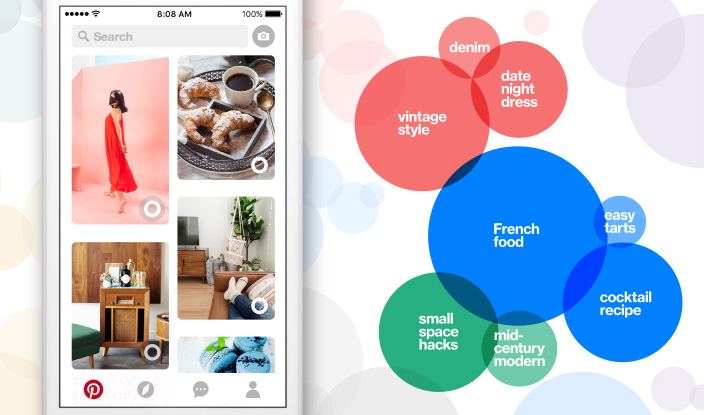
    Pinterest has emerged as a leading social channel for visual discovery. The aim is for a user to discover some topic of interest that they like, and do a deep dive to know more about this topic/ theme of interest. It announced the unlocking of more than 5000 varied ‘interests’ that digital advertisers can target against a ‘Taste Graph’. This means a much better precision-based targeting will be made available for digital ad marketers, which in turn, is expected to boost the conversion from Pinterest substantially.

    How to use Taste Graph?

    If you have used Facebook ads for your digital marketing, then you would find it easy to use Pinterest’s Taste Graph within the Pinterest Ads Manager.
    1. Select from one of the many Pinterest categories that will be available to you in the form of a drop-down box
    2. You can target better by choosing the appropriate sub-categories within each segment

    From the user’s end, it works easily. If the user is pinning a lot of visual content around bikes, he will be shown ads that revolve around motorcycles and two-wheelers. If he hasn’t pinned wedding images for quite a long time, then he will stop seeing wedding-related ads.

    This development heralds a lot of convenience to ad marketers who wish to target Pinterest as a part of their social or digital marketing campaigns. The presence of more segments means that marketers can sharpen their focus on specific products to reach a wider set of target audience at the right time. This means that the targeting is better, the likelihood of a user engaging with a brand increases, and this, in turn, proves profitable for both Pinterest and the brand.

    What does this development mean?

    With this update, the team at Pinterest endeavours to build a strong advertising business integrated within its social media platform. It will help users travel down the customer journey to lead to a conversion eventually. More importantly, it will depict to brands and businesses that the conversion was a result of Pinterest’s initial work of building brand awareness.

    In addition, the Taste Graph is expected to show how the user interests evolve over time with respect to a particular topic or theme. The potential is huge, given that Pinterest has 200 monthly active users and is home to more than 100 billion Pins.

    What the future holds?

    The current statistics have been very encouraging for advertisers. Pinterest has stated that initial results from these ultra-precise targeting have improved Click-through rates (CTR) by 50% and decreased the cost per click by 20%. This was reported for brands like the American luxury department store chain, Nordstrom which adopted Taste Graph for their advertising online.

    In the future, Pinterest plans to make segment selection better. This will be done via a search box where marketers can begin typing in their preferred segments, and the box will be auto-populated with the available segments containing the same alphabets.

  • How To Measure Dark Social Data For Better Marketing Efficacy?

    How To Measure Dark Social Data For Better Marketing Efficacy?

    Dark social is the mode of communicating (mostly one to one, or one to many) using instant messages or other private channels of communication. As compared to regular social media content like that on Facebook and Twitter (that generates data which can be captured and analysed by marketers), content shared via dark social is challenging to track, slice and dice, or monitor.

    With its jump in usage, marketers are increasingly seeking interest into the realms of dark social and how it can be utilised to gain richer insights into customers’ pain points or their buying behaviour. Google analytics marks this traffic as ‘direct’ traffic in the tool. Some examples of dark content sharing will be:

    1. A wife sharing on SMS the movie she would like to watch at the theatre

    2. A WhatsApp group sharing details about their favourite cricket team

    3. An email to a group highlighting a social issue in the locality

    Why is this needed?

    Today content sharing and distribution don’t happen merely through links. There will be social platforms, influencer engagement, and email links through which a person can come to know about your brand. The massive proliferation of these ‘dark’ zones makes it necessary for a smart marketer to know what is going on in that zone. He will have to target the dark social for better reach and coverage of his marketing messages.

    Activating dark social data as a part of your marketing campaign’s analytics stack will further accentuate your brand’s first party data assets. It can radically expand the measurability, tracking, and monitoring beyond the scope of what can be bought and sold on the commodified data marketplace.

    What can be done to capture data from dark social?

    As evident, the key difference between regular social and dark social is the challenge of collecting data in this ‘dark’ zone. Hence it is important for brands to see how they can invest in tools that can help them have a peek into the dark social. This will allow them to measure branded content’s sharing and use this data for designing targeted marketing campaigns for better efficiency.

    The first step in this process is to add UTM parameters to the sharing buttons of your branded content. It looks something like this format – “&utm_source=sharebutton&utm_channel=linkedin”. But this will be a minor step forward as almost 70% of the social shares are done in the dark. We need to go beyond the regular identification of referrer to capture this. For instance, mobile apps will pass a unique identifier in the UserAgent field even if it doesn’t pass the referrer. An example will be the FBIOS identifier that is passed from Facebook UserAgent field for identifying the user accessing a particular piece of content from the Facebook mobile app.

    To sign off

    Remember that these measures will only track the sharing happening on social channels and will not capture relevant data from SMS, IM chats or emails. For this, you will need a more targeted approach that can monitor and analyse these unstructured and dark social data effectively.

  • Twitter’s Timeline is Becoming More Algorithm-Influenced – Here’s How It Can Benefit Brands

    Twitter’s Timeline is Becoming More Algorithm-Influenced – Here’s How It Can Benefit Brands

    If you haven’t checked Twitter recently, you ought to check it out. Twitter has changed the way tweets are displayed on a user’s timeline. You will see much more tweets compared to its earlier avatar. Also, Twitter has started showing more relevant tweets now. By virtue of more tweets and thereby more user engagement, its revenue and earnings have increased by 14% and 12% in the first two-quarters of 2017.

    What are the changes?

    One of the primary changes Twitter has deployed to make the tweets relevant and display those tweets at the top is the use of an algorithm. It takes into account, the tweets you are tweeting as well as replying and that way it decides your area of interest. On the explore tab, it displays popular tweets of the subjects in which your Twitter activity had shown interest. Suppose if I had recently typed Kevin Durant, it would show the popular NBA or results tweet.

    One of the most important things to be considered is, it takes into account only the recent activity and not your old timeline. This way the algorithm is able to generate latest tweets according to your interest.

    Now the logical question would be how to take advantage of the new algorithm based system.

    What’s in it for you?

    The new algorithm on Twitter timeline shows two key takeaways:

    1) It heavily focuses on your recent Twitter activity

    2) It can be largely influenced by user actions

    Although these are just two of the factors a Twitter algorithm works with, we can safely say it’s not complex like Facebook. So it’s an obvious candidate for manipulation. We can definitely take advantages of this new update. Below are two nifty ways:

    • Generate more buzz with your tweets

    The algorithm displays more tweets on top, which are largely engaged by users and which produce more conversation among them. You can jump in the conversation by talking about that particular subject and inspire them to talk more.

    • Like and reply

    After the Twitter algorithm started working, you must have seen much more tweets from people you don’t know or follow. Even if you respond to unknown individuals and like their tweet, you will generate significant exposure, and that would help you to market your products or services better.

    But a random conversation with random people can alienate your loyal audience. So you will have to do it smartly, thereby not offending your followers.

    Use these Twitter timeline algorithm changes to your advantage and improve your brand and personal visibility substantially.

  • Facebook Chatbots – The Advantages, the Drawbacks and the Future

    Facebook Chatbots – The Advantages, the Drawbacks and the Future

    In 2016, when the CEO of one of the world’s largest conglomerates, Mark Zuckerberg, the founder of Facebook announced the Chatbot feature for its Messenger app, it came as a great technological revelation. It was specially designed to automate the process of responding the customers’ queries and inquiries; the manual answering processing was replaced by the bots. The primary purpose of introducing the Chatbot was to give the bigger brand the opportunity to engage with their customers in real time.

    Since its advent, several marketers around the world have started using this technology to improve their customer relationships and boost conversations. If you are looking to introduce the technology for your own brand, it would first help you to know what the technology holds for the future and how you can use the Chatbot to its maximum potential for improving your business prospects.

    The current scenario

    Before we delve into looking into the future of the technology, let us take a look at the present scenario. Quite honestly, the launch of the technology has been quite rocky, to say the least. Many of the bots launched initially had a lot of bugs, and many customers said that they felt the bots were more annoying than being helpful. Facebook itself has admitted that the Chatbot feature or the artificial intelligence has not gained enough prominence yet to dominate the market as it was expected to do. However, this does not mean that the future of this feature is bleak. Over the past one years, Facebook has been working incessantly on improving the technology and make it faster and smarter. The artificial technology surely promises to be a major force in the future, and therefore it would be only wise for the businesses to start deploying the technology and roll with the new developments as they come along. Having said this, the artificial intelligence technology is not meant for everyone. Below mentioned are its advantages and drawbacks for the businesses.

    The Pros of Facebook Chatbots

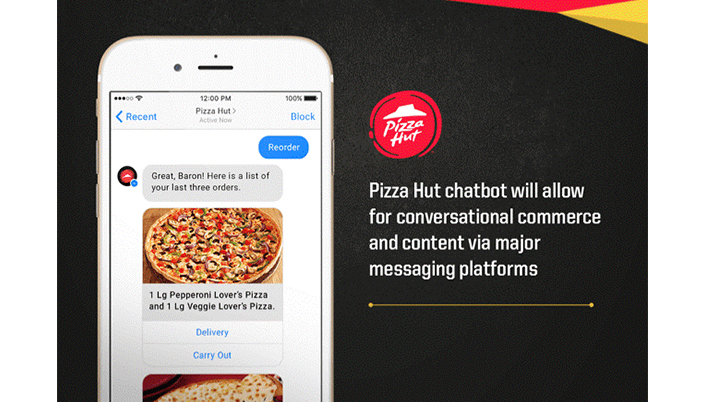
    One of the biggest challenges with any artificial intelligence marketing is to give a personal touch to your communication. It is nearly impossible to make the users feel like that they are having a conversation with a human while communicating with the bots. However, Chatbots are the closest to that. The image below is a classic example of how the chatbots work.

    Redirect the conversations

    With social media the brands can promote the positive testimonials; however, it also propagates the negative feedbacks faster too. You can negate the issue by having a chatbot through which you can redirect the conversation that is in the limelight and onto a private platform automatically and repair the problem immediately. With the usage of the chatbot, you can address the issues of the customers quickly, which is exactly what the customer wants; this would not only make the customer happy but also it would reduce the chances of them ranting about their concerns on the public platform and prevent brand bashing.

    You can get rid of the app completely

    This is probably one of the biggest benefits of using the artificial intelligence; you can get away with the tedious process of updating and maintenance of the app, which is already an overcrowded marketplace. Instead, you can transfer the communication to the chatbot. Several customers prefer this method because it is easier for them to communicate rather than having to open an app; they can use the same platform that they are already using, which in this case Facebook. One of the most popular brands that has started to use the artificial intelligence masterfully and has been quite successful at it.

    Drawbacks

    Human touch will be missed always

    No matter, how helpful the chatbots are they still can never have the same effect that a conversation with a human can provide. Although you can design the bots that can send messages that are as emphatic as they can be to the users’ problems, it can get monotonous at times.

    Today, most of the customer that are tech savvy would immediately know if the responses are automated and they can easily differentiate between the automated and manual response. Often, the automated response bots fall short of the judgement of things that only humans can do.

    If the bot fails, there is no scope for interaction

    While the bots are very prompt in their response time, if they fail, there is no way to follow up with the customer, which in turn can be serious repercussion on the brand image.

  • Using Social Media Ad Space for Promoting Brand Loyalty

    Using Social Media Ad Space for Promoting Brand Loyalty

    Research conducted by Sprout Social on the consumers buying patterns has indicated that people are more likely to buy things from brands that they follow on different social media platforms. The study further revealed that 75.3% of the people buy new things just because they saw or read about the product online, especially on the social media channels. Thus, it is quite obvious that having a good presence on the social networking sites can prove to be a great boon for promoting brand loyalty.

    There are an estimated 2.34 billion people worldwide who use social media platforms every day and rely on such platforms to be informed about the latest happenings of their favourite brands. Not to mention, the consumers use the platforms to connect and share with the friends about all the things they like and enjoy. With such a huge avenue of marketing on social, it is high time (for those who have not already used the social media to its optimum capacity) for the brands to pull up their socks and use the social media platform to its fullest potential and garner loyalty among both their existing and prospective customers. If you are a business owner, it would greatly help you to understand how you can benefit from brand loyalty.

    Do you know what brand loyalty exactly is?

    As per the text book definition, brand loyalty is the tendency of the customers to buy things from a particular brand over and over again rather than purchasing a similar product from a competitor brand. In simple words, brand loyalty implies that a consumer has a higher preference to an individual brand over the other similar brands. Last year, in November, Facebook conducted a study wherein they found out that nearly 77% of people have some degree of brand loyalty. In the social media parlance, a loyal customer can be identified by the number of times he or she likes the posts and comments on the posts put by a certain brand.

    Social Media and Brand Loyalty

    About 53% of Americans who follow certain brands on social media are more loyal to the brand than other customers. However, brands should know that the social media platforms are used by the customers only for communication, and it does not affect their decision making to buy their goods or subscribe for their services. The follower of brands on the social networking sites expect a prompt reply from the brand, as marketers, it is best to respond to the customers’ queries or comments within 30 minutes. However, in reality, it is quite sad that nearly seven out of eight messages sent by customers go unaddressed by the marketers and when it happens, the chances of the customers switching loyalty increases by almost 50 %. With social media now playing a pivotal role in influencing the purchase decision of the customers, the marketers should take the following steps to promote brand loyalty through social platforms.

    Define the way you communicate

    It is pivotal to establish your own voice across all social media platforms; it should be uniform, consistent and in line with your brand personality.

    Keep your ears wide open

    One of the keys to succeeding in converting a casual visitor to your brand page into a loyal customer is to listen to the customers’ problems and provide an instant solution to solve their problems. People generally expect the brands to respond to their questions, complaints, inquiries, and reviews in the same way as they communicate with their friends. As a marketer, you need to be proactive and listen carefully to what people are talking about and don’t be shy to retweet or repost the things shared by the followers of your brand. Make sure to be courteous and thank people if they have said or shared something about your brand. Remember, being thankful for their patronage is sure to win their loyalty. Also, another important aspect of promoting brand loyalty through social media is to provide the users quality content, which is not only relevant to them but also is useful.

    Tell a tale

    It would be foolish to assume that your customers are experts in their respective industries and that they know everything going around in your sector. It is therefore important to provide valuable evidence in the form of illustrations and statistics to underpin your claim. This will have a massive influence in projecting yourself as a trustworthy brand in the market. Remember to engage with the audience as much as possible to get an insight on what they think about your brand and what is the type of content they like to consume the most. Once you learn that, you can increase the customer engagement by sharing more content of their choice.

    Try to build a community

    Having a regular interaction with the followers of your brand on the social media helps in creating a sense of importance among the customers, they feel their opinions matter, which can you can use to build a community. You can use the community to your own advantage by rewarding their loyalty with special offers and discount coupons. You can use the paid ads to promote the discount offers and attract new customers, who can eventually become your loyal followers.