LS Staging

Category: Social Media Optimization (SMO)

  • Major Facebook Update – Trending Section on the Platform is Now Discontinued

    Major Facebook Update – Trending Section on the Platform is Now Discontinued


    Facebook has been lately introducing many changes on the platform. One trending story in this wave change is about the ‘Trending News’ section which will be discontinued soon. This is said to happen because of the poor performance of Trending News section. This section has seemingly garnered less than 1.5% clicks to publishers, on an average.

    The Trending Section is scrapped and along with it all the third-party integrations that relied on the Trends API. According to the research conducted by Facebook, people found it to be not that useful overall. The company said that the content in the Trending topics section accounted for fewer clicks. This, in turn, has made it a redundant space for a platform so huge where every inch of space matters.

    Alex Hardiman, Facebook’s head of News Products reached out to the masses regarding the scrapping of Trending News section. He did it through Facebook’s news blog. This is what he had to say, “We’ve seen that the way people consume news on Facebook is changing to be mobile and increasingly through news video. So we’re exploring new ways to help people stay informed. This is done with timely, breaking news that matters to them. At the same time, we ensure the news they see is from trustworthy and quality source.”

    Will there be a replacement?

    Scrapping the Trending News section means that there is now a distinct vacant spot. Therefore, what would come instead is a valid question one could get. As mentioned by Alex Hardiman, the site is now “exploring” new ways to present news to the masses. This might be a nod in the direction of “Breaking News”, which would be a label indicating news headlines. Facebook is also in the process of testing a “Today In” section. This would enable the users to pull up the latest breaking news from local publishers, organisations and officials. This would put you in a complete awareness zone regarding all that is occurring around you.

    Facebook is also referencing to a dedicated section for Video News coverage to replace this section. This is where people would be able to view news coverage and watch daily news. They can update themselves with the latest happenings, with access to exclusive video coverage.

    Why the need for the change?

    The Trending Section has been on the site since 2014. Users were able to discover happenings with the latest news across the world. It spanned various news sections like Entertainment, Politics, Sports, etc.

    In 2016, however, the platform was accused of curating news, which was seen as politically biased. This “biased approach” was said to govern the news presented to users. This, in turn, was altering the mindsets of people. They were led to believe things through desired perspectives instead of giving them an overview and letting them base self-opinions.  This had resulted in the removal of descriptions of news and only the headlines started showing up.

    Come 2018, and the Trending section encounters a whip of change. How effective would this update be is something we will find out in the months to come.


  • Facebook’s coming up with a new influencer platform to expand collaboration options

    Facebook’s coming up with a new influencer platform to expand collaboration options


    The market is brimming with influencers these days. Sensing the immense scope in this, Facebook – known for foreseeing trends sooner than others – is now trying to come up with new ways to attract more influencers to its network. This is primarily luring for Video publishers, but a platform for influencers would be welcomed warmly nonetheless.

    The most influential social media platform is now working on ways to create a new influencer marketplace platform, which aims at enabling brands to find the right influencers based on their brand specifications and requirements. This not only gives influencers a broader arena to be noticed by businesses across the world but also makes it easier for brands to hunt for influencers. They would then arrange for deals that will benefit both, the influencer and the brand. It would be quite a win-win situation.

    The platform has definite targeting details on a panel that is placed on the left side of the screen. It is here that you can target the audience you would want to reach. This targeting can be narrowed down on the basis of location, age, gender, education and various other filters. Once you have mentioned what chunk of audience you intend to target, the dashboard will work its magic and provide you with a list of registered influencers whose audiences match to those that you have mentioned. That is not all as it would also display the specific engagement of the influencer with their audiences and give you the follower statistics for each of the influencer. You then have the ability to get in touch with the influencer and perhaps strike a deal with them.

    The progress on this frontier is steady, and it is still in the test mode. But once it is up and running, the process of this platform would only make it easier for brands to expand their social media presence through marketing, or influencer marketing to be more precise. This has come in really handy to businesses as the News Feed changes in the current algorithm of Facebook reduced the reach of Page Content.

    Though the making of this platform is still in the testing mode, there remains a lot to be explored about the efficiency of this platform. It is speculated that this platform will most likely partner with Facebook’s Creator App which was launched last year. This would be done to list registered influencers who are willing to collaborate with brands. However, it is still not very clear whether Facebook would be verifying the influencers list to avoid potential authenticity concerns.

    This is seemingly a very logical move by Facebook as it hasn’t really provided any distinct way for influencers/creators to make money on the social media platform. Though they have options like Live Stream Tipping and ad breaks while watching videos, they aren’t as creator-centric as YouTube where they can make money.

    The nature of this platform is quite akin to Facebook Watch – which was their attempt to channel YouTube videos on the platform. However, they have reduced the outlay of this because they intend to invest into building a more self-sustaining content system via revenue ad-sharing.

  • LinkedIn seeks to improve in-platform experience with GIFs in messaging

    LinkedIn seeks to improve in-platform experience with GIFs in messaging


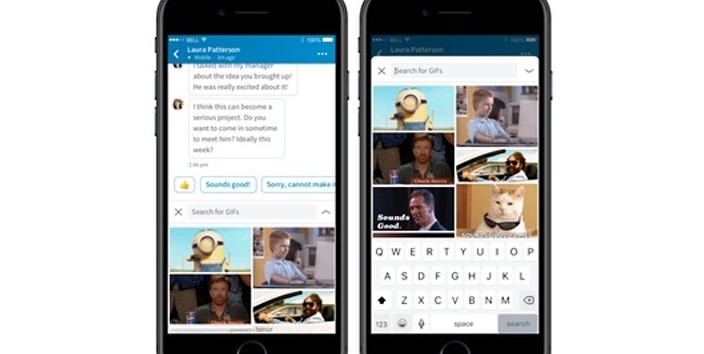
    Professional networking giant LinkedIn announced that it is implementing GIFs into its messaging system. For business users and professionals (who form perhaps the only market for LinkedIn) this move is certain to surprise many. The common perception is that a serious career-oriented platform like LinkedIn need not have a GIF presence on its messaging platform.

    But obviously, the LinkedIn product team seems to differ on opinions here. They feel that GIFs and emojis are staple to the next generation professional’s communication. Hence, this move is in sync with what the aspiring career professional is looking for on LinkedIn. So don’t be surprised if you see a GIF button soon on your messaging window that will allow you to send GIFs in your LinkedIn messages.

    What does it mean for businesses?

    For advertisers, the move seems to have some logical sanity attached to it. LinkedIn has always tried to incorporate a more intimate one-on-one messaging experience with features like SMS-oriented back and forth message flow and emojis.

    For a marketer, this philosophy aligns well with their lead generation objectives, as better one-on-one interaction is directly proportional to better levels of engagement and conversions.

    For suave marketers, the concept of GIFs driving reader engagement has been a well-known subject. On LinkedIn they have been using GIFs as photo attachments to evoke better engagement from the readers.

    A word of caution

    The blending of the informal nature of Gifs in a professional setting like LinkedIn messaging needs a careful thinking before using it. Many senior people think GIF to be a seriously unprofessional addition to a professional networking platform. Using GIFs to communicate with such an audience may backfire badly if not used with care.

    Also, GIFs tend to be misread quite a lot. A possible misinterpretation of a GIF on the messaging system may result in an unhappy client or a total attrition altogether. So be very careful before sending out a GIF to potential customers or business leads.

    Then why have it?

    Many feel that incorporating GIFs addresses two crucial issues:

    1. The lack of human touch is solely missing when we are dealing with 100% text-based messaging or dreary presentations. A GIF can easily overcome this perception and add a human touch to the communication.

    2. GIFs aid a better recall value. When you see something different on your messaging screen, chances are that you would remember it for longer than other types of text-only messages. From a branding point of view, this stickiness of a message is a substantial impetus for marketers to explore GIFs in messaging.

    If used subtly, then GIFs have the power to evoke a greater level of interaction and personalisation on LinkedIn messaging platform. Your brand gets the human touch, the recipient acknowledges the personalised connection, and rewards the effort with better engagement and likely conversion.

    What is your view on the new messaging GIF feature on LinkedIn? Do write to us and let us know in the comments below.

  • Facebook Is Deploying New GDPR And Consent Requests

    Facebook Is Deploying New GDPR And Consent Requests


    GDPR or General Data Protection Regulation assures a user about his or her rights and abilities in data protection. Facebook recently announced new guidelines for the users on a global scale. The company has already started deploying their new guidelines and consent requests in Europe. Soon, the same procedures will take place on a worldwide level with all Facebook users around the world.

    Facebook is planning to ask its users to think and decide on the privacy setting associated with their profile data. These decisions will then conclude which data is shareable with businesses to present ads to the users.

    Why new GDPR notifications?

    These new GDPR guidelines have been designed around the alignment of Facebook marketing with users’ consent. A user may or may not like to share data related to his or her Facebook profile. On the other hand, Facebook thinks that using such data can improve the relevance of ad presentation for the users. Plus, it can allow businesses to reach their target audiences. Hence, these new consent requests and GDPR regulations have been introduced to ensure that both users and Facebook team are on the same page.

    What choices do Facebook users need to make?

    There are a variety of decisions that Facebook is offering to the users with this roll out. Facebook profile users will have to think and make decisions regarding:

    1. Collection of data from partner websites

    Almost every website owns a “Like” button associated with the Facebook page. These websites are the partners or third parties. Facebook desires to ask all these sites whether they can use the collected data in their ad targeting strategies. Site owners will have to decide and provide their consent before Facebook starts using their collected data.

    1. Providing personal information to marketers

    Almost every data in a Facebook profile justifies as personal data. Users will have to decide if they agree to share that data with marketers. With the consent of a user, Facebook will share religious, relationship and political information with marketers. If a user doesn’t want such data to get shared for targeting, he or she will need to delete that data.

    1. Allowing facial recognition

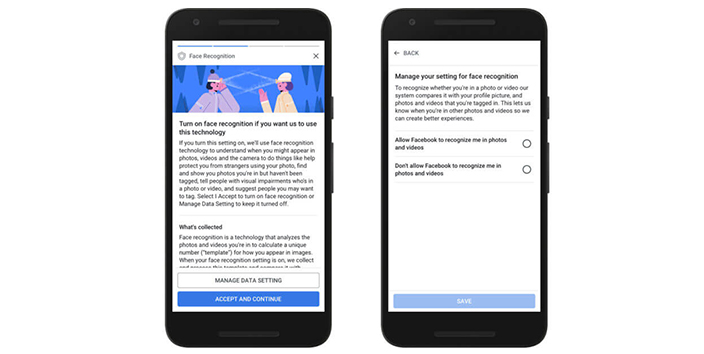
    Facebook is trying to improve security and privacy via facial recognition. However, activation of facial recognition will require the consent of a user, which Facebook plans to ask.

    Users will see multiple screens asking for authorisation along with GDPR and data collection related details.

    Why should you take it seriously?

    Data sharing is about your comfort. Many people feel convenient sharing their personal information to get a better experience. However, many others like to avoid and keep their data protected.

    According to Facebook, users should tend towards sharing their profile information with third-parties. This will allow them to get more personalised and relevant ads. But as mentioned earlier, most information incorporated in Facebook profiles justify as personal information. Hence, it is essential for Facebook to get consent from users.

    Now, as a user, you need to understand your rights and features associated with data sharing. Only then, you can make an informed decision.

  • Facebook’s “issue ads” and verification requirements for Page Managers

    Facebook’s “issue ads” and verification requirements for Page Managers


    It is evident that ‘change’ is something that social media thrives on. Facebook, on similar lines, has always aimed to bring about changes that make networking a better experience and more relevant to the shifting customer preferences and trends. Many of these changes are welcomed, and an equal number of them aren’t. But that has never hindered Facebook from bringing in more changes under the tactful guise of an update.

    The trigger for the update

    Looking back at the mess Cambridge Analytica Scandal left behind for the social media giant, Facebook seems to have taken evasive privacy protection measures. They are now rolling out a range of privacy tools that aim to safeguard data. These changes in the privacy tools and settings allow finer page management. They also come with specific indicators and instructions that aim to fill the leaks that lead to the recent fiasco.

    What is in the update?

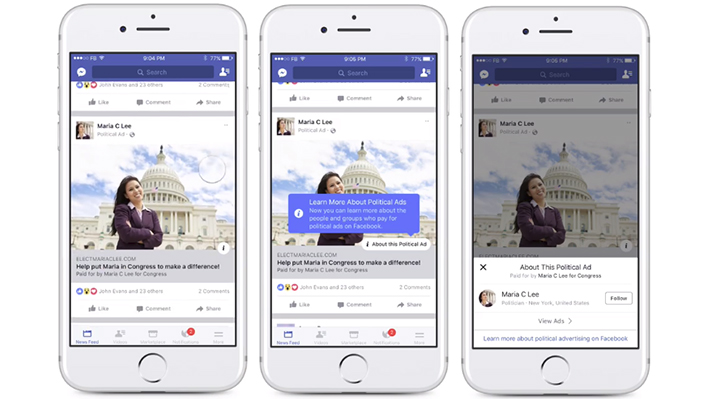
    One of these updates concerns itself with political ads. Not that long ago, Facebook rolled out an update that only verified advertisers would be allowed to run ads of electoral nature on the site. That is to say that if you as a person would want to post an electoral ad or post, you need to reveal your identity. This extended its application to the acquired platform Instagram also. This update also specified that any and every such ad would be labelled accordingly.

    In accordance with this move, Zuckerberg mentions that people who manage Large Pages too will come under the purview of verification. This means a large number of fake accounts using Large Pages will now find it tough to function on the social media platform. This step is expected to bring down misinformation and fake posts substantially.

    What does this mean for FB users?

    However, Zuckerberg hasn’t entirely been clear on what counts as a large page nor has Facebook given out anything regarding the current verification process. But if we are to go by what the Boss says, then page managers would now have to go through a different verification process to confirm their identities. This step will strive to avoid foreign interference and influence in important events like elections.

    In order to apply concrete measures to this, and to counter political issues birthed by non-political groups, Facebook now has something called “issue ads” in its arsenal.

    How do the “Issue ads” aim to curb political influence?

    As recorded by NYTimes, Zuckerberg says, “These steps by themselves won’t stop all people trying to game the system, but they will make it a lot harder for anyone to do what the Russians did during the 2016 elections and used fake accounts and pages to run ads.”

    Facebook suggests that “issue ads” relate to topics that are being discussed across the country and that it is working with third-party services to enlist various keywords which would be refined as time goes on.

    Facebook has constantly been under thorough scrutiny, owing to how big an audience it commands and how influential a source it ends up being.

    But with these measures in place, Facebook hopes to curb the mishaps that dictate destinies thereon. What is your take on the new measures put in place by FB? Do write to us and let us know.

  • Facebook and Instagram introduce some interesting updates to their ‘Stories’ feature

    Facebook and Instagram introduce some interesting updates to their ‘Stories’ feature

    Facebook has been rolling out a slew of new features and graphics support in order to improve the level of engagement and social connect between users of the social media site. Its latest update has made a few changes to the ‘Stickers’ option on Facebook and ‘Stories’ option in Instagram.

    Changes on Facebook Site

    Facebook runs a ‘Stickers’ program that picks artists and develops sticker packs. These stickers convey a range of emotions in a refreshingly different way – a key reason for the program’s success among the site’s users. Last week, the site went ahead and added a few more stickers to enhance the stickers’ efficacy in promoting collaboration among the users.

    With these new stickers, Facebook allows users to add in name, weather, and location. With the name sticker, you can tag friends and communicate in an interactive and refreshingly unique way on Facebook. These options are already present on Instagram Stories. But for those who are present only on Facebook (and not Instagram), it is certainly a new addition that users would want to try out. Even for other users, the new stickers provide more options to Facebook Stories. It gives them better reasons to try it out on Facebook and thus, improve distribution and engagement

    On the anvil are other updates that take a cue from Instagram. Some examples include polls for Facebook Stories, which would be similar to the ones we see on Instagram Stories. For many users, there is a lot of content on the News Feed view but hardly any content present in the Stories module.

    For B2B marketers, this is digital whitespace can be utilised for brand marketing. This sounds interesting especially considering that the Facebook CEO, Mark Zuckerberg, himself stated that more emphasis would be given to Stories and it would be as mainstream as News Feed is today.

    Changes on Instagram Site

    On the Instagram site, there are reports of Instagram Stories mentions now coming up in user notifications. This provides a lot of visibility value to the in-stories tagging option. Users will now be better notified of the mentions. This, in turn, could improve the functionality of the feature. As an outcome, B2B marketers may utilise this functionality for a better level of engagement and improved connection facilities.

    There has been another noteworthy update to Instagram Stories. Images and videos that are presented in square or landscape layout will be rendered into full – screen view in Stories. With this, advertisers can easily reach people across Instagram and Facebook. In the mobile view, this will mean three key updates –

    1. The whitespace will be filed with an appropriate background colour

    2. The text in the post will be added in Stories text below the image or video

    3. The destination URL will be integrated with a ‘Swipe Up’ facility.

    The aim is to cross utilise the Facebook ads in Instagram as well. As a result, marketers need not re-calibrate the Facebook image or video layout when they want to use it in Instagram Stories.

    What do you think of the new updates to Instagram Stories and Facebook Stories? Do write to us with your views in the comments below.

  • LinkedIn rolls out Native Video Marketing

    LinkedIn rolls out Native Video Marketing

    On 29th March, LinkedIn announced two key updates that will be of significant interest to B2B advertisers in the digital space.

    1. It now allows marketers to run native video ad campaigns
    2. It provides placement of videos on Company Pages on the site

    B2B marketers would welcome the new move from LinkedIn that allows companies to run native video ad campaigns and run video ads on the site. At a time when Facebook is reeling under data breach issues, the new move is sure to bring in a lot of interest and sustained visibility from B2B marketers who are looking for a viable social media channel to tap into leads worldwide. And what better than LinkedIn – the best known and perhaps the world’s biggest professional networking site today. Marketers looking to drive results from video content can count on LinkedIn to provide the much needed visibility and business traction.

    What this move means?

    LinkedIn had allowed individuals to add video in native format over the social media platform as late as last August. Many believe LinkedIn is one of the last big social media sites to launch this feature. In order to avoid a similar late-mover tag for B2B too, it has gone ahead and launched native video ads for B2B businesses now.

    Brands will be able to add videos to their company pages as well as to the Showcase page. The new LinkedIn campaign manager will allow marketers to target audience by specific variables like demographics, job title, or industry. When you use LinkedIn’s Matched Audiences option, you can further drill down your ads to be seen by specific account level audiences. You can also build an email list to reach out to existing customers.

    Leads are typically generated either by driving site traffic to the company website or via LinkedIn’s Lead Gen Forms product. As expected, the rollout will be a phased one. Businesses are expected to see more features and get access to better functionality in the coming months.

    Sponsored content now supports video too

    LinkedIn had rolled out a phased beta testing for around 700 marketers since October 2017, to track performance and efficacy of the native ad campaigns. Results have been very encouraging from an ‘impressions’ point of view. Viewers have been found to spend 3x the time on average watching ads with videos as compared to static (text/image) ads. In the same beta testing, it saw that Company Page video was viewed 5x more than other forms of content on the Company Page. This will be an encouraging sign for B2B marketers to embrace native ads on LinkedIn with full enthusiasm.

    Appearance-wise, the native ads will be shown on the News Feed of a targeted LinkedIn member as a standalone, sponsored post. The video will be in auto-play mode by default (in mute version).

    For analysis purposes, the LinkedIn tracking pixel will come in handy. It will allow advertisers to assess the performance of ads with important metrics like leads, sign-ups, site visit numbers, to name a few.

    What is your initial assessment of LinkedIn native video ads? Do write to us and let us know your thoughts.

  • How Can Instagram Add Value To Your Business?

    How Can Instagram Add Value To Your Business?

    If you are an enterprise and are thinking of switching to an Instagram business profile, now is the right time. With Instagram being slammed for its ever-changing algorithms, the image-sharing social media giant is doing its best to create a lucrative channel for business owners to market their products and services on Instagram.

    Statistics have shown that over 25 million businesses have switched to Instagram business accounts. It is an excellent feature because now businesses can promote their accounts and add links to their web pages through their posts and stories. Profile users have access to their insights and promoted posts.

    Listed below are a few features that may convince you to make the switch:

    Insights: One of the most sought-after features of Instagram’s business accounts, ‘Insights’ gives you detailed information on profile visitors, follower information, when they are active on Instagram as well as their location. This feature helps the account manager gauge his target audience and helps him to get in touch with the visitors, thus converting a user into a customer.

    – Polls within Stories: Businesses can incorporate a greater level of user interaction with the help of polls integrated within the Stories module. It lets you ask questions to followers and get instant feedback.

    – Instagram ads: Instagram allows you to put up advertisements and your website links in your posts. This makes it easier for your target audience to access your webpage rather than having them find it themselves.

    – Promoted posts: Once you’ve made the switch, the app allows you to promote your posts. This means that, for a small amount, you can increase the reach of your ad/posts to people other than your followers.

    – Contact: The Instagram business profile allows businesses to add all their contact information on their profile thus making it easier for users to get in touch with them and inquire about their business.

    – Links on stories: Instagram Stories now allow you to add the link of your business website in the stories. So once users view the profile, they can just swipe up and automatically get redirected to your business website.

    – Community connections: Instagram now allows you to follow hashtags. So if other businesses or individuals are tagged under the same hashtag, they would be likely to have the same interests and preferences. This allows your business to be in the right community and thus have a better potential for conversion.

    – Image optimisation: Instead of the regular box images, Instagram now allows you to optimise the dimension of the image as per your references. So if you have a super sharp image that blows viewers’ minds away, you can add it here and see it make a difference to your brand.

    Instagram is definitely adding a ton of features to ensure that it turns out to be a viable social media channel for businesses. Which one of the above is your favourite business feature on Instagram? Do write to us and let us know.

  • All You need to know about Instagram‘s ‘New Posts’ Button

    All You need to know about Instagram‘s ‘New Posts’ Button

    A typical social media feed automatically updates new posts and pushes down the older ones below. The same was the case with Instagram. However, the brains behind the hugely popular social media platform are now testing a new update method for newsfeed.  In order to put more power in the hands of the user, they are planning to add a ‘New Posts’ button to the user’s feeds.

    How does it work?

    The ‘New Posts’ button is intended to keep the user to the current feeds view till the user taps on this button. Once he/ she taps it, the view will move to the top of new posts added by their network. Another social media platform where something similar is happening is LinkedIn.

    By tapping the button, Instagram users will be brought to the top of the feed. This, in turn, will allow you to view more of timely posts that are fresh. This will override the algorithm based automatic feed update. The algorithmic update was performing poorly by pushing up very old posts and irrelevant updates (from a chronological point of view) and hence lowering the overall user experience that Instagram users were facing.

    Why the need for this new move?

    Along with the ‘New Posts’ button, the photo-sharing app promises users to see more of chronological posts. If you recall, the platform has been slammed for pushing up chronologically outdated posts when its algorithm-based post update was in force.

    This is why this update holds so much significance – it will help users get fresh content and overcome the limitation posed by algorithmic feed (of showing older feeds). According to the company blog – “With these new changes, your feed will feel more fresh, and you won’t miss the moments you care about.”

    What does it mean for users?

    Right now there is no clear indication of how the new move will work out from users’ point of view. The current algorithmic view introduced in 2016 was notorious for not allowing users to view new posts and pictures. Before the introduction of algorithmic updates, the feeds view was based solely on date and timestamp, thus allowing users to view newer posts on top and push down the older posts.

    The new update does seek to address a few challenges such as :

    1. Timely updates, allowing users to see posts when they are actually relevant. Imagine getting a ‘Merry Christmas’ greeting on December 28th! This is a problem that the new move seeks to address.

    2. Limited time sales and events too used to get missed because of the algorithmic updates. The ‘New Posts’ button will allow users to see such events and offers when they are actually in force.

    What the future holds?

    While Instagram has offered a slew of new features like ‘Stories’ in the recent past, the fact remains that algorithmic feed was a major gripe with many users. Oly time will tell if the users remain satisfied with these ‘New Posts’ button or not. Do share your views on this change and if the ‘New Posts’ button is working as per your expectations and showing up more relevant feeds?

  • New Analytics On Snapchat For Better Audience Insight

    New Analytics On Snapchat For Better Audience Insight

    Snapchat is trying to re-establish the platform’s position among the advertisers and influencers. This is the reason why the social media platform is creating new tools.

    Now, there is a new analytics update available for the Snapchat influencers. The insights provided by the analytics should help content creators with their approach towards Snapchat. The analytics include multiple types of data to help Snapchat influencers and content creators.

    Here are all of them:

    1. Total views of stories

    The data on total views of the stories is now available for the creators. They can see the number of people who have seen their stories. The data will be available for every story. Plus, a creator can filter the data according to the time period. So, it will be possible to see the total number of story views in a year, in a month, and even in the past week.

    With this insight, users will get the opportunity to understand the engagement growth or decline in their stories. As a result, their ability to provide more engaging stories will improve.

    1. Unique viewers

    The new analytics also has the feature to offer data on unique viewers on a daily basis. Which means that the creators can see how many unique viewers have seen their story on a particular day. This data will come along with the watch time and the completion rate. So, the creator can also see the time spent by new viewers and the number of people who have seen complete stories.

    This data should help the creators to understand what attracts viewers. They can learn the content demands and design their strategy accordingly for Snapchat.

    1. Viewing time

    The viewing time includes a list of data related to the watch time of the stories. The creator can see this data for a year, month, past week and minutes as well. Mapping the watch time will help in monitoring the growth in the audience engagement. With that, a creator can push forward the strategy for Snapchat and get better outcomes.

    1. Audiences’ interests

    This is probably the most valuable data that the new analytics has. The insights about the audiences include their interests along with their lifestyle categories. Snapchat will provide this data for the most engaging viewers. With this, a creator will become clearly aware of the likes and dislikes of the audiences. And that will become a key factor in improving engagement with better stories.

    1. Demographic insights

    The demographic insights are now available for the creators too. These insights can show your audiences in multiple demographics such as age, gender, geographic regions and others. The demographic insights are there to help creators understand the groups of audiences they are influencing with their content. This way, a creator can become consistent with his or her content and satisfy the audiences.

    All these insights have the capacity to change the way creators engage with Snapchat. However, it is important to know that these insights are offered to the influencers only. The logic is to provide the tools and information for the influencers who can bring more engagement with their content.