LS Staging

Category: Social Media Optimization (SMO)

  • Is Facebook Working on Launching an Exclusive Creator Studio for Instagram?

    Is Facebook Working on Launching an Exclusive Creator Studio for Instagram?

    Recent reports state that Facebook is working on releasing a brand-new ‘Creator Studio’ app exclusively for Instagram users. Social media analysts speculate that this new dashboard is likely to be similar to the Facebook Creator Studio app, which was released globally in August of last year.

    Facebook’s Creator Studio was launched along with the much-anticipated feature “Watch.” The interface of the Creator Studio is divided into three sections. In the center tab, you can find a list of the posts that you have published. You can search for a particular post using keywords.

    On the right side of the UI, you can find insights about posts that you have published in the last seven days, along with other information like – scheduled posts, number of posts published, drafts created in the last 28 days, etc. The left panel allows you to access Creator Studio using various views.
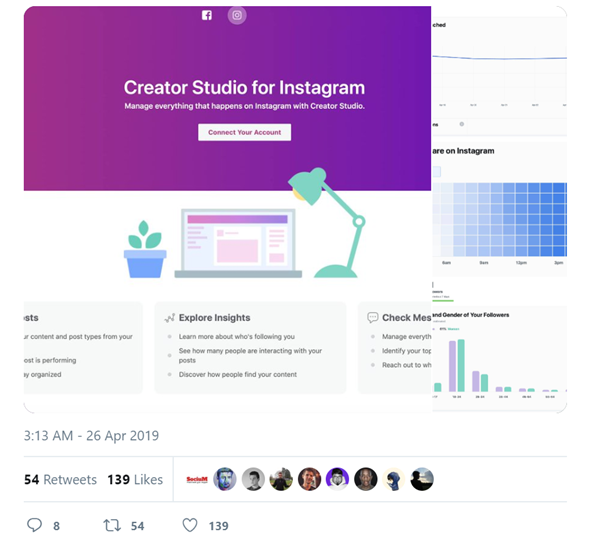
    Images via Matt Navarra on Twitter

    Social media industry consultant and commentator, Matt Navarra, recently tweeted an image of the Creator Studio’s Dashboard. Looking at the image, it looks like the new Instagram Creator Studio will be housed as a tab within Facebook’s Creator Studio dashboard. Note the toggle button for Instagram and Facebook are at the centre of the screen on top.

    What will the Instagram Creator Studio Offer?

    The dashboard will enable Instagram users to track and monitor several analytic metrics like – the activity status of their followers and their demographics – age, gender, etc. Additionally, the dashboard will also make it easy to monitor engagement stats of users. When the feature is rolled out, Instagram users will be able to access various metrics including – time periods when your audience is most active, engagement stats and other relevant demographic info.

    What will be the Impact of this Change to Users?

    It’s true that all these details are already available to Instagram Business users. However, the new Creator Studio for Instagram will make all the required details quickly accessible via a handy desktop app. Another major benefit of this new Creator Studio is that Instagram business account holders will be able to utilize a joint asset library for both their Facebook and Instagram accounts.

    When will the Creator Studio for Instagram be Available?

    Right now, it looks like this feature is being tested, so it’s not available for all Insta users. However, since this is a handy feature for Instagram creators, social media commentators believe that the app will be released globally soon.

    Once it’s made available, it will be a part of the Facebook Creator Dashboard, and you can easily access the Instagram Creator Studio app, by using the toggle button on top. However, to access this feature, you would have to have a connected Instagram account to your Facebook page.



  • Your Facebook News Feed might get a makeover with new font styles

    Your Facebook News Feed might get a makeover with new font styles

    Are you part of the social media crowd that still uses Facebook to post updates regularly or do you belong to the larger Facebook user group, who silently swipes through the news feed?

    Then, we’ve got some exciting news for you. Your news feed is about to look different.

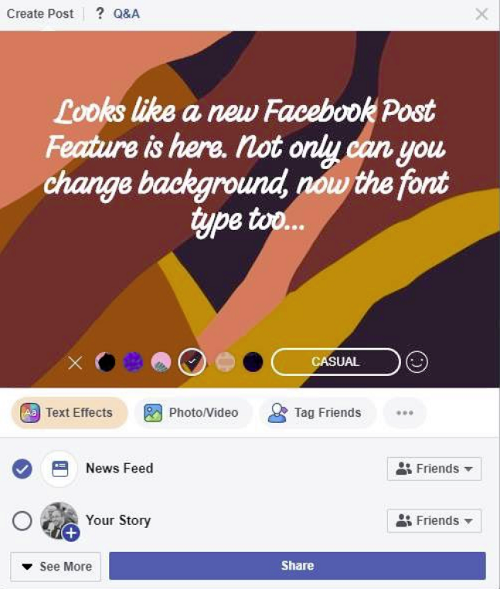
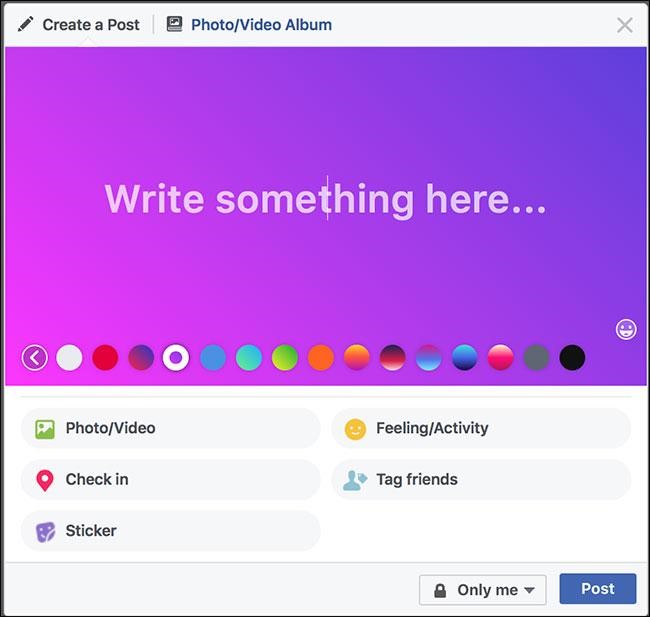
    According to reports by SocialMediaToday, Facebook is testing new font styles for posts on the news feed. Facebook users would now be able to use a range of text effects while updating posts on their news feed.

    As of now, Facebook allows users to change the background of the posts. So, instead of posting on the plain white background of the news feed, users were able to alter the background color, to make their posts stand out in the news feed.

    Image via Facebook

    Recent reports suggest that Facebook is working on providing font effects to its posts, which wasn’t available before.

    Image shared by social media industry commentator Matt Navarra.

    As you can see, when posting updates on Facebook from desktop, users now have the option for adding “Text Effects.”

    What are the available Text Effects?

    Currently, Facebook offers five text features to choose from. Rather than being able to select specific font styles, users would be able to choose only font effects. The available options include:

    • Casual
    • Headline
    • Clean
    • Simple
    • Fancy

    Is this update available on mobile?

    As of now, there is no information on whether Facebook plans to roll out this update to all users including mobile users. Right now, it looks like Facebook is just testing this feature, making it available only for a few users.

    What’s the impact of this new update?

    While font effects work well in stories (since it’s a highly visual focus tool), social media commentators are perplexed by the relevance of this new feature in the News Feed. And, since users can already add a colorful background to their posts, this latest update doesn’t provide users with much of a leap.

    And, there’s the chance that this update could make the news feed look messy. As of now, there is no official data on the number of people who make use of Facebook’s colored backgrounds. Apart from the occasional attention-grabbing post, most users don’t use colored backgrounds when they post on their news feed since it isn’t the default option.

    Currently, Facebook offers these font features only to users who create Facebook stories. It’s interesting to see this feature being extended to regular posts. Social media experts believe that Facebook is trying to get users to post more frequently by providing them with added features and to familiarise them with Facebook Stories, the tool which the company wants user attention to shift to.

    Experts caution that these latest updates can get old really quick and could put off users from the news feed if it becomes cluttered with different font styles and backgrounds.

    As of now, Facebook has not provided any official update on whether this feature will be available to all or only for desktop users.

  • YouTube Working on Two New Internal Metrics to Evaluate the Success of Videos on the Site

    YouTube Working on Two New Internal Metrics to Evaluate the Success of Videos on the Site

    YouTube, the world’s most popular video-sharing site is reportedly testing new internal metrics to evaluate the quality of videos on the network. According to a report by Bloomberg, YouTube is working on new ways to identify “quality” content on the site.

    Until now, YouTube solely relied on engagement criteria like the number of views, comments and likes for measuring the success of the video. It’s not yet known how YouTube will measure the content quality but reports state that YouTube is working on introducing two new metrics soon.

    Work on two new internal metrics for the last two years

    The Bloomberg report states that YouTube’ parent company, Google, has been working on two new internal metrics for the last two years. These metrics will be used to measure the performance of videos. One metric tracks the amount of time users spend on YouTube including the time spent on watching videos, as well as time spent on posting and reading comments.

    The other metric monitors ‘quality watch time.’ This will be used to identify the type of content the user consumes and provide similar content to suit their interest, rather than keeping them watching mindless, entertaining videos. While it’s reported that ‘quality watch time,’ is one of the two new metrics, YouTube is yet to figure out how this metric will work and how to convey the impact of this metric to millions of content creators, who upload videos on the site.

    The idea behind these two new metrics

    YouTube has recently been on the receiving end of several criticisms like making users addicted to video content and providing a socially corrosive tool. These new metrics are seen as a way for the platform to ward off criticism and provide the users with useful and productive videos. Furthermore, these metrics are deemed to help YouTube prevent the spread of noxious video content on the platform.

    Watch time – the reigning metric, as of now

    In 2012, YouTube rebuilt its business model around, ‘watch time.’ This was a measure of the time users spent watching a clip, instead of just clicking it open. This change was made to eliminate the rise of ‘clickbait,’ videos. However, critics of this metric state that measuring watch time was a poor choice, as this metric rewarded offensive videos.

    What does YouTube have to say about the new metrics?

    YouTube declined to reveal anything about the reported new internal metrics. However, a company spokeswoman stated that they used several metrics to evaluate the success of a video. Also, the company declined to state whether ‘watch time’ will be discontinued.

    It’s to be noted that several leaders at YouTube have repeatedly stated that they are working on new ways to punish people who upload offensive and nasty videos on the site. YouTube executives also have stated that they are looking for ways to reward content based on responsibility as a rubric.

    In a blog posted on YouTube in February, YouTube’s CEO, Susan Wojcicki stated that the actions of a few individuals are negatively impacting the entire content creation ecosystem, and they are looking to focus on responsible growth. These two metrics – tracking quality watch time and the total time spent on YouTube seem like an extension of company’s policy of responsible growth.

    How do these new metrics impact content creators?

    The new metrics will play a huge role in video recommendations, search result rankings, payments to video creators and the way YouTube runs ads on the site. An official date for the launch of these new metrics is not known yet.

  • Is Facebook Bringing Back Messenger into the Main App?

    Is Facebook Bringing Back Messenger into the Main App?

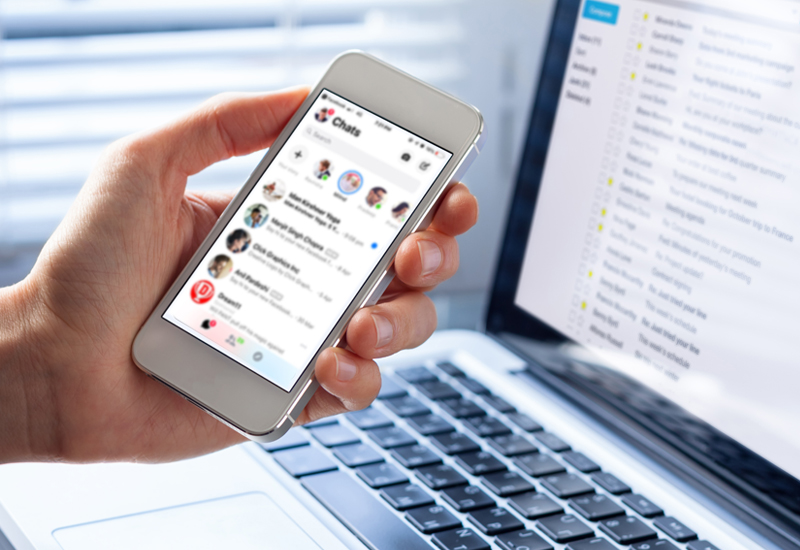
    Facebook’s decision to remove the Messenger app from the main Facebook app is one of the most criticised decision ever taken by the social media giant. Right now, the only way to message any of your Facebook friends is to download the standalone Messenger app from Google Play or the App Store and install it on your phone.

    Introduced in 2011, the Messenger app was integrated into the main Facebook platform until a few years back. In 2014, Facebook alienated the Messenger app, making billions of users download the app separately, to stay connected with their Facebook friends. While this provided Facebook, with a separate multi-million user platform, the move was largely criticised by both users and tech experts.

    Facebook may bring back Messenger into the main app

    Recently, researcher and tech-blogger, Jane Manchun Wong, who is famous for delving into the backend of popular apps, noticed a new feature within Facebook’s app that indicated that Facebook might have plans to integrate the Messenger with the main app.

    Wong recently tweeted on her Twitter account, that Facebook is likely working on an app redesign that it may launch in few months. She stated that the new redesign, instead of redirecting users to the Messenger app, opens the chat window within the main app in a separate section.

    However, Wong also noted that currently the chat feature within the app has only basic functionalities like sending and receiving messages. If you want to use any of the advanced features like sending photos, making a voice call or using reactions, then you must install the Messenger app. She also noted that these advanced features could be added before the redesign goes live.

    Facebook’s grand plan to unify all its apps

    Tech experts wonder whether bringing back the Messenger app into the Facebook app signals Facebook’s grand plan to unify all its chat and social apps including Messenger, Instagram, and WhatsApp.

    Earlier this year, The New York Times reported that Mark Zuckerberg, the Chief Executive of Facebook has plans to integrate all three major divisions of Facebook – WhatsApp, Messenger, and Instagram under the main Facebook app. While these three services will continue to operate as stand-alone apps, users could conveniently message across these platforms using the main Facebook app. When this happens, it will have major implications as it will allow more than 2.6 billion users to communicate across platforms for the first time.

    While this plan is in the works, the NY Times article reported that the unification wouldn’t happen until the end of this year or the beginning of the next year.

    What has Facebook got to say about the integration of the Messenger in the main app?

    In an interview to the Verge, a Facebook spokesperson stated that the company is testing new ways to enrich the messaging experience for users within the main Facebook app. However, Messenger continues to remain a stand-alone, feature-rich app connecting over a billion users’ monthly and they don’t have any additional details to share.

  • Facebook Retiring Relevance Score – 3 New Metrics to be introduced in April

    Facebook Retiring Relevance Score – 3 New Metrics to be introduced in April

    In a recent major updated by Facebook, the social media giant bid adieu to the all-powerful ad relevance score. It announced that it is shutting down the ad relevance score and six other ad metrics on April 30. The company announced via a blog post that the single ad relevance score would no longer be available after 30th April. It also mentioned that it would start rolling out three new metrics in place of the old relevance score.

    What’s The Ad Relevance Score?

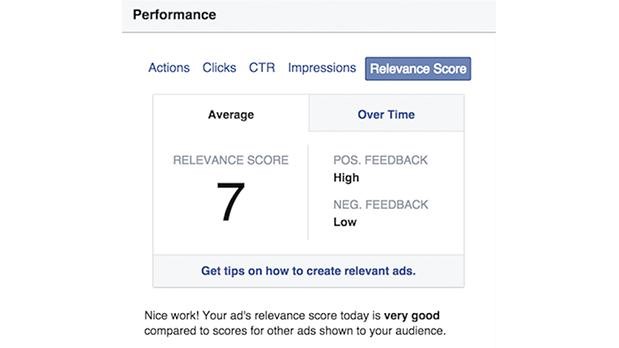
    Facebook introduced the ad relevance score in 2015 to help advertisers measure the effectiveness of their ad campaigns. Facebook explained at the time of introduction that the ad relevance score would be computed using the feedback received from the target audience. When an increased number of users engaged positively with the ad, the higher was the relevance score and vice versa.

    Image via Facebook

    The relevance score helped advertisers tailor their ad campaigns to deliver better performance and higher an ad’s relevance, the lower the cost for delivering it on Facebook.

    What’s Changing Now?

    Facebook recently explained that the relevance score is no longer sufficient to deliver actionable insight to advertisers. Hence, the social media giant plans to switch to more detailed metrics to evaluate ad performance.

    The company plans to roll out three brand new metrics in the coming weeks. They are:

    • Quality Ranking – This is a measure of the ad’s quality compared with similar ads that are targeting the same set of audience.
    • Engagement Rate Ranking – This is a measure of the ad’s expected engagement rates compared with similar ads targeting the same set of audience.
    • Conversion Rate Ranking – This is a measure of the ad’s expected conversion rates compared with similar ads targeting the same set of audience.

    Compared to the single metric used earlier, these three metrics will help advertisers get a clear idea of various elements of their ads like creativity, effective engagement and conversions. Thus, they can know which specific areas they should focus on boosting their ad performance.

    Facebook Also Retiring Other Less Used Ad Metrics

    Apart from the ad relevance score, Facebook is even shutting down other less used ad metrics and replacing them with better actionable options.

    Other Metrics that are Being Removed:

    • Offers Saved and Cost per Offers Saved

    This will be replaced with a “Post Saves” metric that will perform the work of both these metrics while offering you overall insights to monitor when your ads are saved.

    • Messaging Replies and Cost per Messaging Reply

    These two metrics will be replaced by “New Messaging Connections,” and “Messaging Conversations Started,” metrics correspondingly. You can still measure replies in your old conversations. However, the new metrics will offer more functionality for users interacting with your business for the first time, via a new messaging thread.

    • Mobile App Purchase ROAS and Web Purchase ROAS

    ROAS (Return on Ad Spends) will be aggregated into a single metric that will work for all channels – web, mobile and On-Facebook. The individual ROAS metrics will be replaced using a single holistic ROAS metric that will measure ROAS across channels.

    How Will These Changes Impact You?

    Facebook’s new metrics will help advertisers gain more insights for their ad performance campaigns. Advertisers can now build high-quality ad strategies to boost results and increase conversions.

  • LinkedIn stops mail export facility with the new privacy setting

    LinkedIn stops mail export facility with the new privacy setting

    Professional networking giant, LinkedIn has come up with a new change in privacy settings that is sure to cause a ripple among marketers and lead generation experts. Under this change, it now prevents others from exporting your email address from the site.

    While the move itself looks to protect data privacy and might win brownie points with connections and users already hooked on LinkedIn, the way it was rolled out left a lot to be desired. The move came without any forewarning or public announcement. It quietly rolled out the feature universally without a formal announcement.

    How it was discovered?

    A user had reported to TechCrunch that it is no longer possible to export email address of their connections. When confronted with the query, LinkedIn too corroborated this change. It said that this change was done to provide more control over who gets access to their email address details.

    What is the change?

    There is a minor yet impactful change to the user interface of the settings page now. Under the ‘Who can download your mail’ setting, you can set the option depending on the privacy needs you require on a personal level. This way users get the control on who can download their email id through a data export.

    Where is it found?

    Under ‘Settings & Privacy’ traverse to ‘Privacy’. You will see a small section  labelled “Who Can See My Email Address?” This leads to a message “Allow your connections to download your email [the actual address] in their data export?” along with an option to turn on or off the choice. The user can set the toggle to ‘No’ which prevents others from downloading your email address into their data export requests.

    What is the impact?

    Due to the almost zero knowledge about this update, not many are aware of the same. Users may not even know why they should toggle the choice to a ‘No’ rather than a ‘Yes’. The real reason is to protect the user’s privacy and stay in line with the digital business’s strict focus on protecting the user’s privacy.

    With this change the impact is subtle. Users can still view the email id when they visit the connection’s page. However, when they want to do a broad data export, LinkedIn will prevent the user’s id to be added to the data as he/ she may have marked a ‘no’ to “Allow your connections to download your email [the actual address] in their data export?”

    If this move was for a B2C site like Facebook, it would’ve made sense. But on LinkedIn, people establish connections and access mail ids to knowingly get in touch for professional and business reasons. Hence the move on LinkedIn doesn’t make much sense.

    Experts feel that though this might be a big win for LinkedIn in preventing data theft, it might herald a substantial loss for marketers who are interested in establishing a connection for promoting their products/ services. What is your take on this move by LinkedIn? Do write to us and let us know.

  • Facebook making small yet impactful changes to its platforms

    Facebook making small yet impactful changes to its platforms

    Facebook is making small yet definite changes as per the shifting business landscape and evolving customer preferences. These changes are visible across a multitude of applications like the Facebook site itself, Messenger, as well as Instagram.

    Today, we will look at some exciting updates happening on Facebook front.

    1. Stricter ad quality control

    Advertisers who used to get away with low ad quality in the past are going to find it difficult to continue with such ads. Facebook has enforced stricter policies around the quality and disruptive nature of the content served on ads. This page shows a list of do’s and don’ts for using ads that link to external landing pages or have deceptive ads. Advertisers who used to have a high ratio of ads versus the content displayed are also penalised.

    2. Messenger visual updates

    It has been reported that the Messenger application has gone through minor updates to its interface. In addition to stickers, gifs, and emojis, users can now also add ‘effects’ to their new message being composed on the interface. Currently, it is unclear how the ‘effects’ tab will actually work, but some days down the line, we can expect some tinkering to be done by the users and updates shared online about the same.

    3. Instagram Quick Reaction now available to all

    Facebook had rolled out the ‘Reactions’ feature to allow Facebook users to share your response to the content being shown in their feed. Some time back the same feature debuted on Instagram as ‘Quick Reactions’ and was made available for beta testing. It seems that now the feature has been rolled out to all users as of this week.

    4. Stories get a new look

    Facebook has taken a slew of steps in the past to ensure that the Stories section continues gaining traction among users. Even this month there was a small visual update. The People tab in the Messenger is now revamped to display a two-line presentation for each of the users shown in that tab. It will now mimic the current layout followed by the Chat tab inside the Messenger.

    5. Facebook job tools

    The social media giant has also rolled out an improved version of the Facebook Job tools. This helps employers to better find temp and seasonal hires for the upcoming rush Holiday season in the US. This will help them manage job applications and get a higher volume of response to job ads

    6. Facebook Archive Report

    US Facebook users who are interested in politics and issues of national importance now get their own central repository in the form of the Facebook Archive Report, a publicly available database. This will help them find information like the total number of ads and their advertising costs.

    These are some of the changes that are going to have a definite impact on the way users interact with the brand. It will also make life easier for advertisers who wish to promote their business online.

  • Facebook introduces improved Analytics Capabilities for its Pages and further expands it for Instagram

    Facebook introduces improved Analytics Capabilities for its Pages and further expands it for Instagram

    Facebook has launched a beta version to bolster its own site analytics capabilities. It has also rolled out Instagram analytics for marketers to test their ad efficacy. The phase-wise rollout will span many weeks and would be visible on the Facebook analytics dashboard.

    Let’s take a look at what are the new features introduced with these two updates.

    1 – Advanced analytics (Facebook Pages)

    The current analytics concentrated on individual posts that were seen or acted upon by the users. However, the new features seek to go beyond post-level analytics and dig deeper into insights. The beta phase analytics page is designed to provide a broader level of data into KPIs including the different actions taken by users on the page.

    Some of these actions consist of Post Impression, Page follow/unfollow, Page like/unlike, among others. By capturing these valuable events, marketers get a complete picture of what users did after they landed on the particular page. This empowers the page admin and allows decision makers to get richer insights.

    The admins can now utilise the new analytics and blend it with the already existing data on the dashboard to carry out a lot of actions. These include the ability to build new audience segments, monitor the conversions happening from the page, and track the path followed in the buyer journey. The blend of new analytics with the existing dashboard can also help compare audience demographics by factors like activity and channel.

    2 – Instagram analytics

    Instagram analytics is a more significant improvement over the existing Instagram Insights. This gives a broader picture of how the users interact with a brand. Want to see how the new Instagram analytics is a step ahead of the existing analytics/insight reporting? Check out these two new instances that show the immense value add made by Instagram account analytics

    • The marketers can track far more number of metrics needed to gauge the efficacy of the Instagram ad campaign. Some of the essential KPIs tracked include retention rates and lifetime value (LTV). Users who interact with your brand ads and content will be a part of the analytics reports.
    • The admins will also be able to build new audience segments to target them better. Admins can also check out the overlap among users who have utilised various channels to interact with Instagram. These may include app installs, social media visits, or website visits.

    What do these updates mean?

    These updates denote Facebook’s attempt to help the marketers track their ad campaigns better. The social media giant also wants advertisers to use native tools within the analytics ecosystem in order to measure the value provided by the ads served on the social media platform. With 80% of Instagram users following a brand, it is the perfect time for Facebook to integrate high-performance analytics on the platform.

    It will be some time before we see how the new features on Facebook analytics and Instagram analytics shape up the campaign efficacy of marketers. But the new additions do look to be a step in the right direction.

  • Facebook Unveils New Ad Attribution System

    Facebook Unveils New Ad Attribution System

    The Ads Manager section for Facebook Business helps marketers to determine the right efficacy and right source of ad views. If a user takes action on an ad, it becomes difficult to understand which point of source is responsible for the action taken. Be it impressions or link clicks; it is important to know which parts of the advertising displayed in Facebook actually drive the expected outcomes from the ad.

    In order to improve its efficacy, the social media giant has now launched a new Attribution Dashboard. Re-christened simply as Facebook Attribution, the new ad measurement tool aims to provide more insights to ensure precise attribution for better ROI on marketing campaigns.

    What is new?

    For marketers who wish to optimise their ads, the new Facebook Attribution tool can provide some effective ways to measure the performance.  Facebook enables smarter decision making with the help of insights delivered in exciting ways. For instance, it helps you gauge the efficacy of each element of the Facebook presence. When used with Pixel Data (an analytics tool that helps marketers in retargeting), the tool can provide accurate data about how each of these elements is working in influencing your digital business revenue.

    Marketers can also detect the exact source which is driving the conversion. This helps them provide a more concrete connection between the ad viewed and the outcomes achieved. They will also be highly interested in the concept of data-driven attribution modeling. This lets them track, monitor, and measure the approximate impact of your marketing campaigns across multiple social media sites like Instagram, Audience Network, and of course, Facebook.

    What does it mean for marketers?

    Measuring ROI from social media campaigns has been tricky most of the times, especially when there can be multiple attributions to an action undertaken by a social media user. It is difficult to correlate which action translates to what kind of concrete action away from the digital landscape. So if you are looking for social media attribution for an in-store conversion, it is highly complex if not entirely impossible. In this scenario, it will be safe to say that Facebook Attribution can be of help in tracking how social media drives specific outcomes for businesses.

    For marketers, there is still a long way to go in terms of harnessing best results from the new reports and analytics presented by the Facebook Attribution tool. It is suggested to do some playing around with the tool to understand it in depth before assessing how useful it is for your specific use case in marketing and advertising.

    Facebook attribution comes in extremely handy for social ROI proof. So marketers can better look at the data points that impact the outcomes from specific ad campaigns. There is still a long way to go before it can accurately correlate online triggers to offline actions. But the fact remains that as compared to its earlier avatar, Facebook Attribution does provide much better clarity on the impacting factors around Facebook advertising.

  • Facebook Renames Camera Effects to ‘Spark AR’

    Facebook Renames Camera Effects to ‘Spark AR’

    Looking at the growing influence of AR in every sphere of life and business, Facebook is coming up with new ways to reignite the efficacy of its existing applications. Towards this, it has now renamed its Camera Effects to ‘Spark AR’.

    The social media giant has teased this application at its annual F8 conference in April 2017. This week saw the full-fledged application upgrade to bring in the futuristic capabilities provided by immersive AR experiences.

    What are the changes we can expect?

    Facebook is no longer content with animations, masks, and playful effects delivered by the Camera Effects app. To expand to the wider AR domain, the renaming will be the first of many updates that the app will see in the coming few weeks. Even the community name has been updated from AR Studio to Spark AR Studio.

    Additionally, it has brought Spark AR to be used on other platforms like Instagram as well.

    Spark AR and Instagram

    Facebook’s think-tank endeavours to extend the usage of the app features beyond its own platform. Hence, it now provides the Spark AR’s content sharing ability to other platforms like Instagram as well. This way, Spark AR on Instagram will now go mainstream and not remain in the hands of the elite few like Kylie Jenner, NBA, or Gucci.

    Participants in a wider beta testing will be able to utilise Spark AR Studio in order to devise and deploy interactive AR based experiences and share these on Instream to their users. Developers can use this link for submitting their applications for beta testing.

    Why the name change matters?

    Earlier, the Facebook Camera Effects was available solely on one platform, i.e. on Facebook itself. Hence the name at that time made sense. Also, its scope of offerings was limited to minor animations and masks to be used by individual users in their chats, messages, or posts. Both these aspects about the application underwent a radical change since the first teaser about the new upgrade was shown at the 2017 F8 conference. As a part of the latest updates, the application delivers value not just for the Facebook site. It has greatly expanded its scope to allow Instagram users as well. Hence in its new avatar, ‘Facebook Camera Effects’ wouldn’t do justice to the broader role the app has now taken on. Thus the name change makes sense.

    There is one more reason why the name change would be apt. All individual components that are a part of the ‘Facebook Camera Effects’ ecosystem too will now have a common name to depict its association with this ecosystem. Hence, the existing ‘AR Studio’ too is now rechristened to ‘Spark AR Studio’.

    Interestingly, there is a third reason that justifies the name change which is equally imperative. Facebook is looking to bring in the immense business value provided by the AR domain. But tying it up with the existing ‘Facebook Camera Effects’ wouldn’t have given users an idea about the extended immersive capabilities now possible with the app. Hence, the new name ‘Spark AR’ seems to fit in nicely with the new possibilities presented by the application.

    Read all about the official announcement from FB here.