LS Staging

Category: Search Engine Optimization (SEO)

  • How Brands Can Benefit From Digital Sales Transformation

    How Brands Can Benefit From Digital Sales Transformation

    Just like selling procedures, buying processes have undergone massive transformations, thanks to tech innovations and social selling. These approaches play a pivotal part in influencing purchase behavior of consumers.

    Whether you buy an everyday essential or medical equipment, digitised sales processes have completely transformed the way you plan your purchase. Quite naturally, sales officials, marketers, and product developers have to stay abreast of these emerging technologies. Before we dive deep into the nuances, let’s track the significant changes in this regard!

    Noticeable Transformations

    Digital selling is at an all-time high nowadays. Look around, and you will find a majority of buyers making smart purchase decisions. Purchasers are no longer unaware of the current trends, technologies, and product availability. Everyone can make informed moves depending on these crucial factors:

    • Peer reviews
    • Social recommendations
    • Product comparisons
    • Effective and targeted content marketing

    Buyers have come a long way when it comes to taking information-backed purchase actions. It’s right here that sales people need to take the initiative and embrace digital sales transformation. Here’s how to make the most of this emerging technology!

    Systematic approaches

    Cold calls, one-to-one marketing, and unidirectional mails are no longer enough. You have to strengthen the marketing arsenal with social selling strategies. Digitized sales processes are the perfect remedies, but you need to adopt them systematically. Here’s how you can go about it.

    1. Strengthen your brand

    Branding is one of the most impactful digital sales approaches. If you are planning to embrace social selling strategies, it’s highly imperative to build a remarkable presence on popular social media channels. Leave positive and indelible impressions on the minds of your target consumers through following ways:

    • Elaborate on your brand and services
    • Share an interesting story
    • Highlight achievements, accolades, certifications, and rewards thus building social proofs
    1. Content is the king

    High-quality, engaging, and compelling content has always been the need of the hour. However, the art of creating, developing, and publishing them has undergone huge metamorphosis. You don’t need to create lengthy and detailed content anymore. Powerful, dynamic, and high-quality content will serve the purpose. Quality has replaced ‘quantity’, and that’s a significant change worth considering.

    1. Building targeted and reliable networks

    Reaching out to target audience becomes easier when your venture is present in a robust network. Building impressive and remarkable social networks are of paramount significance, as it gives your business the maximum outreach. Your business profile in Facebook or LinkedIn will bring huge benefits for the venture. You will not only capture leads but also convert them into prospects. Here are some information fields you need to fill up:

    • Experience
    • Functionality
    • Performance
    • Company Type
    • Years served
    1. Leverage social selling

    Once you have a remarkable and captivating social presence, you will surely want to use it to your business’ advantage. Leverage social selling by introducing your services and products to a group of like-minded buyers. Or else, you can also work out partnerships with like-minded business ventures.

    1. Nurturing the network

    Personalized marketing approaches and customised advertising is the key to creating a strong network. It’s not just enough to create it; you must develop and nurture it at regular intervals.

    Signing off

    These important tips will surely help you embrace digital sales transformation in a bigger and better way.

  • Did You Know? Google Ranks the Videos Differently than YouTube.

    Did You Know? Google Ranks the Videos Differently than YouTube.

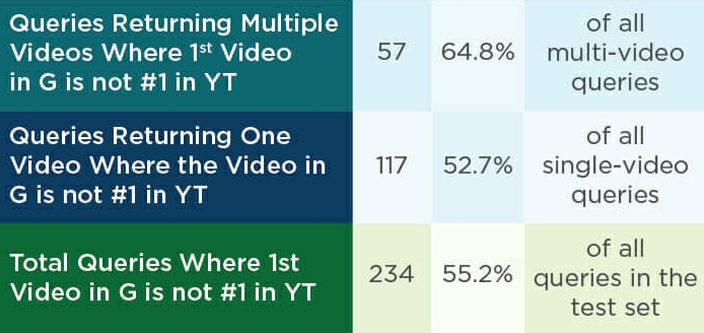
    Have you ever noticed that while searching something online, Google shows a certain kind of YouTube videos in its search results, however, if you use the search term on YouTube, you would get different search results. This happens because according to a report from the Stone Temple Consulting, Google and YouTube rank the videos differently. As a matter of fact, the videos that you would yield on Google and YouTube search results for any given keyword would be different 56.8%.

    Eric Enge from Stone Temple Consulting conducted a thorough research on the subject and some of the findings that he has pointed out has been outright startling. For a few the study may be a revelation in knowing how the two biggest companies function differently. Some of the key findings by Eric Enge is explained the image below:

    Apart from discovering that nearly more than 50% of the time the Google search results show different YouTube videos that has different ranking on YouTube, Enge also figured out that even when Google showed up only one video, more than 55% of the time, the same video would not show up first on YouTube for the same search query. In his hypothesis, Enge suggested that the ranking of the videos is different because the different websites have different goals that they have their own KPIs.

    Whilst the search engine giant, Google tires to provide the users the most relevant content for their search queries, YouTube has a different job to do, it is more focused on providing the best entertainment. The study conducted by Enge points out the approach of YouTube and Google in analyzing the videos as well as the differences in their ranking systems.

    If you are a business owner and are looking for tips to get higher rankings for your videos on both Youtube and Google, the following optimization tips will greatly help you.

    Optimization checklist for YouTube:

    The most fundamental thing to do for optimizing your video on YouTube is to do a little bit of research on the keyword; you would need to determine the keyword that is related to your video and yet the ones that are used the most by the users. Make sure that the keywords you choose are relevant to your business. You can use the various keyword research tools to identify the most popularly used keywords and at the time, it would be make sense to type a few keywords on the YouTube search bar and see the autocomplete suggested terms.

    Another important thing to consider is to check the top videos that appear on the search result for the keywords that you want to target. If you are a small business owner and if the top ranked videos have a large number of views and also have many subscribers, then the keyword might be very competitive and it would be difficult to get high ranking for your video. Once you have created, the next step would be:

    • Provide a good descriptive file name for the video
    • Provide a simple yet compelling title
    • Choose a set of related keywords that have high rankings. It is best advised to use long tail keywords
    • Write good, descriptive description of what the video is about; the description should have minimum 200 words
    • Place the video in the appropriate category

    Optimization checklist for Google

    All the fundamental things that are used for optimizing videos for YouTube like providing a good description, having a good title and a description for the video are also applicable for optimization on Google. However, the keyword research process for Google is different. Since Google is a broad-based platform, its video usage is quite limited as compared to YouTube. Another important aspect optimizing videos on Google is choosing the right topic. Since Google is used to search a wide range of things, it would be best advised to do a bit of research to figure out the areas that have the most potential; there are certain areas where having one or more than one videos, the chances of getting your video ranked on the first page will be higher.

    Some of the most popular areas where your videos can get higher ranking are:

    • Informational videos
    • Reviews
    • Tutorials
    • How to do videos
    • Entertainment

    From the keyword research perspective, it is imperative that you target only the keywords that have a good search volume and also are relevant to your business. Another important thing to consider for getting high rankings for your videos is to create videos to suit your business goals. For instance, if you want to build a strong reputation about your business, then having some information and tutorial kind of videos would be the best approach. This would help you create an impression that you are an expert in the field and it would help you build trust among the targeted audience.

    To conclude, the ranking algorithm of Google and YouTube is different and the returns on your investment will greatly depend on the strategy you adopt for both the platform and how well you execute them.

  • Mobile Page Speed – Importance & New Industry Benchmarks

    Mobile Page Speed – Importance & New Industry Benchmarks

    Why should you care about Mobile Page Speed?

    If you are wondering how to impress the Google crawlers, first think of the user experience on your site. One of the most important factors for a better user experience is your page speed. With more than half of the searches now on mobile devices, it is imperative to work on your mobile page speeds.
    An old yet very informative post on Kissmetrics stated the following:
    • 40% users abandon a site that takes more than three seconds to load
    • A one second delay in page response time can reduce your conversions by 7%
    • If a site makes $100,000 every day, one second delay in your page load time can potentially cost $2.5 million loss in sales every year
    There are several useful articles on ‘think with Google’ that helps us understanding the importance of Mobile Page Speed and how to create a better mobile user experience.
    While users expect sites to deliver fast and frictionless mobile experiences, the reality is that most of the mobile sites don’t live up to the expectations. We put most of our efforts to manage key engagement metrics (bounce rate, average time spent on the site, etc), we often ignore the mobile experience. Not to forget, searches on mobile devices have toppled desktop searches. If not now, then never! It’s high time we start concentrating equally on improving the mobile site experience.
    One of the earlier researches from Google in 2016 stated the following facts. Although the research could be limited to US audiences, these facts are good enough for us to believe that mobile is future:-
    • 30% of all the online shopping purchases happen on mobile devices
    • 40% users leave a page that takes more than three seconds to load
    • 79% shoppers who are dissatisfied with a site’s performance say they are less likely to purchase from the same site again
    According to a recent post from Google:
    • 53% users leave a page that takes more than three seconds to load – implies the dissatisfaction level has increased from 40% to 53%
    • Even though mobile searches have toppled the desktop searches, mobile conversion rates are lower than desktop – reasons could be, users still prefer to purchase on desktop and it can also be due to the slow loading mobile pages. Speed equals revenue!
    • 70% of the pages analysed by Google, the visual content above the fold took almost seven seconds to load. And it took around 10 seconds to load the full visual on the page – implies most of the mobile pages are full of unwanted elements that take ages to load.

    What are the new Industry Benchmarks for Mobile Page Speed?

    Source : Think With Google
    Google’s research had many other important findings:
    • 70% of the mobile pages were over 1MB in size
    • 36% were over 2MB
    • 12% were over 4MB
    One should note that 1.49MB takes around seven seconds to load using a fast 3G connection. So it’s pretty clear how important it is for you to have fast loading mobile pages!
    Here is a link that can guide you on how to improve your mobile page speed:
    With Google’s mobile-first index in the reckoning, it’s a must that you start optimising your sites for a better mobile user experience. A stitch in time saves nine!


  • Ad Viewability – Importance over Impressions and other Interesting Factors

    Ad Viewability – Importance over Impressions and other Interesting Factors

    What is Viewability in Digital Advertising?

    If I have to put this in simplest of the terms, viewability is an online marketing metric that tracks only those impressions that can actually be seen by the users.

    How to measure Display Ad Viewability?

    A display ad is considered viewable when 50% of an ad’s pixels are visible on a screen for a minimum of one second.

    Source: viewability.withgoogle.com

    How to measure Video Ad Viewability?

    A video ad is considered viewabale when atleast 50% of the ad’s pixels are visible on a screen for atleast two consecutive seconds.

    Why is Ad Viewability more important than Impressions?

    An ad might be served but not necessarily viewed by the user. Only a viewable ad can have an impact on user’s mind, change perceptions or build a brand’s trust. Hence digital advertisers and publishers are both giving more importance to a viewable ad rather than a served impression.

    What are some important factors related to Display and Video Viewability?

    To better understand the state of display and video viewability, Google conducted a study of their display and video advertising platforms such as Doubleclick, Youtube, etc.

    They have beautifully presented five top factors related to Display and Video viewability here:

    I have tried to list down some of the interesting factors here:

    Display Ad viewability:

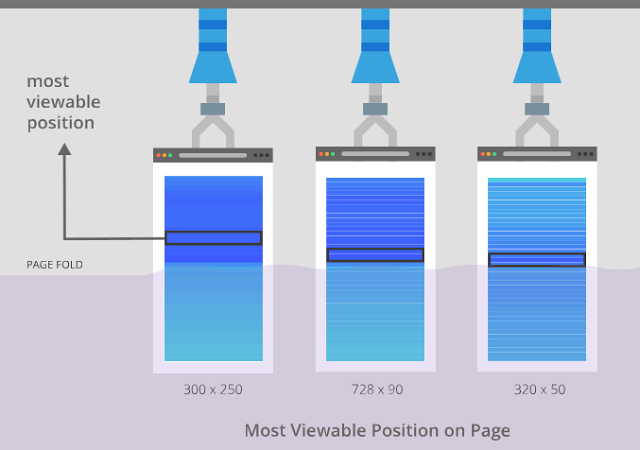
    • The most viewable position is right above the fold and not at the top of the page
    Source: www.thinkwithgoogle.com
    • Vertical ad units perform better than the horizontal ad units in terms of viewability. This is simply because the vertical ads stay on screen longer with the users movement around the page
    • Average above the fold viewability is 68% compared to 40% below the fold
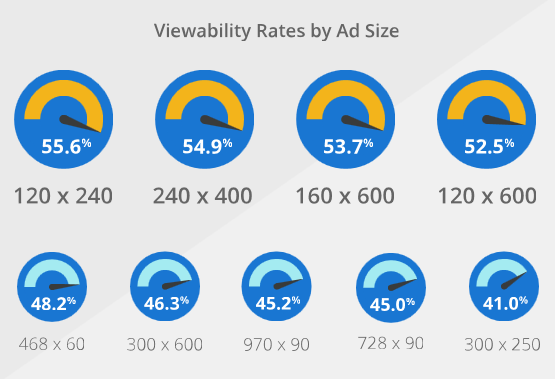
    • The most popular viewability rates by ad sizes are mentioned below:
    Source: www.thinkwithgoogle.com

    Video Ad viewability:

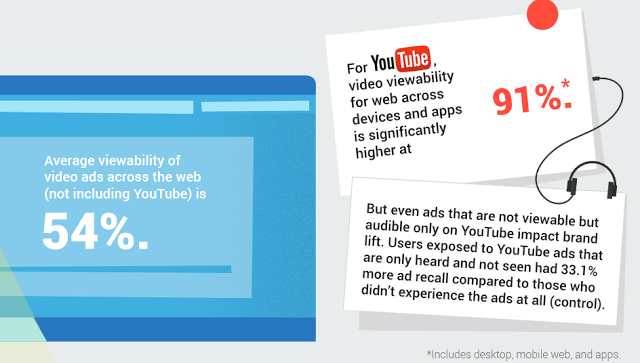
    • Average viewability of video ads across the web (excluding Youtube) is 54%. It goes upto 91% for Youtube
    Source: think.storage.googleapis.com
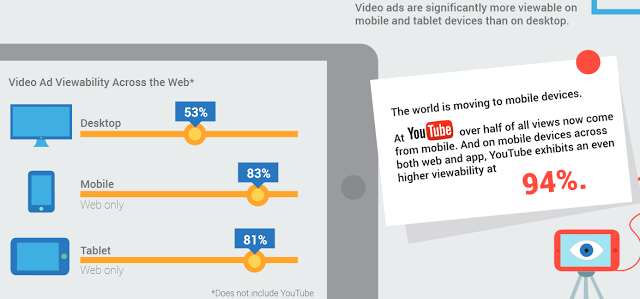
    • Video ads are more viewable on mobile and tablet devices than on desktop
    Source: think.storage.googleapis.com
    • There are several video ads that are not viewable. 76% of those were never on screen – they were on a background tab or not on the screen at all! 24% of the non-viewable ads were scrolled off the screen or abandoned in fewer than two seconds
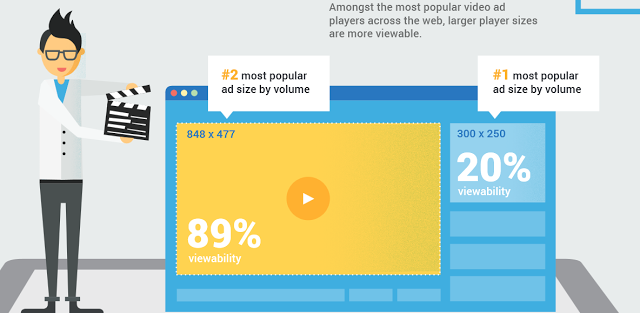
    • 350 X 250 video ad size is most popular by volume but offers only 20% viewability. 848 X 477 is the second most popular size and it offers a huge improvement of 89% viewability


    Source: think.storage.googleapis.com

    An important note for the Adsense Publishers:

    Adsense publishers can make use of above mentioned factors to improve the ad viewability on their sites. Just make a note of one thing. When we talk about first fold of the page that provides more ad viewability, ads placed just above the fold of a page have higher viewability that those at the top of the page. But you need to follow the Adsense ad placement policies also. You can’t place a 300 X 250 ad unit above the fold on mobile pages. So go for 320 X 100 ad units above the fold for mobile pages. You can place larger ad sizes below the fold.

  • Ad balance from Google Adsense – Know more about it

    Ad balance from Google Adsense – Know more about it

    Google is constantly striving and evolving to provide better search results in the organic listings. Google is also emphasizing the importance of better content and fast loading site pages. Ultimately all these efforts lead to better user experience. Google also tries to add related features to its products.

    Google Adsense is one such product that has constantly evolved in terms of bringing updates in the direction of better user experience. Google’s official blog for Adsense related information, Inside Adsense; posted an update on 13th January 2017 about Ad Balance.

    Ad balance is a feature introduced to give more controls to publishers to provide better ads experience to site visitors. If you frequently visit the new interface of your Adsense account, you might have observed a new subtab named Ad balance under My ads.

    It is very important to find the right balance between the user experience on your site and number of ads you show. Ad balance helps you adjust the volume of ads which can lead to a better user engagement with your content.
    One need to note that this feature would help you showcase your best performing ads but that could also result in a minimal drop in earnings. But if you see the larger picture, with a better user experience, one could stay longer on your site and engage more with your content. This in turn can lead to better earnings in the long run.
    Some other important factors you need to note here:
    • If you have already enabled the Show fewer ads lab, you would be automatically moved to Ad balance feature
    • When ads are removed, the ad unit will show as blank
    Now let’s see how the feature looks like:
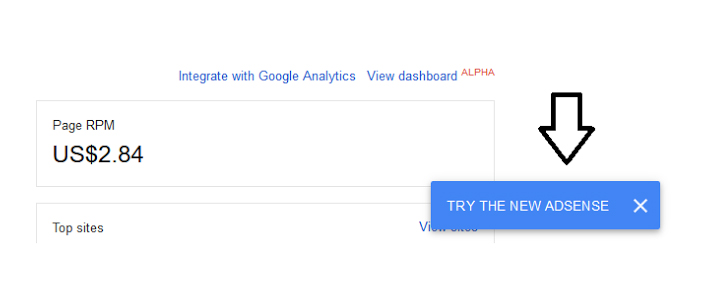
    If you haven’t yet moved to the new Adsense interface, just click on this option that would appear on your old Adsense interface.

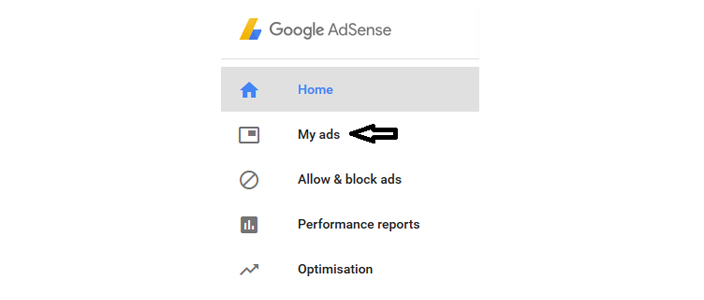
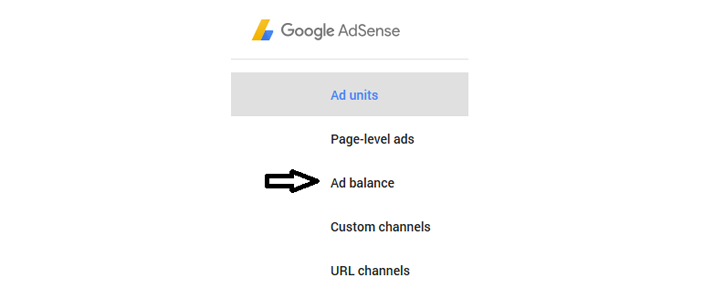
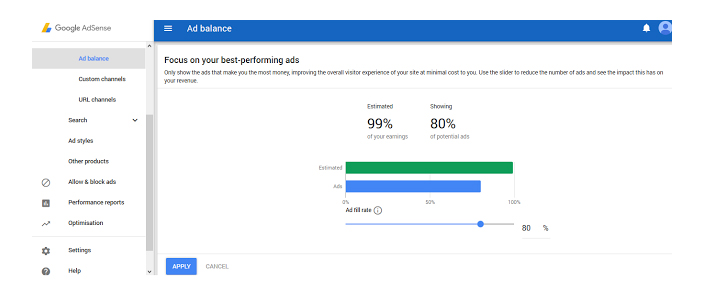
    Click on My Ads under the menu of your new Adsense interface. Then click on Ad balance subtab. You would see a slider for Ad fill rate. This determines how often the ad space on your site is filled with ads.

    For example, you would want to allow 80% potential ads on your site instead of 100%. Use the slider to set the Ad fill rate to 80%. This would fill your page with highest paying ads for up to 80% of the time.
    Worth trying out. If it would add value to the overall user experience, it should ideally help you increase your Adsense revenue. But please note, Google doesn’t guarantee any specific results. Your Adsense revenue depends on various other factors that can include your content, ad placements, site layout, etc.
    The post originally appeared here.
  • What is Crawl Budget and How to Optimise it?

    What is Crawl Budget and How to Optimise it?

    In a recent post on Google Webmaster Central Blog, Gary Illyes tried to explain What Crawl Budget Means to Googlebots. Our SEO Head, Tejas Thakkar, shares what you need to know about crawl budget and ways to optimise it.
    What is Crawl Budget?

    Crawl Budget is a good old concept often overlooked by the search engine optimisation experts. While we all keep pondering on how good the title tags need to be or how to optimise the images; we often forget about how easy or difficult the crawler journey would be on our site?

    Search engine crawlers, spiders or bots are basically programs that visit your site continuously, collect information and create a search engine index. While we emphasise on the user friendliness of our sites, we overlook the importance to make a crawler’s journey amicable on our site.

    In a recent post on Google Webmaster Central Blog, Gary Illyes tried to explain What Crawl Budget Means to Googlebots. And this is how the post simply defines Crawl Budget – The number of URLs Googlebot can and wants to crawl on your site.

    Understanding Crawl Budget further

    Although Google hasn’t mentioned how to quantify Crawl Budget, just to get a rough estimate we can assume the following:-

    On an average, if Googlebot crawls 100 pages every day on my site, the monthly crawl budget should be 100*30 = 3000.

    Determine Crawl Budget using Google Search Console

    Sign into your Google Search Console account, visit the Crawl Stats subtab under Crawl. This is what you would see:-
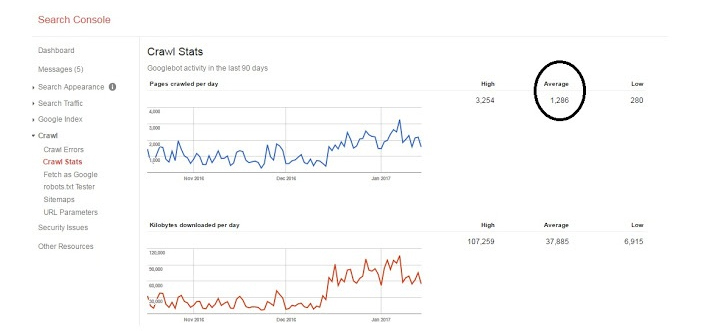
    In this example, the average number of pages crawled in last 90 days by Googlebot were 1,286. So monthly crawl budget comes out to be 1,286*30 = 38,580.

    Who should prioritize crawl budget?

    • If your new pages are being crawled the same day, you don’t need to worry much about the crawl budget
    • If your site has fewer than a few thousand pages, ideally your site would be crawled efficiently. Crawl budget isn’t a cause of concern here
    • You should certainly pay a lot of attention to crawl budget if your site is huge in size where you need to prioritize important pages. Or you own a site that auto generates pages with URL parameters that doesn’t change the content.

    Crawl rate limit and Crawl demand

    Googlebot crawls the websites to gather information and create a search engine index. Google takes cares that the overall crawling process shouldn’t hamper the experience of users that visit the site. Hence it has to set a limit on how often and how long should it crawl a site. This is called Crawl rate limit.

    Gary Illyes included couple of important factors in his post that could affect the crawl rate. They are as follows:

    • Crawl health – The crawl rate can go high if the site responds quickly. The rate may go down if the site is slow or throws server errors.
    • Crawl limit set in Search Console – The crawl rate can be affected if the site owners have modified the crawl rate in Search Console. Note new crawl rate that you set in the Search Console is valid for 90 days.

    The crawl rate can also depend on the demand to crawl certain pages of your site. At times, even when the crawl limit isn’t reached, Googlebot would be disinterested in crawling your pages if there is no demand from indexing. Crawl demand can be determined from the following three factors:-

    • Site/page popularity – Googlebots prefer to crawl popular pages more. This is an effort to keep those pages fresh in the Google index.
    • Staleness – Googlebots prefer to prevent pages from becoming stale in the index.
    • Site-wide events – In cases where your site undergoes a revamp or moves to another domain, bots would prefer to recrawl and reindex the site pages to keep its index fresh.

    Why to optimise your Crawl Budget?

    Now we understand what exactly is a crawl budget. And probably we all have a certain crawl budget assigned to our site which in turn depends on numerous factors  such as the site size, site health, authority, popularity and many more to name.

    How about a scenario where Googlebots are absolutely not interested in crawling your site even if they haven’t reached the crawl rate limit? Probably because your site is technically unhealthy! Loads of crawl errors, duplicate content, dynamically generated URLs and what not!

    Now that’s a tough situation!

    If you really want Google to discover your important content and that too quite frequently, you need to optimise the crawl budget of your site. Logically this is possible if you improve the crawl rate limit and crawl demand for your site.

    To prove this point let’s revisit the definition of crawl budget:- The number of URLs Googlebot can and wants to crawl on your site.

    This can very well mean – Googlebots wanted to crawl say 1000 pages but due to your unhealthy website, they could just crawl 700 live pages. Rest all lead to errors? Or they could just crawl 200 important pages and rest all were duplicate/dynamically generated versions of those 200 pages?

    You wasted a large chunk of your website’s crawl budget due to those error pages or dynamically generated duplicate pages on your site.

    How to optimise your Crawl Budget?

    Now that you know why it is important to optimise the crawl budget, let’s learn how to optimise the crawl budget.

    I have tried to list down as many factors as possible that can improve your crawl budget.

    1) Make your important pages accessible to Google

    Even if you have loads of pages on your site, you would certainly have certain pages that you consider important. For an e-commerce sites, the important pages have to be the home page, category page, sub-category pages, product pages, etc. Just make sure none of your important pages are blocked for Googlebots. Not to forget, you should also allow Googlebots to crawl the CSS and Javascript files. This helps the bots to render your pages correctly.

    2) Block pages that are not important

    Your site can have pages with duplicate content, very old news articles, dynamically generated pages that add no value to the site, etc. Make sure you block such pages in robots file. Preferably add a noindex tag to such pages so that they aren’t a part of the Google index.

    I have seen several instances where sites are developed on test domains that aren’t blocked for Google. The bots crawl and index such test sites. Once the actual site is launched, the test domain leads to duplicate content. Our motive should be to block pages that are not important so that Googlebots can assign crawl budget to the right pages!

    3) Avoid redirect chains

    Long redirect chains can create two issues. First, Googlebots might drop off before they reach your destination URL. This could lead to suboptimal rankings. Second, for every redirect the bot follows; it wastes a bit of your crawl budget.

    So unless and until it is not very important, avoid long redirect chains on your site.

    4) Broken links

    Broken links lead bots and users to a page that is of no use. This is another way to waste a unit of your crawl budget. Avoid broken links.

    5) Update your sitemaps regularly

    There is a high probability that you leave behind URLs in the sitemap that are no longer important or no longer exist on the site. Googlebots can use your sitemap as a medium to crawl your site pages. Make it a habit to remove the unimportant pages from your sitemap and don’t forget to add the new and important pages.

    Additionally you can add your sitemap link to the robots.txt file. Since Googlebots prefer to visit the robots file first, they would come across your sitemap link and crawl all the important pages from there.

    6) Manage parameters on dynamic URLs

    Your site platform or CMS could be generating a lot of dynamic pages. This could potentially lead to duplicate content and harm your site performance in search engines. This could also waste more bit of your crawl budget.

    If parameters added to your URLs don’t influence the content of the pages; inform Googlebots about this by adding these parameters in your Webmaster Tools account (Google Search Console). You can find the subtab URL Parameters under Crawl in your search console.
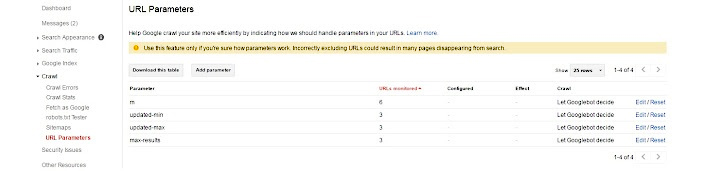
    If parameters added to your URLs don’t influence the content of the pages; inform Googlebots about this by adding these parameters in your Webmaster Tools account (Google Search Console). You can find the subtab URL Parameters under Crawl in your search console.

    7) Manage your site structure and internal links well

    Plan your website structure well. Have a well set hierarchy that not only helps users freely navigate through your site but also provides an ease of navigation to the bots. Try to keep important pages not more than three clicks away from any page. Add most important pages/categories/sub-categories in your navigation menu.

    Internal links might not be a very big factor here, but it is an integral part of a good site hygiene. It can also work in favour of bots to follow the internal links and lead to important pages you wish to get crawled.

    8) Pay attention to Crawl Errors section in Search Console

    As mentioned in Gary’s post, one should keep a constant check on the crawl errors found in the search console. Try to fix as many errors as possible (that includes server errors, soft 404, not found, etc). This would help bots avoid wasting every single bit of the crawl budget on such error pages.

    9) Good and Fresh content

    This is a must. Not only for a better crawl budget but also for your overall site performance. Avoid low quality and spam content. That’s not going to help. Bots would love to crawl your site more frequently if you add more and more fresh and valuable content on your site. After all it’s bots’ duty to keep the Google index fresh!

    10) Build ‘good’ external links

    We all know content and links are the top two factors to rank our sites well. How would external links contribute to a better crawl budget? It’s pretty simple. Logically more links you own from authority sites, more would be the chances of crawlers revisiting your site. Few experiments carried out by industry experts has proved that there is a strong correlation between the number of external links and number of bot visits to your site.

    11) Work on your site speed

    Users always prefer to visit fast loading websites. Similarly a speedy site improves the crawling rate. Make use of some important Google tools to regularly determine the speed of your site pages and recommendations on how to make them load faster.

    https://developers.google.com/speed/pagespeed/insights/

    https://testmysite.thinkwithgoogle.com/

    Once you take care of all these factors you can certainly expect a happy Googlebot.

    This post was originally published here .
     

  • Understanding SSL Certificates to Secure Your Website

    SSL certificate, the abbreviated form of Secure Sockets Layer Certificate is an online identification proof for businesses. This certificate guarantees the safety and security of your websites to your online visitors besides promising them to protect their sensitive information, such as username, passwords, or credit card numbers and so on. Once you get an SSL certificate, you can encrypt and secure all communication that takes place between your customers and your website.

    You can easily find out if a particular website is protected by SSL certificate. All you need to do is look out for the green padlock icon on your address bar, and ensure that the URL of the site is displayed as “https://” instead of “http”. However, some websites use more advanced versions of SSL certificates that display a green bar along with the name of the company on the address bar of the browser.

    SSL certificates make use of a private and public key that work unanimously to set up an encrypted connection. The greatest advantages of using an SSL certificate are as follows—

    • You can avail encrypted security while transferring sensitive data online without the chance of falling victim to online hackers.
    • With an SSL certificate, you can easily win the trust of your customers by securing their personal data and protecting them from phishing scams.
    • Google also rewards websites using HTTPS by slightly boosting their rank on its search engine. Thus, an SSL certificate can help you boost the SEO of your business.

    How Does an SSL Certificate Work?

    • As soon as you visit an SSL-enabled website, the device used by you gets connected to the web server to authenticate the SSL certificate with the certifying authority. Once the verification is done, the device forms a preliminary connection with the web server to find out the type of encryption they will be using; this process is called a ‘handshake’.
    • After the initiation of the handshake, your browser uses the public key to establish a connection with encrypted data or provides the user with a warning about the invalidity of the SSL certificate. On receiving encrypted data using the public key, the data is decrypted by the server using the private key that is accessible only to the specific server. Now a session key is generated and sent the browser so as to create a private connection between the server and the browser.

    SSL certificates are of three types. You should choose the right type of certificate depending on the level of security required by your website. Now let’s elucidate the different SSL certificate types that you can opt for your business.

    • Low Assurance SSL Certificate: Also, known as a domain-validated certificate, this type of SSL certificate is suitable for internal systems. It uses computerized validation process to certify that your domain name is registered. The verification process can be validated by the webmaster in two ways—
      • By confirming via email; or
      • By configuring a DNS record for the website.
    • High Assurance Certificate: Also known as an organisation-validated certificate, it requires human agents for verifying the ownership of the domain including other relevant information pertaining to the organisation, such as name, location, country, etc. High Assurance SSL certificate offers medium protection and is recommended for all types of businesses.
    • Extended Validation (EV) Certificate: This certificate is ideal for all e-commerce businesses as it provides high protection. As the name suggests, Extended Validation SSL certificate calls for the most scrupulous verification procedure. EV certificate takes all measures to make sure that you own an authorised business besides verifying all relevant business information to establish the proof of domain ownership. The best advantage of EV Certificate is that it displays a green padlock on the browser bar of your website to guarantee secured transaction to your consumers. Moreover, EV SSL Certificate is far superior to standard SSL certificates as the latter do not signify that your website is being run by a legitimate business.

    The processing time for all the three types of SSL certificates could take anywhere from a couple of minutes to a few hours. SSL certificates are issued by reliable certifying authorities like Symantec, GeoTrust, GlobalSign, etc., that carry out different levels of security inspection based on the type of SSL certificate purchased by you. Moreover, you can also opt for third-party SSL providers which offer the same level of security at an affordable price.

    Avoid Self-Signed Certificates

    It is advisable not to opt for self-signed or free SSL certificates.  Websites that are secured with a free SSL certificate display an error text when a user visits such websites. While some visitors are bold enough to proceed to such sites by clicking “I understand the risks”, a majority of visitors would prefer leaving the site by clicking “Get me out of here”.

    Free SSL certificates are not virtually regulated. If your website is hacked, it may still appear safe and protected; nevertheless, SSL certificates issued by reliable certifying authorities can be nullified and thus, they notify users of impending risks. You may consider using self-signed SSL certificate onlywhen you are protected by a firewall.

    Securing Multiple Domains with SSL

    If you want to secure a single domain, you must opt for Single-name SSL certificate. In order to protect a domain having multiple sub-domains on a single SSL certificate, you would have to ask for a Wildcard Certificate.  For securing over 200 diverse domains with a single SSL certificate, you must opt for multi-domain certificates.

    However, there are some common problems that may annul your SSL certificate.

    • Serving mixed content via both HTTP and HTTPS: You can troubleshoot mixed content issues by serving all content over HTTPS instead of HTTP. This will ensure that all content are being loaded from a protected source.
    • Certificate name mismatch error: This error arises when the domain name given in the SSL certificate differs from the address that shows in your browser. Thus, make sure the domain name appearing in your browser is identical to the name you had provided while registering the certificate.
    • Expired certificate: To avoid this error, make sure you renew your certificate even before it expires.
    • Missing Intermediate Certificate: Make sure you install an intermediate certificate to enable your SSL certificate to function flawlessly.

    SSL acts like a protective shield to secure the Internet. We live in an era of online business which makes websites vulnerable to hackers, phishers, spoofers, and other cyber-criminals. Thus, it is imperative for all business owners to install SSL on their sites to protect their online stored information and keep internet fraudsters at bay.

  • Local SEO Tips for 2017

    Local SEO Tips for 2017

    The New Year has kicked off and it is time for digital marketers to start off on the right foot by rolling out their digital marketing strategies. In today’s post, we will provide you with simple yet effective local SEO tips so that your business can dominate search rankings in 2017 and beyond.

    The concept of Local SEO has gained traction for the following two reasons—

    • Majority of search queries come from mobile devices which make location a crucial factor; and
    • Google has been giving priority to organic local results for desktop searches as well.

    Local SEO campaigns are quite different than general SEO campaigns. Though it is a challenging task to implement a local SEO strategy, it has the potential to provide your business with exceptional benefits. Local SEO strategies can provide your brand with better online visibility besides maximizing your online presence.

    Here are few guidelines to help you execute local SEO strategies so that you can get the most out of it.

    • Find out the Right Keywords: Once you launch a campaign using Google Adwords, you need to utilize the keyword tool and incorporate it into your website so that the tool can extract countless keywords relevant to your business. Once the keyword tool presents the relevant keywords, you can delete all the Ad Groups on the left column which is not relevant to your business. Now you will find five to fifteen keyword phrase groupings that your business can rank for. After highlighting the different groups, you need to optimize a different page for each group of keyword phrases.
    • Utilize Google My Business (GMB): This easy-to-use tool launched by Google helps brands to get free business listings on Google. With the help of GMB, businesses can reflect their information on Google Search Engine, Google Plus, and Google Maps once they add their business details to it. GMB is beneficial not only for businesses but also for customers as this tool helps your customers identify your business easily. When filling your GMB page, make sure you provide complete, consistent, and accurate information. Also, ensure that the GMB location listed by you is verified by the owner. Last but not least, do not forget to mention the specific city that you are targeting in the title of GMB landing page.
    • Maintain Consistency in NAP (Name, Address & Phone): In order to gain greater online visibility, ensure that your contact details are accurate. At the same time, you should use a uniform template for your NAP on your website, Google Plus account, GMB page, online business directories, and other sites where these particulars appear online. This will help your business build a solid relationship with the location you are willing to target.
    • Utilize Positive Reviews: Positive feedback helps businesses significantly by establishing credibility. Google gives utmost precedence to business reviews and also considers them while ranking your website. The reason why you should capitalise on your business reviews is because people seeking information about your business count on the reviews to understand the quality of your business and if they will be benefitted by your offerings or not. Thus, you should motivate your customers to write reviews about your business. By providing top-notch service to your customers and going beyond their expectations, you can easily generate positive reviews about your business.
    • Make Sure You Publish Unique, Enlightening and Comprehensive Content: Ensure that your web pages contain unique and engaging content so as to keep your online visitors engrossed. Moreover, by focusing on regular organic SEO, you can significantly improve your local ranking on Google. At the same time, to protect your Google ranking, make sure you follow SEO guidelines recommended by Google, instead of employing unethical SEO tactics.
    • Utilize Citations Properly: Citations lend credibility to your website besides building authority and driving traffic to your site. While considering citations, make sure your citations are uniform. At the same time, to gain a competitive edge, ensure that the citations used by you are from superior websites. Another indispensable requirement is to have several industry-relevant or locally-relevant domains that talk about your business in a good light.
    • Set up Different Web Pages for Different Store Locations/Products: If your business has stores in different cities or in different localities within a city, it is advisable to have separate web pages for each store location. You can also incorporate separate links for each store location on a single page. This will help your customers to easily find information about specific stores.

    Similarly, if you offer a wide array of products or services, make sure that each product/ service you offer has its own webpage with specific product/ service description.

    So these are some local SEO tips that you can incorporate into your local SEO campaign. Though many webmasters find it difficult to implement local SEO, a good understanding of Google’s directives and adherence to fair practices can help you considerably in rolling out your local SEO campaign.


  • How to Put Your Data into Action?

    How to Put Your Data into Action?

    In a data-driven society, data plays a crucial role in digital transformation. We dwell in a multi-device world where data acts as the most important asset for countless marketers. It goes without saying that organizations that count on data to stimulate decision-making, drive superior growth compared to those that do not. In this post, we will discuss how you can make your brand more data-driven for enhancing customer experience and driving competitive advantage.

    1. Build up Data and Integrate:

    With countless pieces of data hovering around us, it becomes a challenging task for companies to swim in the oceans of data. A lot of data is generated on a daily basis from countless sources such as— screens, channels, mobiles, touchpoints, etc., and the accumulated data is stored in different formats in different places. Thus, the biggest challenge faced by even the high performing organizations is the challenge of integrating the accumulated data.

    However, data-driven organizations have been successfully dealing with this difficult situation by streamlining the procedure of data collection and integration. By exploring advanced technologies that support your current platform, you too can systematise relevant data, thus transforming information into insights.

    1. Discover Important Insights By Using Analytics Solutions and Machine Learning Technology:

     The method of processing a humongous amount of data makes the procedure of extracting insights quite intimidating for analysts. Despite this, brands leave no stone unturned to discover those virtual bits and bytes of wisdom as it goes a long way in empowering their future business decisions. By leveraging machine learning and other sophisticated tools such as Google Analytics 360 Suite, you can easily discover useful insights for improving the impact of your marketing so as to drive business growth.

    Analytics solutions can help businesses combine data sources and machine leaning for analysing the digital footprints or data traces created by their customers constantly. Moreover, analytics solutions help accumulate more valuable insights to enhance customer experience, and that too without any human interference. For example, Progressive, one of the oldest insurance players had initially unveiled its mobile app to help users only to obtain a quote. However, data generated by Google Analytics revealed that people were keener on purchasing insurance directly from the mobile app; thus, Progressive added in-app purchase option to its app to cater to the needs of its customers.

    Machine learning technology can help organizations attain a higher level of efficiency by helping them concentrate on things that truly matter. Machine learning technology is a great way to keep your customers engaged and that is why more and more organizations are counting on this technology at present. Machine learning makes predictions based on the available data to understand customer behaviour so that you can take appropriate measures to satisfy your customers. Moreover, it also helps identify and prioritize issues so as to solve the issues automatically as fast as possible.

    1. Turning Data Into Action For Better Customer Experience:

     Data is insignificant unless it improves your business performance. By transforming data into insights, organizations can drive marketing performance besides differentiating themselves from their competitors. Thus, top practitioners emphasize on arranging, sharing, and gleaning key insights to derive real value from data.

     You too can generate value from data by transforming data into action in a prompt and repeatable way.  In order to generate outstanding results, businesses need to speak the language of ‘big data’ throughout the entire organization. Data specialists or analytics officers of an organization should collaborate with workers at every level to motivate them to connect with the required data. By identifying goals and setting Key Performance Indicators that helps drive growth, analytics officers can find out how data analysis can help them accomplish their goals. The data can then be used for determining how to touch base with the target audience at the right time with the right creative.

    At the present time, the power of data is intensely transforming the business landscape worldwide. Thus, executives of every big and small company should emphasize on targeted efforts to creatively source data that addresses specific business problems. At the same time, it should be kept in mind that involvement of senior management is equally important as it is the key factor that assists in selling the value of analytics throughout an organization.

  • How Storytelling Helps SEO?

    How Storytelling Helps SEO?

    Storytelling has evolved as an efficient SEO marketing strategy worldwide. Without an appealing story, it becomes difficult for brands to showcase their products and services to their target audiences. Since compelling stories is imperative for connecting brands with their customers, digital marketers have been using mesmerising storytelling techniques to achieve their fundamental SEO marketing goals.

    how-storytelling-helps-seo

    Incorporating interesting brand stories into your website through blogs, videos, and infographics make your content more engaging. People remember stories; therefore, by integrating storytelling into your SEO campaigns, you can enhance brand loyalty and give your business a competitive edge.

    Key Objectives of Storytelling in SEO marketing —

    • Grabbing the attention of your target audiences by conveying your brand message;
    • Entertaining and informing your readers with customer-centric content; and
    • Establishing a long-lasting relationship with your existing customers so as to maximise lead generation.
    • Driving significant ROI and increasing conversions.

    SEO Requires Good Storytelling —

    • A story infused with relevance, motivation, and insight provides your marketing content with a widespread appeal; thus, it is the ideal way to drive traffic and gain loyal followers.
    • It is difficult for SEO marketers to come up with new ideas every day. Storytelling adds a new spin to existing data and helps generate unique content that particularly addresses the interests of your readers.
    • Enhances the efficacy of PPC reports.
    • Increases your click-through rates and reduces bounce rate by engaging your readers with your content.
    • Helps you earn backlinks from bloggers and loyal followers who link your story to their content through backlinks.
    • When your content strikes a chord with your readers, it drives them to share your story on social media platforms, thus, enhancing your social media presence.

    Importance of Data-driven SEO Stories —

    Facts and figures act as the pedestal of a brand story, whereas your ideas lend a perspective to it. A brand may create a story highlighting its past accomplishments and future plans or a story about how it outperforms its competitors in the market but if the story is backed by data, it becomes more persuasive. Thus, brands should focus more on creating data-driven stories to add more value to their content.

    Before working on a data-driven story, content marketers should make sure they have adequate data to prop up their story. The required data can be gathered via surveys, white papers, case studies, customer feedback, or polls. The internet is another useful source of obtaining useful data for crafting convincing stories.  The data should be obtained from credible sources such as Government databases, academic journals, and research reports from reputable institutions. Marketers may also count on Q&A sites such as Quora or Yahoo Answers where they can post their data-related queries.

    When crafting a data-driven story, it is essential to keep the well-researched keywords in mind so that you do not compromise your SEO practices. The story should sound natural and should be narrated in simple terms so that it is easy to comprehend. At the same time, you should re-purpose the story for various media platforms.

    Storytelling—the New SEO

    Storytelling is a great way to illustrate the experiences that your audiences will enjoy on using your products or services. Even the right keywords may not help you endorse your products if you fail to tap into your readers’ emotions.  If you think your SEO marketing tactics is failing to reach its target, it is high time you start telling your readers about the experience, instead of talking about the product. Every brand has its story; all you need to do is identify your story and narrate it in a way that your readers can appreciate and relate to.