LS Staging

Category: Search Engine Optimization (SEO)

  • Google Adds Sticky Header to Search Page

    Google Adds Sticky Header to Search Page

    Google has rolled out a couple of interesting updates to its search page. If you have recently accessed the search engine results page you must have seen that the search bar doesn’t disappear even when you have scrolled from the top of the page to the next fold. This is a part of the extensive testing it has been conducting since August this year. Now it is rolling out these updates at a universal level.

    A look at the changes

    Now when you scroll on a Google search results page, you will see that the search bar remains fixed to the top of the page. This way, if you need to quickly type a query again, you can do so without travelling all the way back to the top of the page. All you need to do is type on the sticky search bar and hit Enter. As compared to the older search bar, this is the key change that is now visible. It saves users a couple of seconds if they want to search another query. They can save time in travelling to the top of the page and type the query from the current location itself. It is interesting to note that this is for desktop- only change and no change will be visible on tablets or smartphones.

    The new design does feel a lot wobbly and might need some fine- tuning work so that it doesn’t shake so much at the time of scrolling up and down. Users might take some time to get accustomed to the new design. There is expected to be a lot of complaints that will emerge against this change. But eventually they will have to be prepared to see this update being visible for a long time.

    What are the initial reviews?

    While many customers have welcomed the change, there are many users who have complained about the new update. The constantly visible search bar at the top even after scrolling seems to be a distraction for many users. Also, users feel that there is already a way to access the search bar at all times even in the older layout, i.e. typing the search query on the address bar, which will re-direct to the Google search results page.

    However, we feel that Google has been testing this update for pretty long. Hence we can expect the changes to stay on the site for long even if the number of impressed users is a bit lower than expected.

    What else has changed?

    The search bar/ field too has undergone a design revamp. Instead of the sharp edges we are accustomed to seeing for so many years now, there has been a slight update here. It now features rounded edges on all four corners.

    What is your opinion of these new changes brought about by the search engine giant on its search engine results page? Do leave us a comment and let us know your thoughts.


  • Google Rolls out ‘Target Impression Share’

    Google Rolls out ‘Target Impression Share’

    With a view to charging advertisers based on the location where they want to display their ads, Google has launched a unique bidding strategy called as ‘Target Impression Share’. Advertisers who wish to display ads at the very top of the page can bid higher and secure this placement. Other than this, advertisers can also look at placing their ads on the top half section (above the organic search results) or at random placements across the search engine results page.

    As Google puts it, Target Impression allows an ad to show in a certain percentage of eligible auctions. The working behind the premise is simple yet clever. Google is the universal leader in search engines. More often than not, people begin their online information discovery journey through a Google search query and its associated results page. So, bidding helps Google award premium ad placement for higher bids and thus allows marketers to get total value for every advertising dollar spent by their brand.

    How can marketers use it?

    This is the fifth strategy brought out by Google to enable smart bidding for marketers. The target impression work at a campaign level. Hence marketers and PPC experts need to include only those keywords that are meaningful and relevant to their specific campaigns. The next step would be to configure the impression share percentage target. This number can go as high as 100%. Google suggests against going too low with the bidding targets as this miscalculation can severely limit the bids needed to reach the goal.

    Marketers are given the option to set one of the three placement options for their ads:

    1 – Absolute top (1st position in search rankings)

    2 – Top of the page (Position is above the SEO backed organic search rankings)

    3 – Any random position in the page (Position will be anywhere within in search results page)

    When marketers select 100% as the percentage of eligible auctions in which the ads need to be shown, the underlying meaning behind the term is simple – they want a particular ad to be shown 100% of the time their business is searched for. To accomplish this, marketers can set the Target Impression Share to 100% and the system will then display their ads on 100% of the ads of the campaign.

    Marketers can use Target Impression as a single/ stand-alone strategy or use it within multiple ad campaigns.  It will be especially useful if you want your brand to rank well for local searches. This will align well with the reporting changes made by Google last week, where it introduced performance reporting for position metrics in the interface.

    For marketers looking to maximise the revenues from their paid ad campaigns can look at utilising the Target Impression bidding programme. This way, they can score better than the competition in terms of search ads impressions. Let us know how you would be tweaking your paid ad campaigns in light of this new development made by Google.

  • Adding Subdomains and Domains Together Now Possible on Google Search Console

    Adding Subdomains and Domains Together Now Possible on Google Search Console

    Digital marketers and webmasters have been using Google Search Console to better manage their websites and score well on the paid marketing and SEO parameters. There are many advantages offered by Google Search Console such as:

    1. Faster indexing

    With the ‘Fetch as Google’ functionality inside the Search Console, you can inform Google to index newly updated or newly added pages by the search bots. Without this assistance, the regular indexing process can take upto many days. However, with Google Search Console, the indexing request is processed in a matter of hours (and even instantaneously in some cases).

    2. HTTPS transitioning

    When we are moving the site from HTTP to HTTPS, Google Search Console helps make the movement easier and without any issues. Once your SSL is completely configured, all you need to do is go to the ‘add a site’ feature and claim your own HTTPS profile.

    3. Sitemaps

    Google Search Console can also be used by webmasters to submit a sitemap of the website to the search engine. All individual pages of the site can be processed appropriately using this method.

    While these strong set of functionalities do help make the web admins more effective, there are more roll-outs emerging.

    Introducing Domain property

    The research and development team at Google Search Console is assessing a unique method to enable users to seamlessly add all data for a site’s subdomains, domains, and subpaths. Google has achieved this by building and introducing Domain property – a web-based property that helps admins to accomplish this purpose.

    The Domain property combines data for the given domain, all subdomains, subpaths and protocols. All the protocol and subdomain variations for a particular website domain are integrated into the Search Console via this Domain property. An exciting aspect about this property is that it will store and allow access to all data related to all URLs without any cut-off date. A domain property is atomic, containing data of all included URLs during the lifetime of the property.

    It is obvious that the webmasters will not be able to split aggregated data by subdomain or protocol from a Domain property. They can, however, split your data by other methods.  As an additional plus point, the web admins have the facility to build distinct Search Console properties for domains that are integrated within a Domain property as per their monitoring needs.

    This feature does seem to have deeper implications from a search engine marketing perspective. We will be on the lookout for valuable comments from web admins who have tested this new module. If you have any report on the efficacy or shortcoming of this module, do feel free to share it with us in the comments box below.

  • How Structured Data Drives SEO Outcomes?

    How Structured Data Drives SEO Outcomes?

    Search Engine Optimisation is a highly specialised domain that plays a pivotal role in digital marketing campaigns for a brand. Considering that more than 63,000 search queries happen per second on Google, targeting your SEO plan better is highly imperative for better ROI. And one of the key factors here is the way you harness structured data to drive SEO outcomes.

    The schema.org is the underlying architecture that gives meaning to structured data on the Web. With this, SEO ranking signals amplify to the benefit of the brand. It helps the Google bot to understand the type of product, its salient offerings, and deals. Some of the commonly used schema include products, ratings, date, recipe, or job posting. The schema.org helps marketers to meet two key goals –

    1 – It helps the bots to match billions of web pages to a vast number of queries that happen daily on aspects like relevance and meaningfulness

    2 – It helps your digital brand to communicate better with search engine bots, and improve the efficacy of its content

    As an outcome, users are served with rich results in the form of rich snippets, rich cards (for mobile devices) and knowledge graph boxes for desktop and mobile searches. This results in a higher number of click-throughs, more traffic, better engagement, and the likelihood of a higher volume of conversions. This is the substantial edge that structured data provides to your SEO campaign and to your business bottom line.

    What is the impact seen?

    In SERP, it is important to influence purchase decisions. With the rich content output from structurally sound web pages, it is possible for your brand to be displayed on top of your competition at the hero position. The user can extract a lot of helpful information from the rich snippets without even placing a click. As an outcome, when the click actually happens, you can be assured that they would’ve moved closer to the sales funnel in the form of qualified leads.

    This fact has been corroborated by the search engine behemoth as well. Google has confirmed that structured data helps the bot to understand the content better and rank it in favour of the brand. It improves Google’s credibility as a search engine, as it now has the ability to deliver more relevant results on the first page of SERPs that provide instant information to users without having them to traverse through too many web pages to find what they are looking for.

    It has also helped Google to tighten its audit mechanism to ensure only relevant results are displayed to the users For example, in case of a job posting, the same must be taken down inside 24 hours of the expiry of the ad; otherwise it may face penalties.

    How is it relevant to the future?

    The future of search is clearly voice. With a huge population of digital users now using voice to search for information, it is clear that Google will adopt an approach that helps it to strengthen its base in this space. And structured data will help it to achieve exactly that.

    In voice, semantic search complexities present a few challenges. With the growing influence of AI and machine learning on voice search, structured data can expedite the efficacy of voice search in terms of accuracy and relevance.

    Be it the present scenario or the future voice-oriented search landscape, one thing is clear. Structured data will be a key influencer in impacting rankings for organic searches for a brand. Hence, it is a wise move to ensure structural integrity of the data and make it search engine friendly.

  • 3 key tips for content optimisation on voice search ecosystem

    3 key tips for content optimisation on voice search ecosystem

    “1 in 6 Americans now own a Smart Speaker”

    “20% of mobile queries are now voice-based.”

    “By 2020, 50% of all searches will be voice-based.”

    These voice search statistics present a compelling fact – voice assistants like Alexa, Cortana, on Google Assistant are going to drive the digital businesses of today’s times. So if you are a forward-looking marketer, it is necessary to build content optimisation practices into your voice search offerings, so that you can be comfortably ahead of the curve as the technology expands exponentially. SEO experts suggest making use of existing resources to spruce up the voice search’s efficacy delivered to a brand. Below are three key ways in which this can be done.

    1 – Don’t ignore the power of featured snippets

    In keeping sync with the natural language mandate for voice search, featured snippets are improving every passing day. These snippets are used by the voice assistant to read out contextual, authoritative, and helpful information in the form of answers to voice commands. Here is a workflow to earn featured snippets on a broad range of topics and questions.

    • Find trending or frequent questions that are predominantly asked in your market sector.
    • Assess the most suitable, relevant, and interesting topic out of the above for your brand.
    • Now that you have narrowed down an elite list of “target question”, you can now create a bunch of closely related and relevant questions that users may be interested in.
    • Now you know which questions are likely to pop up, you can write a detailed content that answers most of these questions in an interconnected way.

    2 – Build a skill

    Skills or actions are a set of steps that the voice assistant is trained to perform in response to a particular query. They can be compared to mobile apps in terms of usage or functionalities. With a good tech expert working by your side, it becomes easier to build skills for a range of functions.

    Even though there are thousands of skills (on Amazon) and Actions (on Google) available, there are still huge avenues available for developers to build skills for specific functionality, features, or action for your specific brand.

    3 – Build persona models for voice apps

    Marketers know the importance of segmenting the target audience based on their persona. It makes targeting easier with the help of personalised marketing messages and ads. There is a similar underlying principle associated with building a persona for voice apps.

    A good voice assistant is sure to have a distinct persona that is different from the other platforms, and yet consistently same across all devices on its own platform. Developers can target characteristics like gender, voice modulation, and inherent aspects (extrovert or introvert for example) to build unique personalities for their voice apps.

    With these tips, you can optimise your existing content to target the voice users. With this, it becomes easier to target voice users and improve your brand visibility among your intended audience.

  • How to Influence Search Rankings with Right Search Intent?

    How to Influence Search Rankings with Right Search Intent?

    Today’s marketers face a deluge of information in the face of shifting Google ranking algorithms. With the pressure to keep all clients’ 1st-page ranking intact, they are often needed to work out strategies to improve search engine rankings, with intention, extension, and authority. When we optimise for intent, we influence SERP results in our favour and improve metrics like CTR for our campaigns.

    Here are 5 key strategies worth noting:

    1 – Focus on keyword research

    When users add in queries, they are looking for one of the following types of information

    1. Informational – It answers questions like what, how, and why.
    2. Commercial – It explains specific queries about a portal like directions or ratings, reviews.
    3. Transactional – For carrying out transactions online
    4. Navigational – The redirect happens to brand URL

    Sites like SEMRush and AskThePublic work well for information keywords while Google AdWords work best for transaction queries.  Then a self-analysis and competitor analysis will direct with the right keywords to be used.

    2 – Optimise existing content

    This also helps boost the alignment of your site content with user intent. You can find out if the efficacy of your meta description, URL, and title tag are aligning with the user intent for a particular search term. This can be seen by filtering Google Search Console to assess the CTR of the top ranking URLs. You can also go one step ahead and analyse session times, bounce rates along with the tracking code to execute conversion optimisation strategies that align with the intent and generate dollars for the company.

    3 – Let Google search provide contextual answers

    Remember the autocomplete feature when you type a query? This can be helpful in augmenting your intent determination exercise. Make sure to run the keywords in incognito approach so that the results remain impartial. The suggestions will show what words are deemed more important by the search engines like Google and Bing.

    4 – Factor in natural language

    Leading indicators like voice search terms or posts from the target audience’s social media profiles give vital clues on what words users would use for typing their search queries. By engaging with target market via surveys or social media questions, marketers can get a fair idea about the intent behind the terms and jargons they utilise.

    5 – Paid marketing analysis for competition

    It is important to factor in PPCs in addition to SEO. Tools like SpyFu and SEMRush can be vital in assessing the competition on the paid marketing side of things. You can concentrate on landing pages to examine how the competition is using meta description, URL, and title tag to rank better on paid searches. This helps you extract maximum value from the dollar spend on your paid marketing campaign.

    With these tips, you can give direction to your SEO strategy by emphasising on user query intent. Do let us know how was your experiment with user intent and if you need any help with it.

  • Google to Integrate 3 New Features in Search Results

    Google to Integrate 3 New Features in Search Results

    In a wave of updates, Google aims to launch not one, but three new features to the search results dedicated to Q&A, FAQs, and How-to content. These are some of Google’s most searched results and the upcoming updates sweeten the experience for the end user all the more. Or will they?

    These upcoming features were announced by Google’s Gary Illyes at Google Dance event in Singapore.

    What are the updates?

    From what the first look reveals, one could safely say that Google will be highlighting its Q&A, FAQ and How-to features, with customised results. An example of this could be that the results will now appear at the top of the page, not unlike how the featured bits of search results are displayed.

    These new search results appear to occupy most of the screen space, owing to the fact that each result has its own drop-down menu. These could be estimated to end up expanding across multiple screens too. This means that you would need to scroll more to know more, as a considerable amount of your page would be occupied by these enriched search results, which Google expects to be a welcome update soon.

    This update aims to put more content out in the search result page itself, saving users the effort of entering the site entirely to know basic information. In case of the Q&A, you happen to see a “more” link, you do not have the full answer, but merely a snippet. The result would be condensed to a bare minimum, as compared to what is shown on the actual webpage.

    Data markup and Google

    However, one of the biggest questions that stares at Google right in the face is, “will Google render these customised rich results on its own or would Google depend on data markup which site owners implement?

    Recently, Google introduced a newer type of data which is structured for marking up tables which are intended to be utilised by news articles and data analysts all across the world. So it is only understood that Google may be deciding to introduce more such types of mark-ups in the future.

    Would this update affect publishers?

    The ease that came with more content displayed on the search result page was that there was less of a need for end users to click through to the actual page. Bearing that in mind, if results are starting to get structure dependent, then how does it even make it worth implementing?

    Considering publishers, if these result types are automatically generated, would publishers be able to opt out of it?

    There are many questions owing to the nature of these rich results that are to come into play soon through Google’s search engine result page (SERP). The answers to a lot of these questions would come in when Google’s search results officially go up with these newer updates.

    Do let us know how these changes will impact your querying and search marketing behaviour. We would love to hear from you.

  • Google My Business Gets Subjective Attributes Update

    Google My Business Gets Subjective Attributes Update

    If users are analysing Google My Business, they would’ve noticed an exciting update to the analytics package. Some businesses are now showing ‘subjective attributes’ in My Business insights dashboard. They give qualitative information to users about what the business is known for. This addition is primarily seen for cafes and restaurant businesses currently.

    What are subjective attributes?

    Any verbatim information that helps give more information about the product, service, servicing quality, facilities, or overall user experience can count as subjective attributes. These characteristics or experiences assigned to the business enable other users to know more about the business. Common attributes worth noting are ‘cozy’ or ‘nice beverages’ or ‘signature dishes’.

    It works in a simple way – Google analyses the various subjective comments put by users. It then sees which attributes are commonly / more frequently occurring. It then displays these attributes for others to see. On the business owners’ end, they can see the different attributes posted about their business or brand. This way, they come to know what the customers are thinking about them and their product/services.

    Releasing this update on Twitter, Google mentioned that the subjective attributes update provides more information on the insights tab. Customers can choose from a list of attributes – good for groups, good for kids, popular for lunch, casual, popular for dinner, and serves healthy options.

    What are objective attributes?

    Subjective attributes can be added by the users as they are highly opinion-based. However, there is another set of attributes – objective attributes – which can be added by the businesses themselves. These consist of factors about a product or service and show users what they have/ serve. So if a restaurant doesn’t serve alcohol, it can put it down as an objective attribute, as it is a fact and helps inform the users. Some examples include ‘has Wi-Fi’ or ‘Good for Sports’.

    How will it pan out for businesses?

    Customers’ opinions are based on the experience they receive at a café or a restaurant. These opinions are hence classified as subjective. Some examples of subjective attributes can be ‘good for groups’, ‘popular with locals’.

    Google says that these subjective attributes will remain on a business listing unless proven false. Needless to say, this characteristic is going to have a tremendous impact on the reputation of a business. Businesses will have to be wary and push up the service delivery quality. This way they can hope to earn more positive subjective attributes to be associated with their businesses.

    Who is the eventual winner?

    It is obviously the end user who is going to use the service of a business establishment or has used it in the recent past. Subjective attributes will expose the user to 3 sets of advantages as below

    1. He can see what parameters are in favour of a business establishment

    2. He has the power to influence decisions with his opinions (post his experiencing the service)

    3. He can make informed buying decisions based on the subjective attributes displayed

    What are your views about this exciting new update? Will you be using this facility to know more about the hotel or café you intend to visit in the upcoming days? Do write to us and let us know.

  • Points to Note when Tackling Negative SEO

    Points to Note when Tackling Negative SEO


    Negative SEO is one of the worst digital marketing outcomes your business has to face. Be it usage of black hat SEO methods (either by you or by third parties) or a sudden shift in Google algorithms, the reasons for the dip in ranking may be many. But one thing is clear, if we need to leverage Google’s immense prowess in brand discovery then we need to pay heed to this ranking dip.

    As a new age marketer, it is not very difficult to turn around this detrimental scenario. Today we list down a series of steps we can take to tackle negative SEO and its harmful impact on engagement and conversion.

    1 – Google/Bing Actions

    By looking at robots.txt and source code, you can assess if a high-value webpage is blocked by mistake. Also, make sure that the index page is on top of search results for “site:YourSite.com” (replace “YourSite” with actual site name). If some pages look spammy or off-theme, then it most probably is an SEO attack.

    2 – Raw Weblogs

    In the age of GDPR, it is becoming challenging to get raw weblog data. You can check for recurring IPs exploring your site for hacks. You can also identify scrapers with their traffic and activity. It will also aid in throwing up server response issues which might previously remain hidden.

    3 – Link Analysis Tool

    With this tool, you can check for a range of issues. The first diagnosis can be to check rankings trend of your keywords with Google search analytics. An unexplained increase in backlinks and lost backlinks too point to a SERP issue. For lost backlinks, it will be good to check with that site’s webmaster to know the reason. You may also face an internal linking issue like broken backlinks (which can be fixed by redirects or retrieving lost pages)

    4 – Google Analytics

    It shows you bounce rate data (showing outliers when segmenting by filters like channel or geography). Also, the increase in sessions and shorter individual sessions point to an issue. Comparative traffic analysis and sources of traffic provide helpful hints as well. Lastly, check the site speed to see the specific problems (browser specific load speed problems or page specific load speed issues). You also get vital data on the search console itself. Pointers like bounce rate and drop in key pages’ traffic can show negative SEO attack.

    5 – Crawling tools

    Compare site load speed analysis with that found in Google Analytics. It also helps you check for open redirects. You can also check for on-page technical factors like issues with ‘nofollow’, ‘noindex’, or canonicalisation issues. These factors enable webmasters to assess if the problem is a genuine negative SEO problem or if some mistake is causing the drop in rankings.

    6 – Google Search Console

    This lets you check for multiple signals of negative SEO – public message broadcast about its algorithm updates or attempt to unduly impact ranking signal. This portion also shows you spammy links that drag your ranking down. It also shows you heavy linking to a single page due to navigation problems. Lastly, if you get too many 500 responses, it denotes a devious objective to bring down crawling efficacy

    7 – Bing analysis

    You need to invest time in Bing analysis too. The Bing Webmaster Tools provide helpful hints such as

    • If the site is showing up in search
    • If click volume is swaying wildly
    • If crawling and indexing has changed
    • If you are connected with or are connecting to unwanted or un-commissioned links

    8 – Plagiarism Checks

    With tools like Copyscape premium, you can easily find plagiarised content which in turn affects the ranking signal. Using a plagiarism service, you can crawl the entire site for string searches on Google/ Bing. This will be useful when fake scrapers are trying to outdo your ranking. You also need to check for plagiarised content across blog, categories, or tag setups.

    With these steps, it becomes easy to keep your SEO campaign aligned with Google’s search engine algorithm updates. Do make sure to carry these out and see a marked improvement in your search engine rankings.

  • Google To Make Phrase-Free Service Ads Possible For Local Businesses

    Google To Make Phrase-Free Service Ads Possible For Local Businesses


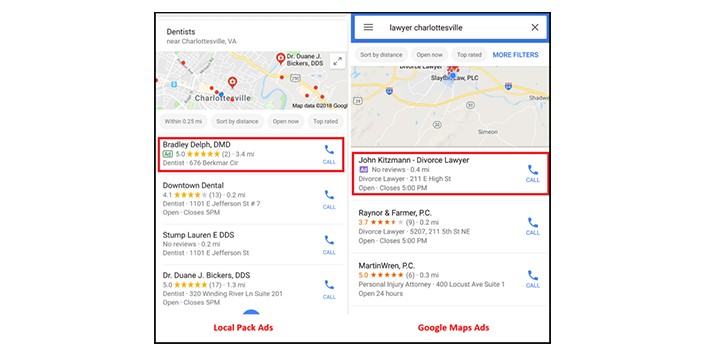
    Google has made a few updates to the Adwords campaigns to favour local businesses on the basis of their verified locations instead of using targeted search queries. Some businesses have reported seeing a “Local Search Ads Experiment Campaign” link – a sign of Google’s emphasis on local businesses without the need for the traditional phrase based AdWords.

    The current scenario 

    Currently, Location Services and Google Maps searches are the predominant ways in which advertisers land with enquiries or customers. Of these, the former is available only to a few home service industries in a handful of US cities.

    Location extensions are the key to generating local advertisement results for many physical stores in many areas now. Location extensions aren’t a new concept. They are primarily used by physical stores to add more muscle to their SERP objectives. This is driven by providing helpful information about the local business in response to search queries. With this useful extensions, Google has been able to serve ad units on local pack and Maps. Advertisers aren’t left with many options to deal with this activity other than switching it on or off with the expansion or removal of location extensions.

    What does the new change mean?

    The likelihood of new locally exclusive programs works in favour of local businesses. They can deal with this search independently from traditional Google searches.

    One month after these experiments, Google rolled out two key improvements to Google My Business.

    1. Business Descriptions

    The first update introduced business descriptions to be entered into the GMB profile. Here GMB provides business owners with 750 characters to describe their products or services and on-going offers.

    1. Addition of Attributes

    The following update enabled organisations to indicate any business they give, making an organised mix of business name, thing name inside that service, item cost and item description. Such attribute based menus were already present for hotels since February this year. Now, can be accessible for more businesses in a diverse list of industries.

    What these changes denote?

    The absence of phrases in local campaigns offers sponsors the opportunity to target neighbourhood searchers without depending on existing efforts and active keywords. This denotes a step ahead for the business savvy marketer who wants better control of his campaigns than what the current setup allows.

    With these updates, business owners can feed in helpful information that will help them come up with relevant search queries on Google maps and google.com

    Regardless of whether such listings are sponsored or natural, one thing is sure. It allows Google to begin integrating the extra information into the Local Pack for more ventures than simply those indicating items. The extra data Google is currently set to gather from GMB for local stores in an assortment of enterprises will be the primary driver in this case.