LS Staging

Category: Search Engine Optimization (SEO)

  • AI vs. Traditional SEO: Is Your B2B Marketing Strategy Ready for the Shift?

    AI vs. Traditional SEO: Is Your B2B Marketing Strategy Ready for the Shift?

    Search is evolving faster than ever. With tools like ChatGPT, Google Gemini, and Perplexity leading the way, search engines are no longer about matching keywords to queries—they’re about understanding intent, context, and delivering meaningful answers.

    For B2B marketers, this evolution signals one thing: Adapt or fall behind.


    The Changing Face of SEO

    Traditional SEO, built on keywords and backlinks, is facing a challenger in AI-driven search. LLMs (Large Language Models) like ChatGPT interpret complex, conversational queries, providing responses that feel more human and relevant.

    But this does not mean giants like Google and Bing are stepping aside. Instead, they are evolving alongside these tools. For B2B marketers, the real opportunity lies in embracing this transformation and creating strategies that align with both traditional and AI-enhanced search engines.


    Harnessing the Power of AI in B2B Marketing

    AI tools like ChatGPT, Gemini, and Perplexity are not just disrupting search, they are opening new doors for B2B marketers. Here’s how:

    ChatGPT

    • Generate high-quality, intent-driven content that resonates with your audience.
    • Build conversational chatbots and FAQs that enhance engagement and user experience.


    Google’s Gemini

    • Optimise for AI-enhanced search rankings with content tailored to how Gemini processes queries.
    • Refine SEM campaigns using Gemini’s AI insights for smarter targeting.


    Perplexity

    • Craft content that answers nuanced, context-driven questions for deeper relevance.
    • Enhance discoverability by structuring content to align with Perplexity’s advanced search algorithms.


    Evolving Your SEO Strategy: Practical Steps

    Here’s how B2B marketers can stay ahead:

    1. Focus on Intent, Not Just Keywords: Understand the “why” behind user queries and craft content to meet that need.
    2. Create Conversational Content: Use AI tools to produce natural, engaging, and conversational copy.
    3. Embrace Voice Search: Optimise for natural language queries and featured snippets as voice search adoption grows.
    4. Leverage AI for Efficiency: Streamline content creation and optimisation with tools like ChatGPT and Gemini.
    5. Stay Agile: Monitor AI-driven algorithm updates to adjust your strategies in real time.


    Looking Ahead: The Future of SEO in an AI-Driven World

    The rise of AI in search does not mean traditional SEO is dead, it is being redefined. As B2B marketers, the key is to evolve alongside these changes. Build content strategies that are user-focused, contextually rich, and tailored for a world where search is increasingly intelligent.

    Will AI take over traditional search? Or will it complement the giants like Google and Bing? The answer lies in how we adapt.

    What’s your take on AI’s role in the future of search? Let’s discuss in the comments.

  • The Rise of Zero-Click Search: How Marketers Should Evolve SEO Strategies

    The Rise of Zero-Click Search: How Marketers Should Evolve SEO Strategies

    Remember the last time you Googled something? Did you actually click on a website, or did you find your answer right there on the search results page? If you didn’t click through, you’re not alone – you’ve just experienced a “zero-click search,” and it’s transforming how we interact with the internet in ways that few could have predicted just a few years ago.


    Welcome to the Zero-Click Era

    Picture this: You’re wondering what time your favourite coffee shop closes. Instead of clicking through to their website, Google shows you their hours right there in the search results. Or perhaps you’re curious about the age of a celebrity, the weather in Paris, or the capital of Mongolia – all this information appears instantly, no clicking required. That’s a zero-click search in action, and these days, it’s happening in over half of all searches. It’s revolutionizing user behaviour and, consequently, reshaping the entire digital marketing landscape.

    The Anatomy of Zero-Click Search Results

    Zero-click searches have evolved into sophisticated information delivery systems. Featured Snippets, those concise answer boxes at the top of search results, have become the crown jewels of search visibility. They’re like having the front-page headline in a newspaper – everyone sees them, and they carry immense authority.

    Knowledge Panels, which appear on the right side of desktop searches, serve as digital business cards for entities ranging from local restaurants to global corporations. They’ve become so comprehensive that users often find everything they need without visiting a website. These panels now include photos, key facts, social media links, and even real-time updates for certain businesses.

    Local Packs have transformed how we discover nearby businesses. When you search for “restaurants near me” or “pharmacies open now,” Google presents a map with the top three local businesses, complete with ratings, hours, and even current busy times. This immediate access to local information has changed consumer behavior dramatically, making it crucial for businesses to optimize their local presence.

    Adapting to the New Normal: A Strategic Shift

    The rise of zero-click searches demands a fundamental rethinking of digital marketing strategies. The traditional focus on driving website traffic isn’t obsolete, but it’s no longer the only game in town. Smart marketers are now playing a dual game: optimizing for both clicks and visibility in zero-click results.

    Making Your Content Zero-Click Friendly

    Think of it like being the helpful expert at a party. You want to be the one giving clear, concise answers that people remember. The key is to structure your content in a way that serves both traditional website visitors and zero-click searchers.

    Consider how you present information on your website. Rather than hiding answers within walls of text, lead with clear, direct responses to common questions. Follow these with detailed explanations for those who want to dive deeper. This layered approach serves both the quick-answer seeker and the thorough researcher.

    Structured data has become more crucial than ever. It’s like providing Google with a detailed map of your content, helping search engines understand not just what your content says, but what it means. This semantic understanding is essential for appearing in rich results and featured snippets.


    The Evolution of Content Strategy

    The rise of zero-click searches has catalysed a significant shift in how we approach content creation. The old approach of creating isolated pieces of content is giving way to a more holistic, user-centric strategy that considers the entire journey of information discovery.


    Understanding User Intent: The New Foundation

    User intent has become the cornerstone of effective content strategy. When someone types a query into Google, they’re not just entering keywords – they’re expressing a need. Understanding these needs requires deep insight into your audience’s behaviour patterns and pain points.

    Informational queries might seem simple on the surface, but they often represent the beginning of a longer journey. Someone asking “what is digital marketing” today might be looking for digital marketing services tomorrow. By providing comprehensive answers to basic questions, you position yourself as a trusted authority for when that user is ready to take the next step.


    The Art of Content Clustering

    Content clustering has emerged as a powerful way to demonstrate expertise and authority to both users and search engines. Instead of creating isolated articles, successful content strategies now focus on building comprehensive resources around central themes.

    Think of your content like a university course curriculum. You have your core topics (like “Digital Marketing 101”) supported by detailed lessons on specific aspects (such as “Social Media Strategies” or “SEO Fundamentals”). This interconnected approach helps search engines understand the depth of your expertise while providing clear navigation paths for users seeking more detailed information.


    Embracing Technical Innovation

    As search technology evolves, new opportunities emerge for businesses to connect with their audience. Voice search has introduced a more conversational aspect to search queries, while mobile-first indexing has made speed and responsiveness non-negotiable factors in search visibility.


    The Mobile-First Imperative

    Mobile optimization is no longer optional. With most searches now happening on mobile devices, your content needs to be not just mobile-friendly, but mobile-first. This means considering how your content appears on small screens before anything else. Load times, navigation, and content layout all need to be optimized for mobile users.


    The Rise of Voice Search

    Voice search has introduced a more natural, conversational element to search queries. People speak differently than they type, often using complete sentences and questions rather than keyword phrases. This shift requires content that matches natural speech patterns while still maintaining professional authority.


    Measuring Success in the Zero-Click Era

    When traditional metrics like page views and click-through rates tell only part of the story, how do we measure success? The answer lies in adopting a more comprehensive view of digital presence and impact.

    Brand visibility has taken on new importance. Appearing in featured snippets and knowledge panels builds brand recognition, even without direct website visits. Engagement metrics have evolved to include how users interact with your brand across multiple touchpoints, not just your website.


    Looking to the Future

    The zero-click revolution is just one part of a larger transformation in how people discover and consume information online. As artificial intelligence and machine learning continue to advance, we can expect search engines to become even more sophisticated in understanding and presenting information.

    Success in this evolving landscape requires agility and adaptability. The businesses that thrive will be those that embrace change while staying focused on their core mission: providing value to their audience, whether through traditional website content or zero-click search results.

    Remember, at its heart, this shift isn’t just about adapting to new technology – it’s about meeting people where they are and giving them the information they need in the most convenient way possible. When you focus on serving your audience’s needs first, the technical aspects of optimization become natural extensions of your commitment to providing value.

    The zero-click revolution might have changed the rules of the game, but the fundamental principle remains unchanged: be helpful, be authoritative, and be where your audience needs you to be. The businesses that master this balance will find success, regardless of how many clicks it takes to reach their audience.

  • 3 SEO Strategies That Could Deliver Robust Results in the Post-COVID World

    3 SEO Strategies That Could Deliver Robust Results in the Post-COVID World

    Having a robust SEO strategy has become more critical than ever. Due to the COVID-19 pandemic, businesses and consumers were forced to make some massive changes at very short notice.

    Due to this, even though the consumption of online content has increased in the last few months, not every business has been able to benefit from the surge in web traffic.

    A significant reason for this is that the pandemic has impacted not just the buying behaviors of the consumers but even their search behaviors. Every time the search behavior gets modified, it calls for some major changes in your SEO strategy as well.

    As the world prepares for COVID recovery, here are three strategies that could help boost your SEO campaigns-

    1. Look for New Keywords

    Keyword research is the most crucial aspect of any SEO campaign. Events like the current COVID pandemic often introduce an entirely new set of keywords that businesses can focus upon. For instance, keywords like COVID, corona, coronavirus, COVID precautions, lockdown, online training, etc. are currently the most searched terms on Google.

    Look for such popular terms and work out ways to use them with your current keywords, products, or services to rank higher on SERPs. For instance, if you have a restaurant, you can focus on terms like safety precautions, no-contact delivery, etc. to better comply with the new ways in which people now interact online.

    2. Create New, Preferably Long-Form Content

    Content marketing continues to be a crucial part of any solid SEO optimization strategies. If you have not started working on new content, now is the right time to begin. As people now spend more time on the internet, they are actively searching and reading content that answers their query. Even with regards to content, focus more on long-form content.

    Long-form content reduces the bounce rate and improves the average time a visitor spends on your website. This provides you with more opportunities to promote your offerings. Make sure that your content is detailed and offers an abundance of actionable value to the visitors. Topics that revolve around the pandemic, safety, precautions, etc. can do exceedingly well.

    3. Go Local

    While the pandemic locked people in their homes and limited their movements, the need for goods and services was and will always be present. People would need groceries, go to salons, and visit the nearest garages. Local SEO has been one of the most effective SEO strategies, especially for SMBs trying to compete with major brands and websites.

    The pandemic has increased the importance of local SEO as people search for products or services that are available closest to their locations. You can create or update your Google My Business profile with detailed information, like company name, address, working hours, website, etc. to boost your ranking in local results.

    Readying Your Business for the Post-COVID World with SEO

    SEO is a long-term marketing strategy that requires adjustments at regular intervals to keep up with the changing trends and consumer behaviors. But with an event like the COVID-19 pandemic that made the world stand still for a considerable duration, your SEO strategy will need something more than small adjustments to comply with the new world order.

    Focus on the SEO optimization tips listed in this post if you are looking for ways to improve your organic visibility and prepare your business for the post-COVID world. A digital marketing company can also be relied upon to help you achieve your SEO objectives and take your business to newer digital heights.

  • How Can Attributes Help Improve Your Google My Business Listing?

    How Can Attributes Help Improve Your Google My Business Listing?

    Getting your business listed on Google My Business (GMB) is a must for optimizing your digital presence, especially if you are aiming to cater locally. One of the most critical aspects of your GMB listing is the attributes.

    In simple words, attributes enable you to advertise your features, services, and other offerings. Do you have a wheelchair accessible entrance? Is there a parking space? What are the payment options you offer? All of these and much more can be selected and shown to your potential customers and even Google in the bid to boost your listing.

    While Google takes several other aspects of your digital presence into consideration, attributes do take you a significant step closer to better rankings.

    Examples of Google My Business Attributes

    Here are some different attribute categories and their attribute options-

    • Accessibility- Wheelchair Accessible, Wheelchair Accessible Entrance, Wheelchair Accessible Parking, Passenger Loading Area, Beach Wheelchairs
    • Activities- Boats for Rent, Bicycles for Rent, Game Room, Scuba Diving, Horseback Riding
    • Amenities- Air Conditioning, Bar Onsite, Child Care, Free Breakfast, Fitting Room
    • Crowd- Adults-Only, Family-Friendly, LGBT-Friendly
    • Dining Options- Breakfast, Lunch, Dinner, Brunch, Delivery
    • Highlights- Live Music, Fireplace, Pool Table, Play Area for Kids, Rooftop Seating
    • Payments- Cash-Only, Credit Cards Accepted, Debit Cards Accepted, Meal Coupons, NFC Mobile Payments

    Types of Google My Business Attributes

    Currently, there are more than a hundred different attribute options to choose from. New attributes are also added regularly. But the attributes you see in your GMB account will depend on your business category. All the attributes available for various businesses can be divided into two broad categories- Subjective and Objective.

    • Subjective Attributes

    According to Google, the subjective attributes determine “What your business is known for.” The business or listing owners cannot directly influence the subjective attributes of their listing. Google gives them these attributes based on the responses it receives from the users.

    For instance, if you run a garage, someone who frequently visits your establishment will be asked about many different aspects of your business by Google. The subjective attributes will then be given by Google based on the responses.

    • Objective Attributes

    The listing owner has complete control over the objective attributes. You can select attributes that best describe your business from your GMB dashboard. Make sure that you only choose attributes that are true to your business, as Google also collects data from your customers.

    In case if any attributes are found to be untrue, Google will remove them from your listing. Moreover, by showing such attributes, you’ll be misleading your customers. This could very well convert into a negative review that could also impact your GMB listing.

    Steps to Add Google My Business Attributes

    If you want to add attributes to your GMB listing, here are the steps you can follow-

    • Log in to your GMB Account
    • Look for the “Info” option and select the location for which you’d like to add attributes
    • Click on the “Add Attributes” option and then select “Edit”
    • After making your selection, click on “Apply”

    Boosting your Google My Business Listing with Attributes

    The GMB attributes are one of the many things that could help improve the ranking of your business listing on Google. While listing owners can themselves add and manage the attributes, it is best to work with a reputed digital marketing company for the best results.

    Professional marketers better understand search engines and the ever-changing marketing trends to not only manage your GMB listing but also help improve other aspects of your online presence.

  • Why is SEO More Relevant Than Ever in 2020?

    Why is SEO More Relevant Than Ever in 2020?

    As a marketer who is concerned about the digital footprint of your business, you might regularly come across technologies, strategies, and tools that claim to be the next best thing. This often makes it challenging for you to stick to a strategy or decide what is right for your digital growth.

    If such modern strategies or tools are unable to deliver results, or at least lasting results, would you be better off with traditional digital strategies like SEO (Search Engine Optimization)?

    But is SEO still relevant in 2020? If professional marketers are to be believed, SEO is not only relevant but more important than ever.

    Why SEO in 2020?

    According to a recent post on SearchEngineLand, 51% of the people who visit B2B and B2C websites are driven by organic search. This means that you are missing out on a significant chunk of traffic by not optimizing your website for the search engines.

    Here are some other reasons why SEO is important for business in 2020-

    1. Optimizing Websites of Locally Focused Businesses

    If you are running a locally focused business, SEO continues to be the best way for client/customer acquisition. If done correctly, it can help you outrank the local competitors and reach more prospective customers.

    Search results on Google are customized as per the geographic location of the user. Your local business website can be optimized in a manner to dominate local search results with the help of SEO.

    1. Search Engines Are the Gateway for Browsing the Internet

    Most people find what they are looking for on the internet with the help of search engines. According to a study posted on SearchEngineJournal, 93% of the online experiences begin with a search engine.

    Considering this fact, a business could lose a lot of potential clients/customers by not getting listed in the search results. Understanding SEO importance and implementing it correctly is one of the most effective ways not just to get listed on SERPs (Search Engine Results Pages) but to land at one of the top spots on the first page.

    1. Implementing a Multi-Channel Marketing Approach

    Just like most things related to marketing, you cannot rely on any particular source for bringing in all the traffic. If you are already using other digital channels like social media and paid ads, SEO can be an excellent addition to your marketing strategy.

    While SEO is ever-evolving and you have to spend a lot of time and resources to get it right, it has a lot of potential to bring in highly targeted traffic.

    Consult a Reputed Digital Marketing Company to Harness the Power of SEO in 2020

    While there is no denying that a lot of traditional methods for online marketing are now obsolete, SEO is here to stay for good. The website optimize process, if done correctly, can help you reach potential clients and customers and bring in a lot of organic traffic.

    The best way to harness the power of SEO in 2020 is to work with a reputed digital marketing company. Marketing professionals better understand the ins and outs of SEO and have the skills and experience that can help your business reach newer heights in the digital world.

  • 7 Ways Businesses Can Leverage SEO & Marketing to Thrive under the Coronavirus Pandemic

    7 Ways Businesses Can Leverage SEO & Marketing to Thrive under the Coronavirus Pandemic

    The world may be on lockdown to contain the Coronavirus pandemic, however, the resilient world of digital marketing is rising to the occasion and working out ways to not only survive but also thrive during this confusion. The pandemic has given us all the time and opportunity to pause and look at things with a fresh perspective.

    Not one to be deterred, the SEO and marketing field has come together to identify ways in which businesses can use this time of work-from-home policies and social distancing to enhance their existing campaigns and identify weaknesses and gaps in content.

    Here are 7 illuminating ideas from Search Engine Journal on leveraging SEO & marketing strategies to help your business come out stronger at the end of the pandemic:

    1. Mini content audit

    When was the last time you checked your inventory of published content? If you’re like most other teams that get caught up with the everyday dynamic challenges of developing strategies, then we can safely presume that you haven’t taken a look at your webpages, videos, infographics, emails, blog posts, whitepapers or any other possible content you developed to market a business. The mini content audit will allow you to identify any duplicate content; remove unnatural links; find content which can be reused and repurposed; update content, links, CTAs; and much more. Who knows, it may even give you some crucial insights into your marketing strategies and smoothen your operations for the future?

    2. Conduct webinars

    If the lockdown has made you keep your impeccable suits in the closet, you can get put one on again and look professional for an enlightening webinar. With everyone’s online presence growing due to the quarantine, business owners or even digital media strategists, can reach out to their customer base and talk about their new products, services, or even reassure their clients of their commitment through this pandemic. Essentially, a webinar will allow the business to stay “visible” and reassure the stakeholders during these uncertain times.

    Webinars can act as your outreach strategy, too. You can choose to rise to the occasion and take charge- disseminate reliable information about how the pandemic affects your industry, how the industry is coping, or even share tips and tricks on how to cope with the situation. You can include links to your website with each webinar.

    3. Read & research

    Whether it is catching up on the latest trends in SEO marketing, or doing a thorough SEO clean-up, digital marketers can play catch-up on a lot of things which will eventually benefit the businesses. Research into webinar and maybe even podcast ideas can come through during this brainstorming period.

    4. Explore different sections on SERPs

    Some businesses often don’t go beyond simply having a presence on a Search Engine Result Page
    (SERP). Whether it is organic or paid search, there are many types of sections on SERP that you can explore and create strategies around during this time of introspection. There are innovative avenues such as featured snippets, position zero, video carousels, Google shopping results, Twitter, and once you plan it, even a knowledge graph. While you’re under quarantine, dedicate the time you save on
    commuting by developing the business/brand’s Wikipedia page, get it verified on social media, thus
    increasing the brand’s chances of appearing on various avenues of a Search Engine Result Page.

    5. Record videos

    The SEO space works great with videos, too. Use this quarantine time to create videos that target long-tail keywords and stand a chance of appearing on YouTube search listings. Embed the video along with a transcript on a blog post, make quote-worthy statements, and use video snippets from the video and use on social media.

    Here’s an example- a fashion brand can do a video on ‘summer fashion trends under quarantine’. Do a video using keywords; transcribe it accurately, make a blog post around the topic and include the video, images, and transcript. This will improve your SEO rankings and keep you relevant.

    6. Dig deeper into first-party data

    Even with Chrome’s new policy which dissuades third-party cookies, you still have a lot of first-party data to analyse. Grab a cup of coffee and take a plunge into analysing data that you may not have considered before. You will gather insights into leads that didn’t pan out, leads that did, and much more when you don’t have ten people insisting that you review only a particular trend or data set.

    7. Go online

    If you own a brick-and-mortar, look up ways to get it online and continue catering to your consumers. Being online could also mean offering doorstep delivery services (assuming it’s legally allowed in your city). Update your Google Business Profile to let your consumers know the special operating hours, safety and hygiene practices that you adopt, and your offers.

    At this crucial juncture where you can either react to the pandemic or respond to it, ensure that you base your business digital marketing strategy on wisdom and a long-term vision to come out stronger, and perhaps, even ahead of the curve.

  • Importance of Link Building for Search Engine Optimisation

    Importance of Link Building for Search Engine Optimisation

    In the seemingly never-ending world of the web, it’s a challenge to ensure that your webpage is one of the top search engine results when a user types in certain keywords. One of the surest ways for SEO optimization and building organic traffic towards your website is through SEO link building. A tried and tested method, link building is a far more ethical way of gaining visitors than buying links.

    What is link building?

    Very simply, getting another website to insert a link to your webpage is called link building. This link is referred to as a ‘hyperlink’. Getting other webpages to include hyperlinks to your website requires trust and time. However, it is an extremely crucial process if you wish to increase the traffic to your website in a consistent and authentic way.

     What is the importance of link building?

    Search engines like Google have countless search results for something as simple as ‘how to make pasta’ to something complex such as ‘evidence for climate change’. Google uses algorithms which determine the relevance and importance of your webpage to the search query based on the number and quality of hyperlinks to your webpage along with other factors. Link building doesn’t automatically guarantee a better search engine result; the hyperlink should be on a quality websites that rank high on the search engine themselves.

    Link building in terms of hyperlinks help to increase visibility and click throughs, building awareness and a greater traffic to your website.

    Hence, link building is an essential tool in the arsenal of digital marketers while building a brand’s success story.

    Different link building strategies for your website

    For the enterprising digital marketer who likes to try out different strategies to drive home results, link building provides a great avenue to execute different tactics. Here are a few:

    1. Finding synonyms

    One of many innovative link building techniques, this strategy requires you to search for websites that are in a ‘similar’ field as you but not the ‘same’ as that will create competition. For example, if you are a health insurance provider in Mumbai, find blogs on healthcare in Mumbai and request them to allow you to write a blog post on their website/blog.

    2. Make meaningful blog comments

    No, this is not about stealing another’s thunder. Find blogs similar to your topic and write a 100-150-word meaningful comment with a link to your webpage. If you leave a generic or ‘spammy’ comment, it will most likely be deleted or not even glanced at. Taking the same health insurance provider in Mumbai example, you can comment on a blog about geriatric health in India. The comment could include insight into the growing costs of healthcare for older people, and include a link to your insurance page.

    Similarly, you can comment on relevant social media posts and forums.

    3. Become a ‘resource page’

    Let’s say your business provides camping equipment. You could look up blogs about camping and request them to include a link to your website. Any potential camper or guide visiting that blog will find the link to your website and probably make a purchase, or at least become aware of your existence!

    4. Guest posting

    If you have a specific area of expertise such as ‘native advertising for fashion’, you can approach blogs that post about digital advertising or marketing and pitch a guest blog idea. Your blog post will not only help break the monotony of that blog, but also earn you backlinks. A simple way to find opportunities for blog posting requires you to search for *your area of expertise*+ ‘write for us’.

    5. Skyscraper method

    Another genius idea developed by a man from the field itself, the Skyscraper method involves you rewriting an already popular post but in a better way. You can include updated statistics, infographics, or videos to create the content. Then, pitch your article to the websites that have hyperlinked to that original article. Since your article is better, they will update their webpage with your article and hyperlink.

    For any of the strategies to work, remember that the content you create needs to be of excellent quality to compel other website owners to hyperlink to your webpage. With a careful mixture of effort and strategy, digital marketers can leverage link building for better search engine optimisation.

  • Google Assistant Receives Rich Text, Handy Tools and Other Snippets

    Google Assistant Receives Rich Text, Handy Tools and Other Snippets

    Google recently announced via a blog post that it’s releasing a new update for Google Assistant on android mobiles. The latest update will add variety to the information provided by the Assistant offering better visual responses and answers in the form of “rich text” for queries.

    Since Google introduced the Assistant in 2016, the search giant has been providing constant updates to the digital assistant – adding features, functionalities and improving visual appearance.

    What’s new?

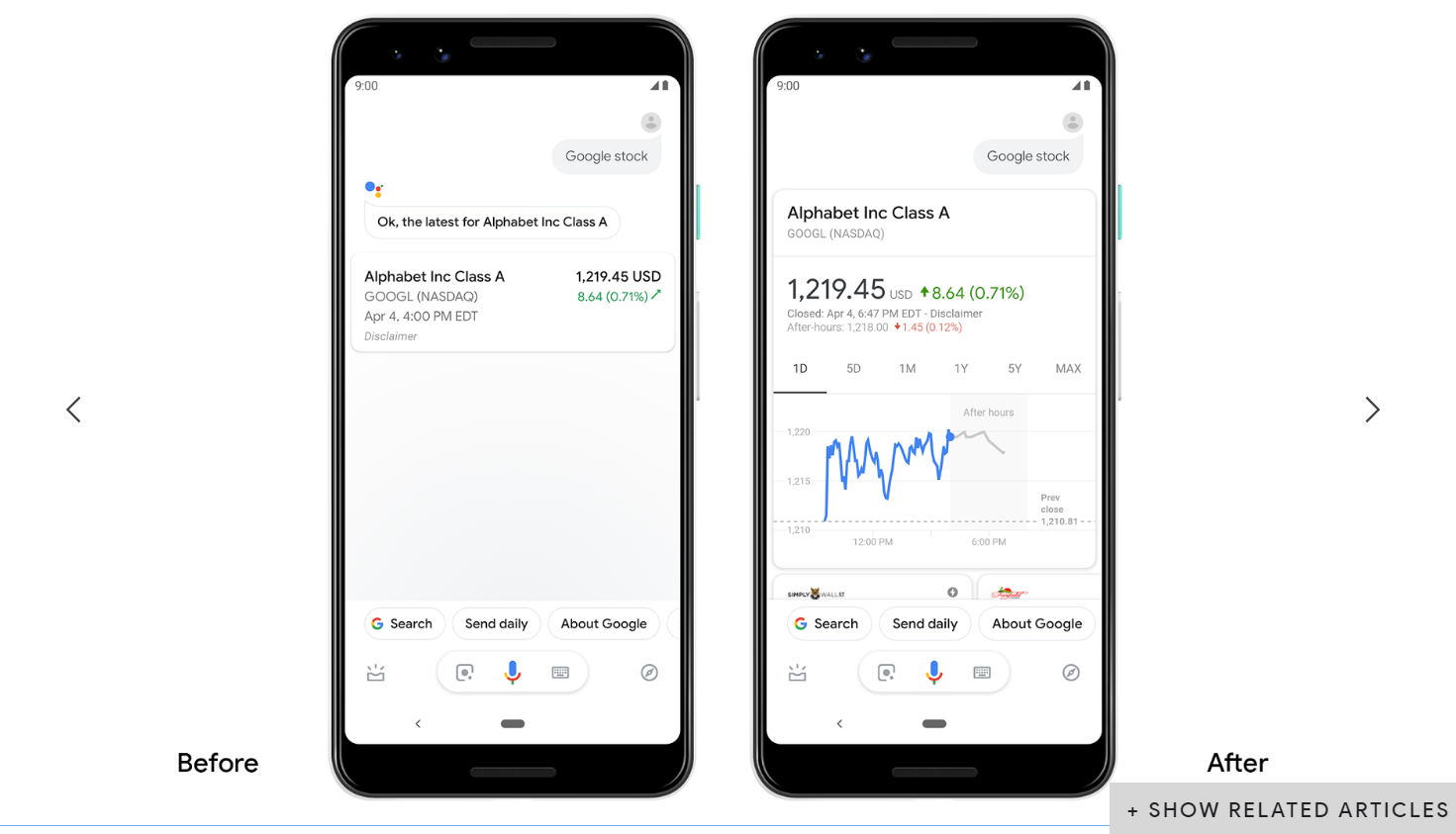
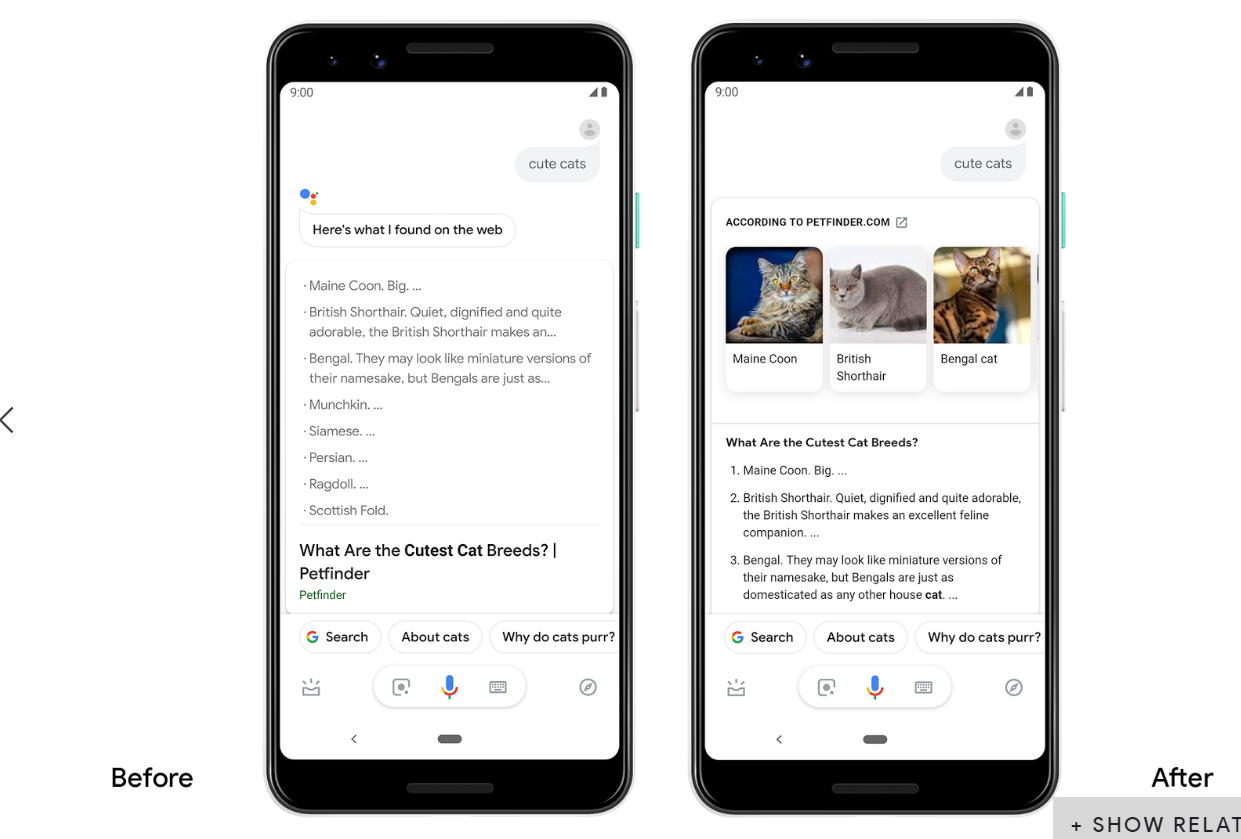
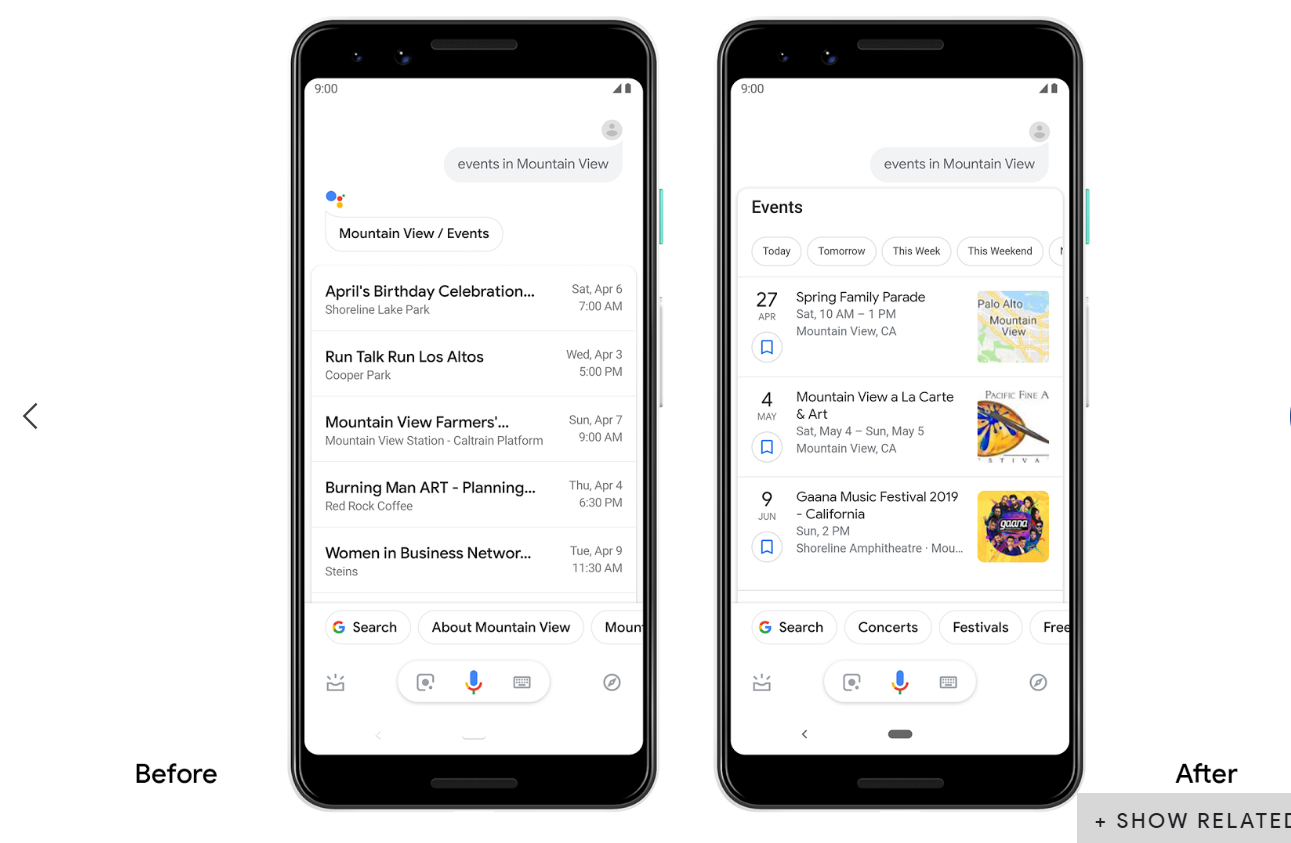
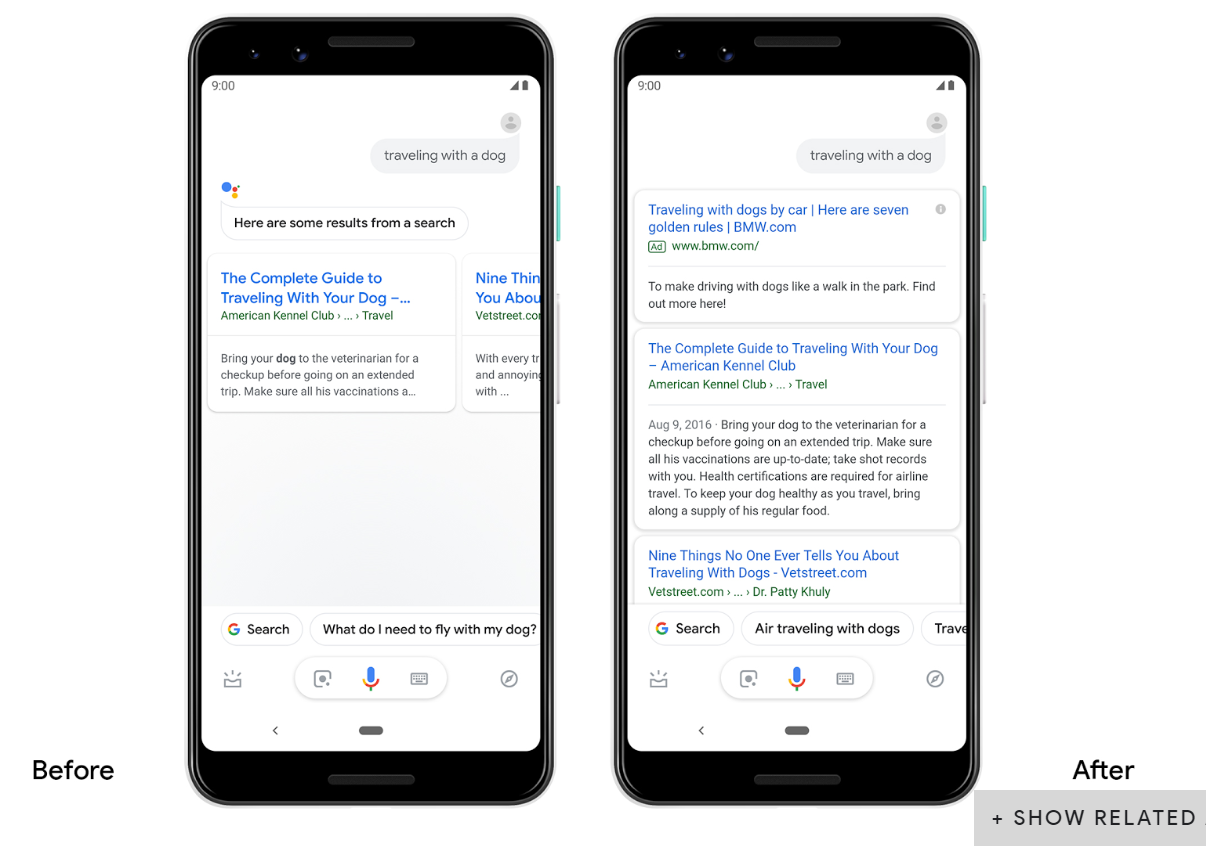
    The latest Google Assistant update includes response cards that present vital information that users are looking for in an easy-to-read format.

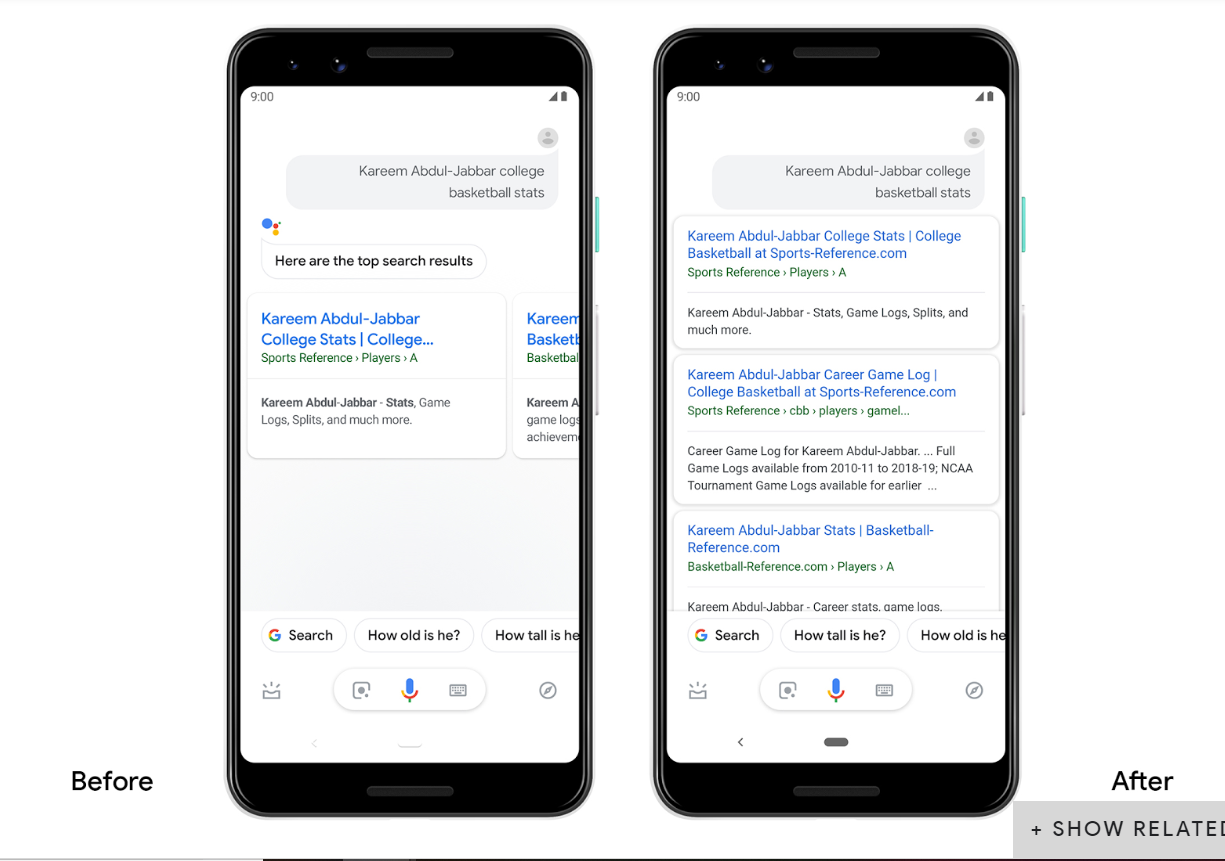
    Look at the before and after Images for some queries:

    As you can see, the new update provides a new interface for specific categories like events. Events now include saving buttons and thumbnails for each event. For categories like stock prices, the latest update provides a detailed stock price chart, along with other enhanced content.

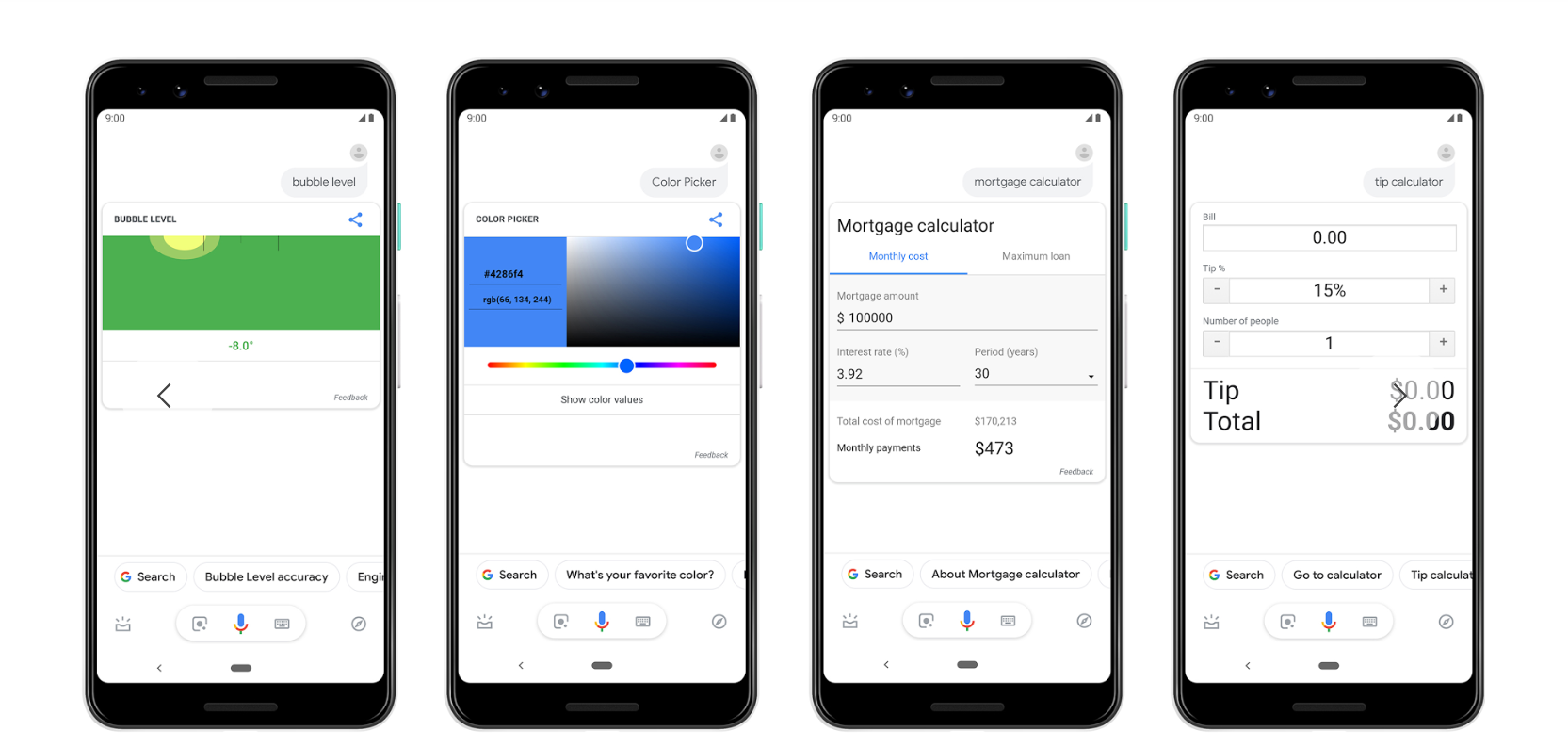
    Apart from the new visual interface for specific categories, the update also provides several handy tools like the metronome music pacer, tip calculator and bubble level as part of the Assistant’s interface.

    Additionally, for some queries, the response at the top includes links to a variety of related sources across the web, helping you learn more about the topic. Earlier, the Assistant only displayed the top result. Now, you can see the full set of search results as you would see on a desktop. Additionally, the Assistant may also include relevant ads that you would see on the Google Search app.

    This latest update is available on all Android phones, thereby helping users get enhanced search results.

    Why this update matters?

    This latest update with its variety of content is part of the search giant’s initiative to add functionality to the Assistant and to harmonise results offered by the Assistant and general Google mobile search results.

    According to stats revealed by MarketingLand, Google Assistant is now available on more than a billion devices worldwide. And, with an increasing number of users using Google Assistant to help them with their daily tasks, these latest functionalities are sure to appeal to users.

    Digital marketing experts predict that as significant percentage of search queries migrate from Google search to the Assistant, Google will work on monetising this space and brands will vie for space in this premium real-estate on users’ smartphones.

    Recently Google started test runs of local ads in Google Assistant results. As of now, the results shown by Google Assistant are ad-free. However, with more search queries migrating to the Assistant, Google will start working on monetising the results shown by the Assistant. And, adding functionalities is the first step.

    Is this update available for all?

    Yes, you can expect to see rich text in your Google Assistant. Try out this feature by searching for queries like, “Why is the grass green?” “Events in Orange County” using the Google Assistant on your Android smartphone.


    [Images via Google Blog]


  • Optimise Content for Voice Search and Virtual Assistants to Stay Ahead of Your Competitors

    Optimise Content for Voice Search and Virtual Assistants to Stay Ahead of Your Competitors

    Voice search is the next big thing in web search. According to ComScore, more than 50% of all searches will happen via voice by 2020, and a vast majority of these searches will occur even without using a screen.

    With increasing usage of smart home speakers and virtual assistants like Alexa, Ok Google, Cortana, and Siri, the trend has already started. Nearly a billion voice searches are done every month, and this number is only going to increase in the coming months and years. As a digital marketer and business owner, it’s time you start optimising your content for voice search and virtual assistants.

    Before, you take a look at SEO strategies for voice search, you need to understand user behaviour behind voice search.

    Why and How do People Use Voice Search?

    The why is obvious – voice search is more convenient and easy, rather than typing on a keypad or keyboard. When it comes to ‘the how’, there are significant differences between how people search using a keypad and search using their voice. The structure and phrasing are entirely different.

    For instance:

    Voice Search: Where is the nearest hair salon?

    Text Search: Hair Salon near me.

    Voice search tends to be conversational, thereby providing an increase in long-tail keywords. Apart from optimising for question-based search, you also have to focus on semantic searches. Semantic search phrases refer to a series of inquiries on a particular topic.

    Where is the nearest hair salon?

    What are the ratings for hair salons near me?

    What is the trending hair cut style, right now?

    In voice search, you have to focus not just on providing the answer to a particular query, but also on the intent behind the search phrases.

    Another major distinguishing factor of voice searches is that it’s highly local. Users using voice search are 3x more likely to search for local information, compared to text searchers.

    Now, that you’ve got a clear understanding of how voice search intent and usage is different from conventional text-based search, let’s take a look at some SEO strategies to optimise your content for voice search and virtual assistants.

    1. Focus on Long-Tail Question Keyword Phrases

    One of the most effective and impactful ways to optimise for voice search is to include question keyword phrases in your website copy and blog posts. Try to provide answers to the commonly asked questions about your business.

    This is a great strategy to get featured in the coveted Google paragraph answer snippet. This not only boosts your overall page ranking, but voice assistants are likely to pull up information from Google’s snippets for user queries.

    Answers featured in Google snippets are short, precise and concise. Use headings to indicate to the search engine that you are answering a question.

    2. Lay Extra Emphasis on Local Content

    Voice search and local SEO are intricately linked together. Searching for info on local businesses is one of the main reasons why users use voice search or seek the help of virtual assistants. Start by making full use of the free Google My Business listing. Ensure that your GMB profile is complete and updated. Try adding seasonal and local content to your GMB page regularly.

    3. Go Mobile-friendly

    There’s no doubt that the majority of voice searches happen on a mobile device. Ensure that your webpage design is responsive. Use Google’s mobile-friendly test tool to see how your website ranks on the mobile-friendly index.

    Next, ensure that your site has a fast loading time. Use PageSpeed Insights to find out your site loading speed. Next, optimise your content for mobile devices. Leave a lot of white space, make use of short sentences and easy to understand words, small paragraphs and make use of sub-headings that hook in the attention of the audience.  

    4. Create Blog Posts that Address User Questions

    People use several phrases and structures in voice search. For instance, one user may ask, “What is the nearest salon near me?” while another user may ask, “Show salons near me.”

    Apart from FAQ pages, create blog posts that address the common queries your target audience are likely to have.

    5. Keep an Eye on Voice Search and Virtual Assistant Trends

    Voice search is just getting started, and there is plenty to be explored. Make sure to monitor the behaviour of users and keep an eye on voice search trends. This will help you adopt new practices and stay ahead of your competitors.

    Voice Search isn’t a Fad. It’s here to Stay.

    Alter your SEO practices to include voice search and to get noticed by virtual personal assistants. By being an early adopter of voice search SEO, you can stay ahead of the competition and pull in your target audience from multiple channels.

  • Google Q&A: Google’s Newest Knowledge Panel Feature

    Google Q&A: Google’s Newest Knowledge Panel Feature

    Google Q&A was rolled out in August 2017. It is a customer-facing feature that allows prospective customers and brands to enquire and respond to questions pertaining to a particular business. These answers are taken via the local knowledge panel and are displayed on the search results page. This also allows users to upvote the answer.

    What are the new updates?

    A few days back, Google announced it is expanding support for rich results within Q&A pages on the web. Google’s aims to use the Q&A feature to offer customers with additional information about a particular organisation or brand. It will help customers to find significant and well-timed responses to common queries. It also prompts them to be directed to the business site from this knowledge panel itself.

    This new supported structured data format is developed and designed to help Google with the question and answer formatted snippets carousel. This snippets carousel lets users slide through answers and questions from Q&A pages.

    This Q&A structured data works for sites that have pages that are already in question and answer format. This is mainly designed for social news sites, forums, and help and support message boards.

    A look at the Q&A pages guidelines for better results

    Google has officially published structured data markup to design this type of Q&A pages for businesses. Appropriately marked up pages are qualified to have a rich result displayed on the search engine result pages. This rich treatment helps in reaching the right users on search. Marking up Q&A pages helps Google generate a better snippet for a webpage.

    There are following guidelines to design Q&A page for the rich treatment. One must follow these guidelines.

    • One should mark up his/her website’s pages by applying any of the three compatible formats like JSON-LD, Microdata, and RDFa. Then only it can be eligible for the rich result.
    • One should not use access control mechanisms like robots.txt or noindex. This will prevent proper indexing of the structured data pages to Googlebot.
    • Always use the most recent and original content.
    • Never mark up misleading or irrelevant content.
    • Content should not promote any violence, negative, or harmful activities.
    • Make sure to abide by the schema.org guidelines for correct relevant type and property names.
    • All image URLs have to be accessible for bot crawling and indexing.

    How to use it effectively?

    The primary approach for getting higher clicks through these Q&A pages is mainly divided into five parts that any business or an SEO agency should use to get the desired result.

    • Plan

    The primary goal of Q&A pages is to help and ease the customer journey from search to call. So an SEO agency should assist a business or brand in planning the content.

    • Post

    Google expects that the business will get engaged in the Q&A process. So the business or the agency working on behalf of them should post their questions.

    • Monitor

    One should properly analyse the questions which are responded efficiently.

    • Respond

    Users should properly respond to the questions in a timely fashion. That will help the future searchers to see that the business was engaged and responsive.

    • Report

    Users should familiarise themselves with the new Google Maps User Contributed Content Policy. Any answers or questions should not violate this policy. If it occurs, then it should be reported to Google as it can poorly reflect on the business.

    Rich results can help strengthen the display of a search result among many other search results. Of course, if the snippet has a carousel with answers and users can scroll through then it will definitely get a higher click than the standard blue link results or regular snippets.