LS Staging

Category: Search Engine Optimisation

  • e-Commerce SEO: 4 Steps to Get the Website Structure Right

    e-Commerce SEO: 4 Steps to Get the Website Structure Right

    Every website, be it a business website, blog, or e-commerce, has a structure. It can either be streamlined and conscientious, or it might be a cluttered mix of jumbled pages.

    While the website structure is critical for every website on the internet, it becomes even more crucial for e-commerce stores where the bottom line depends on the experience you offer at your online store.

    Apart from store visitors, site structure is also significant from the SEO point of view. Google and other top search engines want their users to be redirected to relevant, informational, and user-friendly websites.

    Even if you have the best products at your e-commerce store, but your website’s structure is not up to the mark, it can be very challenging to rank higher in search results. So, how do you build an SEO-friendly e-commerce website structure? Follow these 4 steps-

    1. Build a 3 Level Hierarchical Structure

    One of the golden rules of an optimized website structure is to ensure that visitors are not required to click more than thrice after reaching your homepage to reach the product/page they are looking for. You can consider building a 3-level hierarchical structure for your e-commerce store for the best results.

    The homepage will be at the top of the structure, with level 1 being the category page, level 2 can be sub-categories, and level 3 will be the product pages.

    2. Work on the URL Structure

    The URL structure is also one of the most important on-page ranking factors. SEO-friendly URL will also make it easier for visitors to navigate through your website. For instance, if you are running an online store that sells smartphones, the site structure can be like this-

    Home/Mobile/Apple/iPhone

    The URL structure for the same should be-

    www.xyz.com/mobile/apple/iphone

    Here are some basic guidelines for creating SEO-optimized URLs-

    • Use HTTPS in your website URL
    • Keep the URLs short
    • Consider adding product specifications to the URL (Example- www.xyz.com/mobile/apple/iphone-128gb-silver)
    • Avoid spaces and use lowercase characters

    3. Structure the Website Code

    As e-commerce stores can have hundreds of pages, coding is another aspect that should be at the forefront of creating an SEO-friendly website structure. Messy code can significantly impact the user experience and page speed (a crucial ranking factor). Therefore, when creating navigation, try to keep coding as simple as possible.

    CSS and HTML are recommended as coding in Java, AJAX, and Flash can reduce the ability of the search crawlers to cover your entire website. If you are using WordPress, give special attention to the theme and plugins you are using, as many of them are not search engine optimized.

    4. Create Website Navigation

    The menu or navigation should accurately reflect your website’s structure. It is generally recommended that you should keep the menus as simple and succinct as possible. Avoid using unnecessary sub-menus and make use of side menus when required.

    For instance, when visitors select a category from the menu, they can be redirected to that category page that features a side menu with the sub-categories. Also, as your online store will attract a lot of mobile audiences, it is wise to create separate menus for your mobile website that is easier to use on handheld devices.

    Getting Your e-Commerce Store Structure Right

    It takes careful thinking, correct organization, and creative design to create a visitor- and SEO-friendly website structure. While platforms like WordPress now allow people with zero coding knowledge to create websites from scratch, it is better to trust professionals for an online store.

    When your bottom line and success depend on the traffic and sales generated from your online store, you cannot rely on such free platforms and tools to provide you with the best results. A reputed digital marketing company can help you build an e-commerce store that is attractive, functional, and search engine optimized.


  • How to Use Guest Posting to Build Backlinks and Improve Your Website’s SEO?

    How to Use Guest Posting to Build Backlinks and Improve Your Website’s SEO?

    It is said that Google uses more than 200 ranking factors in its search algorithm. Some of these factors are proven, while others are controversial or speculations. When you are just starting with SEO, it is the factors that have been proven that you should focus upon. One of the most vital factors from this category is links.

    In the post “How Search Algorithms Work,” Google has mentioned that if other prominent websites link to a page, it is a good sign that the information is well trusted. Guest blogging or guest posting is an effective way to build backlinks and improve your website’s SEO.

    What are backlinks? Why are they important? How to find websites for guest posting? Continue reading to find answers to these common questions.

    1. What are Backlinks?

    Backlinks, also known as incoming links or inbound links, are links from one website to a page of another website.

    Search engines consider these backlinks as a “vote of confidence,” which suggests that the information on the page that other websites have linked to is valuable for the search engine users. It is generally seen that web pages with more backlinks have higher organic search rankings.

    2. Why are Backlinks Important in SEO?

    The primary goal of Google and other prominent search engines is to help its users find relevant and credible information. If multiple websites have linked to a particular webpage, search engines see this as a reliable signal confirming the quality and usefulness of the content available on that page.

    While Google regularly updates its search algorithms and has been doing so for several years now, backlinks still continue to be one of the most important ranking factors. In fact, it is also one of the oldest factors that have been around since Google created its original PageRank algorithm.

    3. How to Build Backlinks?

    One of the easiest and most effective ways to build backlinks is guest posting. It requires you to write a blog or article for another website in return for a backlink to your website.

    Links to your web pages/website can be added in various places in the guest post, generally anchored to a related phrase or keyword. Additionally, the backlink can also be placed at the bottom of the page in the author’s bio.

    4. Are Backlinks from Every Website Equally Valuable?

    This is where things get a little controversial. Some experts believe that the quality of backlinks that a webpage has is more critical than the number of backlinks the page has. Quality backlinks are links to your webpages that you receive from websites with higher domain authority.

    Then there are others who lay more emphasis on the number of backlinks rather than the quality. Here, the domain authority of the website where your link is placed is not as critical as long as it links to your website. The ideal solution would be a mix of both. Try to get a combination of websites with higher domain authority and lower domain authority linking to your web pages for the best results.

    5. How to Find Websites That Allow Guest Posting?

    There are a few different ways to find websites that allow guest posting. Here are some of the most effective ones-

    • Search on Google

    For instance, if you have a finance-related website, simply type “finance guest posting websites,” and you are sure to find plenty of great options. Alternatively, you can also enter guest posting-related keywords, like “Write for us,” “Guest Post,” Submit a Post,” etc., to find high-domain websites where you can write a guest post.

    • Search for Relevant Websites

    Another way to find such opportunities is by searching for popular blogs in your domain. For instance, you can type something like “top finance blogs” to get a list of the most popular finance blogs. Visit these blogs and check whether they allow guests to post blogs on their platform.

    • Pitch Guest Posts Through Email

    Sending a guest post pitch through email is another great way to build backlinks. For instance, if there is a high authority website that does not allow guest posts, you can find the contact details of the website owner or webmaster to pitch your guest post. But note that most high authority websites generally decline such requests unless you are already running a popular website.

    Boosting Your Rankings with Guest Posts and Backlinks

    If you are just starting with SEO and guest posting, it can take a bit of time for you to understand the intricacies and know what works and what doesn’t. A smarter alternative is to hire a reputed digital marketing company for your link-building and SEO strategies.

    From contacting high authority websites to writing informational guest posts, experienced marketers can help you with every aspect of building backlinks to boost your search rankings and accelerate your growth.

  • Going Local: Using the Power of Local Languages to Increase Brand Reach

    Going Local: Using the Power of Local Languages to Increase Brand Reach

    Since the 1980s, when the internet was first introduced to the world, English has been the universal language on the web. Over the years, the popularity of the internet has been such that it made English “the world’s second language.”

    Be it creating a business website or launching a new digital marketing campaign, English was the go-to language. But brands across the world are slowly realizing the importance of using local languages to reach more potential customers and build deeper connections.

    While English still is the language of choice when targeting countries like the USA, people in a country like India, with more than 19,500 mother tongues, might better respond when approached in their local language.

    1. Growing Number of Indian Language Internet Users

    According to a study by KPMG and Google, vernacular language internet users in India are expected to grow at a CAGR of 18% to reach 536 million by 2021. In comparison, the English internet user base is expected to grow at a CAGR of 3% to reach 199 million by 2021. In other words, out of the total internet user base in India, around 75% would be that of Indian language users.

    Increasing adoption of smartphones in Tier I and Tier II cities and cheaper internet plans are some of the reasons that are significantly contributing to the popularity of the internet among Indian language users.

    2. Improving Conversions with Local Languages

    According to the “Can’t Read, Won’t Buy” global study by research firm CSA, around 72% of the internet users spend all or most of their time on websites in their local language. Similarly, as per a study on Quartz India, 7 out of 10 internet users in India prefer digital content in their local languages.

    To increase digital conversions, brands need to focus on a lot more than just reaching people. Brand messaging should be as such that it encourages the audience to take action. The use of local languages is one of the most effective ways to reach people and build meaningful relationships, leading to improved conversions.

    3. Achieving Business Objectives with Local Languages

    Apart from increasing conversions and reducing bounce rates, local languages can also be innovatively used to achieve other digital objectives. For instance, region-specific language can help brands reach newer audiences with a lower CPA (Cost Per Acquisition), enabling them to get more value from their marketing budgets.

    Content and advertisements in local languages effectively engage the Indian language internet users, helping brands collect quality leads with higher conversion potential.

    Consider Localization Experts to Go Local

    Using local language on websites or online ads requires a lot more than just using a translation tool. Brands should consider marketing professionals that understand the local culture and customer behaviors to unlock the potential of using local languages.

    Prefer working with marketing agencies that have helped brands with similar localization projects to provide a rewarding and accurate local experience to the audience.

  • How to Improve Your Visibility in Search Results? 5 Tips That Can Help

    How to Improve Your Visibility in Search Results? 5 Tips That Can Help

    According to a report by Backlinko, the #1 organic search result on Google has an average CTR (Clickthrough Rate) of 31.7%. Moreover, the #1 organic results receive ten times more clicks than a webpage listed at the #10 spot.

    When it comes to boosting your digital footprint, improving your search engine rankings is the place to begin. The higher the search engine rankings, the higher the visibility, clicks, conversions, and sales.

    Unfortunately, this is easier said than done. With hundreds and thousands of businesses competing for the top spot in search results and Google regularly updating its search algorithms, landing on the #1 spot or even the first page is very challenging and time-consuming. But as visibility can do wonders for a brand, the struggle is worth the efforts and time.

    So, what are the things you can do to improve your search visibility? Here are 5 tips that can help-

    1. Target Specific Keywords

    Whenever a user enters a search query, search engines try to present most relevant results to the query. If you are just starting with SEO, ensure that every web page targets a particular topic. In other words, you should find high-volume keywords relevant to the web page and use them in the content and meta-tags.

    The more targeted and specific the topic of a webpage is, the greater the possibility of ranking higher in search results.

    2. Add a Blog Section to Your Website

    Blogs are one of the most effective ways to supercharge any SEO strategy. Every blog provides you with the opportunity to target specific keywords and improve your chances of ranking higher in search results.

    Blogs can also work as a voice for your brand and enable you to engage with the website visitors directly.

    But if you do add a blog section to your website, ensure that each post is informative and helpful. Remember that Google doesn’t simply focus on web pages that target keywords but presents results that it believes would be most helpful to the users.

    3. Claim Your Business on Google

    Web crawlers discover search results based on the ease with which they can read and categorize the page content. Want to make this process easier and faster for the crawlers? Claim your business on Google My Business (GMB) and Google Maps. It is a free service offered by Google which only requires you to create a GMB  account and complete the verification.

    Optimize your GMB listing to improve your search visibility, especially for local search results.

    Ensure that you provide as much information about your business in your GMB listing so that the crawlers find it easier to understand your offerings and your web pages have higher visibility.

    4. Start a PPC Campaign

    You can also consider starting a PPC (Pay-Per-Click) campaign to improve your search visibility. If you target the right keywords and place an adequate bid, your ad can be presented next to the organic search results. Why not use only PPC when it can help you get listed above the organic search results?

    For starters, these are paid ads and might not be the best choice for every brand with a limited marketing budget. Moreover, with SEO, you can continue holding a higher spot in SERPs for an extended period. But with PPC, your ads will only appear as long as you keep funding your ad account.

    A combination of SEO and PPC offers the best results.

    5. Use Backlinks

    Domain authority is a critical ranking factor. One of the best ways to improve your domain authority is to use backlinks. In simple words, a backlink is a link on one website that links to another website. They are also commonly known as “incoming links” or “inbound links.”

    For instance, if you write an amazing piece of content on your website and some other website links to this content, this is a backlink.

    Creating content that influencers in your industry would want to link to in their own content, can help you generate valuable backlinks. Think infographics, detailed blog posts, market reports, industry-specific case studies, e-books, etc.

    Apart from creating great content, you can also consider guest blogging, web directory submissions, and broken link building to get more backlinks for your website and improve visibility in search results.

    Get Your Brand Noticed by People with Improved Search Visibility

    As search engines like Google are used by most people to search for products/services or information, improving your search visibility is definitely the best way to get noticed. Consider these tips to improve your visibility and get closer to your digital goals.

    For faster and more effective results, you can look for a reliable digital marketing agency that has worked with several businesses struggling with their digital presence.

  • Why Do You Need SEO and PPC to Grow Digitally?

    Why Do You Need SEO and PPC to Grow Digitally?

    According to a Statista report, almost 30% of the global web traffic is generated through online search usage. This clearly highlights the critical role that search engines like Google play in directing users to websites. Ranking well in SERPs (Search Engine Ranking Pages) thus becomes one of the most effective ways to grow in the digital world.

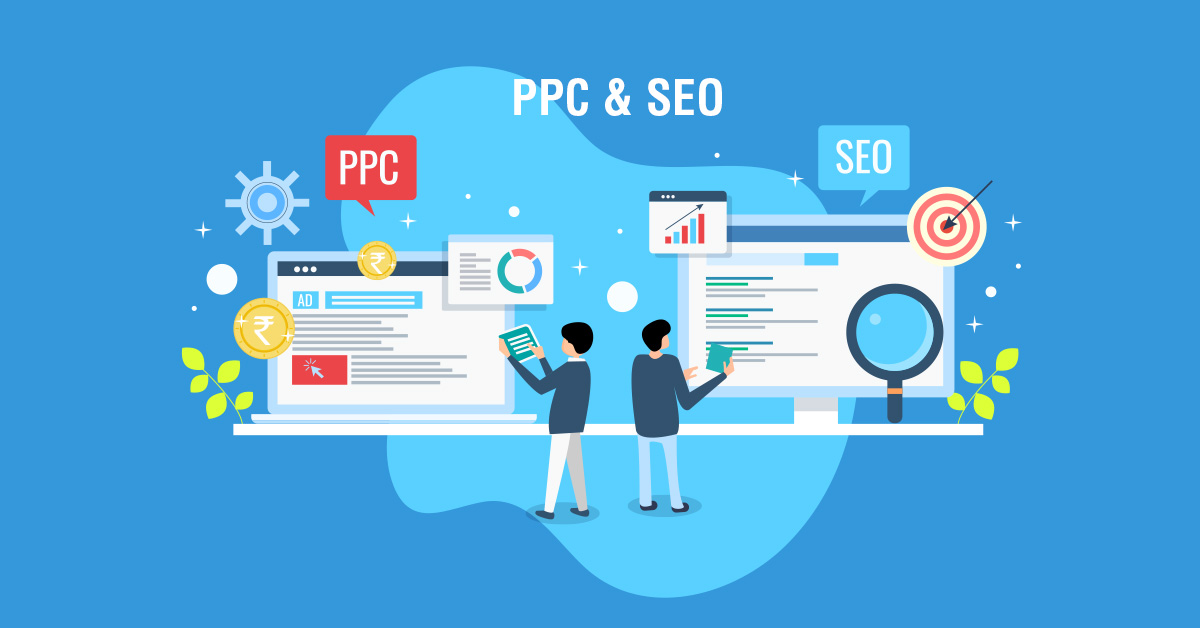
    SEO (Search Engine Optimization) and PPC (Pay-Per-Click) are two of the most popular strategies used by brands and marketers to boost their digital presence.

    While SEO focuses on improving your ranking in organic search results for targeted keywords, PPC is a paid marketing strategy that provides you with the opportunity to present your ads when users search for related content on search engines.

    Ultimately, both SEO and PPC help brands improve their rankings in SERPs. If both of these digital strategies help you rank better, shouldn’t brands and marketers focus on only one? No, experts recommend that you need a combination of SEO and PPC for the best results. Check out some of the reasons why-

    1. Improved Presence on Search Engine

    As mentioned above, SEO provides you with the opportunity to make your web pages rank higher for the targeted keywords. Your web pages can land on the first page or even conquer the coveted top spot. When you also purchase PPC ads for the same keywords, your ads can appear even above the organic search results.

    If you optimize your web pages for a particular keyword and also set a PPC campaign for the same, you get the opportunity to dominate the search results. This could lead to more visibility, more clicks, and most probably, more sales.

    2. Find Relevant Keywords

    With Google regularly updating its search algorithms, it is only getting more difficult for brands to organically land on the first page of search results. The Google Ads platform can help brands in this regard. For instance, the platform comes with the Keyword Tool, which can be used for creating a list of keywords that are relevant to your business/industry and also receive plenty of traffic.

    These keywords can then be integrated into your website to improve its ranking in search results. Similarly, there is an ad tracking tool that enables you to measure how the changes to your ad campaigns and website are impacting conversions. This data can be very valuable for improving your SEO strategy.

    3. Using Ad Copies for Improving Content Strategy

    Experts opine- things that work for PPC also work for SEO. So, you can use your paid ad campaign to improve your website’s organic ranking and use top organic results for improving your PPC campaign. For instance, you can use the ad copy and headline of your top-performing paid ad in the title tags and meta descriptions of your SEO content.

    Similarly, the copy of top-ranking organic web pages can be used in your paid ad to make it more effective. While this is just one example, there are several ways in which you can use PPC for improving your SEO and vice-versa.

    SEO+PPC = Improved Digital Presence

    Search for a popular keyword related to your business/industry. There is a high probability that you will see the same brands having top organic rankings and their paid ads placed above the organic results. With most of your competitors making the best use of SEO and PPC, it won’t be wise for you or your brand to only use one of the two for improving your digital presence.

    You can work with experienced digital marketers to create a custom SEO and PPC strategy that makes you more competitive and helps improve your online presence.

  • 3 Ways in Which Branding Impacts Your SEO and ROI

    3 Ways in Which Branding Impacts Your SEO and ROI

    When it comes to ranking in SERPs, bigger brands are generally given preferential treatment. Even with fewer links and keywords, they often rank higher than smaller brands. Whenever they are penalized, you’ll see them resurfacing only after a few days. But the same is not true for smaller companies.

    Sounds not fair? You can also get this unfair advantage by building your ‘B’ quotient.

    So, if you own a small business and working twice as hard on your SEO strategy, it might still be very challenging for you to enjoy the privileges of bigger brands. This, in itself, is a significant reason for smaller businesses to focus on their branding.

    More importantly, the advantage of branding is not limited to SEO. It is also one of the most effective ways to build customer loyalty and improve your ROI.

    Here are 3 different ways in which branding can boost your SEO and ROI-

    1. Branding Boosts Awareness

    Start-ups offering a never-heard-before product or service need to understand that people will not be searching for them as they don’t know something like that even exists. And if people are not searching for a brand, its products, or services, it will not get the clicks, traffic, or sales.

    Branding is the most commonly used strategy to improve brand awareness. It helps people know about your business, what you do, and what products/services you offer.

    When someone searches specifically for your brand or what you offer, it gets much easier to rank at the top spot in SERPs.

    2. Brand Recognition Key for Receiving Clicks

    While SEO aims to help you rank higher, you ultimately want people to click on your link and visit your webpages.

    Now, let us assume that there is a small sportswear brand that sells sports shoes. When someone searches for the term “sports shoes” on Google, the chances of them clicking on a result from a global brand like Nike is significantly higher even if the new brand is listed at one of the top positions.

    The point here is,

    While ranking is essential, brand recognition will many times outweigh the ranking especially.

    If searchers know your brand, there is a high possibility that they will click on your link in the search results even if you are at the 2nd or 3rd spot and not some rather unknown brand that holds a slightly higher position than yours.

    3. Branding Builds Customer Loyalty

    At the heart of it, branding is about building an emotional connection with the target audience. You don’t want people to shop from your brand just once. You want them to consider you every time they think or talk about products or services related to your industry.

    Brand loyalty aspect plays a significant role in your ROI too.  

    According to research by KPMG, 55% of Indian consumers have agreed to shop from their favourite brand even if there are other cheaper and more convenient options available. So, by working on your branding, you will not only be able to improve the results of your SEO strategy but also work your way towards an improved ROI.

    Improving Your SEO and ROI with Branding

    Modern consumers prefer shopping for products or services from brands that have an emotional appeal. If you are able to get this appeal right, your business can experience its extensive benefits, especially with regard to SEO and ROI.

    Branding is the most effective way to build your brand identity and create something your target audience could relate to. Brands can work with a reputable digital marketing company to build a custom branding strategy that fulfils their business objectives and customer expectations.

  • Local SEO: Top 3 Factors that Can Determine Rankings

    Local SEO: Top 3 Factors that Can Determine Rankings

    As the digital ecosystem has turned into the battleground for advertising, no business, big or small, can now afford not to have an online presence. Search Engine Optimization (SEO) is one of the most effective ways to structure your business presence online.

    Search engines such as Google is where most consumers now begin their search for products or services. Businesses not in the SERPs (Search Engine Results Page), preferably in one of the top positions, are missing out on a lot of potential customers.

    But with that being said, not every business wants to grab the top spot for every related keyword on the national level. Several small businesses mostly cater to local customers. The SEO strategy for such small businesses is built around local search.

    For such businesses, it is essential to focus on Local SEO. Here are the top 3 factors that could determine the ranking for such businesses in 2021.

    1. Getting Listed on ‘Google My Business’

    Getting the business listed on GMB (Google My Businesses) is one of the first steps to take for those looking to rank in local searches. A free tool from Google, it has a significant impact on local search results.

    Moreover, unlike most other aspects of SEO, getting a business listed on GMB is quick and easy.

    However, businesses need to ensure that they complete 100% of the GMB profile, including website link, address, photos, product/service description, business hours, and business category. 

    This is important because, as per research by Google, local businesses with complete profiles are twice as likely to be considered reputable.

    2. Use of Local and Hyper-local Keywords

    Another basic aspect of local SEO is targeting local keywords, preferably long-tail local keywords. For instance, catering business targeting customers from within Mumbai should check out search volumes for keywords such as “catering service, Mumbai,” “catering, Mumbai,” etc.

    Businesses can also go hyper-local and add the name of the suburb within the city, where the business is located or targeting a specific audience. For instance, including names of suburbs such as Navi Mumbai, Goregaon, etc., can help a business target a specific audience.

    Once you have a list of such keywords, ensure that your website and GMB listing is optimized for the same.

    Most small businesses that do well in local searches also create local content when they only want to target nearby customers. For instance, a blog post titled “How to Find Best Caterers in Mumbai” can prove beneficial for your specific audience and hence improve your local SEO if you have a catering business in Mumbai.

    3. Google Maps Can Define Your Presence

    As per research by Google, “near me” searches have increased by more than 78% in India between 2018-19.

    This term often activates the map pack in search results. In other words, searchers will find a list of local businesses with their locations above the organic results when the search term includes “near me.”

    Businesses aiming to improve their local SEO should definitely be a part of this map pack. This can be done by listing the business on Google Maps.

    If you’ve successfully registered your business on GMB, the chances are that your business might already be listed on Google Maps. But if not, you can do it for free by visiting Google Maps.

    Claim your business listing after registering so that local people are able to see your business in search results when they enter related keywords and every time they are finding something on Google Maps.  

    Local SEO Success in 2021

    While SEO will always be about optimizing a website for search engines, there can be significant differences in strategies based on what you are trying to achieve. If local SEO is what you are aiming for, these are some of the basics that will at least help you start getting some amount of local traction.

    Once you are done with the basics, you can then go ahead and work on complex concepts to boost your local rankings further, such as

    1. Get positive ratings and reviews on your listings from your happy customers.
    2. Getting backlinks to your sites from authentic and relevant websites.
    3. Listing your business in local directories.
    4. Work towards improving the average time spent by a visitor on your website.
  • 3 SEO Trends Marketers Should Watch Out For in 2021

    3 SEO Trends Marketers Should Watch Out For in 2021

    No matter how small or extensive your digital goals are, Search Engine Optimization or SEO is one aspect that cannot be ignored. It is worth noting that according to a report on Search Engine Land, 70%-80% of the search engine users completely ignore paid ads. SEO thus becomes the only way to land a spot in top organic search results.

    But the dynamic SEO landscape requires marketers to effectively track every new trend for helping their employers and clients stay competitive and further improve their search rankings. Every new year introduces some significant changes in the world of SEO. 2021 is expected to be no different. Here are 3 SEO trends that marketers should watch out for in 2021-

    1. AI Gains Prominence

    RankBrain, Google’s AI algorithm, is expected to influence search results in the future significantly. Unlike other ranking metrics that are based on insights and discoveries, RankBrain has the unique ability to learn and improve itself.

    While Google has not provided any information with regard to how websites can be optimized for their AI algorithm, experts believe that signals related to user experience will be vital. Factors like clickthrough rate, engaging content, and time spent on the page are the metrics marketers should focus on more in 2021.

    2. Mobile Optimization Becomes More Vital

    According to a Hitwise study, almost 60% of Google searches are now done from mobile. As smartphone users are rapidly rising across the world, it can be expected that this percentage will only increase in the future. If you’ve avoided mobile optimization until now, 2021 can be the right time to begin.

    As Google now uses mobile-first indexing, the website’s mobile version is given priority over the desktop version when someone uses the search engine from a smartphone. If your website is not optimized for mobile, you’ll end up losing a lot of traffic and revenue. Google has also launched a free Mobile-Friendly Test to help you check how mobile-friendly your website is.

    3. Growing Importance of Voice Search

    According to a Voicebit.ai report, voice retail will be a $40 billion industry by 2022 in the US alone. The growing popularity of smart speakers, like Amazon Echo, Google Home, Apple HomePod, etc., will further contribute to making voice search the go-to method to use search engines in the future. In 2021, marketers should start optimizing their websites for voice search. 

    One of the most effective ways to do so is to make your content more conversational and target long-tail keywords. Improving the load time of your website, local listing, and mobile optimization are some other ways to optimize a website for voice search.

    Making the Best Use of SEO in 2021

    No matter if you’re starting with SEO or want to improve an existing strategy further, these are some trends that cannot be avoided in 2021. The best way to take advantage of these trends and rank better is to work with a reputable digital marketing company.

    Professional marketers are at the top of such SEO trends and have the expertise to take advantage of such changes. By teaming up with SEO experts, your website will be better equipped to keep up with the changing trends and rank higher in SERPs.

  • 3 Reasons Why SEO is Crucial for Increasing Brand Awareness

    3 Reasons Why SEO is Crucial for Increasing Brand Awareness

    According to a Statista report, there were more than 1.72 billion websites on the internet in 2019. Amid the rising competition, it might seem like you’ve made it once your brand is successfully established. While establishing a brand is in no way a small feat, there is still a long way to go.

    One of your primary tasks would be to create and retain brand recognition. This will help your brand carve a niche for itself, encouraging consumers to consider you for the products or services you offer. Search Engine Optimization (SEO) can play a vital role in the process. Take a look at 3 reasons why you should focus on SEO if you want to increase brand awareness and recognition-

    1. Spreading a Word About Your Brand

    While paid campaigns have grown in popularity in the last couple of years, not every brand has the resources to invest in paid campaigns. Even if they do, there is no guarantee that paid campaigns would deliver the expected results. Content marketing was and still is one of the most affordable and effective ways to spread the word about your brand.

    According to an eMarketer report, 60% of marketers create at least one piece of content each day. By combining SEO with high-quality brand-focused content, you might be able to attract target consumers. Try to understand how crawlers work and write fresh and informative content consistently to improve your ranking and reach more people.

    2. Increasing Website Traffic Through Relevant Keywords

    Every brand, irrespective of whether they use paid campaigns, lays a major emphasis on using relevant keywords throughout their website. It is one of the most effective ways to get presented in front of prospective customers.

    Look for keywords that users commonly use to search for information, products, or services you offer. Use these keywords in your brand-focused content and other places on your website to get ranked for them on search engines. While there are other SEO aspects that affect search engine ranking, using relevant keywords is one of the most important ones.

    3. Link Building

    Brand recognition is all about increasing the awareness and acknowledgement of your brand. In other words, you need to be at the digital locations frequently visited by your target consumers. Link building is one of the most vital tools to make your presence felt in the digital landscape.

    From acquiring hyperlinks, broken link building, participating in social conversations to creating infographics, there are several white hat techniques to make link building work for your brand. When done effectively, it can help you reach more people while also boosting your SEO and branding organically. 

    Role of SEO in Increasing Brand Awareness

    SEO continues to be one of the most effective ways for brands to increase their awareness and recognition. While SEO importance has grown over the years, optimization has become more complex, with search engines regularly updating their algorithms. In 2018 alone, Google made 3,200 changes to its algorithms, according to a SearchEngineLand post.

    Business owners and their decision-makers often do not have the time to track such changes, and this has a detrimental effect on their SEO strategy. A simple solution to this problem is working with a reputed digital marketing company.

    Marketing professionals keep themselves updated with search engine algorithms. As SEO is one of their specializations, they better understand the strategies and techniques to provide effective results to their clients. If creating, growing, and retaining brand recognition is what you’re aiming for, SEO professionals are sure to provide the best results.

  • Are Keywords Still Relevant to SEO in 2020?

    Are Keywords Still Relevant to SEO in 2020?

    Around 2010 when SEO was still in its infancy, keywords were thought to be the Holy Grail for acing search rankings. Spreading keywords across the articles, including meta description, title tags, and H1, was considered to be an effective strategy by most marketers. And it did deliver results, albeit for a short while.

    When Google introduced Panda, the update focused on promoting pages and sites that offered real value to the users. Ones stuffed with keywords or low on quality were demoted.

    So, have keywords lost their relevancy over the years? In 2020, how should a digital marketer or content creator deal with keywords? Getting back to the basics and understanding what SEO content is could offer a big piece of this keywords puzzle.

    How has the Definition of Search Engine Optimized Content Evolved?

    Just like the search algorithms, the definition of many of the SEO-related terms has changed over the years.

    For instance, around 2010-2012, SEO content used to be defined as content that is optimized for search engines. But with Google focusing more and more on helping users find relevant answers to their queries, this definition is not applicable anymore.

    Now, a more relevant definition of SEO content is one that best answers the query of the users. If your content is able to answer user queries, Google will automatically rank it higher.

    So, rather than creating content that best satisfies the search algorithms, a better strategy now is to create content that offers real value and answers to the users.

    Are Keywords Not Useful Then?

    No, keywords are still crucial. After all, they lie right at the foundation of how search engines work. But the manner in which they should be used has evolved.

    As compared to a piece of content that is stuffed with keywords in the best possible manner, content that answers user query and also has keywords will mostly rank higher. The focus should be on answering user query and using keywords, in full or in parts, as naturally as possible.

    For instance, let us consider a query “How many different types of bones in a human body?”

    The top result for this query could be something like, “There are five different types of bones in the human body.”

    So, the top result here is not just stuffed with a keyword but features keyword along with providing the correct answer to the query. While creating content, it is essential to remember that the search engine is only a medium to reach the audience.

    The final goal is always reaching the audience and not how to best impress the search engine algorithms.

    The Way Ahead for Keywords in SEO

    Keywords always were and probably will always be an important component in SEO. But the good old practice of stuffing content with keywords doesn’t work anymore.

    Google has always wanted to answer user queries in the best way possible. But rather than only focusing on the keywords to rank pages, it now also considers the quality and end-goal of the content that it is ranking.

    In 2020, only the content that is able to answer the intent of the user question most comprehensively, and features relevant keywords, could now be considered SEO content that is eligible for higher rankings.