LS Staging

Category: Pay Per Click (PPC)

  • How To Improve Ad Rank

    How To Improve Ad Rank

    AdRank @LogicserveDigi

    When you realize and accept the fact that Google is here to serve both its users as well maximize advertising revenue for itself, the logic used by Google to target its ads becomes clear and so does the reasoning behind why it’s making the changes to Ad Rank.

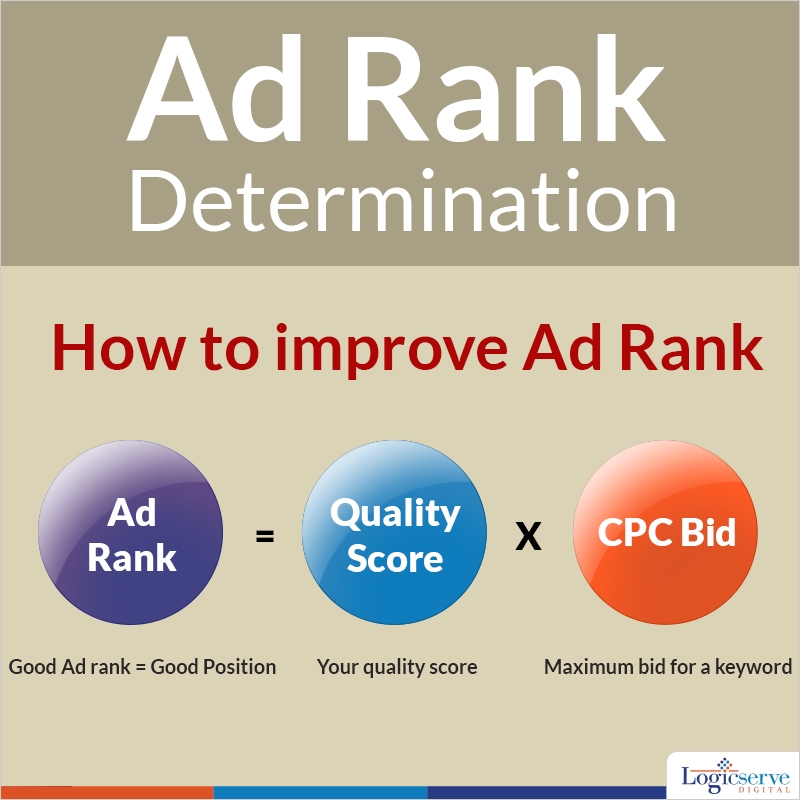
    Ad Rank is of course, the system Google uses to order competing ads on the search result pages. Over the past few months, Google has implemented significant updates to its AdWords program. Whereas till now Google was taking into account the max CPC bid and Quality Score to calculate the Ad Rank, henceforth ad extensions and formats will also a play a role in where your ads end up on the search results page. As Google puts it, they’ve “increased the importance of Ad Rank in determining whether your ad is eligible to be displayed with extensions and formats.”

    Use Ad Extensions for Your Own Benefit

    Google justifies ad extensions as being beneficial to your ads since they improve the ad’s visibility. “If two competing ads have the same bid and quality,” according to Google, “the ad with greater expected impact from extensions will generally appear in a higher ad position than the other.”

    As ad extensions lead to higher click through rates (CTR) for your ads, they represent a better return on investment. This makes sense — even though Google is saying this.

    Look at some of the types of ad extensions Google is offering — app extensions that show links to the app store or call extensions that let people click a button to give your business a call (especially relevant for mobile devices).

    According to research, 70% of mobile searchers are known to call a business from the search results page. Other extensions include consumer ratings annotations or location extensions, offer extensions and review extensions. Social annotations such as showing the number of Google+ followers for your Google+ business page are meaning social indicators since Google is supposed to use social indicators even in determining organic search rankings.

    Clearly an ad which displays average ratings (say for restaurants), location/map/directions (for any brick and mortal business — be it a restaurant or a store), or ongoing offers (a physical retailer with a time-constrained 50% clearance sale discount) will be more useful to searchers and will accomplish higher CTRs.

    Use Ad Extensions or Suffer

    Using ad extensions is not really an option — not when not using them will lead to direct penalties for your ads.

    Consider a scenario where your competitors have wised up to the changes and benefits and have incorporated the changes and extensions but you have not. Remember that use of ad extensions leads to better CTR and Quality Score for you; hence effectively reducing your CPC. Suppose your competitor uses all the beneficial ad extensions improving their Ad Rank; then, if you have the same CPC bid and Quality Score as your competitor, your ad position will go down and your CPC will go up since the formula Google uses to calculate your actual CPC factors in the Ad Rank of your competitors.

    On the other hand, for those with the relevant ad extensions leading to improvements in CTR, they’ll be rewarded with a decrease in average CPC.

    Likely Effects of Ad Rank Changes

    Since this is clearly not an optional change, the effects of Ad Rank changes are inevitable. Some of these changes include:

    • A likely increase in average CPCs. As more advertisers implement ad extensions, they’ll get better ad ranks, increasing the overall average ad rank. Since your CPC is proportional to the ad rank of your nearest competitor, obviously CPCs will go up.
    • Less room for organic results in the SERPs. It seems Google wants to push searchers towards clicking on more of those ads. As ads with extensions in them occupy more search real estate at the top, the organic results will obviously get pushed down, sometimes even below the fold. So, paid advertising will occupy more space leaving less space for organic results.
    • Adoption will increase. Now that Google has cracked the whip, so to say, everyone will hurry to implement ad extensions so that they do not suffer.

    Conclusion

    Marketers have to be smart enough to figure out what are the ad extensions that are relevant for them. Once they’ve figured that out and implemented the extensions, they can expect better impact from their PPC ads. Clearly, Google sees a strong correlation between ad extensions and CTR and how their use leads to searchers interacting more with the ads as well as taking desired actions. So make sure you implement ad extensions with great copy and SEO-optimized landing pages to get the best out of your PPC campaign.

    Previous Post: Understanding YouTube Remarketing
  • How to use Analytics for tracking PPC performance

    How to use Analytics for tracking PPC performance

    PPC Analytics @LogicserveDigi

    To track the performance of your business, it is important to track your conversions. By using Google Analytics, tracking and measuring the source of conversion becomes super easy. When using Google Analytics, all you need to do is define a goal and cite a URL that tells the source of that particular click.

    Google Analytics URL – Creation and Tracking

    To ensure your tracking URL is built, use Google Analytics URL builder and make sure your URLs are tagged with the campaign tracking parameters. It is not as tough as it sounds. All you have to do is simply fill up the form and give your campaign details along with inserting the URL of the landing page.

    The URL so created should only be used in your campaign further and not the standard one. The next step would be to ensure what command you want it to check. For e.g. in case of an e-commerce business, tracking shopping carts should be your goal or command. This way Google Analytics will count the number of visits to the order confirmation page and give you the correct data.

    Tracking of the campaign

    Once you’re done with the goal setting, Google Analytics will start tracking the goal performance and will attribute it to the respective sources. This process will help you to create easy reports to track the performance of your campaign. The custom reports in Google Analytics are easy to read and comprehend and helps you track your digital source accurately.

    To precisely manage your PPC account, tracking should be on your top priority. With the help of Google Analytics you can identify unique visitors or first time visitors from a particular source, bounce rate (relative data of people who visited and immediately left your site) and identifying the top landing pages of your site over a period of time. With the help of Google Analytics you can also measure the amount of time a visitor spent on your site.

    Campaign tracking on other search engines

    To ensure that traffic and conversion tracking is implemented correctly, you have to guarantee that your campaign across all the major PPC search engines is working fine. To double check, take a lead tracking report to ensure conversion data is accurately available in each search engine that is being used.

    Also, don’t forget to double check whether the codes have been installed properly on the landing pages and on overall website. Ensure that no conversion path or the landing page goes unchecked by you. Make sure the Google conversion tracking services are completed so that you have an instant access to your conversion statistics at all times.

    LogicSpeak:

    Analytics do offer viable tracking systems for your online marketing campaign. They can be relied upon to deliver provided you or your PPC account manager sets them up in perfect order as suggested by them.

    Previous Post: What you need to know about guided search in Pinterest

  • Paid Search 2014 Vs 2013 Trends

    Paid Search 2014 Vs 2013 Trends

    Paid Search 2013 -2014 @LogicserveDigi

    More and more consumers are opting for online shopping. With this, the efficacy of paid search for online retailers keeps growing. Both mobile traffic and money spent online by mobile visitors are increasing at more than 50% YoY. Percentage of paid search is quite significant in different segments of the retail sector. Paid search also generated more revenue for companies compared to organic search.

    If you are looking to improve your online sales or your website’s search engine rank, paid search marketing is one of the great ways to improve your game. Global advertisers spent 15% more on PPC and other search advertising in Q1 2013, YoY. CTR (click through rate) has more than doubled from an average of about 5% in 2011 to 11% in 2012. Almost half of the nearly 2,000 marketers surveyed in 2012 said that they used PPC in their online campaigns.

    With Google increasingly displaying the paid search results in a manner that is hardly distinguishable from organic search results, more users find it difficult to differentiate between the two. Hence more users will continue to click on the paid results increasing the value of paid search marketing.

    2013 saw the growth of paid advertising in both Facebook and Twitter. With Facebook becoming better at targeting its ads to its users, the ROI of Facebook PPC ads should increase as well. Mobile search grew in 2013 with more consumers than ever owning smartphones and tablets. While users may browse the web via multiple devices, they are increasingly making purchases with mobile devices. So, e-commerce retailers need to have mobile-optimized websites that makes the buying process a hassle-free experience for customers.

    2014 is likely to see some new trends in paid search advertising. Expect more search optimization that is conscious of demographic data. Clearly, young people and older, wealthier people may choose to spend their vacation time in California, Florida or Disneyland differently. It would be great if ads can be targeted based on the age of the user. It might make sense to target cruise liner trips to the wealthier and older demographic and while targeting more activity-based and adventure-driven stuff to a younger demographic.

    Tracking how users use their mobile devices is critical if paid search advertisers are going to be able to allocate their ad budget effectively. Advertisers will try to get better to track user behavior on their smartphones and how they divide up their activities on different devices. Social media players (Facebook, Twitter, Pinterest, LinkedIn) are all trying to get more engagement from their users. With all of these players now becoming public companies, they’ll try to maximize their revenue with paid advertising. We’re already seeing Facebook video ads and trending topics and so on. Twitter is inserting ads into its users’ TL. Expect more innovation along these lines.

    Since advertisers want to have a good idea about how effective their ads are, search engines like Google (with their AdWords) are updating their measurement and reporting tools. Google is eager to prove the effectiveness of paid search. Both Google AdWords and Bing ads have become more flexible about how to bid across their PPC platforms. Advertisers should love the idea of being able to bid differently based on time of day, location, device, etc. Facebook has also gotten into the game of flexible bidding. This will all continue to become even more complex in 2014 with multiple layers of bidding options.

    “PLAs (product listing ads) will be moving from the right hand side of the SERP to top spots on the left and its popularity is growing and may outperform regular paid text ads,” as shared in my earlier post.

  • Hiring a PPC agency

    PPC Agency @LogicserveDigi

    Managing a small business does require employees to wear more than one hat to keep things going. When it comes to PPC, the big question arises once again…..should you outsource PPC or let it be done in house?

    A fairly balanced column of pros and cons can be written down for both, the in-house PPC campaign & hiring an agency. However, in the long run, hiring a PPC agency yields better profit for most organizations. Here are some of the reasons, why you should outsource PPC advertising campaigns?

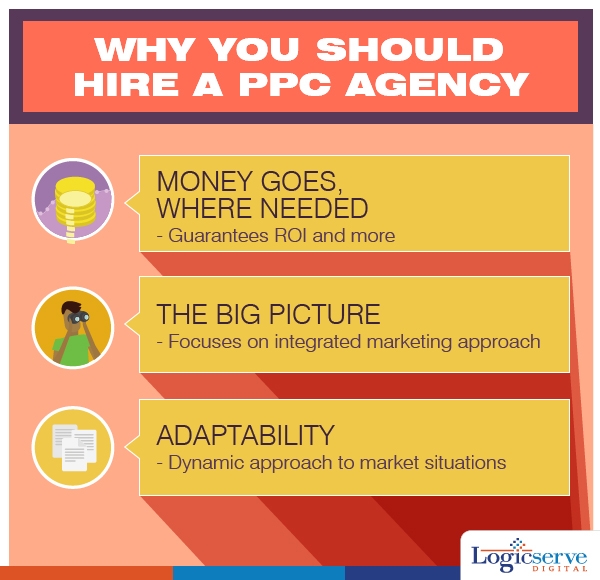
    Stay focused on your business & its expansion – This is true for all sorts of outsourcing and PPC advertising isn’t an exception. A dedicated PPC campaign takes a lot of time. There are a hundred things to take care of, a lot of self-learning, and continuously keeping an eye on the PPC performance. Hiring a PPC agency gives you a whole team to do that. ‘Full-time’, that matters in lot of places, and in the end you come out as a winner.

    Expertise matters

    This is a no-brainer too. Even if your in-house team has some quick-learners, they have loads of other things to get worried about. Hiring a PPC agency brings in the much required expertise for the campaign. Across, the World Wide Web, you will find loads of free advice on PPC advertising but PPC agencies have their set of premium strategies which when put in definitely work wonderfully.

    Money goes where it’s needed

    There are more ways to lose money while starting out with PPC ads, than you can count. Hiring an agency needs investment, agreed. But you save a bunch by not making rookie mistakes. This is where your profit lies.

    Now that we have established that it is awesome to hire a PPC agency, the next step would be to understand, what to look for in a PPC agency.

    Choosing the PPC agency

    There are agencies which boast that they are playing for the big picture. But can you afford that? A balanced agency is the one which is capable of delivering both short term and long term sales leads. What matters here is the affordability of service with positive turnarounds….Yes, PPC service charges should in correlation with the performance of your campaign but if they eat away your profits then you have need to give a couple of thoughts to it.

    Adaptability

    Everyone has a plan A. But winners have a plan B, then C and then D. The agency that you are hiring shouldn’t come out as one having all the focus dedicated to one strategy only. There should be evidence that the firm has applied varied methods for different businesses. They should know how to react to changes in your competitors’ strategies.

    Good relations from SEM Department – Most PPC agencies enjoy working relationships with technical support with search engines across which these campaigns are run. This implies technical glitches, new feature updates, quick resolution of issues et al ensure that your campaigns are well managed and catered to.

    Focus

    PPC agencies are dedicated to perform their role to the hilt as they are trained and qualified to do so. With the accountability clause mentioned within the contract, PPC agencies need to perform extremely well in order to deliver.

    Supplementary online marketing services

    SEO and SEM services are other marketing services that could be employed to enhance the entire marketing initiative. The knowledge and availability of these services through your hired PPC agency could be a great booster to your campaign. In fact, an integrated market plan can be approached upon.

    LogicSpeak:

    A PPC agency usually offers you with case studies, white papers and a list of past clients. Before you sign the deal, it would be great if you are able to get feedback from past clientele. Hiring PPC agency is a move that has high potency to make your business excel.

    Previous Post: How essential is it for you to go mobile?

  • Why should you pay attention to your Quality Score?

    Why should you pay attention to your Quality Score?

    Quality Score is an integral part of any PPC Campaign. This makes it imperative to work upon enhancing the quality score of the keywords within the campaign. I would like to share with a few tips and pointers which could guide in improving the Quality score and of course, your revenue and ROI

    What is Quality Score?

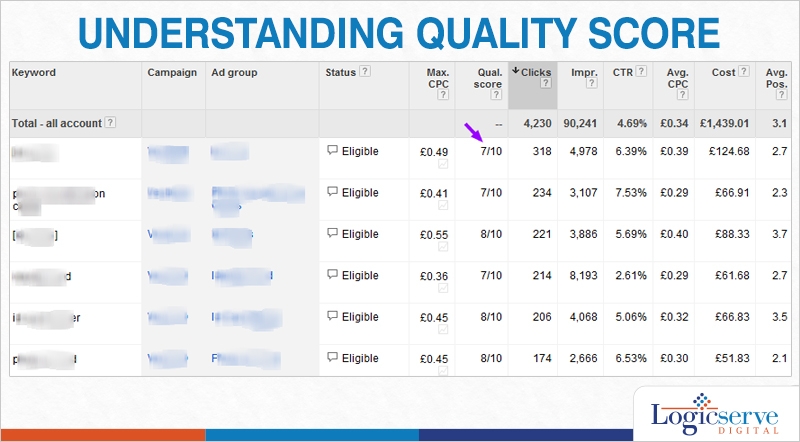
    In Google Pay Per Click advertising (PPC), quality score is Google’s algorithm for the Adwords ad auction. An Ad words ad auction takes place if there is more than one bidder for the keyword with respect to the relevant search query. The beauty of quality score and PPC is that the better it is, the less you pay. That’s right.

    Quality score is inversely related to cost, so the higher your quality score is, the less you will pay for every click.The other great thing about a good quality score is that the higher it is, the better you rank in the ad auction. Quality score works on a scale of 0-10, 10 being the best.

    Below is the formula for Ad rank – the system that ranks ads in the Adwords auction.

    Ad Rank = Maximum Cost per Click x Quality Score

    In simple terms, your position and eligibility to enter into an ad auction is based on the maximum you’re willing to pay for a click, multiplied by the Quality Score that Google have assigned to you. This score is recalculated every time your keywords are eligible to enter an auction, so that users receive the most relevant adverts possible.

    Six Key Factors that Impact Quality Score.

    • Expected click through rate (CTR = Clicks/Impression x 100%)
    • Your Keywords relevance to ad copy
    • Your Landing page relevance, quality and user experience ( e.g. : ease of navigation, quick-load times, and minimum pop-ups)
    • The Keyword relevance to search query
    • Account history: the overall CTR of all ads and keywords in your account
    • Geographic, Site and Device Performance


    Understanding quality score @LogicserveDigi


    Microsoft’s Bing also assigns keywords with a ‘quality score’ using similar criteria but at the same time, it is not taken into consideration when determining how much you will pay, or where your ad will show. Rather, it is more of a tool that can be used to optimize your paid search campaigns.

    A high quality score enjoyed for a given keyword means that the advertiser could receive

    • Higher Avg. Position
    • Higher Impression Share
    • Lower Cost per Click

    This occurs in comparison to keywords of other competitors with lower quality scores.

    On the overall, High Quality Score keywords can be relied upon to drive in relevant traffic at lower CPC for enhancing revenue and ROIs too.

    Now, that we know why quality score is important, we can move on to Click-Through Rate which is the most important variable in this entire campaign. Beginning with, we have two important points to remember –

    • The Click-Through Rate influences the Quality Score to a great extent. The Click-Through rate is determined by dividing the number of times the ad was clicked on by the number of impressions, or times your ad is seen.
    • Paid search ads need to be highly relevant to the query searched. If your click-through rate is higher than other ads on the page, Google can deduce that your ad is good, and will give it a higher quality score. Alternately, if your ads have a low click-through rate, Google will assign it a lower Quality Score.

    Deducing the above, search is based on maintaining relevancy in the Ad copies and hence Google rewards advertisers with high Click-Through rate by offering them better rates on the relevant keywords as these ads keep consumers happy with the search results.

    To improve CTR:

    Have a good account build with short and tightly themed ad groups containing highly relevant keywords

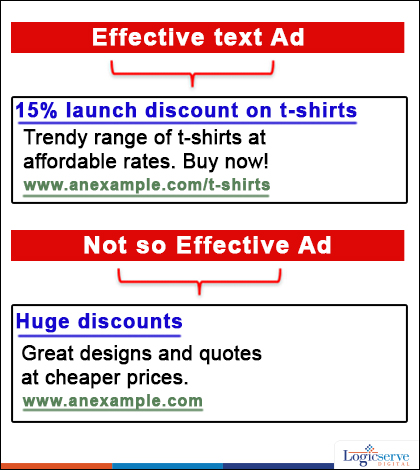
    • Optimise Adcopy Text – Ensure that your ad copy is closely related to your keywords will further drive relevance by increasing your click through rate. The best way to do this is by having a mention of your keywords in your headline of the ad text, in addition to the description lines 1 or 2.
    • Remember – To include a call to action that relates to your business.
      • Example – Buy now! Or Call today!
    • Carefully consider the keyword match types.
    • Use negative keywords to improve the relevancy of your broad match traffic.
    • Analyze the Search Terms Report periodically for negative keyword ideas.
    • Be smart enough to recognize the high volume keywords and analyse their performance on important parameters such as Bids, Avg. Position, Conversion, Revenue metrics, Quality Score, Impression Share and others.

    LogicSpeak:

    In summary, it is necessary to pay more attention to CTR and Quality score as and when possible. The keyword bidding so undertaken is directly responsible for increase in revenue and thereby ROI

    Previous Post:Ways to optimise Social Media Channels


  • Tips for writing winning PPC ads

    Tips for writing winning PPC ads

    Pay per click Ad @LogicserveDigi

    Wondering how to write winning PPC ads which enhance your conversion rate and lead to better ROIs? With no dearth of tips on effective PPC ads available across the Internet, the most crucial ones have been listed out for better understanding.

    Use of clear language

    Keep ads as clear as possible. Even if you are a great fan of subtext and irony, people who see the PPC ads don’t have time to go through those. Hence, whenever you are thinking of a PPC ad make sure that things are put in succinct language.

    Personalized and expressive language

    Ads are meant to introduce your product and services to the people. There may be scores of other providers for the same thing. If you are trying to sell a product ‘A’, make it sound like product ‘A’ from you is better than others. Focusing on your USP in the PPC ad is a high impact strategy. People are more likely to click through if your ad suggests a niche feature offered by your product.

    Make an offer that they can’t refuse

    Make the offer right in the beginning. People want to see what’s on the offer the moment they lay their eyes upon the ad. More importantly they want to know what they can do with the offer. A very clear ‘Call to Action‘ in the ad is very important and this is what makes the ad click. Try to minimize the use of words while conveying the offer.

    Focus on Keywords, but keep intentions honest

    PPC ads should have the keywords that they are looking to target. While doing so, you should be honest about why you are using the keyword. The keyword should not look out of place or forced into the ad. The more natural the usage, the better will be the impact.

    Keep the jargons away

    If you are one of those who think that using jargons make you sound legit, don’t apply it to PPC ads. Jargons don’t attract a large class of audience and cannot be considered to add value to your ad.

    Writing a winning PPC ad takes a lot of effort and many tries before you get it right. Keep the message clear, and keep jargons away. People have a very short attention span.

    LogicSpeak:

    If you want to increase your success, make the ads succinct and at the same time accurate. PPC ads can return a lot of profit, provided they are done the proper way.

    Previous Post: How to Use Customer Service for Increasing Website Ranking

  • Google AdWords Review Extension moves out of Beta Phase

    Google AdWords Review Extension moves out of Beta Phase

    Back in late June this year, Google had introduced AdWords Review Extension designed to allow the AdWord account holders to add the reviews from a third-party, right into the advertisements. It was initially rolled out in a beta testing phase with signing up possible only through contact to an AdWord rep. In a recent announcement, though a Google+ post in the AdWords page, Google stated that it had extended the AdWords Review Extension all the users.

    What is the AdWords Review Extension?

    The review extension is meant to exactly what book publishers have been doing for ages– Showcase positive reviews. The AdWords Review extension will let you quote or paraphrase reviews, rankings etc. from a third-party. These reviews would be visible along with your advertisements along with a link to the review publisher’s website.

    Adding a Review to your Campaign

    The Review Extension is enabled by a simplistic UI. You start with the Ad extensions tab and then go to Review Extensions. Click +Extension will lead you the question of to which campaign you want to add the review extension to. Google makes it categorically clear, that you are solely responsible to acquire the rights to publish the reviews of the concerned third-party.

    The review text is understandably succinct with a 67 character limit including the name of the publisher. As stated by Google, the authenticity of the reviews is verified using automated and human-based methods. So, after you save a review it takes a few days to get approved. Google has obviously found a way to ensure that fraudulent reviews don’t get pass the filter.

    The Effects of the extension

    Showcasing reviews is a time-tested strategy. It has worked almost everywhere. These reviews can be helpful especially to small scale local businesses which cannot use the Seller Extension. You don’t have to pay neither for the clicks on the publisher’s landing page links nor for inclusion of the review. No hindrances on your side, except maybe for the review publishing rights. The upshot from would be a visible increase in the click-through rate. The searcher will enter your site, with the reviews in mind, making a sale more probable. As a user, you get to have an extra marker on whether to waste a click on some advertisement or not.

    This Review Extension has obviously seen positive response otherwise Google wouldn’t have rolled it out within 4 months. This will improve both the veracity and efficacy of AdWords. So, if you run a campaign, make sure you start collecting your accolades!

    LogicSpeak:

    The extension will add the necessary credibility to your Ads. This will increase the trust of the consumer. In the longer run it will uplift the brand popularity with a reviewed source, subsequently working as a word of mouth  for your products.

    Previous Post: Optimise your Google Plus Page for More Interactions

  • Google AdWords Dynamic Search Ads are worth the effort!! They do deliver exceptional results!!

    Google AdWords Dynamic Search Ads are worth the effort!! They do deliver exceptional results!!

    Google AdWords Dynamic Search Ads

    Launched in 2011 – 12, the Google’s Dynamic Search Ads (DSA) program has yet to click off amongst advertisers. Nevertheless, reports of its successful implementation are slowly pouring in which could signal its increasing usage in the coming times.

    Though the term Google AdWords Dynamic Search Ads is quite self explanatory, for more clarity you could consider these ads to target keywords when searched through the search engine and perfectly matching the website inventory. Here, Google creates an ad using the website content and displays it on the screen attracting the buyer to visit its landing page.  From your end, you will have mentioned the product description and display URL while you using the programme.

    Wondering why to opt for the DSA programme? The Google’s DSA programme comes very handy if you are managing a relatively large sized online shopping portal wherein constant keyword updates seem tough to do. By signing up for this programme and inserting the keyword targeted ad into your account, the dynamic ads will automatically be displayed which eases a great deal of burden off your shoulders.

    Setting the keywords is equally easy, you just need to add the keywords in the already present ad group and remember to choose the Dynamic Search Ad from the drop down menu. The choice is yours whether you wish to continue using your existing campaign or opt for a new one.

    While setting up your dynamic search ads account with Google, remember to define

    • Language
    • Location
    • Device
    • Budget
    • URLs on the website on which the traffic should be diverted to.

    ( try using the Auto Targets tab or the URL Filter option)

    Post which the Google AdWords Dynamic Search Ads campaigns do require adequate attention and modifications as and when seemed fit.  If at all, you are planning to run one for your website, these pointers could prove useful –

    • Do observe, monitor and make slight modifications as per the trends and results on a regular basis.  You could even test new ads, product areas and even proceed to update new keywords, negative keywords and so on.
    • Once again, use of negative keywords help in saving a great deal of campaign money. Make sure you study your campaign reports and trends in great depth and update them accordingly.  Also, remember that in case of matching keywords with respect to a search query, the non DSA ads will be displayed. In order to combat this, you could always add negative exact match keywords within your DSA campaign.
    • Simplifying your task, Google DSA campaigns can be sent against all web pages which could seem tempting to you but is not advisable has this leads to not so impressive CTR and irrelevant traffic as well. Slightly more effort on defining exact URLs could go a long way in not only saving your campaign money but ensuring relevant traffic coming your way.
    • Since the DSA programme is entrenched within the Google AdWords module, you can always monitor its trends with relation to bounce rate, pages/visit, visit durations and many other options and modify your campaign accordingly.
    • Instant success with DSA could be your deepest desire but to achieve that you need to keep trying alternates, testing and monitoring your DSA campaign to get the best out of them.

    Find the Google AdWords Dynamic Search Ads interesting to check out then do give it a try. But in case, you are quite busy running the business or managing the portal approaching a professional digital marketing agency could quite serve the purpose.  To begin with you could always check Logicserve Digital as a PPC company which has considerable experience in handling PPC account across various portals.

    Previous Post: Avoid these back links to stay away from Google’s Penalties!!

  • Targeting the Right Kind of Customers

    Targeting the Right Kind of Customers

    Targeting the Right Kind of Customers

    “You finally have your website up and running. All you need to do now is to wait for the customers to pour in and buy your products.” Hold on. That’s not the way it all works. No doubt, you might have the best looking website up on the web, but that’s not bringing in customers. There is a lot more you need to do. Also, note that not every visitor turns into a potential customer.

    You are most likely to come across 4 different types of customers:

    • Those who visit your website just to stay updated with what’s new.

    • Those who just want to have a little bit of fun while they have nothing else to deal with.

    • Those intending to learn more and might later opt for your product

    • Those visiting your website with a sole intention of adding something to the shopping cart.

    You would most likely be interested in the third and the fourth category. But, how do you target a specific type of a customer. No doubt, you might probably walk up to an SEO expert to get it all done for you. That’s obviously bringing in the desired amount of traffic. What about the conversions? There is a bit more you need to do. Listed below are a few simple but highly effective tips that will get you the desired number of potential customers.

    More than just keyword research

    The visibility of your website largely depends on the inclusion of the necessary keywords in your content. No doubt, there are tons of online applications both paid and free that help you select the right keywords for your content. But, there is still something missing.

    Keep aside the keyword research for a minute. You need to get into the minds of the users. How do you do that? By researching various blogs and forums for this is where people often discuss their personal experiences, and there is a lot you can pull out of it. Once you have done that, you can then decide on the keywords you would want to incorporate into your content.

    Target the devices too

    Don’t expect your website to look the same across all types of devices. A website that looks decent on a desktop screen may not have a user-friendly layout when viewed on a tablet or a smartphone. As a result, you need to have a responsible website, one that attains a layout depending on the type of gadget it is being viewed on.

    But, why go through all of this? What are you losing? Well, you are losing out on a large bunch of users who often prefer surfing the internet through a portable device. If your website is not responsive, there are chances they might simply bounce off. You obviously don’t want that to happen. So, make sure your website is rightly visible on devices of all sizes.

    Remarketing

    In case you didn’t know, remarketing means targeting those who have already visited your website in the past. Why remarketing? A few who bounce off might want to return back and purchase your product. You obviously would not want to lose any of these. These visitors are most likely to come across your ads when visiting other website. If not all, some might possibly return to your website through one of these ads through the “Click Here” button and there are your conversions.

    Previous Post: How Can Pinterest help you promote your business?

  • PPC Match Types – What Difference Can They Make?

    PPC Match Types – What Difference Can They Make?

    PPC Match Types

    It is the keyword in your paid search account that drives your entire PPC campaign. Without the right keyword, don’t expect your ad to pull-in the right amount of traffic. Life would have been so easy and beautiful only if you could add all of those keywords in your ad. But, unfortunately that’s not possible.

    However, by using the right keyword match types, you can surely hope to make thing better, in fact a lot better. Before we dive into how to effectively use these keyword match types, let us first understand what they actually are. Have a look at the table below

    Match Type

    Keyword

    Example searches

    Broad Match

    Men’s Shoes

    Shoes For Men

    Broad Match Modifier

    Men’s Shoes

    Man’s Shoes

    Phrase Match

    Men’s Shoes

    Buy Men’s Shoes

    Exact Match

    Men’s Shoes

    Men’s Shoes

    Now, that’s a bit confusing isn’t it? Well, it shouldn’t be for we have got it all cleared up for you

    Broad Match

    Using broad match will show up your ad if the search term contains your keyword irrespective of its order. Close variations of your keyword too, are likely to pull up your ad. You might probably want to stick to Broad matches if you cannot afford to spend hours creating a keyword list. These matches will help you get a higher volume of ad traffic.

    Broad Match Modifier

    In this case, your ad will only be shown when searches contain specific modifications or close variations of the keyword. Modifier does not allow your ad to be shown when synonyms are used in the searches.

    Phrase Match

    Your ad will be shown when someone searches for the exact keyword. The searches may also include a few extra strings of words but will surely contain the exact keyword. Phrase Match offers precise targeting and helps you reach more number of potential customers. Your ad will not be shown to those using search terms that are not quite related to your product or the service you offer.

    Exact Match

    In case of exact match, your ad will appear only when the user searches with the exact keyword and a few variations. For instance, the search term ‘men’s shoes’ will show up ads that contain ‘men’s shoes’ and ‘man’s shoes’ but will not display your ad if someone is searching with terms such as ‘buy man’s shoes’ or ‘man’s shoes on sale’.

    Choosing the Right Keyword Match

    You need to be very careful while selecting a match type. Start up with broad match keywords. However, if you realize that these searches are bringing in a huge amount of irrelevant traffic, you might want to be a bit more specific. This is when you need to opt for either Phrase Match or the Exact matches. If you know too little about PPC, there are chances you might not be able to handle it all by yourself. A professional PPC Management Company can help you out with the task.

    Previous Post: SEO or PPC? What’s Better For Your Website?