LS Staging

Category: Pay Per Click (PPC)

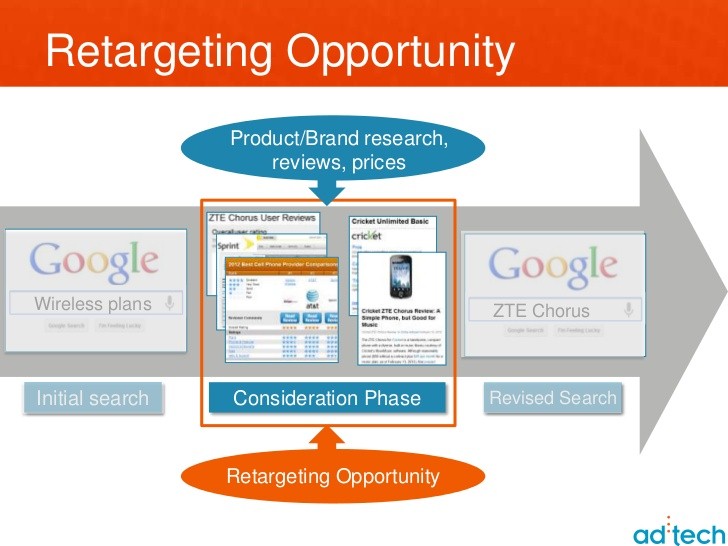
  • SEARCH COMPANION ADS – An efficient way to expand targeting options on GDN

    Google as the largest search engine is constantly on toes to develop and offer advertisers ground-breaking ways to turn up in front of the customers. Now, it has come up with a new method which targets users based on their intent, called as Search Companion Marketing or SCM on the GDN (Google Display Network).

    THE IDEA!

    The idea behind SCM is to make targeting users easier by showing ads based on the intent of the search. This is made possible by showing image and text ads on the GDN to users that put a search query on search engines such as Google, Yahoo and Bing.

    On the GDN, advertisers can choose to target keywords that are highly relevant and reach the users efficiently. For an extensive Display Ad campaign, advertisers can smoothly transition from their Display Advertising to Search Companion Ads.

    For example, a user types a query, say, “Biryani recipe”. When the search engine displays the result, he clicks on any of the organic links that are a part of the GDN. The user will see several ads about the nearby restaurants that specialize in Biryani, or the history of the Biryani and so on. Depending on which link the user chooses to click, Google AdWords will analyze your intent and signal the most relevant ad to the said intent.


    How to implement SCM in Google AdWords?

    You first need to create a campaign with keywords by targeting the GDN, to get started with SCA. Next, you need to contact the Google Representative to enable the SCM feature.


    What makes SCA’s different from Display Ads?

    Search Companion Marketing is about ‘remarketing’ which is more concerned about the search query of the users instead of the advertisers pages or links or forms. The user is remarketed only for the period of the online session.


    search companion ads


    Key takeaways:

    • If you have adequate conversions to get Google tracking and optimization, SCM can work efficiently for lead generation with enhanced CPC bidding
    • Advertisers who focus on lead generation can use SCA optimally
    • SCA displays ads to the searchers who have already expressed interest in the advertisers’ ad, so it flawlessly ranks them higher in the conversion funnel.
  • Google Smart Goals for ‘Smart’ optimisation of your Adwords

    Is there any way businesses can identify premier quality visits to their online websites and at the same time optimise them? Yes, there is a ‘SMART’ way! Smart Goals, powered by Google Analytics, can help you to measure not only conversions but also optimise the Adwords campaign. If you are an advertiser or analytics user these Smart Goals are sure to give you an edge over the competitors. This new Google Analytics feature effortlessly nurtures your bids, ads, and websites.

    What are Smart Goals? Let’s take a closer look!

    Smart Goals, is a smart way to gauge the performance of your website with the help of metrics which traces the high quality visits that have high probability to convert. These metrics consider various signals while assessing the smart goals, such as session duration of the user, pages per session, type of browser used, type of device used etc. Thus, configuring the goals rightly enables Google to provide crucial information, such as the conversion rate of your application or website and also overall number of conversions. So, here is the step-by-step guide on how Smart Goals work:

    A step-by-step guide on how Smart Goals work

    1. By using machine learning, Smart Goals analyses loads of signals to determine which signals have high probability to get converted on your website.
    2. Each quality visit is allotted a score. The best visit is then translated into smart goals.
    3. A threshold is established to determine the ‘best’ visits by picking up about 5% of the traffic coming to the website through Adwords.
    4. Once the threshold is established, the Smart Goal feature is enabled on the website to trace website visits, and also ties it up to the other channels of traffic sources, other than Adwords.
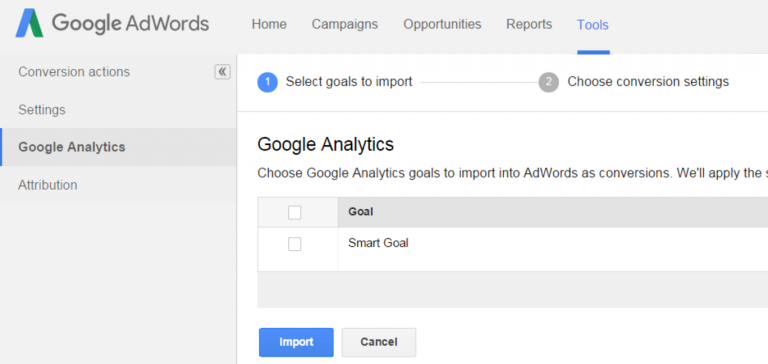
    5. You can effortlessly import the Smart Goals into Adwords once they are enabled in Google Analytics.

    Things to remember before using Smart Goals

    Smart Goals not only help you to optimise your ad campaigns but also help them convert the visits into potential leads and customers. However, before you go further, there are certain requirements you need to fulfil to activate Smart Goals that are listed below:

    • Adwords account and Google Analytics account should be linked
    • Before you set up Smart Goals, ensure at least 1000 clicks to the selected Google Analytics account is sent from the linked Adwords account in the past 30 days
    • No more than 1 million hits per day are received by the reporting view
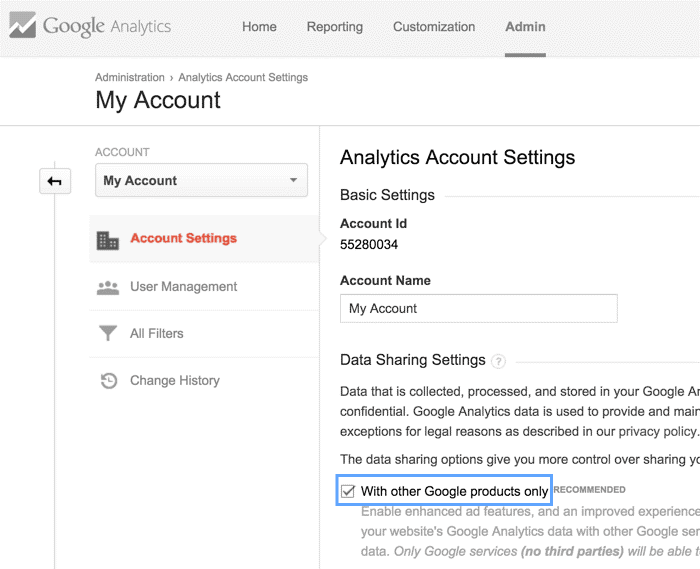
    • Make sure the Google Analytics ‘Data Sharing’ setting – ‘Google Products and Services’ is turned on

    Step-by-step guide to enable Data Sharing

    Once the above given requirements are fulfilled we can move ahead and enable the Data Sharing.

    Smart Goals


    • Login to the Google Analytics
    • Decide on which analytics account you want to enable Data Sharing and navigate to that account
    • Select ‘Account settings’ in the Account column
    • Tick ‘With other Google products only’ check box under Data Sharing settings


    3 Simple Steps to work with Smart Goals

    Now that we have enabled the Data Sharing let’s see how we can enable the Smart Goals.

    Step 1: Enable Smart Goals

    • Login to Google Analytics
    • Select the Admin Tab

    Smart Goals

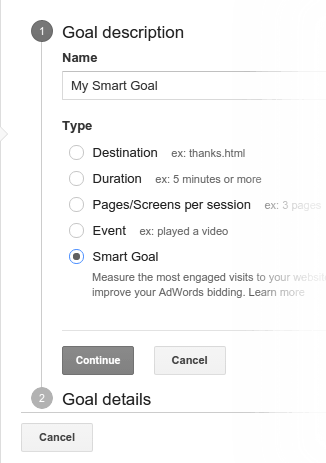
    • Click on Goals > Select Smart Goals
    • Give a name to your Smart Goal and Save

    Smart Goals

    Note: If you select an Industry category, the Goal description might appear different than what is shown in the image above. So, kindly ignore it and click on Smart Goals.


    Step 2: Import Smart Goals to AdWords

    In order to optimise the Google AdWords performance, it is essential to import them into AdWords. Follow these basic steps to do so:

    Smart Goals

    • Link the Google Analytics and AdWords accounts
    • Once linked, wait for 30 minutes to get the imports
    • Sign in to AdWords account
    • Click on the Tools Tab > select Conversions
    • Go to the left hand menu and click on Google Analytics
    • Check the boxes you wish to import. Click continue
    • The next page will display the settings that apply to the goals you selected. Click on import goals
    • Click Close to if you have completed the process or click Import more to import more goals

    Step 3: Use Smart Goals to optimise AdWords

    Once the Smart Goals are imported let them amass data for a few weeks. The first step to start using Smart Goals is to calculate Cost Per Acquisition (CPA). Simply divide the expenditure of the ads by number of Smart Goals completed.

    Let’s take an example:

    Your expenditure in Adwords in past 2 weeks = $2700

    Number of Smart Goal conversions = 90

    Therefore, the average CPA = $2700/90 = $30

    So the average cost for acquiring a session having high probability to convert is $30. In this case, you should set your CPA target to be $30 in the AdWords.

    Note: To optimise AdWords, Google also recommends you to use a flexible automated bidding strategy, called as Target CPA bidding and if you wish to manage the bid by yourself use manual CPC bidding.


    How to see Smart Goals perform?

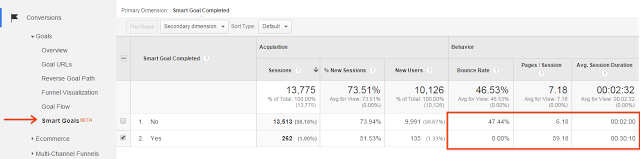
    To see how the Smart Goals are performing, you need to check the Smart Goals report. It helps you to distinguish between the Smart Goals Traffic and the other traffic. To generate the report go to Conversions> Goals> Smart Goals report.

    Smart Goals Limitations

    Though these Smart Goals turn out to be useful for the advertiser, they have their own limitations. They are listed as follows:

    • You cannot customise or configure them
    • They can take up only one of the available 20 slots
    • You can only have one Smart Goal per view
    • They are unavailable for views that get 1 million + visits per day
    • In AdWords, they don’t support VTCs (View Through Conversations) or cross-device conversions

    Well, all said and done, these smart goals are yet not completely rolled out for all the analytics users or advertisers. However, you can expect it to be gradually made available for all the users.


  • Small Business Owners Need To Know This About SEO And PPC

    Tips to improve visibility of small business websites @LogicserveDigi

    The challenge of trying to get a small business website to become visible can certainly be tough to work with. This is especially the case when it comes to getting on a search engine. It is a necessity to get onto a search engine so it will be easier for the people to see that your business is out there. One thing you can do in order to become visible is to utilize pay per click and SEO, or search engine optimization, plans. These are great solutions that will help you get the most out of your business’ efforts when marketing online so you will have more control over what you are doing within your business. This can provide you with more help for your site as needed so you will have a better appearance and support setup that you can appreciate.


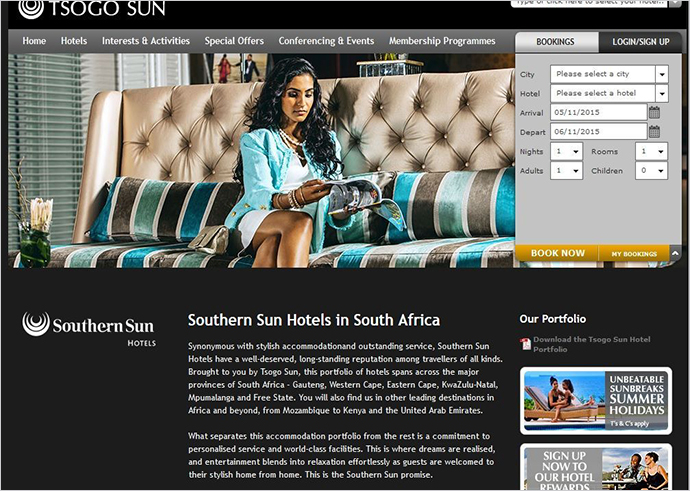
    What Are These Two About? Pay per click advertising is a format that is popular among businesses looking to stand out. It helps you get on top of a search engine by having your site linked up to certain keywords. This is provided that you spend a proper amount of money on each click within your campaign. This is ideal for local campaigns when you are trying to target people within a certain area. For instance, the Southern Sun hotel chain in South Africa established a PPC campaign that focused on reaching local traffic, promoting hotels in specific areas and listing information on sales through PPC ads. The campaign ended up having a return on investment for local responses that was nearly twice as what it got internationally, thus increasing awareness among people in South Africa where the chain’s hotels are.

    Southern Sun Hotel PPC

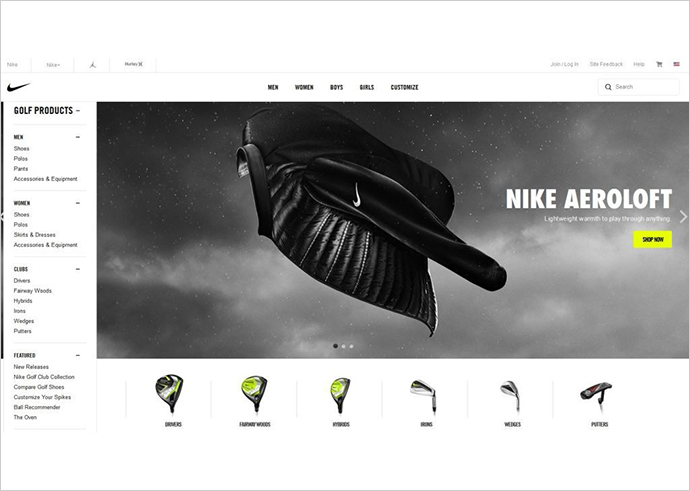
    Meanwhile, you can use search engine optimization to make it easier for your site to be naturally found on a search engine. This often entails functions like taking care of the site map on a site, creating enough descriptive tags on a page and getting as much unique content as possible while using keywords that are ideal to your situation. An example of this comes from the efforts Nike Golf made to make its website more visible. Nike Golf adjusted its website to be more HTML-based while using added tags that would be listed within a website’s code without taking longer for them to load. This in turn allowed the website to become easier to read and not blank when a search engine reviewed what it had.

    Nike Gold products HTML  page


    What to Think About There are many good points that you deserve to consider when thinking about using any of these methods:

    • Make sure you think about the budget that you have for a PPC campaign. Think about how much you are willing to spend per click and then consider the approximate number of clicks that you are willing to spend on. Sometimes you might have the ability to limit your order to work until a specific number of clicks are reached.
    • There are also times when the cost of your PPC campaign might increase due to the demand for a keyword and the competition that you’ve got to bear with. Check every week to see if the value of your campaign is changing to where it’s either more expensive or a little more affordable.
    • The arrangement of your website must be reviewed carefully. This includes a need to take a look at how you’re going to handle the content on your site to make it useful.
    • You must also think about the keywords you want to use on your SEO campaign. This in turn can help you out with getting your site ready while guiding you on the right path when creating the best possible forms of content.
    • You also have to be cautious when preparing your website based on the types of plug-ins or other non-text features that you plan on using within your site. This is to ensure that you are carefully organizing your website based on what you want to highlight.


    Consider Your Upgrades You need to get your upgrades to your site to work to their best right away if you want your SEO or PPC campaigns to work. Triumvirate Environmental, a company that focuses on handling environmental and hazardous waste in a safe manner, established its own blog and shared its content with as many social media sites as possible. These are two popular SEO strategies used to make a page more visible. This in turn increased the site’s number of social media followers and its rankings on social media pages. Meanwhile, Cisco opened its own social listening center to identify what was going on with the company on social media in terms of its mentions and how people identified with the brand. This helped them company to figure out what keywords it needs to use and how to target people in the proper manner when getting online and making itself more visible. The ways how Cisco worked with this content in mind proved to be essential for helping the company to identify new ways to make more money and to make its functions more visible. Regardless of what you plan on using, you can contact Logicserve Digital for help with your online marketing needs. You can use the LogicSpeak program in particular yo help you out with organizing your setups the right way so it will be rather easy for you to get the most out of your SEO or PPC plans.

  • Paid Search & SEO – Complementary Angles of Any Digital Marketing Campaign

    Paid Search & SEO – Complementary Angles of Any Digital Marketing Campaign

    Improve your website traffic with Paid Search & SEO

    Natural and paid search have gained tremendous importance for any online business to perform. As per common sense, performing keywords will be those which users/viewers would use to locate your pages and hence need to be present within the content of your website.

    For starters, you will have your Adwords account to generate a list of highly searched keywords relevant to your products and offerings but this is not enough. There is a lot more research and effort involved over and above just matching your keywords list. What if all the highly researched keywords do not exactly match up to your offerings then you surely have a problem at hand.

    Here, SEO and Paid search come at your assistance. They are hard core internet marketing strategies that are employed to enhance natural traffic coming your way along with technicalities employed to enhance website traffic through paid search.

    Information Architecture –

    Both SEO and PPC involve the use of keywords. Using PPC related tools arriving upon the most suitable and relevant keyword grouping including term variations does offer a clear picture on how the website pages could be developed and displayed. In fact once this process is through; developing relevant content, assigning meta tags, meta titles, meta keywords, HTML titles and more becomes quite easy.


    Page wise Performance Analysis

    Depending upon the IA structure, ascertaining the page wise performance does become crucial. If optimized well, a high number of organic visits could be recorded while paid search can divert traffic to category or product pages. For optimizing the performance, you need to conduct A/B testing of pages and decide upon enhancing the convertibility quotient. Here again, a balance should be struck between the two strategies related to which page the visitors should land. However, remember organic conversions have scored better over paid ones.


    Keywords with ‘brand’ names

    Of course, keywords that contain the brand name are highly popular and searched for but they get lost amidst Google’s privacy concerns. In a way, this could be affecting the organic search. On the other hand, paid search can score far better on this account as broad match keywords can perfectly capture the relevant search queries. Some keyword combinations include ‘brand’ coupons, ‘brand’ reviews, ‘brand’ deals and so on. If these search queries do not meet the desired responses onsite then you can estimate the loss of traffic and conversions too.


    Identifying Competition

    Online competition could vary from real competition. Your search results could offer insights into your competitors like never before. Bear in mind, that online search could be conducted depending upon the product/service offered by you and which not necessarily could be brand specific. Also, it is essential to remember that your competitors could be or could not be on the same platform and hence visibility may vary in performance. However, the Auction Insight Report could offer dynamic insights into the competitive trends within your segment and hence should be referred to regularly.


    Data Analytics & Insights

    Despite, both SEO and PPC working towards the same goal and give equal importance to URL key, title tag, H1 tag and product title. If you are advertising with Google then the product title is picked up automatically to be displayed on Google Shopping and influences the CTR rates. Also, SEO on page optimization mainly highlights the title tag, URL key and H1 tag. It is advisable to pay extra attention to product search queries and understand customer behaviour. In most cases, a slight change in the product title can accelerate conversions both organically and through paid search too.


    Testing and Optimisation

    Paid search facilitates testing of product ads and their performance through the CTA which otherwise is difficult to ascertain in the search engine rankings. Also, with each page having a single title and a meta description, hitting the bull’s eye does become certainly difficult. But with a paid search campaign in place, arriving at a high CTA is not very difficult. Once you zero down upon the better performing CTA, you can replace the same in the page title or within the page description.

    Nevertheless, with multiple data reports just a click away, you need to take efforts to download them and gain insights from them.

    Paid Search and SEO are complementary activities and are essential for any internet marketing campaign to perform well with balanced yet diversified effort. The following perspectives have to be kept in mind

    • Changes (irrespective of frequency) in the algorithms of search engines
    • Regular PPC management to modify and stay ahead of the competition
    • Maintaining a balance between these two strategies is vital – w.r.t. time, effort and even finances

    Buoyancy and dynamism within internet marketing strategy is a must especially when it encompasses paid search and SEO strategies. Remember, search queries i.e. consumer preferences and search engine algorithms which reign supreme and you have to incorporate them within the framework of your digital marketing campaign.

  • How to Track Your Sales Conversion for PPC Campaigns

    How to Track Your Sales Conversion for PPC Campaigns

    PPC conversion tracking @LogicserveDigi

    Almost all companies set up their PPC campaigns for the sake of ensuring that they can get more clicks and thereby improve their leads and consequently sales as well. If you are wondering as to how you can trace your sales conversion and find out the actual benefits which the PPC campaign has yielded, here are the things you need to know and do.


    AdWords and AdCenter Conversion tracking

    AdCenter by Microsoft and AdWords by Google are two of the top tools which can offer you multiple benefits when you are looking to calculate the details of your conversion tracking. They come with scripts which one can easily embed on their site. When you have done so, you can easily find out some very important details about the conversion.

    You can get the following details every time a conversion is made.

    • The keyword
    • The search query used
    • The time at which the conversion was done
    • The day on which the conversion was made
    • The geographical details of the search query
    • Placement of the keyword as well.

    All these details will help you in understanding your target audience and the niche of your customers thoroughly which in turn can help you refine your ad copy even further to optimize the conversion rates significantly.


    Analytics tracking

    When you want to track the sales conversion, you cannot do without analytics. You have the option of either going for a free service like Google analytics or you can even choose paid enterprise solutions like KISSMetrics.

    Analytics is an extremely robust and useful tool in the sense that it offers you more than just conversion data. With the use of this tool, you can have insights like user behavior, referral data and even the type of technology you have been using across your site as well.

    In order to gain the maximum benefit from the use of this tool, you should make it a point to install the script on every single page of your site. This will ensure that you will have a complete report rather than incomplete and partial data.

    Whenever you are using such tools, make it a point to study the details of how you can extract the best benefits from its use. If you do not carry out conversion tracking, you are much more likely to take wrong decisions from your PPC campaign. You need to set clear and well defined goals with reference to your business regarding what you are looking to achieve and then define the same in your analytical tool. This will guide you in the right direction and thus you can be hopeful of maximizing the overall business profits as well.

    We have just listed the top tools which most people tend to use for analyzing their conversion rates. You are free to pick whatever you deem to be fit. Ideally using these tools should be enough to bring you a clear insight of how you can maximize the growth from your PPC campaign.

    Previous Post: Social Media Trends For 2015

  • How To Prepare Your Digital Marketing Strategy For 2015?

    How To Prepare Your Digital Marketing Strategy For 2015?

    Prepare Digital Marketing Strategy @LogicserveDigi

    Are you looking to hone your digital marketing skills to be used in 2015? Here are some of the key tips that you must not miss.


    Set a goal

    Before you begin the strategies to be implemented in 2015, it is extremely important to ensure that you set down the right goal for your business. You need to set some well defined and clear deliverables and goals which your business aims at accomplishing. When you have a clear insight regarding the things you wish to achieve, making the right digital strategy is going to be a whole lot easier.

    When you are setting the goals, following are the points you need to keep in mind.

    • Check out the new products and/or services you wish to target.
    • Analyze the supply and demand curve for the existing products that you have.
    • Find the best and the most successful marketing strategies which your firm used in 2014
    • Compare your 2014 marketing report and analyze the best and worst practices.
    • Look at the goal sheet of 2014 and find out the goals you clinched and the ones you failed.
    • Come up with a rough sketch of the possible marketing methods you should use.

    These are the key points you should keep in mind when you are framing goals for the upcoming year.


    Start with the content

    As we all know how important the content truly is, you have to be sure that you are investing the right amount of time for the sake of your content. You need to put in ample efforts for the sake of drafting impeccable content that is not only accurate but also offers you an extra edge over your competitors.

    Try and research the market, gauge your audience and then make your content more friendly, creative and factual simultaneously. This is going to help you have the right kind of engaging content that shall make your digital marketing strategies successful.


    Pick the perfect platforms

    You have to choose platforms like Instagram, Yahoo, Bing, Facebook, Twitter and so on. All these platforms reap golden rewards when it comes to marketing and you have absolutely no other option but to work on these platforms. Try and popularize your profiles and gain as much visibility as you possibly can. You can use both paid and free advertising methods, but do whatever you can for the sake of maximizing the total reach which you can attain.


    Focus on YouTube

    As per research and statistical analysis, it has been found that YouTube is going to grow massively in popularity in the year to come. This is why you should work upon the kind of views you can achieve. Make sure to have ample YouTube videos and try and leverage the amount of audience you gain from your YouTube channel.


    LogicSpeak:

    These are the top strategies which is sure to help you popularize your digital marketing campaign. You should periodically review the success you have managed to achieve and mold your strategy from time to time.

    Previous Post: Difference between B2B And B2C Content Marketing

  • Types of Facebook Bidding Strategies

    Facebook Bidding Strategies @LogicserveDigi

    When we are talking of advertisements, one has to mention Facebook advertising. It is by far one of the most popular and also effective advertising forms. Facebook has a lot of users and this makes it a befitting platform for the sake of enhancing the total reach which you have.

    However, not all Facebook advertisements turn out to be successful. Ever wondered what sets the best apart from the rest? There are tips, strategies and methods which you need to be aware of. If you have not kept an eye on these points, it will be terribly difficult for you to make the most out of Facebook ads. Here, we will, talk of the main things which you need to know to maximize the benefits you can reap from it.


    Choose The Apt Strategies

    Facebook has taken advertisements to an altogether new level. Here, not only do you advertise your firm, but you exercise complete control over too many factors. There are four diverse strategies from which you can choose and they are namely

    • CPM: cost per mile
    • CPC: cost per clicks
    • OCPM: optimized CPM
    • CPA: cost per action

    Each of these strategies has their own benefits and suitability. The money you are paying for these advertisements differs based upon the strategy which you have chosen. Now, the main thing which you have to do is first determine the type of strategy which will be best for your firm.

    Remember, this can be a very crucial decision because in the end, it will decide as to whether or not you are able to make the most out of your ads.

    If you are focusing on micro targeting and you value the views which you receive because your main aim is to increase your exposure, it is CPM that seems to be the best choice. Those who are on the lookout for performance and are more focused on the clicks they get can settle for CPC. If you sell such services where the call to action is important for you, OCPM looks to be good. However, in most cases, it is seen that CPA turns out to be the best bidding option which you have.

    No doubt, the strategy which you are choosing will depend upon the parameters that are directly a part of your business.


    Analyze The Cost Factor

    Many a times, it is seen that people are not willing to spend a great deal of money on advertisements. However, you need to calculate the returns which you are getting when you put in an investment for such expenses.

    If your Facebook advertisements are leading to sales, the expenses actually turn out to be an investment. When you have a small budget, you can start slow, but do not neglect these advertisements because there are firms that have managed to increase their business significantly because of the smartness with which they handled Facebook advertisements.

    So, make sure to devote time, effort and money to your advertisement campaigns because they have immense potential.


    Previous Post: Tips to Find Customers on Facebook

  • Bidding on Branded Terms: Consider These Parameters

     PPC brand bidding @LogicserveDigi

    Often you will find people debating the need to bid on your own brand, especially when you have a strong seo presence. When you are looking to cut down the cost entailed in marketing and PPC campaign, you are often tempted not to bid on your own brand. However, when you choose to do so, you will be able to maximize the total returns you can have. Here are a few parameters that you have to keep in mind.

    Improve Your Rate Of Conversion

    Mostly, we find that it is the home page which is the top landing page of your site. However, when you are looking to improve your conversion rates, it is by bidding on branded terms that you can make the difference.

    When you are launching a PPC campaign, you will have much larger control over the landing pages and you can maximize the conversion rates significantly.


    Handle Your Competitors

    On various occasions, it has been seen that competitors will resort to bidding on your brand terms. Their main motive behind this is to steal your traffic and benefit from the same. It can also impact the type of organic listing which you have. When you choose to bid on your brand names, you will be able to handle your competitors and ensure that you part of traffic is not stolen.


    More User Clicks

    Not everyone is internet smart. Many a times, you will find that users who search about a certain keyword, they’re likely to click the first result which is actually the ad rather than the search listing. No one wants to lose out on even a single customer. When you choose to bid on your own brand terms, you will be able to get even more user clicks and this can boost your business tremendously. So, do not miss out on the ads either.


    Cheaper For You

    When you are looking to invest in PPC campaign, you are going to be mindful of the cost. It pays to know that when you are bidding on your own brand name, it will be a lot cheaper for you. As the total outside bids is less, the total cost of brand terms is much cheaper. With a higher website relevancy, the overall quality score offered by your website will improve by leaps and bounds as well.


    Customize The Way People See

    When you are investing in PPC, you have a lot of options at hand. You can configure the site links, add your own product listings and even choose what to show to the users. Sometimes, it is the snippets that makes all the difference and will help your customers in reaching to your site.

    These are some of the different points which must have convinced you as to why you need to bid on the branded terms. They can bring about the much needed change and push your firm towards clinching success as well. Do not ignore the importance of branded terms because too often they have proved to be fairly useful in promoting the success of business.


    Previous Post: Types of Facebook Bidding Strategies

  • Quantify User Engagement Using Google Analytics’ Event Tracking

    tracking @LogicserveDigi

    Business offerings can be oversimplified as Services, Products (Digital or otherwise), or the Brick and Mortar model. Whatsoever is being offered, establishing an online presence, and building your brand is no longer optional, in other words, this should be your primary strategy. The first step being, to have a website that is exclusive to your business. This website becomes your official storefront, a virtual presence for your business.

    Once a website is up and running, the next logical step is to analyse its performance based on user engagement to determine, if the website (virtual presence) has actually resulted in conversions (Business opportunities, new clients). Assuming Google Analytics is already set up on the site, and data is periodically collected, we venture ahead

    There comes a time when the conversion rate might have reached a plateau, or a new campaign has failed to result in desired conversion rate? Basic reports may not provide the much needed insights. Enter Google Analytics- Event Tracking.

    An Event, in GA-terms is typically identified as

    • A Click
    • A download – text / media files
    • A specific page’s views
    • Media Play, Pause, Stop
    • There may be others, but these are the most popular ones to be tracked

    The tracking data would provide valuable insights into your visitor behaviour, and possibly with a slight change in position of the element, change in action flow, could cut down bounce rates, and influence the conversion rates for better.

    Here are the logical sequences of steps that need to be followed to successfully add the event tracking code to your website, and collect the data at Google Analytics

    1. Determine the elements you wish to track
    • Click – Link / button
    • Media-play : Audio, Video
    • Downloads – Media, files, ebooks etc

    Understand the different parameters used in Event tracking, before deciding to code.

    Google-Analytics1 @LogicserveDigi

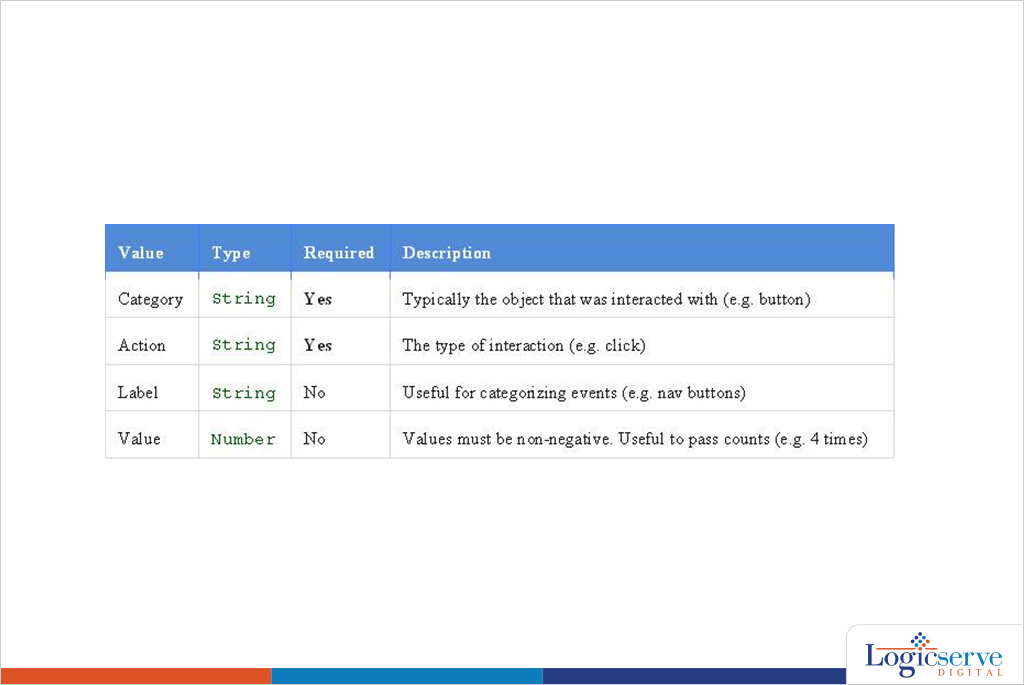
    An event consists of four values that you can use to describe a user’s interaction:

    Google-Analytics-2 @LogicserveDigi

    Source: Google Universal Analytics Documentation

    1. Set up meaningful names for the different parameters used in Event-tracking
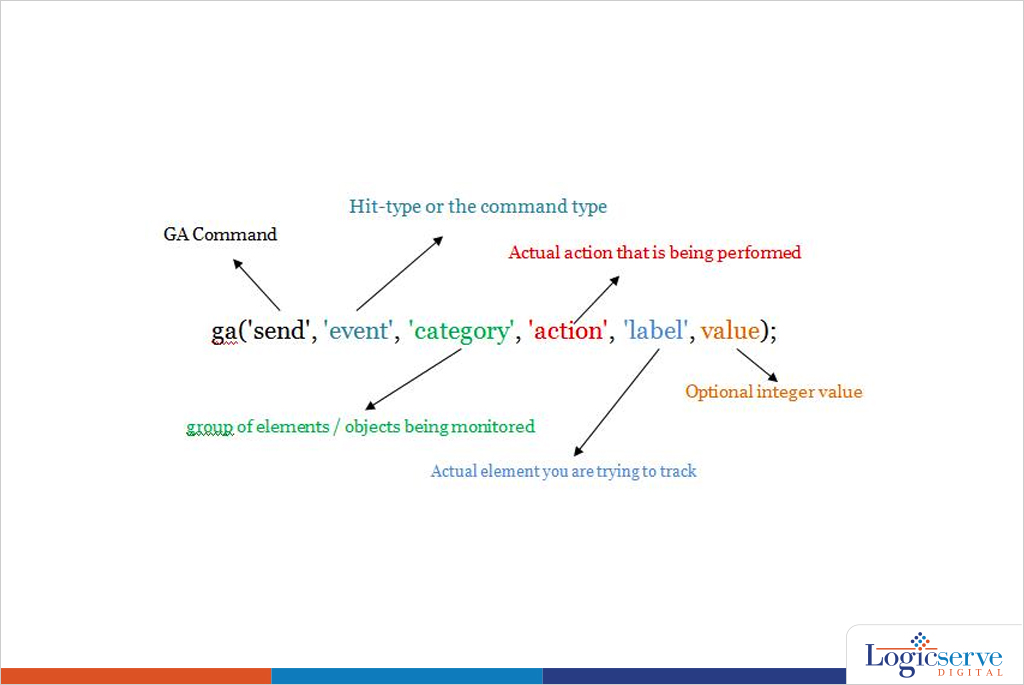
    2. Ga (send: This is the Google Analytics Command. Do not mess with this. Let it be.
    3. Event: This is the hit-type, or the command-type. Do not mess with this either, let it be.
    4. Category :This represents the group of elements / objects being monitored
      Eg: Videos, Audios, Ebooks, Portfolios etc
    5. Action:This represents the actual action that is being performed, Could be a Click / Play/ Pause/Stop/View /download ..whatever that makes sense in your report.
    6. Label [optional]:You might want to pay special attention to this parameter. This represents the actual element you are trying to track.A good example would be EbookTitle / Blogpost-title / Page-title/ Videoname/Audio name This way, when you look at the report, you know which elements are being productive, and the ones which are being counter-productive to your efforts.
    7. Value [optional]:If you are tracking affiliate links, then, this is an extremely important parameter. Because, this associates a number with the event.Most Affiliate links are measured for the no. of clicks, and the affiliate paid accordingly. In other words, each click at an affiliate link carries a certain currency. By specifying a value to the event, you get to associate the tracking with potential earnings.
    1. Eg of Codes to track different type of events
      • ga(‘send’,’event’, ‘Videos’, ‘Play’, ‘Gone With the Wind’);
      • ga(‘send’,’event’, ‘Downloads’, ‘PDF’, ‘/salesForms/orderForm1.pdf’);
      • SEER’s guide on the naming conventions is a good start for DIY enthusiasts
    1. Integrating the code with the elements in the website
    • To Track Contact Form Submit
      – <form name=”input” action=”submit.asp” onsubmit =”ga(‘send’,’event’,’form’,’submitted’,’contactform’)”>
    • To Track button click
      – <button type=”button” onclick =”ga(‘send’,’event’, ‘button’, ’clicked’, ’GetQuote’,, ’true’);”>Get Free Quote!</button>
    • To Track a File download
      <a href=”downloadpath-freeEbook.pdf” onClick=” ga(‘send’,’event’, ‘Resources’, ‘download’, “SEO free guide”, pdfValue, true]);” target=”_blank”>SEO Is Great Whitepaper</a>
    1. RECOMENDED: Set up GOALS in the GA dashboard. Goals are reports that show the performance based on the data collected via the ga(‘send’,’event’
      • Login to GA dashboard > Admin
      • Select Account > Property > Goals
      • New Goal>Custom > Next steps
      • Enter Goal Name : Use something that is easily recognisable
      • Select Event
      • Add values that are relevant to this goal
      • Category <as used in the code >
      • Action <as used in the code >
      • Label <as used in the code >
      • Value<as used in the code >
      • CREATE GOAL

    Sit back and wait for some time for the tracking data to come in. Ideal wait would be one week to see a pattern. Analyse and action accordingly to maximise marketing efforts

    LogicSpeak:

    Setting up an EVENT TRACKING code is easy, and a DIY job for enthusiasts. However, should you feel intimidated to implement this yourself, email your developer or hire a competent agency that specialises in GA with your list of events that need to be tracked and analysed. You should be set up in a week, and will have a possible strategy to implement in 15 days time. Quantifying user engagement is vital to measure the direct influence of your marketing efforts, and Google Analytic’s event tracking allows you to do just that with your website.


    Previous Post: Social Media Starter Pack for Your Business

  • What is Social PPC and How to Maximise Its Use?

    The evolving nature of marketing, advertising and brand building is related to changing technologies and changing consumer behaviour.

    As more and more people across the world become online citizens and spend more and more of their waking hours online, businesses wishing to connect with existing and potential customers have pursued those customers online.

    Just like PPC (pay-per-click) ads on search engines, social PPC is one more way for brands to promote themselves with the aim of building a relationship with customers or selling a product or advertising an ongoing discount to those customers.

    What is Social PPC

    Social PPC is an extension of traditional PPC advertising that is the backbone of online advertising and which is relied upon by search engine marketers and online marketing professionals.

    Whereas PPC ads refer to ads placed on websites — with Google running the largest such as network — social PPC refers to ads in social networks.

    Social PPC — Options Galore

    Among the social networks, Facebook is the king with 1.3 billion monthly active users and growing. Facebook is making every effort as a publicly listed company to monetise this user base. Displaying PPC ads in a strategic fashion in the Facebook Newsfeed and to the right of the Newsfeed to those billion plus users is one of the most effective ways for Facebook to earn money.

    Those billion users of Facebook and the additional hundreds of millions of users of Twitter, Pinterest, Instagram and other social media networks present an opportunity to online marketers to take their message to their customers.

    Facebook has clearly moved along farther on the road to offering advertising options to companies. Other social media platforms have their own individualised and different approaches to PPC ads on their websites.

    Different social media have different cost structures for these PPC ads and different engagement metrics. For Facebook PPC ads, you can opt for either a daily or a lifetime budget and also for cost per thousand impressions (CPM) or cost per click (CPC).

    Hence, businesses get to set their daily budgets and so on depending on their needs and financial status.

    This is quite in contrast to traditional advertising where the costs are fixed — take, for example, Super Bowl ads that can cost $4 million for a 30-second spot or $8 million for a 60-second spot.

    Facebook offers a wide variety of advertising options including sponsoring a page and sponsoring a post and so on. Your Facebook PPC strategy should be driven by your targeted result — whether you want more Likes for a Facebook page, generate sales/leads, etc.

    Engagement with Twitter ads is measured via interactions with promoted tweets, including replies, retweets, Favourites, @ replies, etc.

    For B2B marketers in particular, LinkedIn also offers a powerful platform which is more expensive than Facebook and Twitter.

    Strategy for Success in Social PPC

    To get the best returns from your investment in social PPC, you got to have a detailed plan and you have to follow through on it.

    Have a Targeted Campaign

    While search PPC ads are linked to particular keywords, social PPC ads can be tailored in different ways depending on the social media platform. Within the Social PPC ads, the key parameters which can be defined include age, gender, city, category interest, marital status, designation and company depending upon the nature and extent of campaign.

    Furthermore, the definition of such parameters assists in in-depth monitoring of the campaign such as the engagement ratios, post clicks, shares, post reads and other vital traffic details.

    For example, you can use hashtags on Facebook, Twitter and other social networks to tag your posts. These hashtags can function somewhat like the keywords in search PPC ads and your social PPC campaign content can use these same hashtags to send a uniform message.
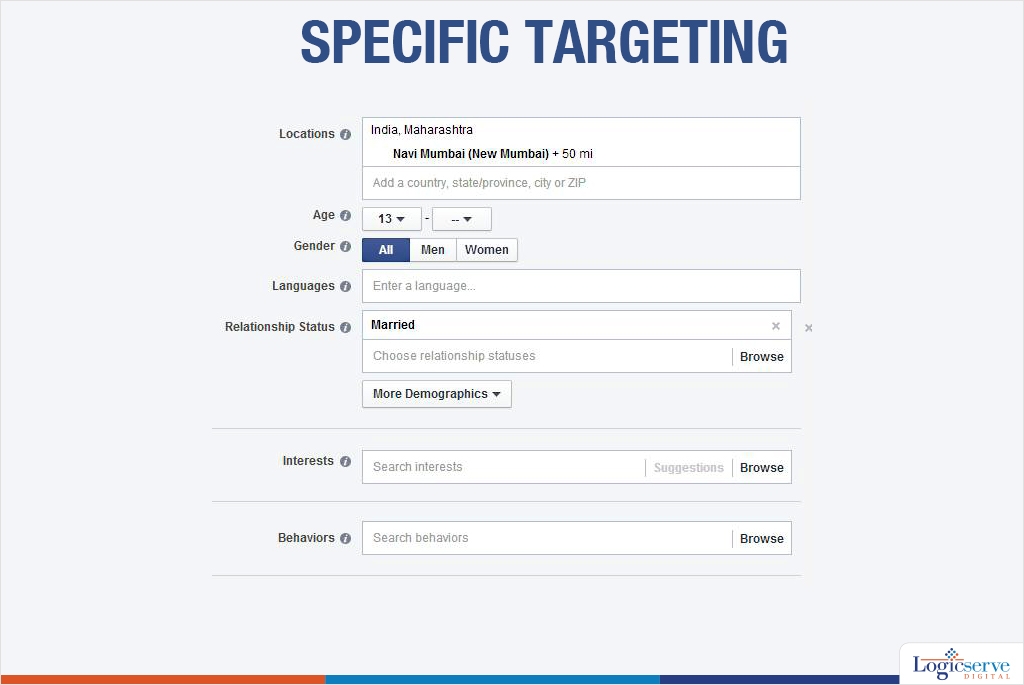
    1.09.14_Specific Targetting _social ppc @LogicserveDigi

    Engage People With Great Ad Copy and Content

    Your social PPC campaign should be built around one consistent message and push that message across all the different platforms. This message should also match any search marketing PPC campaigns you may be simultaneously undertaking.

    To keep the audience interested, the message should be interesting. Various brands adopt different techniques; while some try to be funny, most will be strictly professional. It depends on the size of the business. A giant brand such as Apple, IBM or GE cannot afford to be cavalier as they are more risk-averse and know the dangers of putting even one foot wrong on social media. Social media bloopers are legion and when those bloopers come from corporate Facebook pages or Twitter accounts, people lose no time to take the company to the cleaners. And the media gets fodder as well.

    Measure Social PPC Metrics

    Keeping track of all sorts of numbers related to your social PPC campaign is pretty important if you want to learn from your campaign and streamline it further or improve it or get better returns from the money you spend in such PPC campaigns.

    Like Google Analytics gives you a lot of insights about the website visitors, with social PPC analytics, you will get insights about your social media audience. You will learn about what sort of Facebook posts or tweets get the most social shares which will help you refine your marketing message.

    Whether you are paying for impressions or clicks on Facebook, having a good idea about your ROAS (Return On Ad Spend) is very important as that will help you determine if you are getting a worthwhile return on your social PPC investments.
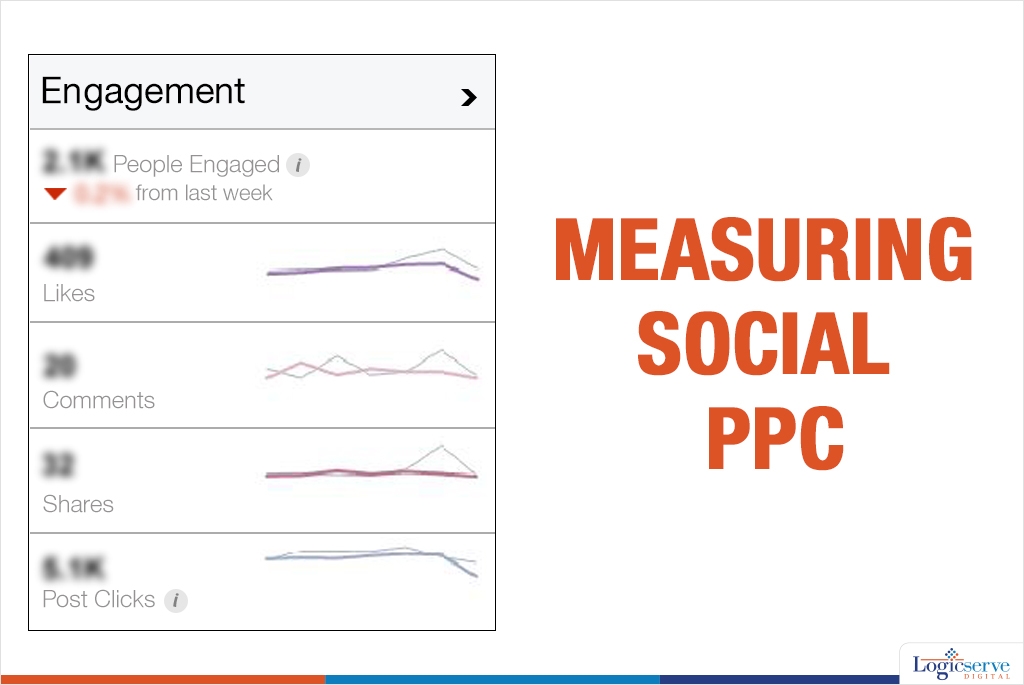
    1.09.14_Measuring social ppc @LogicserveDigi


    LogicSpeak:
    Remember that you need not necessarily be active on all these different social media platforms to run a social PPC campaign. For example, for a Twitter campaign, all you need is to have a Twitter account.

    As you dive into the big world of social media which is ever-changing, you will keep learning as you pursue your social media marketing campaigns. Facebook and Twitter are here to stay. They will be around five years from now although they might change in small and large ways.

    You can think of social PPC as one of the three sides of the online marketing triangle with search PPC and video ads comprising the other two sides. It takes all three sides to complete that triangle.

    Previous Post: Importance of Content in SEO