LS Staging

Category: Pay Per Click (PPC)

  • How to Improve Display Ad Campaign Targeting?

    How to Improve Display Ad Campaign Targeting?

    Be it remarketing, product-specific display, membership programs, or discount offers, these key types of display advertising can be an excellent way to bring your business to a new set of eyeballs and increase brand awareness. Display advertising is similar in processes and outcome as other forms of digital marketing. Get it in front of the right set of people at the right time, and see the miracle of high CTRs. However, many marketers fall short on this crucial goal.

    In this post, we look at some practical ways that can improve your brand visibility with a better level of targeting:

    1. Adding a personal touch

    Nothing works better than having a greater degree of personalisation attached to your marketing messages. If your headline and caption resonate with the current and relevant pain points of the customer viewing the ad, there will likely be a better conversion.

    Along with personalised captions, also make sure to use clear and sharp images that do not turn pixelated irrespective of the device or screen size in which the user is viewing the ad.

    2. Get your KRA right

    Google’s business objective (earnings by impressions) will be far different from your own internal marketing KRA (earnings by conversions). Make sure that you realise this and set up ad campaigns that are targeted the right way. For instance, if you have a mobile app development ad to be shown, you need to factor in uncommon sites like Inc.com, Entrepreneur, Forbes, TechCrunch, TED, or Mashable. These sites are where your key audience (business owners, CxO, CTOs) will be likely to follow and this is where you can reach out to them.

    So, targeting by interest as well as by topics will be the right way to go.

    3. Keep checking placements

    Even after setting up the campaign and running it for 3-4 months, you need to keep looking at the ‘Placement’ section (Google AdWords -> Display Network -> Placements). This portion shows where your ads were displayed in the chosen timeframe. It also comes with a lot of stats like clicks, impressions, and conversions.

    Such on-going review and assessment will uncover interesting stats like –

    • Sites with lots of impressions but lower number of clicks (you can exclude these as they aren’t worth your time or dollars)
    • Sites with good number of clicks but high bounce rate (this means there is some anomaly – wrong audience or wrong ad placement. Solving the underlying issue will help a lot)

    4. Introduce rich media at the right time

    Many clients seek to introduce rich media right from the start of the campaign. Our point is that while it is important, it takes a lower priority than setting up the right ads with the right topics for the right kind of visibility. It will be a cost-effective move to start with static images initially and get other aspects fine-tuned for success. Post this, you can add rich elements like hover effects or videos.

    As evident, the judicious use of data presented by tools like Google Analytics and AdWords can be a critical differentiator to ensure the success of your display ad campaign targeting. By tiling these pointers, you can improve the efficacy of the display ads and help you with your brand awareness goals.
  • How To Avoid Fraud Clicks In Your AdWords Marketing Campaigns?

    How To Avoid Fraud Clicks In Your AdWords Marketing Campaigns?

    Many marketers around the world are always looking up ways to avoid click fraud in the Google Display Network (GDN). Advertisers who offer PPC (Pay-per-click) techniques are exploring the platform of paid search. But they know that exploring this area will also introduce them to click fraud as well. As long as you are aware of it, you may feel the need to learn proactive ways of securing yourself from such marketing issues.

    What is Click Fraud?

    It is a common black-hat SEO technique that involves forcefully increasing the PPC ad clicks. Click fraud can be achieved using many ways, such as by clicking on your own ads to generate revenue, etc. Needless to say, the client who is paying for these ads doesn’t see any yield from such black hat methods. In short, he is spending ad dollars for no returns at all.

    Tips to eliminate such sinful activities

    Even though Google has claimed that click fraud techniques have been eradicated, many marketers are still facing it. Unless you want to stay patient and wait for Google to remove the issue itself, try any of the following tips yourself.

    • Use Social Media ads:

    Your ads may show up only on social media platforms such as Facebook or Twitter in this scenario. This works to your advantage as this limits the involvement of third-party publishers who practice black-hat techniques. This way, you can restrict the act of click fraud as the targeting settings are much advanced than GDN. With paid Facebook or Twitter ads, you are able to target certain groups, which makes it harder for competitors to find your ads.

    • Configuring IP Exclusions in Adwords:

    This method may be an advanced one, but it does help in limiting fraudulent activities while working with AdWords. If you have the specific IP addresses that you may feel are linked to the deceptive PPC clicks, then you can block these particular IPs from seeing your ads. This requires setting up an exclusion from the settings tab and locating IP exclusions option.

    • Manage your targeting Ads efficiently

    Many a time, all that is required are a few alterations in the ad campaign settings to remove the fraud clicks. Sometimes, the geographic location of such clicks is located by marketers. This may be beneficial as then you can create an exclusion with the zip code of that particular area. Hence, you will be able to target healthy traffic only. But, make sure that you are confident about the location of the exploiters.

    • Running remarketing campaigns for GDN:

    Your concerns about GDN-related click fraud can be answered with this tip. You can use a remarketing campaign and avoid such deceitful activities as your ads are only visible to those who show an interest in your website. This way, the publishers who were planning to click fraud on your ads will not be able to see your marketing banners anymore.

    Conclusion

    No doubt the online world is filled with unlimited opportunities. But, this gives birth to illegal activities as well. The GDN platform also involves ad buying problems through fraudulent methods. The good news is that a little bit of caution and incorporation of useful tips like the ones shared here can help you safeguard your marketing campaigns.

  • How to tackle programmatic ad fraud?

    How to tackle programmatic ad fraud?

    Marketers are increasingly relying on programmatic ads to push targeted marketing messages to an intended audience. These are proven to generate better results with better precision. However, its increasing popularity also means that the industry is now grappling with the massive losses that have arisen due to manipulation of the marketing metrics to track the efficacy of the ad campaigns. This is exactly what programmatic ad fraud denotes.

    As per a Pixelate study, over one-third (35%) of programmatically driven ad impressions in the United States in first quarter 2017 were fraud. This shows how acute the problem has become, and not just in the US but across the globe.

    What can be done?

    Instead of being a mute spectator to ad frauds, smart marketers can ramp up their anti-fraud initiatives with these counter measures:

    1. Choose your success metrics better

    Basic metrics like CTR are very easy to track and analyse. Also, they are very easy to manipulate negatively. This issue is prevalent across devices like laptops, connected TVs, smartphones, and tablets. Instead, you need to rely on other metrics that are less prone to frauds. Some of these include:

    – Site navigation

    – Time spent on the site

    – Sign up rate for a particular product or service

    These measures show the level of engagement with the customers. And digital advertisers can be assured that it is not a bot that your site is interacting with.

    2. Single out the main culprits

    In today’s age, the advertiser relies on third-party paid sites to grow the user base, fulfil advertising minimums, and drive more impressions. You need to conduct routine checks on your vendors to ensure that the quality is as per what is stated in their report. These controls are crucial in eliminating frauds and cleaning up your campaign in an effective manner. One way to ensure that you are dealing with good quality vendors is to check if they are accredited by Media Rating Council.

    3. Maintain, share, and assess from a blacklist    

    Marketers today have the opportunity to know if the impressions they are tracking for programmatic ads are blacklisted or no. The underlying principle is that only a handful of sites deliver a majority of the fraudulent ad traffic.

    See anything problematic with the URL www.huffigntonpost.com? If not, have a closer look as it is designed by fraudsters such that it is tough to unravel the fraud (the spelling is incorrect in the above URL). The good news is that today’s fraud tracking programs and tools analyse user behaviour to uncover fraudsters. So, while they may continue evolving their fraud strategies, they may leave behind a fingerprint. When you flag these, the blacklist will block these sites and thus provide you with a much cleaner inventory list to purchase.

    With these steps, concrete actions can be taken to ensure that the occurrences of ad fraud and losses come down significantly. Do let us know if any other measure forms a part of your anti-fraud arsenal? We would love to hear from you.

  • How to utilise lookalike modeling to improve your marketing potential?

    How to utilise lookalike modeling to improve your marketing potential?

    “We tend to be in groups that closely resemble our own persona. We tend to buy or subscribe to the same things as done by our lookalikes.” This is the underlying philosophy of lookalike modeling adopted by ad agencies and marketers around the globe. With this approach, they seek to identify new prospects who closely match the existing customers’ persona, with the belief that they will convert better than others.

    What is driving this new trend?

    Marketers are today utilising lookalike modeling to significantly expand the range and depth of ways (both online and offline) used to target potential customers and identify the ones most likely to convert. The huge amount of data available at different points of the customer journey (from cookies to customer data platforms like CRMs) plus the growing penetration of big data analytics, means one clear thing – lookalike modeling is definitely giving an edge to marketers adopting the technique for ramping up their marketing campaigns for better gains.

    What can be tracked?

    Numerous data points can be tracked to see if a new prospect matches the existing users or customers. The most basic one is demographic based targeting. However, as the sample increases (for example men aged 18-35) the relevance of a niche sample keeps decreasing. With lookalike modeling, this limitation can be removed efficiently. The technique employs statistical and analytical methods to assess the characteristics, online browsing signals, and features of a ‘seed set’ that forms the basis for determining the perfect lookalike target groups.

    Why is it important?

    The biggest advantage of lookalike modeling is its ability to merge the offline-online data signals to provide a seamless picture of the perfect segment of likely customers worth targeting. It brings together diverse purchase signals like on-site actions, engagement through email campaigns, in-app usage, call center contacts, and e-commerce product reviews. This has a better chance of providing a more accurate picture of lookalikes that match your most influential or high-value customers.

    How can it be accomplished?

    Some basic ways in which lookalike modeling is utilised include the below –

    1. Social Media – You have the option to build your likely customer list from a seed list on the social media platform. An example is the Facebook Lookalike Audiences, which helps marketers to create a list based on which page they visited. Based on the target pointers they are assessing, they can determine how broad or how niche they want the targeting to be
    2. Search Engines – Similar Audiences through Google Match too helps optimise bidding tactics around high-potential prospects that are very likely interested in the products
    3. Direct mail – Specialized list providers now collect a vast repository of data around a particular mail ID. This helps them to provide similar matches to a particular profile and provide marketers with a chance to reach out to these lookalikes for better conversion possibilities

    To wrap up

    It will be a smart move to check out this technique to ensure that new customers are on-boarded quicker owing to their lookalike persona that matches existing or high-value customers.

  • Top 3 Strategies for Paid Ads you should implement for the upcoming Holiday Season

    Top 3 Strategies for Paid Ads you should implement for the upcoming Holiday Season

    The last few years have seen a humongous traction in holiday shopping on e-commerce sites. Talk about Cyber Monday, and e-retailers point to a peak summit in reporting GMV and revenues. Americans spent an average of $935.58 during 2016 holiday shopping season. No wonder that 20% of the retail industry’s annual sales happen on 22nd, 23rd & 24th December.

    This also means that the level of competition for visibility in this will be unbelievably cut-throat. If you are an e-retailer, you need to employ more than one paid marketing strategy to gain shopper attention in a crowded supply space. Here are the top 3 strategies that we have compiled for you to target holiday shopping better:

    1. Google Product Listing Ads

    Google PLAs are undoubtedly the biggest revenue generators for holiday e-commerce. You need to check for enablers like long-tail keyword optimization, and crafting compelling product description with detailed product attributes. This way your product should show up irrespective of whether the searcher types in “white running shoes” “size 13 shoes” or “Men’s Adidas Size 13 Running Shoes Adi Pacer 1.0 Low Shoes.”

    2. Amazon Search 

    The Return on Ad Spend (ROAS) has been one of the highest through Amazon, and there is no reason why you should not try out this online channel. Amazon PPC is an excellent way to get listed especially considering that shoppers use it as a search engine within site to discover newer and more products. Imagine if your Amazon PPC lands your products on top of the listing? That is the power of Amazon search. Use it judiciously after factoring in drivers like how much margin you can put on advertising, and how the paid traffic converts to sales.

    3. Retargeting 

    When you focus on paid ads, make sure to target customers that were almost about to make a sale, but didn’t convert at the last minute. With retargeting you get reduced cost per impression, better ROI, higher conversion rates, and laser- sharp targeting (because they had taken the efforts to come to the e-commerce site to buy products earlier).

    The road leading to holiday e-commerce will be successful only if you start today. Hurry up and utilize these tactics to a great 2017 holiday shopping season.

  • 3 Ways You Can Achieve Better Results By Leveraging AI

    3 Ways You Can Achieve Better Results By Leveraging AI

    With Artificial Intelligence emerging as the need of the hour for every organisation, enterprise owners need to tap into the right sources for leveraging this innovative technology! If you own a venture and want it to be driven by AI, it’s imperative to embrace analytics and personalise experiences. Let’s find out how data and analytics can help you make the most of Artificial Intelligence!

    The role of data

    Irrespective of the sector you are operating in, Big data happens to be a force to reckon with. From e-commerce owners to service industry professionals, every business entity is relying on Big Data and data analytics. Marketers have huge amounts of data at their disposal. They can tap into these data sources and leverage them to gain crucial insights into consumer behaviour.

    The crucial ways

    If you want to incorporate AI and gain actionable insights, it is imperative to do it in the right way. Here’s how data analytics can help you win the game!

    1. Think real, think customers

    You have to study consumer behaviour and understand what they want. That’s the key to gaining information about their preferences and choices. Develop a crystal clear picture of your consumers’ behavioural patterns. It is crucial to get a real and authentic idea, and not just rely on data points.

    1. Predictive analytics

    If descriptive analytics was the first step, effective predictions would turn out to be the next significant move. Try delving deep into historical data as that will help you in this context. You can develop some ideas about consumers who opt for discounted products, as well as the group of consumers who won’t. It will be helpful in determining product prices and marketing strategies.

    1. Prescriptive analysis and decision-making

    It’s not just enough to analyse. You have to take positive decisions. That’s what prescriptive analysis is all about. With 10% of enterprises embracing this technology, it’s time to adopt it and make smart decisions.

    Final thoughts

    Now, you know how data analytics can help you leverage AI to get the best results. Product developers and venture owners can rely on data sets thus creating personalised experiences for the target audience. That’s the power of data analytics and its role in implementing AI strategies.

  • Are Autonomous Vehicles the Next Big Marketing Avenue?

    Are Autonomous Vehicles the Next Big Marketing Avenue?

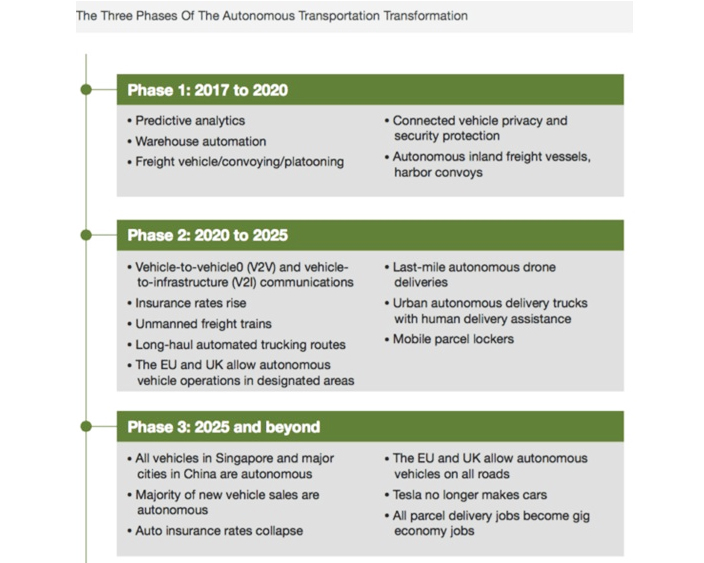
    Recently, talks have been doing the rounds everywhere about autonomous vehicles being the next big thing. If it becomes a reality, as a pedestrian it would be frightening to see vehicles whizzing past you down the road, and there is no one behind the steering. However, from the marketing perspective, autonomous vehicles come as a good news as it opens up a broad new marketing avenue for publishers. This implies that the screens of vehicles will now become the space or platform where publishers and advertisers will compete against each other.

    A new report from Forrester suggests that these vehicles, if and when becomes a reality, are sure to have a massive impact on the global economy. The report further states that it would be no surprise if global brands become sponsors for the rides in the near future. You may see ads like your next vacation is sponsored by XYZ brand.

    For instance, a family vacation to Disney Land in Florida can be sponsored by Disney and can provide the customers with an experience of their lifetime. The screens inside the vehicle can play Disney videos, and even the vehicle itself can be turned into a pirate ship. The report claims that autonomous cars would give the advertisers a belief that the interiors of the vehicle that are equipped with screens, speakers and interactive sensors would resemble a living room or dens. With autonomous vehicles plying on the roads, according to the reports, in the future, the automakers would evolve into publishers and feed the consumer with car-based news and entertainment and also develop a direct relationship with the customer who are essentially the owners of mobile theatre.

    The different possibilities of marketing and advertising through autonomous vehicles is only one aspect of the report, which quintessentially focuses on the impact that autonomous vehicles are likely to have on various businesses including logistics, shipping, insurance and data privacy.

    Apart from the marketing point of view, there are many other pros and cons of autonomous vehicles. While, it could significantly reduce the traffic on roads, on the other side, it could lead to massive loss of employment, especially for truck drivers. According to Forrester’s reports, the self-driving vehicles would have inherent features such as obstacle avoidance technology, image recognition, road sensors and vehicle-to-vehicle communication system. Not to mention, in the wake of Tesla testing the self-driving cars, it is reported that nearly 94% of all road accidents are caused due to human errors. Having said about the pros and cons of autonomous vehicles, the technology is not going to be implemented tomorrow; it still has a long way to go before it becomes a reality.

  • Understanding the Customers’ Device Graphs is the key for Targeted Marketing

    Understanding the Customers’ Device Graphs is the key for Targeted Marketing

    In the purview of the growing usage of the different mobile devices among the consumers globally, cross-device identity matching has gained a huge significance among the marketers. The modern day marketers are taking the device graph serious since it provides them a solid foundation for profiling the different users based on their mobile device usage for different purposes. Today, it is nearly impossible for a business owner to get a complete picture of their existing or potential customer unless and until they track their daily activities across all devices.

    There are two major players specializing in the Device Graph, vis-à-vis Tapad and Drawbridge. There are also other companies like Criteo, which specializes in retargeting that develops Device Graphs as essential marketing tools. The big cloud companies like Adobe, Salesforce and Adobe have either developed their own tools or they have a partnership deal with vendors who develop device graphics as an integral part of their platforms.

    Mike Murphy, the Senior Marketing Manager at Drawbridge suggests that all the Device Graphs are built on a single fundamental idea, however, each developer has a different formula in terms of providing weightage to a certain attribute. Typically, there are to major techniques, which are probabilistic and deterministic and most Device Graphs use both techniques in some way or the other.

    The Deterministic technique are considered to be a gold standard since they  provide definitive results on which device the customer uses the most. This data is usually collected through the logins of the users. For instance, if the customer regularly uses his smart phone or the tablet device to log onto a particular website or portal, the brands can easily conclude that the user is most associated with that particular device. The Probabilistic technique on the other hand user the most common probable data points such as the time of the day when the device is used the most by the customer, the physical location of the device, which is derived by the IP address and the browsing patterns of the user. Murphy stated that Drawbridge has the potential to identify the device usage of an individual even if the same device is shared by other members in a household for different purposes.

    In the video below, Tapad shows the Device Graph process which are largely derived using the probabilistic technique:

    https://youtu.be/M-0P-_lFVq0

    More often than not, Device Graphs are made using both deterministic and probabilistic techniques. For example, the user’s multiple device usage can be determined with a high degree of accuracy only if one the devices was used to log into the brand’s site. That one particular device, which is used by the customer becomes the definitive association and the other devices, which are placed at the same location may be used for visiting the same website on a daily basis. This and other attributes of the device usage pattern can give the Graph-maker sufficient data to conclude that the devices belong to the same users even though he/she has used only one device to login.

    Whilst it is known that the deterministic-based approach yields more accurate results, there are many vendors who claim that the probabilistic approach has provided results that are 80 to 90% accurate. Retargeter Criteo has claimed that it considers Device Graphs to be a vital tool for its businesses and it has built the largest global scale mapping of email addresses to Cookies.

    Murphy considers the usage of Device Graphs will continue to rise in the near future and it will continue to use a combination of both deterministic and probabilistic techniques. However, one of the possible exceptions would be the usage of biometric identification for logging into the aps or the website.

  • Will Google’s Natural Language and Machine Learning Democratize Analytics?

    Will Google’s Natural Language and Machine Learning Democratize Analytics?

    Last week, the world’s leading search engine, Google announced that it would integrate the voice-activated assistance feature in the Google Analytics in its mobile app. This comes as a great news for the users as they would now be able to ask queries in the tool using the natural language; this would make the previous structured query system outdated.

    The users can access the feature by clicking on the ‘ask a question’ section, which would soon be integrated into GA. However, Google announced that the ‘ask a question’ feature, for now, will only be available in English and it will be rolled out for all the users globally. While the feature is now going to be a reality, the concept was first announced by Google at its advertising and analytics events in San Francisco in 2016. The feature is built on the Analytics Intelligence, which was rolled out in September 2016.

    Babak Pahlavan, the head of Measurement and Analytics at Google, said that the company was highly motivated to the Analytics more user-friendly and increase its accessibility through machine learning. He further said, the machine learning capabilities of Google has significantly accelerated the development and the launch of the natural language feature.

    Several surveys have corroborated that nearly 70% of the small and medium sized (SMEs) business from around the world do not use the analytics. It is thus apparent that there is a lot of room to simplify the tool to make it more accessible for the SMEs and help the take advantage of the analytics to improve their business prospects. Pahlavan, said that with regards to the survey results, the voice-activated assistance feature would be a great boon for business owners as it would help them get answers to many of the usual business related questions.  However, you need to know that the GA voice system will not be able to answer all the questions as yet.

    For the time being, the GA voice assistance system is equipped to answer only the ‘what’ question, however, soon, Google will improve the feature to answer the ‘why’ questions, said Pahlavan. The measurement and analytics head stated that Google sees the voice assistance and machine learning as a way to simplify the GA usage and to make it more democratic in the near future. It is estimated that nearly 700,000 people from around the world use GA on their mobile devices every month, with a vast majority of the users using it every day. With the new ‘ask a question’ feature integrated on the GA app, it is sure to increase the engagement and the usage over the mobile.

  • Google Can See the JavaScript Links that No One Can See

    Google Can See the JavaScript Links that No One Can See

    In what may come as a revelation for many small and medium sized organisations, Google is now parsing Javascript and processing content within the DOM. Google has tested and confirmed that many tools available that provide data backlinks and can only see the HTML elements that are classically formatted within the source code of a particular page. These tools do not capture the link referrals from JavaScript redirects that are dynamically inserted <a> tag link or the URLs that are associated with JavaScript onclick events.

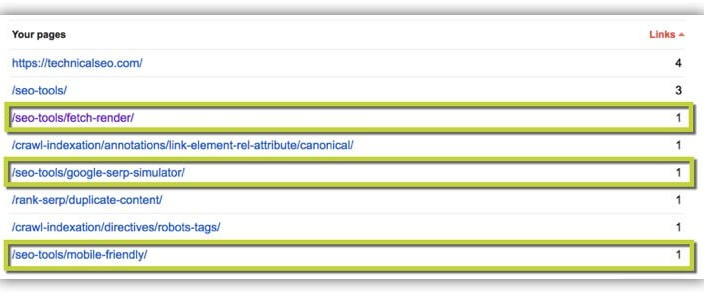
    Apart from the GSC or the Google Search Console that has limited backlink data, the top players in backlink data providers like Ahrefs, Majestic SEO and Moz Open Site Explorer are not reporting on the JavaScript-based link referrals currently. In a test setup to point the JavaScript-based links at TechnicalSEO.com, the links to the targeted pages were not present on the referring site previously.

    While the URL ‘strings’ are found in the page’s source code, they are linked to the onclick events and not within the href attribute of the <a> element. The links in the above imaged are picked up and are reported within the GSC. It is thus quite clear that Google has much understanding of the things that can be classified as ‘link referral’ in today’s digital ecosystem. However, it is quite unfortunate that the same links are not reported by the top data providers that are mentioned earlier.

    Some of the most common concerns that SMEs may have are addressed below:

    Is it really something to worry about?

    The lack of visibility for JavaScript-based link referrals could be an area of concern for webmasters. Since Google can parse the JavaScript, the JavaScript based link referrals are able to be considered while analysing the profiles for webspam. It is highly likely that Google is considering the JavaScript-based links within the link penalties, its inability to view the data within the backlink data tools can hinder the webmasters’ ability to make sure that the profiles are as per the rules.

    Since the Google is providing the links, GSC data should be enough to work from because it is the data owned by Google. Isn’t it?

    It is quite unfortunate that the ‘links to your site’ data will not show you everything that you would need to see to be able to conduct a thorough review of the backlink profile. The data is quite limited; it provides only about 1,000 rows per example and the sample report. As the best measure, people who are trying to review and monitor the backlink profiles, they are encouraged to use the multiple data providers and not just GSC. There have been many instances where the example links that is provided by the Google Webspam Team in a Manual Action message which was not found by any backlink tools including the GSC.

    Do the JavaScript-based link referrals have the same weightage as the conventional redirects?

    Yes. Google not only looks at the JavaScript redirects but Mariya Moeva, a team member at Google, looks at the DOM rather than the source code of a page. This was confirmed by the Mariya Moeva, a Search Quality Team member at Google. It is therefore clear that the elements that the dynamically inserted <a> would have the same weightage as they would be located within the source code.

    What would be the number of backlinks affected by this?

    It would be hard to provide the exact number, but in a survey conducted by OverStack it was noted that in 2016 more than 56,000 developers from around the world Javascript was the most popular technology; it was used by 90.5% of the front-end developers and 54.4% back-end developers.

    What do I do with this knowledge?

    For now, the SMEs owners can wait for the backlink data providers to catch up the JavaScript-based link referral reporting. Today, there are many tools that are going against the wide web and are appreciating the JavaScript for each page in their indices.