LS Staging

Category: Pay Per Click Management News

  • What is GDN and different types of targeting?

    With the world going Digital, marketers are shifting their advertising edges towards the internet. Google helps advertisers to place their ads on various websites and channels that deem fit and appropriate for the brand. The Google Display Network consists of a series of websites that partner with them to display ads on their websites and web pages. Since target audience for marketers spends a lot of time on the internet, it is important to target the relevant target audience. This is an important way to reach out to a broader set of people.

    It uses the same AdWords dashboard like search advertising, but there are a few differences for optimising the campaign. The difference between SEO and GDN is as follows:

    • SEO targets users who are actively looking and want to purchase the product.
    • The targeting is more funnelled and very specific.
    • GDN involves content consumption that the target audience is interested in.
    • However, it isn’t targeted to people who are looking for the product but show ads on content areas that make them purchase a particular product.

    remarketing

    There are different types of targeting for GDN:

    Contextual targeting

    With this type of targeting, ads are shown to users on sites are directly related to the keywords and information is distributed to users by the type of content. Your ads with this type of targeting will be connected to the users once they are engaged in relevant content areas.

    With this kind of targeting, you can look out for users who are very much interested in what you want to sell. You can proceed with keyword level and use a bidding system to find your customers. You can customise it the way you want to by remarketing, controlling systems, frequency control and capping.

    Placement Targeting

    As the name suggests, it places your ads on websites and web pages. It also shows your ads on videos, mobile sites, and RSS feeds. With this kind of targeting, you can choose a particular page that caters to the content related to your brand. For example, if you sell sarees then your ad will be shown on a page that shows content about tips to wear a saree.

    Remarketing

    With this type of targeting, you can show your ad to people/users who have already seen or visited your website on GDN.

    Interest Targeting

    As the name suggests, it targets websites that the user is interested in. For example, if the user of your brand is interested in pop music then your ad will be shown on websites that have content about pop culture.

    Topic Targeting

    This type of targeting is similar to interest targeting, but it concentrates on websites than users. If your brand is a sportswear, then the ad will be shown on sports websites or topics related to sports. You can do holistic targeting with this rather than individual targeting.

    Geographic & Language Targeting

    You can target users by their locations and the language they speak.

    Demographic Targeting

    You can target users on the basis of their age and gender.

    LogicSpeak : There are many targeting options available. Remarketing is one of the most effective types of targeting that you should consider for your campaigns.

    Looking for more information? Feel free to write to us at sales@logicserve.com
     

  • Can PPC be used for Lead Generation by SMEs?

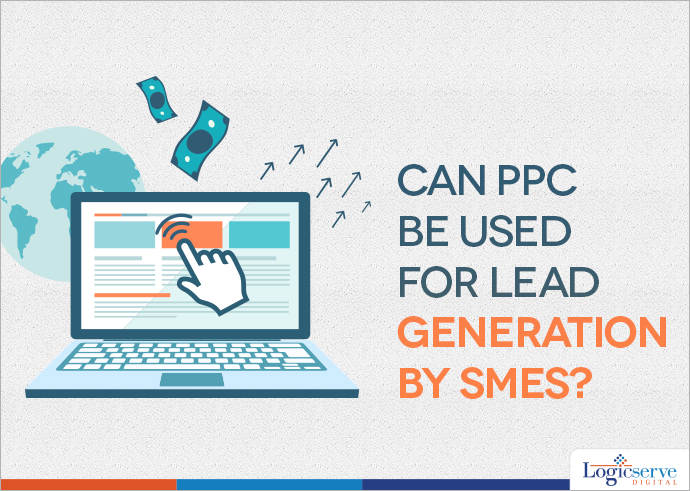
    Can PPC be used for Lead Generation by SMEs?

    PPC-be-used-for-Lead-Generation-by-SMEs @LogicserveDigi

    Small and medium sized businesses often look for no-budget to low-budget marketing and promotion options to reach and acquire their local customers. They usually depend on organic online search rankings to build their online presence. So paying for online searches, through pay-per-click (PPC) advertising is often seen as an expensive option. Moreover, PPC is often thought of as helpful only to e-commerce players, to lead consumers to shop for products. That is, of course, a misconception.

    SMEs have a lot to gain from PPC, especially when it comes to businesses that need lead generation through targeted advertising. Lead generation is meant to get potential customers into the lead-tracking system in order for them to begin an information period with the company, in which the company learns more about customer’s needs, while the customers learn more about the company’s products and services. The ultimate goal is to strike a deal, and thus, acquire a customer.

    How does PPC fare against other lead generation methods?

    A typical lead funnel utilizes a variety of ways to generate leads. Let’s look at some of the prominent ones and analyse how PPC may be more effective:

    • Blogs: These are a good source of leads, but need constant replenishing with high shareability quotient and a good user base, which often takes a lot of time.

    Logicserve_Blog @LogicserveDisgi

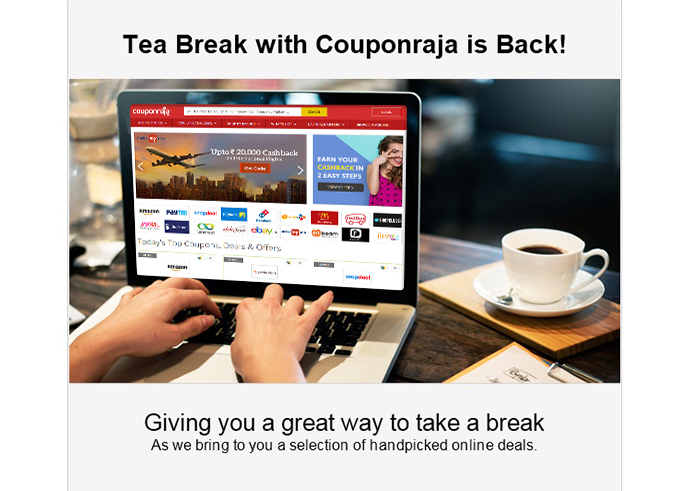
    • Email: Communicating with existing subscribers, or targeting a new set of people through bought databases is possible via email, but often you can only hope to add new leads for your business.

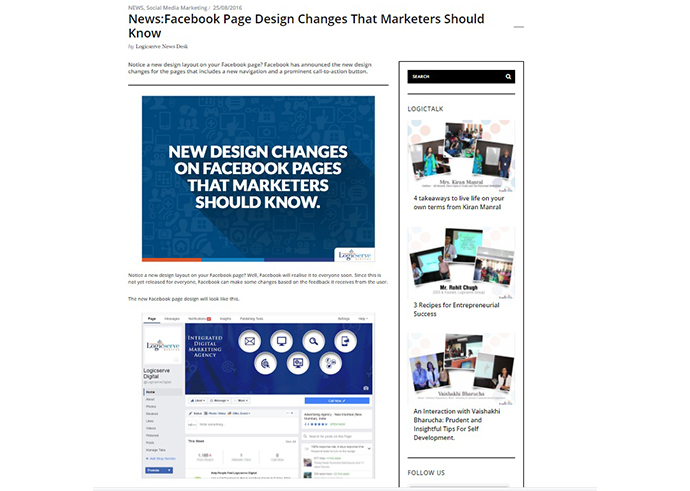
    Emailer @LogicserveDigi

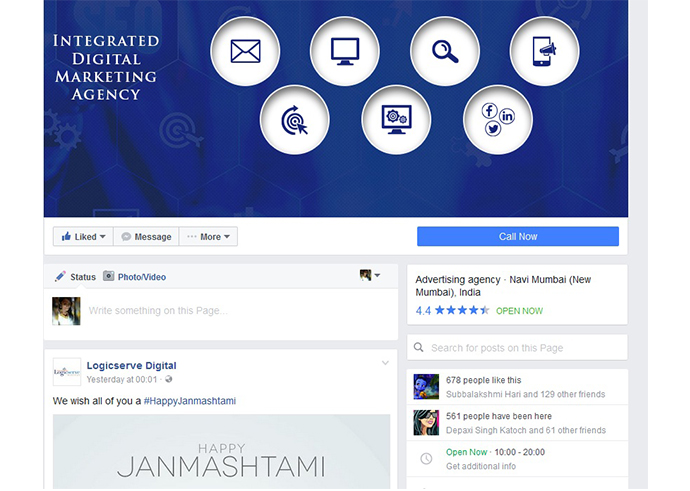
    • Social media: Facebook, Twitter and other social media networks can get business new followers build exposure to a large audience. But followers may not necessarily be your target audience who need your product or service.

    Facebook-Page @LogicserveDigi

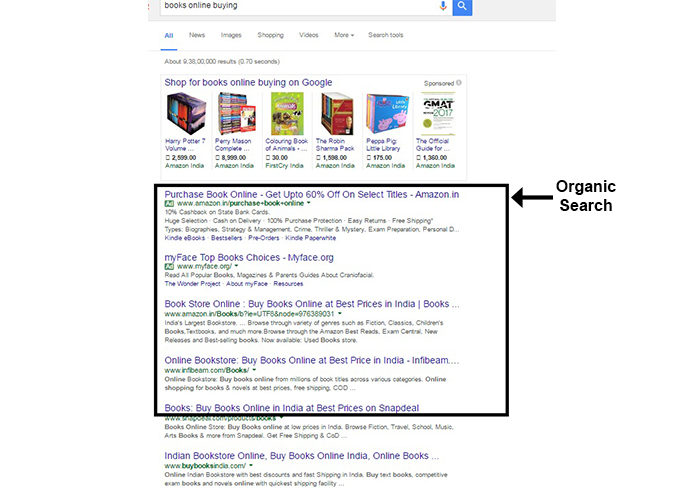
    • Organic search:  4 out of 5 search clicks come from organic listings on the first page, with the advantage of free clicks. But then you have a lot of competition, and it may take an unusually long time for your business to earn a place on the first page.

    Organic-search @LogicserveDigi

    • PPC: This allows your business to appear instantly on the first page to the most relevant audience, those who are searching for a solution to their problem. PPC increases awareness of your business to much higher levels than before.

    Paid-search @LogicserveDigi

    Yes, PPC is a paid search channel. But considering the costs involved in managing social media, blogging, search engine optimization, and e-mail marketing, PPC is comparatively an effective option for most businesses to reach a targeted audience online with full control of expenditure and return on investment.

    How to use PPC effectively for lead generation?

    • Direct potential customers to a landing page instead of the home page – While your home page may contain comprehensive information about your offerings, a well-designed landing page will generate a direct action from the customers for them to be converted into paying customers. A good PPC landing page may be independent of your website.
    • Offer something to your audience – Since you’re not leading your customers to shop instantly for any product or service in a lead generation campaign, and you’re asking for their information, you may as well offer them something they might find useful, like a whitepaper or a brochure.
    • Keep focused communication across touchpoints – The landing page should be able to continue the same story as you’d told your customers in the PPC ad. It should provide more information on the product or the service mentioned in the ad that they’ve clicked.
    • Optimize communication on the landing page – A PPC landing page will be the customer’s first point of contact with you it needs to have just the right information in a concise and visually appealing manner. Also, the lead generation form needs to just the relevant fields which can be filled up easily by the customers without any reluctance.

    PPC or Pay Per Click advertising is a dependable method of generating targeted leads to your business, provided you optimize the customers’ journey from point they click your PPC ad to the point they exit the landing page.

  • Google Announces Some Major AdWords Changes

    Google Announces Some Major AdWords Changes

    Yesterday, at the Google Performance Summit, the search engine giant announced some major updates for AdWords advertisers. The announcement was made by Jerry Dischler, Vice President of Product Management and Sridhar Ramaswamy, Senior Vice President of Ads & Commerce.

    Before we talk about the updates, let’s first have a look at the current effectiveness of Google AdWords and the factors that offer the most needed boost in terms of economy.

    In 2015, Google’s search and its advertising tools were responsible for driving approximately $165 billion worth economic activity in the United States alone, which is indeed a big deal.

    Trillions of searches are being performed on Google.com, and more than 50% of these searches are carried out on smartphones.It is observed that around 1/3 of the total mobile searched on Google are location-based. Interestingly, these searches are found to be growing 50% faster than any other type of search query performed on Google.

    Ever since AdWords store was introduced around 2 years ago, more than 1 billion store visits were recorded worldwide.

    With that being said, how will the latest AdWords update benefit the users?

    • The prime motive behind releasing the update is to help marketers and advertisers across the globe to succeed in the mobile-first world. In the new update, Google plans to redesign almost everything including the creatives, bidding and the workflow.
    • Initially, Google had launched the Universal App Campaigns that helped app owners to reach out to a wider set of audience. All you have to do is just add a few lines of text, place the bid, provide your billing info and the rest is taken care of.
    • To add further boost to your overall marketing campaigns, Google has launched the following new products:

    Responsive Ads for Display

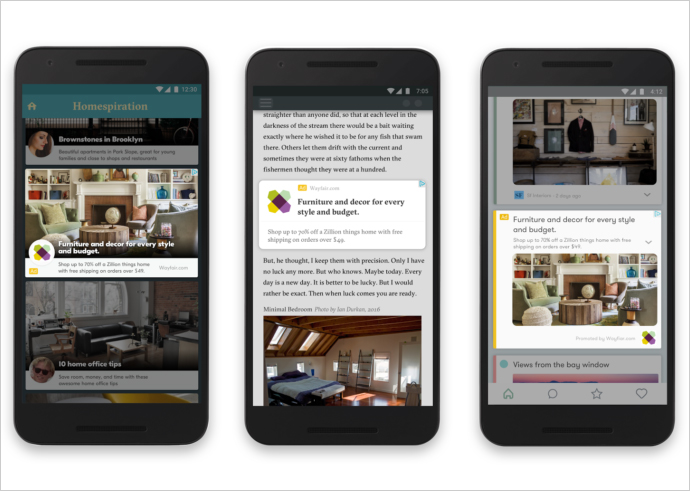
    Display ads will now be able to rightly adapt to the website content on which they are being displayed. These ads will blend with the style of the content they are added to. Creating these ads is easy. All you need to do is simply provide a headline, description, image and the related URL. Google will help you out with the rest.

    Google adwords @LogicserveDigi

    Local Search Ads for Google.com and Google Maps

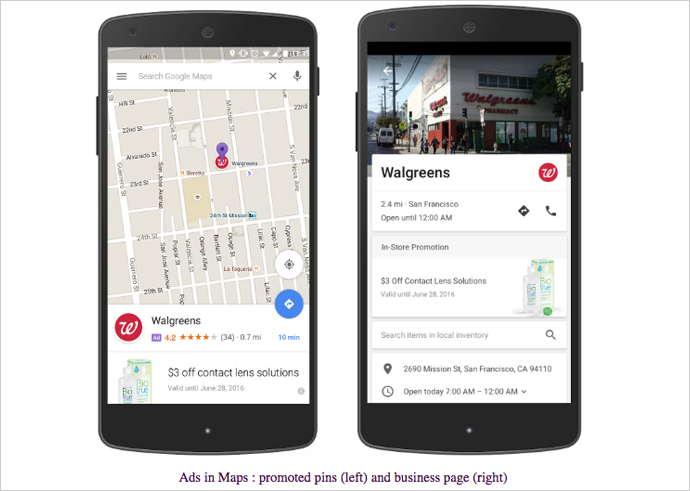
    Google introduces a new local search ads model that will allow a specific business to show up on Google Maps whenever an individual searches for a related product or a service. For instance, if a user searches for a ‘book store’, some of the prominent books stores in the area will appear on the map.

    Google adwords update @LogicserveDigi

    Expanded Text Ads

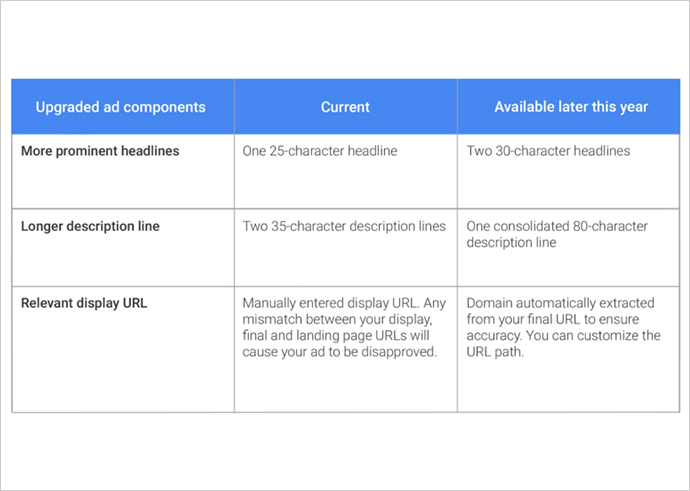
    Finally, Google increases its ad text limit. So, in case you had a lot to talk about your product but didn’t quite have enough space, now is the time to party. The ads will have two 30-character headlines, 80-character description and a URL with a customizable domain path.

    Google adwords new updates @LogicserveDigi

    Bid Adjustments based on the device-type

    By adjusting bids, you can keep a check on how much you spend and where your ad gets placed. Google now allows advertisers to set individual bids based on device-types. As a result, you can now opt to bid differently for different devices. Moreover, you will be able to set bid adjustments in the range of 100 to +900%.

    Have more information, please feel free to share below in the comments?

  • Go Bid On Branded Terms Right Away If You Want Some More Traffic

    Go Bid On Branded Terms Right Away If You Want Some More Traffic

    Go Bid On Branded

    With a huge amount of experimentation and research, no doubt 2012 did turn out to be a pleasant year for online marketers. However, there were a few aspects of online marketing that somehow caused a discomfort for some, one of it being the ‘strategy of bidding on branded keywords’. Many believe that the strategy is just a waste of your marketing budget. On the contrary, you also have a bunch that strongly backs up the strategy. Moreover, having a close look at the data and the research published over the last year, one can easily gauge the effectiveness of bidding on branded keywords. So, here are a few strong reasons why you should start bidding on branded terms if you are not already.

    The searcher knows you well

    Your brand may not be the most popular one on the planet, but the ones typing in your brand name, surely have a decent amount of familiarity with all that you have in store for them. These would probably be the ones who have heard about you from word of mouth or have already been on your website before. This puts forth an assumption that most of their questions have been answered and they are possibly planning to buy your product, which increases your chances of getting a conversion.

    Double up your visibility

    No doubt, you may be enjoying the topmost position in the organic search results, but that’s not all that the searchers are looking for. An additional paid ad listed on the same page will have a strong impact on them. According to a survey carried out in the early 2012, the CTR (Click Through Rate) increased by 5.1 % for bands that had a paid as well as an organic listing compared to just organic listing.

    Your competitors can help

    No doubt, there are a number of restrictions in place that prevent your competitors from using your trademark keywords. But, still its common to find advertisers having a dedicated campaign for the same with an intention of stealing away a major part of your traffic. Of course, this surely isn’t justified. You can warn your competitors for bidding on your branded keywords, but all of that will surely want you to put in a major part of your precious time, which could have been used in coming up with something more productive. So, why not bid on your keywords in a much better way, thereby blocking your competitor from grabbing your piece of cake?

    Not organic but paid

    Some searchers are too specific about the way they search, and therefore many a times prefer clicking on paid listing over organic ones. So, even if you appear right at the top in organic searches, you obviously miss out on a good number of clicks. You also need to know that the traffic received from paid ads cannot be replicated in organic traffic in case the former is shut down or paused. According to Google, more than 80 % of the traffic is lost if the paid ads are zeroed down and the same is not replaced by organic clicks.

    To get the job done rightly, you cannot just blindly choose a PPC agency that claims to be the best. It is important that you put in a good amount of search to locate a PPC management firm that is capable of offering you exactly what you are looking for.

    Previous Post: What Difference Has Google Panda Made To modern SEO?

  • All It Takes To Optimize Your Website’s Conversion Rates

    Is your website receiving the desired number of conversions? If not, then you got some homework to do. But, before you get started, it is important to find out why visitors keep bouncing from your website. There could be a few reasons for this such as a highly cluttered page, no social proof and of course an inaccurate check-out process. Mentioned below are a few tips that can greatly increase your website’s conversion rate.

    Reduce Clutter

    A web page with huge paragraphs and too many links can get a visitor into confusion. Of course, visitors would obviously want to know more about your product or your service, but this does not mean you should stuff the web page with unwanted content. Make sure that every piece of content on your website relates to the product or the service you intend to offer. In case you have too much to talk about, try utilizing bullet points. This will make your web page look organized. Also limit the number of links on your web page. If you are not quite sure about which links to keep and which ones to eliminate, try using your Analytic tracking. This will help you determine the most popular areas of your website, and so you can add in only those links. Finally, eliminate every extra element that causes a distraction to the visitor.

    Be specific

    Do not make your visitors go round and round the bush. Immediately come to the point. All that they want to know is about the product that you intend to offer. List down all the specifications of your product. At times visitors call it a quit when they read something that says, ‘terms and conditions apply’ located somewhere at the bottom of the web page. Therefore, in case you have any specific policies in place, make sure you list them all in detail. This will offer the visitors a great relief and will reduce their chances of bouncing off.

    Beauty is the key

    Once your website has got the right amount of text, its time to add some final touches. Try making your website look attractive. Add in some images that are relevant to your product. Your website needs to be highly interactive but with a simple user interface. See to it that the paragraphs are aligned rightly. Finally, let your website have a separate section meant strictly for public reviews and testimonials, because that is what people look for when they are searching for something online.

    When you are done with all of this, try locating a good SEO and a PPC company who can tell you about the conversion rates for your website. You will probably be satisfied with the result.

    Previous Post: Some Of The Most Common Mistakes With PPC Campaigns

  • Challenges in SEO and PPC management

    There are basically two different approaches to online marketing. First one is the ‘organic route’, i.e. efforts are made to enhance the ranking of a website in SERPs (Search Engine Result Pages). The rankings of the site are highly important for the site to be visible for the visitors arriving at the site are directly proportional to the rank it enjoys. This in turn, enhances opportunities for business. Enhancing the ranking of a website is done using various methods and this approach to online marketing is called as Search Engine Optimisation or SEO approach. The second approach is something similar to conventional advertising except for the fact that these advertisements are displayed on SERPs. And, every time a user clicks on these ads, the sponsoring companies pay the advertiser. This approach is called as Pay Per Click or PPC advertising. There are a few more approaches to online marketing other than these two; for e.g. providing links to the website through other resources like directories, forums and websites of other companies etc.

    There are businesses that have relied more on PPC advertising than on specific SEO approaches.  This has been particularly true with small businesses. But now, with bigger players entering the arena, it’s gradually becoming unviable for small businesses to carry on with their PPC campaigns, as margins are getting sleeker by the day. PPC management hence becomes a serious issue. PPC is basically keyword-based advertising; but it’s not as simple as preparing the content and posting it just once. Strategies are to be drawn and executed on a continuous basis, keeping lots of factors in mind, to make the campaign successful. But, as far as small businesses are concerned, PPC ads are losing steam and a switch-over to SEO approach seems imminent, unless PPC management is done excellently.

    SEO has its own set of challenges, though. Search engines assign rankings to websites based on the algorithms used in them. And, they don’t let out those algorithms into the public domain, as they’ve to maintain secrecy of trade. So, webmasters/SEO Masters have to rely only on their experience (and patience of course, to study through trial and error basis) to incorporate SEO techniques in any given website. They are required to follow a set of guidelines issued by search engine operators all the time. But, the pressures of trade force them to deviate from those guidelines and there comes a point when search engine operators have to crack down on websites, which haven’t adhered to those guidelines. They do it by updating their algorithm. Google undertook its crackdown campaign using Penguin Update in its algorithm recently (April 2012).  Scores of websites have witnessed shocking drops in rankings after this change. And, it’s neither the first time nor the last time that such things are encountered.

    Businesses have to constantly keep reinventing their online marketing strategies, to remain afloat. There seems to be no respite from challenges, no matter whether they’re carrying out their marketing campaigns ethically or unethically.

    Previous Post: Link development strategies for websites

  • Key Nuances of PPC Advertising and PPC Management

    PPC Advertising rapidly gaining preference for those businesses who wish to expand their market across the online horizons.  Performance of PPC advertisements can be monitored in greater detail on a frequent basis enabling them to be modified in a manner as desired by the client and the PPC company monitoring the entire campaign.  At the same time, there are some key factors which need to be remembered for a slight flaw in the campaign could bring in disastrous results.

    Key Nuances of PPC Campaign which should be always borne for ensuring its success include –

    Relevant Targeting – It makes sense to target areas relevant to the scope and size of the business.  Most local businesses are likely to enjoy better ROI if they target areas which they can conveniently reach and serve out to say within 20 – 50 miles of their radius. On the other hand, large businesses can expand their range as per their products and services, capacity, goals and budgets if they have the budget and manpower to do so

    Relevance of Match Types – In depth knowledge of Match Types is essential for getting better returns. As you all know PPC Ads are made of words entirely which are displayed as the search engine queries. You can place your ads as per these categories which include Exact Match, Phrase Match, Broad Match and even Negative Keywords.  The PPC Company and its experts will be able to monitor the entire campaign for attaining the desired results.

    The Concept of Negative Keywords – Negative keywords are used to filter out the modifiers which at times are accompanied by broad and match phrases which could drain out your ad budget without actual results. Hence, use of negative keywords is an absolute must which you can easily implement through the search engine’s PPC campaign.

    Campaign Spread – Despite Google Adwords being synonymous with online marketing, you can also check out other marketing networks which include Bing, MSN and so on which are equally user friendly and cost effective.

    Keyword Selection – Keywords should be so selected that they are quite specific and relevant. At the same time, in depth attention should be paid to the popularity of the keyword, its costs and the ROI factor. It does make sense to narrow down the selection of the keyword and enhance the prospects of your ROI.

    User Landing – For any marketing campaign to be successful, it is necessary to study, research and testing are extremely crucial.  For being accurate, you need to offer users with just what they wish to view on their computer screens along right quality of ads. This implies your ads have to be attractive enough to be clicked and when clicked the user should land on the relevant page which displays the ad related information which could be context, images, text and call to actions etc.

    Testing of Ads– In order to get a fair estimate of the performance of the campaign, it is essential to test the ads at regular intervals. At the same time, in event of new offers, freebies and discount deals, it does make sense to check out their performance on basis of clicks and conversions. For this, one has to be really thorough in rules and performance pattern of the PPC campaigns.

    Conversion Tracking – It is through conversion that returns on investment and performance of ads can be monitored in greater depths. It does make sense to modify campaigns as per the results derived from the tracking and take the campaign to the next level of success.

    Selecting the right PPC Company becomes extremely essential for successful online marketing campaign and ensures that the brand image of the company is also maintained in the desired manner.


    Previous Post : Keyword Research and Trends – Crucial for Online Marketing Campaigns

  • Keyword Research and Trends – Crucial for Online Marketing Campaigns

    Online Marketing has its own set of resources to ascertain customer and market demand but at the same time, it is the business acumen which helps in delivering the right product at the right time and at the right price too. At most of the times, you should strive to be a few paces ahead of the customers by foreseeing their future demand and presenting them with the same when the opportunity arises.

    You could always begin with gaining a firmer grip on your market. An online campaign manager will know best what the market desires in relation to the product or service and at times your gut feel does play an important role in the same. Accompanied by campaign reports and trends, you can get a fair idea of the current trends and are in better shape to respond to them while enjoying increasing ROI.

    The key intricacies of the market do play a vital role and hence it essential to promote a campaign using relevant keywords, contents and other forms of social media marketing. Here, you will be required to seek out and implement business strategies which fit well into the current set up and deliver the desired results.

    Look out for Upcoming Trends and Resources

    Relying up on time tried and reliable sources for ascertaining keyword trends include Google Adwords, Nielsen, Comscore and much more is indeed acceptable but with time, you need to check out new trends which are still gaining popularity. For instance, Facebook, Twitter and other social sites are quickly becoming great channels to boost sales and brand image of a company. This requires does require assistance of an expert online marketing professional and SEO to promote the business in the right manner. Promoting your product or campaign in a novel way definitely evinces interest and accelerates your business to reach new heights.

    You could look out for keywords which integrate well with your business strategies which prove to be equally mind blowing when promoted well through the Internet.

    Indepth study of Keyword Research and Market Trends

    Once you have got for yourself a set of potential keywords, you could begin to think upon how to use them optimally in relation to which customer group should you target, the products on the offer, their prices and other key essentials. The promotion of keywords is extremely crucial for you need to understand the existing content and material which you have on hand and whether it is relevant to the keyword you wish to promote. At the same time, you could think of beginning a new trend in the market which could motivate you to succeed and provide you with much needed gutso to enjoy rolling profits. In all, you should think of channels which divert the attention of market towards you.

    Implement the new strategies through paid search channels

    Once you have chalked out your new and more relevant set of keywords and strategies, it makes sense to implement them in a proper manner. All you are required to do is modify your existing PPC campaigns and try to them out for the initial periods before you expand it to the fullest possible scale. Once you start getting results on the positive side, then you can always fine tune your campaign accordingly and enjoy even better results. This brings out the importance of the requirement of expert PPC Management of your account.

    A successful online marketing campaign relies upon accurate keyword research, out of the box marketing ideas and their well planned and phased out implementation.

    Previous Post : Suitable Content & its Apt Marketing – Essential for a successful Social Media Campaign

  • Google Adwords The Backbone of Online Advertising

    What is Google Adwords?

    Google Adwords is a convenient platform for online advertising. Adwords provide a simple way of advertising where ads are created for all kinds of budget. Ads created thus are displayed along with the search result or in the content sites like Blogger or HowStuffWorks. The ads can be created in any format like text, image etc. making online advertising an interesting option. There are two types of Adword ads:

    • Keyword-targeted ads: You choose keywords for which your ad appears and specify the maximum amount that you are willing to pay for each click. Google Adwords optimizes the cost per click to the minimum amount required for the display of the ad.
    • Placement-targeted ads: You select Google content site where your ad will appear. You then specify the maximum amount you are willing to pay for each click or for each thousand view of that site. Like in keyword-targeted ads, Google Adwords optimizes the cost per click of the placement specific ads to minimum amount required for the display of the ad.

    How does Google Adwords function?

    The lifecycle of Google Adwords ads is –

    1.      Creating the ads using relevant keyword related to the business or the selection of the content site where the ad has to appear.

    2.      The ad appears for the targeted-keyword search in the “Sponsored Links” section on the page. If it is content-site targeted, it will appear for that particular site.

    3.      Potential customer click on your ad for more information on your product/service which might culminate into a developing business relationship.

    Why use Google Adwords?

    Google Adwords ensure that the ads appear when a particular keyword related to your ad is searched for. The advantages of using Google Adwords are-


    1.      Ads can be controlled – They can be formatted or edited and the budget can be re-set to suit changing conditions.

    2.      Low advertising cost – The advertising cost is low as you pay only when clicked, which is the cost per click.

    3.      Wider reach – Can target a wider range of audience on Google and its content sites thus increasing the ad viewership.

    4.      Region specific – The ads can be designed in accordance with different geographic locations. This helps to make the ads region and language specific.

    For all business types – Low investment makes it a lucrative platform for all business types; small-scale as well as multinationals

  • Pay per Click Management Services

    Pay per Click is a fast growing Online Marketing tool used by several enterprise including small business establishments. Due to rising competition, the cost of keywords has increased resulting in the increase in cost per click (CPC). In such swiftly evolving and challenging market it becomes necessary to efficiently manage your pay per click advertisements. A Pay Per Click management company helps in optimizing these services for a profitable campaign and better returns.

    A PPC advertisement management service program includes the following task:

    1. Keyword Selection: Extensive market research and selection of appropriate keywords.
    2. Creative titles and adverts: Properly coined titles and well conceptualized adverts help to maximize click-through and conversion rates.
    3. Setting destination URL: Landing page of any searched keyword is the mirror of your website and product/service. Choosing the appropriate URL increases the prospect of increasing the conversion rate.
    4. Campaign Tracking: Outcome of a PPC advertisement can be measured. This service aids to the process of tracking codes to measure the conversion rate. These in turn help to analyze the ROI.
    5. Bid Management: Bid performance monitoring, bid price changes etc.
    6. Regular Performance Analysis: Analysis of various aspect of the campaign like keyword costs, conversions, text ads etc…and providing a performance report