LS Staging

Category: Pay Per Click

  • Why Do You Need SEO and PPC to Grow Digitally?

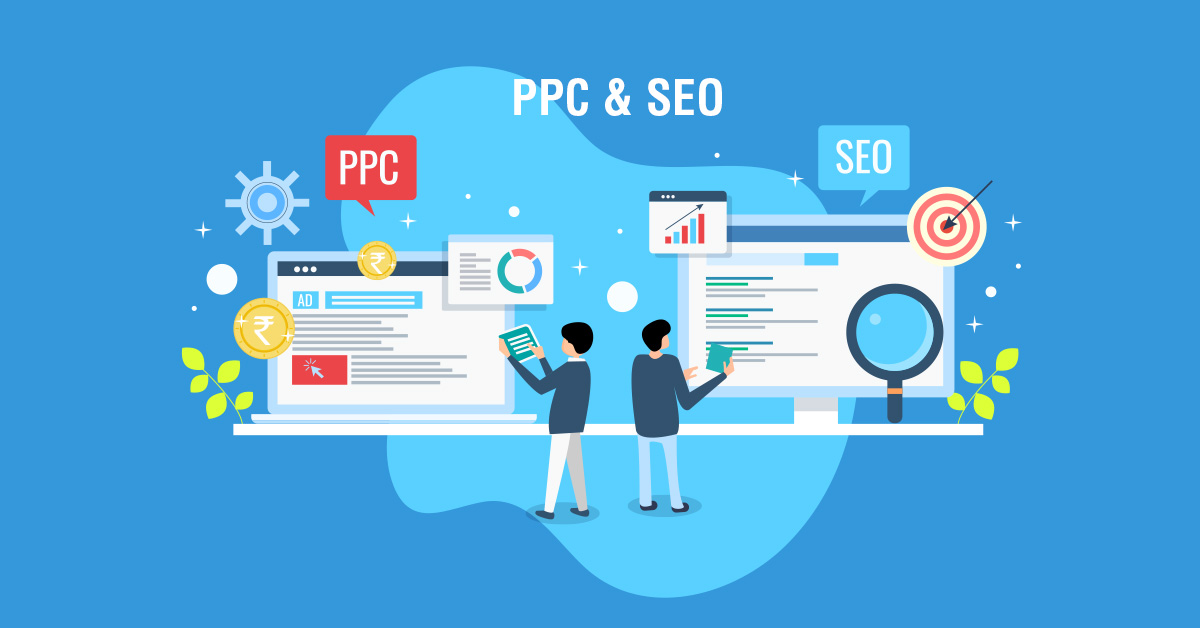
    Why Do You Need SEO and PPC to Grow Digitally?

    According to a Statista report, almost 30% of the global web traffic is generated through online search usage. This clearly highlights the critical role that search engines like Google play in directing users to websites. Ranking well in SERPs (Search Engine Ranking Pages) thus becomes one of the most effective ways to grow in the digital world.

    SEO (Search Engine Optimization) and PPC (Pay-Per-Click) are two of the most popular strategies used by brands and marketers to boost their digital presence.

    While SEO focuses on improving your ranking in organic search results for targeted keywords, PPC is a paid marketing strategy that provides you with the opportunity to present your ads when users search for related content on search engines.

    Ultimately, both SEO and PPC help brands improve their rankings in SERPs. If both of these digital strategies help you rank better, shouldn’t brands and marketers focus on only one? No, experts recommend that you need a combination of SEO and PPC for the best results. Check out some of the reasons why-

    1. Improved Presence on Search Engine

    As mentioned above, SEO provides you with the opportunity to make your web pages rank higher for the targeted keywords. Your web pages can land on the first page or even conquer the coveted top spot. When you also purchase PPC ads for the same keywords, your ads can appear even above the organic search results.

    If you optimize your web pages for a particular keyword and also set a PPC campaign for the same, you get the opportunity to dominate the search results. This could lead to more visibility, more clicks, and most probably, more sales.

    2. Find Relevant Keywords

    With Google regularly updating its search algorithms, it is only getting more difficult for brands to organically land on the first page of search results. The Google Ads platform can help brands in this regard. For instance, the platform comes with the Keyword Tool, which can be used for creating a list of keywords that are relevant to your business/industry and also receive plenty of traffic.

    These keywords can then be integrated into your website to improve its ranking in search results. Similarly, there is an ad tracking tool that enables you to measure how the changes to your ad campaigns and website are impacting conversions. This data can be very valuable for improving your SEO strategy.

    3. Using Ad Copies for Improving Content Strategy

    Experts opine- things that work for PPC also work for SEO. So, you can use your paid ad campaign to improve your website’s organic ranking and use top organic results for improving your PPC campaign. For instance, you can use the ad copy and headline of your top-performing paid ad in the title tags and meta descriptions of your SEO content.

    Similarly, the copy of top-ranking organic web pages can be used in your paid ad to make it more effective. While this is just one example, there are several ways in which you can use PPC for improving your SEO and vice-versa.

    SEO+PPC = Improved Digital Presence

    Search for a popular keyword related to your business/industry. There is a high probability that you will see the same brands having top organic rankings and their paid ads placed above the organic results. With most of your competitors making the best use of SEO and PPC, it won’t be wise for you or your brand to only use one of the two for improving your digital presence.

    You can work with experienced digital marketers to create a custom SEO and PPC strategy that makes you more competitive and helps improve your online presence.
  • Top 10 PPC Trends to Leverage in 2020

    Top 10 PPC Trends to Leverage in 2020

    The poster boy of the paid marketing world, pay-per-click advertising is evolving with each passing year. The advances in AI, changing privacy guidelines, birth of new online platforms, increase in video content consumption, change in how digital users consume content, have led to digital marketers rethinking their PPC advertising strategies.

    Up your PPC marketing game by staying relevant and incorporating these trends into your campaign:

    1. Focus on Automation

    Although automation in CPC advertising is not new, how it will be used is changing. Automation will use statistical analysis to remove non-performing ads, boost the visibility of best performing ads, and identify and bid for ad auctions with the best potential. These otherwise labour-intensive tasks will be automated using AI and machine learning, to allow the human team to focus more on development strategy.

    2. Artificial Intelligence for efficacy

    Right from predicting the CTR on future ads to analysing bids that are most likely to generate high levels of traffic, AI is here to revolutionise how paid search marketing is done. The more it learns about the users’ behaviour, the more it will help to create targeted ads.

    3. Video ads

    Whether it is Instagram Stories or Google video ads, users are going to continue to throng to video ads to know about product or service. Marketers will need to design ads keeping in mind Google video ads’ vertical orientation. Another feature that marketers need to pay heed to is the Bumper Machine- the 6-second un-skippable video that plays before, within, or after a YouTube video. While the Bumper Machine utilises machine learning to create multiple bumper ad options for you, you can modify the video and sound as per your strategy. This often-overlooked component of a YouTube ad will be a focal point this year.

    4. Ads Data Hub

    The reliance on pixel technology to gain insights into your YouTube ad metrics will be overtaken by Google’s Ads Data Hub. Although the focus on Ads Data Hub was due to a greater need for security, the Hub is a comprehensive tool to understand the efficacy of a CPC across digital devices as opposed to the single screen insights that pixel technology was restricted to.

    5. Smart bidding

    AI is going to change the way marketers bid. Google has come up with some much-needed controls for smart bidding such as Campaign-level Conversion Setting which allow the advertiser to set campaign goals for campaigns instead of the earlier account-level goals. The ‘Maximum Conversion’ control will ensure that you optimise your daily budget to get a maximum number of conversions. ‘Seasonality Adjustments’ will adjust the bid if the AI predicts a higher conversion rate during let’s say, the holiday season. Furthermore, Google has initiated ‘value rules’ which allow the marketer to differentiate the different conversion values based on the variables such as audience, location, and device used.

    6. YouTube Masthead

    When YouTube launched the Masthead for TV in the last quarter of 2019, the decision was based on the increasing popularity of YouTube on TV. More than 250 million hours of content was consumed per day by TV YouTube users.

    7. Voice search

    One of the biggest PPC trends to watch out for is the shift in preference for voice searches than typed searches. It is estimated that 2020 will see 50% search queries being voice-based. Businesses need to design PPC campaigns that include this new trend. Digital marketers need to keep in mind that voice searches are more conversational, start with a question word (where, what, why, how), and are mainly commanded through smartphones than any other device. Develop campaigns that focus on the “where” and “when” keywords as these words indicate that the user is at the conversion stage rather than at an awareness stage as indicated by keywords such as “what” and “who”.

    8. Smarter mobile user segregation

    Google’s AdMob helps businesses analyse an app’s data and user behaviour. It provides key insights into users who are likely to make an in-app purchase and those who aren’t. This type of segmentation will help advertisers pick the right type of audience to advertise to. AdMob also identifies any significant changes in your metrics such as impressions and alerts you to ensure immediate action.

    9. Virtual Reality Advertisements

    Millennials and Gen Z are investing their time and effort in VR. The “click” here is through VR’s eye-tracking technology which plays the video when the user’s eyes linger on it for a couple of moments. Digital marketers can design VR ads that allow the user to experience the product before buying it. There is a range of possibilities for marketers to explore; users can “try” out a pair of shoes to know its benefits, or a potential buyer can try on clothes before buying.

    10. Alternative platforms

    While Google and Facebook are the hotbed for digital ads, platforms such as Quora and LinkedIn are fast gaining ground. For instance, more and more online users are spending time on Quora, literally looking for answers; digital marketers can develop native ads for popular Quora queries and highlight their product or service.

    CPC is one of the largest target marketing strategies that any digital marketer can use. Use this article as a starting point to get the best out of the growing trends in PPC, and to stay ahead of the curve.

  • How Can First-Party Data Be Used for Improving PPC Performance?

    How Can First-Party Data Be Used for Improving PPC Performance?

    The boundless world of online marketing brings with it a host of marketing options. While SEO continues to be one of the most cost-efficient marketing strategies, spending money on PPC campaigns is turning into a critical component of every digital marketing strategy.

    And marketers do have some pretty solid reasons to spend their budget on PPC. For instance-

    • As per a study, around 33% of people click on paid ads when they search for something on Google as the ads provide the most accurate answer to their query
    • Another research suggests that around 40% of the user clicks go to the top 3 paid ads on the search results page

    But while PPC is currently enjoying widespread popularity in the world of online marketing, brands need to have an innovative marketing approach to make the best use of the available opportunities.

    For instance, with Google now focusing on adding more automation to the PPC landscape, this is an excellent time for brands to use the first-party data to improve their PPC performance innovatively.

    What is First-Party Audience Data?

    While there are now many different ways for brands to collect all the different types of audience data, the data that a brand collects from its audience is the most valuable. This is exactly what first-party data is. It is the data that a brand collects from its audience through analytics, resource downloads, subscriptions, app, newsletters, events, and more.

    Unfortunately, seldom these data sources have any link to one another. For instance, a brand might be using CRM for collecting customer data and Google Analytics for tracking user behaviour on their website. The data from these sources is never effectively connected to help brands abstract the big picture.

    Strategies to Effectively Use First-Party Data

    In the world of digital marketing, every challenge is an opportunity to innovate. Fortunately, there are some time-proven strategies with regards to using first-party data for powering PPC campaigns.

    1. Integration Between Google Analytics and Data Sources

    While Google Analytics is by far one of the most advanced analytics tools, it lacks a few features. For instance, important data points like lead to sale conversion rate, sale value of leads, and lead scoring data is missing. This is where the integration between your data sources and Google Analytics can work its magic.

    There are many different ways to connect your data sources to Google Analytics. One of the easiest of them is to use a data connector tool. The tool can be used to connect a data source like the CRM system to your Google Analytics account. The overall goal here is to ensure that there is a way for the lead data on your Google Analytics panel to be traced back to its origination on your website.

    2. First-Party Data for Improved PPC Bidding

    Several brands are already using first-party data with Google Ads scripts to improve their bidding strategies. But combining conversion-focused bidding strategies along with Smart Bidding, a part of the Google automated bidding software, is proven to deliver improved results. Smart Bidding uses machine learning and uses data points like location, device, time, etc. to adjust bids.

    First-party data can be used to analyse campaign results, and the data points like business impact and campaign performance could be used to optimize bidding strategies. For instance, the data can be used for adjusting ROAS (Return-On-Ad-Spend) or CPA (Cost-Per-Acquisition) targets rather than adjusting ROAS/CPA targets based on the default Google Ads conversion report.

    3. Optimized Audience Expansion

    Google Customer Match allows you to target customers or prospects with the help of first-party audience data. For instance, you can import your email lists into Google Ads. Platforms like Facebook, LinkedIn, and Twitter now also offer this functionality. The goal here is to target people who are already aware of your brand as they are more likely to convert.

    Apart from targeting people who already know about your brand, you also have the option of building targeting lists based on characteristics that are common between your existing audience and new audience. For instance, the Audience feature on Google allows you to search for targets based on the search behavior of your existing audience.

    Utilizing First-Party Data for Boosting PPC Campaigns

    With regards to PPC, automation and machine learning will only get more popular in the future as it enables Google to manage things at scale humans, and even traditional machines cannot.

    This makes it an excellent time for brands to focus more on their first-party data so that valuable data could be fed to the automated systems, and their PPC campaigns are effectively optimized.

  • 5 Audiences to NOT Include in your PPC Campaigns

    5 Audiences to NOT Include in your PPC Campaigns

    Identifying the audiences NOT to reach is as important as identifying audiences you want to reach for PPC campaigns. By not showing ads to negative audiences, marketers can reduce spends and avoid tiring out potential customers by running irrelevant ads.

    Here, in this guide, you can take a look at the five audience categories to exclude from PPC campaigns.

    1. Support Seekers 

    People who are looking at your web pages for support are generally existing customers. They are not looking to purchase from you, but require extra assistance.

    Brands can build retargeting lists based on the URLs visited. Customers who visit the FAQ and other support section of the website can be excluded from PPC campaigns.

    2. Previous Customers 

    Including or excluding previous customers depends on business goals. Let’s understand this with an example. Consider a brand that has a multi-step funnel before customers convert.

    At the first point of contact with the brand, customers are offered an asset like free delivery on their first order when they sign up for the newsletter. Marketers can now include these customers to a retargeting list and entice them for a second transaction. On the other hand, marketers can exclude them from the campaign, since they already have the asset (free delivery coupon) in hand. However, marketers can decide to include them in another campaign, say a product demo campaign.

    This way, marketers can ensure that past customers are not retargeted for duplicate messages. Instead, it gets them to take the next step in the funnel.

    3. Job Seekers 

    It’s common knowledge that site visitors who are more interested in the career section of your website are not likely to purchase from you. So, it makes sense not to include this set of audience in your PPC campaigns’, and thereby avoid unnecessary spends.

    4. Present Customers – But it depends

    Current customers fall under the grey area of PPC campaigns. Some PPC marketers argue that they should be included while others believe otherwise.

    • Brands that are looking to upsell can include current customers for ad campaigns.
    • Alternatively, marketers can include customers who have purchased Product A for campaigns related to Product B and vice versa.
    • Existing customers provide recurring revenue to brands. You can segment them into smaller segments based on whether they are likely to repurchase or not.

    5. Audiences in non-retargeting Campaigns 

    It’s a good practice to avoid audiences from other campaigns in specific retargeting campaigns. For instance, if a brand is running an interest-creating campaign on Facebook. Make sure to include the audience from this campaign in one particular retargeting audience list so that you can send them specific messaging, getting them to convert.

    Define your Audience for Precise Targeting 

    While these are the top 5 audience categories to exclude from your PPC list, there may be several other categories based on your goals and objectives. Make sure to refine the audience list that you want to show and not show your ads. This way, you can avoid wasting money on the wrong audiences while getting the right audiences to convert.

  • 5 Reasons why Automated Bidding is NOT the Magic Potion to all PPC Challenges

    5 Reasons why Automated Bidding is NOT the Magic Potion to all PPC Challenges

    It’s no surprise that Google is pushing advertisers to make use of its machine learning tools and features. Automated bidding for PPC campaigns is one such strategy that Google is using to entice advertisers.

     What is Automated Bidding? 

    As the name implies, it’s an automatic bidding strategy used for Google AdWords campaigns. In automated bidding, Google monitors the performance of the campaign using advanced machine learning tools, which automatically sets and adjusts bids for every auction, based on the goals defined.

    Google currently offers six different automated strategies to meet different PPC goals. Here’s are different automated bidding strategies that PPC advertisers can use:

    S.No. Bid Strategy Goal
    1 Maximize clicks To increase traffic to the site
    2 Target impression share To increase site visibility
    3 Target CPA automatically To increase conversions
    4 Target ROAS To meet a target ROAS while assigning different values to each conversion
    5 Maximize conversions automatically Get more conversions within the budget
    6 Maximize conversion value automatically Get more conversion value


    Does this mean, PPC campaigns can be run automatically without the need for PPC experts? Well, No, in this guide, we take a look at why using automated PPC bidding strategies may not always be the right choice.

    #1: Automated Bidding doesn’t mean it’s a Completely Hands-off Approach 

    Advertisers falsely assume that once they set up automated bidding, the tool itself takes care of all the aspects of the campaign.

    To give an example, IS (Impression Share) is a metric that advertisers regularly monitor while using manual bidding. When switching to automated bidding, advertisers stop monitoring this key metric, which could lead to plenty of lost impression shares.

    One reason for lost IS with automated bidding is that when a competitor’s actions change the value per click, the automated bid strategy stays within the bounds set by the advertiser. This leads to losing impression shares to competitors.

     #2: Advertisers are likely to Miss Out on Key Insights 

    Let’s explain this with an example. For instance, if the conversion rate drops after launching a new landing page, automated bids will reduce the number of bids, so that it can remain within the target. The advertiser will not know why the bid values were dialled down.

    The result – they are likely to lose more impression shares.

    #3: Bid Automations do not Automatically Rectify all the Mistakes of Manual Bidding

    Majority of advertisers consider automated bidding as the solution to achieving results that they were not able to achieve manually. They think that once they set the target, the system will automatically reach the desired goal.

    This is a significant mistake. For instance, if advertisers set a low target, they could potentially lose volume. On the other hand, if the goal is too aggressive, it causes a loss of profitability.

    Just like manual bidding, advertisers have to monitor and change targets based on performance.

    #4: Automated Bidding Complicates the Math

    PPC advertisers are likely to be familiar with the basic math of PPC for manual bidding like:

    • Increase the CPC bids to become more aggressive
    • Increase the tROAS to become more aggressive and so on.

    With automated bidding, advertisers have to relearn the math once again to get it right, and the worst part is that the math is not transparent as with manual bidding.

    #5: Even Automated Bidding Requires Multiple ROAS

    Several advertisers falsely believe that with automated bidding, they can set a single target for the entire campaign. Sadly, it doesn’t work that way. Advertisers still have to set different goals for various ad group levels.

    The key takeaway – Advertisers should continue to keep an eye on Details, even while using Bid Automations

    While there’s no denying that automated bidding is a powerful tool, advertisers have to consider the following factors before they start using it:

    • Understand it inside out
    • Continue to keep an eye on details
    • Targets are still fluid goals that vary based on changing requirements
  • No more accelerated Ad delivery for Search and Shopping campaigns.

    No more accelerated Ad delivery for Search and Shopping campaigns.

    Google Ads has announced its plans to switch to standard delivery of ads by 1st October.

    What is Changing?

    Earlier this month, Google announced that it plans to change the ad delivery mechanism for Google Ads campaigns. Starting 17th September, standard delivery will be the only option for new campaigns, and from 1st October, all existing search and shopping campaigns will be automatically switched to standard delivery.

    Quick Recap into Ad Delivery Mechanisms

    The ad delivery method determines how long the ad budgets last. The two options available earlier were:

    • Standard Ad delivery – Here, Google optimizes the distribution of the ad cost to make the budget last for the entire day. Here, the ads are distributed evenly throughout the day.
    • Accelerated Ad delivery – Here, the ad budget is not distributed and is likely to be exhausted before the end of the day. Works well when marketers want to show their ads on specific times of the day, say early in the morning.

    The standard ad delivery option was the default choice earlier. From this month, it will be the only choice, and from 1st October, the accelerated ad delivery option will no longer be available.

    Why is Google making this change?

    Generally, advertisers on Google Ads don’t opt for the accelerated delivery option, especially when they have limited budgets. With standard delivery, advertisers were able to generate as many conversions as possible within a specific target CPC (Cost-per-conversion). This was a tactic used by advertisers, who wanted to get the most out of their budgets.

    Google notes that the accelerated delivery option isn’t quite effective for campaigns that don’t have budget limitations. On the other end of the spectrum, accelerated delivery doesn’t work very well for campaigns that are budget limited as well. This is because using accelerated deliveries increases CPCs due to high competition early in the day, and causes the entire budget to be exhausted in earlier time zones.

    On the other hand, standard delivery considers the ad performance throughout the day and works better at maximizing ad performance, by the daily budget. When advertisers choose standard ad delivery, their budget is evenly distributed throughout the day. According to Google, this helps in optimization of spends based on user searches.

    What does Google recommend as an alternative?

    Google recommends that advertisers maximize conversions and clicks by using different bidding strategies to boost ad performance. Additionally, Google also recommends using ad scheduling to manage the optimal time for showing ads and adjust bids in accordance with the period.

    The Key Takeaway for Advertisers from this recent change

    A large number of advertisers who are used to the accelerated ad delivery option will most likely miss this feature once it goes away. However, advertisers have to understand that similar changes are likely to occur more in the future, as Google optimizes the performance of its machine learning algorithms.

    With this change, Google is signaling to advertisers that its algorithm is better equipped to optimize ad delivery based on the advertiser’s goals and other contextual signals, instead of showing the ads frequently and early in the day.

  • PPC 2018 in Review: How These Top 5 Trends will Impact Paid Advertisers in 2019

    PPC 2018 in Review: How These Top 5 Trends will Impact Paid Advertisers in 2019

    2018 was a huge year for PPC marketing. There were several massive changes in the paid search landscape – the launch of new campaigns, enhanced features, better targeting capabilities, new tools and more.

    How do these big changes and trends impact PPC advertisers in 2019? That’s one of the big questions in everyone’s mind. Here, in this article, we take a look at how the trends and changes of 2018, shape the way paid search marketers will work in 2019 and beyond.

    1. Google Ads Gets a New Name and a New UI

    Google announced the name change of Adwords to Google Ads, in June 2018. This name change reflects the platform’s move away from keywords. Going forward keywords will play a lesser role in paid search marketing and will be more focused on audiences. Additionally, the name change of the platform indicates Google’s growth beyond text ads to ads of different formats and across a variety of sites and apps.

    The new Google Ads UI is more of a command centre than the previous dashboard style. There’s a new YouTube reach planner, the ability to make changes right from the Overview section, notes and several other new features.

    Experts predict that this new UI will be the most significant change in PPC for 2019. There are several new ways to segment data, and finally, marketers will make the shift from keywords and text ads, to new categories of ads.

    2. Enter the Era of Amazon’s Advertising

    2018 was the year when Google, Bing, and Facebook recognised the role of the e-commerce giants when it came to PPC marketing. According to reports by eMarketer, Amazon is currently the third-largest digital ad marketplace in the US. Though it’s far behind Google and Facebook, Amazon’s ad revenue is expected to skyrocket in the coming years.

    What does this mean for paid advertisers? Experts predict that paid advertisers will lean towards Amazon, both in terms of budget allocations and campaign management.

    With the ad format in Amazon, different from Google and Bing, advertisers will have to develop distinct practices specifically for the platform. Though Amazon’s ad management and reporting capabilities are nowhere near Google, right now, experts expect to see significant progress this year and in the coming years.

    3. AI-Powered Insights

    While AI in marketing has been around for some time now, both Google and Bing allocated significant resources for AI-research in 2018. This helps in improving AI-driven recommendations in both the search engines.

    The Competition tab from Bing offers performance insights and other location-based recommendations, powered by machine learning networks. Google also offered better data visualisations, which help advertisers track the performance of their campaigns, effectively. 

    How do these impact the advertiser? With quicker insights powered by AI, advertisers will spend lesser time on analysing spreadsheets and instead focus on developing their marketing strategy and creative tactics.

    4. Increase in Cross-Channel Advertising

    Today, the digital marketing space is so varied, and there are plenty of channels and platforms, all offering different benefits to the advertiser. In the coming years, you can expect advertisers focusing on cross-channel and cross-device attribution.

    However, while it’s easy to build and co-ordinate multi-channel campaigns, reporting silos is still a major challenge for paid advertisers. Advertisers can expect new tools that make it easy to monitor and track performances for cross-channel advertising campaigns.  

    5. Video will Continue to Play a Significant Role

    Though video marketing has been around for a long time, the trend doesn’t seem to die away, anytime soon. PPC marketers should plan on including video into their strategies to gain coveted placements on SERPs.

    Even if you don’t want to increase spends on video marketing, you can still leverage YouTube audiences as part of your PPC search campaigns. And, experts predict that more platforms will adopt Google’s recent introduction of vertical video ads.  

    Looking Ahead for 2019

    2018 was a significant year for PPC. With the arrival of Amazon, depreciation of keywords and the increasing role of machine learning and AI, 2019 presents several new challenges and opportunities for paid advertisers. And, PPC advertisers have to embrace these new trends, to stay ahead of the pack and create successful campaigns.

  • Google Now Pays For Conversions Bidding In Display Campaigns

    Google Now Pays For Conversions Bidding In Display Campaigns

    In the ever-changing, ever-evolving world of Google, changes are not all that surprising. However, Google still manages to take people off-guard with some variation or another.

    The latest one in the line being, conversion-based bidding called “Pay-For-Conversions” available for display campaigns.  

    Why Should You Know About This?

    If you are an advertiser, basing your strategies on Google’s functioning, then this is important information. With the bidding functionality now available, advertisers will be charged when users convert from ads.

    This move is similar to Google’s search campaigns. Advertisers that want to pay by conversion rates would set for themselves a target Cost Per Acquisition or CPA that needs to be acquired in the bidding section of the campaign settings. To further clarify how this works, Google graced its confused audiences with an example.

    “Let’s say your target CPA is $10, and you drove 30 conversions over the weekend. You’ll pay exactly $300, with an actual CPA of $10.” Further, they said, “you’ll never pay above your target Cost Per Action.”

    Google, therefore, is trying to put it out that Pay-For-Conversions will use the same functionality (in algorithmic terms) as that of Click-based payment. This hints towards the goal which is to garner as many conversions as possible by the desired target threshold.

    For Those of You Who Are Still Wondering What Target CPA Is

    Formerly known as Conversion Optimizer, Target CPA bidding is an automated bidding strategy provided by Google Adwords. Target CPA optimises your bids so that you get the most conversions for your target CPA, which you set as a goal.

    Let’s put it this way, say you found out through intensive research and experience that you can pay up to $2 to gain a customer, and still have margins left to cover your costs, so you would then choose a target CPA of $2 and Google will then deploy algorithms to get you the best bids to reach that goal.

    Some Additional Information on Target CPA

    •    Target CPA is a lucrative option for high volume campaigns like the ones which promote products or services with identical margins.

    •    The upper limit on a target CPA is $200.

    •    In case you happen to get an error while trying to pay for conversions, then your account would be disqualified for “undisclosed reasons.” For added authenticity, Google says that eligibility is refreshed on a daily basis.

    •    What advertisers need to keep in mind is that Pay-For-Conversions don’t work on conversions imported from calls or Salesforce. They also do not work for cross-device conversions or shared budgets.

    •    There also happens to be an option called Smart Display Campaign, which offers pay conversions. Campaigns need to at least reach 50 conversions in the course of 30 days to be eligible for the Smart Display Campaign (which is basically an advertising solution to handle variables so as to acquire a larger customer base.

    Now that we have all the details about this update, advertisers need to make sure to set a target Cost Per Acquisition. This will help to make sure that the update works in their favour and they can make the most out of this new update announced by Google.

  • How can AI Drive Marketing Automation and Personalisation?

    How can AI Drive Marketing Automation and Personalisation?

    Artificial Intelligence (AI) has increasingly been in the news for quite some time now. Be it unleashing new business potential or making digital marketers’ work more effective; there are multiple interesting applications of AI. Key components of AI include artificial neural network, deep learning, and machine learning. It would not be wrong to say that these fields have emerged as separate ecosystems by themselves.

    For marketers, the key aspect that showcases a promising future of the blend of digital marketing with AI is customer data. This data is available across multiple sources, in different formats, and across various types (like structured and unstructured data). The primary challenge for today’s marketer is to make sense of the seemingly random pieces of information and weave it together to generate previously hidden insights.

    The best part about such data is that it doesn’t need a full tech stack of AI-based solutions to make sense. Even a smaller subset of AI like machine learning will be fully capable of delivering tremendous business value with the help of processes like parsing of customer data from a diverse source, data prediction, and other features that fulfil the marketing automation objectives.

    However, one common theme comes out of this exciting partnership between marketing and AI. As more and more sources are being tapped to know the target customer better, the role of AI applications in making sense of the broader spectrum of data will keep on increasing.

    Making sense of the numbers with AI prowess

    Given the immense potential, it is not surprising to see many marketers today looking at using AI into their marketing campaigns, especially in content marketing. Even machine learning is proving to be valuable in tapping into newer audiences and boosting the user base for a particular brand based on their buyer persona objectives. It helps in sifting through massive troughs of big data that on first glance, look unrelated, but when explored from the eyes of machine learning, yield phenomenal insights. These may be in the form of information on rewarding markets, segments, or patterns that give better direction to your marketing campaigns.

    How will AI help marketing?

    It is interesting to note the key objective with which these initiatives are driven. Marketers would need the massive influence of AI to meet a prime goal – that of personalised customer experiences. Also, there are other exciting avenues. Let’s discuss them below –

    1 – Customer experiences at the heart of AI adoption

    Marketers focusing on segmentation and personalisation of ad campaigns reported positive yields for their campaigns. AI and machine learning can easily traverse through billions of data points, and help the marketers to create better market segments. They can facilitate more impactful ad delivery to improve the conversion rate on the basis of personalised marketing messages.

    2 – Better recommendations 

    AI will analyse the kind of content users would be interested in. This helps marketers to generate bespoke content that is deeply tailored and looks more natural to individual preferences. This will impact different marketing activities like loyalty programs and promotions.

    3 – Leveraging data in real time

    A third area where AI can deliver exemplary impact will be marketing automation. Of course, this won’t mean that the marketer’s job would be reduced to nothing. Here, AI would work with up-to-date data and use predictive modelling to deliver real-time deals and offers that the customer is actually looking for at that time.

    It will be wrong to term AI as the ‘magic pill’ that cures all ills (for the marketers). But yes, it is true that in its current form, AI has the capabilities to boost the marketer’s efficacy and generate better outcomes.

  • How to Get True Google Analytics Insights On Single Page Visits?

    How to Get True Google Analytics Insights On Single Page Visits?

    Content has immense power as far as engagement is concerned. With compelling content, the target readers stay hooked on the site for longer. They read through the entire article and act upon the call to action. However, there is a strange contradiction that your Google Analytics ends up reporting. Yes, the search engine analytics reports this as a bounced page with 0-second session duration.

    Here’s how:

    1 – Bounce rate is when there is a ‘back’ button click, a browser window is closed, manual URL feeding, or a click to an external link.

    So every single type of visit is classified as a bounce if the user doesn’t click to another page on the site (which is what usually happens when a reader reads a blog or article)

    2 –Time on page is computed only when the entry and exit pages are different. If the reader reads through the article and exits from the same page, the time is calculated as zero seconds, even if he took (suppose) 3:25 minutes to read a content.

    This is because it needs the initiation time of the 2nd page to compute time on page (which will not exist in case of single-page sessions)

    Why is this important?

    Google Analytics is the Holy Grail for digital marketers all over the world. Their success and performance is determined by the numbers thrown up by the GA site. The GA site tracks awareness, which leads to engagement, which in turn, leads to conversion. However, the fact remains that its in-built ranking signal determiners itself cannot be taken at face value every single time. As smart digital marketers, we need to know this limitation about Google Analytics. Otherwise, we would end up making terrible strategy decisions.

    How to overcome this limitation?

    1 – To rectify the Bounce Rate metric

    It is easy to update the Universal GA parameters with the below line of code

    setTimeout(“ga(‘send’, ‘event’, ‘nobounce’,’45_sec’)”,40000);

    So for your content, an engaged user will be anyone who is on the page for more than 45 seconds. Some bugger organisations may set the benchmark higher and use 60 second or more to classify a page as a non-bounced visit.

    2 – To rectify time-on-page metric

    Using Google Tag Manager, we can set up a trigger to improve the reporting on this particular metric. The trigger will be the timer type. Here set the interval as either 15000 (15 seconds) or 30000 (30 seconds). Then by using the code below, you can set the trigger to go off on every page of the site.

    Page URL

    Matches RegEx

    .*

    Then create a ‘timing event’ tag by populating the fields – ‘Category’, ‘Action’, and ‘Label’. Lastly, select the trigger created some moments back and publish the changes.

    You need not be troubled in case you see a high occurrence of bounce rate and zero time on page reporting. With these tips, you can easily tweak the setup of Google Analytics to reflect the true state of engagement on your website. This is done by factoring in single-page visit session too for your organic search performance.