LS Staging

Category: Other SEO News

  • 10 Seo Lead generation tips to grow your business

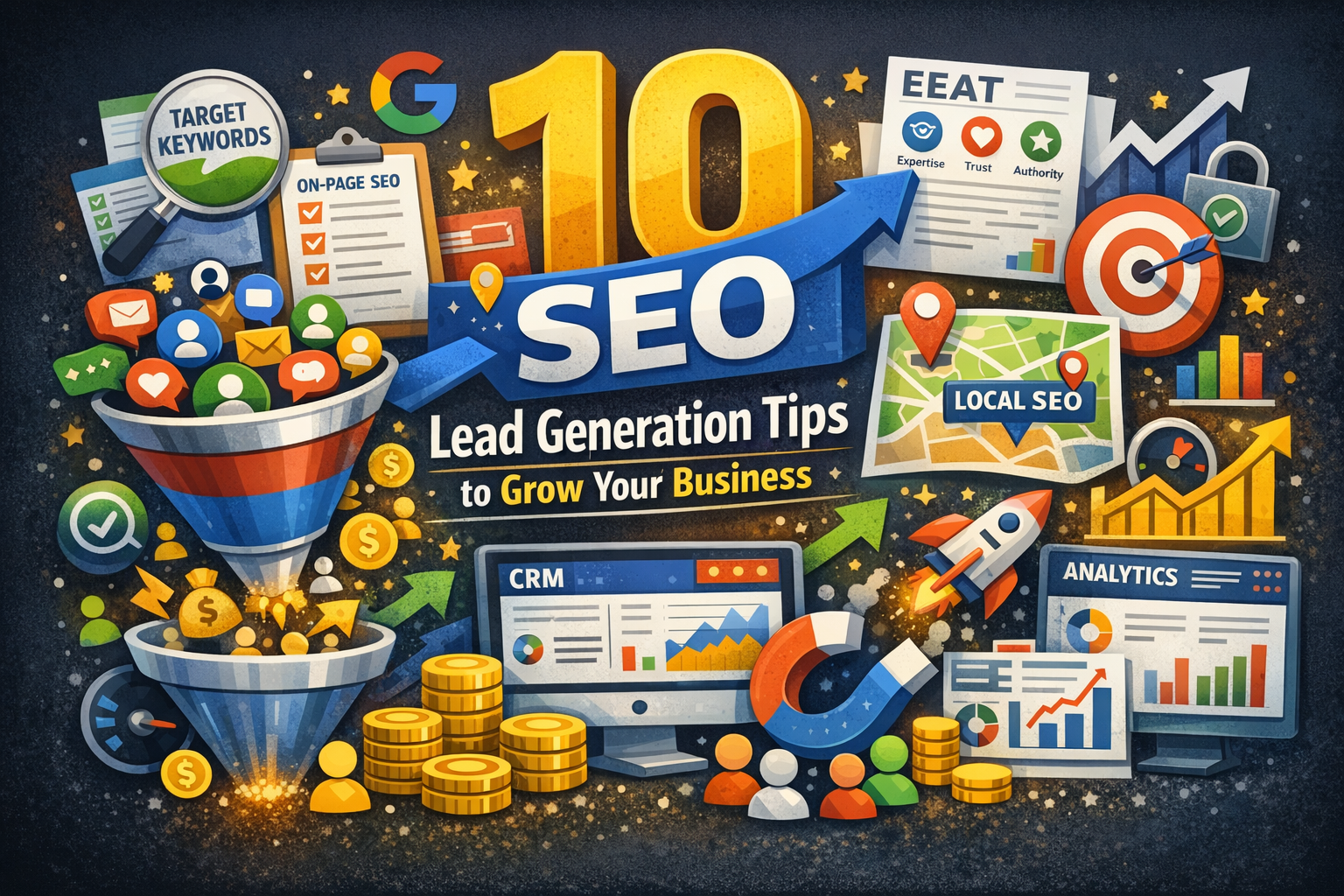
    10 Seo Lead generation tips to grow your business

    SEO led lead generation is the process of attracting potential customers through organic search engines like Google and converting them into real business opportunities, such as inquiries, demo requests, sign-ups, or sales.

    Unlike traditional advertising, where businesses push messages to a broad audience, SEO works differently. It helps your business appear to people exactly when they are actively searching for a solution. This makes SEO one of the most powerful and sustainable ways to generate qualified leads.

    For example, imagine someone searches for:

    • “best CRM for small business”
    • “SEO agency near me”
    • “website redesign services”

    These people are not casually browsing. They already have a problem and are looking for a solution. That means they are warm leads. SEO ensures that your website appears at this crucial decision-making stage.

    How Does SEO Help in Lead Generation?

    SEO helps generate leads by improving your visibility for high-intent searches. When your website ranks for keywords that show strong buying intent, you attract people who are more likely to convert.

    Here’s how SEO supports lead generation:

    1. It drives targeted traffic

    SEO focuses on ranking for keywords that your potential customers are actively searching for. This means the traffic you receive is highly relevant to your business.

    1. It builds long-term trust

    When your website consistently appears in search results, users begin to see your brand as credible and authoritative. Over time, this trust increases conversion rates.

    1. It reduces cost per lead

    Unlike paid ads, where you pay for every click, SEO brings organic traffic without ongoing ad spend. While it requires investment upfront, the long-term cost per lead becomes significantly lower.

    1. It brings consistent prospects

    Once your pages rank well, they can continue generating leads for months or even years with proper optimisation.

    1. It supports scalable growth

    As you create more targeted pages and improve your SEO, your lead flow grows steadily without relying entirely on advertising budgets.

    SEO does not just increase website traffic, but it also attracts the right traffic.

    How SEO Helps Generate Quality Leads

    Not all website visitors are valuable. What truly matters in lead generation is quality.

    SEO leads tend to be higher quality because users coming from search engines are:

    • Already researching solutions
    • Actively comparing options
    • Closer to making a buying decision

    For example, someone who clicks on a social media ad might not be actively looking for your service. However, someone searching “digital marketing services pricing” is already evaluating options. This is why SEO leads often convert better than cold outreach or passive campaigns.

     10 SEO Lead Generation Tips to Grow Your Business

    Let’s explore the most effective SEO strategies that can help you generate consistent leads.

    Tip 1: Target High-Intent Keywords (Not Just High Volume)

    Many businesses focus only on keywords with large search volumes. However, traffic alone does not guarantee leads.

    Instead, focus on buyer-intent keywords such as:

    • “hire SEO consultant”
    • “best accounting firm in Mumbai”
    • “digital marketing services pricing”
    • “software demo request”

    These keywords indicate that the user is ready to take action.

    There are three main types of keyword intent:

    • Awareness– The user wants to learn something.
    • Consideration – The user is comparing options.
    • Conversion – The user is ready to buy or contact.

    For lead generation, transactional and commercial keywords usually deliver better results.

    Tip 2: Optimise Content Around Search Intent

    Ranking on Google is not enough. Your content must match what the user expects to find.

    For example:

    • If someone searches “SEO lead generation tips,” they expect a practical guide.
    • If they search “SEO agency pricing,” they expect clear pricing information.
    • If they search “best CRM tools,” they expect comparisons and recommendations.

    Before creating content, ask yourself:

    • What problem is this user trying to solve?
    • What action are they likely to take next?

    When your content aligns perfectly with intent, conversions improve significantly.

    Tip 3: Create Conversion-Focused Landing Pages

    Blog posts help attract awareness. However, landing pages are what generate leads.

    You should create dedicated SEO-friendly pages for:

    • Services
    • Specific industries
    • Locations
    • Product offerings

    A high-converting landing page should include:

    • A clear and compelling headline
    • Benefits and value propositions
    • Social proof such as testimonials
    • A lead form placed prominently
    • A strong call-to-action (CTA)

    Without proper landing pages, traffic may increase but leads will remain low.

    Tip 4: Improve On-Page SEO for Every Lead Page

    On-page SEO ensures that both search engines and users clearly understand your content.

    Important elements include:

    • Including your primary keyword in the title and H1
    • Using proper heading structure (H2, H3)
    • Writing compelling meta descriptions
    • Adding internal links to relevant pages
    • Optimising image alt text
    • Including FAQ sections for better visibility in search features

    Strong on-page optimisation improves rankings and increases user trust.

    Tip 5: Strengthen Technical SEO

    A website that loads slowly or functions poorly can lose leads even if it ranks well.

    Key technical improvements include:

    • Improving page speed
    • Ensuring mobile responsiveness
    • Fixing broken links
    • Optimising Core Web Vitals
    • Adding HTTPS security
    • Removing duplicate content

    A better user experience leads to better conversion rates.

    Tip 6: Build Authority Through EEAT Content

    Google values content that demonstrates:

    • Expertise
    • Experience
    • Authoritativeness
    • Trustworthiness

    What Does Each Part of EEAT Mean?

    Experience

    This shows that the content creator has first-hand or practical experience.

    For example:

    • Sharing real client results
    • Explaining what worked and what didn’t
    • Describing practical implementation steps

    Experience answers the question:
    Has this person actually done this before?

    Expertise

    This refers to knowledge and skill in a specific field.

    For example:

    • Demonstrating deep understanding of SEO strategies
    • Explaining technical concepts clearly
    • Publishing in-depth, accurate content

    Expertise answers:
    Does this person know what they’re talking about?

    Authoritativeness

    Authority is about reputation.

    It is built through:

    • Industry recognition
    • High-quality backlinks
    • Mentions in trusted publications
    • Strong brand presence

    Authority answers:
    Is this website or brand recognised in this field?”

    Trustworthiness

    Trust is the most important part.

    Trust signals include:

    • Clear contact information
    • Transparent pricing
    • Honest claims
    • Real testimonials
    • Proper citations

    Trust answers:
    “Can I rely on this information and this business?”

    Why EEAT Matters for Lead Generation

    In lead generation, trust directly impacts conversions.

    Even if you rank #1:

    • If your website looks weak, users won’t convert.
    • If your claims are not supported, users won’t trust you.
    • If there is no proof of experience, users hesitate.

    Tip 7: Use Local SEO to Generate Nearby Leads

    If you are a service-based business, local SEO can be extremely powerful.

    Optimise for:

    • “near me” searches
    • City-specific keywords
    • Google Business Profile

    Additional strategies include:

    • Creating location-specific pages
    • Collecting positive Google reviews
    • Adding local schema markup
    • Maintaining consistent business details (NAP: Name, Address, Phone)

    This helps you attract leads from customers who are ready to buy locally.

    Tip 8: Focus on Conversion Rate Optimisation (CRO)

    Traffic alone does not guarantee results. You must optimise for conversions.

    Simple CRO improvements include:

    • Adding clear CTAs
    • Offering free consultations
    • Reducing unnecessary form fields
    • Using chatbots or live chat
    • Displaying trust badges

    When SEO and CRO work together, lead generation improves dramatically.

    Tip 9: Offer Lead Magnets

    People are more likely to share their contact details when they receive value in return.

    Effective lead magnets include:

    • Free audits
    • Downloadable guides
    • Templates
    • Industry reports
    • Free trials or demos

    For example:
    “Get a Free SEO Audit Report in 24 Hours.”

    This approach converts organic visitors into real leads.

    Tip 10: Track SEO Leads with Analytics and CRM

    If you do not track your leads, you cannot improve performance.

    Use tools such as:

    • Google Analytics 4
    • Google Search Console
    • CRM software like HubSpot or Zoho
    • Call tracking systems

    Track:

    • Form submissions
    • Demo requests
    • Phone calls
    • Organic conversions
    • Keyword-to-lead performance

    SEO success should always be measured in leads and revenue, not just rankings.

    Common SEO Lead Generation Mistakes

    Avoid these common errors:

    • Focusing only on traffic volume
    • Not adding CTAs on blog posts
    • Ignoring technical SEO
    • Weak landing page structure
    • No trust signals
    • Not tracking conversions
    • Relying only on blogs without service pages

    Successful SEO lead generation requires strategy, structure, and optimisation.

    How Long Does SEO Take to Generate Leads?

    SEO is not an instant solution, but it is sustainable.

    Typical timeline:

    • 0–3 months: Foundation and indexing
    • 3–6 months: Traffic growth
    • 6–12 months: Consistent lead generation
    • 12+ months: Compounding returns

    While competitive industries may take longer, SEO delivers long-term value compared to short-term ad campaigns.

    Is SEO Better Than Paid Ads for Lead Generation?

    Both SEO and paid ads have benefits.

    SEO provides:

    • Long-term organic traffic
    • Lower cost per lead over time
    • Increased brand trust
    • Sustainable growth

    Paid ads provide:

    • Immediate visibility
    • Quick testing opportunities

    The most effective strategy is to use paid ads for short-term results while building SEO for long-term lead stability.

    How Do I Track SEO-Generated Leads?

    Track SEO leads by setting up:

    • GA4 conversion events
    • UTM attribution
    • CRM lead source mapping
    • Search Console performance reports

    This helps identify which pages + keywords drive revenue.

    Conclusion

    SEO is one of the most reliable and cost-effective ways to generate qualified leads. When implemented correctly, it attracts high-intent prospects, builds trust, and delivers consistent results over time.

    By focusing on search intent, strong landing pages, technical optimisation, authority building, and proper tracking, businesses can turn SEO into a powerful lead generation engine that drives sustainable growth month after month.

    Frequently Asked Questions

    1. What types of businesses benefit most from SEO-led lead generation?

    SEO-led lead generation works especially well for all businesses where customers actively search online before making a decision, and can benefit significantly from SEO. The key factor is whether your audience uses search engines to compare solutions.

    1. What is the difference between SEO traffic and SEO leads?

    SEO traffic refers to the number of users visiting your website from organic search results. SEO leads, on the other hand, are visitors who take a meaningful action, such as filling out a form, requesting a demo, booking a consultation, or making a purchase.

    1. How can I identify high-intent keywords for lead generation?

    High-intent keywords usually include action-driven words such as “hire,” “buy,” “pricing,” “consultation,” “near me,” “services,” or “demo.” You can identify these keywords using tools like Google Search Console, keyword research tools, competitor analysis, and reviewing customer queries. These keywords indicate that the user is closer to making a decision.

    1. Should I focus more on blogs or service pages for lead generation?

    Both are important, but they serve different purposes. Blogs help attract informational traffic and build authority, while service pages convert users who are ready to take action. For strong SEO-driven lead generation, businesses should use blogs to build awareness and strategically guide users to high-converting service or landing pages.

    1. How important is content quality for SEO lead generation?

    Content quality is critical. Search engines prioritise content that demonstrates expertise, accuracy, and trustworthiness. High-quality content builds credibility with users, improves engagement, and increases conversion rates. Poor or thin content may rank temporarily but rarely generates sustainable leads.

    1. Can SEO generate leads without paid advertising?

    Yes, SEO can generate consistent leads without paid advertising once your pages rank well. However, SEO requires time, strategic planning, and ongoing optimisation. Many businesses use paid ads initially for faster visibility while building long-term organic lead flow through SEO.

    1. How does technical SEO impact lead generation?

    Technical SEO ensures your website loads quickly, functions properly on mobile devices, and provides a smooth user experience. If a website is slow or difficult to navigate, users may leave before converting. Strong technical performance directly improves both rankings and lead conversion rates.
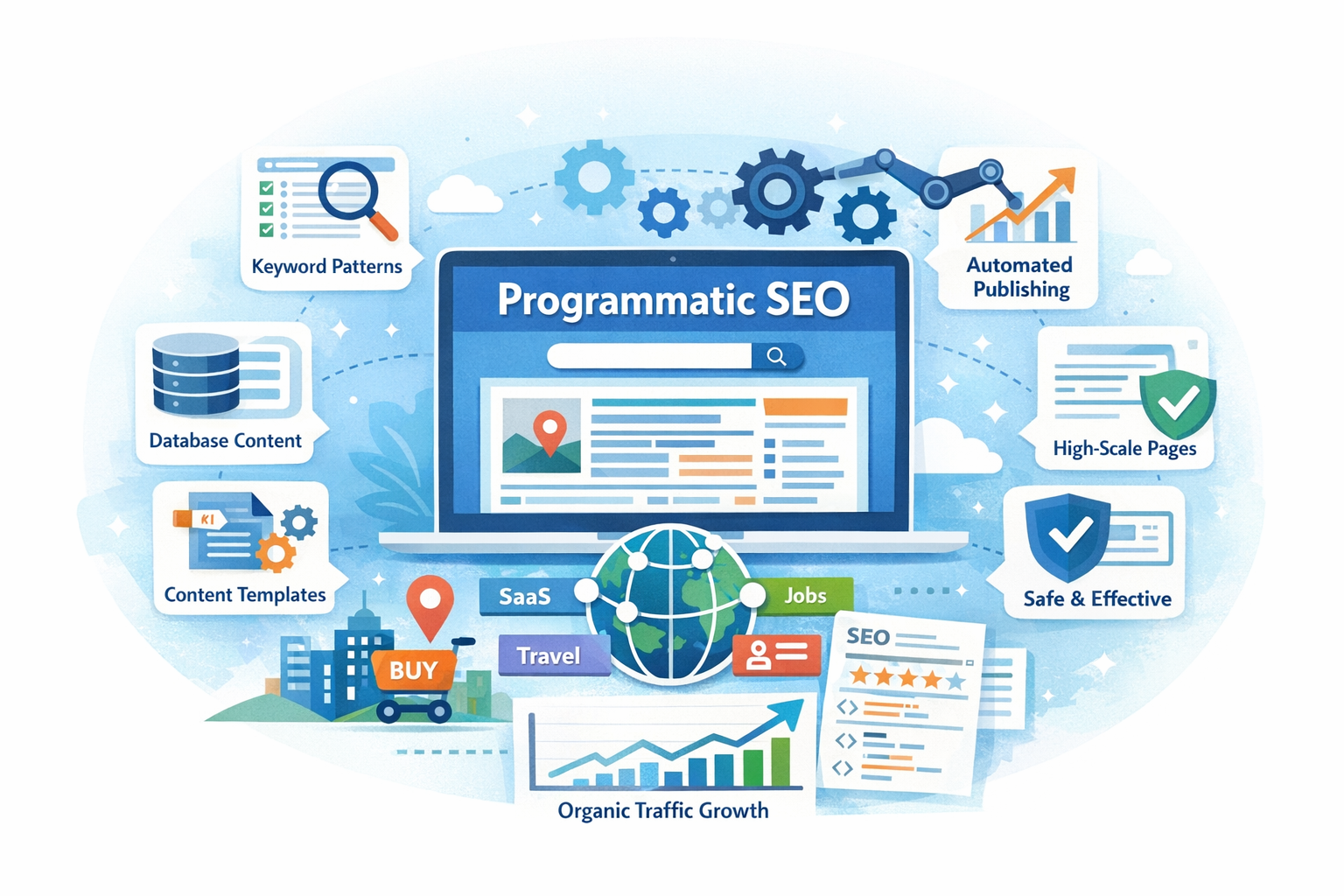

  • What is Programmatic SEO: A Complete Guide

    What is Programmatic SEO: A Complete Guide

    What is Programmatic SEO? A Complete Guide

    Programmatic SEO is one of the most powerful strategies modern websites use to generate thousands of high-ranking pages at scale. From travel aggregators to eCommerce marketplaces, programmatic SEO helps brands unlock massive organic traffic through automation, structured content, and data-driven publishing.

    In this guide, you’ll learn:

    • What programmatic SEO means
    • How it works
    • Differences between traditional SEO vs programmatic SEO
    • Use cases, benefits, examples, and safety guidelines
    • How to set up programmatic SEO the right way

    Introduction to Programmatic SEO

    Search engines today reward websites that provide relevant, scalable, and structured information for users. With millions of long-tail searches happening daily, manually creating content for each keyword is no longer practical.

    That’s where Programmatic SEO comes in.

    Programmatic SEO helps businesses create hundreds or even thousands of SEO-optimised landing pages automatically without sacrificing relevance or quality.

    What is Programmatic SEO?

    Programmatic SEO is a strategy where web pages are created at scale using:

    • Templates
    • Structured keyword patterns
    • Database-driven content
    • Automation tools

    Instead of writing every page manually, programmatic SEO allows you to generate pages dynamically based on search demand.

    For example:

    • “Best hotels in Delhi
    • “Best hotels in Mumbai
    • “Best hotels in Bangalore

    Instead of writing 500 separate pages manually, you build one template and populate it programmatically.

    How Programmatic SEO Works?

    Programmatic SEO works through a combination of SEO research, structured content templates, and automation systems to create large numbers of search-optimised pages efficiently and consistently.

    Key components include:

    1. Keyword + Page Pattern Discovery

    You identify scalable keyword structures that can be repeated across hundreds or thousands of pages, such as:

    • Services in [City]
    •  Products under [Category]
    • Jobs in [Industry]
    • Tools for [Use case] These patterns help capture long-tail search intent at scale.

    2. Database-Driven Content 

    Instead of writing each page manually, content is pulled dynamically from structured data sources like:

    • Product catalogues
    • Location directories
    • SaaS feature lists
    • Public datasets This ensures accuracy, consistency, and easy updates across all pages.

    3. Template-Based Page Creation 

    A reusable page format is created that follows SEO best practices, including:

    • SEO-friendly headings
    • FAQs for long-tail queries
    • Schema markup for rich results
    • Internal links for better crawlability Each page uses the same template but displays unique data.

    4. Automated Publishing

    Pages are generated and published automatically using:

    • CMS integrations
    •  No-code tools
    • Static site generators
    • Custom scripts This allows teams to launch and scale content quickly without manual effort.

    Difference Between Traditional SEO & Programmatic SEO

    Search engine optimisation has evolved far beyond just writing blog posts and building backlinks. Businesses use two powerful but very different SEO approaches: Traditional SEO and Programmatic SEO. While both aim to improve organic visibility, they work in distinct ways and serve different goals.

    Here is a clear comparison:

    Feature Traditional SEO Programmatic SEO
    Content creation Manual writing Automated generation
    Scale Limited pages Thousands of pages
    Best for Blogs, guides Directories, marketplaces
    Keyword targeting Broad + selective Long-tail + structured
    Speed Slower Fast publishing
    Data requirement Low High
    • Traditional SEO builds authority through content depth.
    • Programmatic SEO builds traffic through content scale.

    How to Set Up Programmatic SEO (Step-by-Step Guide)

    Programmatic SEO is one of the most powerful ways to scale organic traffic, but it only works when executed strategically. It combines keyword research, data, templates, and technical SEO to create thousands of high-intent pages without sacrificing quality.

    Here’s how to learn and implement programmatic SEO the right way.

    Step 1: Perform Keyword Research for Programmatic SEO

    Keyword research is the foundation of any successful programmatic SEO strategy. Unlike traditional SEO, where you target a limited set of keywords, programmatic SEO focuses on patterns and repeatable search queries.

    Instead of looking for single keywords, look for keyword formulas.

    Look for keyword patterns like:

    • “Top restaurants in [city]”
    • “Best [tool] for [industry]”
    • “[product] alternatives”
    • “Cheap flights from [A] to [B]”

    Use tools like:

    • Google Keyword Planner
    • Ahrefs / SEMrush
    • Google Autosuggest
    • Search Console data

    Step 2: Create a Scalable Content Template

    Once you have identified keyword patterns, the next step is to build a scalable content template. This template acts as the backbone for every programmatic page.

    A strong programmatic SEO template should include:

    • SEO title + meta description (dynamically generated)
    • H1 with keyword variation
    • Structured subheadings (H2, H3) for clarity
    • Unique introductory text using variables
    • Data tables, listings, or comparisons
    • FAQs for Answer Engine Optimisation (AEO) and Generative Engine Optimisation (GEO)
    • Contextual internal links

    Each page pulls data from a database or spreadsheet and inserts it into predefined sections.

    Example:

    “Best CRM software for real estate”
    “Best CRM software for healthcare”

    Same structure, different intent and data.

    Step 3: Use Structured Data and Schema Markup

    Structured data helps search engines understand your content better, which is increasingly important for AI-powered search experiences.

    By adding schema markup, you increase visibility in:

    • Rich results
    • Featured snippets
    • AI overviews
    • Voice search responses

    Essential schema types for programmatic SEO:

    • FAQ schema – improves SERP visibility and AEO
    • Product schema – for tools, software, and eCommerce
    • Local Business schema – for city or location pages
    • Review schema – for trust and CTR improvement

    Schema doesn’t guarantee rankings, but it significantly increases eligibility for enhanced search features.

    Step 4: Ensure Content Uniqueness but Avoid Thin Pages

    One of the biggest risks in programmatic SEO is creating thin or duplicate content. Google does not reward mass-produced pages unless they provide unique value.

    To keep pages helpful and index-worthy, add layers of originality.

    Ways to ensure content uniqueness:

    • Custom descriptions instead of generic text
    • Location-specific insights (trends, tips, regulations)
    • Expert commentary or editorial notes
    • User reviews or ratings
    • Dynamic FAQs based on intent
    • Fresh data updates

    Even small variations can make a big difference when scaled across hundreds of pages.

    Rule of thumb: Each page should be able to stand on its own, even without internal links.

    Step 5: Build Internal Linking at Scale

    Internal linking is what turns programmatic SEO pages into a connected ecosystem, rather than isolated URLs.

    A strong internal linking structure:

    • Improves crawlability
    • Distributes link equity
    • Strengthens topical authority
    • Helps pages rank faster

    Common programmatic internal linking structures:

    • City → Category → Listing
    • Country → State → City pages
    • Product → Alternatives → Reviews
    • Use case → Tool → Comparison

    Use dynamic internal links that automatically update as new pages are added.

    Example:

    • “Best restaurants in Mumbai” links to
      • “Italian restaurants in Mumbai”
      • “Top fine dining restaurants in Mumbai”

    This creates semantic relationships that search engines love.

    Is Google Ads Considered Programmatic?

    No — Google Ads is not Programmatic SEO.

    Google Ads and programmatic SEO are often mixed up because both use automation, but they belong to completely different marketing channels.

    What Google Ads actually is

    Google Ads is a paid advertising platform. You bid on keywords, write ad copy, and pay every time someone clicks your ad.

    Even when campaigns are automated (Smart Bidding, Performance Max, Dynamic Search Ads), they are still:

    • Paid placements
    • Budget-driven
    • Dependent on cost-per-click

    Once you stop paying, traffic stops immediately.

    What is Programmatic SEO?

    Programmatic SEO is an organic search strategy. It focuses on:

    • Creating large numbers of SEO-optimised pages
    • Ranking naturally in search results
    • Driving traffic without paying per click

    Automation is used only for content creation and page generation, not for buying visibility.

    Why do people get confused?

    The word programmatic is widely used in advertising to describe automation, so many assume:

    “If it’s automated, it must be programmatic.”

    But that’s not true.

    The real distinction:

    • Programmatic Ads = automated paid campaigns
    • Programmatic SEO = automated organic pages

    One buys traffic. The other earns it.

    Is Programmatic SEO Safe Under Google Guidelines?

    Yes, programmatic SEO is completely safe when done correctly.

    Google does not penalise automation. In fact, Google has clearly stated that content creation methods, whether human, automated, or AI-assisted, are not the issue.

    The issue is quality and usefulness.

    What Google actually penalises?

    Google penalises pages that exist only to manipulate rankings, regardless of whether they were written by humans or generated automatically.

    This includes:

    • Thin content with little or no value
    • Spam-like, mass-generated pages
    • Duplicate or near-duplicate pages
    • Keyword stuffing and forced optimisation
    • Pages that fail to satisfy search intent

    Bad programmatic SEO gets penalised, not programmatic SEO itself.

    When Programmatic SEO Is Safe and Effective

    Programmatic SEO aligns with Google’s guidelines when it puts users first.

    It is safe when:

    1. Pages are genuinely useful

    Each page should help users make a decision, find information, or compare options, not just exist for indexing.

    1. Content is unique, even at scale

    Templates can be shared, but the content within them must vary:

    • Different data points
    • Different insights
    • Different context

    Uniqueness doesn’t mean long, but it means meaningful.

    1. User experience is strong

    Pages should:

    • Load fast
    • Be easy to navigate
    • Be readable and scannable
    • Work well on mobile

    Google increasingly evaluates how users interact with pages, not just what’s written on them.

    1. Pages satisfy search intent

    If someone searches:

    • “Best CRM for startups”
      They would expect comparisons, pros and cons, pricing or features, not generic filler text.

    When pages clearly match intent, programmatic SEO performs exceptionally well.

    Use Cases and Examples of Programmatic SEO

    Programmatic SEO works best for industries with structured search demand.

    Popular examples include:

    1. Travel Websites
    • Hotels in [city]
    • Flights from [A] to [B]
    1. eCommerce Platforms
    • Shoes under ₹2000
    • Best laptops for students
    1. SaaS Comparison Pages
    • Zoom alternatives
    • CRM tools for startups
    1. Job Portals
    • Marketing jobs in Bangalore
    • Remote developer roles
    1. Real Estate Directories
    • Apartments in South Delhi
    • Villas in Goa under 2Cr

    What Types of Websites Benefit Most from Programmatic SEO?

    Programmatic SEO is ideal for websites that have:

    • Large datasets
    • Repeatable search patterns
    • Multiple categories or locations
    • Directory-style content

    Best suited for:

    • Marketplaces
    • Aggregators
    • SaaS companies
    • Travel platforms
    • Local service directories

    Programmatic SEO Ideas for Growth

    If you’re looking for programmatic SEO ideas, try:

    • Location-based landing pages
    • Product comparison pages
    • Industry tool directories
    • Automated FAQ hubs
    • Glossary + definition pages

    Key takeaways:

    • Programmatic SEO creates pages automatically using templates + data
    • It helps capture thousands of long-tail keywords
    • It works best for directories, marketplaces, SaaS, and travel brands
    • Google supports it when pages are high-quality and user-first
    • Programmatic SEO is essential for GEO + AI-first search visibility

    When combined with traditional SEO, expert content, structured data, and EEAT principles, programmatic SEO becomes a long-term growth engine.

    Frequently Asked Questions

    What is programmatic SEO in simple words?

    Programmatic SEO means creating many SEO landing pages automatically using templates and structured data.

    Is programmatic SEO safe?

    Yes, if you avoid thin content and focus on helpful, user-first pages.

    How does programmatic SEO work?

    It uses keyword patterns + templates + databases to publish pages at scale.

    What is the difference between SEO and programmatic SEO?

    Traditional SEO focuses on manual content creation, while programmatic SEO focuses on automated scalable page generation.

  • What Is International SEO & Why Does It Matter for Global Brands

    What Is International SEO & Why Does It Matter for Global Brands

    International SEO is the process of optimising a website so that search engines can identify which countries and languages the business targets, and serve the most relevant version of the site to users across different regions.

    Why International SEO Matters for Global Brands

    Global brands don’t compete on visibility alone, but they compete on relevance.

    Without a proper international SEO strategy, brands risk:

    • Ranking the wrong language page
    • Sending users to irrelevant country versions
    • Creating duplicate content issues
    • Losing trust in high-intent markets


    The Reality of Global Search Behaviour

    • Users search differently by region
    • Keywords vary by language, culture, and intent
    • Google uses geo-signals, not assumptions
    • AI search engines expect clear geographic context


    International SEO ensures your content aligns with how users and algorithms actually search worldwide.

    International SEO vs Local SEO vs Global SEO

    SEO Type Focus Example
    Local SEO City or local area “SEO agency in London”
    International SEO Country + language English (US), English (UK), Spanish (MX)
    Global SEO Broad worldwide presence Brand visibility across regions

    International SEO is the foundation of a scalable global SEO strategy.

    How International SEO Works (Technical + Content View)

    1) Technical Signals (Search Engine Clarity)

    International SEO requires strong technical signals so search engines clearly understand which country or language version of a site to rank.

    2) Content Localisation (User Relevance)

    Localised content ensures users see culturally relevant, linguistically accurate, and region-specific information, not just translated text.

    3) Authority & Trust (EEAT Signals)

    Building regional authority helps search engines trust a brand within specific countries through local links, mentions, and expert signals.

    Benefits of International SEO for Global Brands

    1. Higher Rankings in International SERPs

    Search engines understand who your content is for, improving rankings across countries.

    1. Better User Experience

    Users land on content in their language, currency, and context — increasing trust and engagement.

    1. Stronger Brand Authority Globally

    Consistent, localised presence builds international credibility and EEAT signals.

    1. Improved Conversion Rates

    Localised pages convert better than generic global pages.

    1. AI & LLM Visibility

    Well-structured international SEO helps AI systems correctly reference and surface your brand.

    International SEO Strategy: A Step-by-Step Framework

    Step 1: Market & Language Research

    Start by choosing where to expand based on real demand—because the right market + right language setup determines everything that follows.
    Pointers:

    • Identify high-opportunity countries
    • Map language vs location
    • Validate demand using local keyword data


    Step 2: Choose the Right URL Structure

    Your URL structure tells Google how to separate and rank regional versions—so pick a format that fits your scale, resources, and long-term growth plan.
    Pointers:

    • ccTLD (example.fr) → Strong geo targeting
    • Subdomain (fr.example.com) → Large enterprises
    • Subdirectory (example.com/fr/) → Most scalable
    • Subdirectories often offer the best balance of authority + scalability


    Step 3: Implement hreflang Correctly

    hreflang prevents confusion by guiding search engines to show the right page to the right audience based on language and country.
    Pointers:

    • Tells search engines which language the page is in
    • Indicates which country the page targets
    • Helps serve the correct version to users
    • Incorrect hreflang = wrong indexing + lost rankings


    Step 4: Localize Content (Not Just Translate)

    Translation changes words, but localisation changes meaning and relevance, so the content matches local intent, culture, and expectations.
    Pointers:

    • Keyword intent differences
    • Cultural references
    • Local regulations & terminology
    • Native language tone
    • Translation ≠ Localization


    Step 5: Build Regional Authority (EEAT)

    To rank in new regions, brands need local trust signals so search engines see you as credible in that market, not just globally.
    Pointers:

    • Local expert authorship
    • Country-specific backlinks
    • Regional PR mentions
    • Local case studies & testimonials


    Here is an International SEO Checklist for Quick Reference

    • Country & language mapping
    • Correct URL structure
    • hreflang implemented and validated
    • No duplicate content conflicts
    • Localised keyword research
    • Native-level content quality
    • Internal linking between regions
    • Local backlinks & citations
    • Schema markup (Organisation, FAQ, Article)
    • Clear regional trust signals


    Common International SEO Mistakes Global Brands Make

    • Using auto-translation tools
    • Targeting multiple countries with one page
    • Missing or broken hreflang tags
    • Assuming English works everywhere
    • Ignoring regional search intent
    • Not optimising for AI-driven search


    International SEO & EEAT: Why Trust Matters More Globally

    International SEO isn’t just about ranking in different countries; it’s about proving trust and relevance in every region you target. Search engines and AI-driven answer engines rely heavily on EEAT signals to determine whether a brand deserves visibility, especially when the audience is global, and the content affects decisions.

    How EEAT Applies to International SEO

    • Experience: Local use cases, regional examples
    • Expertise: Native authors or market specialists
    • Authority: Local backlinks & citations
    • Trust: Legal pages, contact details, regional compliance

    Strong EEAT = higher international rankings + AI citations

    International SEO for AEO, GEO & LLMs

    How Answer Engines Evaluate International Content

    AI systems look for:

    • Clear geographic intent
    • Structured content (FAQs, definitions)
    • Accurate localisation
    • Consistent entity references

    Optimisation Tips for LLM Visibility

    • Use explicit country & language mentions
    • Answer questions directly (AEO style)
    • Add FAQ sections
    • Use schema markup
    • Maintain consistent brand entity signals


    Example: International SEO in Action

    For example, a global SaaS brand might use subdirectories like /us/, /uk/, and /au/ to target different regions. It would localize pricing, spelling, and examples for each market, while implementing hreflang correctly so search engines serve the right version to the right users. It would also build backlinks in each region to strengthen authority locally.

    Result:

    • Higher regional rankings
    • Improved conversions
    • Increased AI search visibility

    Why International SEO Is Non-Negotiable for Global Brands

    International SEO is not optional for brands operating across borders.

    It is the foundation for:

    • Global visibility
    • Regional relevance
    • AI discoverability
    • Long-term search authority

    If your brand serves multiple countries, you don’t just need SEO but you need International SEO done right.

    Frequently Asked Questions

    What is international SEO?

    International SEO is the process of optimising a website to target multiple countries and languages in search engines.

    What is the difference between international SEO and global SEO?

    International SEO focuses on country and language targeting, while global SEO focuses on broad worldwide visibility.

    Why is international SEO important?

    It improves rankings, user experience, conversions, and AI visibility across global markets.

    Does international SEO help with AI search?

    Yes. Clear localisation and EEAT signals improve visibility in AI-powered search and LLM responses.

  • All About LLMs: What They Are, How They Work, and How to Optimise for LLMs

    All About LLMs: What They Are, How They Work, and How to Optimise for LLMs

    Large Language Models (LLMs) are no longer just a trend in AI research; they are actively reshaping how people search, consume content, and make decisions online. From ChatGPT, Google Gemini to Claude, Perplexity AI, and enterprise copilots, LLMs are becoming the new interface of the internet.

    Did You Know
    The LLM market is expected to rise to USD 82.1 by 2033
    Source: market.us

    Instead of browsing through ten blue links, users increasingly expect:

    • Direct answers
    • Contextual summaries
    • Trustworthy recommendations
    • AI-generated decisions

    For brands and marketers, this shift presents two realities:

    A massive opportunity for early visibility
    A serious risk of invisibility if your content is not LLM-ready

    This guide covers:

    • What LLMs are (in simple terms)
    • How they work behind the scenes
    • How LLMs are changing search forever
    • The rise of AEO and GEO
    • Practical strategies for optimising content for AI-first discovery


    What is an LLM (Large Language Model)?

    A Large Language Model (LLM) is a type of artificial intelligence that is designed to understand and work with human language.

    It is called:

    • Large because it is trained on an extremely large amount of text
    • Language because it deals with words, sentences, and meaning
    • Model because it is a system that learns patterns from data

    An LLM is an AI system that learns how humans write and speak by reading billions of examples from the internet, books, articles, and conversations.

    Popular Examples of Large Language Models (LLMs)

    These LLM models are trained on massive amounts of text data, allowing them to understand human language, generate responses, and even perform tasks that once required human intelligence.

    Some of the most well-known LLMs include:

    • GPT-4 / GPT-4.1 (OpenAI) – One of the most advanced models, widely used in tools like ChatGPT for writing, coding, and problem-solving.
    • Gemini (Google) – Designed to combine language understanding with advanced reasoning and multimodal abilities.
    • Claude (Anthropic) – Known for its focus on safe, helpful, and conversational AI interactions.
    • LLaMA (Meta) – A popular open model family that supports research and enterprise AI development.
    • Mistral (Open Source) – A fast-growing open-source LLM praised for efficiency and performance.

    What makes these models so powerful is their ability to work across a wide range of real-world applications.

    What is the Impact of These LLM Models

    LLMs are not just experimental tools anymore; they are being used in everyday products and business systems, such as:

    • Smart chatbots and AI assistants that can hold natural conversations
    • Search and answer engines that provide direct, detailed responses instead of simple links
    • Content summarisation tools that quickly turn long documents into short insights
    • Code generation platforms that help developers write and debug programs faster
    • Enterprise automation systems that improve workflows, customer support, and decision-making

    LLMs are transforming how we interact with technology, making AI more accessible, useful, and human-like than ever before.

    How Do LLMs Work?

    At a high level, LLMs work in three core stages:

    1. Training on Massive Data

    LLMs are trained on:

    • Public web pages
    • Books and research papers
    • Forums and Q&A sites
    • Code repositories
    • Licensed and curated datasets

    This training helps the model learn:

    • Grammar and syntax
    • Facts and concepts
    • Relationships between ideas
    • Patterns in how humans communicate

    Important: LLMs do not “store” content like a database; they learn patterns and probabilities.

    2. Understanding Context Using Transformers

    LLMs are built using a neural network architecture called transformers.

    Transformers allow models to:

    • Understand context, not just keywords
    • Track meaning across long passages
    • Identify relationships between entities
    • Weigh importance using “attention mechanisms”

    This is why LLMs can answer:

    “Explain LLM optimisation for SaaS brands in India”

    —not just match keywords like traditional search engines.

    3. Generating Human-Like Responses

    When you ask a question:

    1. The LLM breaks it into tokens
    2. Evaluates context and intent
    3. Predicts the most useful next tokens
    4. Generates a coherent, contextual answer

    The output feels “intelligent” because:

    • It is context-aware
    • It draws from patterns across billions of examples
    • It is optimised for helpfulness and relevance


    How LLMs Are Changing Search Forever

    Search is no longer just about ranking pages but it’s about being chosen as the answer.

    For years, the search journey looked like this: users typed a keyword, Google showed a list of results, and people clicked through multiple links to compare information before deciding what to trust.

    But today, search behaviour is rapidly changing.

    With AI-powered search experiences, users aren’t always browsing — they’re asking questions and receiving direct, summarised responses. The decision is happening instantly, often without visiting a website at all.

    Traditional Search (SEO)

    How it worked:

    • Keyword → Page ranking → Click
    • Users explore multiple sources
    • Decision happens after reading and comparing

    In this model, SEO success meant:

    • ranking on page 1
    • earning clicks
    • keeping the user on your site

    LLM-Powered Search (AEO & GEO)

    How it works now:

    • Question → Direct answer
    • Fewer clicks, more zero-click journeys
    • AI synthesises information across sources

    In this model, the goal is no longer just ranking.

    It’s about

    • being cited
    • being summarised
    • being pulled into the AI’s response
    • becoming the “trusted source” inside the answer itself

    What This Looks Like in the Real World

    Examples of AI-first search experiences already shaping discovery:

    • Google SGE is generating AI summaries at the top of the results
    • ChatGPT browsing responses, pulling content from the web, and rewriting it
    • Perplexity answering with citations instead of links-first browsing
    • Bing Copilot / Gemini surfacing “best answers” before organic results

    What is the Risk and  the Opportunity

    Here’s the uncomfortable truth and that is even if your content is excellent, it may never be surfaced if it’s not structured in a way that LLMs can understand, extract, and trust.

    Because LLM-powered search doesn’t “read” as humans do.

    LLMs scans for:

    • clear definitions
    • structured sections
    • summarisable takeaways
    • authoritative tone
    • factual consistency
    • question-answer formatting
    • trustworthy signals (expertise, sources, clarity)

    Search is shifting from SEO (Search Engine Optimisation) to:

    • AEO (Answer Engine Optimisation)
    • GEO (Generative Engine Optimisation)


    AEO vs GEO vs SEO: What’s the Difference?

    Optimisation Type Focus Goal
    SEO Search engines Rank pages
    AEO (Answer Engine Optimisation) AI answers Be cited as the answer
    GEO (Generative Engine Optimisation) LLMs Be used in AI-generated responses


    Modern optimisation of content requires all three to work together.

    How LLMs Choose Which Content to Use

    1) Clear Topical Authority

    LLMs prefer content that covers a topic deeply, links related subtopics, and consistently proves expertise instead of writing one-off shallow blogs.

    2) Strong EEAT Signals

    Answer engines trust content more when it shows real authorship, genuine experience, accurate facts, and a credible brand footprint.

    3) Structured, Extractable Content

    LLMs rank content higher when it’s easy to scan and extract using headings, summaries, FAQs, and schema-ready formatting.

    4) Entity Clarity

    Answer engines perform better when the content clearly defines who/what it’s about, uses consistent terminology, and strongly connects the brand to the topic.

    How to Optimise Content for LLMs

    1. Write for Questions, Not Just Keywords

    LLMs respond to natural language queries.

    Instead of:

    “LLM optimisation strategies”

    Use:

    • “How do you optimise content for LLMs?”
    • “What is GEO in SEO?”
    • “How do brands rank in ChatGPT?”

    Include these as H2s and FAQs.

    2. Build Pillar + Cluster Content

    LLMs prefer depth over volume.

    Best structure:

    • 1 Pillar page
    • 8–12 supporting cluster articles
    • Strong internal linking

    This signals:

    • Authority
    • Context
    • Coverage completeness

    3. Optimise for EEAT Explicitly

    LLMs evaluate trustworthiness aggressively.

    Include:

    • Author bios with expertise
    • Real-world examples
    • Updated statistics
    • Clear explanations
    • Brand credibility signals

    For brands like LS Digital, this means:

    • Showcasing experience with AI, data, and marketing transformation
    • Demonstrating applied knowledge, not theory

    4. Use Answer-First Formatting

    Structure content like this:

    Question in the form of header
    Direct answer to the question in (2–3 lines)
    Next is an expanded explanation of the header
    Give Examples/context or sources

    This is ideal for:

    • Featured snippets
    • AI citations
    • Voice search
    • Chat interfaces


    LLM-Friendly FAQs

    FAQs help LLMs:

    • Understand intent
    • Extract clean answers
    • Reference your content

    Example:

    kLLMs and answer engines understand content through entities (recognizable brands, tools, concepts, and terms), not just repeated keywords. By mentioning relevant platforms like ChatGPT, Gemini, answer engines, generative search, and AI discovery, you help systems better understand context, relationships, and relevance—ultimately improving GEO (Generative Engine Optimisation) visibility.

    Common Mistakes Brands Make With LLM Optimisation

    • Writing thin blogs with no depth
    • Chasing keywords instead of questions
    • Ignoring author credibility
    • Over-optimising for search engines only
    • Not updating content regularly

    LLMs reward clarity, authority, and usefulness, not hacks.

    The Future of Search Is AI-First

    LLMs are not replacing search engines; they are becoming the interface layer.

    What this means for brands:

    • Visibility ≠ rankings alone
    • Content must educate, not just attract
    • Authority compounds over time
    • Early adopters gain disproportionate advantage

    Brands that invest in LLM-ready content today will dominate AI-driven discovery tomorrow.

    Why This Matters for Marketers & Brands

    LLMs are already influencing:

    • Buying decisions
    • Brand discovery
    • B2B research
    • Product comparisons

    Optimising for LLMs is no longer optional but it’s the next evolution of SEO. For digital-first brands, agencies, and enterprises, the opportunity is clear:

    Create authoritative, structured, experience-driven content that both humans and machines trust.

  • Must Follow Digital Marketing Professionals

    Must Follow Digital Marketing Professionals

    LSD-Blogpost-Digital-marketing-professional @LogicserveDigi

    With Google being absolutely stringent regarding aggressive use of SEO techniques, the year 2014 became unconventional as experts were inclined to explore the non SEO tools for marketing. Neil Patel, Seth Godin, Aron Lee, Danny Brown and Jay Bear were the remarkable achievers of 2014. And now, We’ve put together a list of outstanding digital marketing professionals whom you should follow in 2015. These professionals come with extensive internet marketing expertise and years of experimental knowledge.


    Jeff Bullas


    Google has revised the SEO rules. Now search engine marketing relies heavily on social media presence instead of a tricky process. Follow Jeff Bullar to learn incredible social media marketing tips, tools, updates and innovative techniques. Forbes recognizes his work and accomplishments, and ranks him as the 8th of the top 10 social marketing talents and 1st as the content marketing Influencer of the year 2014.


    Kim Garst


    For online marketing professionals and the overall B2B segment, LinkedIn and Twitter will be an important business promotion tool always. Boom Social CEO Kim Garst is a social media expert, who has been found to build remarkable brand identities on the social media grounds.


    Joe Pulizzi


    Your writing should connect and talk to the reader. Plus, you will need a promotional strategy to put it before the curious crowd. Follow Joe Pulizzi for his exceptional content marketing skills. This entrepreneur, speaker and author is really one of its kind.


    Joanna Weibe


    Similarly, you will also find Joanna a convincing content writing expert. She writes and manages “Copyhackers. You will find her posts extremely informative and educational.


    Chad White


    Email marketing will be an indispensable tool for increasing business revenue. Follow Chad to learn the unbeatable techniques through his publications. His research and annotations have appeared in USA today, Wall Street Journal and the New York Times.


    Ryan Deiss


    His knowledge and niche expertise puts him apart from his counterparts. Follow Ryan Deiss for updates, mind blowing email marketing funnels and his overall marketing expertise.


    Pat Flynn


    He put a bit unconventional approach to entertain his followers. He talks about his real life successes and failures to help followers conceptualize digital marketing trends and techniques.


    Darren Rowse


    He is the ProBlogger founder. The power of smart blogging is the subject he talks about. His blog has lots of tips to offer regarding making money online.


    Gael Breton


    Follow Gael Breton and his authority website to know everything about SEO and its advantages. He also talks a lot about social media. His website has some remarkable podcasting interviews with some of the best internet marketing minds.


    Ana Hoffman


    The SEO industry is going to be extremely unpredictable. SEO professionals now need to keep pace with the frequently changing methodologies. Ana Hoffman shares in depth knowledge about serious traffic generation.

  • Tips to Optimize Images for Blogs and Social Media

    Tips to Optimize Images for Blogs and Social Media

    SEO image optimisation @LogicserveDigi

    It is not only the text on a website that can engage a visitor or a reader. Studies have proved that images and videos are able to hold the attention of the visitor due to their visual appeal. However, randomly posting images or videos without proper optimization would be an exercise in futility. You need to know how to get the best out of them and the effort you have put in to insert them on your posts. Only that will enable you to get leads and make your site popular amongst the social media circles.


    Pleasing Visuals Tell The Story

    The right visuals not only help you in providing the necessary breaks in your post but also serve to convey appropriate emotions that you have in mind to the site visitors. Nobody wants to keep reading reams of text at one go and having images at the right places helps in keeping the visitor engaged on the post.


    So what is optimization and how can it be done?

    The steps to optimization of your images can be done as under:

    1. First find the images that suit your post the best. It has to complement the text and at the same time be visually appealing. You can make use of free sites to find them and that will also ensure you are not contravening any creative licensing terms. Do not pull images from Google as you may end up infringing copyright.
    2. Do not pick oversize images or those with high resolution as it will slow down page loading and lead to your site ranking lower in search engines that place user experience over everything else. You can make use of plugins to reduce sizes through compressing them to make sure the speed of loading of the page is not affected.
    3. Name the images properly and do not stick to the original names. In doing so, use the keywords that best describe the post so that search engines can correlate and determine the relevancy. When a search is done, the images you have posted for specific keywords will pop up and help in ranking the site higher. Naming should be done using dashes as opposed to underscores so that the filename is not perceived to be a long one.
    4. The use of metadata is crucial here. The bots of search engines can crawl the text but not recognize images. So you need to help them by putting the relevant descriptive text or metadata. This will make the Alt tag as well as the title tag visible when the visitor hovers over the link. These tags must have the keywords so that search engines can understand and pick up the relevancy of the images to the post.
    5. Captions are useful to attract attention of the reader and therefore should be used.


    LogicSpeak:

    Having mentioned the above, unless you provide useful content that is relevant and engaging, you cannot expect to have increased traffic to your site. Content indeed remains the king and you have to ensure you are providing interesting and informative content to back your images.


    Previous Post: Want Better Site Rankings – Get Good Online Reviews

  • Want Better Site Rankings – Get Good Online Reviews

    Want Better Site Rankings – Get Good Online Reviews

    Online reviews @LogicserveDigi

    The ultimate aim of any webmaster is to get his or her site noticed in order to acquire high search engine rankings. For webmasters who have put up sites to advertise and promote their business in the local market, nothing can be more helpful than positive reviews from respected sites like Yelp or Google. These reviews help in not only pushing up the site in search engine rankings but also edify the site. This leads to more people visiting the site and boosts chances of the site owner getting more leads and business.


    Who Needs Good Reviews

    Local businesses like hotels, law firms, real estate brokers, agents and other service providers will benefit a lot from good reviews about their site on search engines. With more and more people visiting the internet to look for products and services, a top ranked site will push out other competitor sites and be the first to be noticed by visitors. When reviews are accompanied by star ratings, people feel even more comfortable doing business with such site owners and that is good news indeed.


    Surveys And Importance Of Star Ratings

    As per surveys conducted from time to time, more than 80% of respondents believed in positive reviews influencing their ultimate decision to buy from a particular site. Similarly, negative reviews also influenced them equally to keep away from certain sites.

    Good reviews with appropriate high star ratings are also important from the perspective of being accorded higher rankings on search engines. Sites like Google will not bother to list sites that do not conform to certain minimum rating standards set by Google and that means those sites will never get noticed by eager visitors to the internet.

    If you are operating in an environment where many of your competitors have sites that are eliciting reviews, you need to ensure you measure up equally. Otherwise, your site may not even be picked by search engines for viewing by visitors.


    Should You Solicit Reviews Then?

    Given the above scenario, is it okay for a webmaster to solicit reviews? Well, it depends, as Google does not mind the site owner asking for feedback or reviews but Yelp does mind. You need to check the terms and conditions before soliciting them.

    The moot point is that your customers have to be happy in any case, whether you solicit reviews or not. If they are happy, even if they are not allowed to post reviews on a particular site, they will talk about your site and that will get you more visitors. On the other hand, if they are allowed to post, then you benefit all the more. It is important you take feedback of unhappy customers seriously and work on them as very often it is the reviews they post that get noticed and picked up by other visitors.

    You could send out a satisfaction survey questionnaire or call your customers on a periodic basis to get their feedback. This will help you work on the short comings and also enable you to get positive reviews from them once they notice the improvements you have brought about.


    Where To Find Review Sites

    While there are many review sites, you would want to focus on the ones that are crucial or relevant to your business. You can do the following to identify them.

    1. Do a search on the brand name or your company name, either adding “reviews’ or not doing so. You will find both positive and negative reviews. Look at the negative ones and the sites they appear on in order to chart out your next course of action.
    2. You may also choose non brand words or generic terms to look for reviews on sites that put them on the first few pages.
    3. You can scan based on your competitor keywords to check out if your business or name is mentioned on any of the sites.


    LogicSpeak:

    Once you have identified a few top sites, focus on them to ensure that you are presenting up to date information about yourself, your business and respond to the feedback, comments or reviews actively. That will ensure you keep driving those customers back to the sites and also result in positive referrals.


    Previous Post: Google Mobile Friendliness – Important Parameter for Ranking Higher

  • How to Measure B2B Content Marketing Outputs

    How to Measure B2B Content Marketing Outputs

    Content Marketing @LogicserveDigi

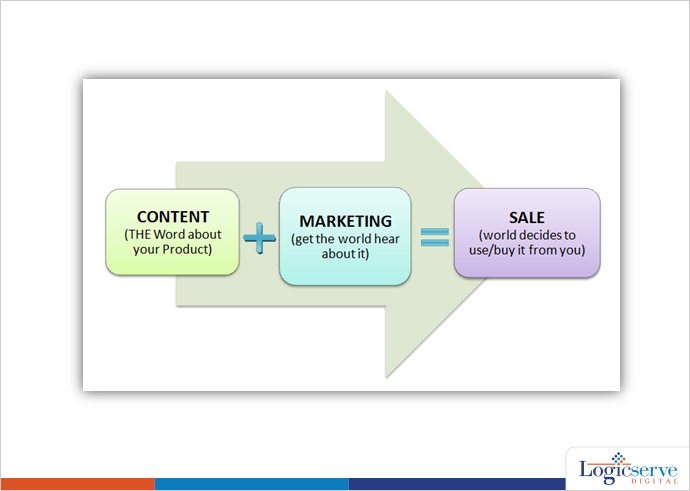
    You probably have an awesome product/service that could solve the world’s problems. But, such a product/ service fulfills its destiny only when the ‘world’ hears about it AND decides to use it to solve its problems.

    In a nutshell, this should put things in perspective for you.

    Content-marketing-sale @LogicserveDigiThere is a certain level of investment involved with any effort that directly affects sales. Content Marketing is no different either. The challenge is, to measure quality in a quantified manner. Can we?? Let’s see…


    Characteristics of Quality Content

    Quality is the very arsenal that pique’s the interest from casual glance to focused reading. Although it is impossible to quantify quality (…to measure marketing efforts…), these traits have a direct impact on content marketing. So, for a content marketing strategy to generate desired results, do not compromise on quality over cost.

    • Accuracy & Expertise on the subject matter
    • Study supported by Statistics
    • Relevance to prevailing industry standards
    • Intelligent and useful conclusion
    • Actionable Wrap-up


    The Cost Involved

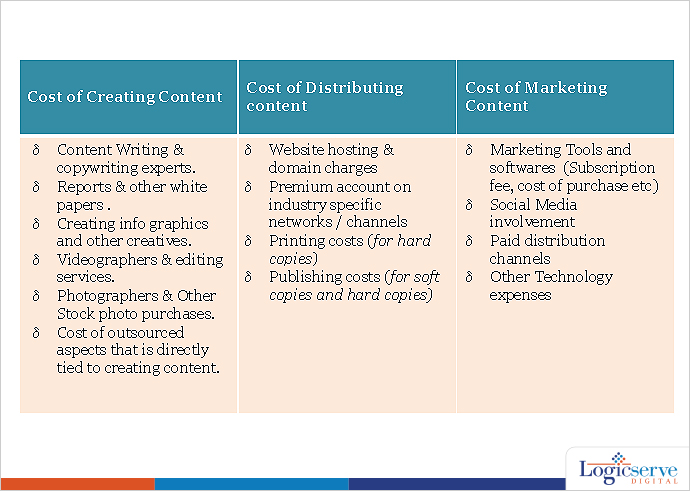
    Creating content with the intent of driving sales takes a bit more tact than regular writing. Multiple factors go in to accounting for the content creation and marketing efforts. Some are listed below.

    Content marketing cost @LogicserveDigi


    Measuring ROI on Content Marketing

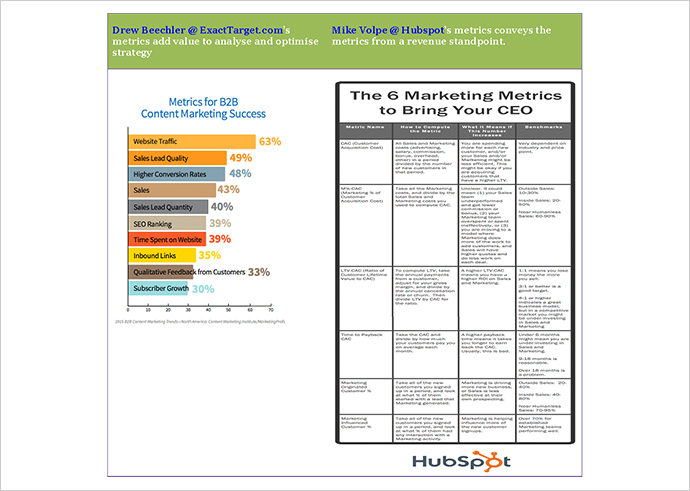
    Tracking and evaluating investments from time to time, is a good way to observe the market, optimise the strategies and influence sales. However, between the marketing department and the investment authorities, metrics totally vary, albeit working towards the common goal, they chose separate paths.

    Measuring content marketing ROI @LogicserveDigi


    Logicspeak:

    Content has stood the test of time, much before the hype of SEO and SMM transitioned from nerds-only to the mainstream boardroom. So, it is safe to assume that, in spite of numerable (yet) unforeseen changes that might happen to Google’s algorithm, Social media’s ad policies, content will continue retain its momentum in driving traffic and influencing sales. However, this requires due diligence to a strategic content creation & content marketing plan.

  • How to Create Content for Mobile

    How to Create Content for Mobile

    Mobile-content-creation @LogicserveDigiYou must be aware of the importance of creating websites that are optimized for mobile viewing. If you want to stay at the top of your business, it is extremely important to keep the mobile users in mind. In order to help you create befitting content for mobile, here are the points you can keep in mind.


    1.     Make a responsive layout

    When you are looking to make your content suitable for mobile users, the very first thing you have to keep in mind is to make your layout responsive. A responsive web layout is so designed that regardless of which device you are using and the screen size, which it has, the content will be clearly visible without any size misappropriation.


    2.     Create touch friendly links and icons

    When you want to have content that is friendly for mobile viewing, it is important to have touch friendly icons. This makes for easy mobile viewing. When people are surfing on their mobile, they are not likely to appreciate pages and pages of endless narrative content. Try and break the content into smaller clickable segments such that one can smoothly navigate from one page to another.

    You should make it a point to have a detailed study of the size of the icons that will suit the screen size of different mobiles. If you have a call to action field on your page, make sure to keep it on focus so that users do not end up missing it altogether.


    3.     Research the needs of your mobile users

    There is absolutely no short cut to success. You have to be sure that you are going through the complete details of what your mobile users want. If you dig at the statistics, you will get a lot of important facts regarding what users want when surfing through your site. The content which you put on your site should not be there merely for the sake of filling the pages.

    You have to research well and find out what your audience connects with and takes a call to action. Once you have a clear idea about the same, you will be able to understand and curate the content accordingly. When you are offering mobile friendly content, you will need a lot of short headlines, catchy subtitles, short paragraphs and a little bit of illustrative content as well. All these together makes for an excellent mobile friendly content. Obviously, you have to keep seo in mind; however, the key idea is to keep your focus upon the ideas which appeal more to your users.


    4.     Format judiciously

    When you are producing mobile friendly content, you have to be careful about the type of formatting you offer. You should make it a point to align your content in an apt manner. Have numerous paragraphs but make them short. Use the right font and try and avoid too much fancy letters. Do not go for too bright or too dull font colors. Keeping these little things in mind will help you churn the perfect mobile friendly content.

    LogicSpeak:

    Creating mobile content is not much different from creating content for other channels. One should always remember that, even though the channels play a role the quality of content is of primary importance.


  • Difference between B2B And B2C Content Marketing

    Difference between B2B And B2C Content Marketing

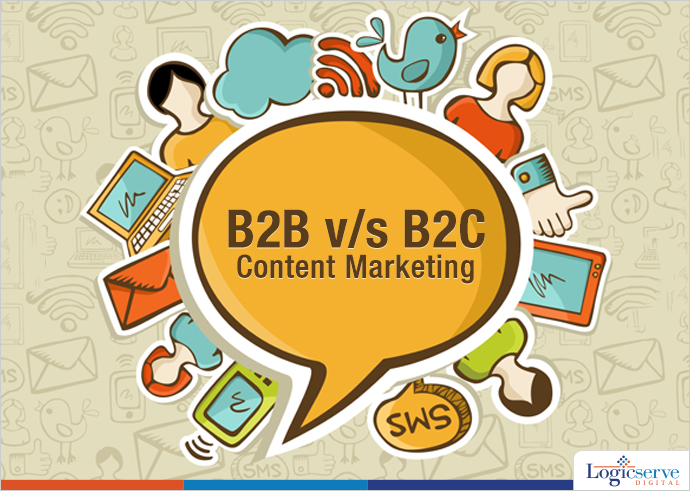
    B2B Vs B2C Content @LogicserveDigi

    When you are curating content, the strategies aren’t same for one and all. There is a lot of difference in the way you craft content for B2B as compared to B2C. Let us take a look at the details of the same.

    The Difference In Target Base

    As B2B and B2C cater to different segments of customers, you have to keep this in mind when you are making the content for these organizations. B2B refers to business to business dealings and thus the content which you craft needs to be such that it applies to all the major business brands that are your main targets.

    You have to be more factual and load your content with details that are straight and to the point. When business organizations want to engage in business with you, they will need hard core facts and core technical details that have to do with your business. This makes it important for your content to be much more technical than creative.

    B2C organizations on the other hand aim at targeting the end consumers. Here your content has to be creative and catchy such that you can attract the attention of the customers. Customers need not be fed a huge amount of technical details or even facts and figures. All that is desired from you is the fact that your content should be catchy enough to entice users to read it and then lead to the desired call to action as well.

    The different challenges

    The challenges which you are going to face as B2B or even B2C organization are going to differ a great deal.


    B2B:

    – Those organizations that work on B2B framework generally do not have extremely rigid budget issue. However, they face the issue of producing enough content. The type and amount of business which they are catering to may differ significantly and winning over the different business bodies isn’t easy.

    – As the other business bodies are also skilled in their field, one has to produce ample content which is crisp and loaded with all the factual details and researched statistics which will convince the businesses.


    B2C:

    – On the other hand, when we are talking of content marketing strategies for B2C business, we often find budget to be a strict issue. Most of these firms do not have a lot of budget for the sake of content marketing because winning over customers through content is just one facet of their business.

    -The budget needs to be invested in various other places which make it hard to excel in content marketing.

    These are the main differences in content marketing. While the main methods may remain the same, there are differences in the way content marketing has to be approached.


    LogicSpeak:

    So, one should not get complacent and it is important to understand the details of the target base, the focus of the firm, the needs of the business and then the right strategies and methods should be executed so that one can get the befitting results. Content marketing must be done in the best way to achieve the highest output.


    Previous Post: SEO 2015 – What you need to know