LS Staging

Category: Google Analytics

  • Strategizing for a Cookieless Future

    Strategizing for a Cookieless Future

    Cookies have been pivotal in digital advertising and marketing, yet rapid changes and heightened concerns over data privacy are ushering in new regulations. Moreover, the inevitable phase-out of cookies looms on the horizon; Google recently announced a delay in third-party cookie deprecation for Chrome until early 2025, affording advertisers more time to adapt seamlessly.

    In this post, we explore cutting-edge strategies and solutions for cookieless social media and Google advertising, ensuring compliance with evolving privacy standards.


    Audience targeting without cookies

    • Despite Google’s two postponements of cookie deprecation, advertisers are bracing for inevitable changes, grappling with uncertainty about the future of advertising without cookies.
    • To prepare for this shift, leveraging first-party data through retargeting and lookalike audiences emerges as a cornerstone strategy. While many advertisers currently rely on third-party data alongside first-party insights, the impending cookie phase-out necessitates exploration of alternative approaches
    • Google Topics API: This innovative solution categorizes websites based on user interests derived from browsing history. By selecting from a list of predefined topics, advertisers can deliver targeted ads while safeguarding user privacy with data stored locally on browsers.
    • Second-Party Data: Collaborative data exchange through partnerships or mergers offers fresh insights into audience segments. For example, a yoga app partnering with a sports retailer can merge user databases to refine targeting.
    • Social Media: Leveraging user-provided data on platforms allows precise segmentation based on demographics, behaviors, and geographic locations, facilitating tailored ad campaigns.
    • Contextual Advertising: By placing ads in relevant contexts, advertisers maintain effectiveness without compromising user privacy. Targeting based on interests, events, or seasonal trends enhances engagement.
    • Retargeting Strategies: Although more challenging without cookies, effective tools and data enable advertisers to reach desired audience segments with personalized ads, ensuring continued engagement.


    Google Ads without cookies

    As third-party cookies phase out, Google Ads faces a pivotal transformation towards a privacy-centric approach. Embracing first-party cookies through server-side tracking emerges as the straightforward solution.

    Emphasizing First-Party Data

    Google Ads is poised to pivot towards leveraging first-party data, enhancing conversion accuracy through innovative methodologies:

    • Enhanced Conversions: Integrating user-provided data—such as email, phone numbers, and names—directly into Google Ads amplifies targeting precision.
    • Offline Conversion Tracking: Utilizing data sourced from offline channels like CRMs and CMSs enriches insights, ensuring comprehensive campaign optimization.

    Privacy Sandbox Initiatives

    Google pioneers initiatives like Federated Learning of Cohorts (FLoC) and Topics API:

    • FLoC: Groups users based on shared online behaviors, enabling targeted advertising without compromising individual identity.
    • Topics API: Assigns weekly topics to users, enabling contextual ad delivery tailored to user interests and behaviors.

    Contextual Targeting

    By harnessing contextual data, Google Ads serves ads aligned with web page content, ensuring relevance without cross-site tracking. This approach respects user privacy while optimizing ad effectiveness based on keywords, topics, and content themes.

    Social Media ads without cookies

    In the realm of digital advertising, social media stands resilient amidst the cookie apocalypse. Unlike other platforms, social media ads thrive without relying on cookies, thanks to robust tools and strategies:

    Platform Algorithms and User Data

    Social media platforms employ sophisticated algorithms to decipher user behavior patterns. Interactions such as likes, shares, and follows provide deep insights, enabling precise ad targeting tailored to user preferences.

    Voluntary User Data

    Users willingly furnish platforms with valuable data upon signup and throughout their usage journey. This includes demographic details like age, gender, location, and specific interests, empowering advertisers with rich insights for effective targeting.

    Contextual Advertising Power

    Utilizing contextual cues from viewed pages, social media delivers ads aligned with user interests without intrusive behavior tracking. This approach respects user privacy while ensuring relevance and engagement.

    Device and Browser Fingerprints

    Platforms leverage unique identifiers such as device characteristics and browser settings to refine ad targeting, maintaining effectiveness without relying on cookies.

    Social media’s adaptability to evolving data regulations underscores its capability to deliver targeted ads responsibly. Embracing Comprehensive API Integration (CAPI) types ensures compliance and enhances ad delivery efficacy in a cookieless landscape.

    Explore these cutting-edge tactics to elevate your social media advertising game:

    Server-Side Tagging Implementation

    Harness the power of server-side tagging across major platforms like Facebook, TikTok, Snapchat, and LinkedIn. These platforms support seamless integration with our designed tags, ensuring efficient data attribution from ad impressions to conversions on your website.

    Utilizing Offline-First Party Data

    Maximize campaign effectiveness by integrating offline-first party data. This approach captures conversions beyond online interactions, including in-store purchases, phone orders, and chat-based transactions. By tapping into comprehensive customer insights, you enhance targeting precision and optimize remarketing efforts.

    Custom Customer Data Platform (CDP) Development

    Unlock the potential of a tailored CDP without the complexity and cost traditionally associated with such platforms. Utilizing Google Tag Manager, build a customized CDP tailored to your specific needs. While technical proficiency is required, this solution empowers marketers to leverage data effectively without additional expenses.

    Cookies in affiliate marketing

    Cookies are fundamental in affiliate marketing, facilitating precise tracking of user activities and attributing conversions to affiliates. They capture vital data on user behavior, preferences, and interactions, empowering advertisers to refine strategies and enhance targeting.

    As the era of third-party cookies draws to a close, affiliate marketing must innovate alternative tracking and attribution methods:

    Server-Side Tracking

    Opt for server-side tracking over third-party cookies to ensure reliable attribution. Long-lived first-party cookies are pivotal, allowing affiliates to claim commissions for conversions over extended periods, unlike short-lived cookies that expire quickly, especially on browsers like Safari.

    Unique Affiliate Links

    Employ unique affiliate links or discount codes to accurately credit affiliates for sales, bypassing reliance on cookies. Each link serves as a distinct identifier, ensuring precise commission allocation.

    Fingerprinting

    Despite privacy considerations, fingerprinting amalgamates device, IP address, and browser data to create unique user identifiers. This method, while effective, requires careful navigation of regulatory landscapes.

    User Accounts

    Encourage users to create and log into accounts for persistent tracking of activities across sessions, mitigating reliance on cookies while maintaining tracking capabilities.

    Innovative approaches ensure affiliate marketing thrives amidst evolving privacy regulations, demonstrating resilience and adaptability beyond traditional cookie-based tracking methods.

    Retargeting campaigns without cookies

    Retargeting campaigns have long relied on cookies to deliver personalized ads to users who have interacted with specific webpages, driving valuable return visits to websites and apps. However, with impending changes in data privacy regulations, advertisers must adapt and implement innovative, privacy-conscious tracking methods for effective cookieless retargeting.

    Cutting-edge Solutions for Cookieless Retargeting:

    • Google’s Protected Audiences API: This technology facilitates on-device ad auctions, ensuring remarketing and custom audience targeting without relying on cross-site third-party tracking. By categorizing users into interest groups based on their onsite behavior, publishers can serve relevant ads from previously visited websites.
    • Meta Conversion API: By bypassing device-based tracking, this API enables direct event transmission from advertiser websites to Meta. This streamlined approach empowers advertisers to effectively retarget users on Meta platforms without the need for traditional cookies.
    • Innovative Ad Solutions: Advertisers are pioneering new cookieless ad solutions such as LiveRamp’s RampID, which offers global addressability while sidestepping reliance on third-party cookies, device IDs, or IP addresses.
    • First-party Cookie-based Retargeting: Leveraging first-party cookies remains a robust strategy in the cookieless landscape. Advertisers can optimize retargeting efforts by enhancing the value of first-party data, ensuring precise targeting across various platforms.


    Final thoughts: what digital marketers should consider

     As advertisers and marketers worldwide prepare for the impending cookieless future, one burning question remains: How can we effectively transition away from reliance on third-party cookies? With these cookies long powering online marketing and advertising strategies, the search for viable alternatives has intensified.

    Strategies for Seamlessly Embracing the Cookieless Era:

    • Embrace First-Party Data: Shift your focus towards harnessing first-party data over third-party alternatives. This approach allows for nuanced personalization and fosters deeper connections with your audience by leveraging insights from customer behaviors and purchase histories.
    • Adopt Server-Side Tracking: Emphasize server-side tracking solutions, which offer enhanced control over data transmission and management. Beyond navigating cookie deprecation, server-side tracking strengthens data protection efforts and enables the creation of privacy-compliant advertising tailored precisely to your audience.
    • Value Offline Conversions: Elevate the significance of offline conversions in your marketing strategy. Understanding and measuring campaign effectiveness through offline interactions provides invaluable first-party customer data. This holistic approach bridges the gap between online advertising efforts and offline sales, enriching audience insights and optimizing campaigns with privacy compliance in mind.

    Transitioning to server-side tracking presents a straightforward path to adapting to the evolving digital landscape post-cookie era while maximizing your data’s potential. For guidance on implementing cookie-free tracking solutions, reach out to us.


     

  • Top 5 BigQuery Use Cases for Modern Data Analytics

    Top 5 BigQuery Use Cases for Modern Data Analytics

    The data analytics and business intelligence landscape is rapidly evolving, compelling modern businesses to leverage advanced technologies and tools to extract valuable insights from their vast datasets. Among these tools, BigQuery, a serverless enterprise data warehouse of the Google Cloud Platform has acquired mass recognition.

    While Google BigQuery was only available for GA 360 paid users initially, GA4 users now have limited but free access to this analytics platform. But why use BigQuery? Here are 5 use cases to introduce you to the vast potential of this innovative data warehouse-

    1. BigQuery Machine Learning Integration

    With BigQuery’s built-in ML integration, you can build machine learning models with unstructured, structured, and semi-structured datasets within the platform with simple SQL commands. It eliminates the need to export data to other applications and allows SQL practitioners to build ML models.

    This easier access to ML systems paves the path for innovation and transformative advancements across domains. For instance, 20th Century Fox has been using Google’s Cloud Machine Learning Engine to predict the movie audience, while MLB is using the same to better understand baseball fans.

    2. BigQuery Business Intelligence Engine

    BigQuery’s BI engine is an in-memory data analysis service that allows rapid analysis of the stored data with high concurrency. The BI engine can expedite SQL queries irrespective of their source and also supports ongoing optimization by managing cached tables.

    Through its SQL engine, BigQuery can also interact with a host of business intelligence tools, including Looker, Power BI, Tableau, and more. In other words, you can create impactful reports, visualizations, and analyses with the data collected in BigQuery. Moreover, the BI engine can also be integrated with custom applications to accelerate data analysis and exploration.

    3. BigQuery and Geospatial Analytics

    Accurate location data is often crucial for making business decisions. BigQuery also has a Geographic Information System (GIS) that allows geospatial or geography-based data analysis. It can work with Google Earth Engine, BigQuery Geo Viz, Jupyter Notebooks, and other applications to convert latitude and longitude data into precise geographic locations.

    For instance, a retail store chain that wants to optimize its marketing efforts by understanding the geographical distribution of its customers and customizing promotions based on location-specific preferences can do so effectively with the help of BigQuery’s geospatial capabilities.

    4. Real-Time Data Analytics

    Real-time data analytics has become a cornerstone of modern business strategies. As one of the fastest data warehouses in the world, BigQuery excels in meeting the demands of this dynamic landscape. With its ability to process and analyze data streams in real-time, businesses can stay at the forefront of actionable insights.

    From monitoring user activities to understanding their behavior, engagement patterns, and preferences, BigQuery can unlock valuable insights. Moreover, in sectors like e-commerce and finance where timely response is critical, BigQuery’s real-time analytics can allow businesses to track events as they unfold.

    5. BigQuery for Smaller Datasets

    BigQuery is not just for larger businesses with big amounts of data. Even smaller businesses and low-traffic websites can experience a host of benefits with this platform. For instance-

    • Unlike GA4, BigQuery does not have a data threshold. So, data-poor websites that often struggle with problems related to incomplete or missing datasets in GA4 can get a clearer picture with BigQuery.
    • User-specific data of website visitors who are not active for 2-14 months (depending on data retention settings) is automatically deleted in GA4. You can resolve this issue by integrating GA4 with BigQuery.
    • With GA4, you use Google’s server for storing the collected data. So, all the data is governed by Google’s data policies. But with BigQuery, you have complete ownership and control of your data.

    Driving Business Growth with BigQuery

    Google BigQuery is a robust platform for organizations looking to perform large-scale data analytics and gain insights from their data in a fast and efficient manner. At the same time, even smaller businesses with limited data can also leverage this tool to discover valuable insights for improved decision-making.

    Organizations can consider teaming up with a trusted digital marketing agency to take maximum advantage of BigQuery to innovate, optimize, and grow

  • A Deep Dive into GTM: Understanding Server-Side Tagging

    A Deep Dive into GTM: Understanding Server-Side Tagging

    Amid the rising privacy concerns and the imminent death of third-party cookies, Google introduced SGTM (Server-Side Google Tag Manager) as a data tracking alternative in 2020. It moves the control of data tracking from third parties to the first parties, enabling website administrators and marketers to choose the data they want to share with third parties.

    All of this can sound complicated unless you don’t fully understand how server-side tracking works. But before that, let’s take a quick look at the workings of traditional client-side tagging.


    What is Client-Side GTM Tagging?

    With client-side GTM tagging, you install a JavaScript snippet into the source code of your website. So, every time your website loads in a visitor’s browser, the GTM code loads too, and fires tags according to the configuration. As the entire process takes place in the visitor’s or client’s browser or device, this is known as client-side tagging.

    For instance, if you deploy a custom JavaScript library and someone visits the website, the tags will collect the required data and forward it to third-party tools and platforms. However, as the library will have direct access to the visitor’s browser, it could also collect additional data, including personally identifiable information of the visitor.


    How is Server-Side GTM Tagging Different?

    The data collection process is more or less the same with server-side tagging but with one significant difference- a server (or servers) for hosting the GTM container. The server functions as a protective buffer between client-side tracking and the third parties.

    So, rather than relying on the visitor’s browser or device, server-side tagging depends on the server to execute the tracking code. If we take the same custom JavaScript example from above, the tag will only interact with the cloud server and not directly with the client’s browser. As a result, you can choose the data you want to collect and share with 3rd party platforms.


    Client-Side Tagging vs. Server-Side Tagging


    Here are some of the most significant differences between the two-

    Feature Client-Side Tagging Server-Side Tagging
    Execution Location Tags are executed on the user’s browser Tags are executed on the server
    Data Privacy and Security Limited control over data privacy and security due to client execution Enhanced control over data privacy and security as the execution takes place on the server
    Speed and Performance May cause delays in page rendering Reduces impact on page load times
    JavaScript Dependency Dependent on the client’s browser supporting JavaScript Reduced dependency on the client’s browser capabilities

    What are the Benefits of Implementing Server-Side Tagging?

    Here are some of the reasons to consider server-side tagging-

    • Improved control over the data being shared with third parties
    • Makes it easier for website owners to maintain data privacy compliance
    • Can be an ideal tracking method once third-party cookies are phased out
    • Improves website performance as only a single tag is deployed on the website
    • More granular data for a comprehensive view of visitors across touchpoints
    • Integration with all the digital channels, including web and app

    What are the Drawbacks of Server-Side Tagging?

    While server-side GTM tracking offers valuable benefits, there are a few things you should keep in mind-

    • Server-side GTM container is a free-to-use service but the cloud/server where the container is hosted is not free. Google recommends websites have at least three servers for SGTM implementation. With Google Cloud, each server costs $40/month. So, that’s $120 per month with three servers.
    • Implementing and maintaining server-side GTM tags is a fairly technical process and would mostly require a professional.

    Who Should Use Server-Side Tagging?

    As many countries, including India, have already introduced stringent data privacy laws, it makes sense for all websites to move away from client-side tagging. Here are some examples of websites that should consider server-side GTM tracking-

    • Websites that handle sensitive user data, like finance, healthcare, and other sectors where data privacy is a top priority
    • E-commerce platforms can leverage server-side tracking to improve website performance
    • Social networking platforms, interactive web applications, etc., that have complex user interactions
    • Websites struggling with the limitations of client-side tracking, like issues with ad-blockers or browser restrictions

    Boost Security and Performance with Server-Side GTM

    With data protection laws only getting more stringent with time, server-side tagging is an excellent alternative to client-side tagging as it offers improved data privacy and security. The server-side tracking method is also highly scalable and makes tag debugging and maintenance easier through its centralized nature.

    Businesses and website owners can consult with a reputed digital marketing agency to better understand the advantages of server-side tagging and whether or not it is the right approach according to their specific needs and objectives.

  • Unlocking the Power of Google Analytics 4’s New Attribution Model

    Unlocking the Power of Google Analytics 4’s New Attribution Model

    Are you curious about the latest buzz surrounding Google Analytics 4 (GA4)? One of the most talked-about features is its new attribution model. In this article, we’ll explore what makes GA4’s attribution model stand out from its predecessors and how it can help you gain deeper insights into user behavior and optimize your marketing efforts.

    The Challenge of Attribution Models in Universal Analytics (UA):

    To understand the significance of GA4’s attribution model, it’s essential to recognize the limitations of the previous version, Universal Analytics (UA). UA heavily relied on last-click attribution, giving all the credit for a conversion to the last touchpoint before a user converted. This approach didn’t consider the multiple touchpoints a user might interact with before conversion, leading to an incomplete understanding of the user journey. Although UA offered various attribution models, choosing the right one was often a challenge.

    GA4’s Data-Driven Attribution Model:

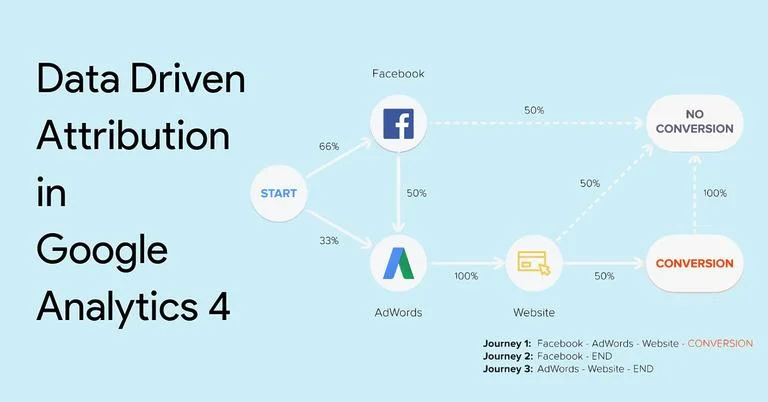
    In contrast, Google Analytics 4 has introduced Data-Driven attribution as the default model, leveraging machine learning algorithms to assign credit. This model considers all user touchpoints and attributes credit based on their relative impact on conversions. The accuracy of this model improves over time as it is data-driven, making it a more robust and long-term solution.

    Key Features of GA4’s Attribution Model:

    Cross-Device and Cross-Platform Tracking: GA4 can track users across different devices and platforms, providing a complete view of the customer journey and attribution. This is possible due to GA4’s user-centric data model, which assigns a unique user ID to each user, regardless of the device or platform they use.

     Machine Learning-Based Attribution: GA4 employs machine learning to analyze user behavior and assign credit to the most influential marketing channels. This approach is more accurate and flexible compared to the rule-based attribution model used in UA.

    Event-Based Tracking: GA4 tracks user interactions as events, offering more granular data than pageview-based tracking. This allows tracking specific user actions and attributing them to the appropriate marketing channels.

    Customizable Attribution Models: GA4 allows businesses to create custom attribution models tailored to their specific needs and goals. This level of customization was not possible in UA, which had a limited set of predefined models.

    Conversion Modeling: GA4’s conversion modeling predicts which marketing channels are likely to drive future conversions based on past behavior, enabling more effective resource allocation and marketing optimization.

    Benefits of Data-Driven Attribution:

    Data-Driven Attribution in GA4 considers the different paths users take to conversions and identifies the most effective marketing channels. This insight empowers businesses to optimize their marketing spend. For example, if a particular channel significantly influences conversions, you can allocate more budget to it.

    Furthermore, Data-Driven Attribution helps understand the impact of non-marketing touchpoints on conversions. For instance, a specific webpage on your website may effectively drive conversions, even if it’s not part of your marketing funnel. This insight guides website optimization for conversions.

    Conclusion:

    In summary, GA4’s enhanced attribution modeling capabilities are a game-changer for businesses of all sizes. By harnessing the power of this tool, you can gain valuable insights into user behavior and conversion patterns, enabling more informed decisions about your marketing spend. Embrace GA4’s new attribution model, and unlock the potential for optimizing your digital marketing strategies. If you’re eager to learn more about GA4, our team of experts is ready to assist you in maximizing the benefits of this powerful tool.

  • Audience Activation in GA4

    Audience Activation in GA4

    In today’s digital landscape, reaching the right audience at the right time is a critical aspect of any marketing strategy. Here’s where segmenting audience becomes important in delivering more relevant and personalized experiences according to the characteristics, behaviours, and preferences of target audiences.

    This goal is now achievable through Audience Activation with GA4 (Google Analytics 4) where Google allows marketers to build custom audiences based on specific user behaviours, preferences, and attributes. These audiences can then be used to create highly targeted marketing campaigns that reach the right people at the right time with the right message. Whether it be through targeted search ads, display ads, video ads, or personalized website experiences.

    By leveraging this power, marketers can drive higher conversions and improve overall user experiences. Here are some of the many ways you can activate audiences in the GA 4:

    1.Target Customers Within Specific CRM Segment

    Reach users who fall into sub-segments of your observable customer base, defined by regions, preferred product categories or most-frequent retailer chains.

     Examples

    1. Users who purchase your items at discount in your offline stores post online visit
    2. Customers who are responsive to CRM communications about a particular product category

    2.Optimize Bids Towards Users with Specific Intent

    Define an audience trigger to fire conversion events based on specific intent signals such as adding items to cart and use this event as optimization signals for your campaigns.

    Examples

    1. Users who spent at least 1 minute on product- related pages & screens within last 7 days regression Model’ provided by Big Query to build
    2. Users adding items to shopping cart or users initiating checkout process
    3. Users repeatedly viewing product detail pages

    3. Target Recently Inactive Customers

    Reach users who have been active in the past but no longer are, such as lapsed purchasers or app users. Re-engage them with specific incentives and personalised offers.

    Examples

    1. Users who abandoned shopping cart within last week
    2. Users who initiated signup process, but did not complete
    3. Users with items in basket, yet to initiate checkout
    4. Users who installed app, and stopped utilizing app

    Marketers can use the advanced targeting capabilities not only to improve customer engagement but also to boost conversions and ROI by putting the right hat on the right head at the right time.

    Not to forget, the above are just a few examples, and the possibilities of such customized audiences’ creation are limitless.

  • Optimizing Bids With GA4

    Optimizing Bids With GA4

    Optimizing bids is essential for any business to achieve advertising goals and maximize the value of the marketing budget.

    However, optimizing bids can be a complex and challenging process, requiring a deep understanding of user behaviour, market trends, and advertising ecosystem. Additionally, an organization may find this task exigent because of limited budgets, fierce competition and no substantial expertise.

    Here is where GA 4 – the new face of analytics helps you optimize your bids more effectively. GA 4 is equipped to create audience triggers based on customers’ interaction with the website. By tapping on the behaviour of different audience segments, you can create highly targeted campaigns that reach the right users at the right time and drive more revenue.

     Here are a few out of the many ways how GA 4 can help you can optimize your bids:

     1. Optimize Bids Towards Users with Specific Intent

    • Audience Examples:

    Users adding items to shopping cart

    Users repeatedly viewing product detail pages Users completing newsletter signup

    • Audience Description:

    Define an audience trigger to fire conversion events based on specific intent signals such as adding items to the cart, and use this event as optimization signals for your campaigns.

    2. Optimize Bids Towards Specific Product Buyers

    • Audience Examples:

    Users adding items worth > $100 into shopping cart

    Users adding items across multiple categories into cart

    Users initiating checkout for repeat purchases

    •  Audience Description:

    Define an audience trigger to fire conversion events based on specific product purchase intent, especially high-margin items, optionally prioritising first-time or repeat-buyers

    3. OPTIMIZE BIDS TOWARDS HIGH-VALUE CUSTOMERS

    • Audience Examples:

    Users who have completed at least 3 purchases

    Users who have spent more than $1,000 over time detail pages

    Users who have reached a particular loyalty tier.

    • Audience Description:

    Define an audience trigger to fire conversion events when users reach a certain milestone in their customer journey, based on loyalty, lifetime spend, subscription renewals etc.

    Therefore, Audience triggers in Google Analytics 4 (GA 4) can be a powerful feature that can help in optimizing bids and improving campaign performance. Since you can simply use these triggers for optimizing your campaigns, this enablement becomes crucial to ensure that your ads are displayed to the appropriate audience at the appropriate time, with the appropriate budget.

  • Supercharge Your Business with Geo-Based Targeting in Google Analytics 4

    Supercharge Your Business with Geo-Based Targeting in Google Analytics 4

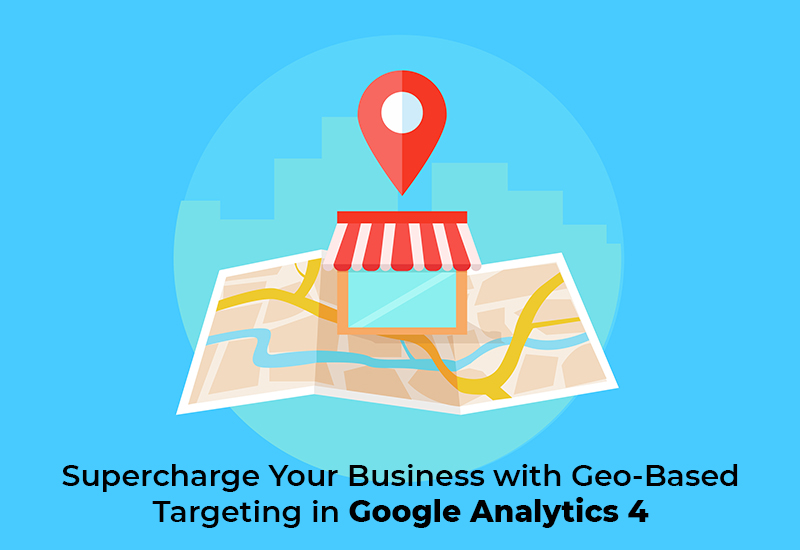
    In today’s competitive business landscape, reaching the right audience with targeted marketing efforts is crucial for success. Geo-based targeting, powered by Google Analytics 4 (GA 4), offers businesses the ability to connect with customers on a more personal and localized level. This approach not only enhances the relevance of marketing campaigns but also improves efficiency, increases conversions, and ultimately enhances the overall user experience. In this blog, we’ll explore the various use cases of geo-based targeting with GA 4 that can help you supercharge your business.

    1. Localized Marketing Campaigns:

    With GA 4, businesses can create highly effective localized marketing campaigns that resonate with customers in different regions. By analyzing user location data, you can gain valuable insights into where your customers are located and tailor your marketing messages, ads, and content to match their local interests and preferences. This personalized approach boosts engagement and increases the likelihood of conversions.

    For example, if you run an e-commerce store selling outdoor gear, you may notice that customers in colder regions are more interested in winter clothing while those in warmer areas focus on camping and hiking gear. By crafting region-specific campaigns, you can effectively cater to the unique needs and preferences of each target market.

    2. Region-Specific Product Recommendations:

    GA 4’s user behavior tracking provides a wealth of data on customer preferences in different regions. By leveraging this valuable insight, businesses can offer personalized product recommendations based on the geographical location of their customers. This targeted approach not only enhances the customer experience but also increases the chances of converting leads into loyal customers.

    For instance, an online bookstore can use GA 4 data to understand which genres or authors are popular in specific regions and use that information to recommend relevant books to customers based on their location.

    3. Localized Pricing and Offers:

    By harnessing the power of GA 4, businesses can gather data on user engagement and purchasing behavior in different regions. Armed with this information, you can implement dynamic pricing strategies based on location, offering region-specific discounts, promotional codes, or pricing adjustments. This approach optimizes conversion rates and maximizes revenue by aligning your pricing with the varying economic sensitivities and purchasing power across different regions.

    4. Inventory Planning:

    GA 4’s ability to provide valuable user behavior data combined with geolocation information allows businesses to optimize their inventory planning. By identifying demand patterns for specific products in different regions, you can adjust your stock levels accordingly. This data-driven approach ensures that you have the right products available in high-demand areas, leading to improved customer satisfaction and increased sales.

    Conclusion:

    Geo-based targeting with Google Analytics 4 offers businesses a powerful tool to optimize their marketing strategies and connect with the right audience in a more impactful and cost-effective manner. By understanding and leveraging customer data based on geographical location, businesses can create personalized experiences, improve customer engagement, and ultimately drive growth in their ecommerce ventures.

    However, it’s essential to ensure compliance with privacy regulations and obtain appropriate consent when collecting and using user location data. Additionally, setting up GA 4 correctly to track and analyze geolocation information is crucial for successful implementation.

  • 4 Reasons Why Marketers Should Consider Switching to Google Analytics 4

    4 Reasons Why Marketers Should Consider Switching to Google Analytics 4

    With Google Analytics 4 (GA4), Google has replaced Universal Analytics (UA) property type that marketers have been using forever. With significant upgrades to user tracking, reporting, and set-up, GA4 is more streamlined, powerful, flexible, and user-focused. 

    GA4 is a lot more than just an updated version of UA and will mostly involve a steep learning curve for marketers who want to make the switch. It will require them to un-learn and re-learn a tool they have been using for a long time. But even with all of these challenges, the switch from UA to GA4 is definitely worth considering.

    Here are 4 reasons that make GA4 a smarter alternative to UA-

    1. Flexibility Like Never Before

    GA4 allows and encourages custom reporting. Users can make custom reports with data of their choice. It also offers a wide range of visual representation options, including interactive graphs, pie charts, and more. The availability of custom reports significantly reduces the need to use pre-made reports that are often irrelevant. It also helps in making the dashboard less cluttered.

    With GA4, all the essential data you need can be accessed faster so that you can make informed decisions on the go to improve the effectiveness of your website or app.

    2. Smarter Insights

    Google’s advanced machine learning models enable GA4 properties to track all the latest trends in real-time. It can also automatically generate detailed insights, including unusual spikes, changes, or differences in data trends. Moreover, the self-learning algorithms continue to learn and evolve to further boost the quality of the generated insights based on which you can make informed decisions.

    While the automated insights feature of GA4 is similar to the intelligence analytics feature of UA, it is more advanced and significantly more powerful.

    3. Automated Event Tracking

    As event tracking has gained prominence in the last few years, Google has equipped GA4 with automated event tracking. With UA, users have to manually set up event tracking with Google Tag Manager (GTM) to track events such as video plays, scroll depth, link clicks, etc. GA4 can do this automatically.

    Events can also send valuable insights regarding website info, actions, and website visitors to the tool for generating visual reports. This also means that you can now collect custom information which is not possible with UA as it uses the pre-defined hit model.

    4. GA4 is the Future

    Google has already mentioned that GA4 is the future of analytics. All the new features and upgrades will only be rolled out for GA4 in the future. It is also the default property type for creating a new GA property. However, users still have the option to continue using the existing UA properties without switching to GA4.

    When it comes to analytics, it is always wise to switch to upgrades as significant as GA4 as quickly as possible as it can provide you a head start over others. With time, marketers and brands will bid farewell to UA, and GA4 will be the only option left. Rather than waiting for a few months before switching, this could be an excellent time to jump the bandwagon and start mastering GA4.

    Upgrade to the Future of Analytics with adveGA4

    Google Analytics 4 is a significant upgrade to Universal Analytics. While its launch received a lukewarm response from the marketing community, most people have started realizing its potential and how it can boost their analytical capabilities.

    If you’ve been using UA for a very long time and struggling with the GA4 switch, a reputable digital marketing company can help. Experts who are already well-versed with GA4 can ensure that the changeover is hassle-free and time-efficient.

  • Still Prefer Universal Analytics Over GA4? Check Out 7 GA4 Features That Will Make You Think Otherwise

    Still Prefer Universal Analytics Over GA4? Check Out 7 GA4 Features That Will Make You Think Otherwise

    As Google Analytics is used by millions of marketers and businesses, a rebuild from the ground up was expected to cause a lot of chaos and furore. And this expectation turned into a reality when Google first introduced Google Analytics 4 or GA4 in October 2020.

    To say the least, most users were disappointed with the upgrade. Some found it difficult to use, while others opined that it was more focused on enterprise-level users and disregards smaller businesses. But a lot has changed since then. People have started understanding the effectiveness of the upgrade, and Google, too, has continued to add new features.

    If you still believe that the older Universal Analytics is better than the upgrade, here are 7 GA4 features that will make you think otherwise-

    1. Improved GA Layout

    If you have been using GA for some time, one of the biggest differences you’ll notice as soon as you open the GA4 account is the layout. Google has redesigned the navigation layout while also recategorizing and renaming many sections.

    While getting used to the new layout can take some time, the update has been built around events and user paths to provide a clearer understanding of the customer lifecycle.

    2. Additional Reporting Features

    The traditional “Custom Report” of Universal Analytics has also been upgraded with many new features. There is now an “Analysis” section where users can drag-and-drop dimensions, metrics, and segments, such as funnel analysis, cohort analysis, user lifetime activity, segment overlap, etc.

    There is also an “Exploration” section which is now the standard category for breaking data into many different ways for improved analysis.

    3. Better Visualizations and Reporting

    Visualization has also been significantly improved to provide a holistic view of digital activities at a single glance. For instance, with Universal Analytics, users could view real-time data through overview, traffic sources, locations, events, and content reports.

    But in GA4, all of these real-time reports are visualized in a single place. Dynamic data interaction and report/data comparison are other features that help users make more sense of the available information.

    4. Automatic Event Tracking

    Through enhanced measurement, users can also automate different types of events in GA4. The event options are scroll, page views, site search, outbound link clicks, file download, and video engagement.

    Logged events can also be marked as conversions without any limitations. In Universal Analytics, there is a limit of 20 conversions for every reporting view.

    5. Granular Data Control

    As data privacy is now critical in every industry, Google has also refurbished its data control policies. Users now have more control over analytics data collection, usage, and retention. For instance, marketers can now select whether they want to use data purely for measurement or ad optimization. 

    The changes have been made to comply with the future updates related to limited identifiers and cookies.

    6. Predictive Analytics Capabilities

    One of the top features of GA4 is the predictive metrics. The tool uses machine learning algorithms for measuring conversion progress and predicting potential user actions. There are three predictive metrics currently available in GA4- Purchase Probability, Revenue Prediction, and Churn Probability.

    With the help of these metrics, marketers can identify users as well as their actions that could result in a conversion or purchase.

    7. Anomaly Detection

    Google again relies on artificial intelligence and machine learning to detect anomalies on most line graphs available in GA4. Anomalies are when GA4 expects something to happen in a particular way on your website, but it doesn’t.

    In simple words, it alerts you about things that might need your attention. You can choose the graphs for which you’d like to activate anomaly detection and even select the learning period and sensitivity.

    Should You Upgrade to GA4?

    As GA4 is the future of analytics, as declared by Google, it is time for businesses and marketers to start embracing this upgrade. It has some pretty impressive features, and Google will keep updating it well into the future. But as with any major upgrade, there is a learning curve with GA4 that could require your time and effort.

    A smarter solution for businesses is to rely on a top digital marketing company to help them transition and access updated features that could revolutionize their digital initiatives.

  • 3 Google Analytics 4 Features Every Marketer Should Know

    3 Google Analytics 4 Features Every Marketer Should Know

    Google Analytics is used by millions of website owners and businesses across the world. Over the years, Google has consistently upgraded this platform to help marketers better analyze their website data. On 14th October 2020, Google released a blog post to introduce an updated version of the platform, known as Google Analytics 4 or GA4.  

    The update made the previous “App+Web Property,” introduced in 2019, the default property type for the analytics account. A host of new features were also introduced with the upgrade to keep up with the changing consumer behaviour, stringent data privacy regulations, and the rising need for efficient use of website analytics.

    3 features of GA4 every marketer should know about are discussed below-

    1. ML-Powered Marketing Insights

    Google Analytics has been using Machine Learning (ML) for a long time now. But it has been made far more valuable and useful in GA4. The tool can now use your data to find trends and also send you notifications about the same. Its ability to predict consumer behaviour and action has been improved significantly to make it easier for marketers to plan in advance.

    For instance, GA4 is capable of predicting revenue from a specific user group. This will allow marketers to build groups and analyze why a particular group of users have a higher probability of conversion compared to others.

    2. Improved Google Ads Integration

    Businesses and marketers who use Google Ads will appreciate the deeper integration of analytics and ads in GA4. Data from the analytics account can be used for building custom audience from users who visit your website and app. Moreover, it will also add or remove users to and from the new lists based on the actions they perform on the website automatically.

    Advertisers have also been requesting a feature for tracking YouTube conversions for some time now. With GA4, marketers can view YouTube conversions (web+app), along with a host of other channels like organic search, paid search, email, social, and more.

    3. Customer-Focused Measurements

    Unlike Universal Analytics, which still measures fragmented data based on platform or device, GA4 has a more customer-focused measurement approach. This enables marketers and businesses to better understand how audiences engage and interact with the website.

    For this, GA4 uses an extensive range of identity spaces, including Google signals from people who have opted for personalized ads and user IDs provided by marketers. To give you an example, let us assume that a customer purchased a product from your website or app. With GA4, you can check their entire journey or the steps they took before completing the purchase.

    For instance, they might have seen your ad in Google search or YouTube before landing on your website/app and making the purchase. With this information, you can focus more on the channels that are bringing in the customers.  

    Boost Your Marketing Efforts with GA4

    Google will continue adding more features to GA4 to provide marketers and businesses more opportunities to improve their marketing initiatives. As Google has already mentioned that GA4 will be the future of analytics, this can be an excellent time for marketers to switch from Universal Analytics to GA4 and experience all of these great features.

    Businesses can consider working with reputed digital marketing companies to make the best use of this upgrade and boost their digital growth.