LS Staging

Category: Digital Advertising

  • DOOH Advertising all set to emerge as a huge influencing factor in 2019 and beyond

    DOOH Advertising all set to emerge as a huge influencing factor in 2019 and beyond

    Online advertising is a huge influencing factor, yet big brands when they want to announce new product launches or introduce new campaigns, still make use of digital out-of-home billboards.

    Here are a few examples to illustrate the continuing relevance of digital out-of-home (DOOH) billboards in the era of online ads. Alex O’Hanian, the co-founder of Reddit, announced in mid-2018 that Reddit had made a significant investment in AdQuick, a digital billboard company. Similarly, Netflix purchased substantial assets from a popular billboard company in LA in 2018.

    What is DOOH?

    Digital Out-of-Home advertising refers to any visual advertising media found outside the audience’s home. This includes digital billboards on streets, digital signs displayed on bus shelter, airport transit areas, train stations and more.

    Some of the biggest brands including Apple, Amazon, Coca-Cola, HBO, McDonalds and several others, regularly spend on DOOH campaigns. A recent example is Apple’s “Shot on an iPhone” campaign. The campaign invited iPhone users to send in creative photos clicked on their mobiles. The best ones were displayed on static and digital billboards across the country.

    Here, we illustrate the increasing relevance of DOOH in 2019:

    DOOH presents a giant canvas for the digital generation

    Outdoor DOOH screens are now seen as an extension of the social media marketing. Social media feeds are increasingly cluttered, and brands lose their prominence amidst all the noise. This is why, by displaying curated Instagram posts on giant digital screens located outside prominent gathering spaces like concerts, sports events, it morphs into an appealing and attractive canvas for the modern day generation Z.

    Additionally, brands can improve user engagement by displaying selected posts from users. This is highly effective, as users feel that this is a great way to engage with the brand’s culture.

    DOOH offers a connected screen on for all surface

    With 5G expected to be rolled out in 2019, advertisers believe that it will now be possible to convert any flat surface into a connected screen. For example, Vengo digital signage-focused vending machine machines operator is using the screens on vending machines to display ads that are unrelated to what the vending machine offers. Advertisers are using DOOH to engage with customers in unique locations like gyms, office buildings and more.

    DOOH is becoming more audience-centric

    Just like the traditional TV commercials, DOOH is not becoming more audience specific. Take the example of the campaign for JetBlue, run by OUTFRONT. The campaign included real-time flight schedule data and real-time traffic, which was displayed on digital billboards at Time Square, NYC. These ads were customised based on third-party data.

    Additionally, advertisers are also customising DOOH ad-run times based on DOOH locations. For instance, ads displayed on DOOH screens on NYC subway platforms run for an average of four to eight minutes. This is the average time between two subway trains and audiences are likely to spend this waiting time watching DOOH screens on the platform.

    DOOH screens have also evolved to include geo-fencing. This enables mobile devices within the target location to be coordinated along with the bigger displays. This is a way for advertisers to pinpoint audiences when they complete a purchase.

    The rise of viewing sheds and interactive DOOH ad campaigns

    Place Exchange, a DOOH exchange firm recently launched “viewing sheds,” around DOOH screens, using third-party data. This way, advertisers can identify accurately whether mobile devices in the nearby location visit a particular website after seeing the ads promoted on the giant screens.

    SurveyMonkey recently ran a DOOH campaign which was displayed in Times Square. The giant screens displayed images of four influential celebrities, Serena Willams, Arianna Huffington, Jeff Weiner, and Draymond Green. The ads invited opinions from audiences. Viewers nearby could take part in an online survey, by scanning the QR codes displayed near the massive screens.

    DOOH has evolved into more than digital billboards

    The Era of DOOH advertising is just beginning. With newer technologies like AR and more, DOOH advertising is all set to become the talk of the town. According to the IAB (Interactive Advertising Bureau), DOOH advertising in the US reached a record high of $7.4 billion in 2018.

    With endless screens, innovative displays and creative ad campaigns DOOH will become a huge influencing factor in this era of digital advertising.
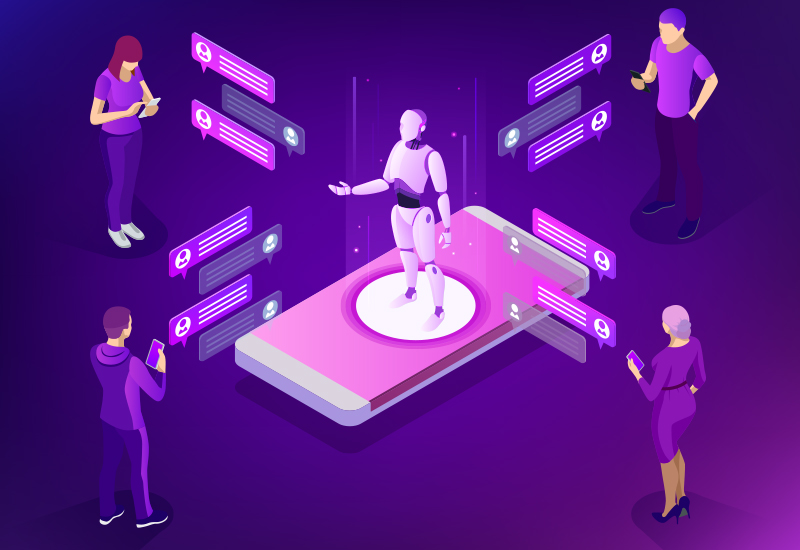
  • Power up your holiday season deals with Chatbots

    Power up your holiday season deals with Chatbots

    Chatbots are offering a lot of advantages as the new age AI-based customer support weapon for modern brands. It has proven its efficacy in the form of better outreach at the right time with the right customers, and round the clock accessibility.

    Here are some reasons why the retail sector can find chatbots to be a capable customer support executive during the holiday season:

    1. Better gifting recommendations

    A significant portion of retail shopping is taken up by users who want to gift something to their near and dear ones. Here, they find it difficult to get a right fit gift. With chatbots, however, narrowing down to the right gift and saving time in the process becomes easy. With an interactive line of questioning like ‘who is the gift for?’, the chatbot can get maximum information about the persona of the recipient and accurately suggest recommendations for gifting.

    2. Better wish lists

    Chatbots can prod the shoppers to build a wish list well ahead of the season where availability is not a problem. If they do this successfully, the buyer can be prompted to pick multiple items from the assortment for gifting family members, friends, or clients. With proper call to actions, redirects, and sharp images, this pointer can be driven for successful outcomes.

    3. Better open rates

    As compared to a measly 5-10% open rates for emails, the story is quite encouraging for Facebook messenger based bots. These command a staggering 75% open rates. This means that chatbots are a proven marketing enabler for your brand. It helps improve your outreach efforts with phenomenal efficacy in local marketing endeavours. A chatbot can intelligently sense past behaviour on the site that didn’t lead to conversion. It can push for a 5% – 10% discount to sweeten the deal and make the prospect to convert faster.

    4. Shipping intelligence

    Shipping has an unfortunate relationship with the holiday seasons. With no proper information presented, the buyers may remain in the dark about crucial details. Here a chatbot can step in and help out with various factors like express deliveries, same day deliveries (for last minute orders), limited deliveries to particular zip codes, expected delivery timelines, and charges (if any). It can go one step ahead and share the order tracking process for the buyer’s peace of mind. They can also come to know about the product return policies and steps in case they want to return the same.

    5. Post holiday marketing boost

    It is interesting to note that your chatbot can deliver value even after the holiday season is over. Unused inventory can be sold easily with personalised notifications to past buyers based on their shopping history. This way you can give a fillip to post-holiday sales and marketing for your online retail brand.

    Chatbots are a great way to enable online retail traction during and after the peak period. These tactics will come in handy when you need to go that extra mile to entice customers to buy from your brand in the upcoming holiday seasons.

  • How to create consistency in co-created storytelling for brand narratives?

    How to create consistency in co-created storytelling for brand narratives?

    The famous Coca-Cola campaigns are a testimony to how storytelling impacts different consumers in different ways depending on what narrative they hear (or experience). For example, you may start seeing a new campaign on YouTube as a video. Next, you might see TV commercials or outdoor ads for the same. When you visit a store, you may see the product placed well into prominence in the overall assortment. Once you have experienced the product, you may visit social media pages to see the various comments coming in from other users.  It is interesting to note that the storytellers for different campaigns work towards one particular larger narrative that fits well into all types of ads served or experiences had by the customer.

    Four principles of story worlds that work right for your brand

    Story worlds are nothing but the different pieces of stories created by various experts like advertising agencies, TV commercial production houses, bloggers, video creators, and social media management experts. It is difficult to help them stay aligned to a singular narrative, but these principles should definitely help:

    1 – What is the brand purpose?

    Your first step would be to have a clear brand purpose that informs the users about the values of the brand. This will ensure that the different branches or ad serving mediums will have consistency in how they connect with the customers.

    2 – Is the brand purpose correctly applied to consumer psychology?

    The company’s larger picture purpose has to resonate with the different offerings. For instance, MasterCard allows its customers to gain credit via cards to meet their needs. This works on customer psychology when they view a MasterCard ad and are prompted to go for a card as they can create a unique experience of their own.

    3 – Is the customer involved enough?

    Take the case of Doritos. It sought users’ participation in the form of the Doritos Super Bowl ad contest. Here the users were tasked with filming creative ads and sending it to Doritos. The best ads were then rewarded with a whopping $1 million and obtain a 30-second spot aired at the time of the Super Bowl tournament.

    4 – Listen to what they say

    Being responsive to the users’ opinions and views goes a long way in enhancing your brand visibility. For instance, MasterCard dropped its ‘Goal for meals’ campaign after a public outcry. Dubbed as the ‘Hunger Games’, the ploy was to donate meals based on the number of goals scored in a football match. MasterCard listened to the public sentiment and donated a million meals without tying it up to any marketing campaign. This allowed the card processing giant to depict that they listen to their customers and thus gain their trust.

    These pointers will help you get the collective storytelling prowess of co-creators of different stories within the overall brand narrative. What other examples have you seen of various lines of storytelling in place? Do write to us and let us know.

  • Ways to Augment Digital Campaigns with Offline Ads for Best Outcomes

    Ways to Augment Digital Campaigns with Offline Ads for Best Outcomes

    The last decade saw a massive shift of those involved in print and billboard advertising to digital mediums. However, we are now seeing a reverse trend where digital marketers are increasingly coming to grips with the nuances of offline advertising (TV, print, and OOH ads). The reason behind this transition is not very hard to fathom. Digital consumers are increasingly demanding a seamless online-offline experience. Irrespective of the device they use to consume content, the delivery should be uniform and uninterrupted.

    Why is this change interesting today?

    OOH and TV are rapidly going the digital way. TV will eventually be bought programmatically to enable better impact among a select audience. It is no surprise that even startups and emerging businesses are placing their trust in OOH and TV ads to expand their brand awareness across the nation.

    The evolving tech landscape too has made it possible for marketers to allow these media channels to be more targeted, drive better inventory buying, and enable insightful performance monitoring. This gives off positive signals for marketers of multinational companies and startups alike.

    How to integrate both?

    You need to plan your strategy around a solid framework. We trust the purchase funnel to be a viable ecosystem around which we can plan the online-offline integration strategy. Right from base level awareness about the brand to eventual conversion, all milestones of the purchase funnel can be programmed to integrate online and offline.  There is no set rule which dictates which idea to use at what stage.

    A wise approach would be to create a successful customer journey that targets the offline-online touchpoints at the right time. It also delivers ads that complement both mediums for a great omnichannel experience.

    We see that offline depicts the below characteristics:

    1 – Low cost per thousand

    2 – Wider reach

    3 – More expensive to run due to elements like banners, TV commercial slots

    On similar lines, online channels depict the below characteristics:

    1 – Higher cost per thousand

    2 – Narrower reach

    3 – Much less expensive to run

    With these characteristics in mind, we can have the below approach:

    1 – Use offline for upper-funnel activity (i.e. promoting reach and brand awareness)

    2 – Use online for lower-funnel activity (i.e. for acquisition, conversion, and brand loyalty)

    Why timing plays a key role?

    The duration of your ad campaigns has a bearing on what type of channels you use for brand promotion. If you need quick results in a matter of months then it makes sense to roll out both offline and online campaigns at the time.

    For e.g. you can start off with an OOH campaign to promote brand awareness, followed by intense paid search campaigns that target the online channel. Optimising the ad spends in both channels via carefully thought out campaigns will be a wise thing to do. You will see a direct impact on the cost per acquisition (CPA) or campaign impact when this is done.

    What are your thoughts about closing the gap between the online-offline divide in the world of marketing? Do share your unique experiences with the world by commenting in the box given below.

  • Leveraging B2B For Increased Sales Opportunities In Your Venture

    Leveraging B2B For Increased Sales Opportunities In Your Venture

    Targeting potential prospects and helping them navigate through the purchase lifecycle is an integral part of the B2B sales process. Your ability and power to engage targeted buyers turns out to be the determining factor in the sales process. A majority of marketers and brand advertisers struggle to gain optimum momentum from their B2B marketing approaches. It also becomes difficult to measure the ROIs and its impact on the sales funnel.

    It’s here that brand advertisers need to adopt a completely different approach. Developing ABA or ‘account-based advertising’ strategies is crucial. If you are planning to make it big in the B2B sector, here are three most crucial considerations that will help you generate increased ROIs, strengthen the sales team, as well as reach out to targeted purchasers.

    1. Identifying key accounts

    Developing targeted campaigns for B2B advertising and laying a strong foundation for business marketing is imperative. You have to tailor marketing strategies according to your key buyers, and that’s exactly where you need to identify the major accounts. Some of the key approaches include:

    • Create effective lists: Most of the sales team have vertical accounts that help them gain a strategic advantage over competitors. This existing list will help marketers develop innovative ways to kick-start their advertising projects.
    • Rely on existing data: The CRM system will have a comprehensive record of targeted accounts. You can leverage the existing datasets and pull those user accounts directly.
    • Merging marketing approaches: The perfect way to gain increased traction for your sales team is by complementing intuition-based advertising and data-based marketing. It is highly crucial to merge both the marketing approaches for exceptional outcomes.
    1. Advertising to key buyers

    Reaching out to key accounts is an important thing to do. You have to look for high-value accounts and create marketing strategies accordingly. Precise approaches will prove to be the key and not traditional advertising approaches. Here’s how to do it:

    • Narrow down to targeted accounts: Leverage IP-derived information thus narrowing down to the right set of audience.
    • Leverage real-time data: Intuition or intent-based marketing can work wonders. You can rely on and leverage these data sets to identify early buying signs.
    • Reaching out to buying committees: Account-based advertising can also help you reach out to targeted buying communities.
    1. Measuring at account levels

    Click-through-rates and other means of measuring advertising metrics will fail to gauge the actual scenario in the B2B landscape. You have to get the hang of the real situation and measure the actual ROIs. The parameters for this calculation will be as follows:

    • Number of accounts engaged
    • Closed revenue
    • Closing rates
    • Cost-per-engaged-buyer accounts
    • Account-reach level metrics
    • Measuring short-term campaigns
    • Assessing the long-term revenues

    It’s always imperative to keep a tab on the impact of your marketing campaigns. Right from awareness and audience engagement to revenues and growth impacts, quite a few factors demand careful consideration. To derive maximum momentum from your B2B campaigns, you have to measure the marketing strategies as well as focus on creating segmented plans. That will help you strengthen the sales team and ensure a successful B2B promotion plan.

  • How to Augment Programmatic Creatives with UGC?

    How to Augment Programmatic Creatives with UGC?

    User Generated Content (UGC) offers a goldmine of information from a user point of view. Any serious marketer would want to know what the customers prefer and their specific pain points, in order to deliver targeted solutions. And UGC offers just that.

    As a marketer, you can get value from UGC by collecting and analysing organic posts, comments, and content put up by the brand’s users on channels like social media. Now there are two ways to use this content in your marketing campaigns –

    1 – Reach out to individual customers and request to use their data

    2 – Use third-party services that are adept at pulling brand-specific content from different social media channels and capture all ‘mentions’ about the brand.

    Why the need for such efforts?

    For marketers the potential offered by UGC is phenomenal. They can use it by itself or blend it with brand-generated content. It is a goldmine of leading indicators that can boost your marketing endeavours up by several notches. Moreover, people trust user-generated content more than the advertised content. Hence there is natural credibility that is associated with this form of content.

    Benefits of UGC emanating from customers

    UGC is known to influence purchase decisions. They do not cost a lot to deploy, but the ROI provided remains exceptional. These creatives have proved to generate high engagement rates on the known social media platforms. This is the primary reason why these creatives are made available on the social media platforms.

    Coca Cola’s ‘Share a Coke’ campaign is a classic example of how the multinational beverage giant stepped up its marketing game and got high impact gains in the process. There was tremendous social media traction where users posted their images with their name on the Coke bottle. As an outcome, sales jumped up by 2% in the US, as against the 10-year trend of negative growth witnessed by Coca-Cola.

    How to use it effectively?

    We need to combine user-generated creatives with brand-produced creatives together to create the maximum impact. Crowdsourced creatives work well to attract users to your site. Hence they can be used at the initial stage of the sales funnel when you are in the prospecting phase. On the other hand, brand-produced content will generate impactful yields when they are used for retargeting purposes.

    Crowdsourced creatives will work well when they revolve around activities related to the product, while brand-generated content will deliver results when it is focusing on the product’s USP.

    It is important to note that the outcomes may vary in degrees for different types of content and different types of brands. So marketers will have to closely watch out for the yields generated by both types of creatives and continuously test it to ensure the optimum mix.

    UGC platforms are a great way to start tracking engagement with high impact creatives. However, the emphasis needs to be on continuously tracking the efficacy of the campaigns to see if they are working or not. For instance, for some brands, bypassing these forms makes sense so that they can employ other outreach techniques like directly getting in touch with social media influencers.

  • Experience the new Links Report on Google Search Console

    Experience the new Links Report on Google Search Console

    Digital marketing experts have seen a flurry of new reports being ported from the legacy version of Google Search Console to the new beta Search console that has completed development and is seeing a limited trial run for now. They now have three more reports added last week. These are the mobile usability report, the Links Report, and the site and user management report.

    Let’s take a look at what these reports do and how it helps marketers gain useful insights:

    What is covered in the Links Report?

    Google has made the results accurate so the number of visible results will be lesser and precise. Google wants to elaborate on this since the users might be naturally inclined to think of an issue when the number of links drops from old console to the new beta console.

    Some of the types of links that a user can get insights on include –

    • Top linking domains

    Which sites are linking to my site the most?

    • Top linked pages

    Which web pages or site does my site link to the most?

    • Which are my top linked pages from a specific site
    • Top linking text

    What link text points to my site?

    • Listing of the links from a specific site to my page
    • What are the top sites linking to my page
    • Top linked pages

    Which of my pages are linked the most from within my own site

    What is covered in Mobile Usability Report?

    Another valuable addition is the mobile usability report. With mobile being a highly influential ranking signal in recent times, it was only a matter of time before this made a presence on the search console. This helps users to score well on mobile ranking factors by checking for this specific error from this report. Want to request Google to re-index the page once the errors have been rectified? The new search console does that as well. This was a feature that was lacking in the legacy version of the console.

    What is covered in site and user management?

    You also get the facility to add and verify new sites and manage a property’s permissions and different users. So, in the new console, you can work with these 4 features:

    1. Manage different types of permissions via the beta version of Google Search Console.
    2. Manage multiple users via the beta version of the console.
    3. Add additional sites through the beta version of the console
    4. Validate the ownership of the newly added sites

    At the time of publishing this post, the feature was not yet available to everyone but is expected to be there in a matter of days. You can see if it is available to you by clicking on https://search.google.com/search-console/links

    Currently, users can continue using both features – the new search console as well as the older search console. Google plans to keep the older version alive till it is necessary to get the porting done and configured for the new interface.

  • How to Overcome the Menace of Fake Social Media Accounts?

    How to Overcome the Menace of Fake Social Media Accounts?

    Fake social accounts are proving to be a daunting challenge for marketers today. Right from fake voters providing loud opinions on political orientation, or obsessively re-tweeting about a single theme, there are serious implications around fake accounts. As per stats, there were 11% more fake accounts in 2016 as compared to 2014. This shows that the issue is escalating with every passing year.

    Reasons for the increase in fake accounts

    Sometimes, there might be a genuine need to create an alternative social media account. For instance, when a doctor wants to keep his personal life separate and doesn’t want to be inundated with ‘friend requests’ from patients. However, in such cases, there is no danger to anyone, and the intent is not negative. The real issue comes when fake social accounts are created with negative intent.

    There are two key reasons why someone would take the effort to create and promote a fake social media account from an institution or a known influencer like a company CEO –

    1 – Damage brand reputation

    Disgruntled former employees or even angry relatives (like an ex-spouse) may create a fake profile on major networking channels to tarnish the person’s professional image. The scamsters use three key channels – Facebook, LinkedIn, and Twitter, to do the damage.

    2 – Extract money via dishonest means

    Unscrupulous people put up new fake accounts representing the chief executives of a renowned bank or financial institutions and then request for cash or wire transfers. They might even set up a fake website and re-direct users to the fake social media channels integrated within the site.

    What can be done about this?

    It is never easy dealing with this menace. There may be reactive measures applied upon discovery of the fake profiles by someone in your known network. However, a true measure of its effectiveness will be in proactively detecting these profiles and taking timely steps to counter this issue.

    So while tips from employees, stakeholders, or family network might uncover the issue, the damage would’ve already been done by then. Experts recommend using intelligent cybersecurity automation tools like IntSights. You may see a site like “The HDFC Bank” or “HDFC Banks” which mimic the front page of the original “HDFC Bank”. The tool can detect duplication of a logo, visual imagery, and text searches to sift the real one from the fake ones.

    Also, actual behaviour on the profile detects its genuineness. So, if you see a profile that has a large number of followers, but very less degree of engagement then it is most likely to be fake. Another telltale sign is racking up an insanely high number of followers in a matter of hours or days. These are red flags that bring out a fake social media site to the fore.

    If there is a website that accompanies a fake social media profile, the genuine brand can intimate the domain registrar to cancel the fake site’s registration. The genuine brand will have a valid reason that the fake site infringes on its reputation and hence needs to be taken down.

    As evident, the ramifications of fake social account are huge, especially when you are a marketer dealing with the accuracy of the data being tracked for monitoring marketing efficacy. These steps might alleviate the problem to some extent.

  • Data Transfer Project – The Brainchild of Tech Spearheads

    Data Transfer Project – The Brainchild of Tech Spearheads

    Building a framework and open-source it to people has been in the pipelines for a while now. Finally, Facebook, Twitter, Google and Microsoft have partnered to get together and make it happen. And quite to the universal excitement, it has come across quite well.

    Introducing the DTP

    The tech giants came together to bring about something that was only dreamt of. These four tech giants have come together to build a framework that is entirely focused on data portability. This has been, quite simply, named as Data Transfer Project or abbreviated as DTP. DTP is an open source initiative that aims to offer a framework, through which companies can create tools that allow people to transfer data from one platform to another without any hustle. In simpler terms, it means that you would not have to download and upload data over and over again every time.

    Information flow at the core

    The DTP comes with all guns blazing as companies are not holding information about the project to themselves. “Right now, much of the online products and services we use do not interact with each other in a coherent and intuitive fashion,” wrote Damien Kieran, the Data protection officer at Twitter. He wrote this in a blog post while intending to announce the project.

    He says more about the project as he continues, “information that is housed on one platform cannot be easily and securely transferred to other services. This is not a positive collective experience for the people who use our services and we are keen to work through some of the challenges as an industry.”

    Why is the DTP is so anticipated?

    Because it comes with an open source, that is to say, that it is a completely transparent system of processes. To solidify this, Kieran writes in his blog post, “in keeping with our overarching principles around transparency and accountability, this process of information sharing between our companies and the related work streams will be open for all to scrutinise, critique, and to build off.”

    One of the biggest partners of the team that has gotten together to achieve the DTP – Google – adds to the discussion its valued opinion. It says that the organisations which are currently involved into making tools for the DTP are creating tools that can convert any service’s proprietary APIs or Application Program Interface to and even from a small set of data formats which are standardised. This makes the transfer of data across platforms a lot easier using “industry-standard infrastructure and authorisation mechanism, such as OAuth.”

    Last word by Facebook

    One of the most controversial members of this partnership, Facebook, says that the four companies involved are “…committed to building a common way for people to transfer data into and out of online services.”

    Facebook says that the DTP is in its early stages of formation and hopes that more and more organisations and organisational experts get involved with the project.

    The unification of resources to build a more secure and formidable data transfer platform which does not tamper or make essential data vulnerable is the whole motive of the DTP.

  • Tips to Enable Digital Attribution Across Channels and Devices

    Tips to Enable Digital Attribution Across Channels and Devices


    There is no secret behind the fact that the legacy of attribution solution is limited. The digital path of a consumer gets more and more complicated as it constantly intertwines with other platforms and channels. This has kept the attribution providers from evolving and adapting to the current requirements of survival.

    This is actually a white sheet from Branch Metrics. For those of you who do not know this, Branch Metrics is a linking and business analytics platform that offers tools for independent mobile application companies. It generates smart deep links that enable the passage of data through applications which thereby facilitates conversion tracking. It also enables user engagement through targeted communications.

    In statistical terms, it provides deep links for over 6 billion monthly users across the globe and is a trusted solution for over 30,000 apps which rely on inter-platform and inter-channel attributions like – Airbnb, HBO Now, Pinterest, Tinder, Starbucks, and many others.

    There are a lot of things this white sheet from Branch Metric covers, like:

    1. An overview of web and app attribution just as they have developed.
    2. Challenges faced by today’s web and app attribution.
    3. The shortcomings of fingerprinting and cookie-based attribution methods considering how easily they could be manipulated by cybercriminals.
    4. An introduction to the various benefits of people-based attribution which is popular in the industry.

    There is a wide variety of models of attribution which are used by agencies all over to provide insights into the analysis and measurement of attribution. We enlist the most commonly used methods of attribution:

    1. Last click attribution

    In this model of attribution, it attributes the source of conversion to the last page or the organisation where the user clicked before the conversion occurred. Though this method can be problematic, it is one of the most commonly used methods.

    1. Post View attribution

    Post view, in ways more than one, comes across as the inferior version of last click attribution model, but it uses the very same principle. It gives conversion credit to the last person who showed the ad to the customer.

    1. Equal attribution

    Equal attribution takes into consideration every involvement that has led to the final sale. Though this is a good model in the sense that it brings equality to the process, it does not consider the idea that certain aspects of conversion have more weight than the others.

    1. Fractional attribution

    This is integrated and gives credit to a variety of different sources by allowing it to contribute to the conversion. This method determines duplicate attributions and this way it removes those factors that have not really contributed to the conversion. Thus, allowing the system to assign a higher weight to certain steps which played a significant role in the final conversion.

    Enabling attributions across multiple platforms would only make user experience all the more lucid and beneficial without having the hassle of endless verification processes and also at the same time having the assurance that the transactions you make online are safe and secure. This is a leap in terms of digitisation and it is about high time that we break free from the tradition chains of cookie-based attributions.